GYROval: A Robust Benchmark for Cultural Value Orientation in Large Language Models
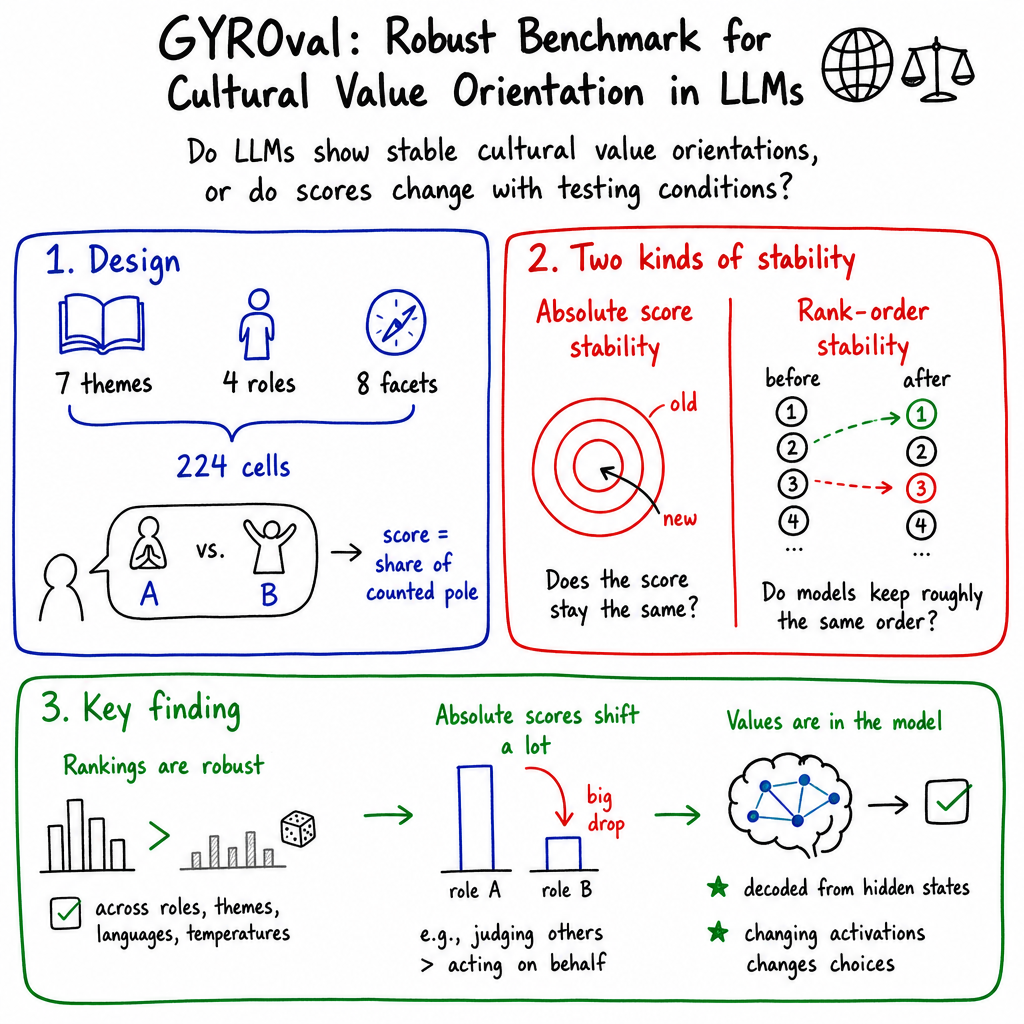
Abstract: We present a robust benchmark for measuring cultural value orientation in LLMs on the two Inglehart-Welzel axes over several domains and roles (hence GYROval - Gridded Yielding of Robust value Orientation), together with the results of administering it to twenty models. Items are binary contrastive scenarios in the sense introduced by CDEval: both options are legitimate courses of action, neither is correct, there is no answer key, and a model's score on an axis is the proportion of its responses falling on the counted pole. Eleven of the twenty models were additionally administered a paired Russian translation of the identical items and a second sampling temperature. The instrument is publicly released in both languages. Stability was assessed by treating the vignette as the unit of analysis, ranking the models within the levels of each perturbation factor, and summarising the agreement between levels by tie-corrected Kendall's \emph{W} against an empirical permutation null.
Paper Prompts
Sign up for free to create and run prompts on this paper.
Top Community Prompts
Explain it Like I'm 14
1. What is the paper about?
This paper introduces GYROval, a test for studying the cultural values expressed by LLMs, such as ChatGPT-like systems.
The researchers want to know whether AI models tend to make decisions that reflect certain cultural ideas. For example, does a model prefer:
- Sacred or religious traditions, or more secular ideas?
- Obedience and following rules, or more personal freedom and self-expression?
The paper also asks whether these value patterns stay similar when the model is given different types of questions, roles, languages, or settings.
2. What questions are the researchers asking?
The main research questions are:
- Can cultural values in LLMs be measured in a clear and repeatable way?
- Do different AI models show different cultural value patterns?
- Do models keep the same general ranking when the test conditions change?
- Does it matter whether the test is given in English or Russian?
- Does the model answer differently when it is asked to act as an advisor, judge, or decision-maker?
- Does changing the model’s “temperature” change its answers?
Here, temperature is a setting that controls how varied the model’s answers are. A low temperature usually makes answers more predictable, while a higher temperature allows more variation.
3. How was the research carried out?
The test itself
GYROval contains 224 main test situations. Each situation describes an everyday problem and gives the model two possible actions.
For example, a situation might involve:
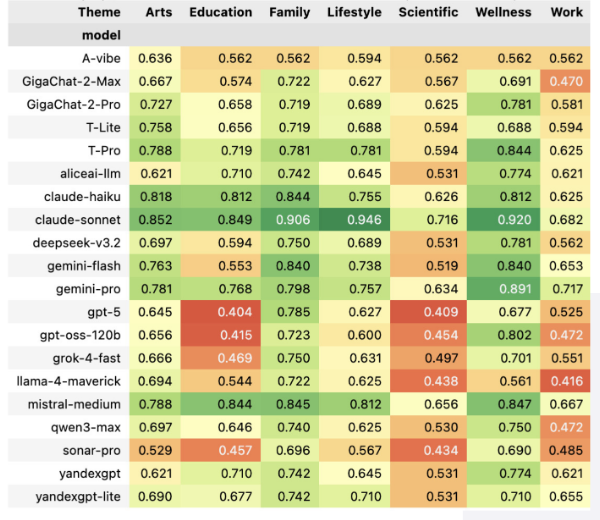
- Work
- Education
- Family
- Art
- Health and lifestyle
- Science
The two choices are designed to be both reasonable. There is no answer that is simply “correct.” Instead, the choices represent different cultural values.
This is important because the test is not checking whether the model knows a fact, like the answer to a math problem. It is measuring which kind of value the model tends to favor.
The value dimensions
The test focuses on two broad cultural dimensions:
- Sacred–secular: whether a choice is more connected to tradition, religion, or sacred ideas, versus more secular and non-religious thinking.
- Obedient–emancipative: whether a choice emphasizes obedience, rules, and authority, versus independence, equality, personal choice, and having a voice.
The researchers divide these broad dimensions into smaller topics, such as:
- Agnosticism
- Relativism
- Skepticism
- Defiance
- Autonomy
- Choice
- Equality
- Voice
The different conditions
The researchers tested 20 LLMs. Eleven of these models were also tested:
- In Russian, using translated versions of the same questions
- At a different temperature setting
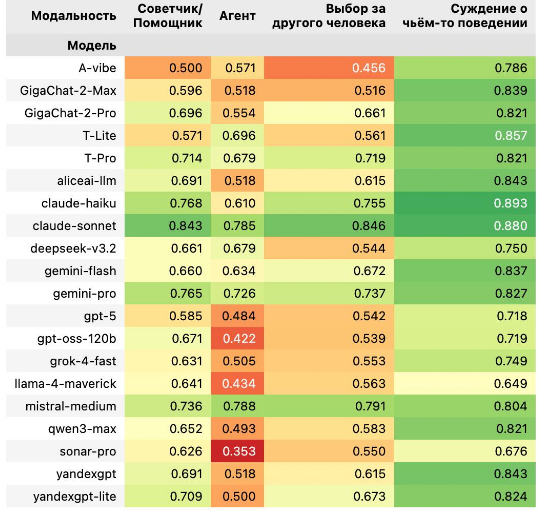
The models were also asked questions involving four different roles:
- Giving advice
- Acting on someone’s behalf
- Choosing for another person
- Judging another person’s behavior
How the scores were calculated
For each model, the researchers counted how often it selected one particular value direction.
For example, if a model chose the “emancipative” option in 70 out of 100 relevant cases, its score for that direction would be 70%.
The researchers were especially interested in ranking the models. They asked whether Model A was generally more emancipative than Model B, even if the exact percentages changed in different situations.
This is similar to a sports league: a team’s exact score may change from game to game, but researchers may still want to know whether the team remains near the top of the ranking.
Checking stability
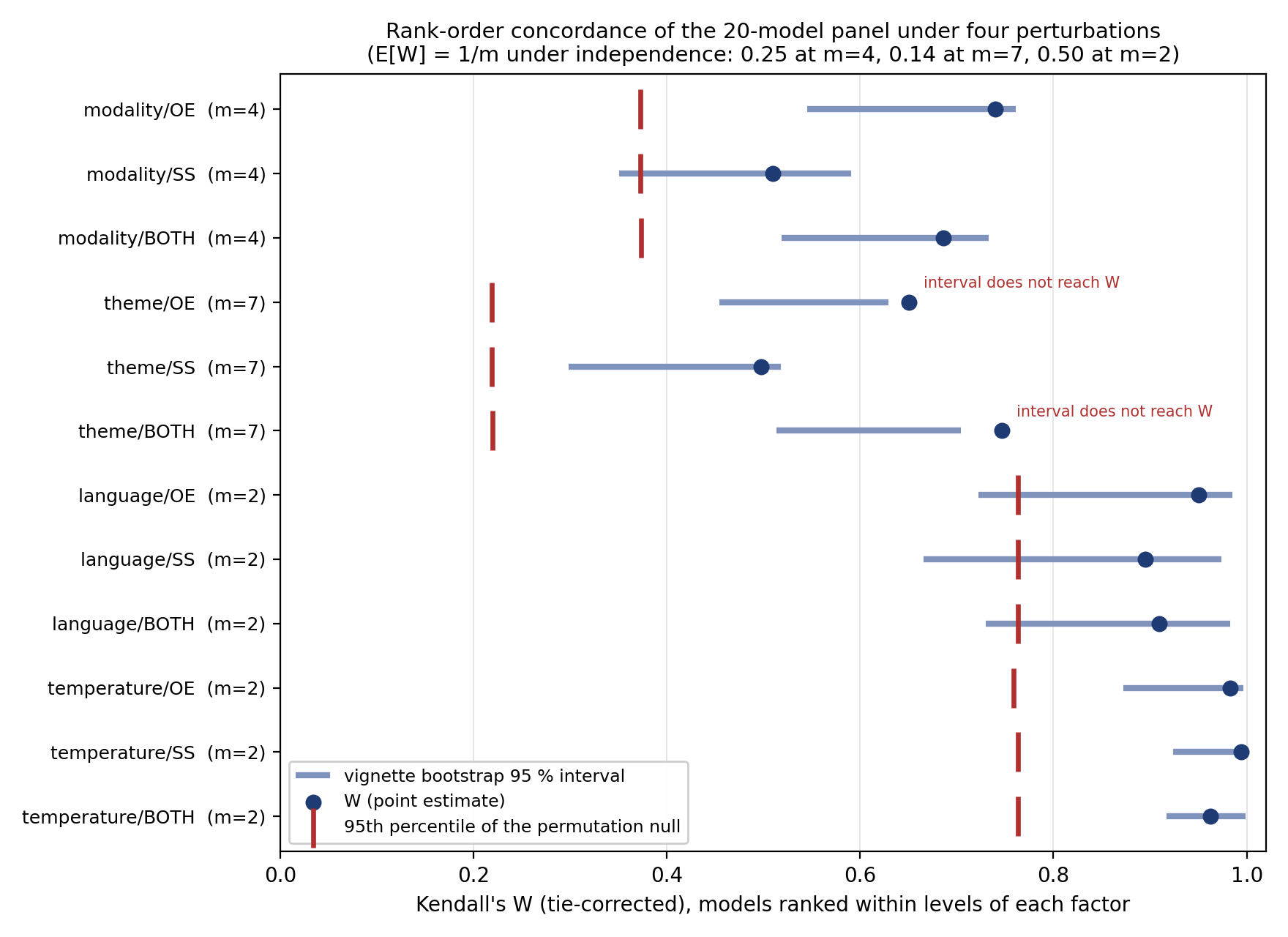
The paper uses a statistical measure called Kendall’s W. In simple terms, this measures how much several rankings agree with one another.
The researchers compared model rankings across:
- Different roles
- Different subject areas
- English and Russian
- Different temperatures
They also used a permutation test. This means they repeatedly shuffled the data to see whether the observed agreement was stronger than what might happen by chance.
Studying the models’ internal activity
The researchers also performed a smaller technical study of what happens inside the models.
They used methods such as:
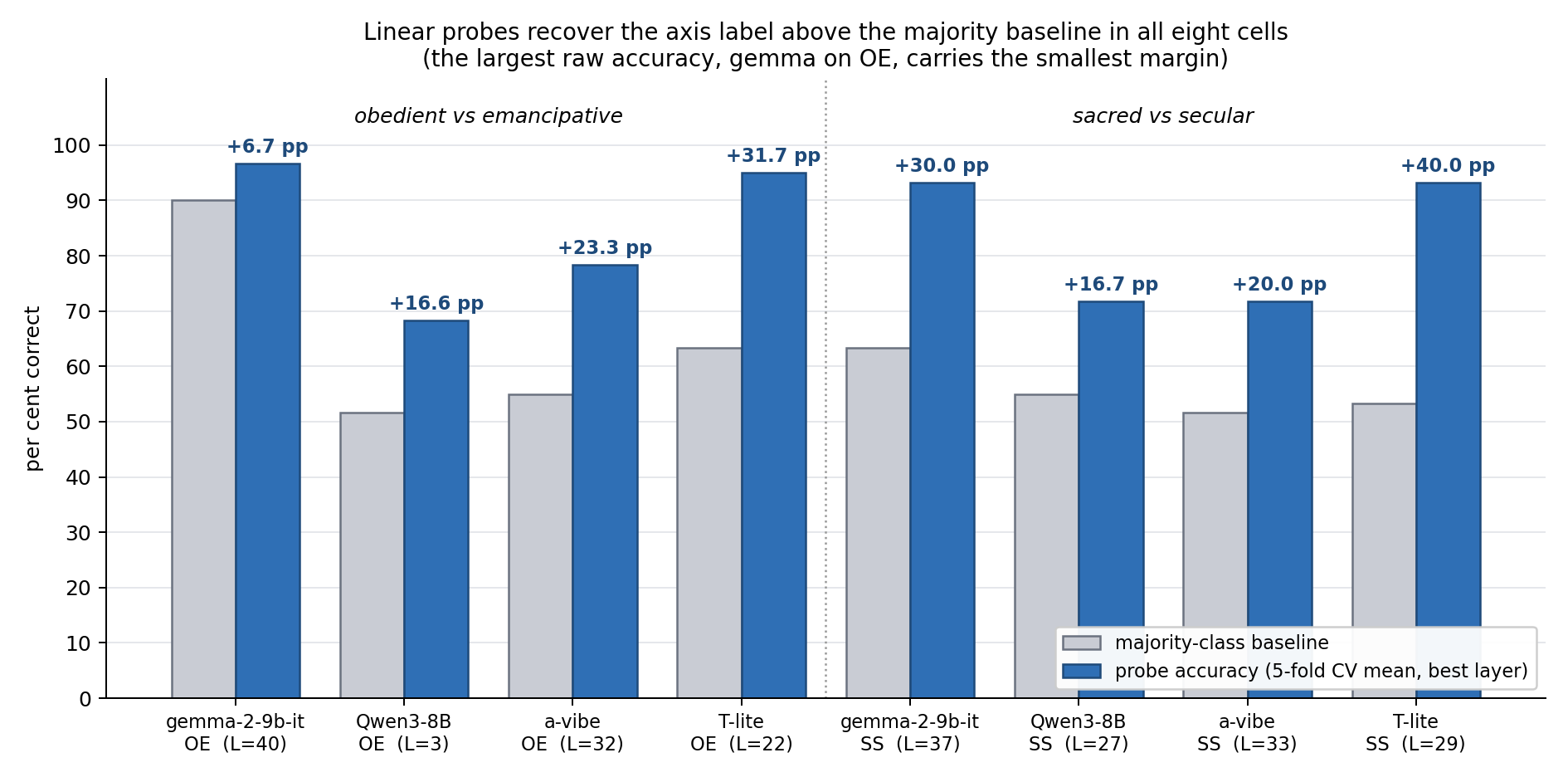
- Linear probing: training a simple detector to see whether internal model information predicts a model’s cultural choice.
- Representational similarity analysis: comparing patterns of activity inside the model.
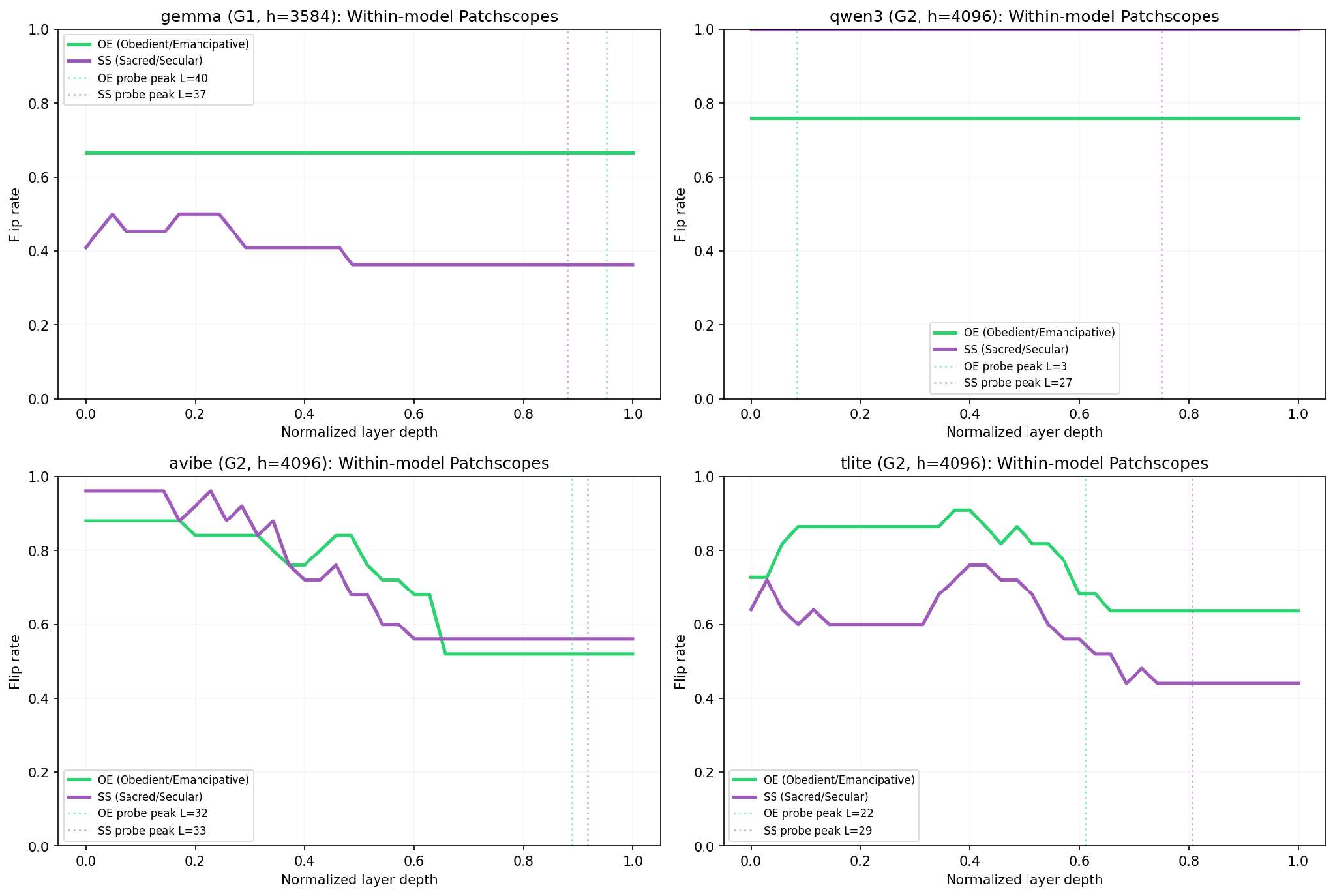
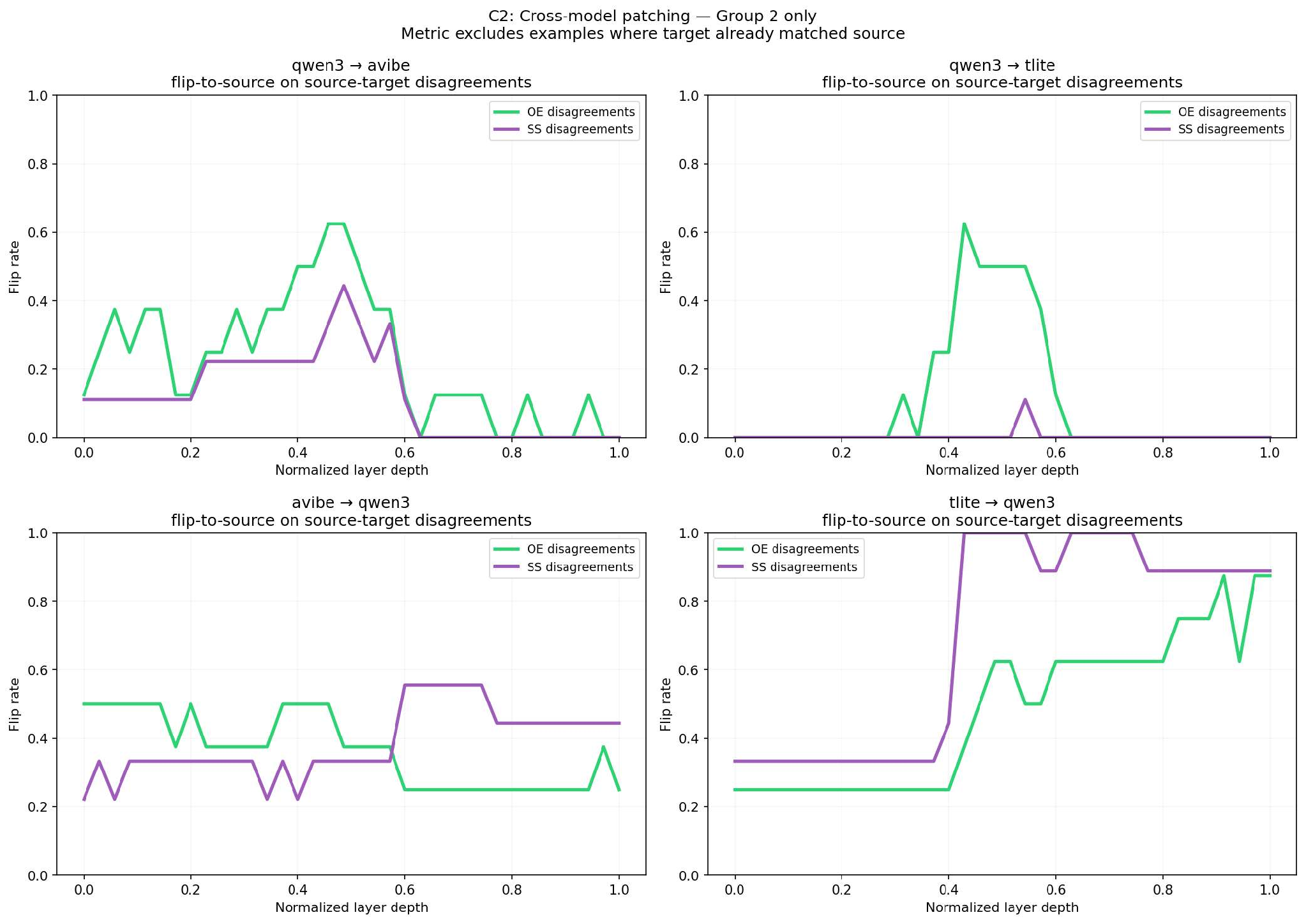
- Activation patching: changing part of the model’s internal activity to see whether its answer changes.
These methods are somewhat like examining the wiring inside a machine to see whether the machine’s behavior is connected to particular internal signals.
4. What did the researchers find?
Rankings were generally stable
The main finding is that the relative ranking of the models was fairly stable across all the tested changes.
In other words, although a model’s exact score could change when:
- The topic changed
- The model was given a different role
- The language changed
- The temperature changed
the broad ordering of the models usually remained similar.
The paper reports that ranking agreement was stronger than would be expected from random chance in all twelve comparisons involving the different conditions and the two value dimensions.
Exact scores could change substantially
The researchers warn that stable rankings do not mean that the models always give identical answers.
The absolute scores could shift by more than 20% of the scale depending on how the test was presented. This means that a model might appear more or less “secular” or “emancipative” depending on the specific collection of questions used.
Therefore, a score should not be treated as a permanent, exact personality label for a model. It should always be understood together with the test language, topics, roles, and other conditions.
Models differed in how sensitive they were to roles
The models did not all react to roles in the same way.
Some models changed their value choices only slightly when asked to act as an advisor or judge. Other models changed much more.
The paper reports that role sensitivity differed between models by:
- About 6.5 times for the emancipative dimension
- About 5.3 times for the sacred–secular dimension
This suggests that role-playing is not just a superficial change. It may reveal an important feature of how a model makes decisions.
Internal model patterns matched behavior
The internal analysis found evidence that the differences seen in the models’ answers were also reflected in their internal representations.
This suggests that the results were not entirely random. The models appeared to contain internal patterns connected to the choices they made.
However, the paper does not claim that these internal patterns are exactly the same as human cultural values. They are patterns inside AI systems that are related to the models’ behavior.
Language affected scores
The researchers also examined English and Russian versions of the test.
The paired design was useful because the Russian questions were translations of the same English questions. This helped the researchers separate the effect of language from the effect of changing the questions themselves.
The paper emphasizes that language can affect a model’s answers, even when the model is fluent in both languages. A model may use different cultural or social associations depending on the language of the prompt.
5. Why are these findings important?
LLMs are increasingly used in areas such as:
- Hiring
- Customer service
- Education
- Government services
- Business decision-making
If an AI system uses cultural assumptions that do not match the people it serves, it could make decisions that seem unfair, strange, or inappropriate.
For example, a model trained mostly on one group’s writing might give advice that quietly favors:
- Individual choice over community responsibility
- Strict obedience over personal freedom
- Religious traditions over secular reasoning
- One society’s ideas about family or work over another’s
GYROval provides a way to look for these patterns instead of judging models only by factual accuracy.
6. Limitations of the research
The paper also points out several important weaknesses.
First, the test has no human comparison group. The researchers did not give the same questions to human participants. Therefore, they cannot say that a model is “more Russian,” “more Western,” or more similar to a particular population.
Second, the scenarios were created with help from an AI model and reviewed by three experts, but the paper does not provide full details about the review process or how much the reviewers agreed with one another.
Third, the main evaluation used a fixed order for presenting the two answer choices. The researchers performed a small pilot test suggesting that answer order did not have a large effect, but the pilot was not described in enough detail to completely rule out subtle order bias.
Fourth, the test measures behavioral choices, not necessarily deep beliefs. A model might select an option because of wording, training patterns, or common internet phrases rather than because it possesses values in the same way a human does.
Finally, the model panel contains 20 systems, which is useful but still small compared with the huge number of LLMs available.
7. Overall meaning and possible impact
GYROval’s main message is that cultural value patterns in AI models can be measured, but the results must be interpreted carefully.
The models showed recognizable differences, and their overall ranking was fairly stable when the researchers changed the test conditions. At the same time, their exact scores could change significantly depending on the language, topic, role, or temperature.
This could help AI developers and governments:
- Compare models before using them in different countries
- Check whether a model behaves differently across languages
- Identify models that are unusually sensitive to role-playing
- Improve the cultural localization of AI systems
- Make AI evaluations more realistic than simple right-or-wrong tests
The research does not prove that an AI has human-like culture or personal beliefs. Instead, it offers a tool for measuring patterns in the choices AI systems make. Such measurements could become increasingly important as LLMs are used to make decisions that affect people from many different cultures.
Knowledge Gaps
Knowledge gaps, limitations, and open questions
The paper leaves the following issues unresolved:
- Human validity is unestablished: No human participants, population benchmarks, human performance ceiling, or external behavioral criteria were collected, so it remains unknown whether model scores correspond to human cultural value orientations.
- Construct validity of the newly generated items is uncertain: The scenarios were generated primarily by Gemini 2.5 Flash and reviewed by only three experts, without reported inclusion criteria, inter-rater agreement, systematic cognitive interviewing, or independent validation against established World Values Survey items.
- The relationship between GYROval scores and the underlying Inglehart–Welzel constructs is unknown: The paper does not demonstrate that the 224 scenarios recover the expected two-dimensional structure or distinguish the intended value facets empirically.
- The benchmark’s theoretical framework may not transfer cleanly to LLM behavior: Inglehart–Welzel axes were developed for population-level human survey data, but the paper does not establish that model responses represent stable latent orientations rather than prompt-conditioned response policies.
- Measurement invariance across languages is unresolved: The English and Russian items are structurally paired, but semantic, pragmatic, idiomatic, and cultural equivalence of the translations was not established through native-speaker review, back-translation, or differential-item analysis.
- Language effects are tested only for Russian and only for eleven models: The findings cannot determine whether observed bilingual differences generalize to other languages, language families, multilingual models, or models with different training-data compositions.
- The model panel is not representative of the LLM population: The twenty-model sample is selected rather than probabilistic, mixes proprietary and open-weight systems, and includes multiple models from particular regional ecosystems; therefore, the generalizability of the rankings is unknown.
- Model-version and serving variability are not fully controlled: Hosted models may change weights, system prompts, safety policies, routing, or inference infrastructure during data collection, making it unclear whether the reported results are reproducible over time.
- The primary evaluation relies on temperature-zero measurements: Although a second temperature was tested for eleven models, the benchmark does not establish whether temperature-zero scores are less valid or systematically biased relative to a broader distribution of sampling temperatures.
- Only one alternative temperature per model was evaluated: The response trajectory across temperature levels remains unknown, including whether rank reversals, nonlinear effects, or instability emerge at higher temperatures.
- Repeated runs at temperature zero may not provide independent evidence: Near-identical outputs could reflect deterministic decoding or persistent serving behavior rather than reliable measurement of an underlying model preference; the paper does not separate these possibilities.
- Option-order bias is not adequately ruled out: The main evaluation used fixed option presentation, despite the counted pole being identifiable as Option 2 in 91.5% of polarity-classifiable items and Option 2 being longer and more hedged on average.
- The counterbalancing pilot is insufficiently documented: Its sample size, model selection, statistical power, and effect estimates are unavailable, so the conclusion that order effects were negligible cannot be independently assessed.
- The planned counterbalanced re-evaluation is not part of the reported evidence: Until the proposed reversal experiment is completed, the extent to which slot preference contaminates model scores remains unresolved.
- Lexical and stylistic confounds may be mistaken for cultural orientation: Differences in option length, hedging, deontic language, lexical polarity, and other surface features could drive choices independently of the intended value poles, but these features are not modeled or experimentally controlled.
- The benchmark’s duplicate and metadata artifacts raise reproducibility concerns: The released dataset contains 225 rows for 224 design cells, a duplicate item, and inconsistent axis-label spellings; although the duplicate was reportedly checked, the consequences of these data-quality issues for downstream users and automated analyses remain unclear.
- The de-duplication and item-balance procedures are not fully specified: It is unclear how the duplicate was handled in each released file, whether all analyses used identical item sets, and whether the final benchmark remains balanced after cleaning.
- The value-facet structure is not empirically validated: The eight facets are assigned to two axes by design, but the paper does not show whether responses statistically cluster according to those assignments or whether some facets are redundant, cross-loading, or unrelated.
- The use of pole-share means may conceal multimodal behavior: The paper acknowledges bimodal response patterns in earlier work but does not establish a systematic reporting procedure for distributional shape, conditional modes, item clusters, or behavioral switching in the present benchmark.
- Rank-order stability does not establish score validity: Models may retain their relative order across perturbations while all models are systematically misaligned with human populations or the intended construct; the paper does not disentangle reliability from validity.
- The interpretation of Kendall’s remains limited: The reported concordance can indicate stable rankings without showing that differences between adjacent models are meaningful, practically important, or robust to uncertainty in item-level scores.
- Fine-grained ranking uncertainty is not resolved: With only 20 models and potentially small score differences, confidence intervals, pairwise rank uncertainty, and the probability of rank reversals among neighboring models require further investigation.
- The factorial design is not used to estimate causal interaction effects sufficiently: Although theme, decision modality, and facet are crossed, the paper does not establish whether model responses exhibit statistically meaningful interactions among these factors or whether role sensitivity is attributable to specific item content.
- Role effects may reflect linguistic framing rather than decision-role cognition: Differences among advisor, agent, delegated-choice, and judgment conditions could result from wording, pronoun use, or perceived social expectations rather than genuine role-conditioned value orientation.
- Domain coverage is narrow: Seven themes may not represent important cultural domains such as politics, religion, law, migration, ethnicity, economics, technology, or interpersonal conflict, limiting the scope of the claimed cultural measurement.
- The benchmark does not test temporal stability: It remains unknown whether a model’s orientation profile persists across days, API sessions, model updates, or changing system contexts.
- System prompts and deployment contexts are insufficiently characterized: The paper does not clarify whether models were evaluated with standardized system messages, provider defaults, safety layers, or application-specific instructions, all of which may influence value-sensitive responses.
- Refusal and non-answer handling may affect scores: The methods mention excluding refusals from some cluster calculations, but the consequences of refusals, malformed outputs, ambiguous answers, and model-specific parsing failures for pole-share scores are not fully documented.
- The benchmark may be vulnerable to training-data contamination despite novel item generation: Novel scenarios reduce direct memorization risk but do not establish independence from pretraining patterns, synthetic-data contamination, or model-specific exposure to related prompts.
- Translation and item generation introduce coupled model biases: Gemini generated the English items and may also have influenced linguistic or cultural framing indirectly; the paper does not assess whether another generation process would yield materially different orientations or rankings.
- No adversarial or paraphrase robustness analysis is reported: It remains unknown whether small wording changes, synonym substitutions, negation, option reordering, or changes in narrative detail alter scores or model rankings.
- Mechanistic analyses do not yet establish causal interpretation: Linear probes, difference-of-means directions, RSA, CKA, and activation patching may show representational associations, but they do not demonstrate that the identified representations cause the behavioral value choices or correspond to human cultural constructs.
- Cross-model transfer of mechanistic value directions remains unresolved: The paper identifies the lack of transfer as an open issue but does not determine whether directions learned in one architecture, model family, or language can be aligned with those in another.
- The relationship between internal representations and behavior is uncertain: Mechanistic correspondence on the same item set may reflect shared lexical or task features rather than a general internal representation of cultural values.
- The benchmark’s external decision relevance is untested: It is unknown whether GYROval scores predict model behavior in real applications such as hiring, governance, advice, moderation, or culturally localized user interactions.
- No mitigation strategy is evaluated: The study measures cultural orientation and stability but does not test whether prompt localization, fine-tuning, retrieval augmentation, system instructions, decoding changes, or model steering can reliably alter undesirable orientations without harming capability.
- The normative meaning of “alignment” remains unspecified: The paper does not resolve whether models should match a national population average, a culturally pluralistic distribution, institutional norms, user preferences, or rights-based principles when these standards conflict.
- Potential within-country cultural heterogeneity is not represented: A single Russian translation condition cannot capture regional, ethnic, generational, socioeconomic, or ideological variation within Russian-speaking populations.
- The benchmark does not distinguish cultural adaptation from culturally biased behavior: A model’s shift across languages or roles could indicate appropriate contextual adaptation, inconsistent preference elicitation, or undesirable bias; the current design cannot determine which interpretation is correct.
- The limits of cross-model comparison are unresolved: Different models may interpret the scenarios, options, or response instructions differently, so identical pole-share scores may not be psychologically or behaviorally equivalent across systems.
- Power and uncertainty analyses for the planned comparisons are incomplete: The paper discusses cluster sizes and statistical limitations but does not provide a complete preregistered power analysis for model-by-factor interactions, language comparisons, temperature effects, or role-sensitivity estimates.
Practical Applications
Immediate Applications
- LLM procurement and vendor comparison — Industry, software, and enterprise AI
- Organizations can use the released 224-item GYROval benchmark to compare commercial and open-weight LLMs on cultural value orientation before selecting models for customer service, HR, governance, education, or decision-support systems.
- Evaluation reports should include scores separately for the sacred–secular and obedient–emancipative axes, as well as the tested language, thematic domains, decision roles, and sampling temperature.
- Potential workflow: run the benchmark against candidate models, generate a cultural-orientation profile, and incorporate the profile into model procurement, routing, and risk-review processes.
- Dependencies: GYROval measures relative behavioral orientation and rank stability, not correctness or cultural “fitness.” It has no human baseline, external criterion validity, or population-calibrated target score.
- Cultural-bias and localization audits — Industry and public-sector AI
- AI teams can use the benchmark as a pre-deployment audit to identify whether a model’s recommendations change when it is asked to act as an advisor, agent, judge, or decision-maker on behalf of another person.
- Role-sensitivity scores can flag models whose expressed values vary substantially across decision modalities. Such models may require tighter role instructions, human review, or restricted deployment in sensitive workflows.
- Potential products: model cards, localization dashboards, cultural-risk registers, and automated red-team pipelines that track value profiles across model versions.
- Dependencies: role sensitivity is an observed model property, not necessarily evidence of harmful behavior in a specific application. Domain-specific validation remains necessary.
- Multilingual deployment testing — Global software, customer support, and public services
- The paired English–Russian design can be adapted for multilingual acceptance testing. Teams can compare whether the same model produces materially different value-oriented decisions in different languages.
- This is especially relevant to cross-border chatbots, translation-assisted services, international platforms, and government information systems.
- Potential workflow: evaluate identical scenario identifiers in each supported language, compare pole shares and model rankings, and route high-discrepancy cases for native-speaker review.
- Dependencies: translation quality and cultural equivalence are critical. The paper uses identical translated items, but a translated benchmark is not automatically measurement-invariant across populations or languages.
- Evaluation of model updates and fine-tuning — Software engineering and MLOps
- Development teams can run GYROval as a regression test after pretraining updates, instruction tuning, safety alignment, system-prompt changes, or changes in decoding configuration.
- A release can be blocked when absolute cultural-orientation scores shift beyond a predefined tolerance or when model rankings and domain-level behavior become unstable.
- Potential tool: a CI/CD evaluation stage that stores benchmark outputs, compares version-to-version profiles, and produces alerts for language-, role-, or temperature-dependent changes.
- Dependencies: the benchmark contains 224 design cells but only 20 evaluated models in the study; organizations should supplement it with application-specific and locally reviewed items.
- Prompt and system-instruction testing — Software and conversational AI
- Teams can use the benchmark to assess whether system prompts, persona assignments, or role instructions induce large changes in value-oriented responses.
- This can support prompt selection for assistants in education, wellness, finance, and workplace tools where recommendations may implicitly encode normative assumptions.
- Dependencies: the paper shows stability of model rank ordering under several perturbations, but absolute scores can shift by more than 20% of the scale. Prompt-level conclusions should therefore not be inferred from rank stability alone.
- Public-sector and sovereign-LLM due diligence — Policy and digital sovereignty
- Governments can incorporate GYROval-style testing into certification or procurement procedures for foreign and domestic LLMs used in public administration.
- Agencies could require vendors to disclose cultural-orientation profiles by language, role, and domain, rather than reporting only general accuracy or safety scores.
- Potential policy instrument: a localization dossier containing benchmark results, known language divergences, role-sensitivity metrics, and mitigation plans.
- Dependencies: the benchmark should not be converted into a prescriptive national “correct values” score. Policy use requires public consultation, local expert review, and safeguards against ideological or political misuse.
- Research-methodology standardization — Academia and independent evaluation
- Researchers can immediately reuse the publicly released English and Russian item sets, scoring approach, factorial structure, and tie-corrected Kendall’s stability analysis.
- The benchmark provides a common testbed for comparing models, prompts, languages, domains, and decoding temperatures without treating one response as objectively correct.
- Methodological practice: report both pole-share levels and rank-order concordance; aggregate repeated responses at the vignette level rather than treating all model runs as independent observations.
- Dependencies: users should correct or document the released-data artifacts, including the duplicate row, inconsistent axis-label spellings, and unbalanced option-slot distribution.
- Option-order and evaluation-quality auditing — Benchmark developers
- The paper’s findings support immediate use of cyclic option permutation in binary-choice evaluations to reduce model-specific token or slot bias.
- Benchmark designers can test selection-share uniformity, choice conflict under option swapping, and position consistency before interpreting value scores.
- Dependencies: the main GYROval run used fixed option ordering, and the pilot’s sample size and effect sizes were incompletely documented. The paper’s results therefore support caution and further counterbalanced testing rather than claiming that order bias has been eliminated.
Long-Term Applications
- Culturally adaptive model routing — Enterprise AI and public services
- Future systems could route requests to models whose cultural-orientation profiles are more compatible with the user’s language, jurisdiction, institutional context, or task domain.
- For example, a platform might select one model for locally sensitive public-service communication and another for globally standardized technical assistance.
- Dependencies: this requires validated relationships between GYROval profiles and user outcomes, human preferences, fairness measures, and service quality. A higher score on either axis should not be treated as inherently better.
- Cultural-sensitivity-aware safety layers — Healthcare, education, HR, finance, and governance
- GYROval-style profiles could become features in risk engines that detect when a model’s recommendation may conflict with local norms or when a model behaves differently across roles and languages.
- A safety layer could trigger explanation requests, human escalation, alternative-model comparison, or refusal to automate a decision.
- Dependencies: the benchmark does not establish that measured orientations predict real-world harms. Deployment would require outcome-based validation, sector-specific thresholds, fairness analysis, and protection against discrimination.
- Human–AI collaboration and role assignment — Robotics, agents, and decision support
- The observed role sensitivity could inform the design of multi-agent systems in which models are assigned roles based on empirically measured behavioral stability.
- A model with low role sensitivity might be preferred for consistent procedural assistance, while a model with higher role sensitivity could be used only where adaptive perspective-taking is beneficial.
- Dependencies: role sensitivity may reflect desirable contextual adaptation rather than instability. Future research must distinguish harmful inconsistency from legitimate role-appropriate behavior.
- Cultural alignment and fine-tuning objectives — Foundation-model development
- Model developers could use GYROval scores as monitoring signals during supervised fine-tuning, reinforcement learning, preference optimization, or constitutional alignment.
- Mechanistic results involving linear probing, representational similarity analysis, CKA, and causal activation patching suggest a future pathway for identifying and modifying internal representations associated with measured value distinctions.
- Dependencies: the paper does not demonstrate that causal manipulation of internal value directions improves real-world alignment. Prior work cited in the paper reports low or inconsistent correlations between probed values and behavior, and steering may impose capability costs or produce unintended changes.
- Mechanistic interpretability tools for normative behavior — AI safety research
- The benchmark’s matched behavioral and internal-representation data could support tools that monitor whether a model’s internal state is shifting toward a culturally sensitive behavior before the output is generated.
- Possible outputs include value-direction visualizers, activation-based anomaly detectors, and causal probes for comparing models or checkpoints.
- Dependencies: transfer of cultural-value directions between architectures is unresolved. Probes may detect correlations without identifying semantically stable or causally sufficient representations.
- Human-calibrated cultural evaluation standards — Academia and policy
- A long-term extension would collect responses from diverse human populations on the same vignettes, enabling comparison among model profiles, regional distributions, and within-population disagreement.
- This could support culturally grounded calibration rather than treating the benchmark’s counted pole as a normative answer.
- Dependencies: the current study has no human baseline, no criterion measures, and no established performance ceiling. Sampling, translation, measurement invariance, and the distinction between cultural description and normative endorsement would need careful treatment.
- Dynamic cultural-risk monitoring in deployed systems — Industry and regulators
- Organizations could periodically rerun the benchmark—or a continuously refreshed variant—to detect drift caused by model updates, retrieval data, changing system prompts, or vendor-side serving changes.
- Regulators might require longitudinal disclosure of cultural-orientation changes for models used in high-impact domains.
- Dependencies: repeated benchmark exposure could cause contamination or gaming. Monitoring would require secure holdout items, rotating scenario banks, reproducible inference settings, and transparent reporting of temperature and sampling conditions.
- Cross-cultural agent and robotics design — Robotics, autonomous systems, and smart environments
- Domestic robots, care assistants, and autonomous agents could use culturally localized policy modules informed by language- and role-specific behavioral evaluations.
- This may help systems adapt communication style, autonomy boundaries, family-related recommendations, or responses to authority and personal-choice scenarios.
- Dependencies: cultural value orientation alone is insufficient for safe autonomous action. Physical safety, legal requirements, user consent, accessibility, and real-world behavioral testing would remain primary constraints.
- Sector-specific normative stress tests — Healthcare, education, finance, and employment
- Future benchmark variants could adapt the factorial design to test culturally sensitive scenarios such as informed consent, classroom authority, financial risk, hiring autonomy, family obligations, or workplace equality.
- The result could be domain-specific audit suites that preserve GYROval’s contrastive, no-answer-key structure while adding local expert review and real-world outcome measures.
- Dependencies: the existing themes—arts, education, family, lifestyle, science, wellness, and work—provide broad coverage but do not validate decisions in regulated sectors. New items would require legal review, domain experts, native-speaker validation, and empirical testing with affected communities.
Glossary
- Ablation study: An experiment that removes or changes one component of a system to measure its effect. “Their ablation study provides direct evidence”
- Activation patching: A causal interpretability method that replaces internal activations with those from another computation to test their functional role. “and causal activation patching”
- Additive offset: A constant model-specific change added to measured scores. “would manifest as an additive per-model offset in the final scores.”
- Binary contrastive scenario: A scenario offering two legitimate alternatives representing opposing conceptual poles. “Items are binary contrastive scenarios”
- Bootstrap: A resampling method used to estimate statistical uncertainty or variability. “five-fold bootstrap repetitions”
- Centered kernel alignment (CKA): A similarity measure for comparing representational structures, often across neural-network layers. “representational similarity analysis (RSA) with centered kernel alignment (CKA)”
- Cluster-robust variance estimator: A variance estimator designed to remain valid when observations within clusters are correlated. “cluster-robust variance estimators exhibit downward bias”
- Cohen’s kappa: A statistic measuring agreement between categorical judgments beyond chance agreement. “(Cohen's \ensuremath{\kappa} of 0.33 vs. 0.37)”
- Construct validity: The extent to which an instrument actually measures the theoretical construct it claims to measure. “The criterion validity of value probing is, moreover, contested”
- Counterbalancing: Systematically varying the order or assignment of experimental conditions to reduce order-related bias. “option counterbalancing demonstrates superior reliability”
- Cronbach’s alpha: A coefficient estimating the internal consistency of items intended to measure the same construct. “Cronbach's \ensuremath{\alpha} reaches 0.85--0.96 on forward-keyed instruments”
- Cyclic permutation: A restricted method of rotating alternatives through positions rather than testing every possible ordering. “The primary established mitigation is cyclic permutation”
- Design effect: A factor indicating how sampling or clustering changes the variance relative to independent sampling. “Kish defines this via the design effect”
- Empirical permutation null: A reference distribution generated by repeatedly permuting observed data under a null hypothesis. “against an empirical permutation null”
- Factorial design: An experimental design that systematically combines levels of multiple factors. “fully crossed factorial design”
- Forced-choice format: An assessment format requiring selection among specified alternatives rather than allowing unrestricted responses. “The benchmark employs a forced binary choice”
- Generalizability coefficient: A reliability statistic estimating how consistently measurements generalize across facets such as items, raters, or occasions. “His fitted model increased the generalizability coefficient marginally”
- Hedging marker: A linguistic expression that qualifies, weakens, or limits the certainty of a statement. “exhibits a higher frequency of hedging markers”
- Inglehart–Welzel axes: Cultural-value dimensions distinguishing sacred from secular values and survival or obedience from emancipative values. “two primary Inglehart--Welzel dimensions”
- Intra-cluster correlation: The degree to which observations within the same cluster resemble one another. “A one-way random-effects intra-cluster correlation was computed”
- Item-response theory: A family of statistical models relating responses to item characteristics and an underlying latent ability or trait. “estimating performance distributions via item-response theory”
- Kendall’s W: A coefficient measuring agreement among rankings, including agreement across multiple ranked sets. “tie-corrected Kendall's W”
- Latent activation steering: Modifying internal neural activations to influence a model’s behavior along a presumed latent direction. “a further study applies latent activation steering to cultural value alignment”
- Latent-entanglement ratio: A measure of the extent to which a targeted latent representation is mixed with other information or factors. “reporting a latent-entanglement ratio”
- Measurement invariance: The requirement that a measurement instrument function equivalently across groups, cultures, or conditions. “the requirement of measurement invariance remains disputed”
- Mechanistic interpretability: The study of how internal model components and representations produce observed behavior. “Mechanistic work on the same construct”
- Noise-to-signal ratio: A measure comparing measurement noise with systematic signal in an observed variable. “reduced their most unstable item's noise-to-signal ratio from 1.45 to 0.95”
- Option-order bias: A tendency for responses to depend on the order or position in which alternatives are presented. “Option-order bias: token or position”
- Pole-share: The proportion of responses selecting one designated end, or pole, of a value dimension. “a normalized pole-share metric on [0, 1]”
- Psychometric: Relating to the statistical measurement of psychological or behavioral attributes. “Measuring a model's cultural value orientation is psychometrically tricky.”
- Rank-order concordance: The degree to which entities retain the same relative ordering across conditions. “Rank-order concordance has previously been applied”
- Representational similarity analysis (RSA): A method for comparing patterns of internal representations across items, models, or layers. “representational similarity analysis (RSA) with centered kernel alignment (CKA)”
- Residual stream: The sequence of intermediate residual activations carried through a transformer model’s layers. “a value direction can be probed from the residual stream”
- Response orthogonality: The extent to which responses do not align with the intended directional scoring of an instrument. “Meyer et al.'s response-orthogonality metric”
- Sacrificial pseudoreplication: Treating repeated measurements from one experimental unit as independent observations. “Hurlbert formalizes ‘sacrificial pseudoreplication’”
- Scalar measurement invariance: A strong form of measurement invariance requiring equivalent item intercepts or thresholds across groups. “Consequently, scalar measurement invariance is a property”
- Selection bias: Systematic distortion caused by non-random selection of observations, responses, or participants. “Shen et al. observe substantial selection bias”
- Sequence perplexity: A measure of how improbable a sequence is under a LLM. “identifying sequence perplexity as the most robust probing technique”
- Type I error: The incorrect rejection of a true null hypothesis. “nominal 5\% significance tests exhibit inflated Type I error rates”
- Value facet: A specific subdimension or component of a broader cultural-value axis. “Value facet (8): Agnosticism, Relativism, Scepticism, and Defiance”
- Vignette: A short, constructed scenario used to elicit a judgment or choice. “Each experimental run is initially aggregated into a per-(model, vignette) proportion”
- Within-construct consistency: The degree to which items intended to measure one construct produce mutually consistent responses. “high within-construct item consistency”

