- The paper demonstrates that the integral homology H₂(K_f) is either trivial or torsion-free, with geometry dictated by plane curve components.
- For cDₙ singularities, explicit combinatorial formulas relate lattice invariants and 2-adic valuations to the rank and torsion of H₂ using the Newton boundary.
- The study leverages Milnor fibration and monodromy techniques, applying Smale’s theorem for an accurate diffeomorphism classification of five-manifolds.
Topology of the Links of cDV Singularities of Types cAn and cDn
Introduction and Problem Statement
This paper investigates the integral homology of the links associated with isolated compound Du Val (cDV) singularities for types cAn (n>0) and Newton non-degenerate cDn (n>4), with a particular focus on H2 of their links Kf in dimension five. The topology of these links is closely tied to the study of complex surface and threefold singularities, with implications for manifold classification, especially concerning simply connected, five-dimensional manifolds with vanishing second Stiefel-Whitney class.
Given a germ f:Cn→C with an isolated critical point at the origin, the link Kf is constructed as the intersection cDn0 for sufficiently small cDn1. For a cDV singularity, this link is a smooth five-manifold whose homology encodes much of the topological complexity of the singularity.
Main Results and Theorems
The authors establish several key structural properties for the homology of links associated with these singularities:
- For cDn2 (cDn3): The second integral homology cDn4 is either trivial or a torsion-free abelian group of rank cDn5, where cDn6 is the number of local irreducible components of the plane curve cDn7 at the origin. This implies, via Smale's theorem, that cDn8 is diffeomorphic to either cDn9 or a connected sum of cAn0 copies of cAn1.
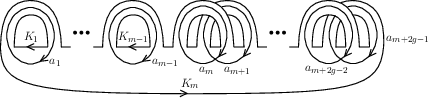
Figure 1: A basis on the fiber surface cAn2 associated with the study of the Seifert matrix for cAn3 links.
- For Newton non-degenerate cAn4 (cAn5):
- The authors analyze the link using the combinatorics of the Newton boundary cAn6. They give an explicit formula for the rank of cAn7 in terms of the Newton polygon, 2-adic valuations, and certain lattice invariants defined via the edges and vertices of cAn8 and cAn9.
- In the weighted homogeneous case, when the singularity is a Thom–Sebastiani sum of Brieskorn–Pham, cyclic, or chain type singularities, the paper further determines the torsion subgroup of n>00 and lists all possible group structures.
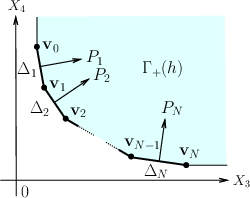
Figure 2: The Newton diagram for n>01, with vertices and compact 1-faces n>02 crucial to the computation of n>03.
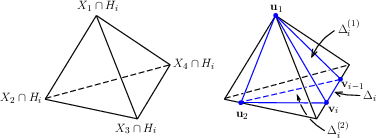
Figure 3: The simplex corresponding to key terms in the Newton polytope of n>04, representing faces critical for the calculation of the zeta function.
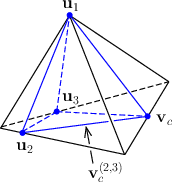
Figure 4: Classification of faces in the Newton boundary for various intersection scenarios, labeled by Newton polytope geometry.
Methodology
Homological Computations for n>05
The computation for n>06 proceeds via the Milnor fibration associated to the singularity n>07. The monodromy on the homology of the fibered surface n>08 associated with n>09 is central. By leveraging the specific structure of the Seifert matrix for fibered links (as in Lemma 4.1), it is shown that the cokernel of cDn0 gives cDn1, with cDn2 the number of irreducible components in the germ cDn3. Smale's theorem then allows a topological classification of the link.
Newton Boundary and Monodromy Techniques for cDn4
The analysis of cDn5 singularities hinges on a detailed combinatorial study of the Newton polyhedron cDn6, particularly Newton non-degenerate germs of the form cDn7, as in Equation (1-1). The Milnor fibration's monodromy is computed via the A'Campo–Varchenko formula, which relates the zeta function of the monodromy to the geometry of the Newton boundary and to lattice invariants derived from the faces.
Explicit formulas are given for the contribution of each face (or simplex) in the Newton polytope to the zeta function, and by extension, to the characteristic polynomial of monodromy. The computation distinguishes various face types corresponding to coordinate subspaces and lattice directions, with parameter counting effected via 2-adic valuations to determine when factors of cDn8 appear.
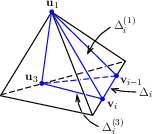
Figure 5: Faces corresponding to different cases for the cDn9 Newton boundary; critical in classifying contributions to n>40.
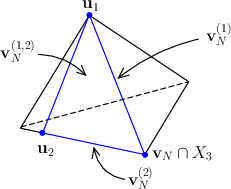
Figure 6: Illustration of more complex face pairings in the Newton boundary for the study of higher-multiplicity components in n>41.
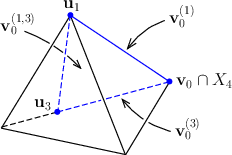
Figure 7: Combinatorial enumeration of face incidences in the Newton diagram; distinguishes which faces contribute in each case (a)-(e).
Weighted Homogeneous and Thom–Sebastiani Cases
The weighted homogeneous case is treated by combining results from Orlik’s theory on the integral homology of links of weighted homogeneous hypersurface singularities and the recent proof of Orlik’s conjecture for Thom–Sebastiani sums of cyclic, Brieskorn–Pham, or chain types [HM22]. The full homology structure, including torsion, is prescribed in terms of the explicit form of n>42 and combinatorics of the supporting terms in n>43.
Numerical and Structural Highlights
- For n>44 singularities, the possible links are n>45 and connected sums n>46, matching Smale's classification.
- For n>47 (Newton non-degenerate, n>48): The explicit formulas for n>49 involve lattice lengths H20, 2-adic data, and combinatorics of polygonal edges:
H21
where the sum and correction terms are determined precisely using the combinatorics and the detection of certain parity conditions.
- Torsion in H22: In the weighted homogeneous case, H23 is either trivial, free, or consists only of H24-torsion; all possible cases are enumerated structurally using greatest common divisors and the character of the supporting terms in H25.
Implications and Outlook
This work sharply delineates the possible topology of links of isolated cDV singularities for the major series H26 and H27 (when non-degenerate and H28). The main theoretical implication is a near-complete topological classification (up to diffeomorphism) of the links in terms of basic algebraic-geometric data (multiplicity and lattice invariants). The practical upshot is that the link invariants are algorithmically computable from the Newton diagram, and in key cases, the diffeomorphism type is uniquely determined.
The general absence of torsion in H29, except possible Kf0-torsion in weighted homogeneous/Thom–Sebastiani cases, aligns with classical constraints from Smale’s 5-manifold theory. Moreover, the methods and combinatorial analysis applied here could, in principle, be generalized further to more complicated or higher-dimensional non-degenerate singularities.
Conclusion
This paper achieves a comprehensive algebraic-topological classification of the links of cDV singularities of types Kf1 and Kf2 under Newton non-degeneracy, unveiling precise homological invariants in terms of Newton polytope data. The results clarify the landscape of possible simply connected five-manifolds arising as such links, with complete determination of when free and Kf3-torsion summands arise in their second homology. The combinatorial and monodromy techniques utilized set the stage for broader applications in singularity theory and low-dimensional topology.
References:
- "The integral monodromy of isolated quasihomogeneous singularities" (Vu et al., 2021)
- "Zeta-function of monodromy and Newton's diagram" [math/0310506]
- "Singular Points of Complex Hypersurfaces" (Milnor)
- "On the structure of 5-manifolds" (Smale)
- "On the homology of weighted homogeneous manifolds" (Orlik)