- The paper presents a detailed analysis showing that explosive molecular outflows arise from rapid multi-body interactions in dense, massive clusters, releasing kinetic energies of 10^47–10^49 erg.
- It combines high-resolution JWST and ALMA observations with proper motion studies to map the 3D structure and v ∝ r kinematic profile of narrow, high-velocity CO and H2 streamers.
- The study highlights profound implications for massive star formation, indicating that such impulsive events can bias the initial mass function and drive significant ISM turbulence and cosmic ray acceleration.
Explosive Molecular Outflows: Mechanisms, Observational Evidence, and Implications
Introduction
The paper "Explosive Molecular Outflows" (2607.10452) presents a comprehensive analysis of an emergent class of short-lived, high-velocity isotropic outflows associated with massive star-forming regions. Distinct from the canonical, steady-state, bipolar molecular outflows typically traced to disk accretion and jet ejection, these "explosive" outflows display isotropic configurations of narrow, collimated streamers with Hubble–Lemaître-like expansion, reach kinetic energies Ek∼1047−1049 erg, and are linked to clusters with bolometric luminosities in excess of 105L⊙. The analysis combines systematic observational characterization across multiple high-mass regions (Orion BN/KL, G5.89–0.39, DR21, and others), a critical review of theoretical models, and discussion of the implications for massive star formation, stellar dynamics, and ISM feedback.
Observational Diagnostics and Physical Properties
Explosive molecular outflows are identified through characteristic ensembles of narrow, high-velocity streamers (CO, H2, [Fe II]) emanating radially from a well-defined center and conforming to a strict v∝r kinematic profile, inconsistent with steady winds or jets. The archetypal case is Orion BN/KL, where 40–150 collimated CO filaments and hundreds of H2 "fingers" trace an origin $700-1000$ yr ago, with radial velocities up to 350 km/s and a highly isotropic spatial distribution.
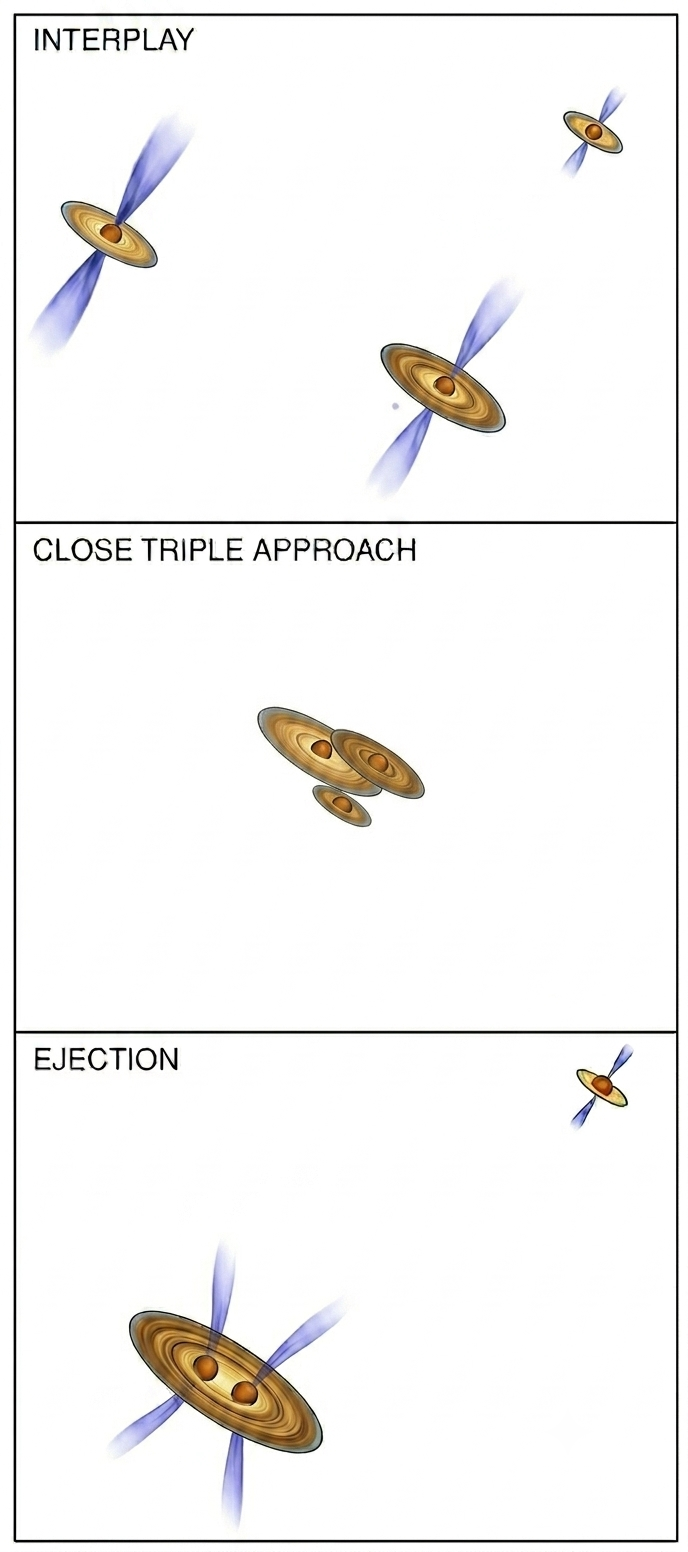
Figure 1: Dynamical evolution and disintegration of a protostellar triple system leading to ejection and reconfiguration, illustrating a qualitative pathway toward explosive outflow generation.
JWST and ALMA observations robustly delineate the 3D structure, velocity field, and chemical composition of the ejected material. These flows are mechanically far more powerful than typical protostellar outflows, often exceeding classical outflows by several orders of magnitude in both mechanical luminosity and total kinetic energy, as summarized in a broad survey of regions (see Section~\ref{sec:common} and the compiled physical properties table).

Figure 2: The Kleinmann–Low Nebula (KL nebula) in Orion with the BN object, JWST NIRCam color composite showing H2 and [Fe II] emission tracing the explosive outflow.
A signature feature is the absence of a luminous driving source at the geometric center of explosion, suggesting rapid displacement or ejection of the original powering object(s). Proper motion studies corroborate this, finding several runaway massive stars (e.g., BN, Source I, Orion MR, Source X) with vectors pointing away from the outflow center and a lack of any significant mass at the origin.
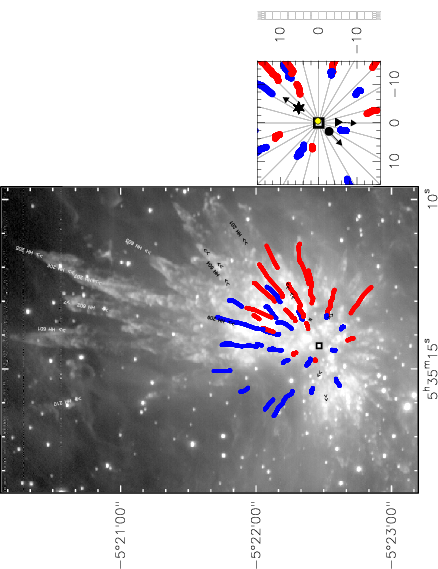
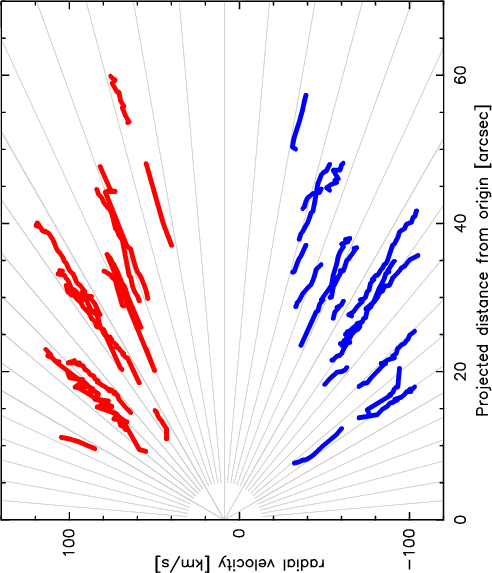
Figure 3: SMA CO(2–1) streamers with overlaid H2, all converging at a common central position corresponding to the disintegration site of a former multiple stellar system.
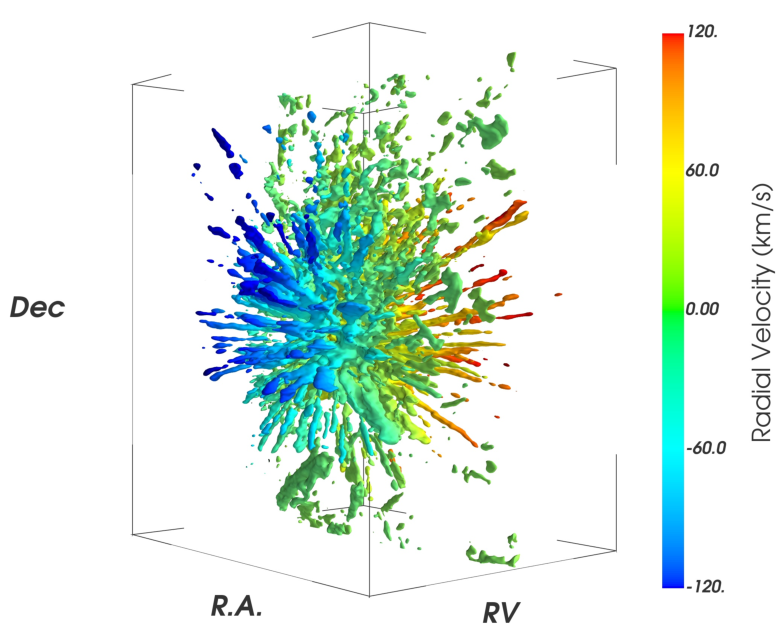
Figure 4: ALMA 3D structure (RA, Dec, velocity) of the Orion BN/KL explosive outflow, revealing its nearly isotropic distribution and Hubble–Lemaître expansion.
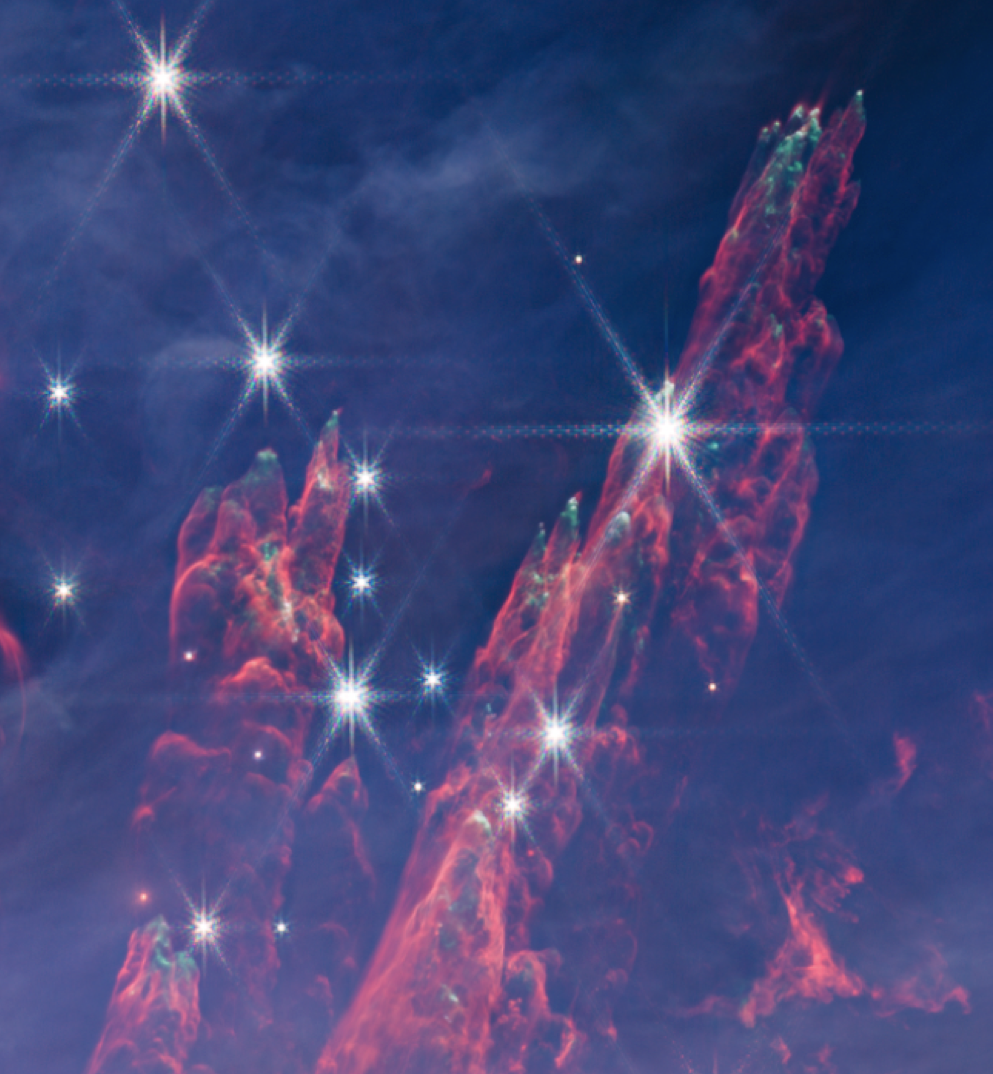
Figure 5: JWST zoom-in on the tips of the explosive molecular "fingers" in Orion BN/KL, highlighting high-velocity bullets composed of molecular and atomic gas.
Similar phenomenology, including isotropic molecular shells and absence of central driving source, is observed in G5.89–0.39, IRAS 16076–5134, DR21, and others, each displaying dynamical ages of 103–104 yr and energies of 105L⊙0–105L⊙1 erg.
Mechanisms: Dynamical Interactions in Massive Clusters
Several physical models are evaluated:
- Steady Winds, Bipolar Outflow Superposition, and Instabilities do not reproduce the isotropy, velocity field, or energy budget.
- Magnetically-driven Explosions lack sufficient energy given observed field strengths, and cannot produce the correlated runaway population or kinematic profile.
- Catastrophic Stellar Evolution (Failed Supernovae) lack observational evidence (nucleosynthetic byproducts, remnants).
- Gravitational Dynamical Interactions—Mergers, Binary Hardening, Close Multi-body Encounters: These models are strongly supported. N-body simulations and analytic estimates show that non-hierarchical systems in dense, massive proto-clusters can experience close encounters where protostars merge, form hard binaries, or are ejected through gravitational slingshot, efficiently liberating 105L⊙2–105L⊙3 erg and disrupting/catapaulting circumstellar and ambient gas as high-velocity bullets. The proper motion distribution, time coincidence, and energetics in Orion BN/KL and G5.89–0.39 are all quantitatively reproduced only by such events.
(Figure 1, revisited)
Figure 1: The paradigm for triple system disintegration and merger-induced explosive outflow, with formation of a tight binary and ejection of the lowest-mass member.
The short timescale and impulsive energetics imply these are not rare; the inferred Galactic event rate (105L⊙41 per 140 yr) matches the massive star and core-collapse supernova rates, implicating this process as a generic phase in massive star cluster evolution.
Magnetic Fields, Chemistry, and High-energy Signatures
ALMA and other high-resolution polarimetric studies indicate a predominantly radial or azimuthal magnetic field configuration in the expanding remnants, consistent with flux-freezing of pre-existing fields as material is swept outward. The dynamically dominant role, however, is inertial: the kinetic energy of the outflow is an order of magnitude greater than the energy stored in the compressed field.
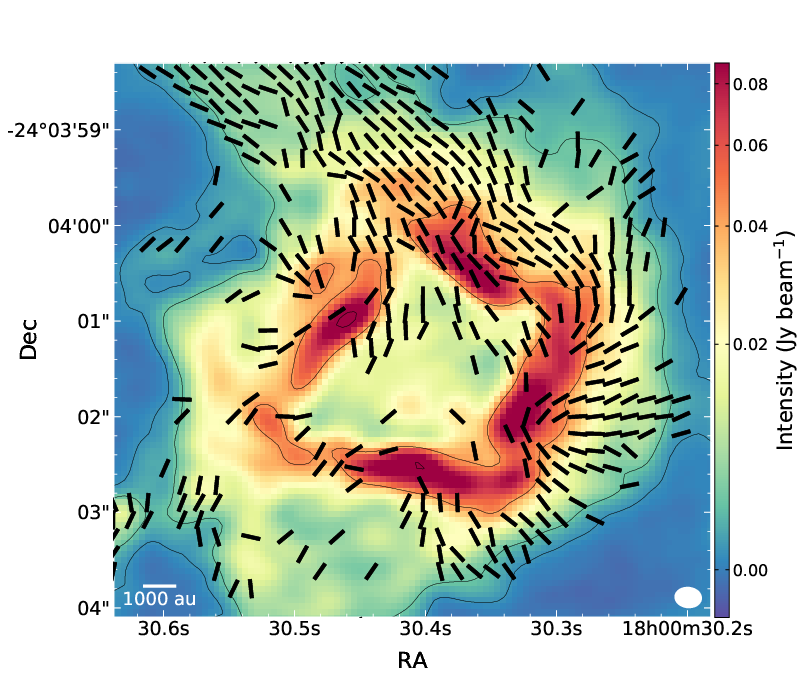
Figure 6: Model of position and velocity isotropy in a gravitationally-driven explosive outflow, demonstrating the robustness of the 105L⊙5 distribution in the reference frame of the unbound population.
Notably, the explosive environments catalyze volatiles and complex organic chemistry, with species like HCl tracing shock-driven chemistry not typical of standard protostellar outflows. Sensitive gamma-ray observations (Fermi-LAT) for several explosive outflow sites reveal elevated GeV emission, supporting efficient cosmic-ray acceleration in these young, magnetized shocks, at efficiencies approaching 105L⊙610–15%.
The prevalence of these events in regions with extreme protostellar concentration (105L⊙7 pc105L⊙8) and massive reservoirs indicates that high multiplicity and rapid dynamical evolution are common. The resulting expulsion of lower-mass (runaway/walkaway) stars together with enhanced accretion or merger of massive members implies a strong bias toward the formation of single massive stars, a top-heavy local initial mass function, and rapid evolution of cluster core structure. The mechanical energy injection also drives turbulence, chemical enrichment, and may locally suppress further fragmentation, coupling the outflow physics to subsequent star and planet formation.
Energetics and Galactic Implications
The mechanical luminosities of explosive molecular outflows, for a given bolometric luminosity, greatly exceed those of steady bipolar flows—often by two orders of magnitude—and lie well above established 105L⊙9–20 correlations for classical outflows.
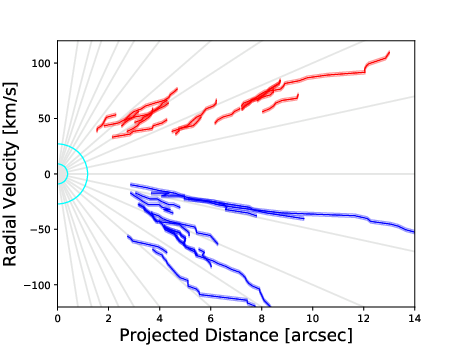
Figure 7: Mechanical luminosity as a function of bolometric luminosity. Explosive outflows (red circles) are systematically offset above the classical accretion-driven trend (blue/orange squares), highlighting their impulsive origin.
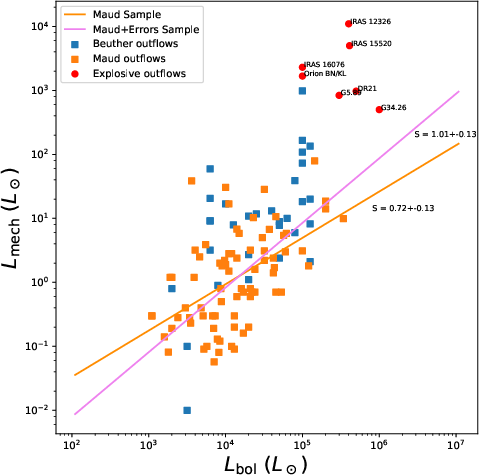
Figure 8: Top-down Galactic distribution showing that explosive outflows are found across the disk, not confined to special environments. Their occurrence rate is commensurate with massive star formation and supernova rates.
Open Questions and Future Prospects
While the gravitational/dynamical scenario quantitatively explains the ensemble of properties, further questions remain:
- The exact initial conditions and role of pre-merger disk/envelope structure in determining energy and morphology
- The fate and observable signatures of ejected, compact low-mass bodies
- The effect of such events on the surrounding magnetic topology and long-term cloud evolution
- Chemical timescale and shock-catalyzed complex molecule production unique to explosive feedback
- Relative contribution to Galactic cosmic-ray acceleration and high-energy emission
Forthcoming high-sensitivity, high-resolution interferometric surveys (ALMA, JWST, ngVLA) across Galactic clusters will constrain the true frequency, proper motion traces, dynamical models, and chemical/excitation diagnostics of these events.
Conclusion
Explosive molecular outflows constitute a distinct, short-lived, and mechanically dominant feedback channel in the formation of massive stars and stellar clusters. They originate primarily from close multi-body dynamical interactions and (proto)stellar mergers in young, dense environments, efficiently transferring gravitational potential energy into isotropic, high-velocity, multi-phase gas ejection. Observationally, they are signposted by collimated, ballistic streamers with large velocities, associated runaway stars, and enhanced shock chemistry. The inferred Galactic rate is comparable to the rate of massive star birth and supernovae, highlighting their ubiquity and importance. This mode of feedback has profound implications for massive star growth, star cluster dynamics, high-mass IMF bias, and the chemical and energetic state of the ISM. Future sensitive surveys will clarify the role of explosive outflows in regulating star formation and their contribution to ISM energy and cosmic ray budgets.