- The paper introduces a hybrid SV-FBP model combining analytic operators with a learned redundancy weight module to manage irregular CBCT trajectories.
- The study shows that spatial sampling distribution, rather than trajectory continuity, primarily dictates reconstruction quality, as evidenced by MSE, PSNR, and SSIM metrics.
- The framework delivers competitive performance in moderate sparse-view regimes while revealing limitations in severely undersampled settings compared to iterative reconstructions.
Robustness and Stability Analysis of Differentiable Shift-Variant FBP for Cone-Beam CT under Challenging Acquisition Settings
Introduction
The paper critically examines the robustness and adaptability of a differentiable shift-variant filtered backprojection (SV-FBP) framework for cone-beam computed tomography (CBCT). The focus is on scenarios involving highly irregular and discontinuous scanning trajectories, sparse-view acquisition, and multi-isocenter geometries. The differentiable SV-FBP model builds on the theoretical foundation proposed by Defrise and Clack, but replaces analytical redundancy weighting—which is difficult to generalize to non-standard or discontinuous acquisition settings—with a data-driven, differentiable neural network learning procedure. Through systematic experiments, the paper elucidates the performance boundaries, strengths, and inherent limitations of this approach, particularly when compared to iterative reconstruction (IR) baselines.
Differentiable SV-FBP Architecture
The model architecture leverages the known-operator learning paradigm. All reconstruction operators except for the trajectory-dependent redundancy weighting are kept analytically exact and differentiable, ensuring a hybrid model that fuses physical insight with data-driven adaptation.
The overall reconstruction process comprises:
- Projection weighting using analytic cosine and sinogram-domain weights.
- Grangeat's intermediate representation via Radon-domain differentiation.
- Redundancy weighting, implemented as a trainable layer, absorbing analytic forms into learned parameters.
- Differentiable backprojection steps to produce the final volumetric reconstruction.
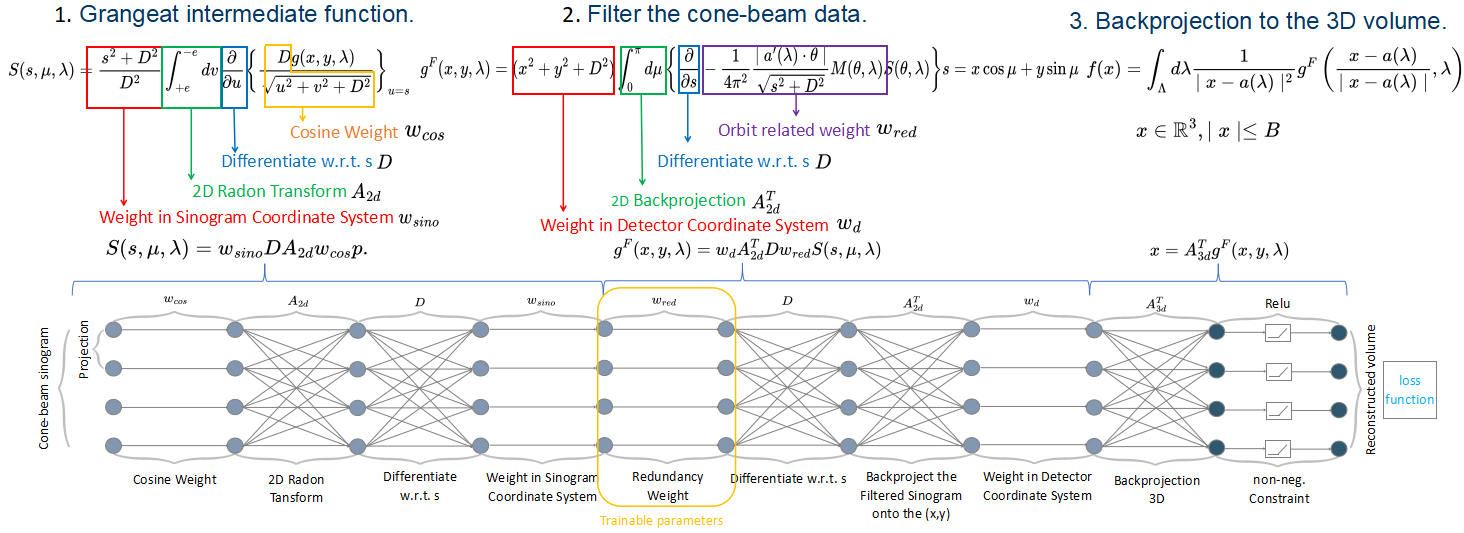
Figure 1: Differentiable shift-variant FBP model architecture, integrating analytic operators and a learned redundancy weight module.
This design minimizes the number of trainable parameters while retaining interpretability and facilitating adaptation to arbitrary and possibly discontinuous CBCT trajectories.
Experimental Evaluation: Trajectories and Sampling Paradigms
A major contribution is the comprehensive experimental evaluation on a variety of challenging source trajectory types:
- Random Trajectory (RT): Unconstrained random sampling on a fixed-radius spherical shell.
- Random Nearest-Neighbor Reordered (RNNR): Random sampling reordered to maximize geometric continuity between adjacent projections.
- Random Farthest-Neighbor Reordered (RFNR): Random sampling reordered to maximize spatial discontinuity across the trajectory.
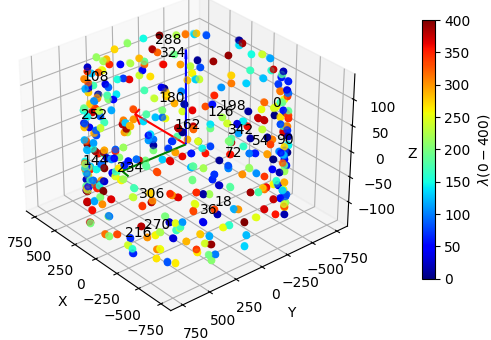
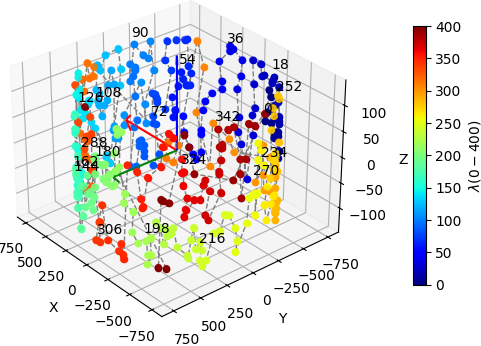
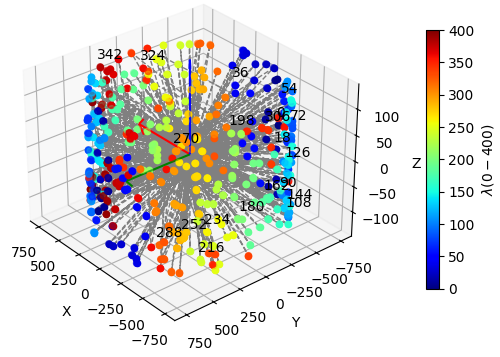
Figure 2: Illustration of the three source trajectory types—RT, RNNR, and RFNR—capturing variable degrees of sampling continuity and spatial irregularity.
A multi-isocenter (Lissajous-saddle) trajectory is further introduced to break the fixed-isocenter assumption, employing a 3D Lissajous curve for the isocenter and a saddle pattern for the out-of-plane angle, resulting in highly nonplanar and asymmetric geometry.
Results: Trajectory Robustness
Extensive quantitative and qualitative experiments reveal:
- Stability Across Trajectories: For fixed-isocenter acquisition, differentiable SV-FBP demonstrates minimal sensitivity to trajectory continuity/order. Random, re-ordered continuous, and highly discontinuous (RFNR) sampling patterns all yield similar reconstruction quality as measured by MSE, PSNR, and SSIM.
- Dominant Role of Sampling Distribution: The spatial distribution of source points dictates reconstruction quality more strongly than trajectory continuity. Continuity of traversal path does not compensate for spatial information loss due to irregular or sparse sampling.
- Learned Redundancy Weights: Visual analysis of learned redundancy weights for different ordering patterns (after re-indexing) exposes high similarity in learned spatial patterns, with local amplitude variations only.
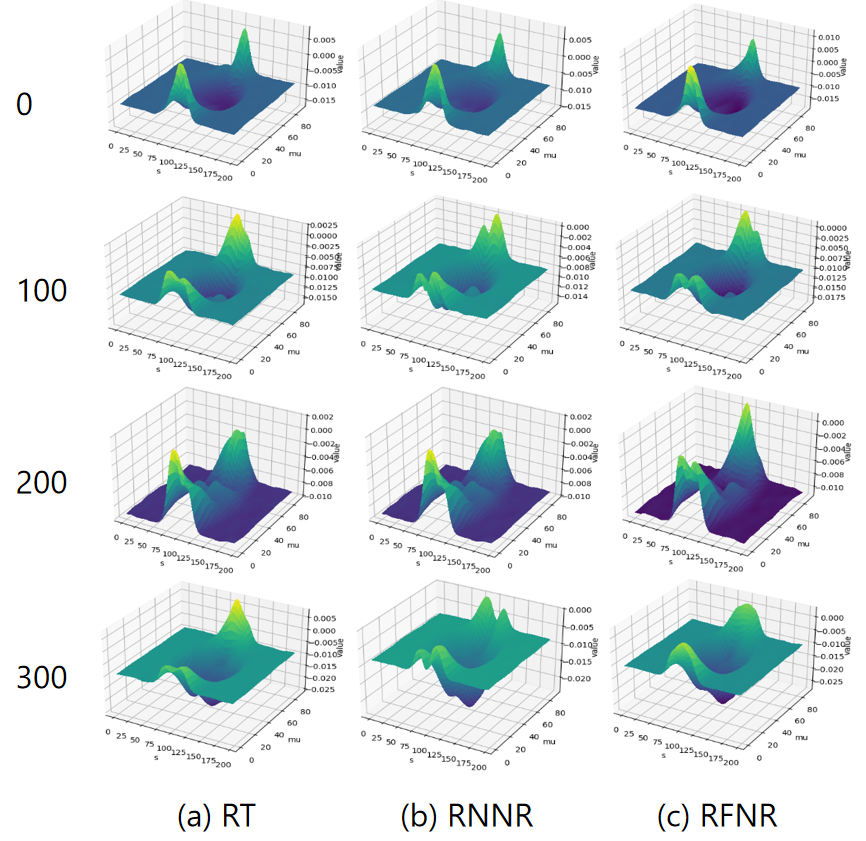
Figure 3: Visualization of learned redundancy weights for RT, RNNR, and RFNR, aligned via source-position indexing; nearly identical spatial patterns confirm the dominance of sampling distribution over ordering.
Representative reconstructions highlight the formation and persistence of streaking and other artifacts primarily in relation to sampling irregularity, with little attributable to traversal discontinuity alone.
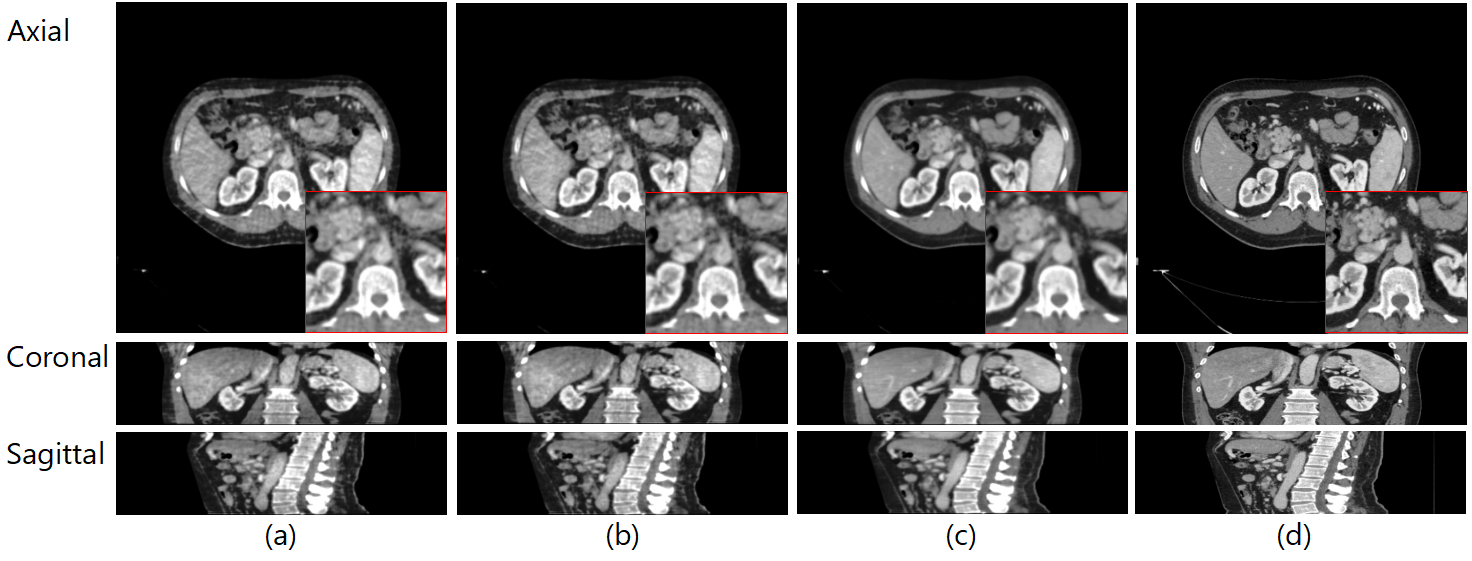
Figure 4: Representative reconstructions for RNNR, RFNR, and sinusoidal trajectories; all exhibit high fidelity compared to ground truth, with increased artifacts in discontinuous settings.
Sparse-View Analysis
The sparse-view regime is exploited to empirically determine the data sufficiency thresholds:
- Competitive Performance (Moderate Sparsity): With 300–400 projections, differentiable SV-FBP matches or outperforms algebraic iterative reconstruction (AIR, 50 iterations) with a 10x reduction in runtime.
- Transition to Iterative Dominance (Severe Sparsity): Below 200 projections, the absence of iterative data-consistency in SV-FBP leads to increased artifacts and loss of detail, with AIR offering superior performance in these ill-posed regimes.
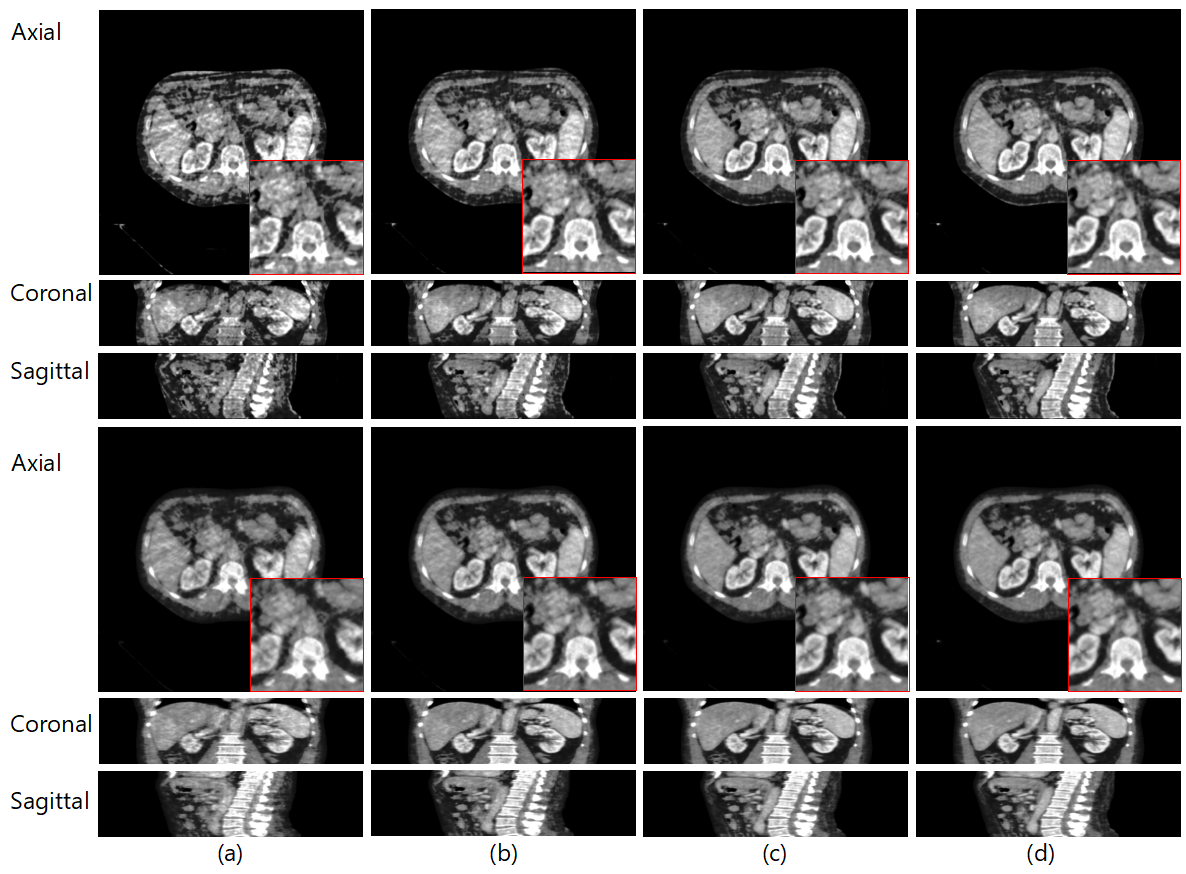
Figure 5: Sparse-view reconstructions using the RFNR trajectory—SV-FBP preserves edge detail in moderate sparsity but exhibits more artifacts at 100 views than AIR.
These outcomes delineate a practical operating range for SV-FBP and underscore the fundamental limitation of FBP-style models lacking iterative updates when data is severely undersampled.
Multi-Isocenter (Lissajous-Saddle) Geometry
Application to Lissajous-saddle multi-isocenter trajectories demonstrates:
- Model Transferability: The same SV-FBP architecture, trained without analytic modification, delivers high reconstruction quality comparable to fixed-isocenter cases, indicating robustness to variable system geometry.
- Generalization Capability: Learned data-driven redundancy weights retain adaptation capacity, even as the acquisition geometry becomes fully nonplanar and asymmetric.
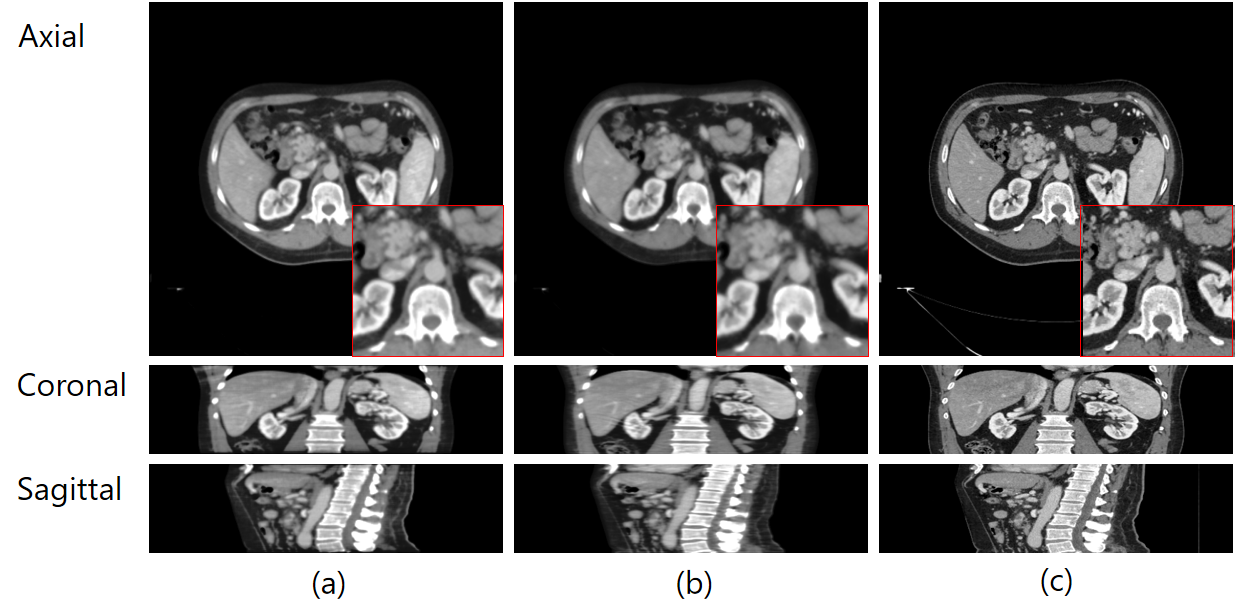
Figure 6: Reconstructions for the Lissajous-saddle multi-isocenter trajectory—SV-FBP recovers intricate structures with limited artifacts, equaling or exceeding the AIR baseline.
Theoretical and Practical Implications
- Sampling Insights: This work clarifies that in high-dimensional, shift-variant inversion scenarios, spatial coverage and sampling quality are the primary determinants of reconstruction fidelity. Algorithmic robustness to ordering/discontinuity is thus a function of correct weighting over acquired views.
- Model Efficiency: By confining learning to the redundancy weight module, SV-FBP preserves interpretability and requires dramatically reduced training data compared to fully supervised end-to-end or black-box approaches.
- Practical Utility: These findings validate the use of differentiable SV-FBP in robotic and nonstandard CBCT systems, including those employing task-specific or irregular scan trajectories to optimize image quality or physical constraints.
- Limitation and Future Work: A clear limitation is SV-FBP's breakdown in highly ill-posed, severely undersampled regimes. Future hybrid schemes, integrating learned weights with plug-and-play priors or unrolled IR modules, may extend the practical utility envelope into these ill-conditioned spaces.
Conclusion
The differentiable SV-FBP framework is empirically validated as robust and effective for a large class of non-standard, potentially discontinuous CBCT acquisition geometries. Its trajectory-agnostic stability, rapid inference, and minimal parameterization make it well-suited for the emerging landscape of robotic and adaptive imaging. The inability to fully compensate for severe undersampling highlights intrinsic limitations of analytic and single-pass differentiable approaches, motivating future integration of data-consistency modules and hybrid learning. Theoretical insights from this work inform trajectory design, regularization, and architectural choices as CBCT systems become increasingly flexible and application-specific.