- The paper introduces a silicon-based monitor that achieves bunch-by-bunch vertical beam size measurements at SuperKEKB.
- It employs a coded-aperture method and least-squares template fitting to extract beam sizes with a measurement precision of 6.4 μm.
- The integrated system architecture, combining silicon sensors, wideband amplifiers, and high-speed digitization, enhances accelerator diagnostics and guides future upgrades.
Development of a Silicon-Based Ultra-Fast X-Ray Beam Size Monitor for SuperKEKB
Introduction: Motivation and Requirements
The silicon-based ultra-fast X-ray beam size monitor (SiXRM) was developed to provide bunch-by-bunch vertical beam size measurements at the SuperKEKB collider, which operates at unprecedented luminosities using a nanobeam scheme that demands extremely small vertical beam sizes. Standard diagnostic systems based on visible synchrotron radiation cannot resolve vertical beam sizes below approximately 10 μm due to fundamental limits set by diffraction, and CMOS-based X-ray monitors average over the entire bunch train, failing to capture bunch-resolved variations.
SiXRM addresses these deficiencies by leveraging silicon strip sensors with fast temporal response and fine spatial granularity. This enables direct bunch-by-bunch diagnostics crucial for understanding collective effects, single-bunch instabilities, and optimizing luminosity in high-luminosity colliders.
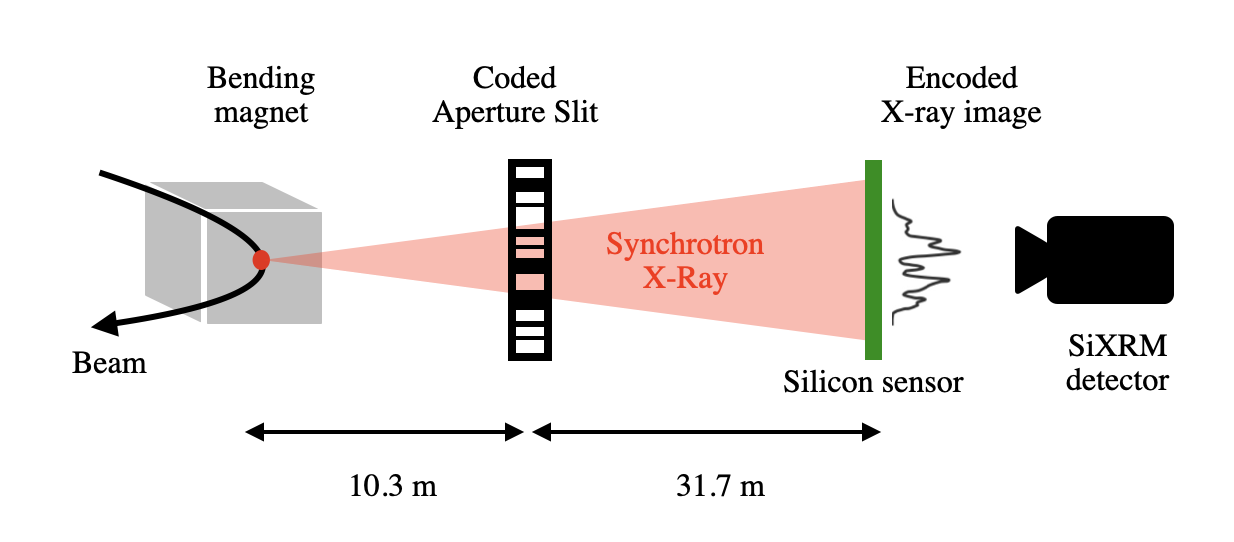
Figure 1: Conceptual layout of the SiXRM, showing beamline transport, coded aperture, and detector integration within the SuperKEKB tunnel.
X-Ray Beam Size Measurement Principles
SiXRM is positioned downstream of the existing CMOS-based XRM, utilizing identical optical and coded-aperture systems for consistency in template generation and direct measurement comparison. The system detects synchrotron X-rays from bending magnets, with HER and LER critical photon energies of 7.2 keV and 4.4 keV, respectively. The coded aperture enhances photon statistics and encodes spatial information in diffractive intensity distributions; templates are generated by convolving the aperture PSF with Gaussian profiles of varying σ_y, accounting for spectral characteristics and attenuation.
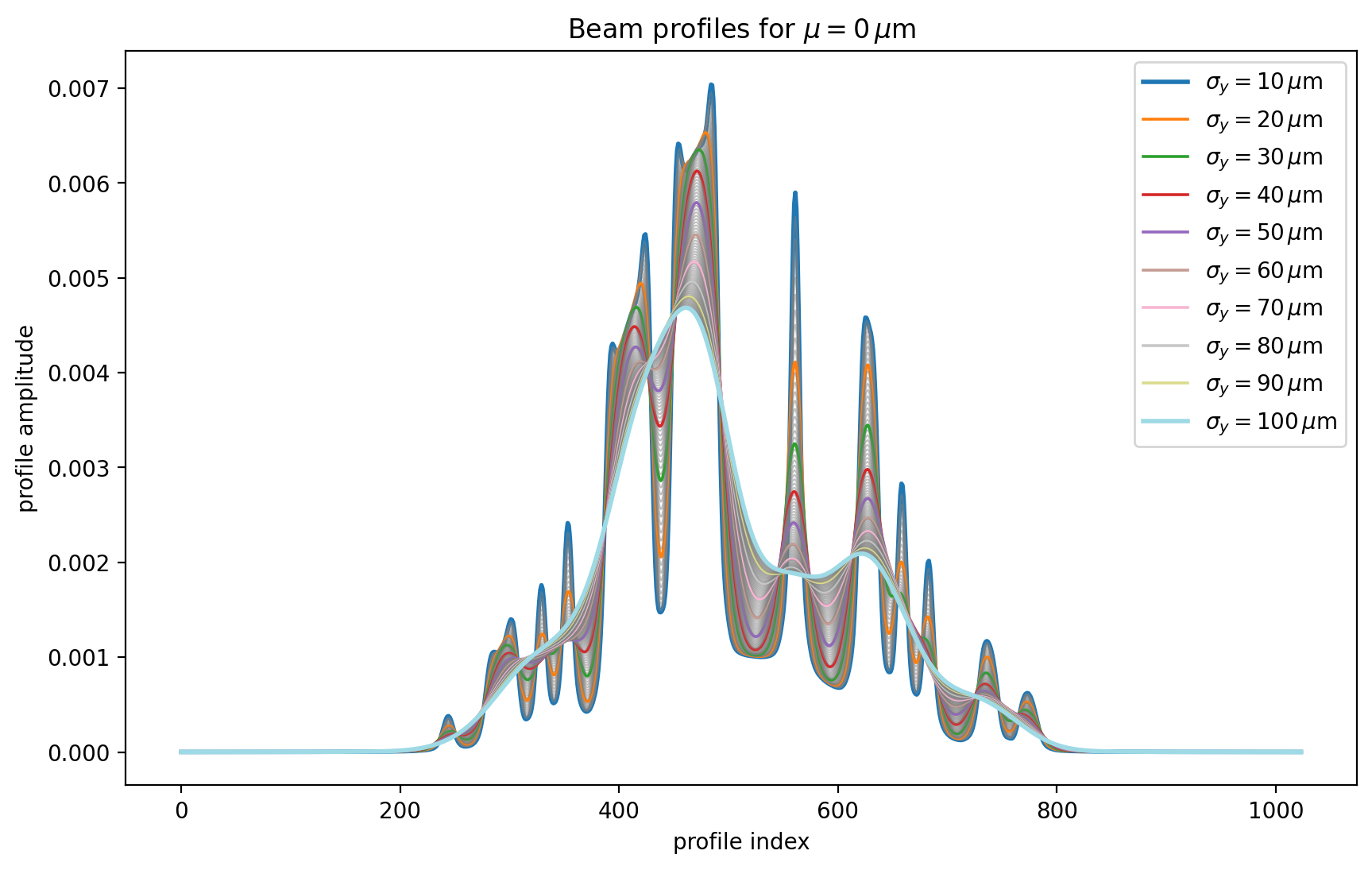
Figure 2: Representative simulated X-ray image templates varying with vertical beam size, highlighting coded aperture broadening and smoothing.
Beam size extraction is performed via least-squares template fitting, yielding σ_y and nuisance parameters for spatial alignment and normalization.
Detector System Architecture
SiXRM’s system consists of a silicon strip sensor board, wideband amplifier boards, and a boardstack-based waveform readout. The sensor was fabricated at Stanford, with 128 cathode strips spaced 50 μm apart and 75 μm depletion depth, operated at -40 V bias. For commissioning, 42 channels are wire-bonded for signal routing and mechanical stability.
The amplifier boards employ MAR-6SM+ monolithic wideband amplifiers for a 20 dB gain, supporting signal fidelity under low charge deposition conditions characteristic of synchrotron X-ray detection.
Readout utilizes the TOP detector boardstack (originally developed for Belle II), incorporating IRSX ASICs operating at 2.7 GSa/s with deep analog buffers and Wilkinson conversion. The modular architecture achieves scalable, multi-channel waveform digitization, aggregation, and transfer to backend DAQ.
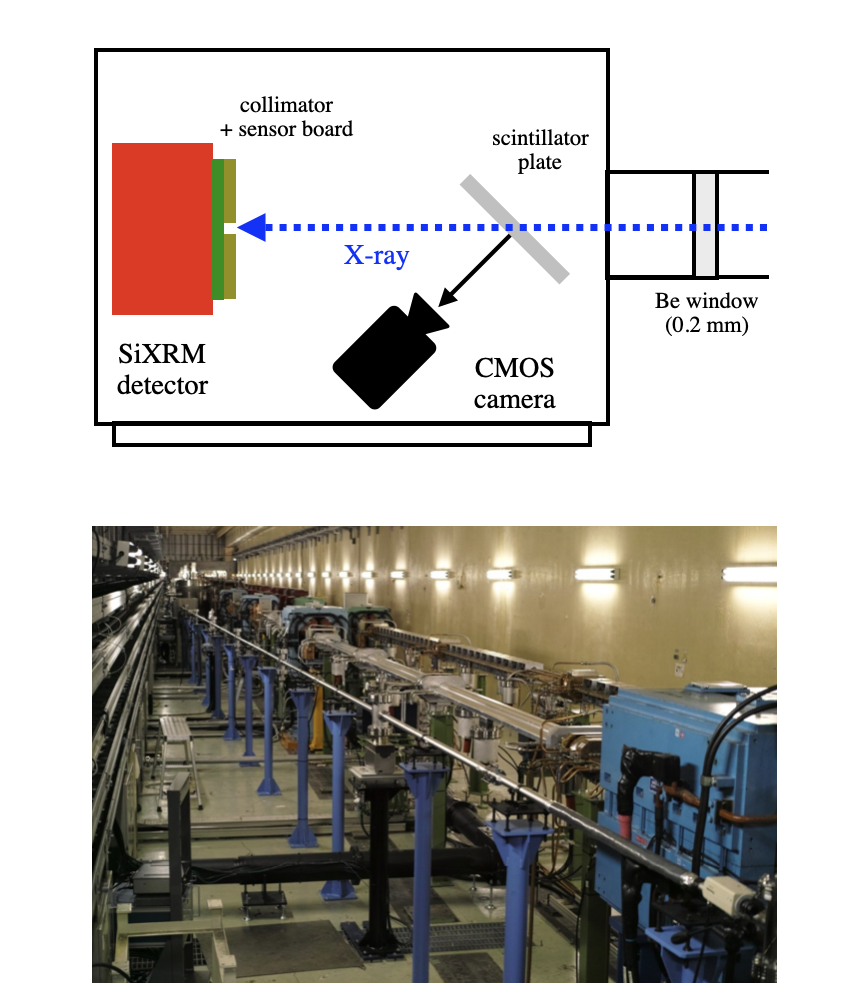
Figure 3: Detector system overview, highlighting detector box shared by CMOS and SiXRM along vacuum transport.
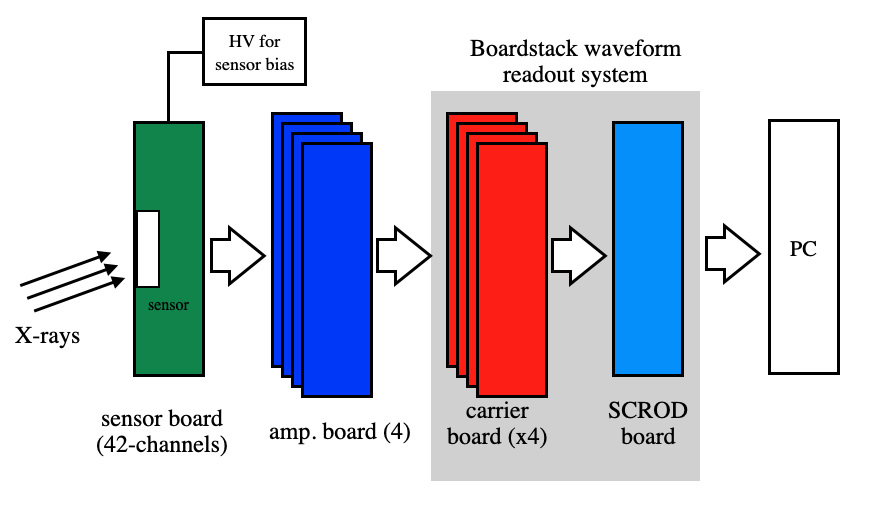
Figure 4: SiXRM block diagram: sensor, amplifier, boardstack digitization, and PC transfer.
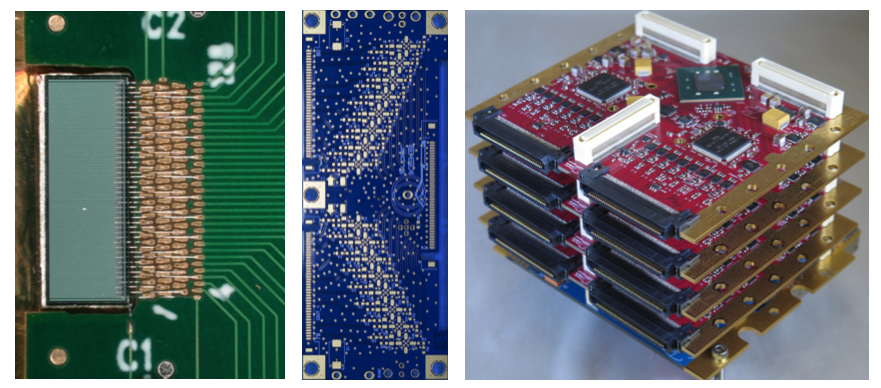
Figure 5: Photographs of sensor and electronics: wire-bonded silicon sensor, amplifier boards, and modular boardstack.
Performance is validated both at KEK and with a dedicated University of Hawaii testbench, facilitating firmware and DAQ evaluation using a sensor emulator with FPGA-generated signals.
Vertical Beam Size Reconstruction and Calibration
Calibration is performed using a pulsed 980 nm laser, scanned vertically across sensor channels to correct for channel-to-channel response differences. Spline interpolated waveforms are aligned via cross-correlation, and peak extraction follows a robust pipeline designed to mitigate baseline shifts arising from overshoot and ringing; baseline is estimated by connecting maxima on window sides with a straight line.
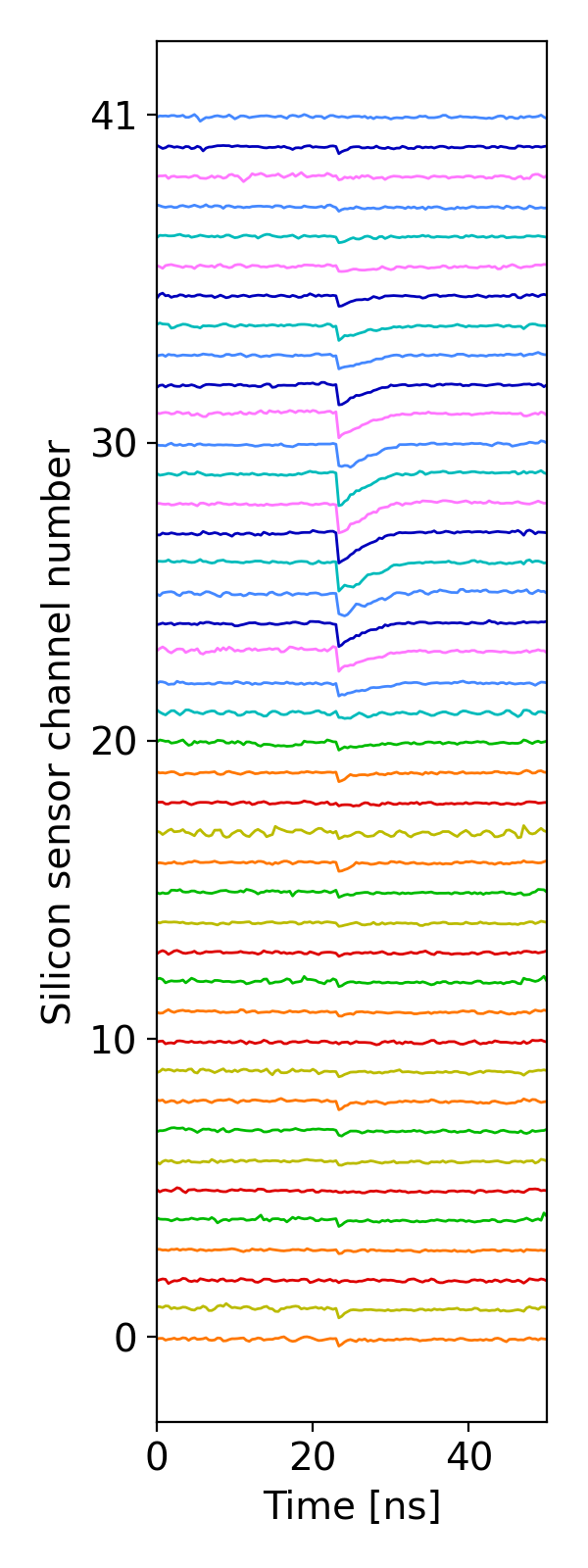
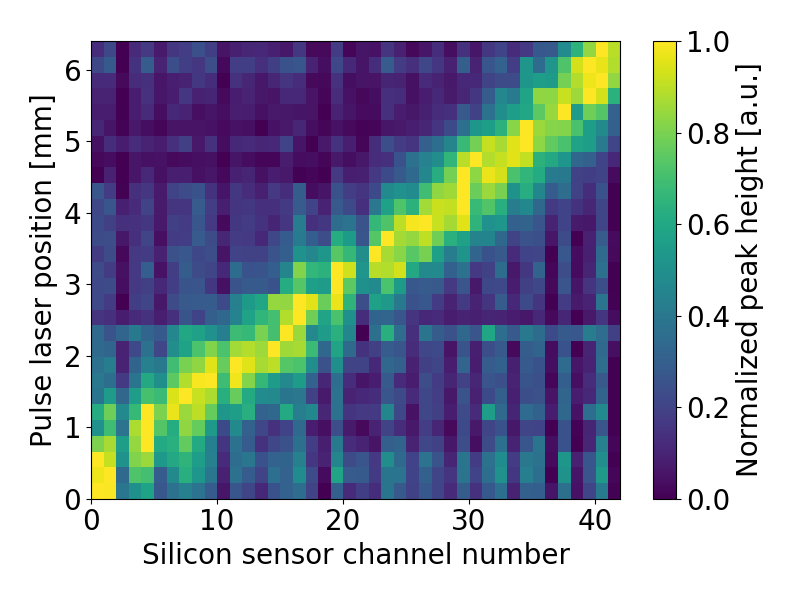
Figure 6: Laser-based calibration—pulse response and spatial channel mapping for sensor strip calibration.
Beam measurement waveforms acquired for a single revolution (~10 μs) using sweep-mode capture manifest clear bunch structure, abort gaps, and pilot bunch signatures. The pulse heights for each sensor channel in each bunch construct the X-ray image for vertical size extraction.
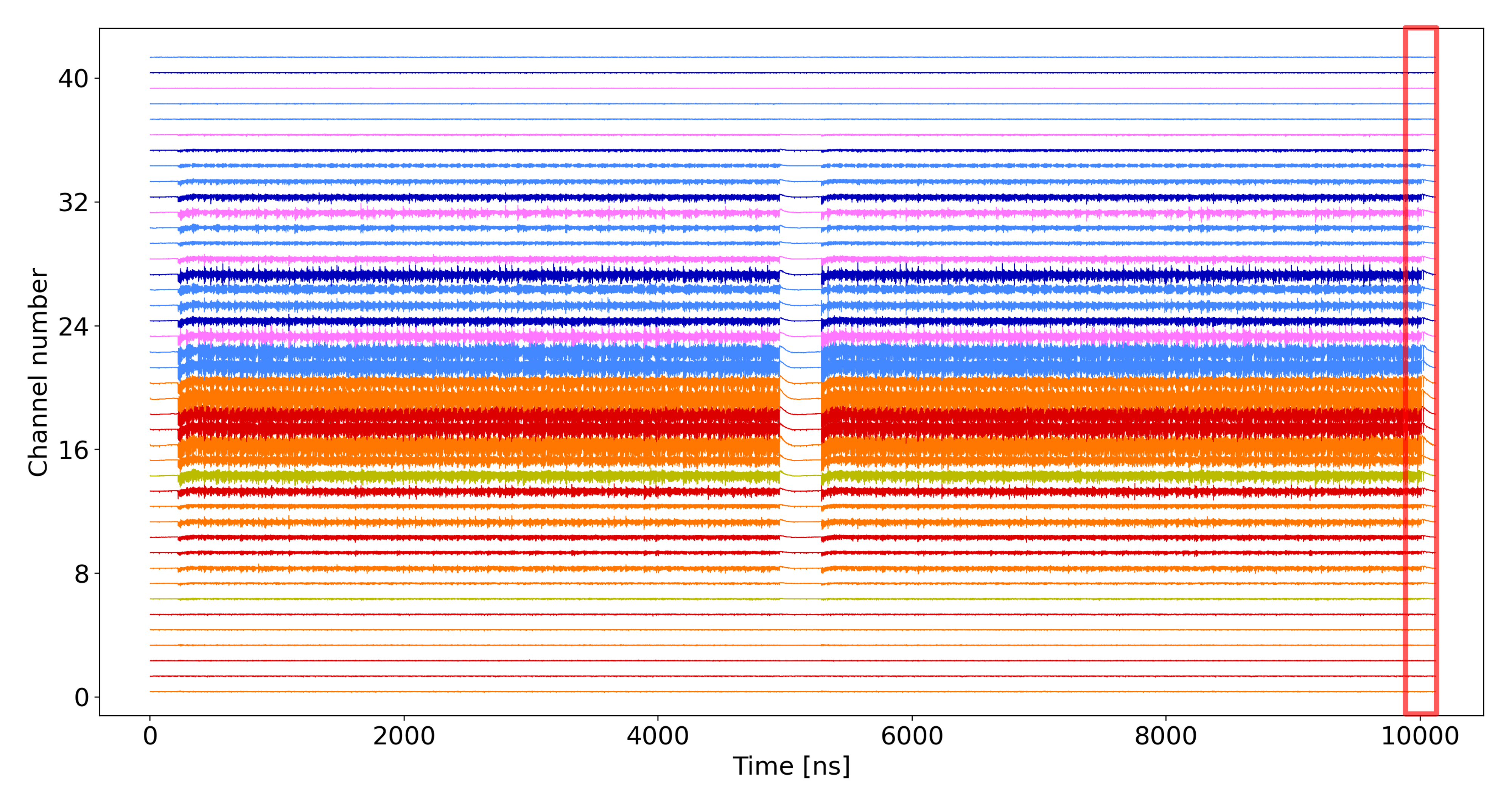
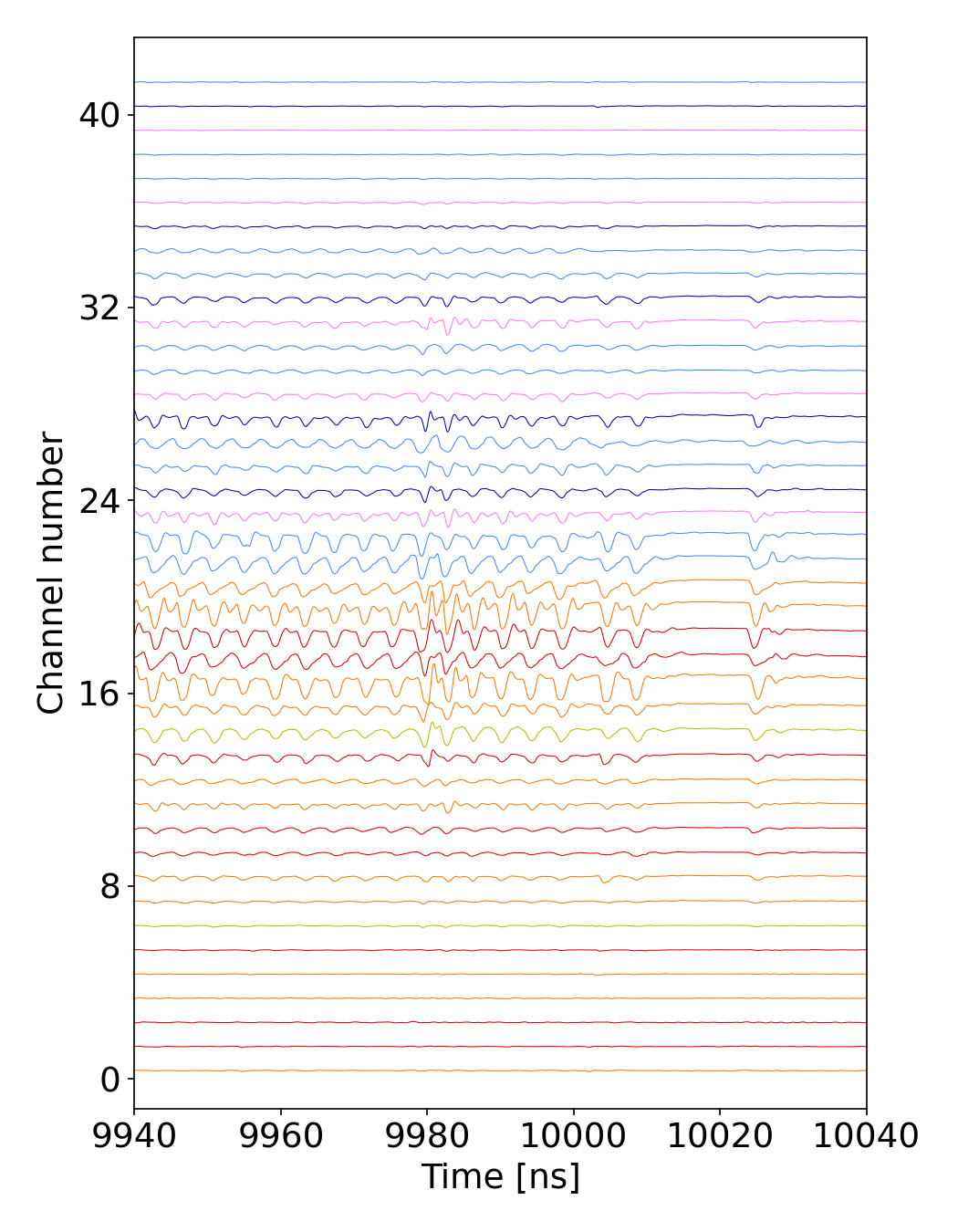
Figure 7: Representative SiXRM HER waveforms—full revolution and zoomed region, showing 2346 bunches at 800 mA.
Peak heights are extracted via windowed minima and local maxima-based baseline estimation, then gain-calibrated using laser coefficients.
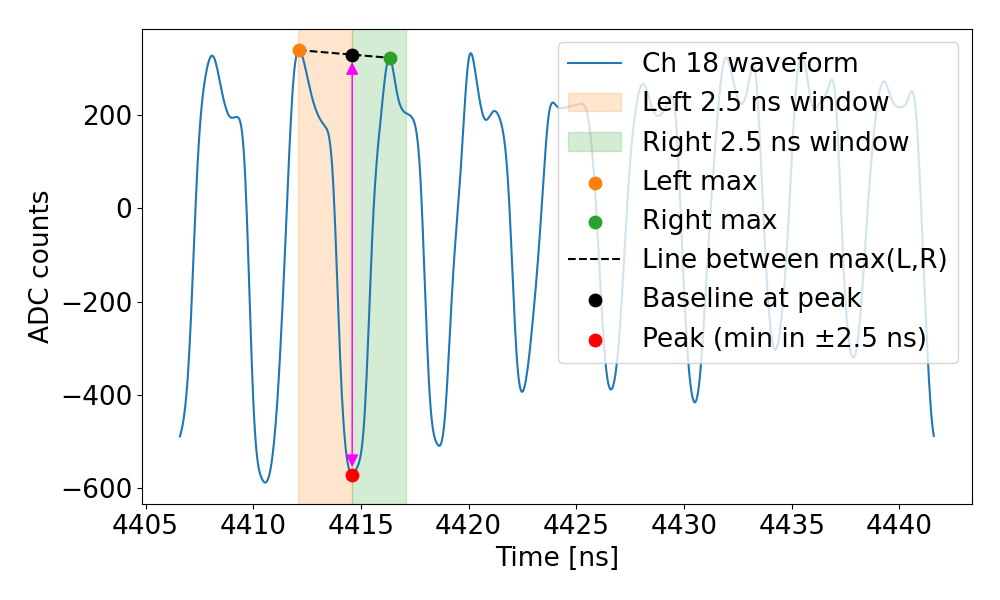
Figure 8: Illustration of baseline and pulse height extraction for a single channel.
Template Fitting and Bunch-by-Bunch Imaging
Superimposed reconstructed images reveal the coded aperture fingerprint across all bunches. Template fitting per bunch yields vertical beam size σ_y; the fit includes nuisance parameters for spatial alignment and normalization. For the analyzed HER dataset, SiXRM yields an average bunch σ_y of 54.3 μm, compared to 56.6 μm from the CMOS-based XRM. The good agreement attests to the robustness and validity of the SiXRM approach.
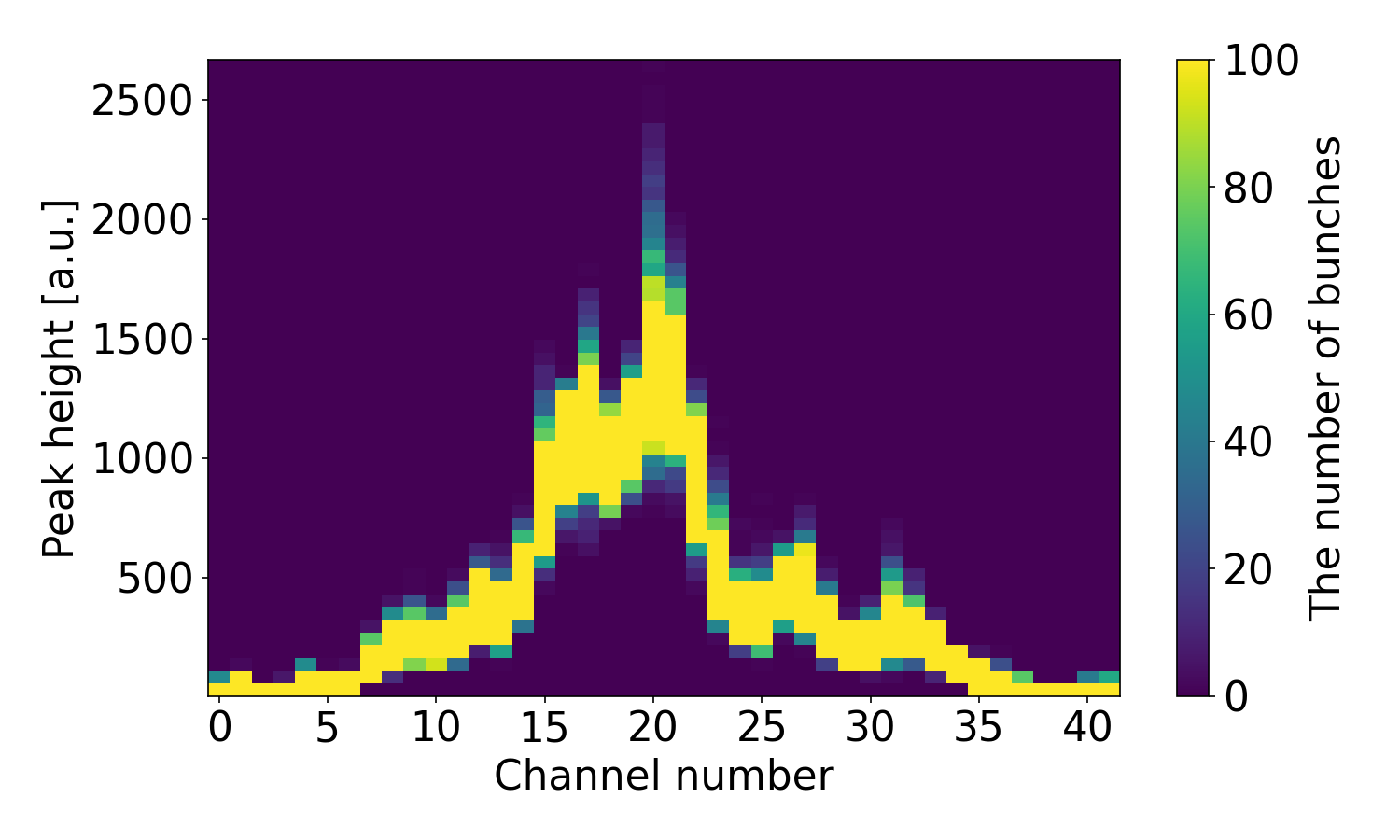
Figure 9: Aggregated bunch-by-bunch X-ray images, coded aperture response visible.
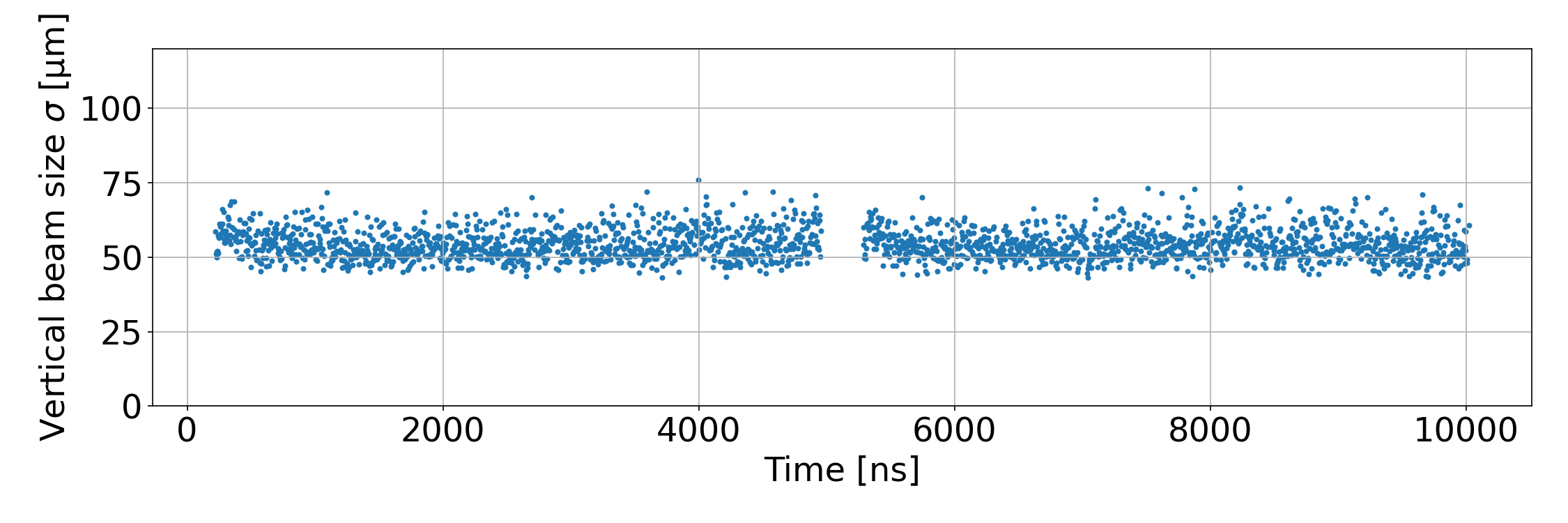
Figure 10: Bunch-by-bunch σ_y for a revolution, revealing abort gap positions and train structure.
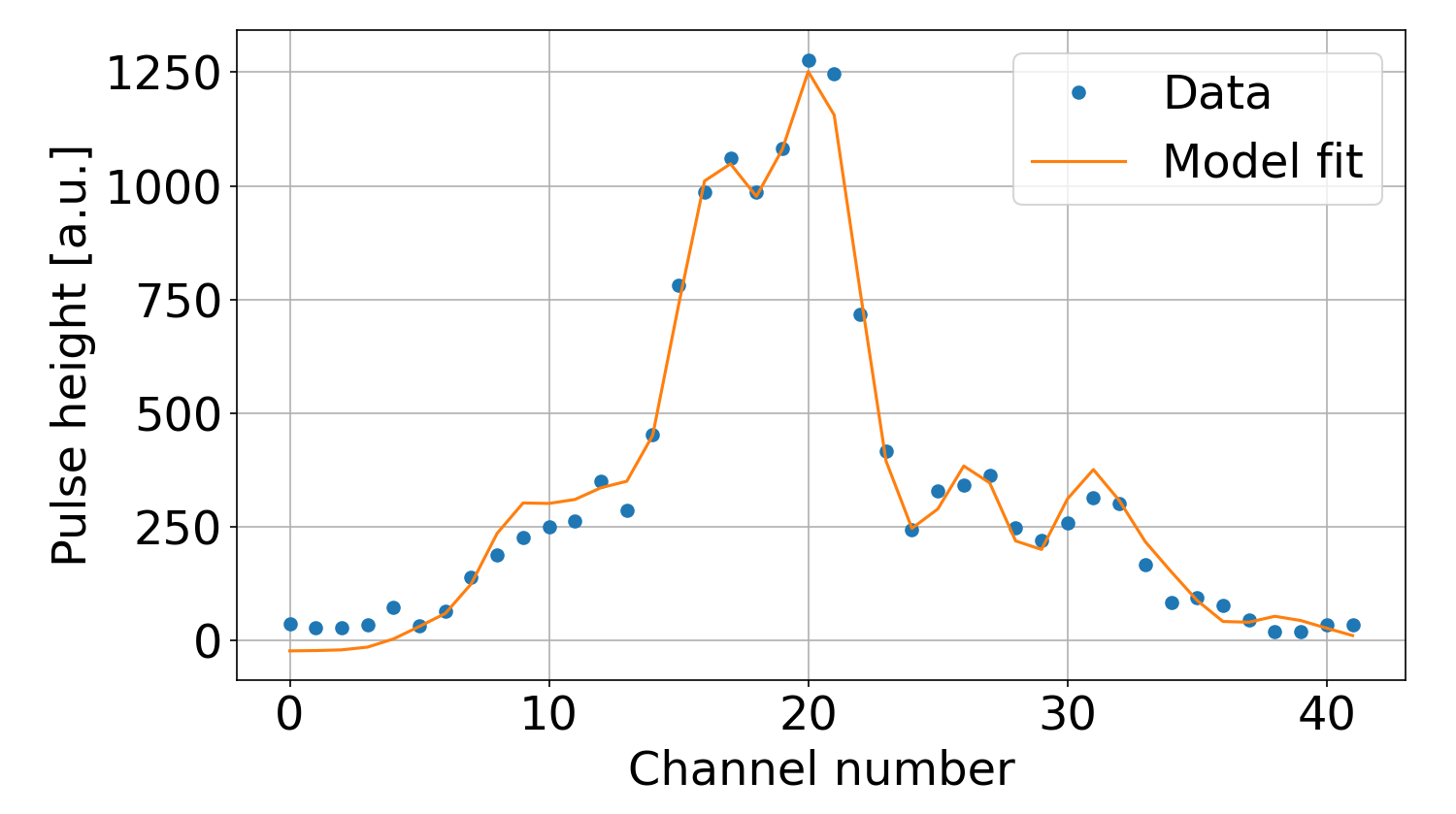
Figure 11: Example single-bunch template fit, demonstrating match between measured pulse heights and model.
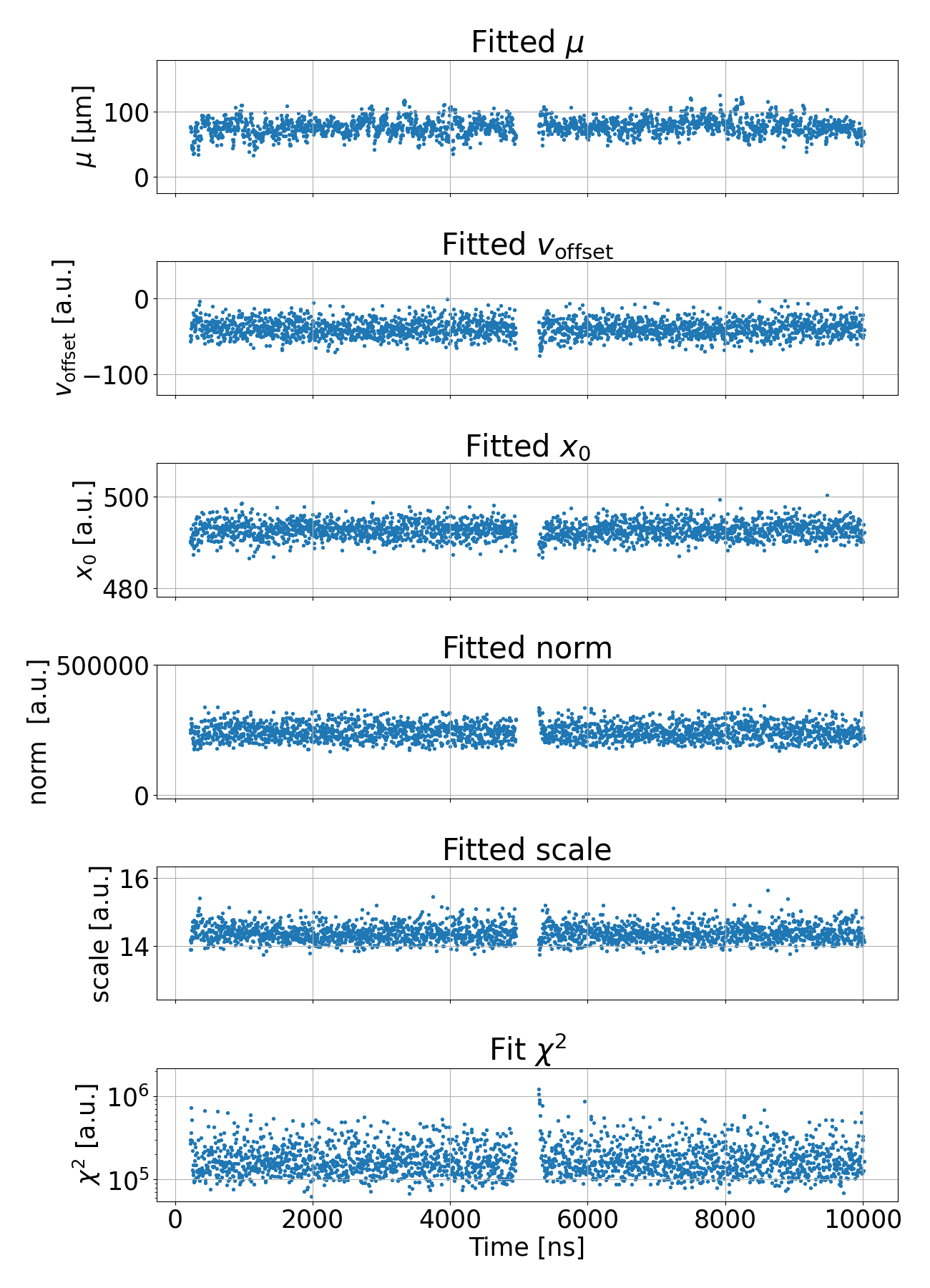
Figure 12: Fitted nuisance parameters and χ² per bunch, showing overall stability.
SiXRM precision is established via direct comparison with CMOS-based XRM over 2429 sweeps, spanning broad accelerator conditions. Each sweep’s σ_y is averaged across bunches and compared to the corresponding 20 s averaged CMOS measurement; points cluster tightly along the diagonal.
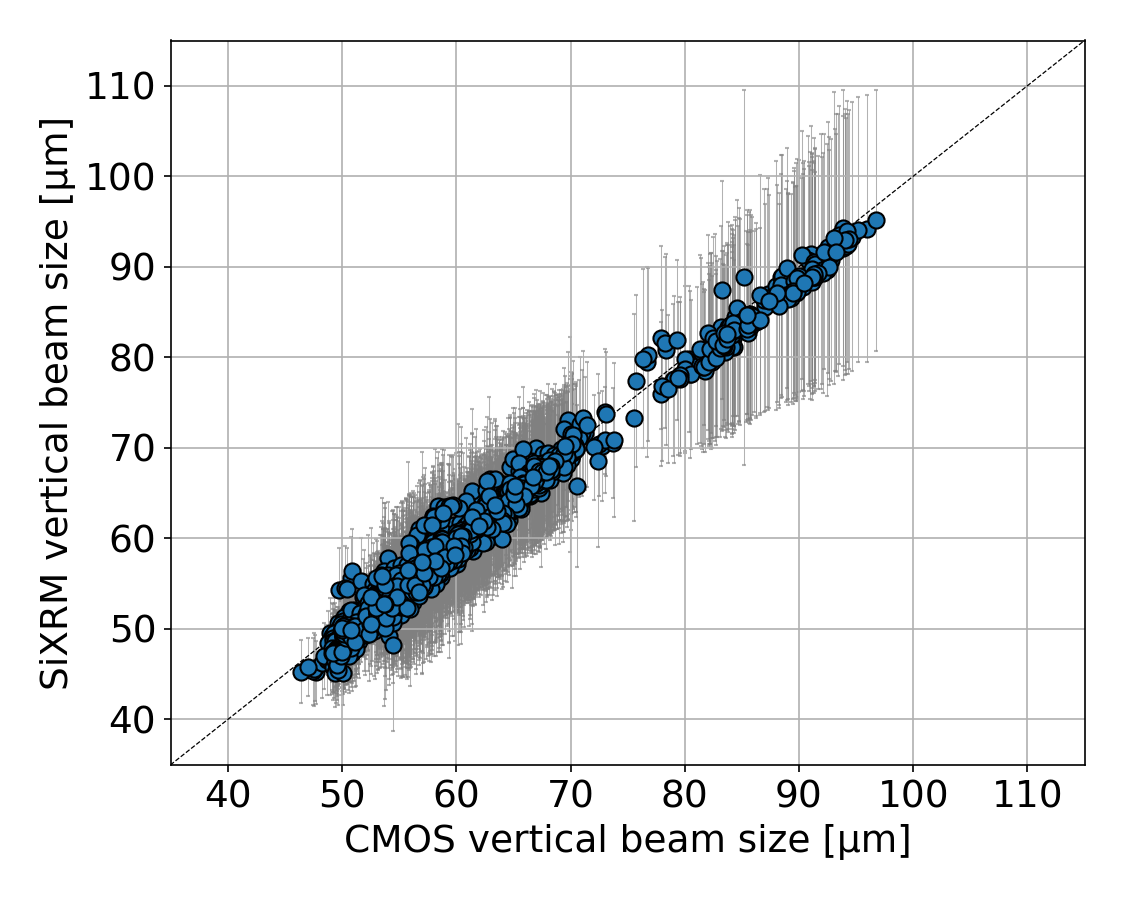
Figure 13: Comparison of SiXRM and CMOS-based XRM vertical beam size for 2429 sweep measurements.
Precision estimation, computed as the standard deviation of residuals between SiXRM (bunch-resolved) and CMOS (averaged) σ_y, yields an upper bound of 6.4 μm. This includes machine and bunch-to-bunch variations, establishing a conservative estimate for measurement uncertainty.
Implications and Future Outlook
SiXRM fundamentally enhances beam diagnostics at SuperKEKB, providing a new avenue for bunch-resolved studies of beam-size evolution, instability mitigation, and luminosity optimization. The system architecture is validated for HER operation and sets the benchmark for temporal and spatial resolution.
Identified limitations (sweep-mode readout requiring multiple acquisitions for full revolution reconstruction) motivate future upgrades. Adoption of high-speed digitization platforms (e.g., RFSoC) and real-time feature extraction will transition SiXRM to true full-turn, bunch-by-bunch acquisition, reducing systematic uncertainties and improving data efficiency.
Extension to the LER will demand improved front-end electronics, including higher-gain amplifiers, lower noise, and potentially alternative sensor materials such as InGaAs, in response to lower beam energy and X-ray signal strengths.
Practical impacts are immediate: SiXRM supports real-time accelerator tuning, anomaly detection, and machine protection in high-luminosity colliders. Theoretical fronts include enhanced studies of collective effects, instabilities, and non-linear beam dynamics.
Conclusion
SiXRM represents a technical advance by enabling silicon-based, ultra-fast, bunch-resolved, X-ray vertical beam size monitoring at SuperKEKB. The detector system successfully reconstructs bunch structure and coded-aperture X-ray images with measurement precision conservatively bounded at 6.4 μm. Results demonstrate strong consistency with established CMOS-based XRM diagnostics and validate the new approach for high-luminosity collider studies. The trajectory for future work is set toward real-time, full-triggered acquisition, optimized electronics, and expansion to positron ring diagnostics, with substantial potential for furthering both practical accelerator performance and beam physics understanding.