- The paper introduces a group-theoretic approach using SO(4,4) that naturally explains chemical periodicity and period-doubling.
- It rigorously maps the four quantum numbers to Cartan eigenvalues, linking orbital filling to Lie algebra representations.
- The framework uniquely predicts antimatter counterparts and higher-period extensions, offering a unified model for element prediction.
Group-Theoretic Foundations of the Periodic Table via SO(4,4) and the Double SO(4,2)-Tower
Introduction and Context
This work advances the group-theoretic approach to the structure of the periodic table, formulating a unifying framework based on the Lie algebra so(4,4) (rank four), and establishes deep connections between chemical periodicity and the eigenstructure of Cartan generators. Unlike traditional models that approximate periodicity via orbital filling schemes (notably the Madelung/Bohr approach), this paper demonstrates that the periodic system, including extensions beyond the standard table and the intrinsic period-doubling phenomenon, arises naturally from the symmetries of so(4,4). It rigorously addresses shortcomings of earlier models, notably the artificial introduction of auxiliary quantum numbers in the Rumer-Fet-Barut/Ostrovsky group schemes. The approach subsumes and generalizes existing group-theoretic constructions and provides a mathematically coherent description that intrinsically incorporates spin, Madelung ordering, and, notably, antimatter counterparts.
Madelung Rule, Quantum Number Ordering, and Janet Table
The paper provides a precise technical discussion of Madelung rule-based orbital filling, highlighting discrepancies between the (n,l) and (n+l,n) schemes, and emphasizing the empirical success of the latter for neutral atoms—leading directly to the Janet left-step table of elements.
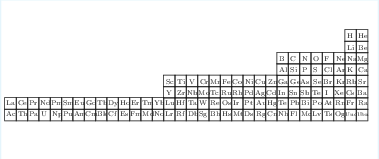
Figure 1: Janet left-step table of chemical elements (1929).
This Janet arrangement is shown to correspond precisely to the Madelung rule and undergirds the mapping between group-theoretic structures and chemical elements. The identification of a double periodicity (even/odd n+l sets) is recognized as a consequence of underlying group representation theory, rather than purely empirical shell-counting heuristics.
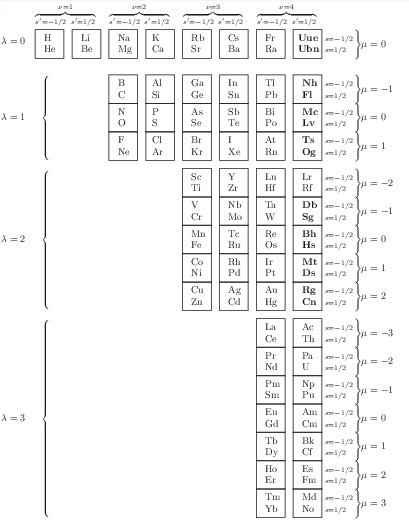
Figure 2: The periodic table in the Janet-like form of the basic representation Fss′+ of the Fet group.
Representation Theory: The so(4,4) Algebra and Four Quantum Numbers
The four quantum numbers (n,l,m,s) are mapped directly to the eigenvalues of the Cartan subalgebra of SO(4,2)0, with explicit generator identifications. The paper establishes that the root system of SO(4,2)1 is the 24-cell (octaplex), admitting a regular, self-dual four-dimensional polytope structure. Projection onto three-dimensional subspaces (under the action of the "spin" Cartan generator) yields two isomorphic cuboctahedral root systems, each associated with a subalgebra isomorphic to SO(4,2)2.
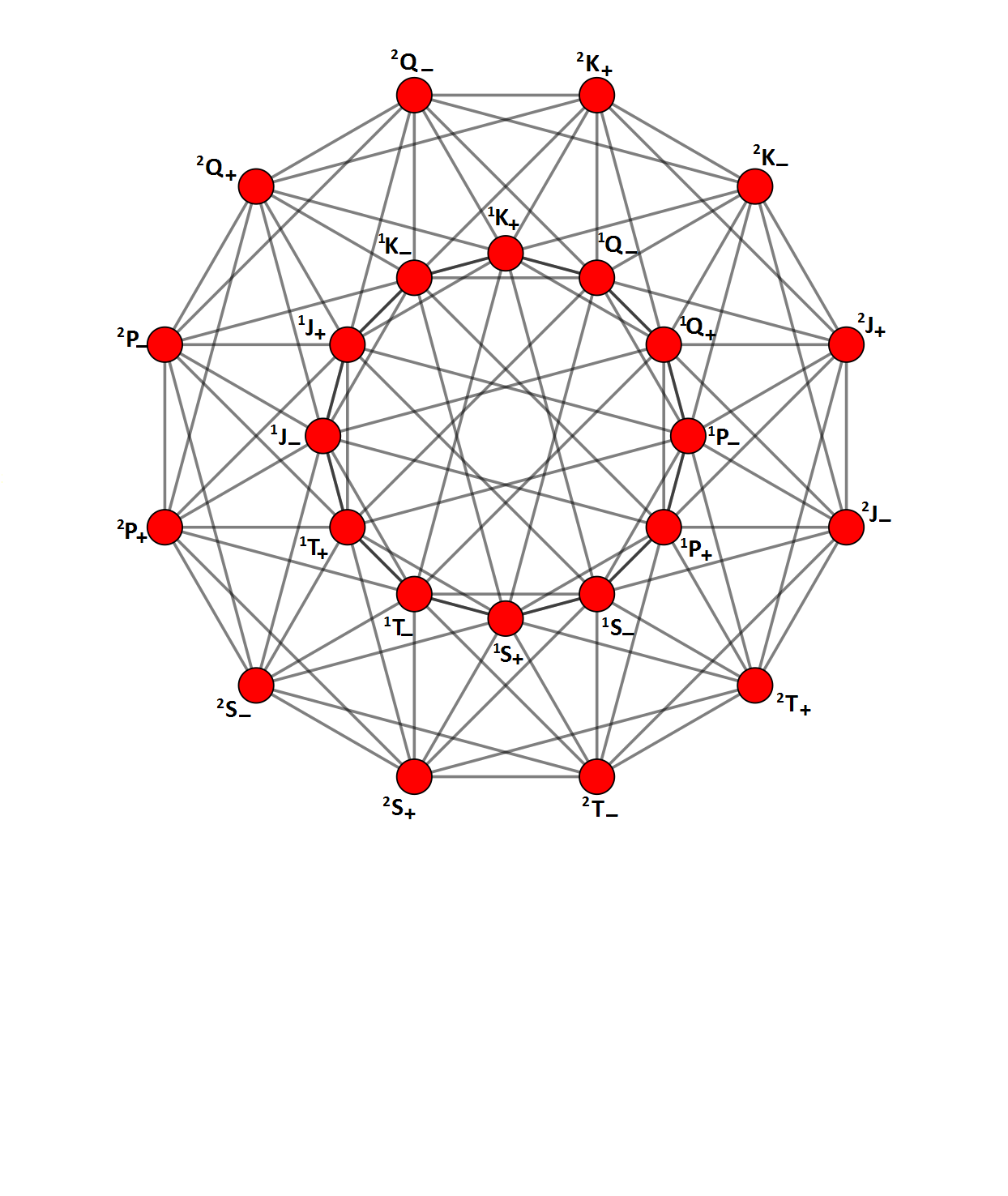
Figure 3: Root diagram of the Lie algebra SO(4,2)3.
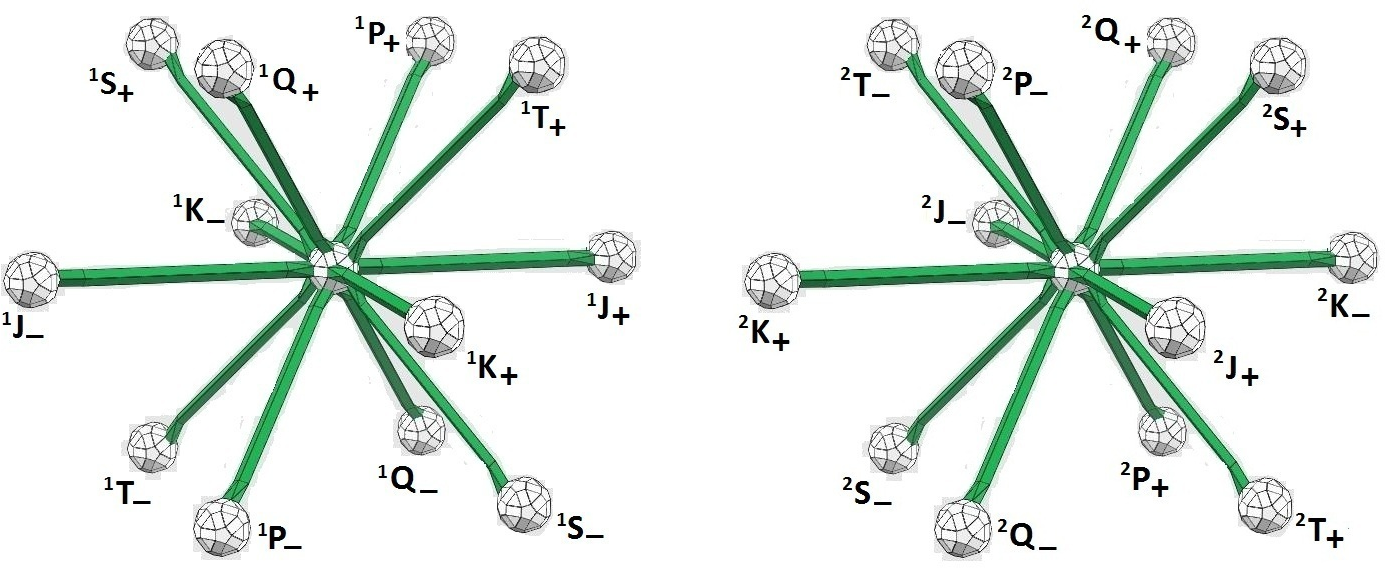
Figure 4: Root diagrams (cuboctahedra) of split bases of the Lie algebra SO(4,2)4.
The inclusion of the fourth Cartan generator (spin) is not ad hoc but necessitated by the rank of the algebra, and its action produces a doubling, structurally corresponding to (and explaining) both spin and "vertical" period doubling.
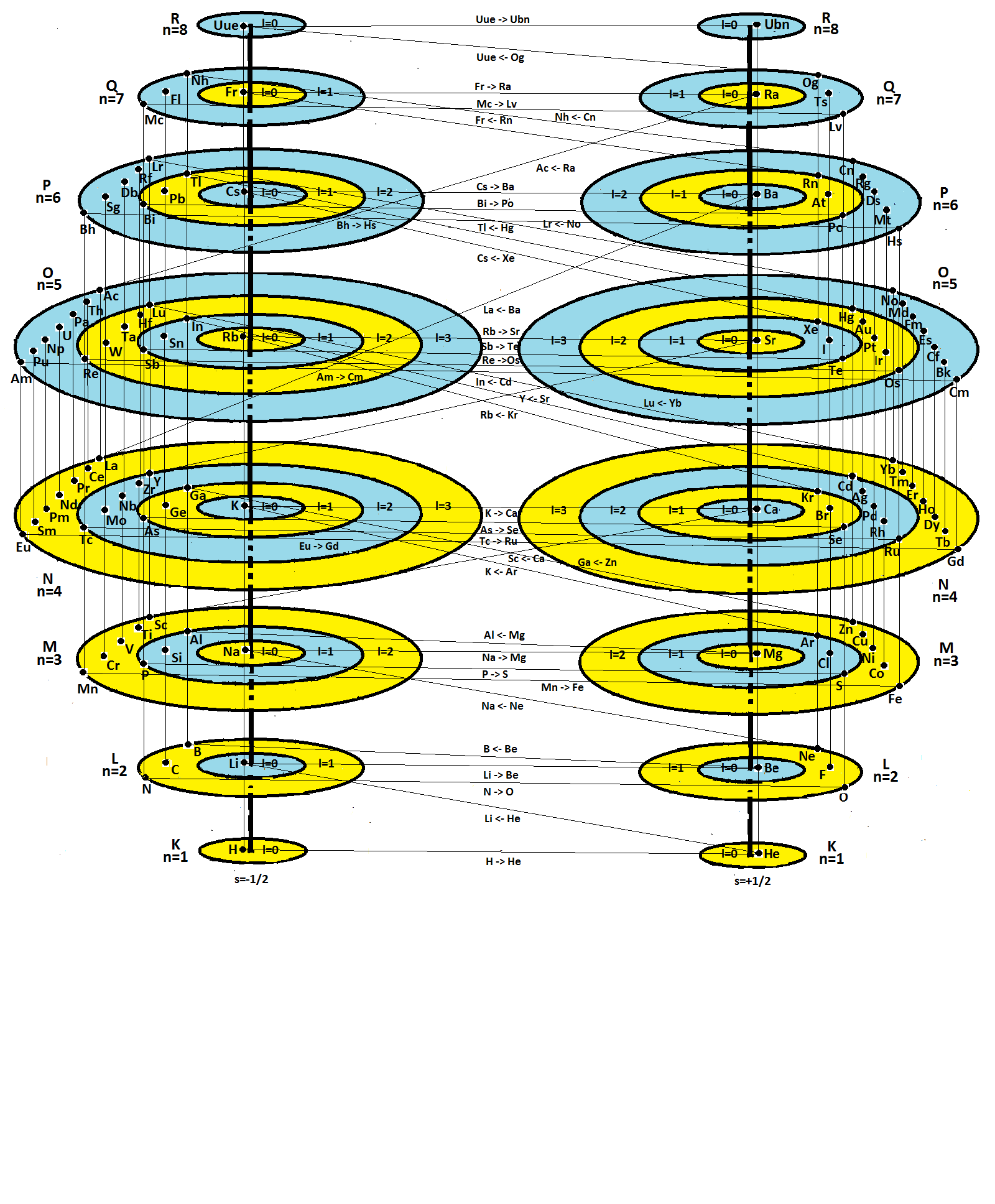
Figure 5: The periodic system of chemical elements in the split basis of the Lie algebra SO(4,2)5.
Weight Diagrams, Energy Levels, and Period Doubling
Chemical element states correspond to the nodes of the weight diagram of SO(4,2)6, with double SO(4,2)7-tower structure: two interleaved "towers" or three-dimensional projections, each populated according to spin quantum number (SO(4,2)8). Floors correspond to principal quantum number SO(4,2)9, and within each floor, weight diagrams realize so(4,4)0-diagrams (Fock representations) of so(4,4)1. The explicit mapping accounts for the empirically observed Rydberg period sequence and its doubling.
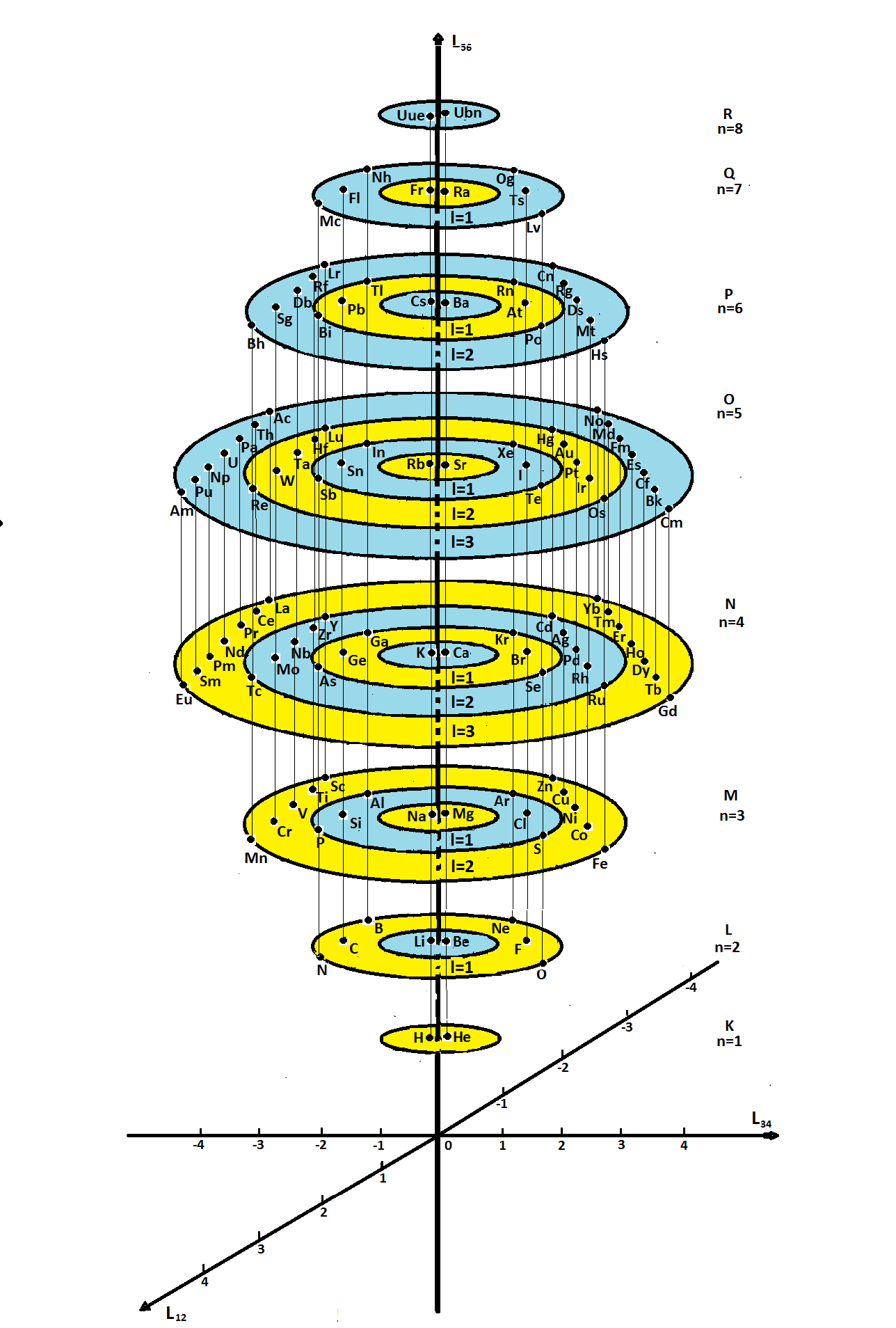
Figure 6: Periodic system of chemical elements in the form of a combined weight diagram of split bases of so(4,4)2.
Subsequent figures detail the explicit structure for so(4,4)3 (see Figures 7–12), showing how the so(4,4)4-diagrams naturally encode the observed shell-filling sequences, including lanthanide/actinide (and hypothetical superactinide/hyperactinide) families.
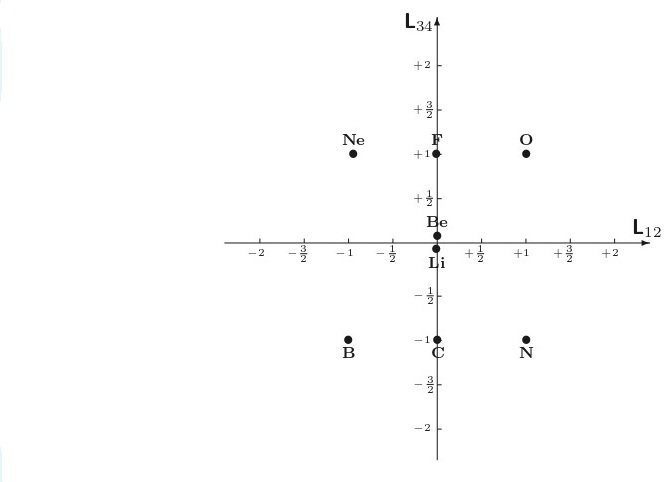
Figure 7: The level so(4,4)5 of the weight diagram of the algebra so(4,4)6 contains the so(4,4)7-diagram of the subalgebra so(4,4)8, which fully includes the second period.
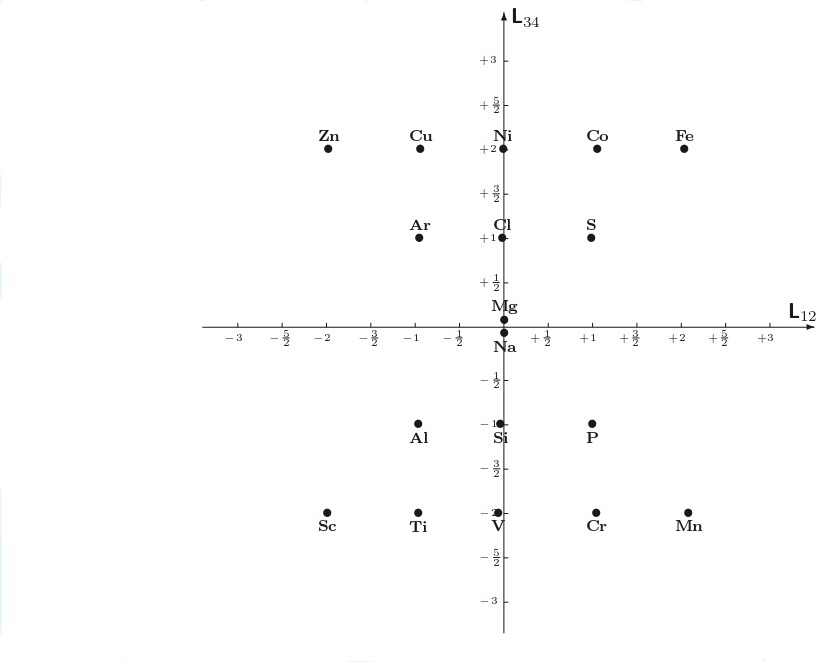
Figure 8: The level so(4,4)9: the so(4,4)0-diagram of so(4,4)1 contains the full 3rd period and transition metals of the 4th period.
...(and so on for Figures 9–12, detailing floors so(4,4)2–so(4,4)3)...
Higher-Period Extensions: Seaborg and 10-Periodic Towers
By moving beyond so(4,4)4, the framework predicts and describes the Seaborg (8-periodic) table and a further unobserved 10-periodic extension, mapping new hypothetical elements and period sequences. In both cases, the construction remains entirely group-theoretic, relying on the hierarchical reduction of representations in chains of subgroups.
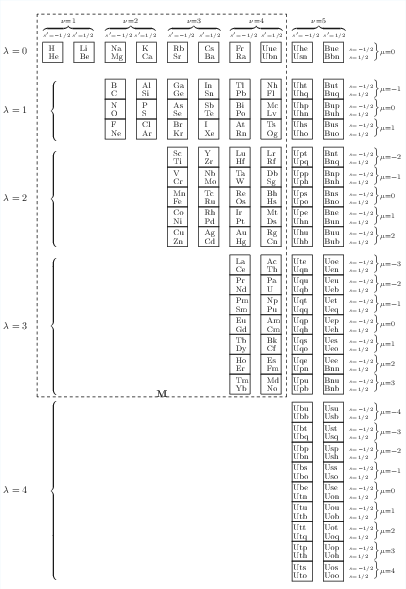
Figure 9: The Seaborg table in the Janet-like form of the basic representation so(4,4)5 of the Fet group.
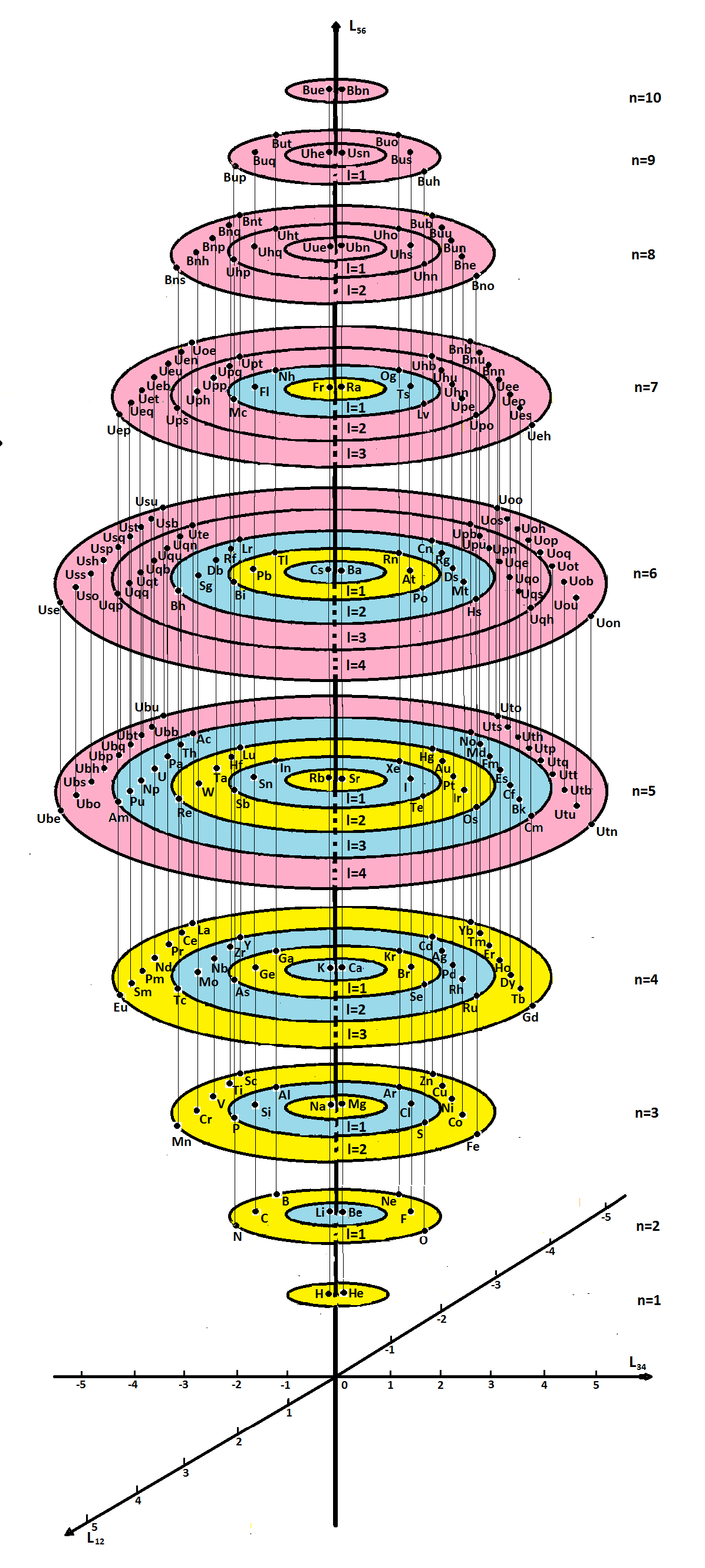
Figure 10: Seaborg Tower (8-periodic extension) in the form of a combined weight diagram of the algebra so(4,4)6.
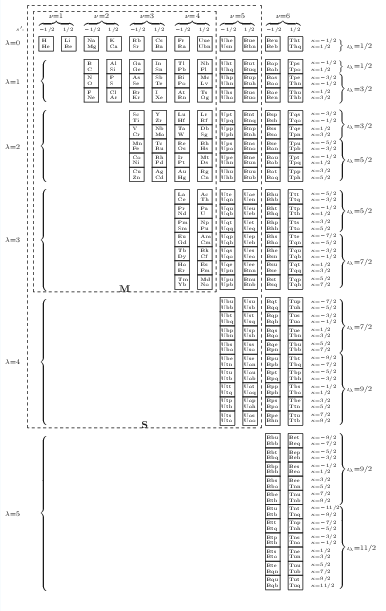
Figure 11: 10-periodic extension of the periodic table in the Janet-like form of the basic representation so(4,4)7 of the Fet group.
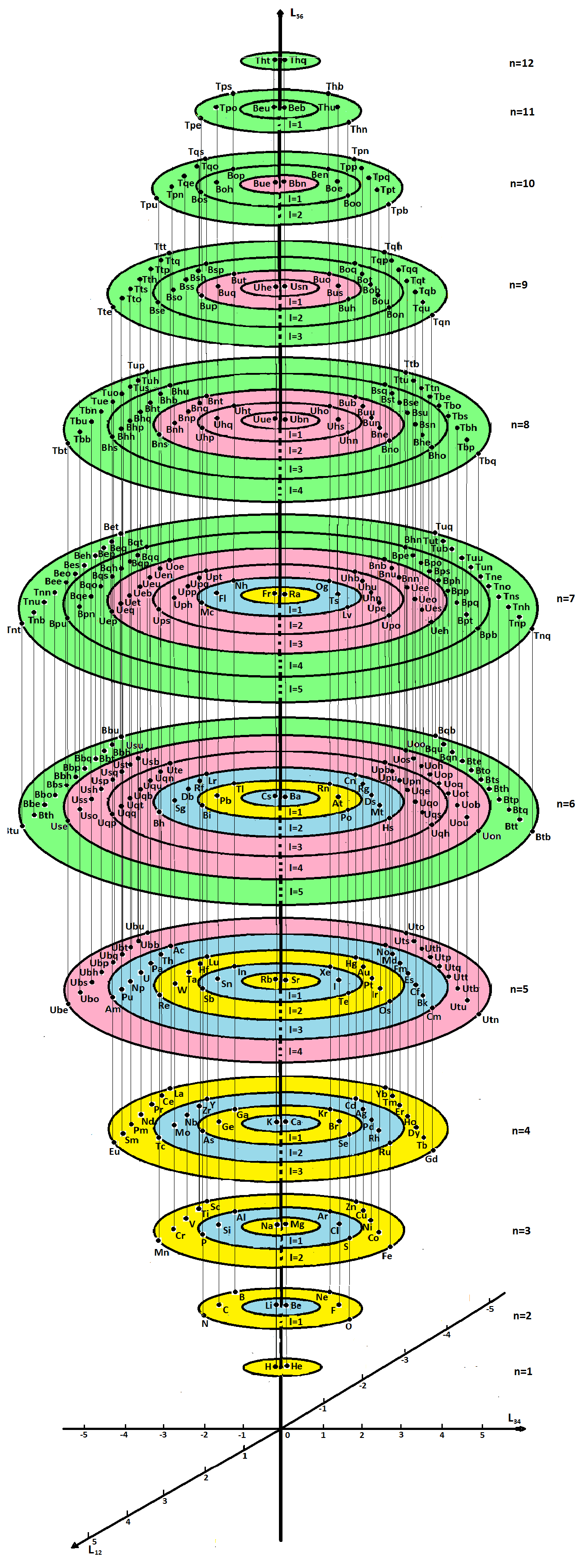
Figure 12: 10-periodic Tower in the form of a combined weight diagram of the algebra so(4,4)8.
Mass formulae for the elements (formulas (43) and (47) in the original) admit asymptotic predictions for the average masses within multiplets, further reinforcing the physical relevance of the representation structure.
Critique of Prior Group-Theoretic Schemes
The Ostrovsky-Fet approach based on so(4,4)9 and related constructions artificially introduces a fifth quantum number (to model period doubling), which lacks a physical eigenfunction. In contrast, the present (n,l)0 scheme demonstrates that the four physical quantum numbers suffice; the observed period-doubling, including empirical sequence (n,l)1, emerges as a consequence of the higher symmetry and the action (and commutation) of the fourth Cartan generator associated with spin.
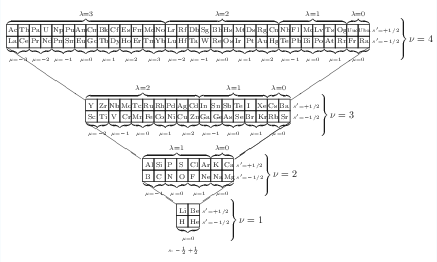
Figure 13: The Janet table in a pyramidal form with quantum numbers of the Fet group (the first Fet basis).
Antimatter: Group-Theoretic Inclusion of the Anti-Table
A compelling result is the natural inclusion of antimatter. By allowing negative values of the principal quantum number (n,l)2 (that is, relaxing the restriction to positive-definite values inherent to the Bohr model but not to group representations), the doubled three-dimensional projection of the weight diagram yields an explicit matter/antimatter symmetry: one pyramid for elements ((n,l)3), and a reflected one for antielements ((n,l)4).
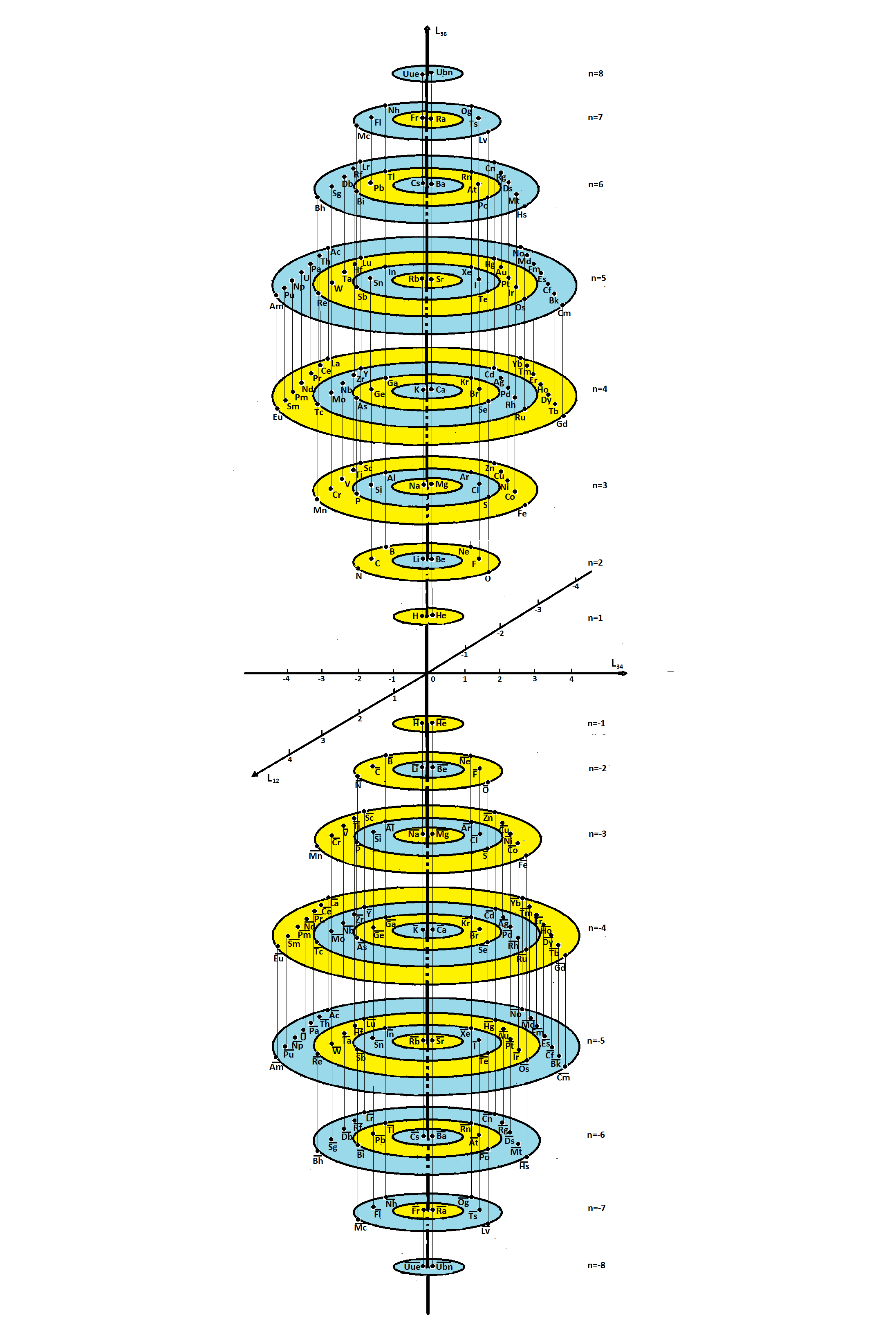
Figure 14: The elements ((n,l)5) and antielements ((n,l)6) of the periodic table in the representation of the doubled three-dimensional projection of the weight diagram of (n,l)7.
This construction provides a formal basis for the dual Mendeleev anti-table and admits further generalization for other quantum states within the same group-theoretic framework.
Implications and Future Prospects
This work unifies the chemical periodic system with the mathematical theory of semisimple Lie groups and their representations, specifically identifying the (n,l)8 algebra as the symmetry that (i) supports the known quantum structure of atoms and (ii) explains the empirical structure, including period doubling, without ad hoc quantum numbers. The theory is directly extensible to predict the structure of superheavy elements, offers a stringent framework to evaluate the appearance of novel families (e.g., superactinoids/hyperactinoids), allows formal inclusion of antielements, and suggests that observed chemical periodicity is a manifestation of deep algebraic symmetries.
On the practical side, the model can guide element discovery (especially superheavy elements and their ordering), systematic mass prediction, and may inform the interpretation of observed regularities (and irregularities) in atomic properties. Theoretically, it strengthens the bridge between quantum chemistry, the theory of fundamental particles, and mathematical physics.
Conclusion
The group-theoretic scheme based on (n,l)9 provides an intrinsic, geometrically and physically motivated explanation for the periodic system of elements, the Madelung rule, and the phenomenon of period doubling. The four quantum numbers (n+l,n)0 receive direct interpretation as weights of the Cartan subalgebra, and all essential features—including the possibility of antimatter and higher-period extensions—arise naturally within this algebraic structure. The identification of the double (n+l,n)1-tower as the organizing principle resolves longstanding ambiguities in group-theoretic approaches and connects chemical periodicity to well-understood structures in the theory of Lie algebras and their representations.