Multi-agent Autoformalization of Tensor Network Theory
Abstract: We build a team of specialized large language-model agents and present an agent-driven workflow for research-level formalization in theoretical physics, with the autoformalization of the fundamental theorem of matrix-product states as a demonstration. The agents, coordinated through a structured mathematical blueprint and periodic human review, orchestrated and executed the full formalization autonomously. For some statements, the agents were able to explore new proof routes that are not part of the standard literature. Along the way the agents produced extensive tensor-network and quantum-information libraries not previously available in Mathlib, Lean's mathematical library. As a physical application, the formalization also extends towards symmetry-protected topological phases in one dimension. We find that the main bottleneck in large-scale autoformalization is enforcing mathematical intent and we provide a detailed study of the full process and various subtleties involved. We release the codebase as the library \href{https://github.com/LionSR/TNLean}{TNLean}, together with a \nChapters{}-chapter \href{https://lionsr.github.io/TNLean/blueprint/}{blueprint} of the formalization effort.
Paper Prompts
Sign up for free to create and run prompts on this paper using GPT-5.
Top Community Prompts
Explain it Like I'm 14
What this paper is about
This paper shows how a team of AI “agents” (specialized computer programs) can work together to turn a complicated physics/maths result into a fully checked, computer-verified proof. The authors test this on a central result in tensor network theory called the Fundamental Theorem of Matrix-Product States (FT‑MPS). Along the way, the AI team also builds reusable tools for quantum information and tensor networks, and applies the theorem to understand a kind of quantum phase of matter (symmetry‑protected topological, or SPT, phases).
Think of it like this: a human mathematician writes a clear plan (a “blueprint”), and a team of helpful robots follows that plan to build a precise, Lego‑style model (the formal proof) that a strict inspector (the Lean proof assistant) checks step by step.
What questions did the researchers ask?
The authors focused on simple but important questions:
- Can a coordinated team of AI agents, with minimal human guidance, formalize a modern, research‑level physics theorem all the way to a machine‑checked proof?
- What new tools and libraries are needed to make that possible for tensor networks and quantum information?
- Where do such AI systems struggle most: finding the right steps in proofs, or making sure they’re proving exactly the intended statement?
- Can the formalized theorem be used to automatically recover known physics results, like the SPT “fingerprints” that label certain 1D phases of matter?
How did they do it?
They used a multi‑agent system guided by a shared plan and a strict checker:
- The “blueprint”: a human‑readable plan in plain math language that states theorems, definitions, and proof sketches, all linked to the exact Lean code. It’s like a detailed recipe that also points to the finished dish.
- Lean 4 proof assistant: a program that accepts only completely correct, step‑by‑step proofs. Think of Lean as an unforgiving referee that never misses a detail.
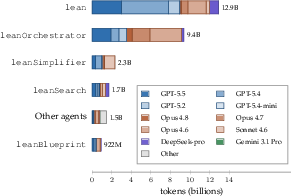
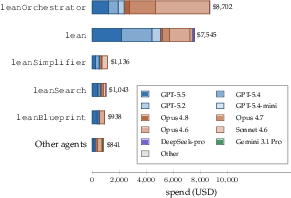
- Specialized AI agents with different jobs (like a small company):
- An orchestrator: splits big goals into smaller tasks and assigns them.
- A proof writer: fills in Lean proofs line by line.
- A scout: searches existing math libraries (so you don’t reinvent the wheel).
- A simplifier: cleans up and refactors proofs so they’re easier to reuse.
- A blueprint synchronizer: keeps the human‑readable plan and the code in sync.
- A reviewer: checks that the statement being proved matches the intended one and matches the literature (not just that the proof type‑checks).
- Persistent memory: the agents remember what was tried before, what worked, and what didn’t, so they don’t repeat mistakes.
About the physics content (kept intuitive):
- Matrix‑Product States (MPS): a compact way to describe quantum states on a 1D chain using a small set of matrices (like a recipe for long chains that repeats a small instruction).
- Transfer operator: a “machine” built from the matrices that summarizes how information flows along the chain; its eigenvalues tell you how things behave at long distances.
- Blocking: grouping several sites into “super‑sites.” This often makes the math nicer—like zooming out so a blurry picture becomes clear.
- Canonical form: a standardized way to present the tensors (the matrices in the recipe), so you can fairly compare two different recipes.
The agents read and stitched together the core references, used blocking and canonical forms, and even found an alternate proof route for a special case using a classical algebra theorem (Skolem‑Noether), showing they can creatively connect ideas across fields.
What did they find?
Here are the main results, explained simply:
- They fully formalized the Fundamental Theorem of MPS (equal case): If two properly standardized MPS “recipes” produce exactly the same vectors for every chain length, then the two recipes are the same up to a change of internal labeling (a single invertible matrix that “conjugates” one to the other). In everyday terms: if two cake recipes always taste identical for every cake size, then they’re the same recipe, just written with different internal names.
- They built and released TNLean: a public Lean library with many tools for tensor networks and quantum information (like completely positive maps, quantum Perron–Frobenius theory, and the machinery around transfer operators). This is like adding a new toolbox to the community hardware store.
- They derived a physics application automatically: Using the formal FT‑MPS, they showed that when an MPS is symmetric under an on‑site group action (a kind of pattern that leaves the state “the same”), that symmetry shows up internally as a “projective” action—almost a representation, but with harmless phase factors. The pattern of those phases forms a robust label (a cohomology class) that identifies the SPT phase. In short: the theorem explains why a hidden “internal” symmetry label classifies these 1D phases.
- They identified the main bottleneck: not proving small steps, but ensuring the agents are proving exactly the intended theorems with the right assumptions. For example:
- Avoiding a too‑strong assumption (a “doubly stochastic” normalization) that made the theorem easier but too narrow.
- Keeping theorems about finite chains, not replacing them with “as ” statements that don’t fit the original goal.
- Stating and checking edge cases carefully (e.g., lengths and dimensions are positive).
- They showed how to catch and fix such issues: by routinely reviewing the blueprint against the Lean code and the original papers, then feeding that feedback to the agents to reorganize proofs.
Why does this matter?
- Reliable physics and math: Many physics arguments skip details that are obvious to experts but not to machines. Turning them into computer‑checked proofs forces clarity and catches hidden assumptions.
- Reusable infrastructure: The TNLean library gives future researchers ready‑made tools to formalize more results in tensor networks, quantum information, and beyond.
- Smarter collaboration: A team of specialized AI agents, guided by a clear blueprint and light human oversight, can handle large, research‑level projects—not just short competition problems.
- New directions: The same workflow could help formalize other big theorems in quantum information and condensed matter, and could even help explore open problems, by ensuring each step is precise and reusable.
- Education and transparency: The blueprint and code are public, making it easier to learn, audit, and extend the work.
In essence, the paper is both a case study and a toolkit: it shows that AI teams can rigorously formalize advanced physics results today, it explains the pitfalls to avoid (especially about stating theorems correctly), and it provides the libraries and processes to push further.
Knowledge Gaps
Knowledge gaps, limitations, and open questions
Below is a concise, actionable list of what remains missing, uncertain, or unexplored in the paper, grouped by theme to guide follow-on work.
Theoretical and formalization scope
- Fundamental Theorem (FT) “proportional-case” not formalized: only the equal-case () is handled; the version allowing equality up to nonzero scalars (possibly -dependent) remains to be specified and proved in Lean.
- Non-periodic (open-boundary) MPS are not covered: FT-MPS with boundary vectors and the corresponding gauge classification are left for future work.
- Non-translationally invariant MPS not addressed: extension of FT to site-dependent tensors (finite-periodic or fully inhomogeneous chains) remains open.
- Parent-Hamiltonian machinery absent: existence of gapped parent Hamiltonians for injective MPS, gap stability, quasi-adiabatic continuation, and gapped paths are not formalized; needed to complete the 1D SPT classification program.
- Bulk–edge correspondence and edge projective representations unformalized: the link between edge modes and the cohomology class (including open-boundary edge analysis) is not yet captured.
- Unitary symmetry specialization not proved: while Theorem 3 allows linear , the standard physics case and the induced choice of unitary gauges (up to phase) with is noted but not formally proved.
- Antiunitary and spatial symmetries omitted: time-reversal, inversion, reflection, and their twisted cohomology () are not treated.
- Fermionic/graded extensions not considered: super vector spaces, projective/central extensions for fermionic SPTs, and supercohomology frameworks are unaddressed.
- Higher-dimensional tensor networks not covered: fundamental theorems for PEPS (e.g., MPO-injective or normal PEPS subclasses) are suggested as targets but not developed.
- Matrix-product operators (MPOs) unformalized: MPO theory and FT analogues, including symmetry actions on MPOs, are not treated.
- Canonical form uniqueness and stability not analyzed: formal statements on uniqueness (up to standard gauges), multiplicity counting, and stability under small perturbations are not provided.
- Constructive algorithms are missing: no certified, executable procedures (within Lean) to compute canonical forms, BNTs, or gauge maps and permutations , nor complexity bounds for such algorithms.
- Finite vs. asymptotic equivalences remain uncharacterized: formal criteria connecting asymptotic statements (norm convergence, peripheral spectrum data) to finite-length equalities are not developed, despite being central to avoiding earlier misformulations.
- Optimal quantum Wielandt bounds not achieved: the blocking bound uses ; tightening to the best-known or optimal scaling—and formalizing a sharp quantum Wielandt inequality—remains an open task.
Methodological and system limitations
- Reliance on human oversight to enforce intent: the system required multiple human-led blueprint reviews to catch theorem weakenings (e.g., unintended “doubly stochastic” gauge) and mis-specified asymptotic definitions; a general, automated mechanism for intent enforcement is not provided.
- Limited automatic detection of vacuity/weakenings: there is no principled method to detect vacuous proofs or unintended hypothesis strengthening beyond ad hoc reviewer checks.
- Context-window constraints and orchestration scalability: bounded LLM context and instruction-following reliability limit scale; there is no demonstrated approach guaranteeing correctness when the blueprint, code, proof state, and literature cannot fit jointly.
- Semantic alignment not formally verified: tools like checkdecls ensure syntactic linkage (blueprint ↔ Lean), but no machine-checked guarantees that Lean theorems semantically match the literature’s statements or the blueprint’s prose.
- Maintainability under upstream changes: the library had to refactor when Mathlib added CP maps; general migration tooling, stability metrics, and compatibility layers for sustained maintenance are not discussed.
- Generalization beyond this domain untested: it is unclear how the orchestration patterns, memory structures, and reviewer pipelines transfer to other physics subfields or large-scale mathematical formalizations without manual retuning.
- Novel proof-route exploration lacks systematics: the Skolem–Noether route for the injective case emerged ad hoc; there is no framework to systematically search, validate, and integrate nonstandard proof strategies while preserving intended hypotheses.
Reproducibility, evaluation, and reporting
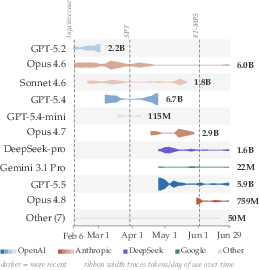
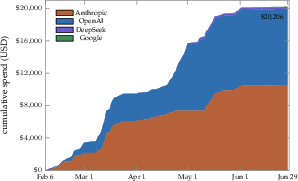
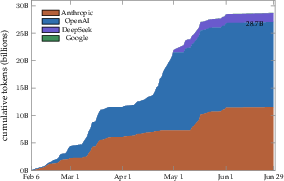
- Incomplete quantitative reporting: key figures (total lines of code, number of declarations, tokens/costs) appear as placeholders in the manuscript, impeding reproducibility and comparative assessment.
- Reviewer reliability not benchmarked: false-positive/negative rates for the automated reviewer (blueprint–Lean and literature–Lean audits) are not measured against a gold standard.
- No ablation or comparative studies: there is no evaluation of the marginal benefit of orchestration patterns (e.g., scout–then–prove), persistent memory, or blueprinting vs. single-agent baselines or human-led baselines.
- Non-determinism and seed control unreported: the effects of LLM sampling parameters, seeds, and model drift on proof outcomes and reproducibility are not analyzed.
- Dataset and parsing robustness unassessed: the system depends on LaTeX sources of primary references; resilience to PDFs or OCR’d, inconsistent, or heterogeneous sources (common in physics) is not evaluated.
- Domain-constraint encoding remains ad hoc: avoiding meaningless branches (e.g., , ) required manual assumptions; a general DSL or mechanism to encode domain-specific side conditions up front is absent.
Practical Applications
Immediate Applications
Below are actionable use cases that can be deployed now, based on the paper’s released code (TNLean), orchestration software (TeXRA), agent roles, blueprint method, and verified results (FT-MPS and the SPT invariant). Each bullet notes the sector, potential tools/workflows/products, and key assumptions/dependencies.
- [Academia | Mathematical Physics, Quantum Information] Turnkey formalization of adjacent results in tensor-network theory
- Tools/workflows/products: TNLean library and blueprint; agent roles (leanSearch, lean, leanSimplifier, leanBlueprint, reviewer); scout-then-prove and review–repair loops
- Use cases: extend to injectivity after blocking, CP maps and quantum Perron–Frobenius facts, Wielandt-type bounds; begin formalization of MPS with boundaries, matrix-product operators, and parent-Hamiltonian lemmas already outlined in the blueprint
- Assumptions/dependencies: Lean 4/Mathlib compatibility; community conventions (canonical forms, normalization) recorded in the blueprint; occasional human oversight to prevent “intent drift”
- [Academia | Condensed Matter] Verified computation of 1D SPT invariants from symmetric MPS
- Tools/workflows/products: a small “SPT class checker” built atop TNLean that takes an injective MPS tensor A and finite on-site action U(g), computes the virtual gauges X(g), and returns the cohomology class [ω] ∈ H2(G, C×) (or U(1) under unitary normalization)
- Use cases: sanity checks for analytical/numerical studies of symmetry-protected phases; regression tests for code that manipulates MPS symmetries
- Assumptions/dependencies: injective tensors; finite group actions; bridge code to interface numerical A,U(g) with formal objects; unitary reps if one wants a U(1)-valued invariant
- [Software Engineering | Formal Methods] Immediate adoption of the blueprint + reviewer pipeline to safeguard “intent”
- Tools/workflows/products: TeXRA; leanBlueprint sync (checkdecls); automated reviewer agent; CI hooks
- Use cases: enforce alignment between natural-language specs and formal artifacts in large Lean codebases; gate AI-generated proofs/specs before merge; PR bots that fail builds when specs drift from theorems
- Assumptions/dependencies: CI integration; maintainers agree to blueprint-as-spec; model/API access for reviewer agent
- [Publishing | Research Integrity] Blueprint-linked submissions for mathematical physics and quantum information
- Tools/workflows/products: authoring workflow where every theorem in the manuscript links to a Lean declaration; journal-side bots that run checkdecls and simple hypothesis audits
- Use cases: reproducibility “badges”; referee support (readable blueprint + machine-checked links)
- Assumptions/dependencies: publisher buy-in; modest compute budgets; authors provide Lean packages and blueprint
- [Education | Graduate Training] Studio courses and reading groups centered on autoformalization
- Tools/workflows/products: course templates using TNLean; assignments where students fill blueprint proof outlines and let agents close sorries
- Use cases: training in rigorous physics, formalization skills, and agent orchestration patterns
- Assumptions/dependencies: instructor familiarity with Lean; curated memory files to reduce startup cost
- [Quantum Computing Industry | Tooling] Verification scaffold for protocol and compiler identities
- Tools/workflows/products: TNLean components (CP maps, transfer operators) to specify and check algebraic transformations used in optimizations; scout-then-prove pipeline for regression proof search
- Use cases: proof-carrying identities for circuit rewrites; validated assumptions in simulation backends that use tensor networks
- Assumptions/dependencies: extend TNLean to circuit IRs; staff time to encode domain semantics; Lean/Mathlib maturity in quantum informatics
- [Open-Source Ecosystems | Lean/Mathlib] Continuous cleanup and “intent linting”
- Tools/workflows/products: leanSimplifier and reviewer agents as CI bots; persistent memory of “anti-patterns” (e.g., accidental doubly-stochastic assumptions, asymptotic vs finite misformulations)
- Use cases: lower maintenance cost; prevent regressions or silently weakened statements
- Assumptions/dependencies: repository governance; acceptance of automated refactors
- [AI/ML Engineering] Multi-agent proof-development workflows as a general pattern for complex coding/spec tasks
- Tools/workflows/products: TeXRA; coordination patterns (parallel dispatch, scout-then-prove, review–repair); distilled memory files
- Use cases: complex refactors with guardrails; structured design memos before expensive model calls
- Assumptions/dependencies: organizational policy for agent use; prompt libraries and memory hygiene
- [Policy/Standards | AI Assurance] Lightweight audit templates for AI-generated scientific artifacts
- Tools/workflows/products: reviewer prompts, mismatch detection (literature ↔ blueprint ↔ Lean); acceptance criteria for statement strength vs cited sources
- Use cases: grant or institutional policy checklists; internal research QA
- Assumptions/dependencies: domain adaptation beyond physics; standardization of audit reports
Long-Term Applications
The following require further research, scaling, or development (e.g., broader libraries, stronger models, integration with external stacks), but the paper’s methods and releases lay the groundwork.
- [Academia | Large-Scale Formalization] Autonomous or near-autonomous formalization of major results in quantum information and many-body physics
- Tools/workflows/products: expanded TNLean; stronger search and memory; richer Mathlib for operator algebras and quantum channels
- Use cases: formalizing MIP*=RE pipelines; complete SPT and phase-classification programs (gapped paths, parent Hamiltonians)
- Assumptions/dependencies: improved LLM reliability and context handling; sustained library development; curated blueprints for multi-paper proofs
- [Quantum Software Stacks | Verified Compilers] Proof-carrying passes and equivalence checking from algorithms down to hardware IRs
- Tools/workflows/products: formal semantics for circuit IRs; Lean-powered equivalence checkers; proof artifacts bundled with compilation
- Use cases: certifying optimizations in NISQ and fault-tolerant compilers; compliance for regulated verticals (e.g., pharma workflows using quantum subroutines)
- Assumptions/dependencies: community IR standards; Lean libraries for quantum control/measurement; performance engineering
- [Safety-Critical Systems | Healthcare, Aviation, Robotics] Agent-guarded formal verification pipelines
- Tools/workflows/products: generalized blueprint-and-reviewer framework; domain-specific Lean libraries; intent-gated agent orchestration
- Use cases: medical-device firmware, avionics control logic, robot motion-planning invariants
- Assumptions/dependencies: formal semantics for domain stacks; certification processes; hybrid testing + proofs
- [Policy/Regulation | Scientific Reproducibility] Machine-checkable proof/spec requirements for AI-generated or AI-assisted claims
- Tools/workflows/products: submission standards (blueprint + proof link + audit report); repository of audit prompts and criteria
- Use cases: regulatory or funder mandates; journal policy for critical claims
- Assumptions/dependencies: consensus on formats; cost-effective review automation; community training
- [Materials Discovery | Quantum Materials] Formal–numerical hybrid pipelines for phase classification
- Tools/workflows/products: interfaces that translate numerical MPS/MPO outputs into formal statements; certified SPT labels and parent-Hamiltonian properties
- Use cases: error-detecting workflows where formal checks flag ambiguous or oscillatory finite-N behavior; provenance for materials claims
- Assumptions/dependencies: robust bridges between floating-point data and exact algebra; libraries for error bounds and stability
- [Education at Scale] Curricula where blueprints are first-class research artifacts
- Tools/workflows/products: repositories of blueprints, technique notes, and distilled memories; “spec-to-proof” exercises; automated feedback loops
- Use cases: scalable training in formal methods across physics, CS, and math; capstones that produce publishable blueprints
- Assumptions/dependencies: educator adoption; accessible tooling; cloud resources
- [Research Automation | Discovery Loops] Closed-loop systems that propose conjectures, plan proof programs, formalize, and self-correct
- Tools/workflows/products: conjecture generators; dependency-aware planners; stronger reviewer agents able to detect subtle over-strengthening/weakenings
- Use cases: exploring alternative proof routes (as seen with the Skolem–Noether detour) systematically across fields
- Assumptions/dependencies: improved model reliability; better global-state management; reward structures for “useful failure”
- [Finance/Crypto | Assurance] Transfer of patterns to formal verification of cryptographic protocols and smart contracts
- Tools/workflows/products: blueprint-driven specs; agent reviewers for hypothesis strength vs standards; proof-carrying transactions
- Use cases: audits for ZK-proofs, custody schemes, and on-chain logic with mathematically precise guarantees
- Assumptions/dependencies: Lean libraries for cryptography and VM semantics; industry acceptance
- [General-Purpose “Research OS”] An integrated platform that tracks mathematical intent, formal artifacts, and review lineage across disciplines
- Tools/workflows/products: TeXRA-like orchestrators, versioned blueprints, alignment bots, long-horizon memory
- Use cases: institution-wide research QA, multi-team theorem/protocol development with provenance
- Assumptions/dependencies: interoperability with existing tooling; governance for shared memories; privacy and IP policies
Cross-cutting assumptions and dependencies that affect feasibility
- Agent reliability and context limits: bounded context windows and instruction-following errors are the primary bottlenecks; blueprint-and-reviewer gates remain necessary.
- Library coverage: success depends on Mathlib/TNLean maturity (e.g., operator algebras, quantum channels, circuit semantics).
- Human oversight: strategic supervision is still needed to set intent, resolve definitional choices, and reset when a route is conceptually wrong (finite vs asymptotic confusions).
- Compute and integration: CI and publisher-side bots need sustainable compute; organizations must integrate TeXRA-style pipelines with IDEs and repositories.
- Domain assumptions: physical proofs often require injectivity, unitary symmetry, finite groups, nonzero bond dimensions and lengths; articulating these removes vacuous edge cases and ensures transferability.
Glossary
- 2-cocycle: A function ω(g,h) encoding the phase ambiguity in a projective representation, satisfying a cocycle condition. "projective representation with 2-cocycle "
- Basis of normal tensors (BNT): A minimal set of normal-tensor blocks that uniquely describes a tensor up to repetition and permutation. "called basis of normal tensors, or BNT, ${\{A_k^i\}_{k=1}^g$, that always exists for any tensor and accounts for repeated blocks in ."
- Blocking: Grouping consecutive lattice sites into a single coarse-grained site to alter the tensor and its transfer operator. "after blocking a sufficient number of sites"
- Bond dimension: The dimension D of the virtual (bond) index connecting tensors in an MPS. "Here is the local Hilbert-space dimension and is the bond dimension."
- Bond space: The virtual Hilbert space on which the internal (gauge) symmetry acts in an MPS. ": projective rep.\ on the bond space"
- Blueprint: A human-readable, structured specification linking mathematical statements to their Lean formalizations. "a 12-chapter blueprint of the formalization effort."
- C*-algebra: A complex Banach algebra with an involution satisfying the C*-identity; a standard setting for operator algebras and quantum channels. "the positive and completely positive maps between -algebras were added to Mathlib 4.31"
- Canonical form (CF): A block-diagonal normal form of an MPS tensor in which each block is normal and scaled. "Then is said to be in a canonical form~(CF) if "
- Central simple algebras: Finite-dimensional simple algebras over a field whose center is exactly that field. "a classical result about automorphisms of central simple algebras."
- Cohomological invariant: A topological quantity (e.g., a class in group cohomology) that remains unchanged under deformations, used to label phases. "A cohomological invariant from injective symmetric MPS"
- Cohomology class: An equivalence class in cohomology capturing topological or algebraic obstructions; here, the class of a 2-cocycle. "The cohomology class is unchanged"
- Completely positive (CP) map: A linear map that remains positive under extension by identity on any ancillary space; models quantum channels. "a completely-positive (CP) map called the transfer operator "
- Doubly stochastic (DS) gauge: A normalization/gauge where the transfer operator is both unital and trace-preserving. "a doubly stochastic (DS) ``gauge''."
- Fundamental theorem of MPS (FT-MPS): Characterizes when two MPS tensors generate the same family of states via an invertible change of basis on the bonds. "the autoformalization of the fundamental theorem of matrix-product states (FT-MPS) as a demonstration."
- Gauge transformation: An invertible change of basis on the virtual indices that preserves the physical state generated by an MPS. "The global gauge transformation can then be constructed"
- Injective (MPS tensor): An MPS tensor whose local matrices span the full matrix algebra after sufficient blocking, ensuring a unique fixed point of the transfer operator. "the special case of \cref{thm:bnt-equivalence} (when is injective)"
- Lean 4: A version of the Lean interactive theorem prover used for machine-checked formalization of mathematics. "via the Lean~4 proof assistant."
- Left-canonical form: A normalization where the transfer operator is trace-preserving. "a left-canonical form, in which is trace-preserving."
- Mathlib: Lean’s main community-driven mathematical library. "not previously available in Mathlib, Lean's mathematical library."
- Matrix-product operator (MPO): A tensor-network representation of operators, analogous to MPS for states. "matrix-product operators (see, e.g.,~\cite{Cirac2017Matrix,Liu2026Parent})"
- Matrix-product state (MPS): A class of quantum many-body states represented by a product of local tensors contracted along virtual bonds. "A translationally invariant matrix-product state (hereafter simply an MPS) is a family of quantum states"
- Matrix-product vector (MPV): The unnormalized version of an MPS, often used when discussing operators and transfer matrices. "thus they are also called matrix-product vectors (MPVs)"
- Normal tensor: An MPS tensor whose transfer operator has spectral radius 1 with a unique peripheral eigenvalue. "We say that a tensor is normal if its transfer operator has spectral radius $1$ and a unique eigenvalue with "
- On-site linear representation: A group representation acting locally and identically on each physical site of the chain. "let be an on-site linear representation of a finite group ."
- Operator algebras: Algebras of bounded operators (often on Hilbert spaces) studied in functional analysis and quantum theory. "operator algebras, and spectral theory."
- Parent Hamiltonians: Local Hamiltonians for which a given MPS is an exact ground state, used in phase classification. "The full SPT classification also involves symmetric parent Hamiltonians and gapped paths"
- Projective representation: A representation defined up to phase, satisfying ρ(g)ρ(h)=ω(g,h)ρ(gh) for a 2-cocycle ω. "form a projective representation of : "
- Quantum Perron–Frobenius theory: Spectral theory for positive (or completely positive) maps on operator algebras, focusing on dominant eigenstructures. "quantum Perron-Frobenius theory"
- Quantum Wielandt bound: A bound ensuring that after finitely many blockings, powers of a positive map become strictly positive/injective in a suitable sense. "by the quantum Wielandt bound."
- Right-canonical form: A normalization where the transfer operator is unital. "a right-canonical form, in which is unital"
- Skolem–Noether theorem: A result stating that automorphisms of central simple algebras are inner, used to derive conjugation forms. "through the Skolem-Noether theorem"
- Spectral radius: The largest modulus of the eigenvalues of a linear map/operator. "has spectral radius $1$"
- Symmetry-protected topological (SPT) phases: Gapped phases of matter distinguished by symmetry and characterized by cohomological invariants in 1D. "symmetry-protected topological phases in one dimension."
- Trace-preserving: A property of a quantum channel or transfer operator that preserves the trace of operators. "in which is trace-preserving."
- Transfer operator: The completely positive map associated with an MPS tensor governing correlations and fixed points. "called the transfer operator "
- Unital: A property of a map that sends the identity to the identity. "in which is unital"
Collections
Sign up for free to add this paper to one or more collections.