- The paper introduces MLIP Studio, a unified web platform integrating over 60 universal MLIP models for benchmarking and atomistic simulations.
- It demonstrates significant DFT optimization reductions up to 33× and energy/force MAEs approaching chemical accuracy through comprehensive model comparisons.
- The platform streamlines workflows with interactive visualization and flexible task setups, enabling reproducible, rapid AI-driven quantum simulations.
Introduction
The integration of machine learning interatomic potentials (MLIPs) into atomistic simulation workflows has precipitated a paradigm shift in computational chemistry and materials science. Universal MLIPs—foundation models pre-trained on expansive, chemically diverse density functional theory (DFT) datasets—now approach DFT accuracy at a fraction of the computational cost. Despite rapid progress in model architectures, foundation MLIPs remain difficult to access and compare due to incompatible software ecosystems and the absence of comprehensive, interactive benchmarking frameworks. The paper "MLIP Studio: An Open Platform for Interactive Benchmarking and Atomistic Simulations Using Machine Learning Interatomic Potentials" (2607.07606) addresses this gap, presenting MLIP Studio: a free, source-available web application that consolidates more than 60 universal MLIPs and delivers a unified interface for rapid evaluation, benchmarking, and simulation.
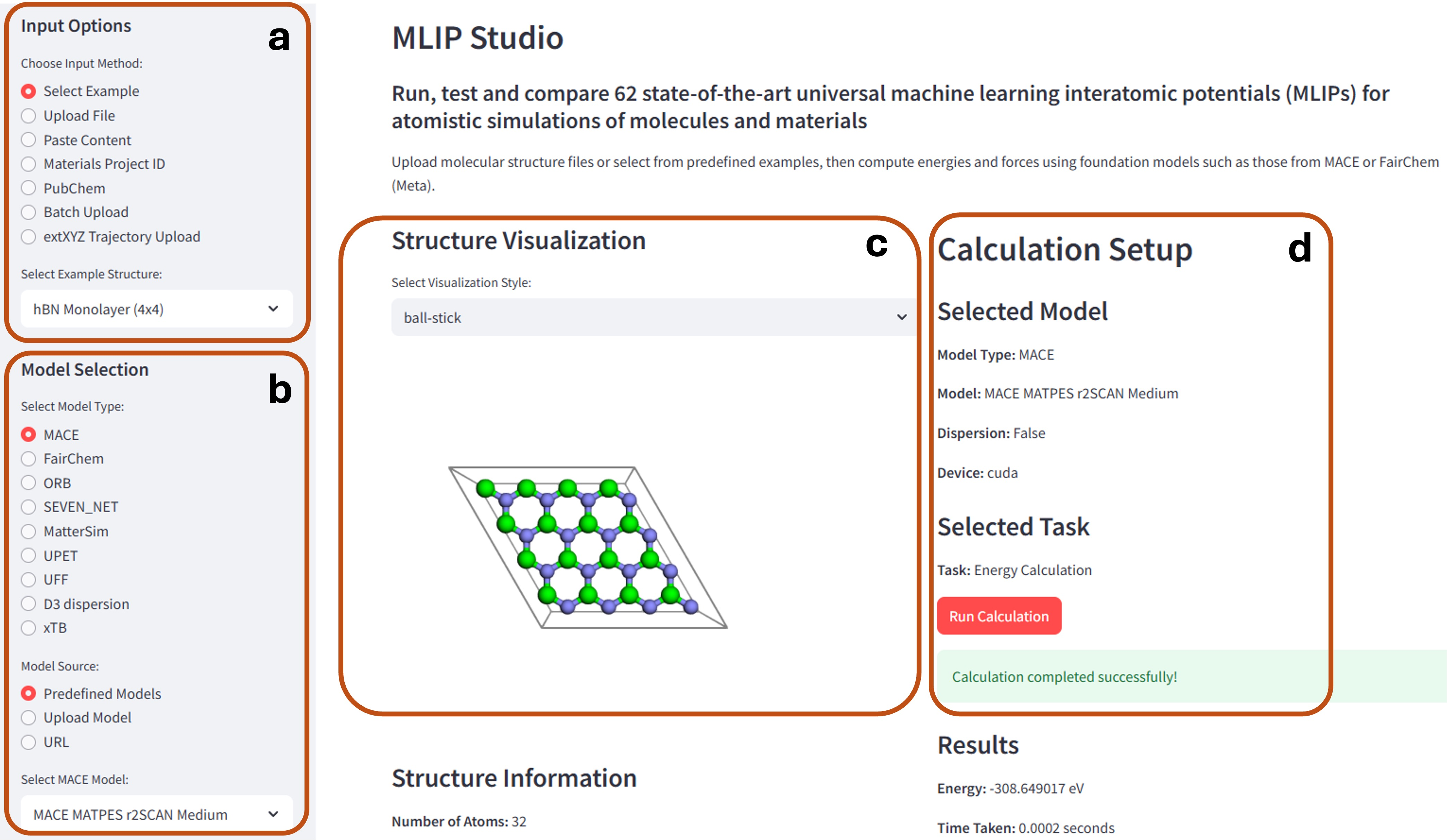
Figure 1: MLIP Studio’s interface integrates structure input, model selection, 3D visualization, and task execution into an interactive web platform.
Supported Universal MLIP Architectures
MLIP Studio consolidates six major universal MLIP families in a single platform, eliminating the need to manage conflicting dependencies and environments:
- MACE: Utilizes E(3)-equivariant, higher-order message passing on atomic graphs, achieving high data efficiency and strict symmetry constraints [batatia2022mace].
- FairChem (UMA): Employs equivariant smooth energy networks (eSEN) and mixture-of-linear-experts (MoLE) architectures, with multi-task, domain-adaptive heads for chemistry, materials, catalysis, and more [wood2025family].
- ORB: Offers direct-force and conservative variants, with direct-force models delivering ∼10× speed and ∼8× memory reductions, enabling simulations of 105-atom systems [rhodes2025orb].
- MatterSim: Designed for robustness across extreme thermodynamic conditions via uncertainty-aware active learning [yang2024mattersim].
- SevenNet: Architected for parallelized, large-scale MD using scalable, cutoff-restricted equivariant GNNs.
- PET: A transformer-based, rotationally unconstrained model operating on directed edges, capable of both conservative and direct-force inference with competitive Pareto efficiency [mazitov2025pet].
A wide suite of models from each family is included, supporting fast, head-to-head comparison and enabling users to benchmark accuracy, transferability, and efficiency on their target systems.
General Workflow and Interactive Features
MLIP Studio organizes simulation workflows into four streamlined steps, all via browser:
- Flexible Structure Input: Models accept structures from examples, file upload (CIF, XYZ, MOL, etc.), Materials Project/PubChem import, batch uploading, or trajectory (extXYZ) files. Interactive, hardware-accelerated 3D visualization is provided.
- Model Selection: Users toggle between supported MLIP families and variants, and optionally upload custom MACE-compatible weights for immediate use.
- Task Configuration: Calculation tasks include single-point energy/force/stress, atomization/cohesive energy, geometry optimization (with various optimizers and custom multi-stage workflow), vibrational analysis, EOS (e.g., Birch–Murnaghan), spin-state scans, batch/trajectory evaluation, DOS/band gap prediction, and dipole/partial charge inference.
- Results and Visualization: All results are presented with parity plots, error tables, and visualizations. Reference data can be uploaded for benchmarking, with element- and frame-level diagnostics.
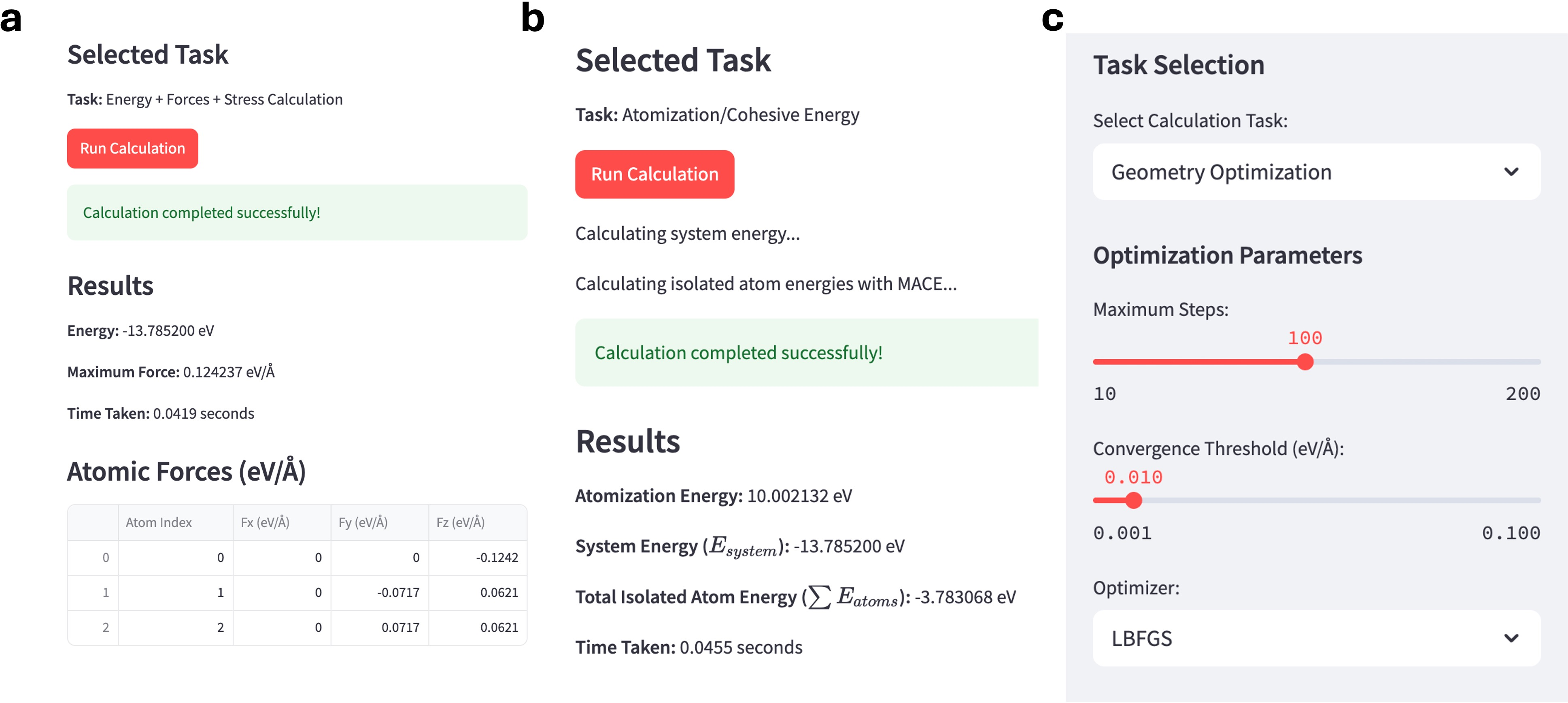
Figure 2: Representative MLIP Studio outputs for forces (tabulated per atom), atomization energy, and geometry optimization settings.
Applications and Numerical Results
Geometry Optimization and Pre-Relaxation
MLIP-driven pre-optimization significantly reduces subsequent DFT geometry optimization cost. Case studies with ibuprofen, caffeine, and a 64-water box demonstrate that MLIP pre-optimization (using UMA OMOL and MACE OMAT) reduced required DFT optimization cycles by factors ranging from 5× to 33× compared to starting from random or UFF-relaxed structures. This leads directly to order-of-magnitude savings in wall-time for high-throughput DFT calculations.
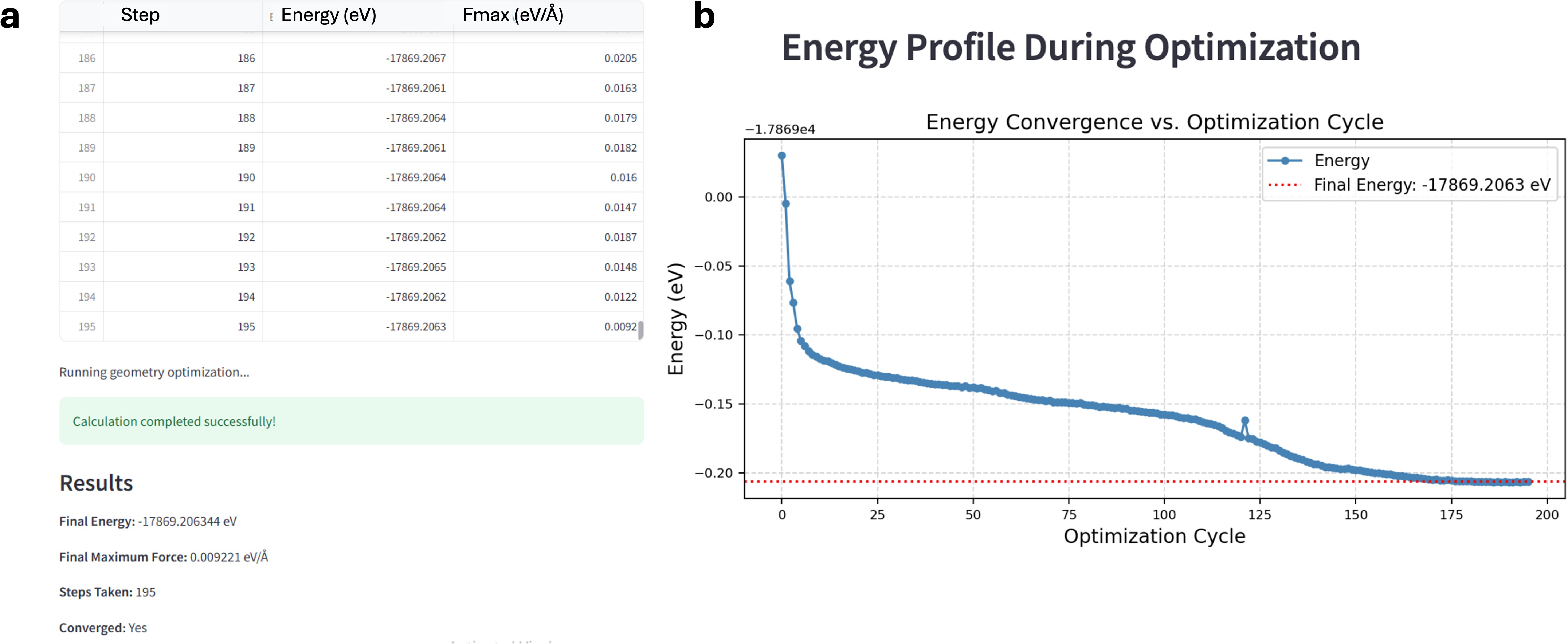
Figure 3: Geometry optimization profile for ibuprofen, illustrating rapid energy descent and convergence in <200 steps.
Vibrational Analysis
Finite-difference vibrational frequencies computed with MACE OFF24 models show remarkable quantitative agreement (error < 50 cm−1) with high-level ab initio and experiment for water, including accurate zero-point vibrational energies.
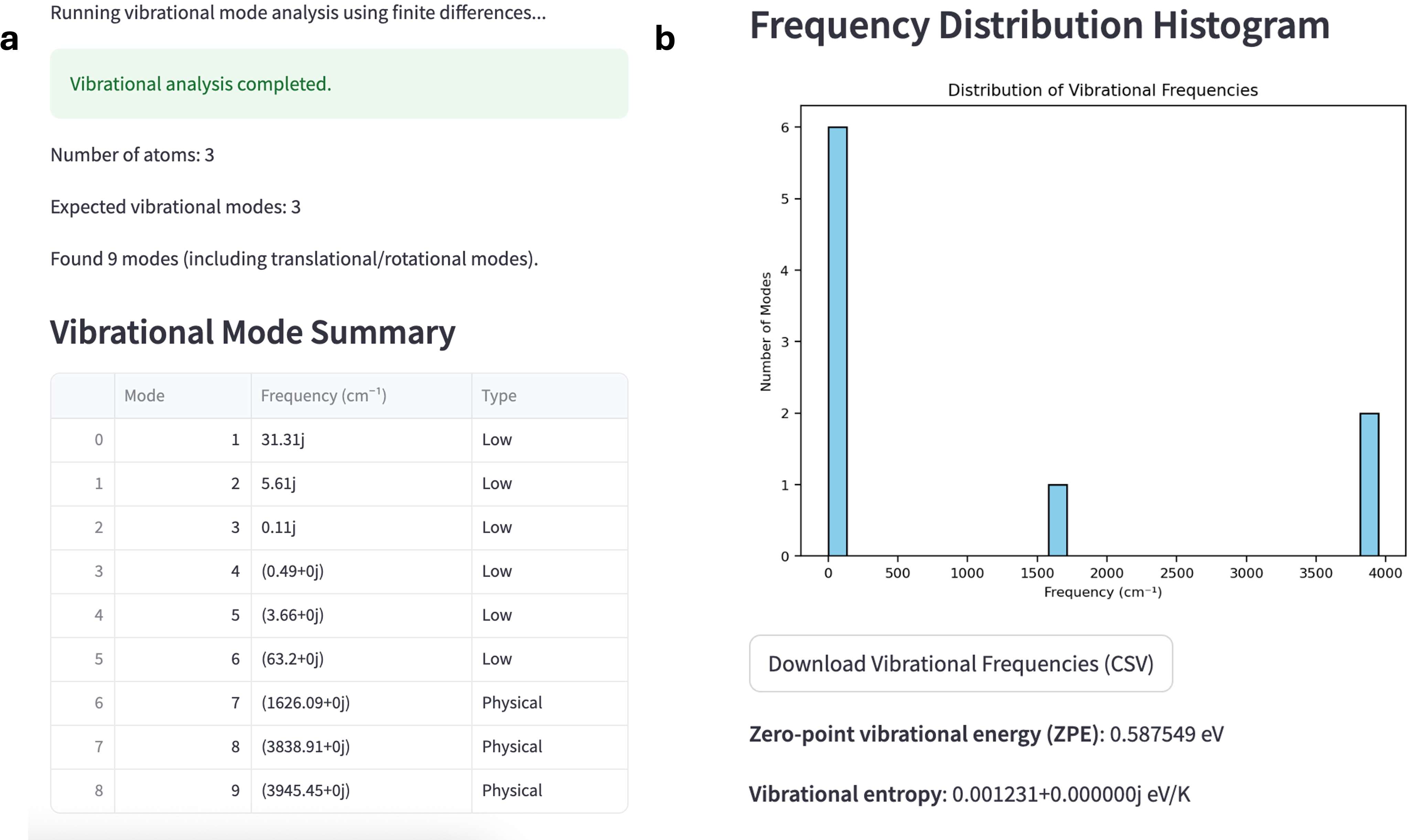
Figure 4: Normal-mode frequency table and computed ZPE for H∼0O as predicted by a universal MLIP.
Equation of State, Spin-State, and Electronic Properties
EOS fitting (e.g., of silicon and Al∼1O∼2) yields bulk moduli within ∼31–3% of reference DFT and experimental values, validating the reliability of underlying energy predictions for structural mechanics.
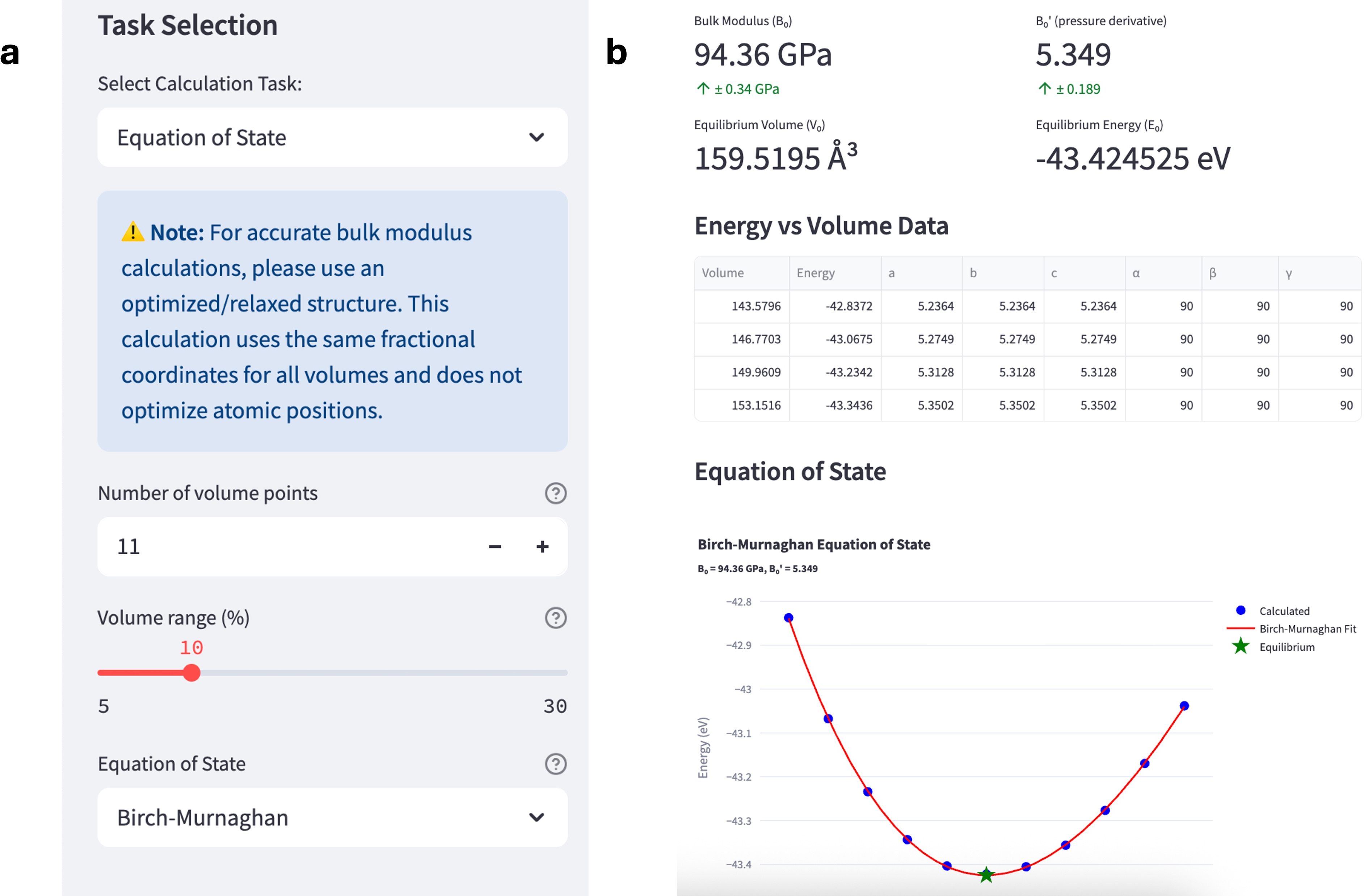
Figure 5: Birch–Murnaghan EOS fit for silicon: computed energy-volume curve, bulk modulus, and equilibrium properties.
Spin-state scans with UMA OMOL universally recover the correct ground states for molecules with nonzero spin: e.g., identifying the correct quartet for CrCl∼4.
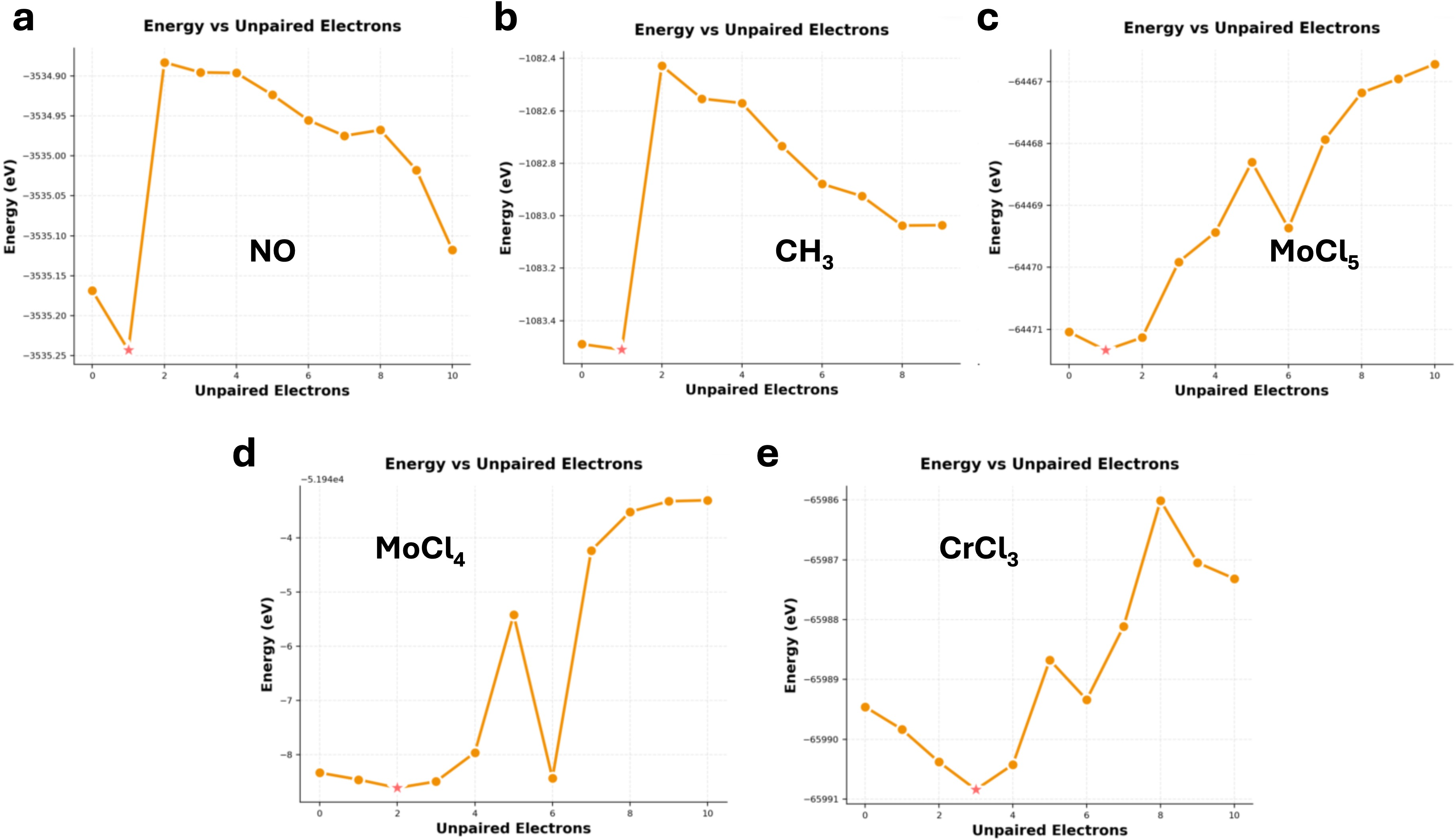
Figure 6: Energy vs. unpaired-electron count for several molecules, with minima matching experimental spin ground states.
Band gap and density of states prediction (e.g., via PET-MAD-DOS) matches DFT-computed electronic properties across molecules and solids—enabling rapid screening for optoelectronic functionality.
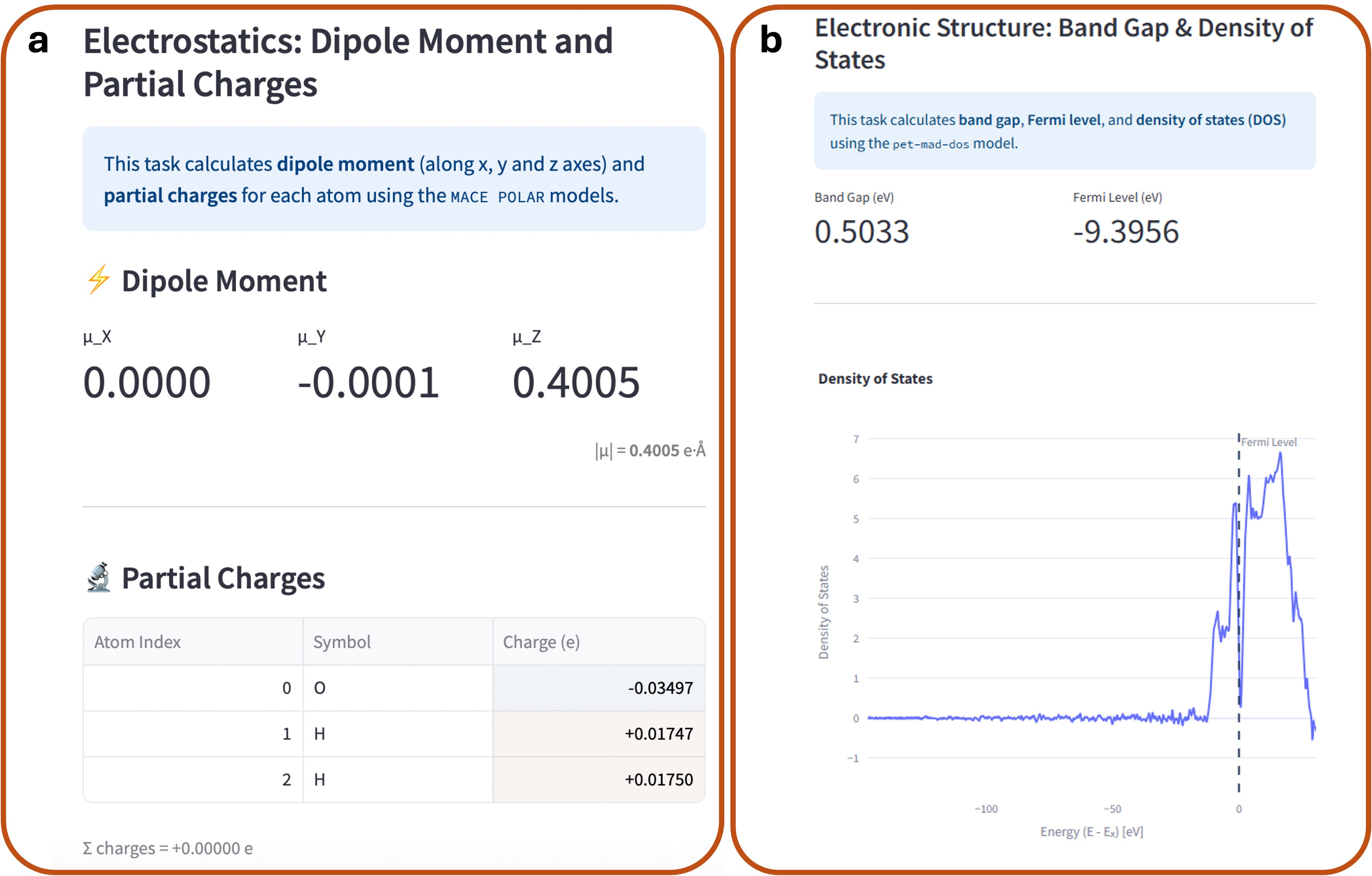
Figure 7: Dipole, partial charges, band gap, and DOS output for test systems.
High-Throughput Screening and Benchmarking
Batch and trajectory-evaluation features allow rapid screening of thousands of configurations (e.g., to identify low-energy packings from random ensembles) and side-by-side evaluation across multiple MLIPs, providing direct diagnostics on ensemble energy variance and model consistency.
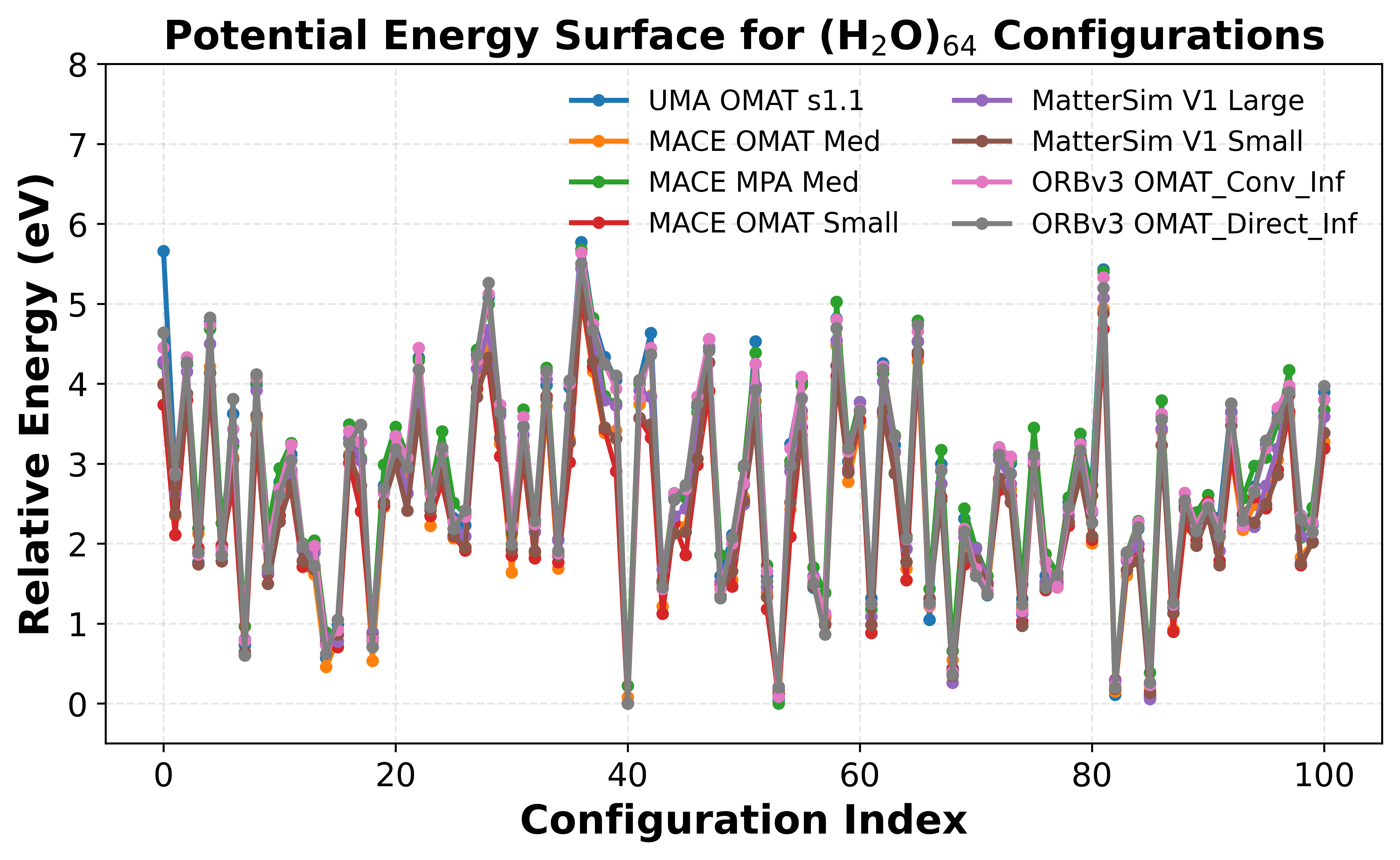
Figure 8: Comparison of relative energies for 100 configurations of a 64-water box; all PBE-trained MLIPs produce consistent energy orderings.
Trajectory benchmarking against AIMD reference data (e.g., for CrCl∼5 on sapphire) produces parity plots colored by atom type, revealing that MAEs for energy (3–14 meV/atom) and force (51–111 meV/Å) are on par with or outperforming published values, but with significant variation by model family and observable.
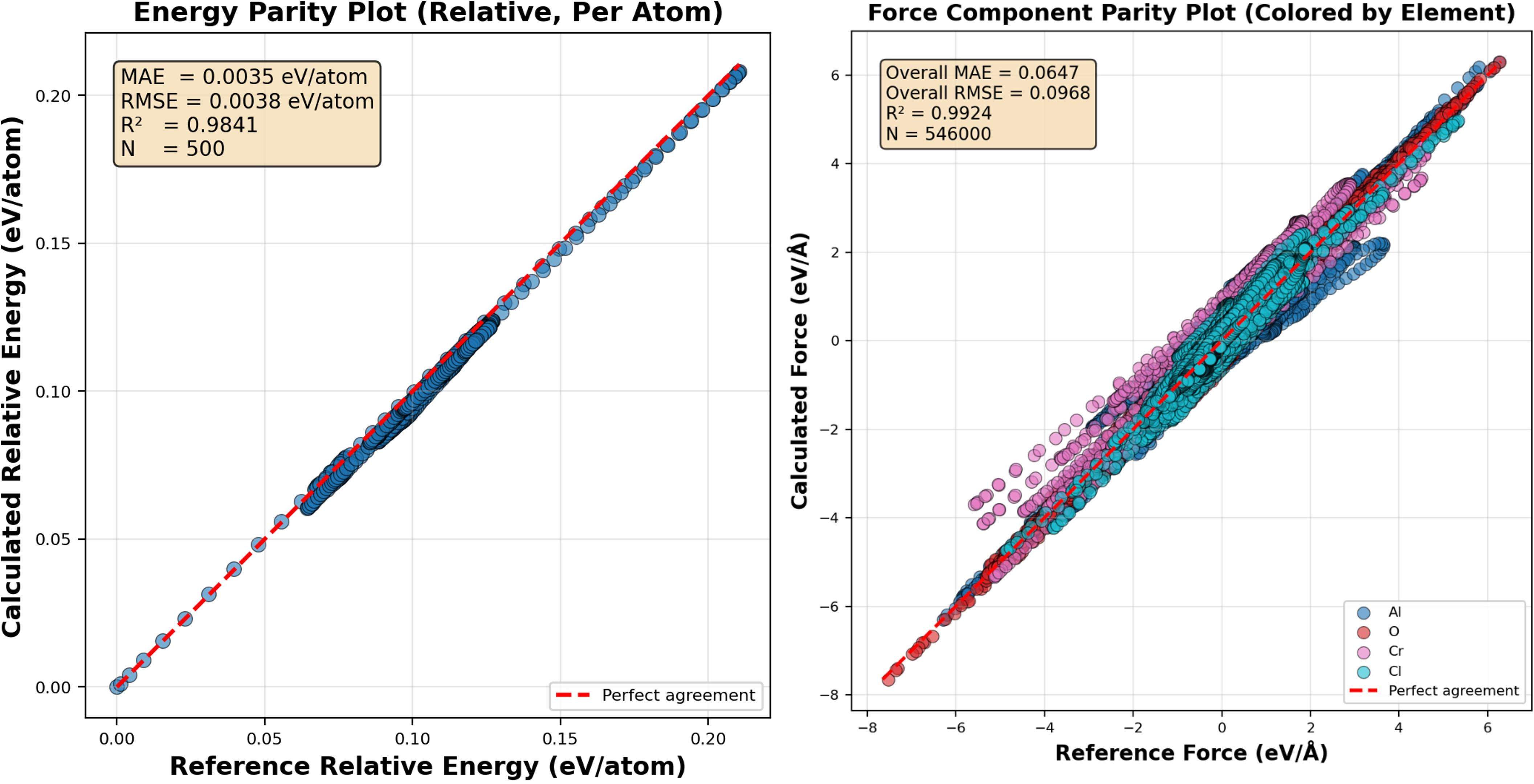
Figure 9: Energy and atom-resolved force parity plots for 500 AIMD configurations of a CrCl∼6/sapphire interface.
Wall-time benchmarking on both CPU (i9-12900K) and GPU (RTX 5070) reveals a ∼7 spread in inference speed across models. Fastest variants (e.g., PET-MAD XS, MACE OMAT Small) achieve ∼8 speedup over UMA or large MACE variants, with hardware-specific shifts in best-performing models.
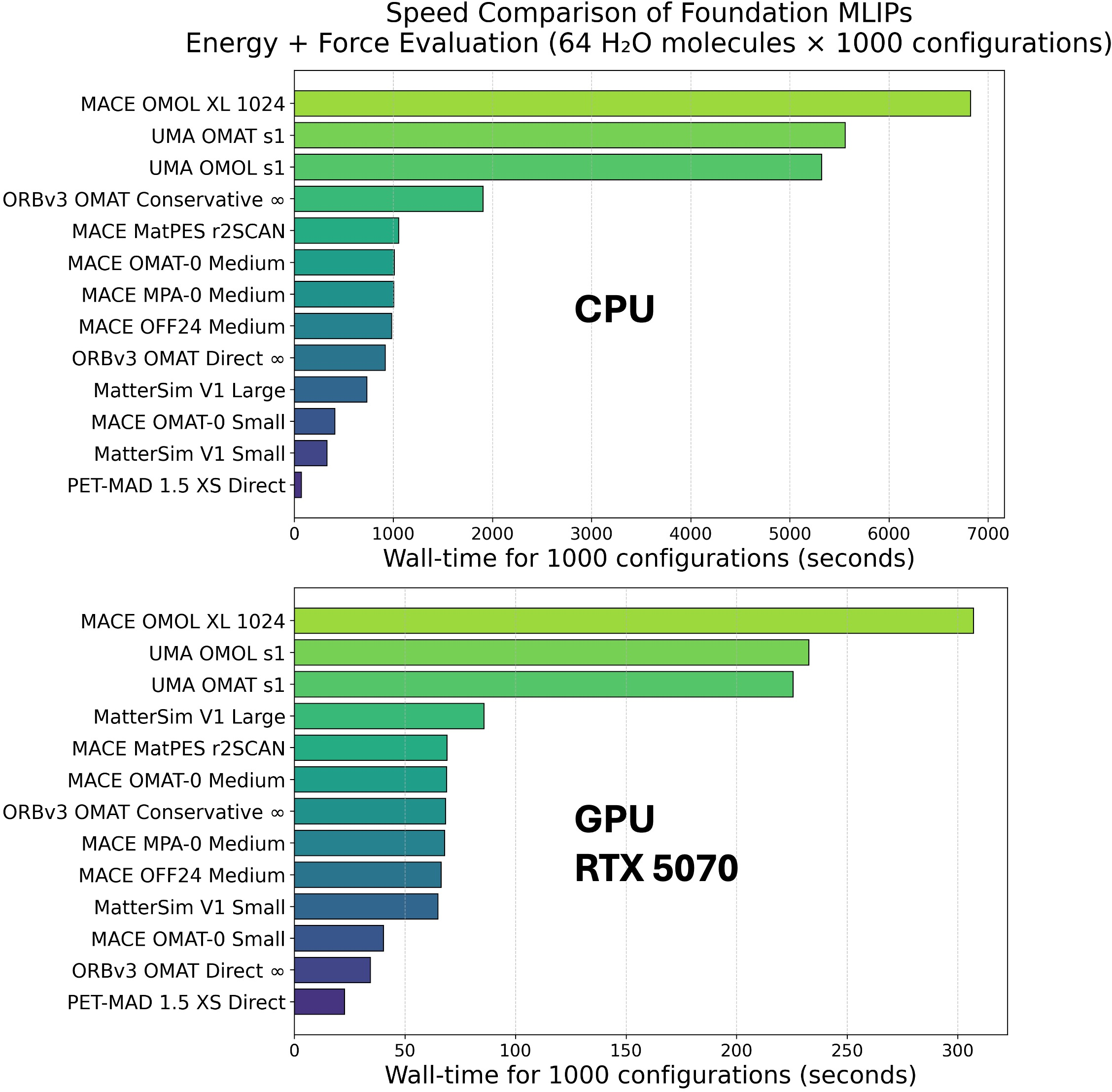
Figure 10: Comparative wall-time benchmarks for 1,000 configuration box; GPU acceleration yields up to ∼9 speedup.
Case Study: CrCl×0 Adsorption on Sapphire
A complete workflow—encompassing bulk optimization, surface energy, spin state, dimer interface PES, and trajectory benchmarking—is demonstrated for a realistic, technologically relevant system. Results show:
- MLIPs generally predict lattice constants, cohesive energies, and bulk moduli within chemical accuracy for Al×1O×2.
- Only OMOL-based MLIPs (trained with spin/charge) can predict ground-state spin of CrCl×3.
- Surface energies and interface PES qualitatively track DFT, but quantitative variation highlights the need for cross-model validation.
- For AIMD trajectory benchmarks, PET OMAT gives lowest energy errors, UMA OMAT lowest force errors.
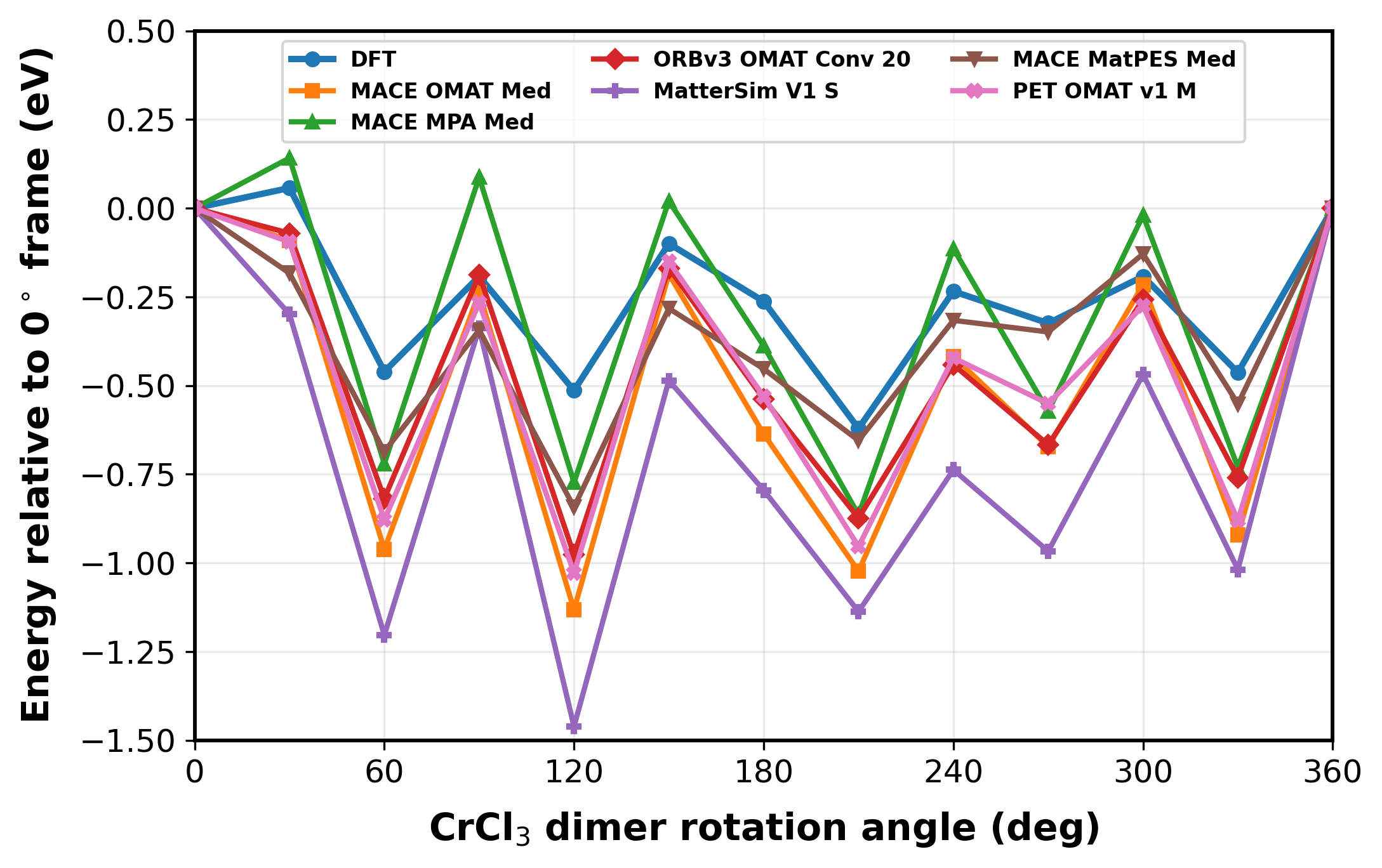
Figure 11: Rotational PES for CrCl×4 dimer on sapphire; several MLIPs track DFT reference energetics.
Implications, Limitations, and Future Directions
MLIP Studio provides an open, extendable platform that directly addresses key practical bottlenecks in MLIP deployment: dependency conflicts, multi-model benchmarking, interactive visualization, and batch diagnostics. The consolidation of CPU/GPU benchmarks, cross-model consistency checks, and support for custom model upload positions MLIP Studio as an essential tool for rapid, reproducible MLIP evaluation and protocol development.
Strong numerical findings: MLIP-based pre-relaxation reduces DFT optimization effort by up to ×5; benchmarking demonstrates MAEs approaching meV/atom and sub-0.1 eV/Å for forces across complex, multi-element, non-equilibrium trajectories; inference time per configuration can be reduced from ×67 s to ×7 s with appropriate hardware and model selection.
Bold, testable claims: The systematic side-by-side comparison reveals that model selection for a given system and observable cannot be decoupled from task context: e.g., force MAE and energy MAE optima do not always coincide, and inference performance depends complexly on both hardware and architecture.
Future developments should address the integration of explicit MD engines, NEB and reaction-path tools, optimization for cluster and surface systems, and more automated, community-driven model registry and evaluation. The platform’s pedagogical design and transparency mandates foster broad reproducibility, lowering barriers to foundation MLIP adoption in education, research, and high-throughput discovery.
Conclusion
MLIP Studio realizes a comprehensive, unified environment for running, evaluating, and benchmarking universal MLIPs with minimal user-side technical burden. The platform elevates the practical deployment and comparison of foundation models in atomistic simulation, supplying both methodological rigor and operational flexibility. By catalyzing fair, reproducible evaluation and rapid prototyping across the field’s most capable universal MLIP architectures, MLIP Studio will be instrumental in shaping both the research trajectory and educational methodology of the next generation of AI-driven quantum simulation.
(2607.07606)