- The paper presents a constrained co-creation framework that leverages productive friction to spark creative breakthroughs in structural design.
- The study introduces four design dimensions—domain grounding, shared representations, state awareness, and multimodal expression—to support iterative design under strict constraints.
- Empirical findings show that integrating AI as a reflective partner diminishes repetitive tasks while enriching exploration and innovation in architectural design.
Creativity from Friction: Human–AI Interaction for Exploratory Structural Design
Introduction
The paper "Creativity from Friction: Human–AI Interaction for Exploratory Structural Design" (2607.07521) addresses the profound misalignment between conventional generative AI paradigms, which focus on producing finalized outputs, and the iterative, exploratory, and constraint-driven workflows foundational to creative disciplines like structural design and architecture. It posits that true creative synthesis in structural engineering emerges through the negotiation of complex and multidisciplinary constraints, wherein friction is not a nuisance to be eliminated, but a catalyst for novel solutions. The authors conceptualize and demonstrate "constrained co-creation"—interactive, multimodal human–AI workflows in which productive friction is preserved, promoting reflective design and agency within rigorous engineering bounds.
Structural Design as Constrained Creativity
Unlike unconstrained creative domains, structural design is defined by the imperative to resolve spatial, mechanical, material, economic, and regulatory requirements simultaneously. Exemplars such as Maillart’s Chiasso Shed, Saarinen’s Dulles Airport, the Broadgate Exchange House, and Eiffel’s Eiffel Tower (Figure 1) demonstrate that the "art" of structures derives from the creative synthesis of efficiency, economy, and elegance under strict constraints, not from the exercise of unconstrained freedom.
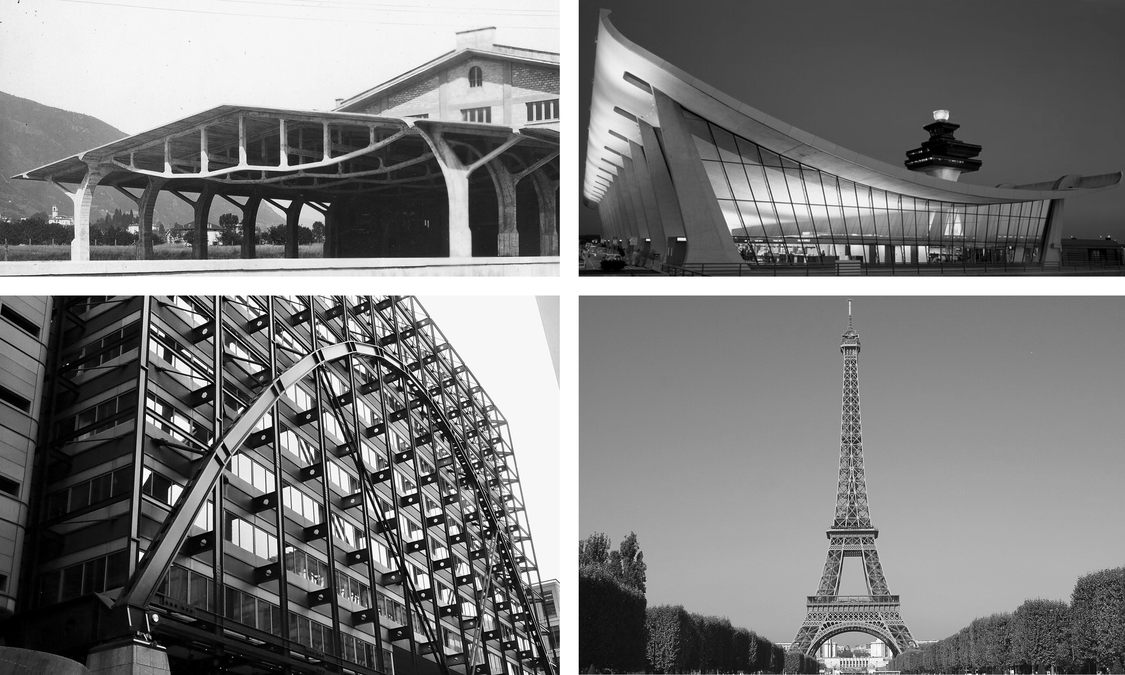
Figure 1: Examples of Billington’s structural art, each representing creativity arising from balancing form, force, and constraint in landmark structures.
The paper grounds its perspective in the tradition of "reflection-in-action" [schon1983reflective], emphasizing that expert designers navigate evolving constraints through iterative externalization, inspection, and revision of partial solutions, rather than seeking a direct path to an optimal answer. Generative AI systems, if designed merely to automate the production of final forms, risk undermining both the creative process and structural feasibility.
Design Dimensions for Human–AI Structural Design Interfaces
The paper identifies four design dimensions, refined from co-creative and mixed-initiative HCI frameworks, necessary to support exploratory structural design:
- Model Grounding in Structural Design Knowledge: Integrating domain-specific logic—structural load paths, customary spans, member hierarchy, and typical boundary definitions—is essential for reliable AI suggestions. Absent this, AI-generated artifacts risk structural invalidity and associated loss of user trust.
- Human- and AI-Readable Data Structures: Shared representations must be simultaneously visual, inspectable, and modifiable by humans, while being programmatically accessible and interpretable by AI agents, enabling mutual editing and understanding.
- State Awareness and Interaction History: AI tools must track the evolving design state, persistent constraints, and the sequence of edits, allowing for real-time reasoning about impact, responsibility, and compliance.
- Multimodal Expression of Design Intent: The system must support incomplete and ambiguous communication through sketches, annotations, text, and partial models, as design intent is rarely verbalized or fully specified in parameterized form.
These dimensions underpin the proposed interaction workflow, conceptualizing the design process as a negotiation between explicit programmatic constraints and intrinsic disciplinary knowledge.
The Co-Creation Workflow and System Architecture
Figure 2 illustrates the proposed human–AI workflow, featuring bi-directional, multimodal interaction anchored in preset and emergent constraints.
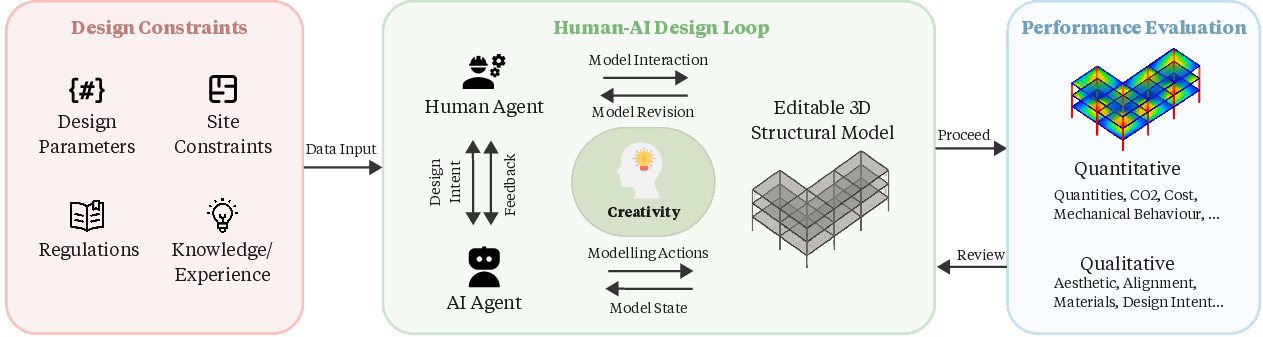
Figure 2: The workflow supports collaborative exploration under constraint, enabling both human and AI agents to iteratively edit, evaluate, and contextualize the evolving structural model.
Constraints are established at the outset (spatial, programmatic, regulatory), augmented by ongoing feedback about feasibility embedded in both the AI’s reasoning model and the designer's tacit knowledge. The workflow emphasizes reducing "unproductive friction"—repetitive, mechanical modelling actions—while preserving "productive friction" generated by constraint negotiation, comparison of alternatives, and reflective judgement. Rather than automating ideation, the AI acts as an accelerator and conversational partner within the bounds of professional discipline.
Empirical Study: Observing Human–AI Co-Creation
The study recruited three expert participants to address a constrained multi-storey building design task (Figure 3), requiring compliance with spatial boundaries, a central void (public plaza), and minimum performance constraints.
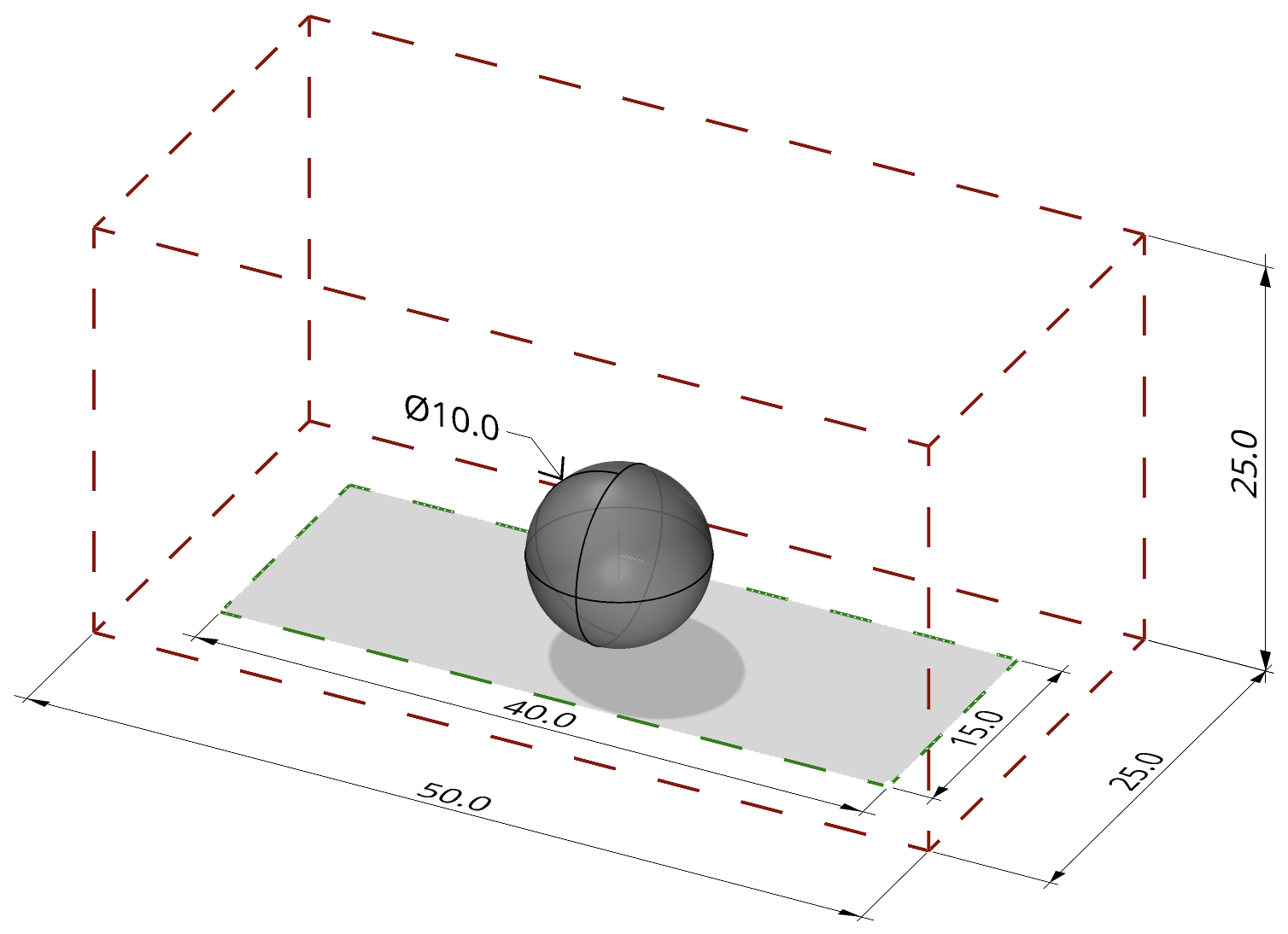
Figure 3: User study boundaries, including geometric, support, and void constraints for the creative design task.
The co-creative system integrated direct 3D manipulation, text-based prompting, and sketch-based inputs, all routed through a Gemini-based multimodal AI backend capable of bidirectional interaction. The recorded interaction timelines (Figure 4) and analysis of initial sketches versus ultimate models (Figure 5) yield qualitative insights into the dynamic of productive friction, AI-influenced design evolution, and the emergence of creative solutions.
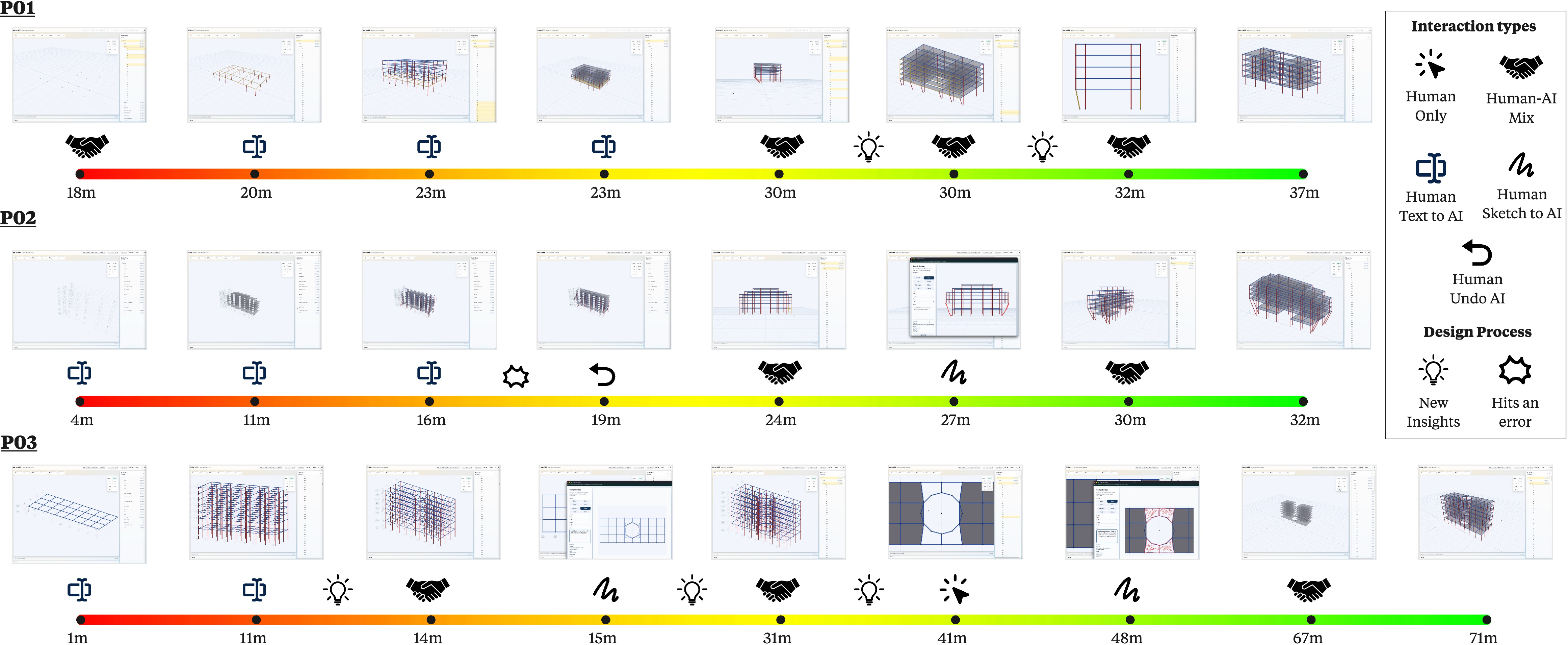
Figure 4: Design timelines for each participant, showing the evolution of ideas through mixed human–AI, language, sketch, and direct manipulation inputs.
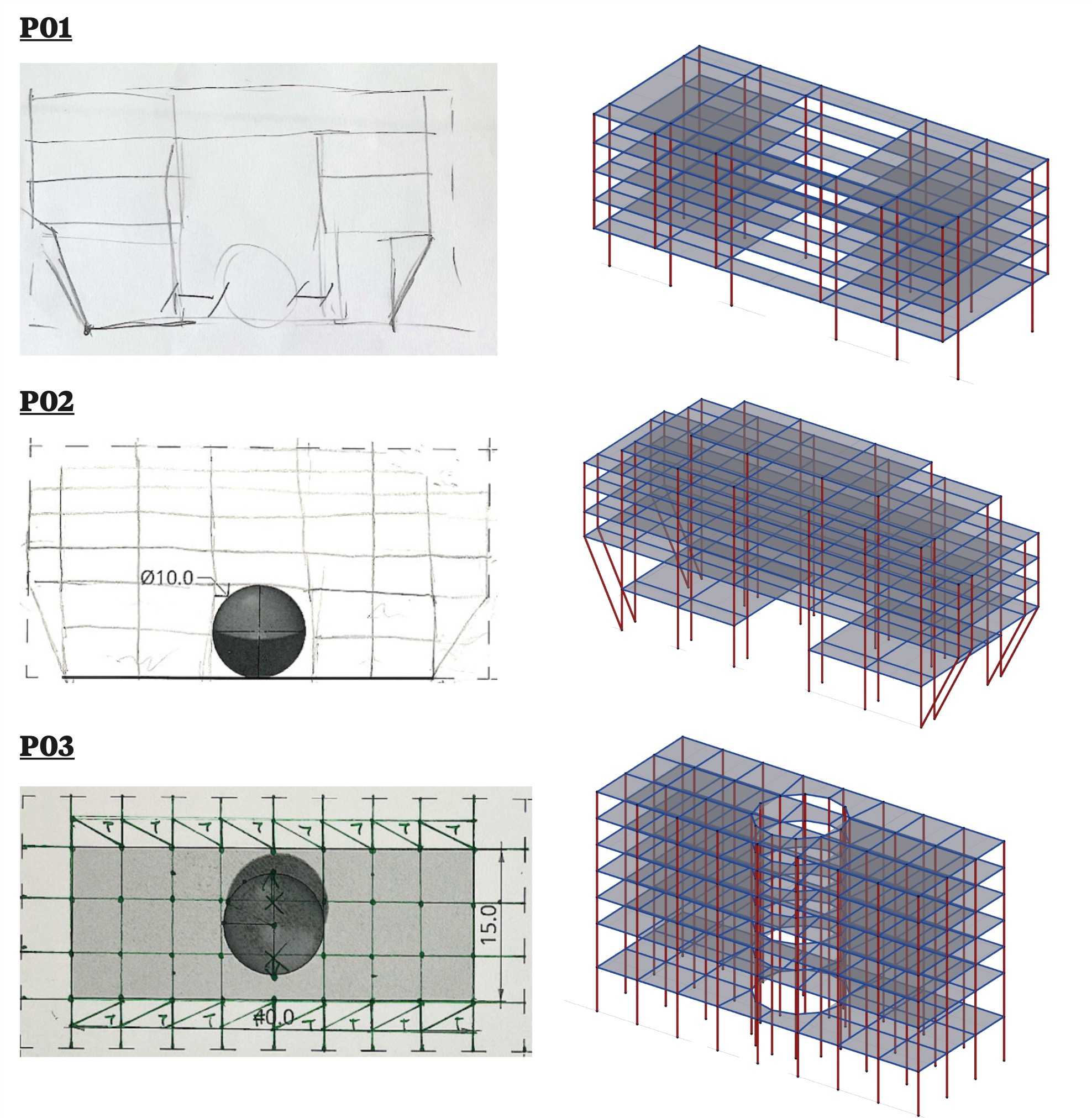
Figure 5: Initial sketches and the corresponding final models, highlighting iterative refinement through AI-supported co-creation.
Notably, participants altered their design direction multiple times in response to both visual inspection and AI-supplied alternatives or rapid model updates. The AI was generally most effective at reducing repetitive actions (e.g., grid generation, element replication), but less so at resolving ambiguous or highly creative sketch-based instructions, which required nontrivial interpretation. Multimodal input—especially sketching—was consistently valued as a means of quickly exploring alternatives, underscoring the importance of ambiguity and incomplete specification in early-stage design.
Human Agency and Perceptions of Collaboration
Participants differentiated automation, collaboration, and true co-creation by the locus of decision-control and proactive suggestion. While the AI system was leveraged primarily as an accelerator or collaborator on explicit tasks, participants stated that genuine co-creation would require the AI to actively suggest alternatives, warn of infeasible design moves, or highlight emergent constraint violations. Importantly, all valued retained human agency and reflectivity, using AI as a tool for exploration rather than prescription.
Limitations and Implications
The study is positioned as qualitative and formative, with a small expert sample and an early prototype lacking robust CAD functionalities. Creative breakthroughs—changes to design direction—arose primarily from the participants’ own reflective inspection of AI-generated outputs, rather than autonomous AI prompting. Future research prospects include scaling interface complexity, enhancing proactive AI design suggestions, and systematically investigating how varying levels of AI autonomy affect co-creation dynamics and creative outcomes.
The authors propose that integrating rigorous model grounding, dynamic state tracking, and comprehensive multimodality will be essential for the next generation of AI-augmented design tools. Practically, this research advances the development of specialized, trustworthy, and agency-aware AI systems for accomplished and novice structural designers alike. Theoretically, it underscores that creativity in high-consequence engineering domains is indelibly shaped and potentiated by the friction of constraint and the continuous negotiation between human intent, artifact evolution, and disciplinary logic.
Conclusion
This work demonstrates that generative AI for structural design should be reframed as an interactive partner in disciplined exploration, not as an autonomous provider of final answers. The preservation of productive friction is central: constraint negotiation catalyzes creative advances, while repetitive modelling should be efficiently offloaded to AI assistance. The study’s pilot interface and user observations corroborate the foundational value of domain-specific model grounding, shared modifiable data representations, stateful interaction histories, and multimodality in enabling human–AI co-creation. Future AI systems adopting these design dimensions will more effectively support engineering creativity, agency, and rigor within complex and evolving constraint environments.