- The paper demonstrates that common concepts manifest in multiple visual attractors, with a median of two distinct clusters per concept.
- It utilizes 2.6 billion QuickDraw sketches with techniques like PCA, UMAP, and DBSCAN to map out latent visual clusters across cultures.
- Findings show a 45% stronger alignment between visual representations and cultural similarity compared to language, underscoring the need for multimodal AI models.
Large-Scale Visual Sketching Unveils Latent Cultural Diversity in Human Conceptual Structure
Introduction
The investigation of conceptual universality has conventionally relied upon linguistic analyses, which are limited by the inherent abstraction, compression, and cross-cultural arbitrariness of language. The study "Billions of Sketches Reveal Hidden Cultural Variation in Human Concepts" (2607.07267) addresses this constraint by harnessing a global dataset of over 2.6 billion QuickDraw sketches from 236 countries and territories to probe visual, rather than verbal, instantiations of common concepts. By comparing the geometry of visual embedding spaces with those derived from multilingual word embeddings, and relating both to established cultural similarity measures, the work exposes divergent and previously unquantified patterns of intracultural and intercultural conceptual representation.
Methodological Advances and Dataset
The authors utilize the Google QuickDraw dataset, comprising 2.6B crowd-sourced sketches across 344 concepts. Each entry encodes pixel-level stroke information, creation timestamp, and inferred country-of-origin. After filtering and normalization, sketches are represented as 384-dimensional DINOv2 embeddings; further dimensionality reduction using PCA and UMAP enables clustering in latent space. DBSCAN is applied to discover exemplar clusters within each conceptual class, while a grid-based method is introduced for categories that elude conventional density-based clustering. Concept-level clusterability is quantified as the proportion of non-noise sketches, and concept properties such as concreteness and sensorimotor grounding are mapped using both human-annotated databases and LLM-based annotation.
Exemplar Structure and Concept Clusterability
Analysis reveals that human-drawn sketches of most concepts do not converge to a single prototype but organize into multiple stable visual attractors. The median number of distinct clusters per concept is two, with distributions ranging from single-form (e.g., "donut") to high-variance (e.g., "crow" with 21 clusters). Concepts with high haptic and sensorimotor association are systematically more clusterable, indicating that embodied experiences, particularly those mediated through manual interaction, are reflected in the consistency of visual forms across individuals and cultures.
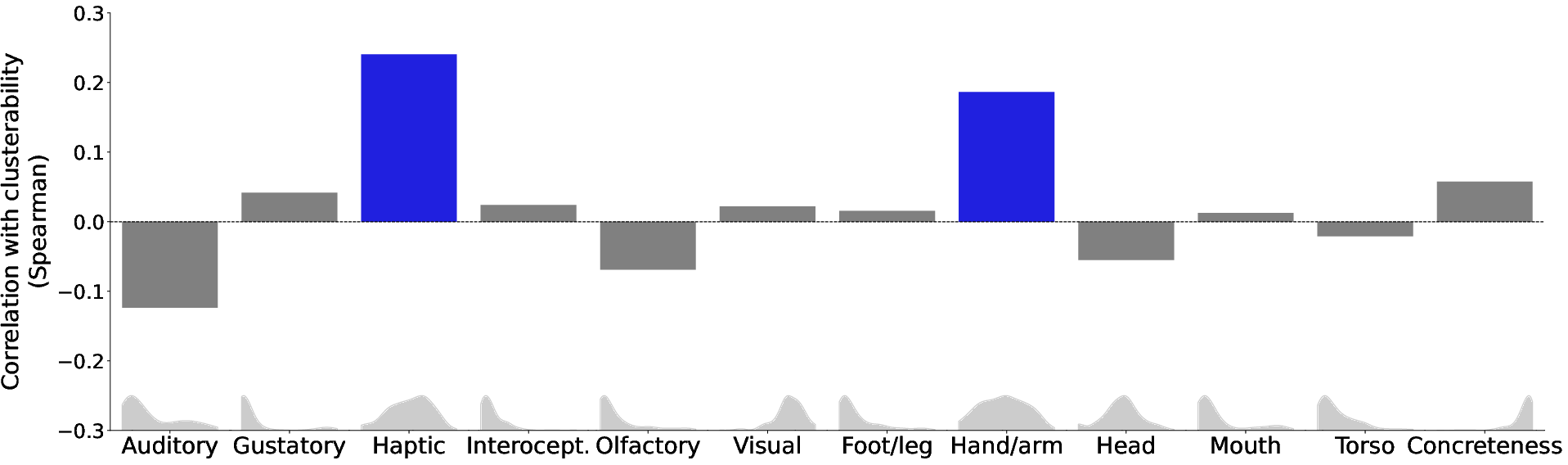
Figure 1: Significant correlations between clusterability and haptic/sensorimotor properties.

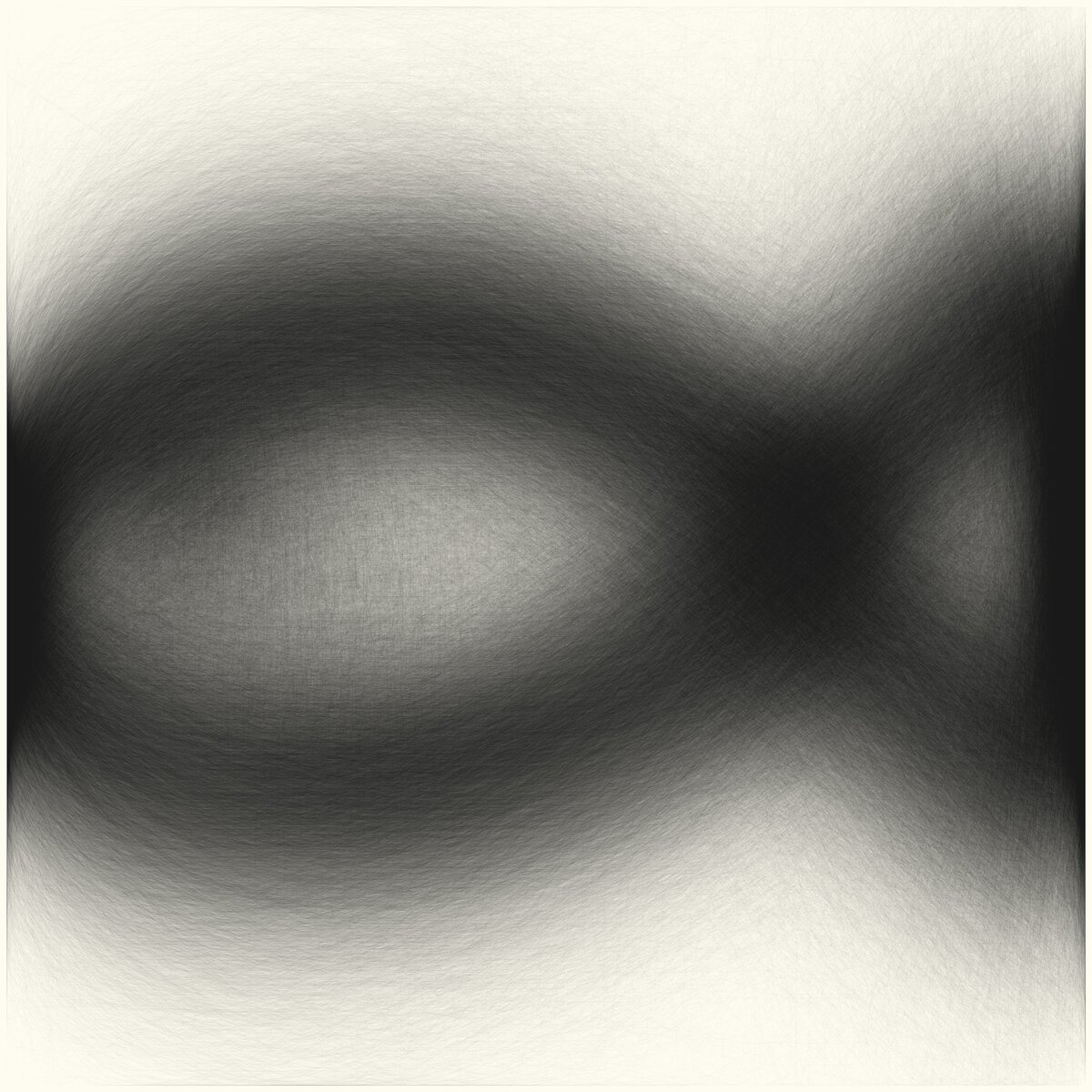
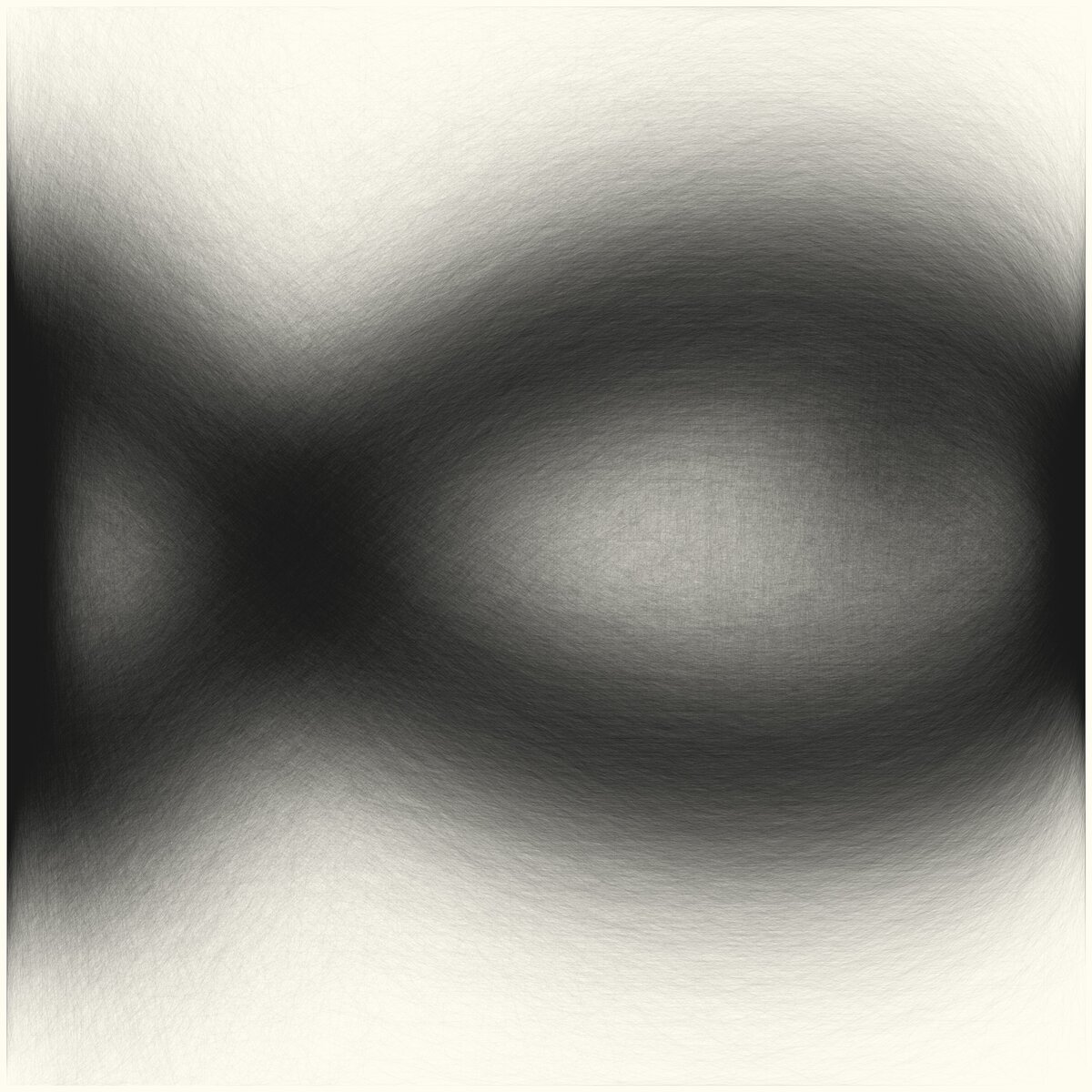
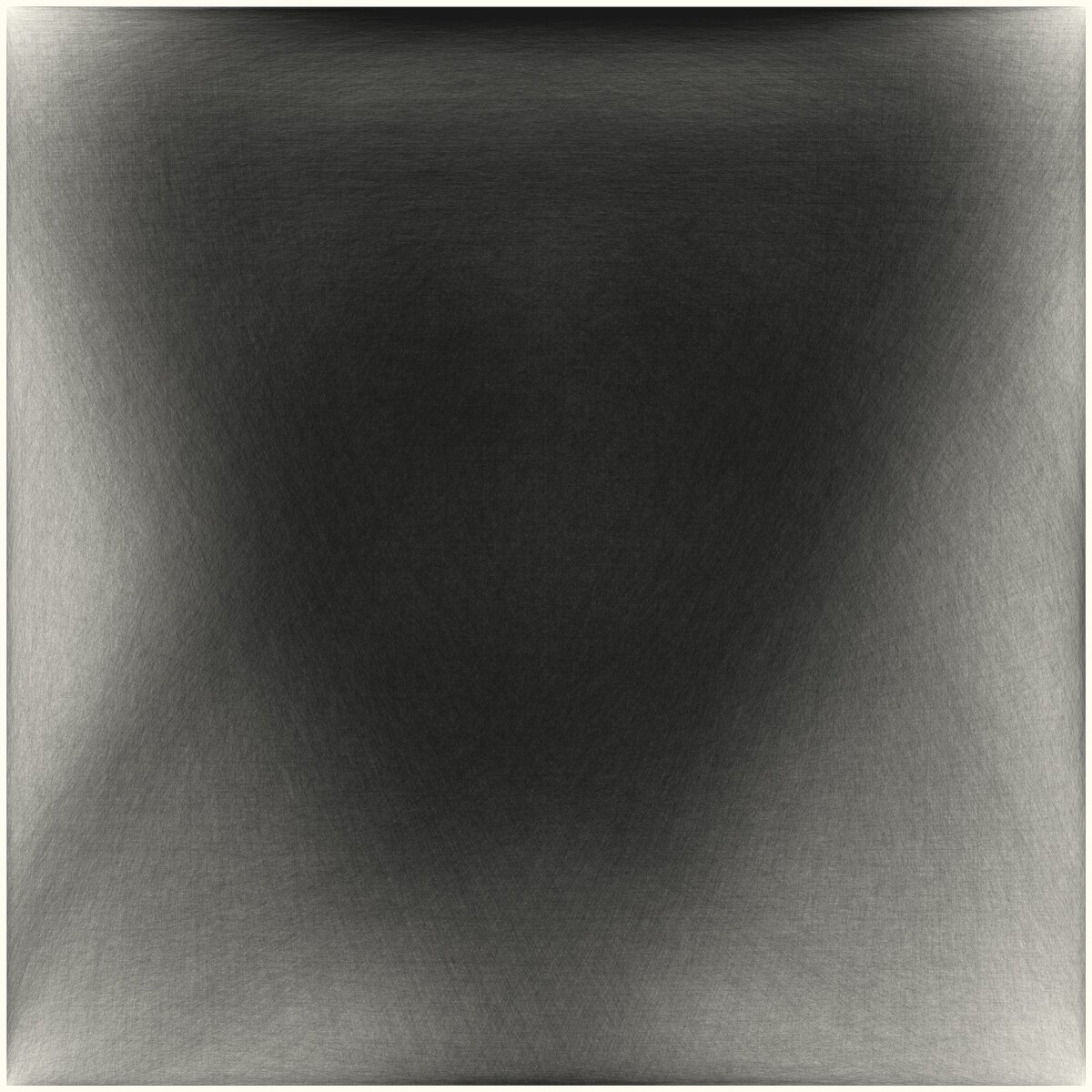
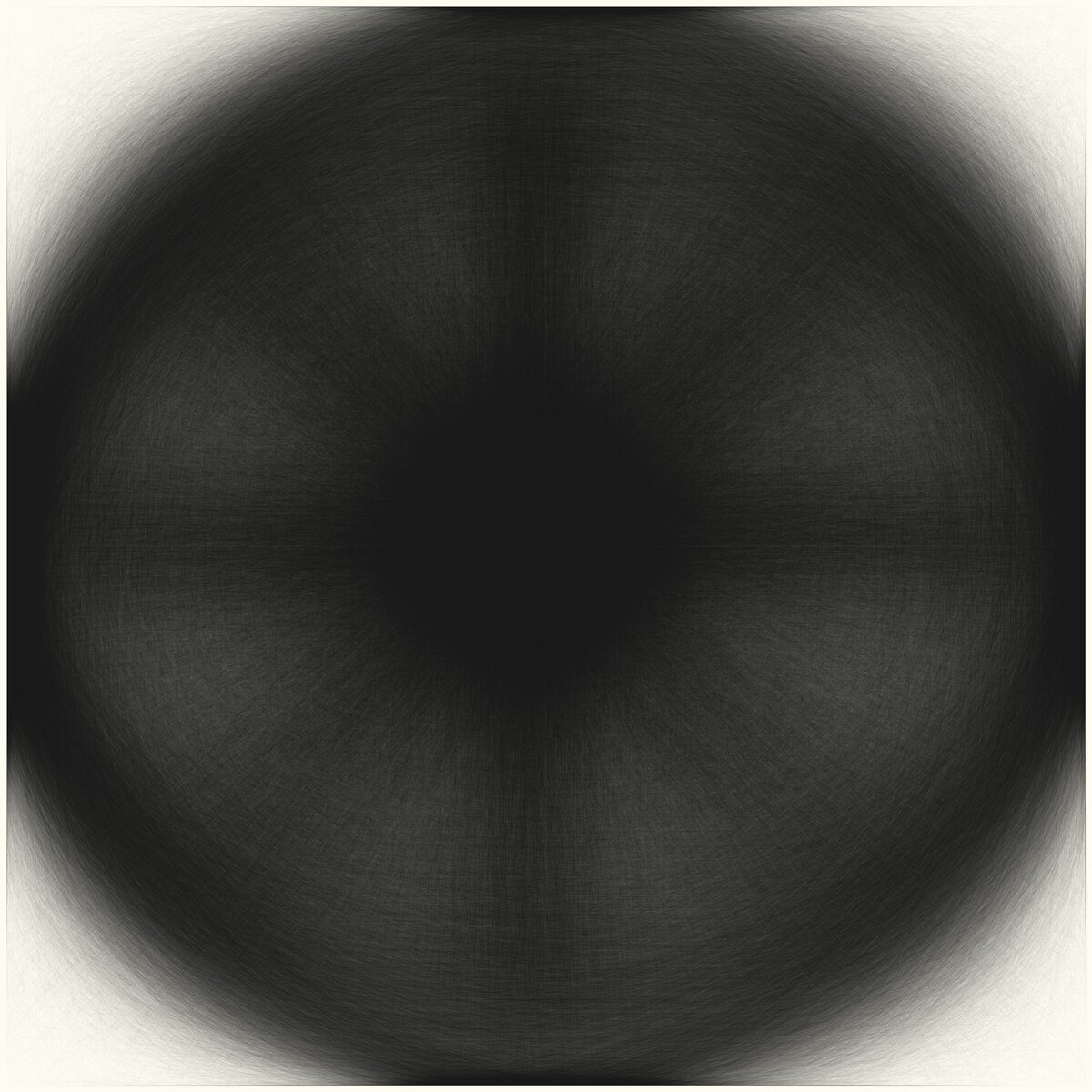




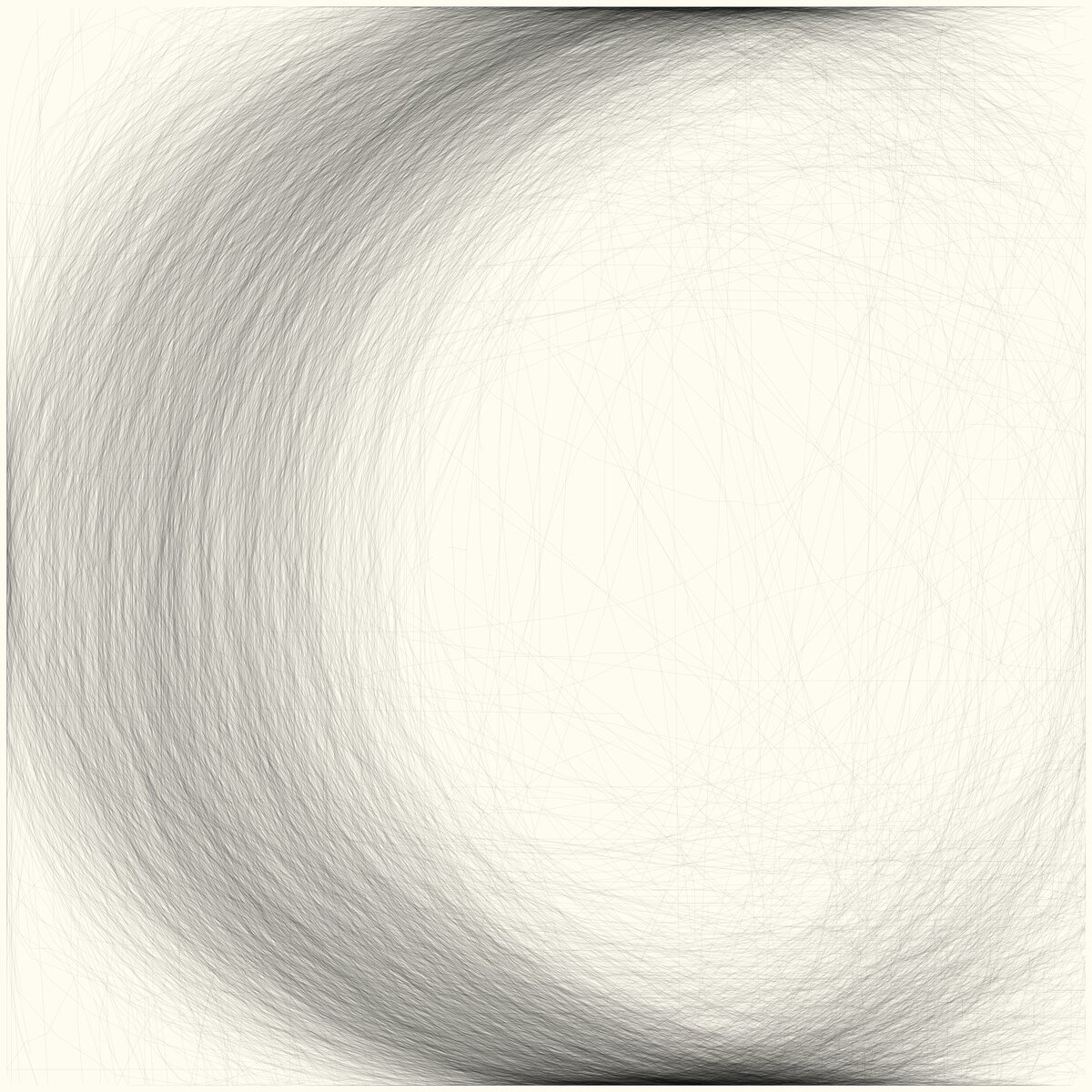

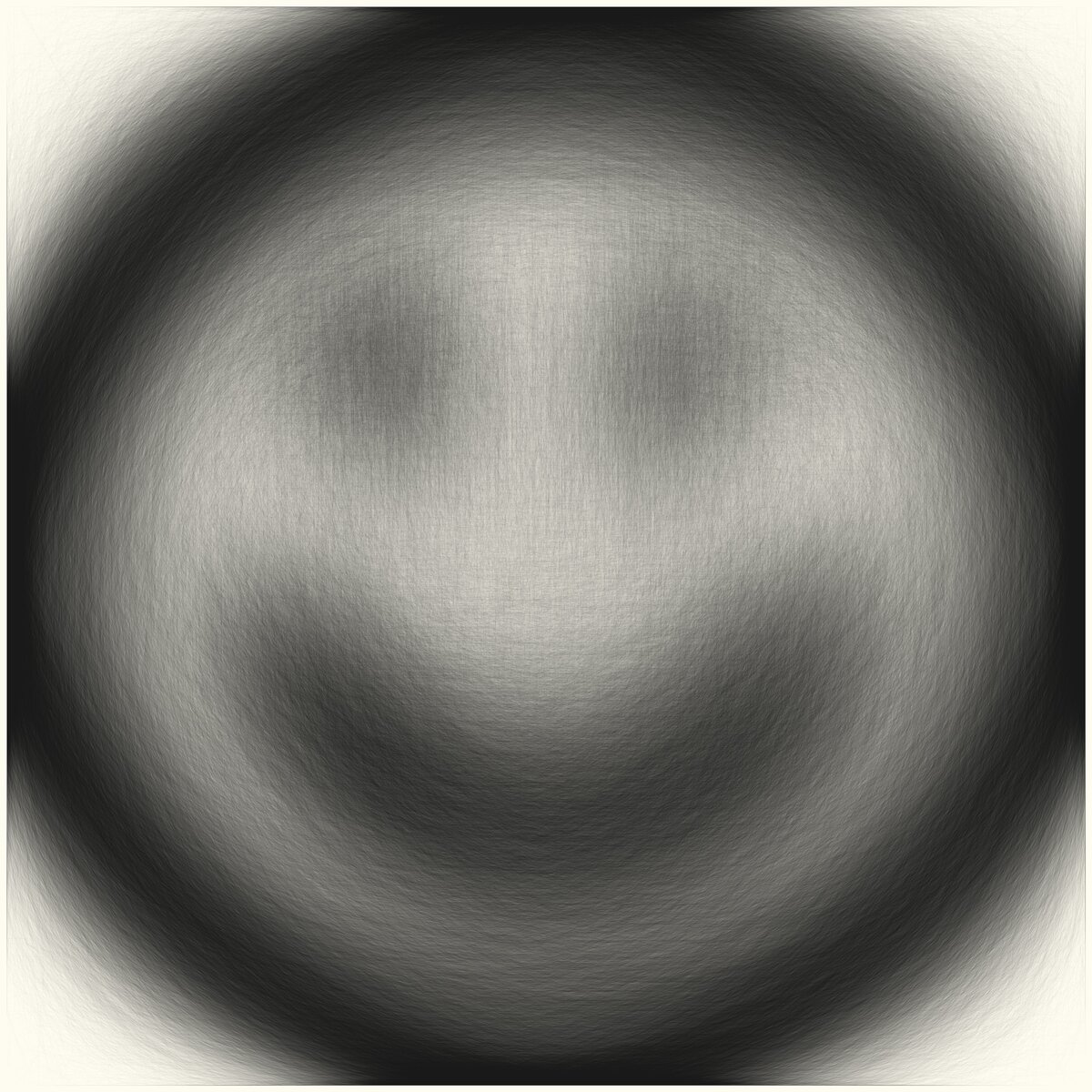
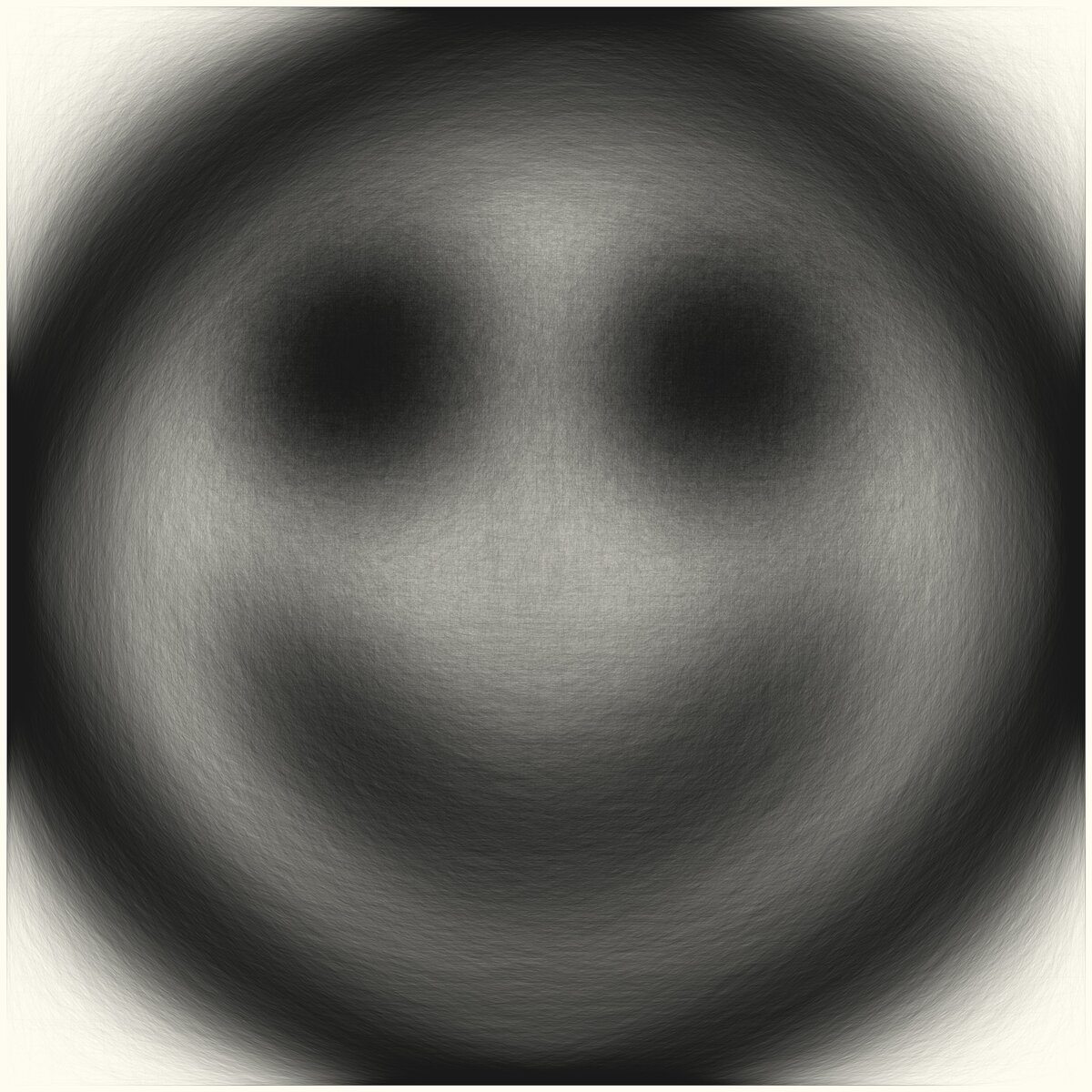
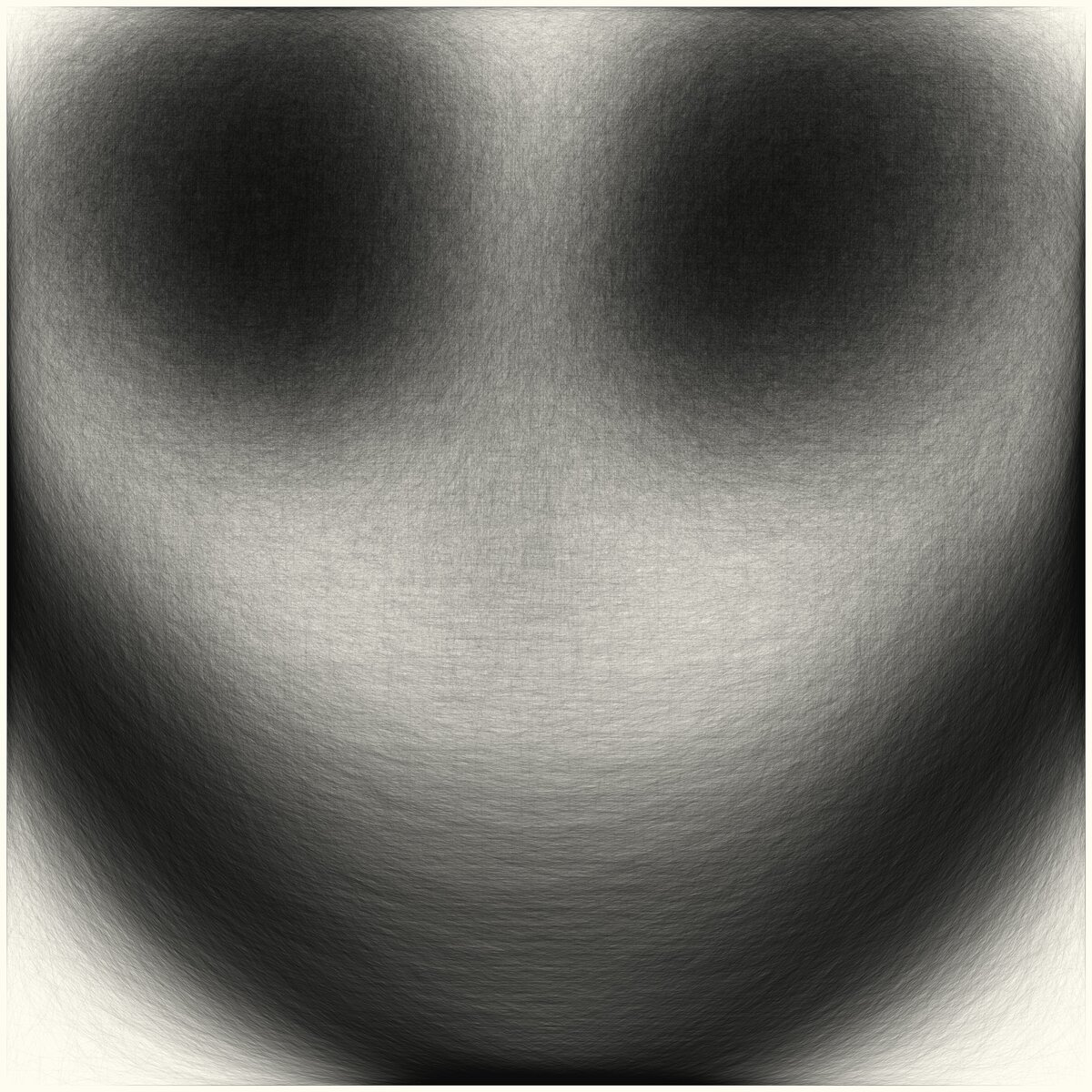

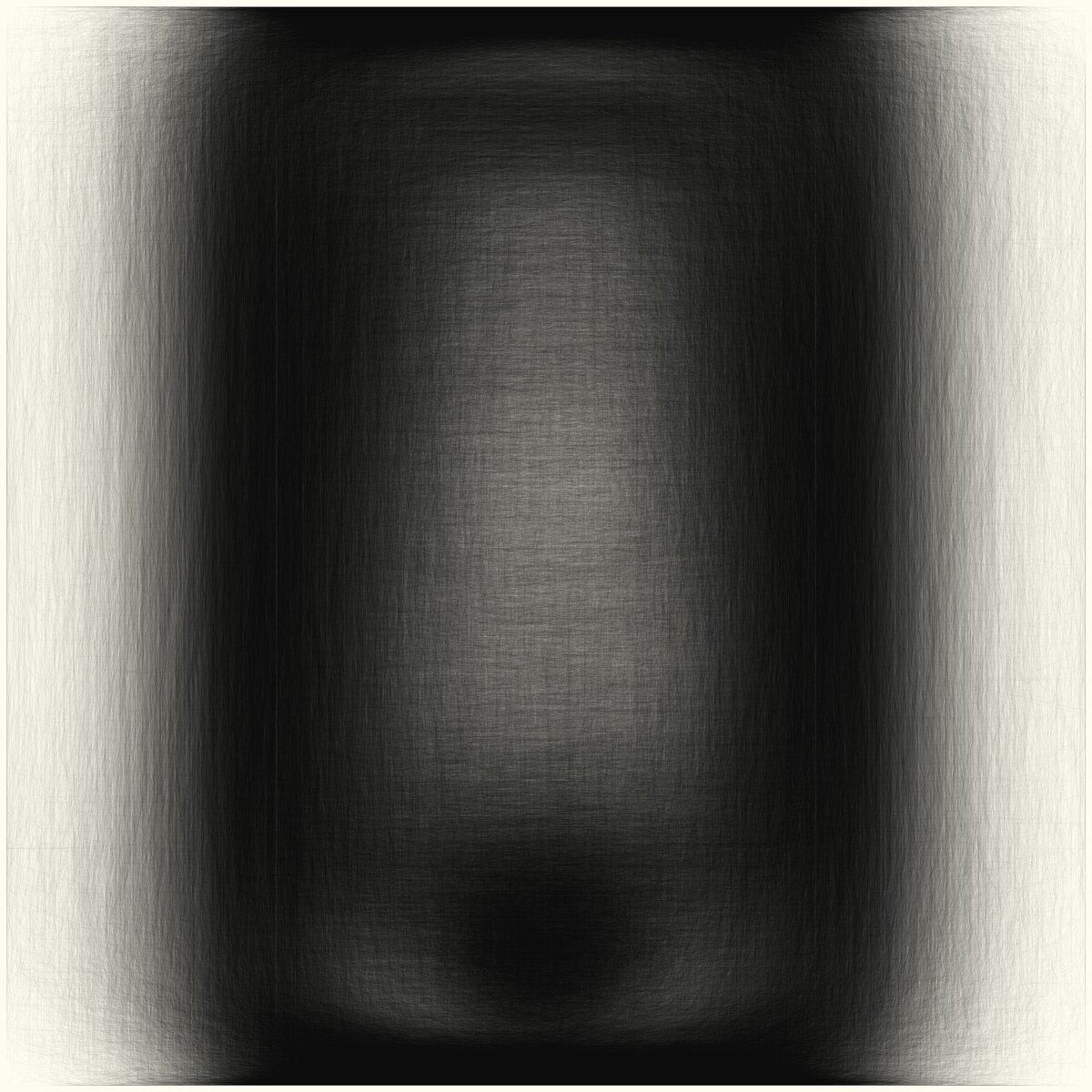
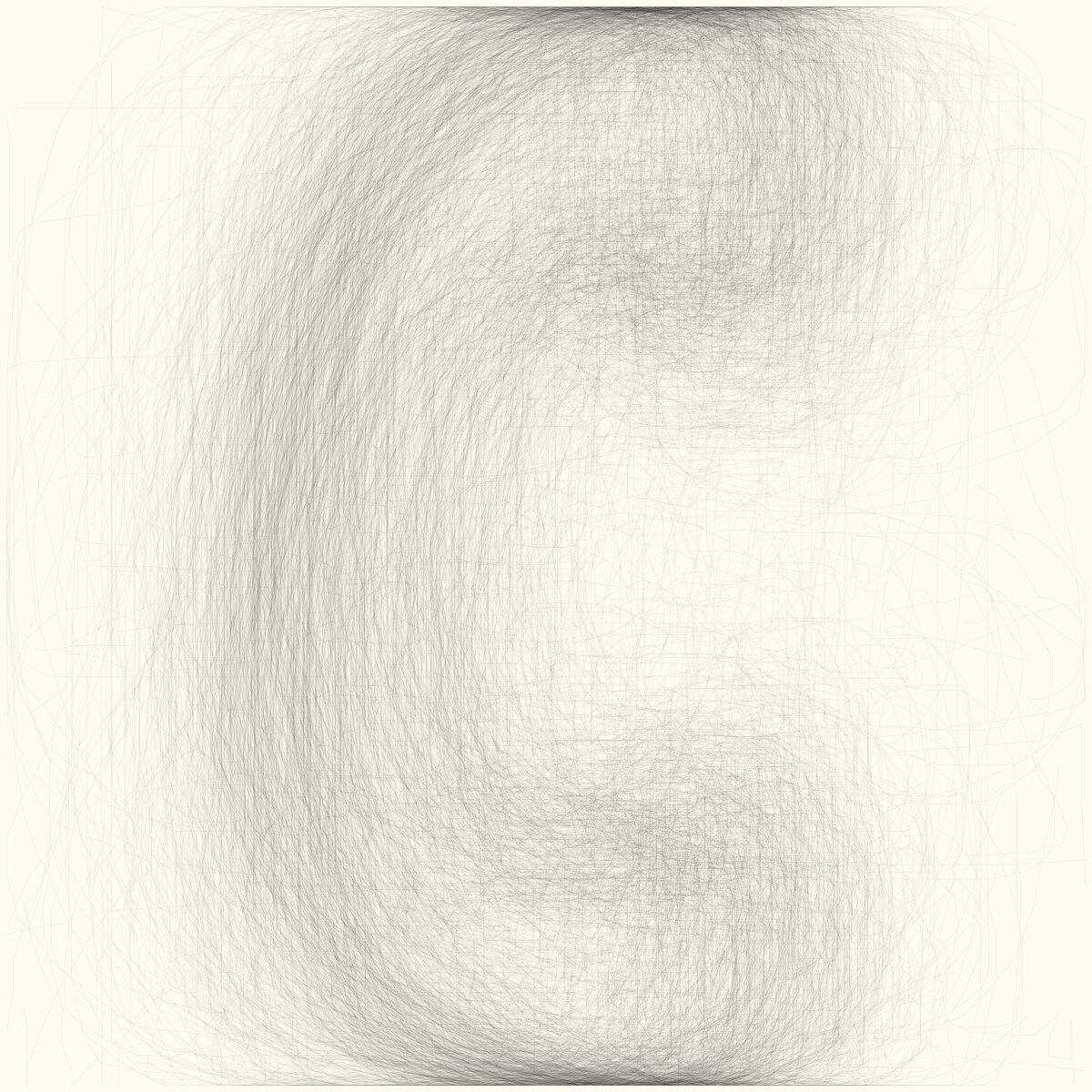


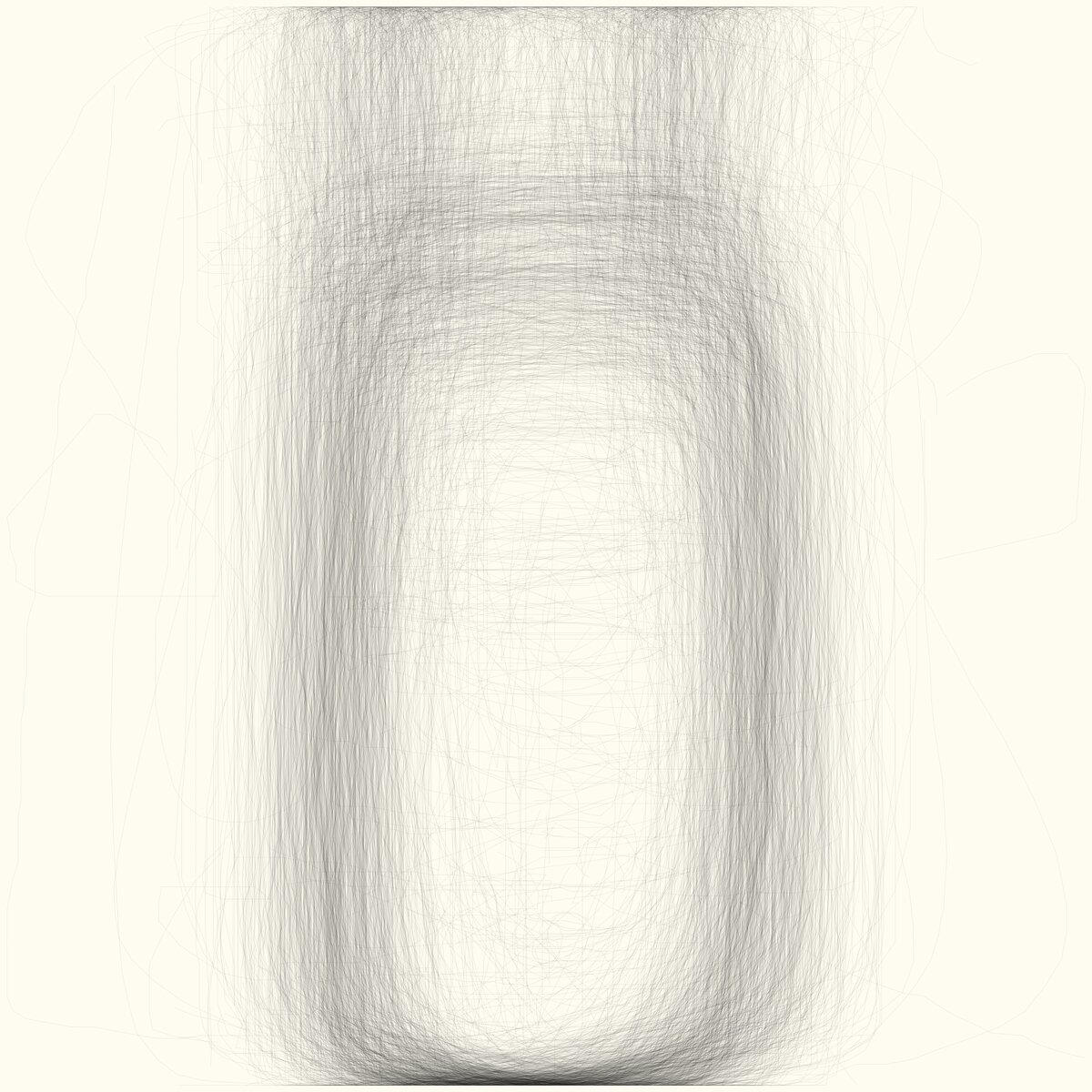
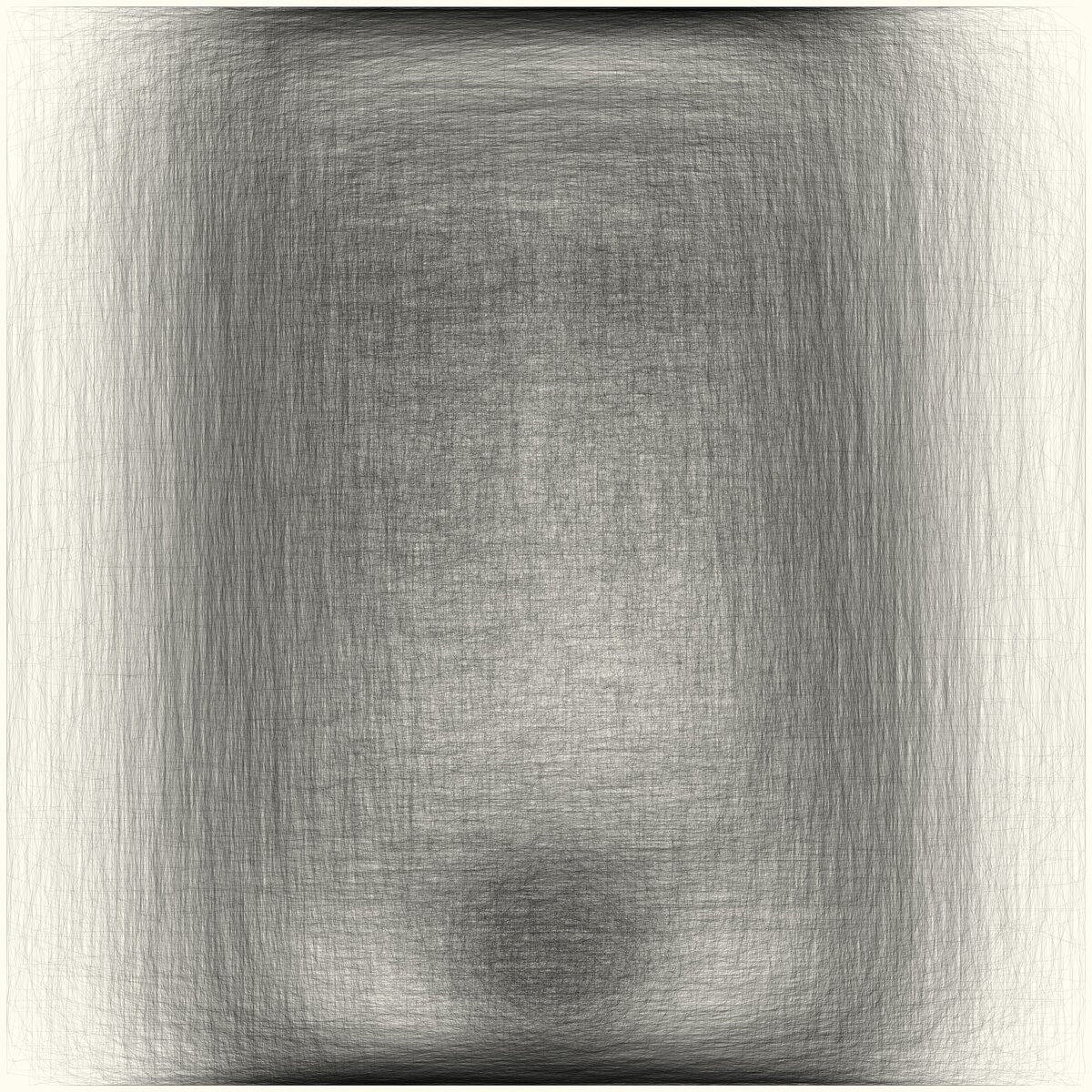
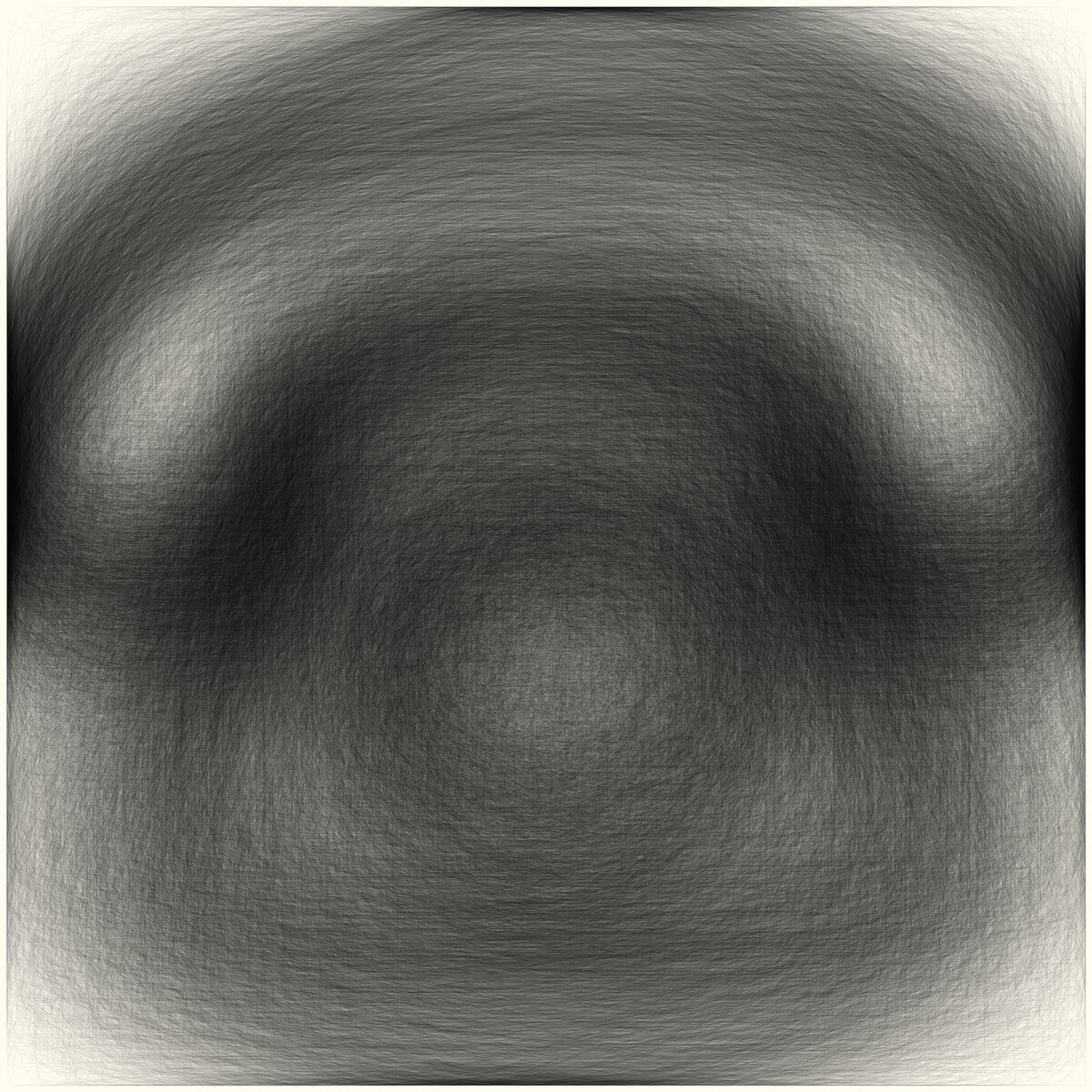
Figure 2: Representative cluster overlays for six concepts, visualizing stable cross-user visual attractors.
Divergence Between Visual and Linguistic Semantics
Upon comparing visual and language-based concept embeddings, the study finds substantial divergence in their induced similarity geometries. For instance, alternative visual clusters of a concept (e.g., pizza as a "slice" vs. a "whole pie") are rarely nearest neighbors in latent space, nor are visually similar objects consistently semantically proximate in language space. The macro average rank correlation between visual and word-based similarity hierarchies is only 0.098, across multiple metrics and embedding models, quantitatively establishing that visual sketch data exposes relational structures systematically compressed or erased in language.
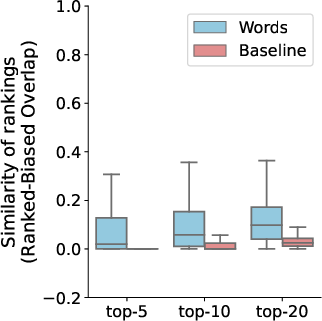
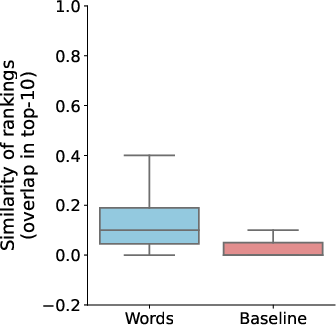
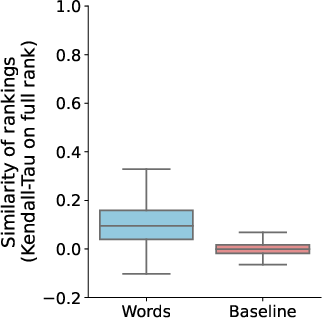
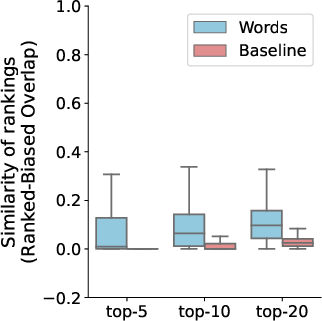
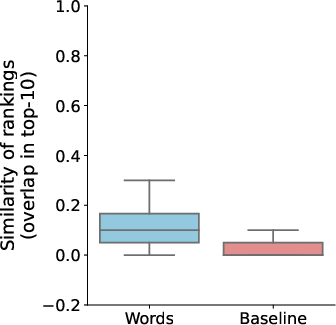
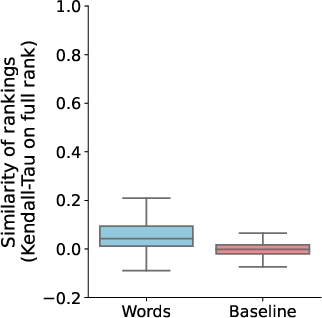
Figure 3: Rank-Biased Overlap between image and word embedding-based concept similarity rankings shows negligible agreement.
Intercultural Patterns in Visual and Linguistic Concept Networks
To formalize cross-cultural similarities, two country × country networks are constructed: one defined by visual cluster similarity and another by word embedding-based semantic proximity (across primary national languages). Louvain community detection reveals that image-based networks recover strong, intuitive clusters—such as English-speaking, South American, European, and East Asian conglomerates—with high intragroup similarity. In contrast, the linguistic network yields fainter, less coherent community structure.
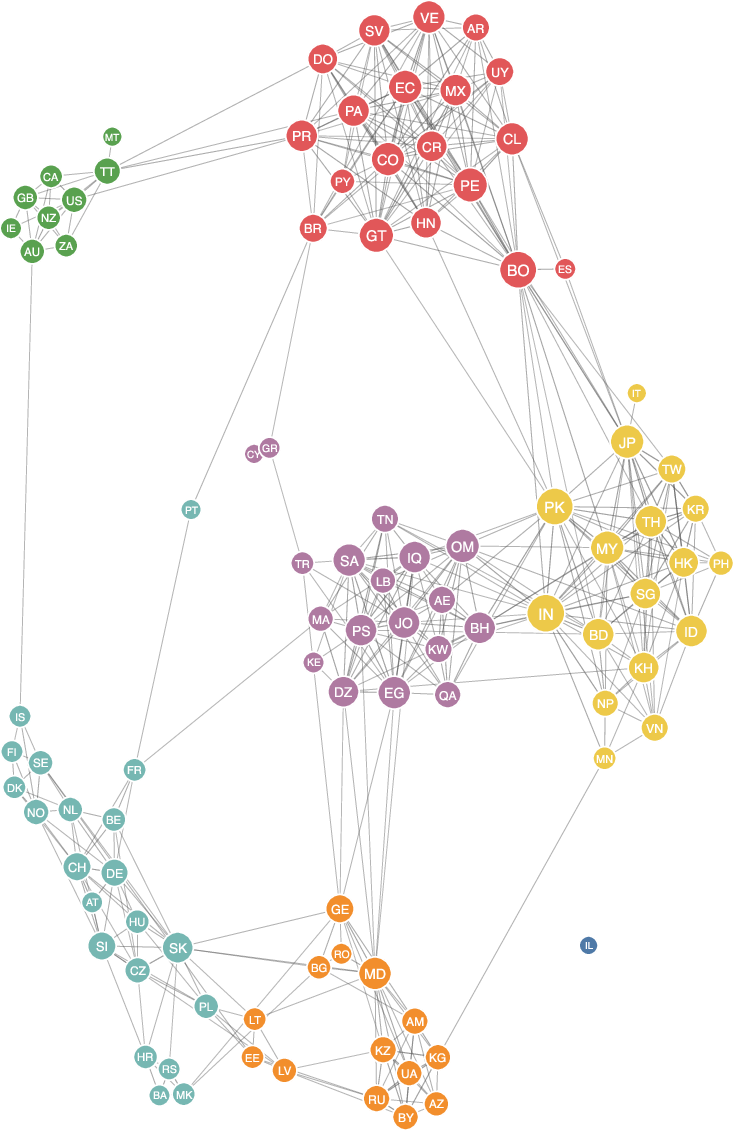
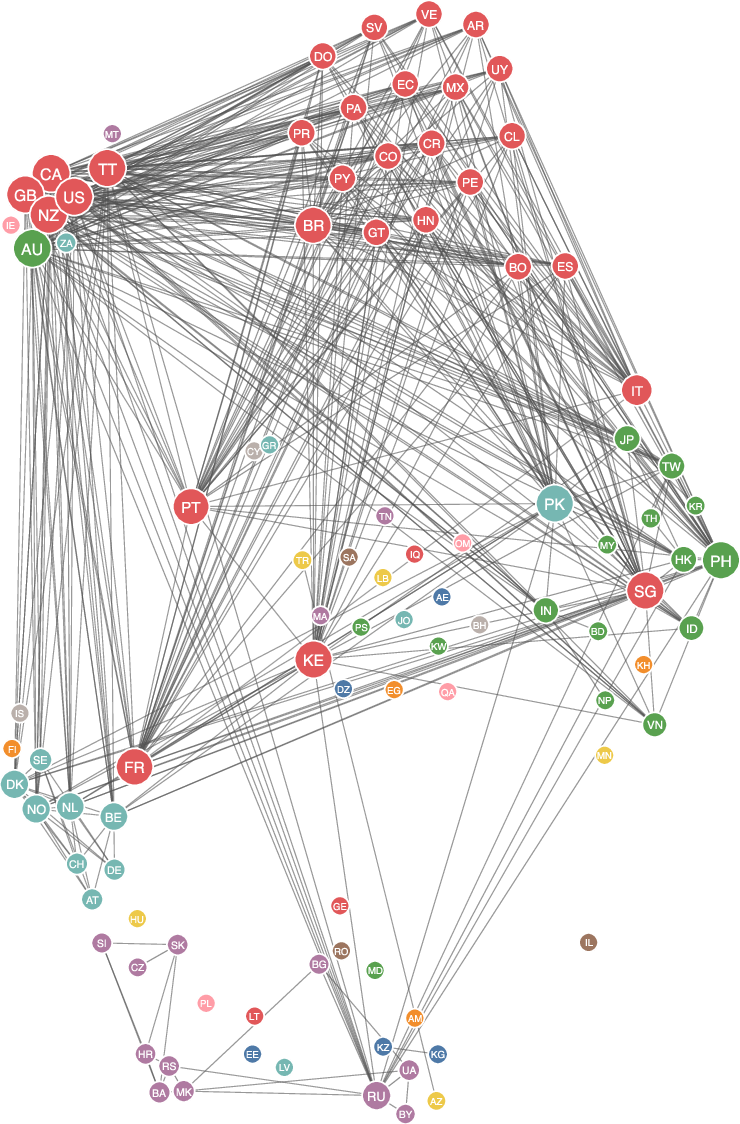
Figure 4: Contrasting country networks; left: image-based cultural communities, right: language-based.
The alignment between these concept similarity networks and established measures of cultural distance, derived from the World Values Survey, is quantified. Image-based conceptual proximity is 45% more predictive of country-culture similarity than the language-based alternative across edge, node, and community overlap metrics (robust to edge-filtering parameterization and network size).
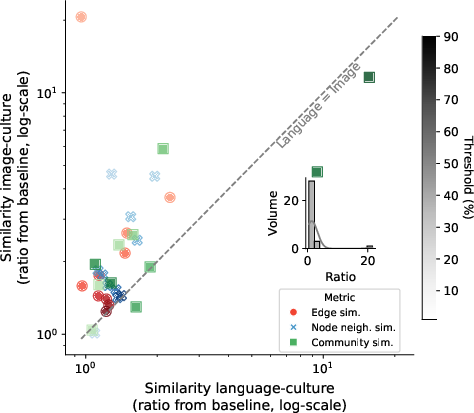
Figure 5: Image-based networks consistently better align with World Values Survey-based cultural similarity.
Theoretical and Practical Implications
These findings have direct implications for cognitive science and the development of AI systems seeking to model human concepts. The results provide evidence against a purely linguistic, abstraction-driven account of conceptual universality; instead, they articulate an embodied, multimodal, and culturally-variable view, with language compressing—but also obscuring—rich diversity reflected in visual representations. The stronger alignment between visual conceptual space and cultural structure compels future research to embrace multimodal embeddings in analyses of conceptual representation, learning, and cultural transmission.
For AI, these results underscore critical limitations of LLMs or models trained solely on text. As text-based conceptual embeddings correlate weakly with both sketch-derived representations and cultural ground truth, it follows that current language-only models cannot adequately replicate, predict, or model culturally conditioned, embodied human concept formation. The work motivates future multimodal architectures and training corpora that directly incorporate large-scale, behaviorally rich, nonverbal data—sketches, gestures, sensory traces—to augment the representational fidelity of artificial agents. There is an implication regarding cross-cultural fairness in AI: models grounded only in language may systematically underrepresent or trivially distort diversity present in embodied experience.
Limitations and Future Directions
Despite its scale, the dataset remains biased towards anglophone and internet-enabled populations, lacking fine-grained demographic control or device-level metadata. Sampling and socioeconomic biases, as well as potential attempts to "game" the QuickDraw platform, introduce latent noise. However, the authors argue that the colossal sample size affords robust detection of stable, population-level regularities. Broader coverage and demographic annotations in future datasets would further strengthen and generalize these findings.
Conclusion
This work demonstrates that large-scale visual sketching uncovers latent individual and cultural heterogeneity in conceptual structure inaccessible to language-based analyses. Key quantitative findings—median two exemplars per concept, 0.098 correlation between language and image spaces, and 45% closer alignment of image-based representations to cultural similarity—collectively undermine claims of conceptual universality inferred from textual data alone. They establish the necessity of multimodal, embodied, and culture-aware approaches in both cognitive science and AI.

