- The paper introduces a hierarchical diffusion framework that integrates displacement, stress, and strain energy features into a UNet for superior topology optimization.
- It employs a differentiable connectivity constraint to suppress floating materials, ensuring compliance with load transfer and enhanced manufacturability.
- Experimental results demonstrate significant reductions in compliance error and floating material ratios compared to state-of-the-art methods, even across out-of-distribution cases.
Hierarchical Physics-Guided Diffusion for Topology Optimization
Background and Motivation
Topology Optimization (TO) is a critical tool in engineering, formulated to determine optimal material distribution for lightweight and high-performance structural designs under prescribed loads and boundary conditions. Traditional approaches such as SIMP, PINN, and solver-guided learning offer strong physical consistency but suffer from high computational cost and limited capability for generating diverse alternatives, especially when inputs vary. Generative methods using deep learning, notably diffusion and GAN-based models, promise rapid, diverse sample generation but frequently lack rigorous physics guidance, yielding poor generalization and disconnected (floating) material artifacts.
HPG-Diff Framework
HPG-Diff introduces a hierarchical physics-guided diffusion framework that systematically aligns multi-level physics features with the denoising stages of a UNet-based diffusion model. Key innovations include:
- Hierarchical Conditioning of Physics Features: Displacement (U), Principal Stress Line (PSL), and Strain Energy Density (SED) are injected at shallow, mid, and deep layers, respectively. This mapping exploits the inherent hierarchy in UNet architectures, matching local information (U) with shallow layers, mid-level structural skeleton cues (PSL) with intermediate layers, and global stiffness context (SED) with deep layers. This physically-motivated conditioning has demonstrably improved mechanical fidelity and generalization across unseen boundary conditions.
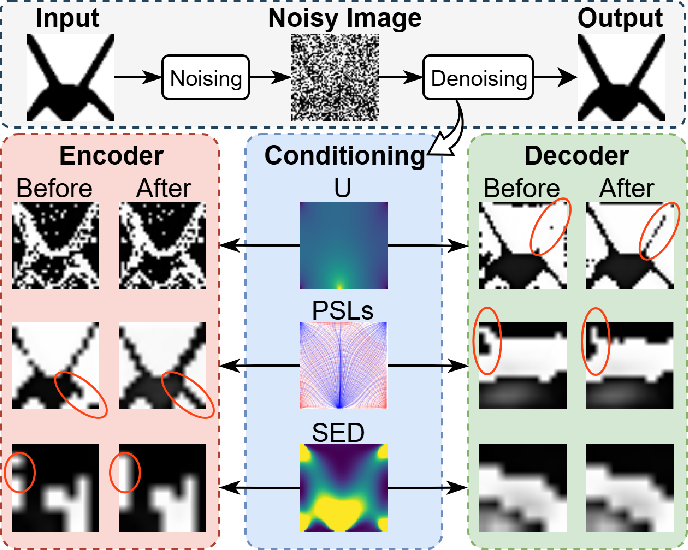
Figure 1: Example of local feature enhancements driven by conditioning physics features in the denoising process.
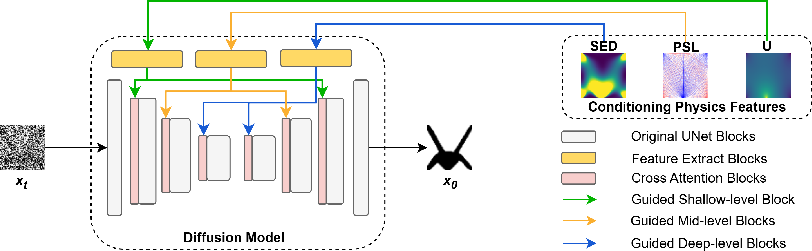
Figure 2: HPG-Diff hierarchical physics-guided diffusion framework.
- Differentiable Connectivity Constraint via Floating Material Suppression (FMS) Loss: Disconnected high-density regions that do not participate in load transfer are penalized with a differentiable loss inspired by heat propagation from load regions, ensuring that only material reachable from the load contributes. This loss formulation is effective in suppressing floating material and improving manufacturability without incurring non-differentiable operations.
Experimental Results
Quantitative benchmarking against state-of-the-art generative TO models (TopologyGAN [nie2021topologygan], TopoDiff [maze2023diffusion], DOM [giannone2023aligning]) demonstrates robust improvements:
- In-distribution: HPG-Diff achieves an average Compliance Error (CE) of 0.87% and Floating Material (FM) ratio of 2.90%, improving median CE by ~80% and FM by 47–93% relative to baselines.
- Out-of-distribution: On unseen boundary conditions, HPG-Diff records an average CE of 5.29% and FM ratio of 2.44%, outperforming TopoDiff and DOM by 71–83% on CE and 60–82% on FM.
- Generalizability: Performance does not rely on multi-stage post-processing or retraining for new designs; lightweight LoRA fine-tuning enables domain adaptation for non-square domains with small datasets (see case studies below).

Figure 3: Example of HPG-Diff for rapid and diverse topology optimization design generation.
Ablation and Orthogonality Studies
Component-wise ablation confirms the necessity of hierarchical conditioning and FMS loss:
- Removal of hierarchical guidance inflates CE (in-distribution: 0.87% to 4.34%; out-of-distribution: 5.29% to 36.62%) and FM.
- FMS loss is critical for suppressing floating material, decreasing FM from 6.47% to 2.90% and improving CE statistics, especially among high-error cases.
Physics feature orthogonality analysis underscores their complementary contribution: SED and PSL exhibit high orthogonality, while U and PSL are more correlated, yet each feature distinctly improves different layers’ function during denoising.
Case Studies: Domain Adaptation and Design Diversity
- Square domains (shelf bracket): HPG-Diff yields multiple alternative layouts with compliance comparable or superior to SIMP solutions, elucidating its capacity for design diversity.
- Non-square domains (cantilever, bridge): LoRA fine-tuning enables adaptation with limited data, generating variants within 2–4% compliance error and minimal FM rates, thus extending applicability beyond classical square-shaped benchmarks.
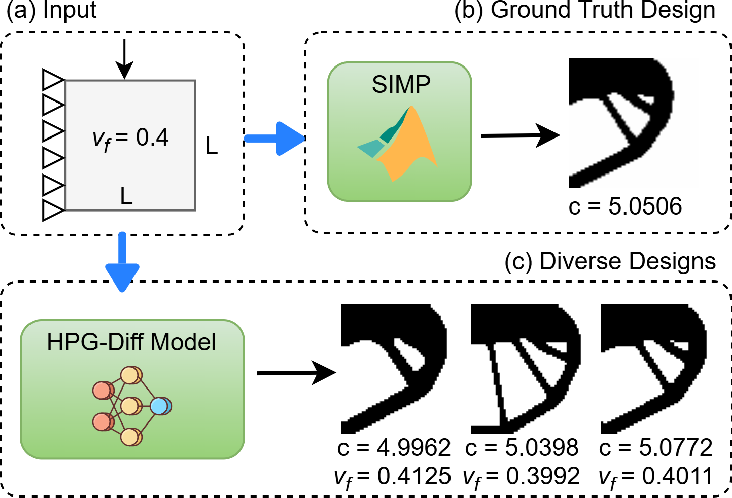
Figure 4: Case study 1: Application of HPG-Diff in shelf bracket design.
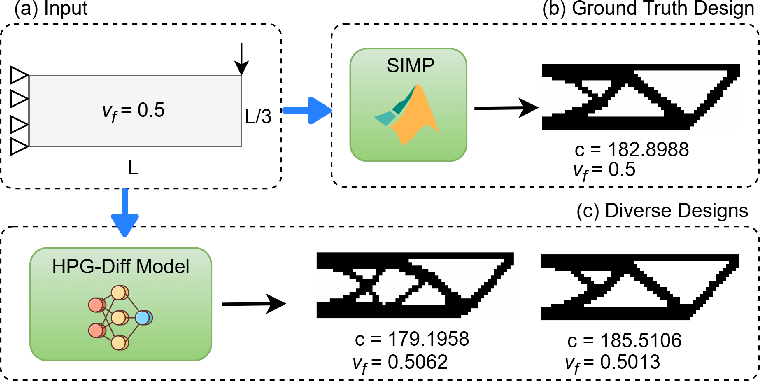
Figure 5: Case study 2: Application of HPG-Diff in cantilever beam design.
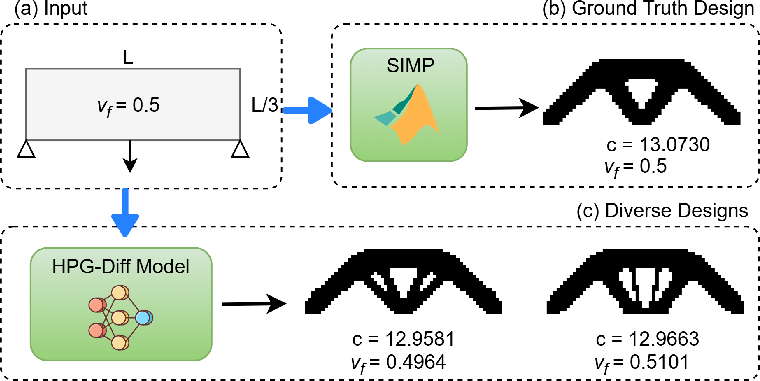
Figure 6: Case study 3: Application of HPG-Diff in classic bridge design.
Practical and Theoretical Implications
The combination of hierarchical physics-conditioned denoising and connectivity constraints demonstrates that generative models can achieve mechanical fidelity rivaling classical FEA-based solvers while providing diversity and efficiency. This synergy endows HPG-Diff with strong out-of-distribution robustness, enhanced manufacturability due to reduced floating material artifacts, and scalable adaptation to varied domain shapes. The framework supports rapid, stochastic design exploration while retaining strict compliance with physical principles—a critical advancement for generative engineering design workflows.
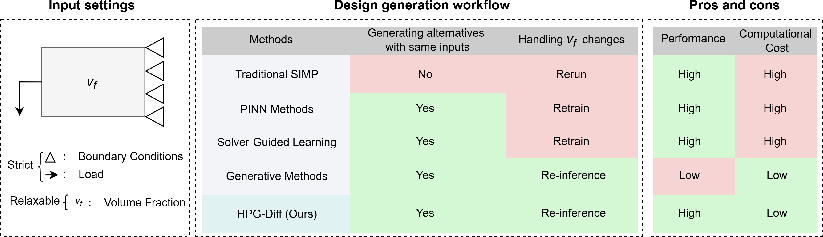
Figure 7: Performance vs Efficiency: Comparison of mainstream TO methods in adaptability, performance, and computational cost.
Limitations and Future Directions
Remaining limitations include reliance on initial FEA feature computation, restriction to single-load cases for FMS loss instantiation, and limited domain shapes in adaptation. Future research directions include:
- Extending hierarchical conditioning to non-linear, dynamic, or multi-load scenarios.
- Incorporating manufacturing constraints (e.g., overhang, minimum length scales) directly in loss or conditioning.
- Investigating uncertainty quantification via Bayesian generative modeling.
- Scaling to irregular, multi-resolution domains and broader datasets.
Conclusion
HPG-Diff establishes an effective methodology for embedding physical knowledge and connectivity constraints within the generative paradigm for topology optimization. Aligning physics features with denoising process layers leverages both domain expertise and neural architecture design, yielding substantial accuracy gains and improved manufacturability. Lightweight domain adaptation is feasible via LoRA fine-tuning, facilitating practical engineering deployment. The framework offers a promising blueprint for future advances in generative physics-aware design algorithms.

