- The paper presents a novel Pathway Activity Autoencoder (PAAE) that integrates multi-omic data using biological pathway constraints for transparent cancer subtype stratification.
- It shows that moderate dropout improves the reproducibility of pathway importance rankings, while excessive regularization leads to a sharp decline in predictive performance.
- Empirical results highlight that late-stage integration of gene expression, RPPA, and microRNA data outperforms early integration in classification and survival prediction.
Introduction and Motivation
The paper "Biologically Informed Deep Neural Networks for Multi-Omic Integration, Pathway Activity Inference and Risk Stratification in Cancer" (2607.05306) addresses the fundamental challenge posed by the integration of high-dimensional, heterogeneous multi-omics data for cancer patient stratification. Traditional methodologies for multi-omics integration either prioritize interpretability at the expense of modeling flexibility—often via linear models—or maximize representational capacity but at the cost of interpretability, e.g., in conventional deep learning pipelines.
To reconcile this, the authors introduce Pathway Activity Autoencoders (PAAE), a class of Biologically-Informed Neural Networks (BINNs) that embed structured prior knowledge into model architecture, specifically by leveraging gene-set/pathway constraints. This approach yields intrinsic interpretability at the level of biological pathways while maintaining the expressive potential of deep neural networks, particularly in the context of multi-omics integration for breast cancer subtype classification and survival analysis. The work systematically investigates repeatability, robustness under regularization, and the practical and theoretical consequences of model configuration and data integration strategy.
Pathway Activity Autoencoder Framework
PAAE implements a pathway-centric deep autoencoder in which every encoder subnetwork is defined over the subset of molecular features mapping to an individual biological pathway. For a set of pathways P, each encoder block Ep processes features associated with p, outputting a single pathway activity score ap, leading to a compact and interpretable context of pathway activity Figure 1. The concatenated vector a of pathway activities forms an explicit latent space, optimized to reconstruct the full molecular profile via a shared decoder.
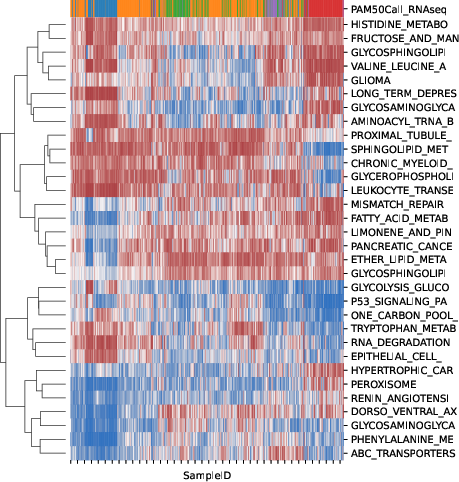
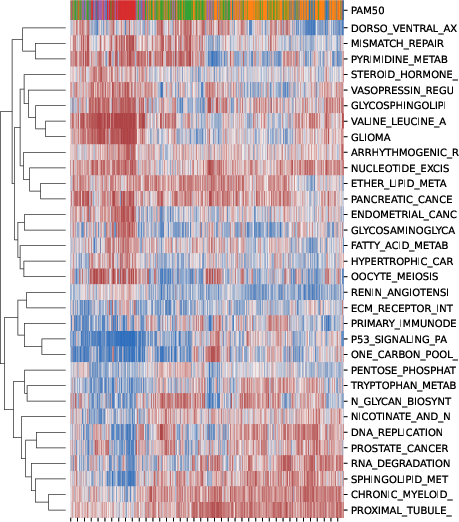
Figure 1: Clustermap based on cosine distances between sample-level inferred pathway activity vectors in the KEGG PAAE pathway activity space, illustrating intrinsic stratification by clinical phenotype.
This design enables the direct attribution of downstream classification or survival relevance to specific biological pathways, allowing rigorous mechanistic interpretation of deep model decisions. Dimensionality reduction via UMAP projections and featuremaps in pathway activity space further support the visualization of subtype-specific molecular signatures Figure 2.
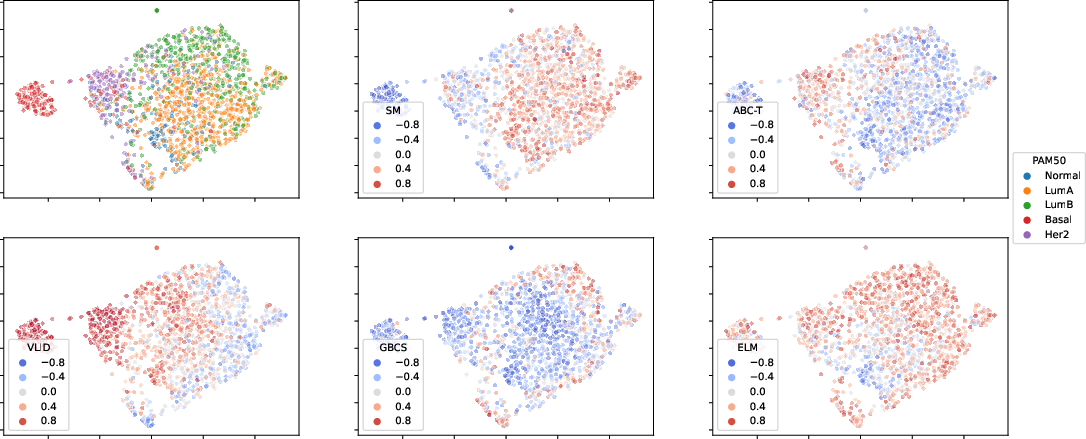
Figure 2: Subtype distribution overlayed on a 2D UMAP of inferred pathway activities, highlighting discriminative signal across top informative pathways.
Downstream tasks are addressed by training linear classifiers or Cox proportional hazards models on pathway activity vectors, supporting both supervised and unsupervised subtype identification and risk stratification.
Repeatability, Dropout, and Model Robustness
Robustness to model initialization and training noise is a crucial criterion in clinical contexts. The authors perform an extensive robustness analysis across 2560 model instantiations at varying dropout rates in the pathway activity layer, quantifying both pathway-specific consistency (Pearson correlation) and global representational alignment (CKA similarity). Increased dropout monotonically boosts inter-run pathway-wise correlation, but above a ~70%-80% dropout threshold, global representational similarity and predictive performance exhibit a marked decline (Figure 3, Figure 4).
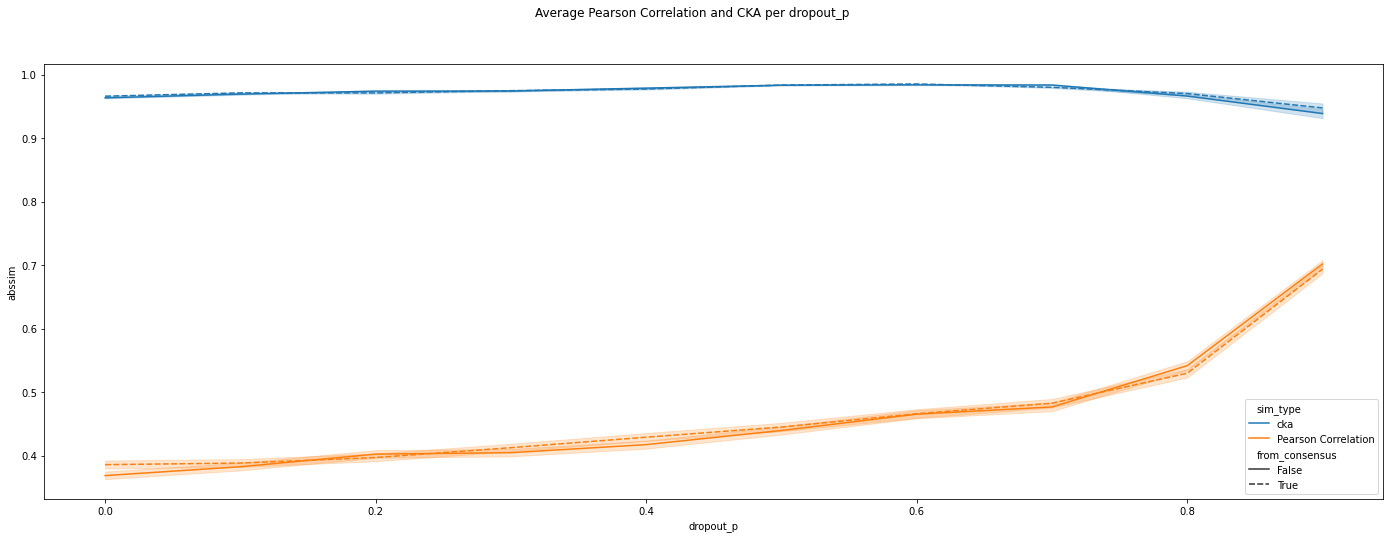
Figure 3: CKA and Pearson correlation between pathway activity vectors across model initializations at varying dropout rates, detailing phase transition and tradeoffs between reproducibility and representational richness.
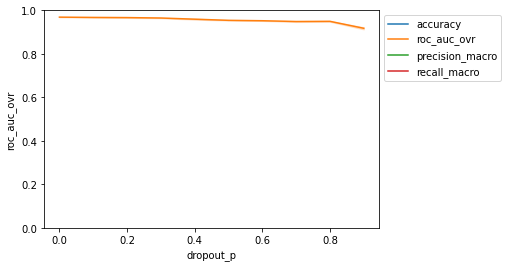
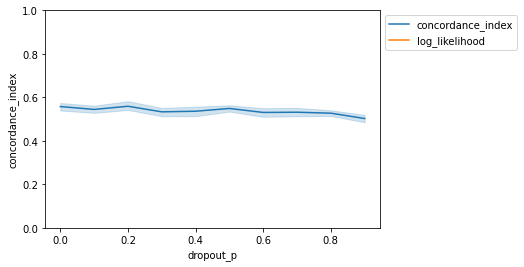
Figure 4: ROC AUC and C-index as a function of dropout rate. Performance sharply degrades above 70% dropout, coinciding with maximal inter-model agreement.
This phase transition delineates an important design constraint: moderate dropout regularization improves reproducibility of pathway importance rankings (Kendall tau-b) without catastrophic loss of predictive utility, but excessive regularization collapses class-separating signal, evidenced by bleaching of pathway activity patterns Figure 5.
Interpretable Subtype Classification and Clinical Transparency
The pathway-constrained latent space enables the construction of highly interpretable classifiers. The authors demonstrate a decision-tree-based subtype classifier built on the most discriminative pathways per class, yielding explicit, human-auditable clinical decision rules Figure 6.
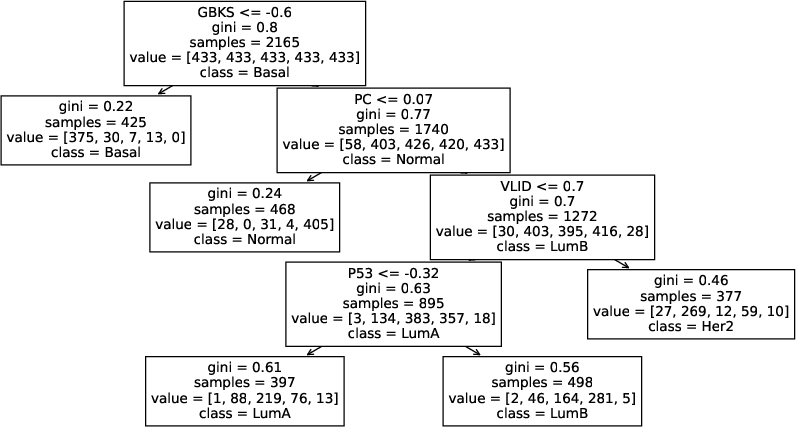
Figure 6: Decision tree trained on pathway activity vectors of PAAE-KEGG model, with each leaf node corresponding to a breast cancer subtype.
Mapping decision boundaries back into UMAP projections elucidates the correlation between specific pathway activity regimes and clinical subtypes, both in training and external validation cohorts Figure 7.
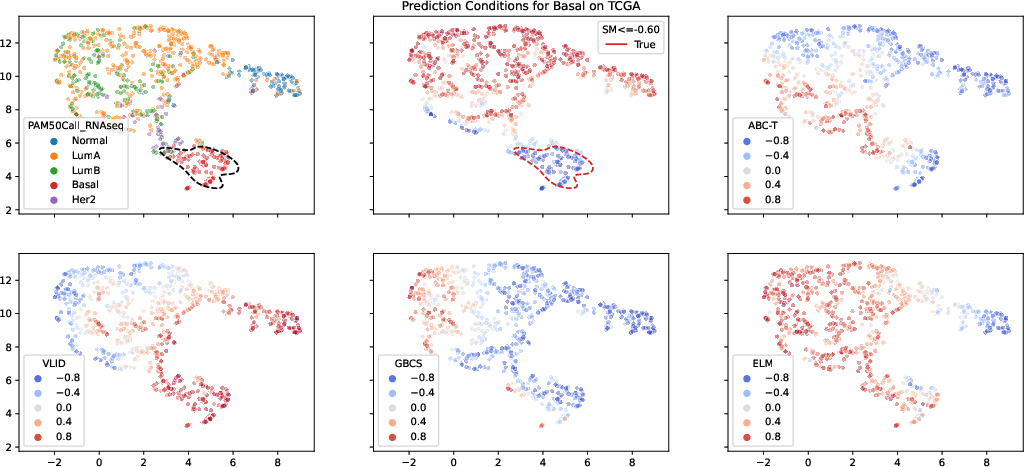
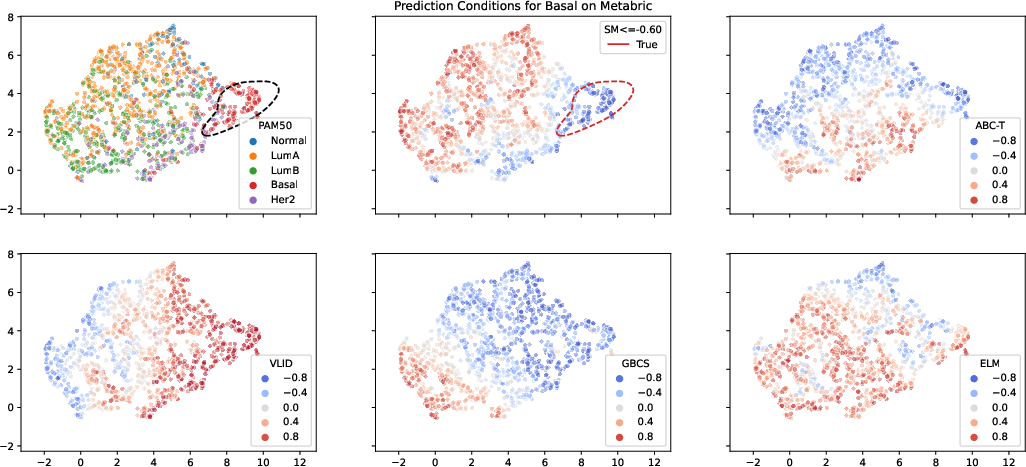
Figure 7: UMAP featuremaps with KDE contours showing sample concentration by decision tree rules for the Basal subtype in TCGA and Metabric datasets.
Although model simplification via heuristic selection of top pathways reduces classification accuracy relative to unconstrained PAAEs, it maximizes actionable interpretability for end-users, illustrating the tradeoff landscape between transparency and raw predictive power.
Multi-Omics Integration: Strategies and Empirical Outcomes
The multi-omics implementation of PAAE supports both "early" integration (joint pathway encoding across concatenated omics features) and "late" integration (independent PAAE models per omics layer, fused via mean or concatenation post-hoc). Comprehensive ablation experiments across 63 omics-layer combinations reveal:
- Late-mean and late-concat integration consistently outperform early integration for both PAM50 classification and survival tasks (Figure 8, Figure 9).
- Gene expression, RPPA (proteomics), and microRNA layers contribute most positively to classification and survival; the mutation layer is deleterious in early integration but neutral in late integration strategies (Figure 10, Figure 11).
- Multi-omics integration improves performance over all single-modal approaches, but the composition of synergistic omics subsets is context- and task-dependent.
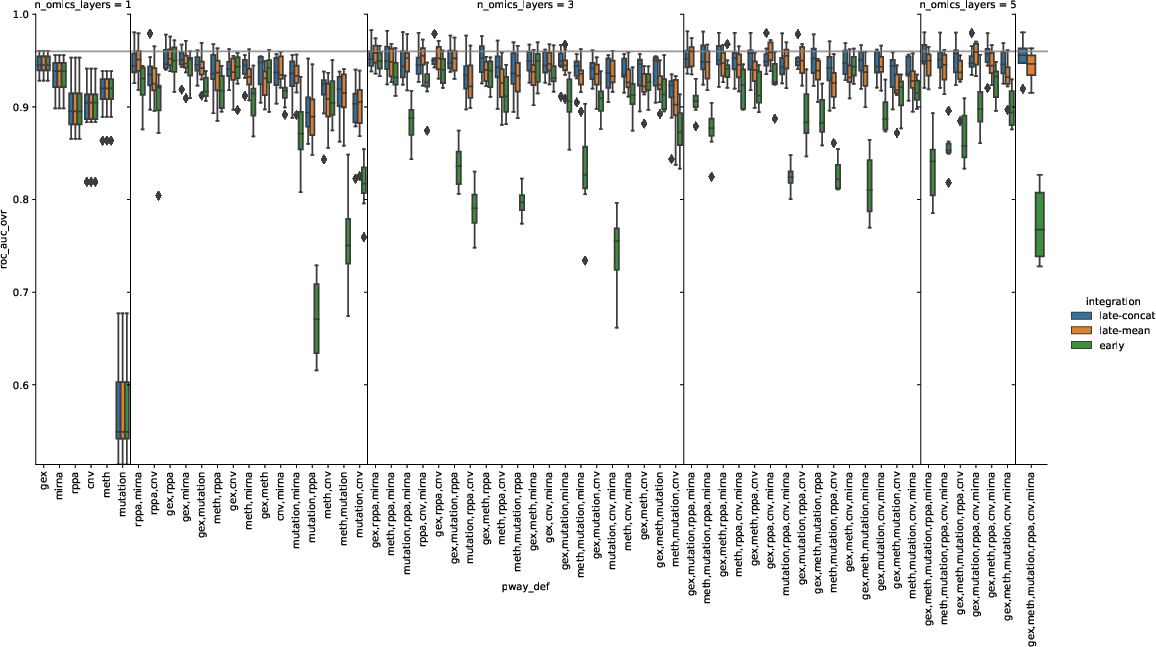
Figure 8: ROC AUC of one-vs-rest logistic regression for all omics integration strategies; lines mark best median performance.
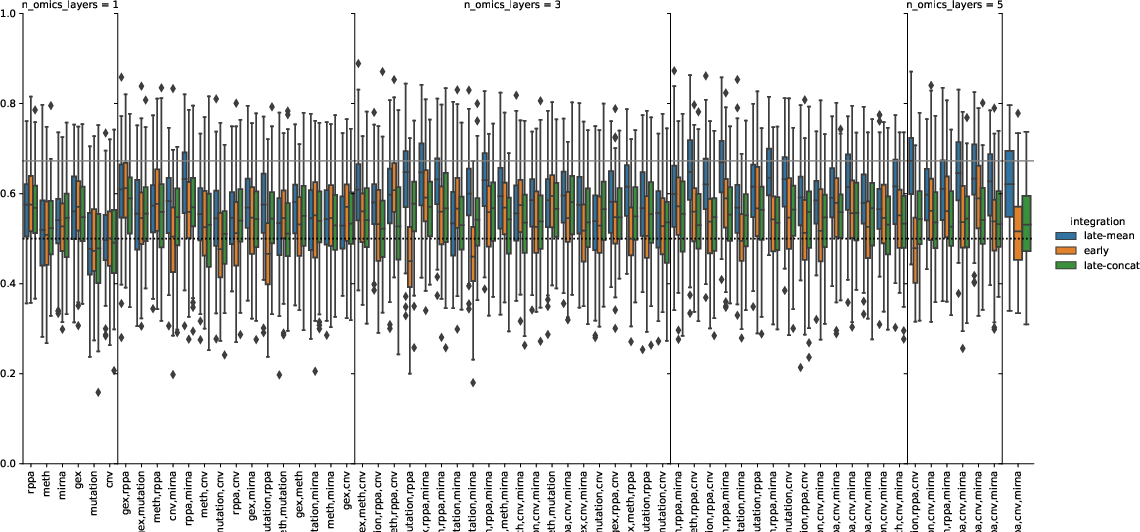
Figure 9: Concordance Index (C-index) for all omics integration methods.
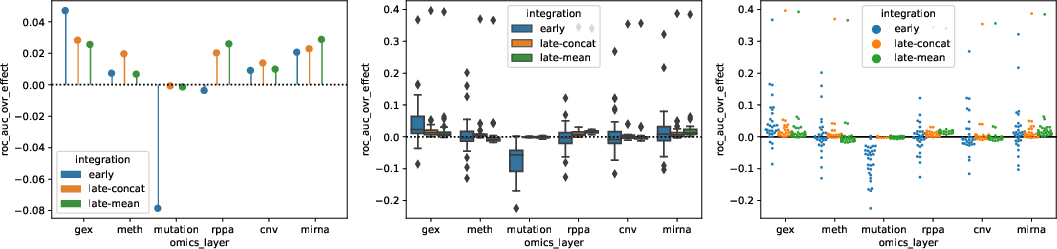
Figure 10: Marginal contribution of each omics layer to classification performance (ROC AUC), demonstrating negative impact of mutation and positive impact of gene, RPPA, and microRNA, especially in late integration.
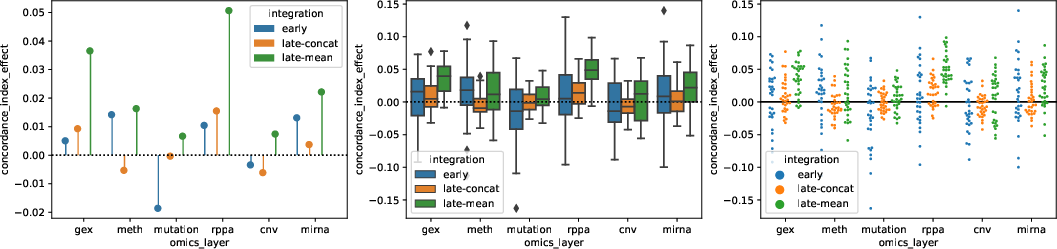
Figure 11: Marginal contribution of each omics layer to survival prediction (C-index).
These results provide empirical justification for tailored integration strategies and recommend avoiding early integration when data modalities differ substantially in informativeness or signal-to-noise ratio. The adapted Shapley-value analysis confers a robust estimation of each layer’s contribution, accounting for interaction effects across omics combinations.
Pathway Prioritization and Biological Discovery
The interpretable nature of the PAAE latent space allows rigorous pathway prioritization through mutual information and survival relevance. Consistent separation of samples by pathway activity Figure 1, substantiated by high cross-cohort robustness, demonstrates that pathway-centric representations both capture and generalize disease-relevant biological mechanisms.
Kaplan-Meier survival stratification of top pathways (VLID, SM, etc.) reveals significant and Cox-consistent survival differences in independent datasets Figure 12, highlighting the utility of pathway activity inference for candidate biomarker nomination.
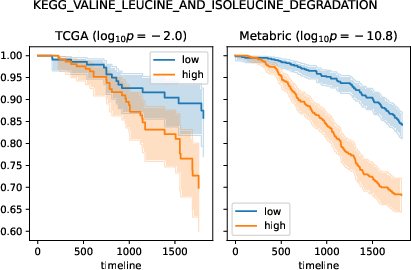
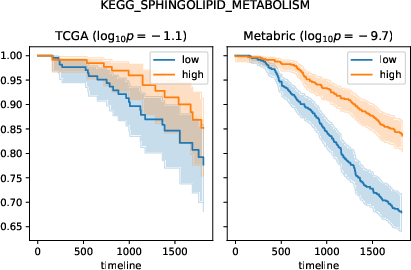
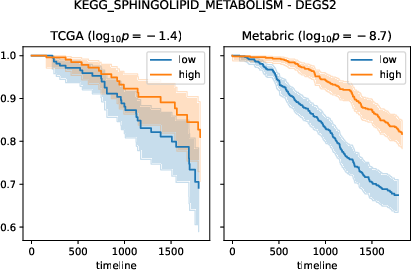
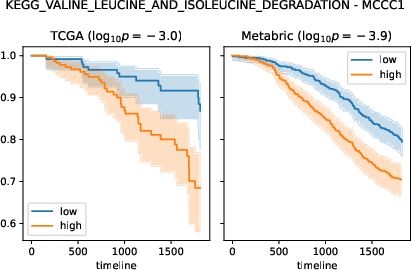
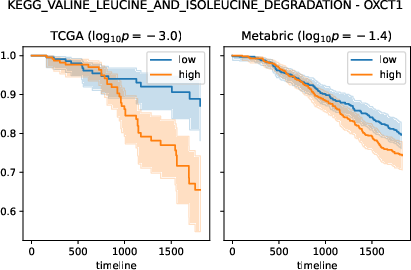
Figure 12: Kaplan-Meier curves for selected pathways and genes, illustrating consistent survival stratification across datasets.
Implications and Future Directions
This study establishes that pathway-informed autoencoder architectures can unify interpretability, robustness, and representational power in multi-omics data integration and clinical modeling. By embedding biologically meaningful priors directly into deep learning architectures, the method supports downstream mechanistic insight generation, biomarker discovery, and transparent risk stratification.
The findings regarding dropout-induced phase transition and repeatability have broader relevance to the development of interpretable neural networks in biomedical contexts—a moderate regularization regime is essential for balancing stability and fidelity in non-convex, data-limited regimes. The performance analysis of omics layer integration suggests that late-stage strategies are preferable in heterogeneous multi-modal scenarios.
From a translational perspective, the intrinsic transparency of BINN-based representations makes this framework more amenable to clinical deployment and regulatory acceptance compared to black-box models. However, limitations related to dataset scale and non-convex optimization persist, suggesting that future work should explore the integration of foundation models for omics data [Fishman et al., GENA-LM] and advanced techniques for uncertainty quantification.
Conclusion
The Pathway Activity Autoencoder framework provides a reproducible, interpretable, and scalable solution for multi-omics integration in cancer stratification. Its explicit incorporation of biological prior knowledge bridges the gap between prediction and explanation. The empirical analyses delineate the optimal regimes for regularization, integration, and layer selection, offering practical guidelines and articulating the theoretical underpinnings of robust, clinically relevant AI in precision oncology. The approach is extensible to other complex diseases requiring multi-modal molecular characterization, and serves as a model for future work at the intersection of deep learning, systems biology, and translational medicine.

