- The paper introduces a novel Bayesian hierarchical model (PFDSEM) that integrates scalar and functional predictors for multi-resolution environmental data.
- It leverages basis expansion and dynamic latent structural equations to capture spatial, temporal, and covariance dependencies in pollutant emissions.
- Simulation studies and empirical applications validate robust parameter recovery and highlight significant policy implications across regions.
Partially Functional Dynamic Structural Equation Model for Multi-Resolution Environmental Data
Introduction and Motivation
Atmospheric pollutant emissions are governed by a complex interplay of socio-economic, demographic, and meteorological factors, each characterized by distinct temporal and spatial resolutions. Traditional empirical models, such as regression-based or spatial econometric approaches, lack the capacity to handle multi-resolution predictors, intervariable covariance, temporal nonstationarity, and latent confounding in a coherent manner. The presented work introduces the Partially Functional Dynamic Structural Equation Model (PFDSEM), a fully Bayesian hierarchical framework capable of integrating scalar predictors (e.g., annual GDP) and functional predictors (e.g., hourly temperature), with dynamic, latent-variable structural equations accommodating both spatial and temporal dependencies.

Figure 1: Multi-panel illustration of the modeling context, taxonomy of influencing factors, key scientific questions, Bayesian inference process, and PFDSEM outputs.
Model Specification
Multi-Resolution Covariate Integration
The PFDSEM incorporates both scalar and functional covariates. Functional predictors, such as meteorological time series, are projected onto low-dimensional bases (e.g., B-splines), converting infinite-dimensional integrals into tractable finite sums while retaining high-resolution temporal structure. The model thus avoids information loss due to arbitrary aggregation or discretization and enables joint estimation of all parameters with uncertainty propagation.
Dynamic Structural Relationships and Latent Variables
The measurement equation links observed pollutant emissions to scalar predictors, basis-expanded functional variables, and a high-dimensional latent vector representing unobserved socio-environmental factors. The dynamic structural equation models the evolution of outcome and explanatory latent variables using province-specific random effects, nonlinear functions, and a combination of Conditional Autoregressive (CAR) and Linear Model of Coregionalization (LMC) schemes, capturing both temporal persistence and contemporaneous inter-factor covariance.
Bayesian Inference
All parameters—regression coefficients, functional effects, loading matrices, covariance matrices, CAR and LMC parameters, and latent states—are assigned conditionally conjugate priors where possible. P-spline priors on functional effects provide adaptive regularization. Posterior inference is achieved via a hybrid MCMC scheme combining Gibbs and Metropolis-Hastings updates, monitored by Potential Scale Reduction (EPSR) diagnostics to confirm convergence.
Simulation Study
Simulation experiments assess the frequentist properties of Bayesian estimators in high-dimensional settings with mixed covariate types, latent structure, and nontrivial temporal/spatial dependence. Across both moderate and large sample regimes, posterior means exhibit negligible bias and low RMSE, with estimation robust to both informative and weakly-informative prior specifications. This confirms accurate parameter recovery and insensitivity to hyperparameters.

Figure 3: Bayesian estimation of functional parameters, demonstrating recovery of ground-truth curves under simulation.
Empirical Application to Chinese Provincial Atmospheric Pollutant Emissions
Data and Covariate Structure
The framework is applied to air pollutant emissions data for 30 Chinese provinces (2015–2020), integrating functional meteorological series (e.g., sea level pressure and 2 m temperature from ERA5), scalar socio-economic and demographic indicators from statistical yearbooks, and environmental concerns (search intensity from Baidu) as proxies. Post-screening, 49 indicators across 10 conceptual dimensions are selected.
Exploratory Spatial Analysis
Both Moran's I and local LISA cluster statistics confirm significant spatial autocorrelation for all pollutant indices, although the strength of clustering for certain pollutants (e.g., SO2, PM2.5) decreases over time, consistent with dispersal of emission sources or regional policy effects.
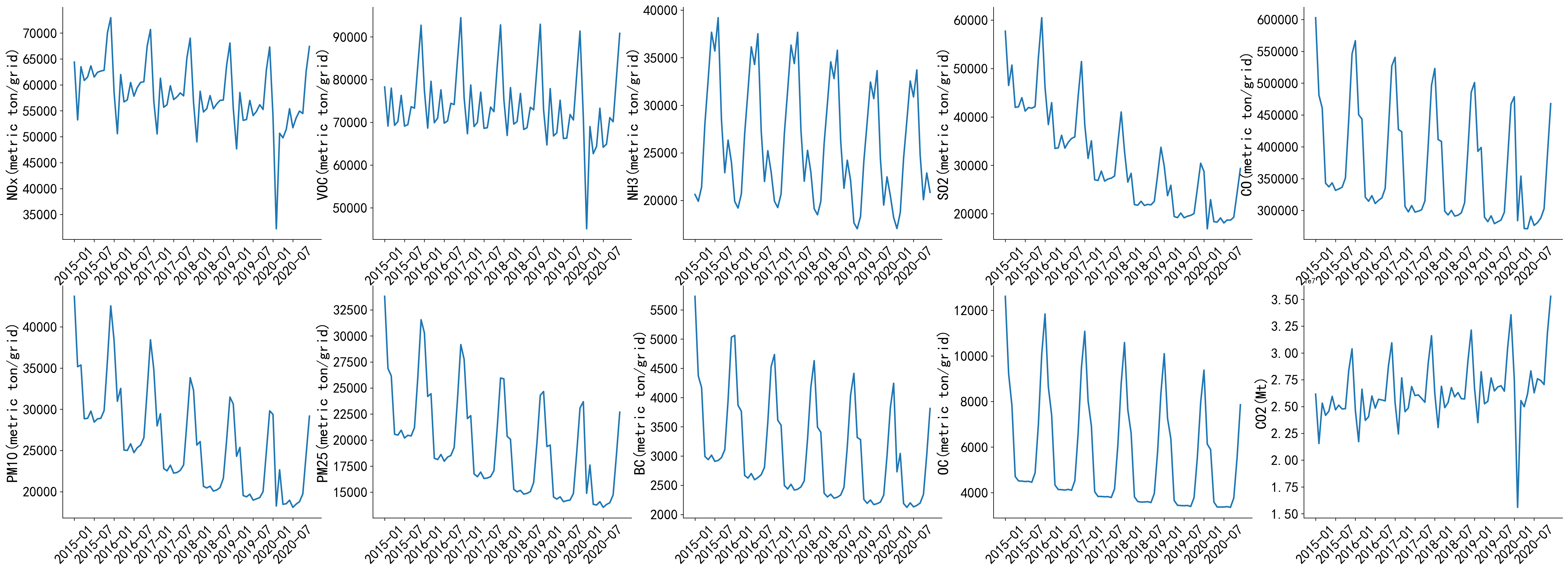
Figure 2: Time series of major pollutant emission indicators, illustrating seasonal and interannual variability.
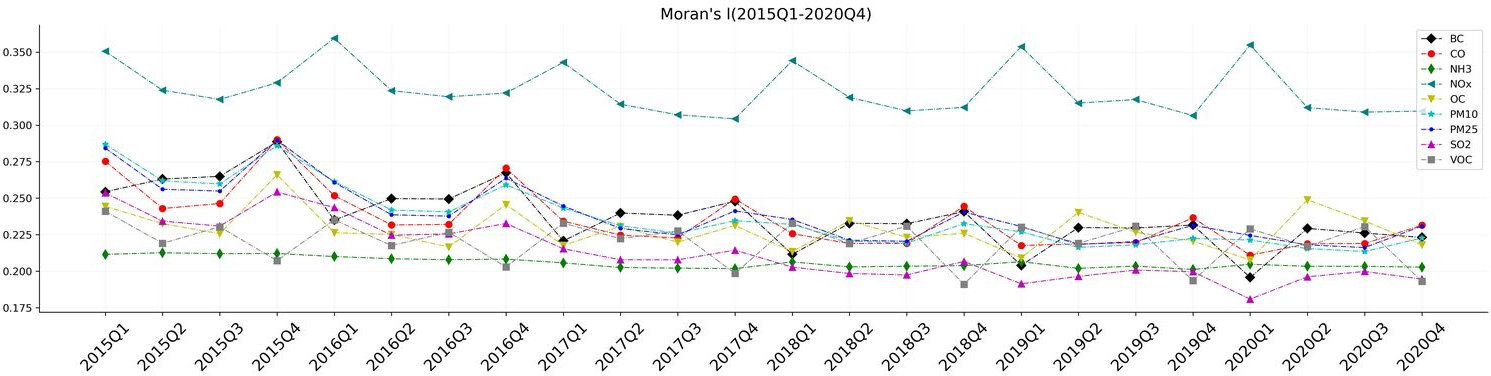
Figure 6: Quarterly spatial autocorrelation (Moran’s I) for emission indicators, with persistent significant clustering.
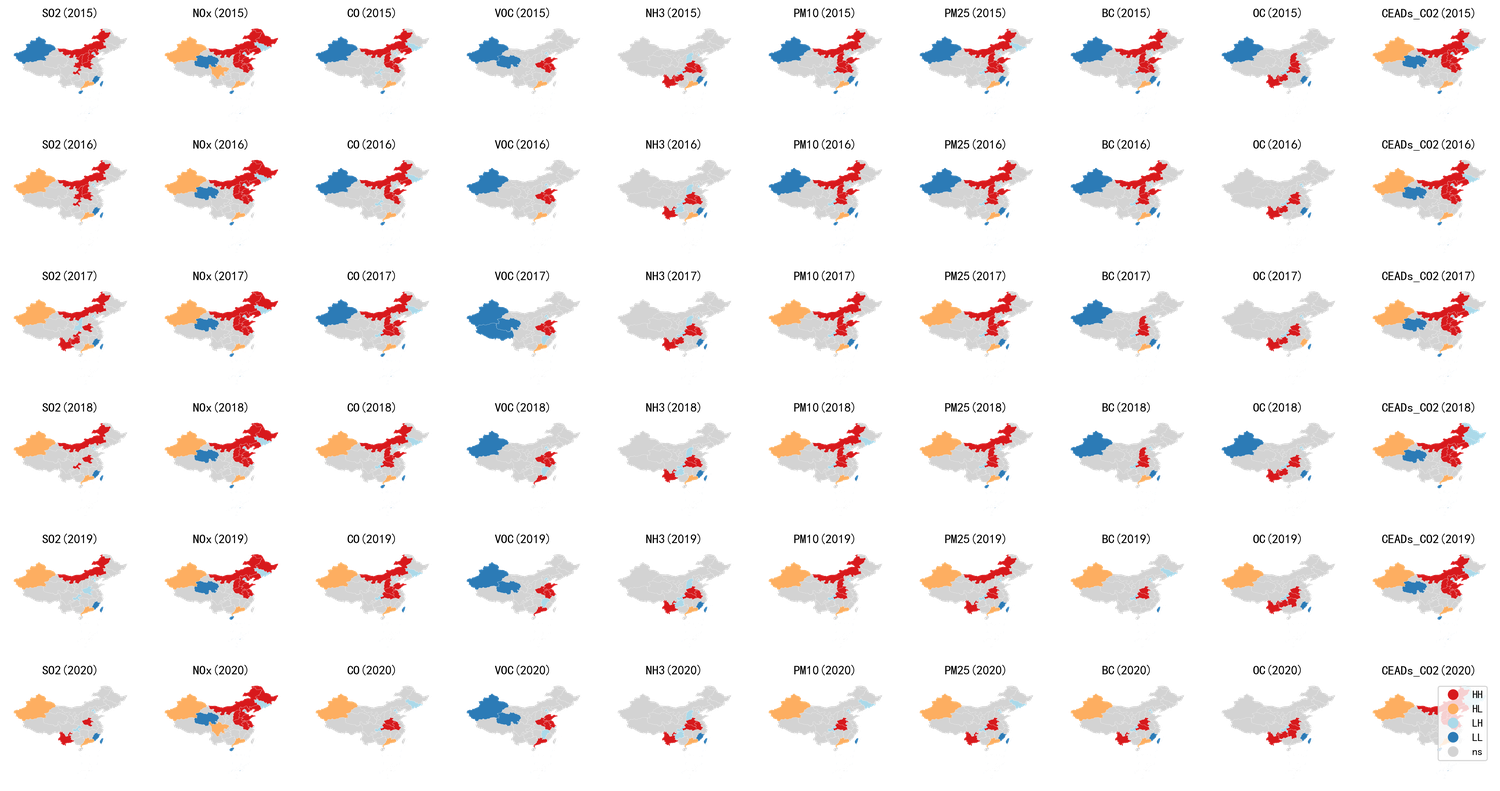
Figure 4: LISA cluster maps, highlighting regions and periods of significant local spatial association in emissions.
Model Results and Interpretation
Model Fit
R2 values for pollutant emission indicators range from approximately 0.42 to 0.89, with standard deviations of residuals consistently low, indicating strong fit across both CO2 and co-occurring pollutants.
Structural Insights
Posterior estimates indicate that meteorological conditions, economic development, population structure, vegetation cover, technological innovation, urbanization, and education act as inhibitors of emissions, while forest fires/natural disasters, road/traffic, household size, and environmental concern (as proxied by search intensity) are positively associated with emission intensities. Directionality of these associations is resolved at both province and time levels, revealing non-uniform policy effects and potential context dependence.
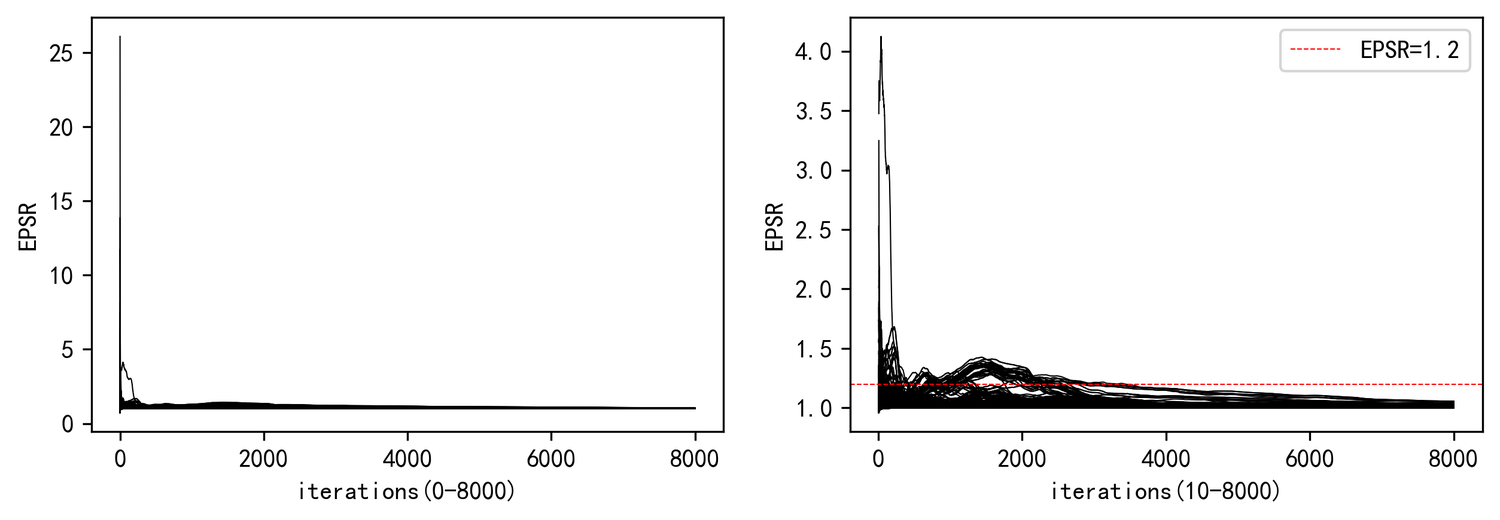
Figure 5: EPSR diagnostics confirming satisfactory MCMC convergence across posterior draws.
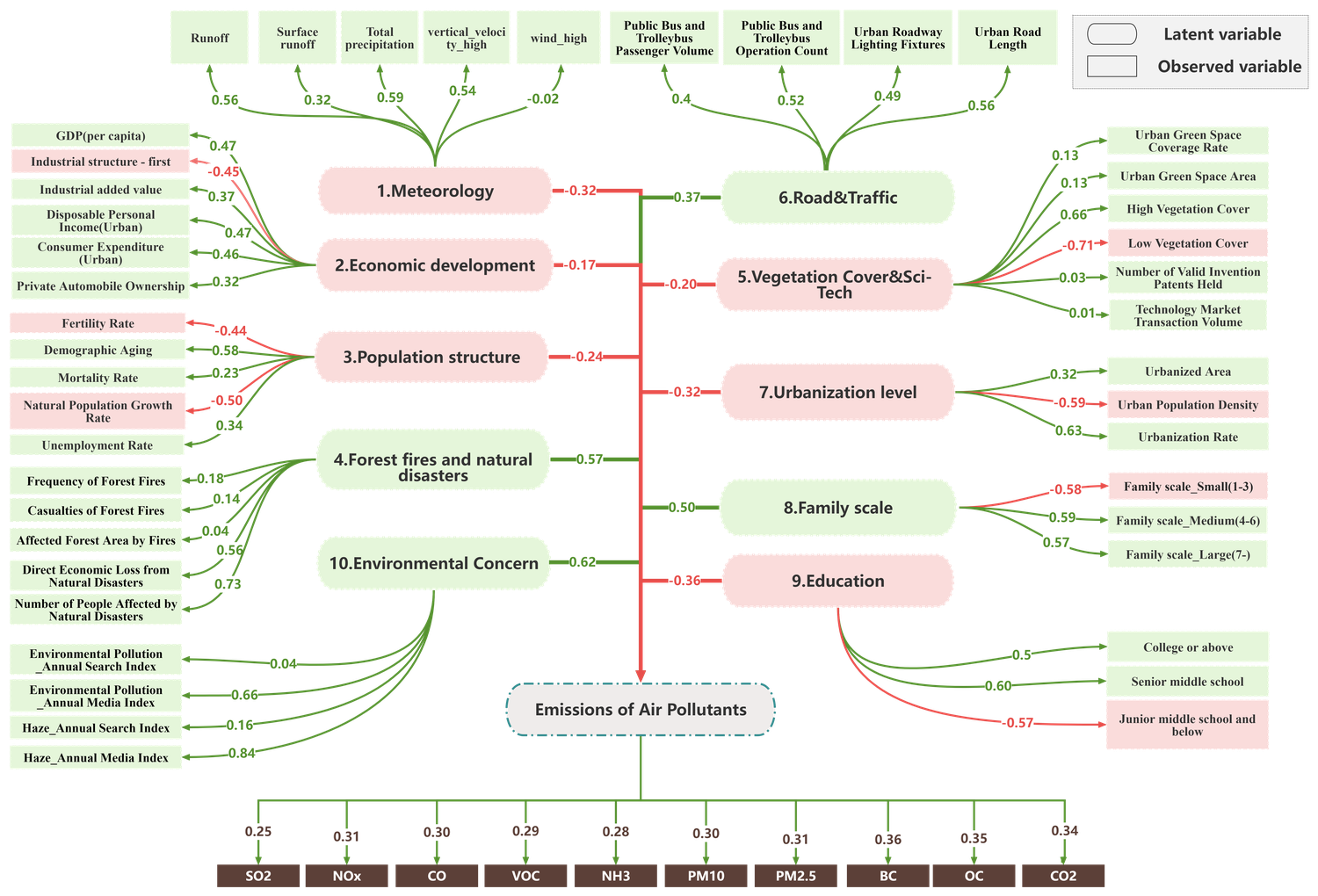
Figure 7: Complete PFDSEM structure for pollutant emissions, indicating interconnections among covariates, latent factors, and outcomes.
Functional (Meteorological) Effects
Posterior estimates for functional coefficients of sea level pressure and 2 m temperature reveal strong seasonal patterns and nonstationary associations, with intervals providing uncertainty quantification for sub-seasonal effects. These curves directly support hypotheses about seasonal meteorological trapping or advection regimes.
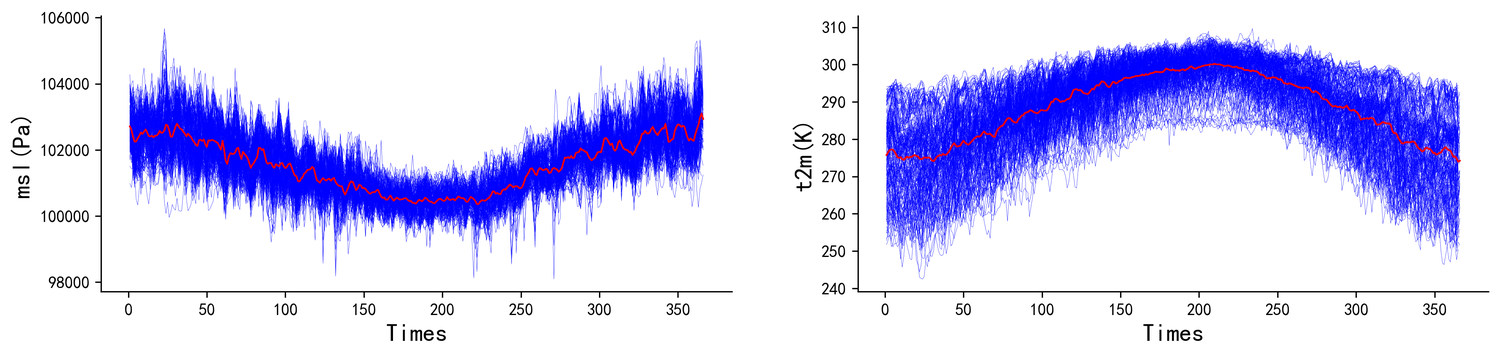
Figure 8: Time-varying functional data series for meteorological covariates.
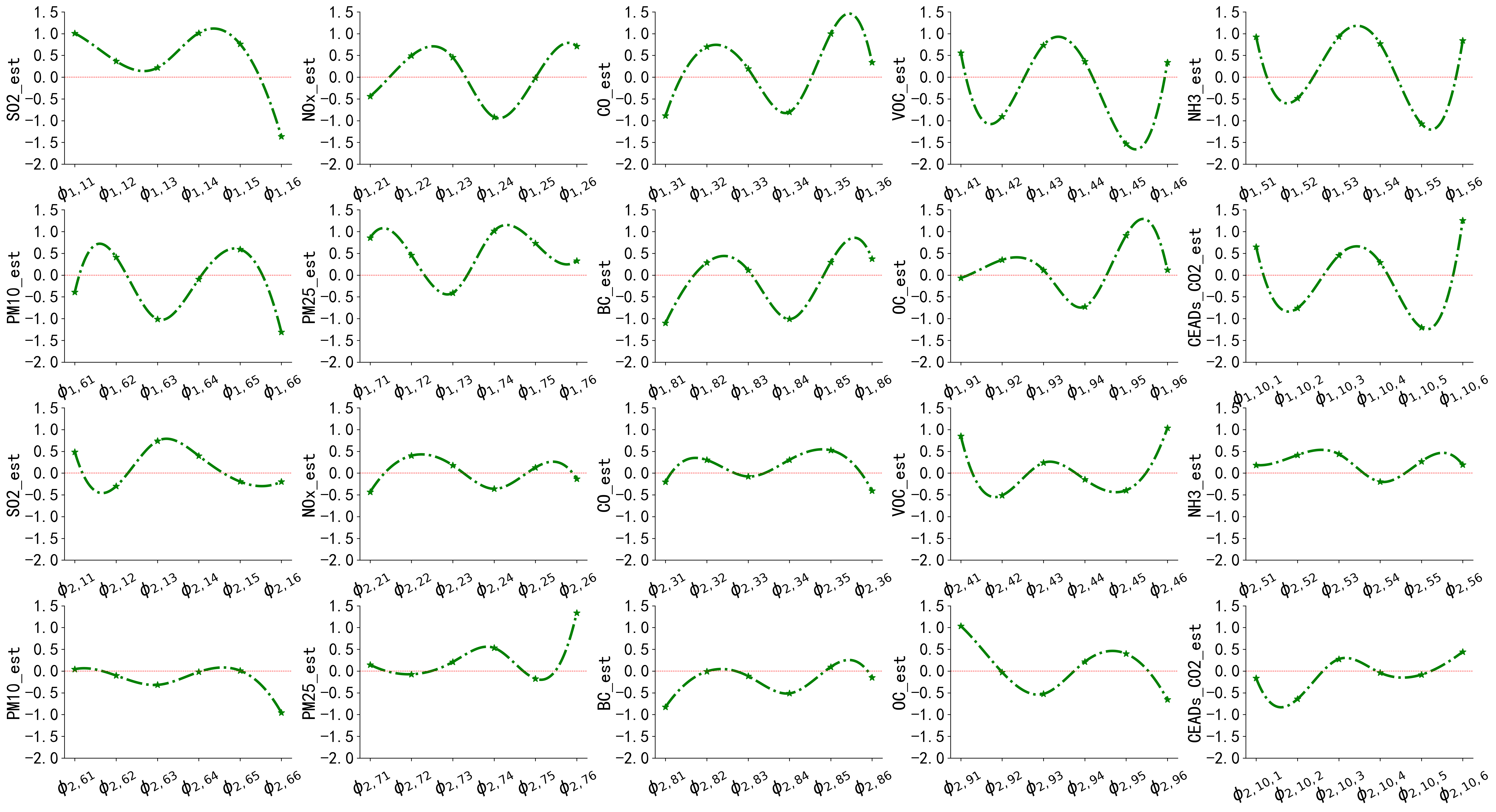
Figure 9: Estimated functional regression coefficients for sea level pressure and temperature, showing seasonally modulated effects on emissions.
Latent and Structural Heterogeneity
Province-specific structural coefficients as well as random effect variances (Υ^l) elucidate substantial cross-provincial heterogeneity in both direction and strength of factor-outcome relationships. Temporal dependence in structural effects is statistically significant (ρ^ξ≈ρ^δ≈0.55), confirming nonstationarity in controllable emission drivers.
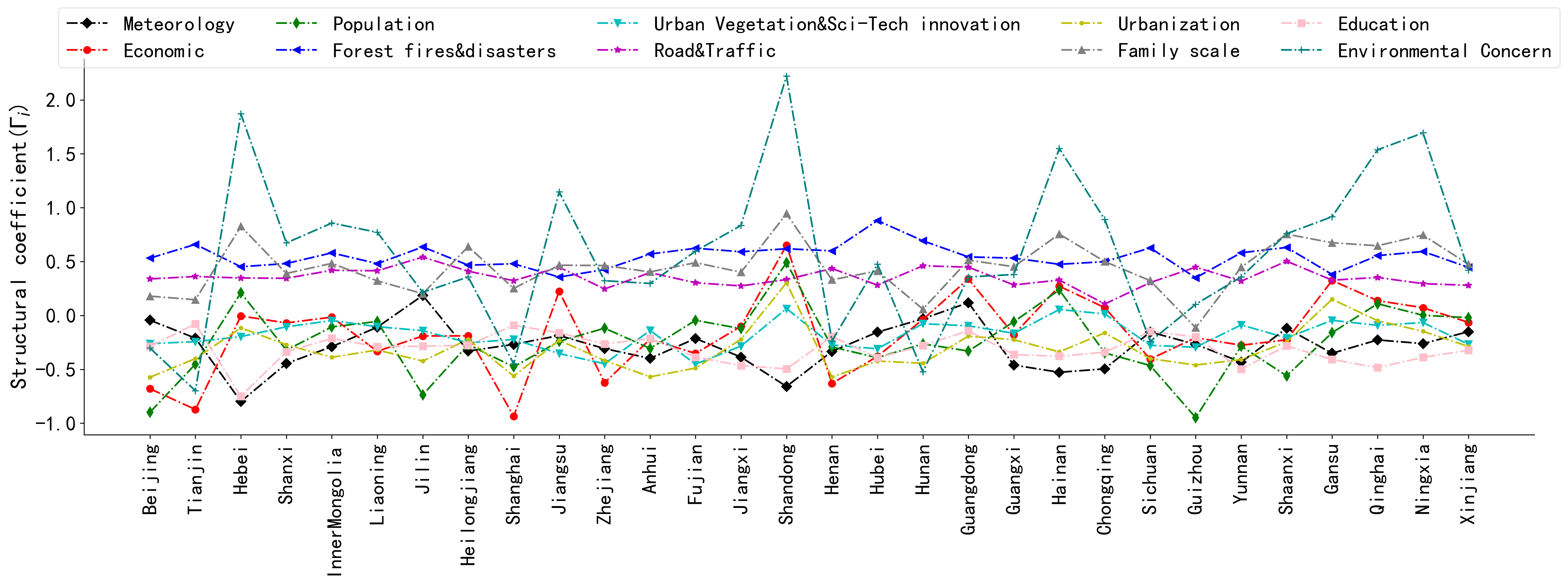
Figure 10: Posterior means of structural coefficients Γi across provinces, demonstrating spatial heterogeneity.
Inter-factor Correlations
Estimates of the LMC-implied correlation matrix show strong positive associations among economic development, urbanization, population structure, family size, environmental concern, and technological innovation, highlighting an underlying, mutually reinforcing system dynamics.
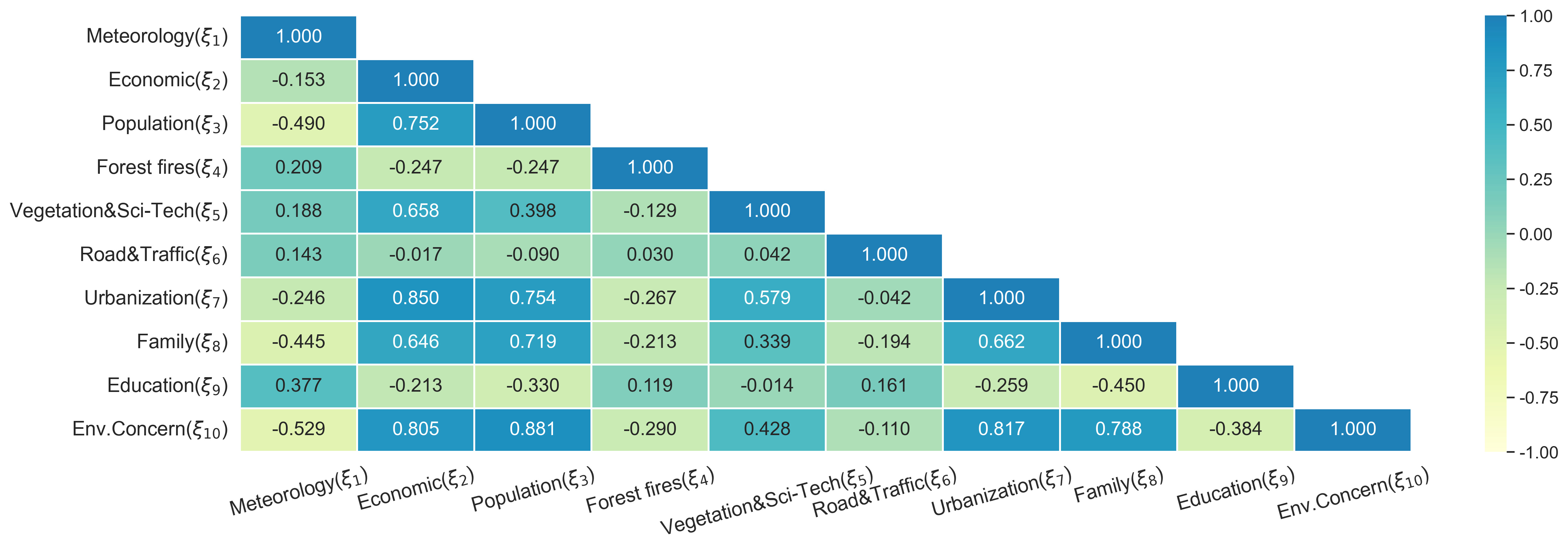
Figure 11: Posterior correlation matrix for latent factors, indicating multiple positively linked subgroups across socio-economic dimensions.
Implications, Limitations, and Future Directions
The PFDSEM enables formal statistical interrogation of temporally varying, regionalized, and multi-resolution relationships between pollutant emissions and heterogeneous drivers. Results challenge assumptions of national uniformity in factor effects, instead advocating for regionally and seasonally adaptive policy design.
Practically, the evidence for significant positive temporal dependence and inter-factor synergy means that policy interventions (e.g., targeted economic or technological incentives) may yield non-local and lagged benefits or unintended consequences, depending on regional structure and policy time horizon. The pronounced seasonal meteorological effects underscore the necessity of dynamically optimized regulation (e.g., heating season controls).
Methodological limitations include reliance on observational data (precluding strict causal inference), dependence on CAR(1) and additive functional effect assumptions, and computational intensity of full MCMC. Extensions could consider ARMA or nonparametric temporal dynamics, function-on-function interactions, instrumental variable structures, and scalable posterior approximation via variational inference or advanced MCMC.
Conclusion
The PFDSEM provides a statistically rigorous, computationally tractable, and highly interpretable solution for integrating and analyzing multi-resolution environmental data in the context of atmospheric pollutant emissions. By enabling simultaneous modeling of scalar, functional, and latent predictors—while capturing spatial, temporal, and structural heterogeneity—it advances both applied environmental policymaking and the broader landscape of functional and dynamic latent variable modeling (2607.04641).