- The paper computes the complete RSET using angular-splitting regularization and high-order mode subtraction, enabling precise evaluation deep inside the Schwarzschild interior.
- It uncovers a universal ultraviolet scaling where the dominant tensor components diverge as r⁻⁶, leading to a strongly positive null energy contribution in the Raychaudhuri equation.
- The findings challenge singularity regularization models by showing that semiclassical corrections intensify local focusing rather than defocusing the classical singularity.
Complete Quantum Stress Tensor in the Schwarzschild Interior: Ultraviolet Scaling and Null Focusing
Introduction and Context
The study of quantum effects in black hole interiors is critical for understanding the fate of classical singularities and the viability of semiclassical gravity in extreme curvature regimes. A key object in semiclassical gravity is the renormalized stress-energy tensor (RSET), ⟨Tab⟩ren, which serves as the source term in the semiclassical Einstein equation. While the RSET has been extensively evaluated outside black holes in various quantum states, a complete, controlled determination of all tensor components throughout the interior of a standard four-dimensional Schwarzschild black hole had remained unavailable, leaving the nature of local semiclassical sources—particularly near the spacelike singularity—unquantified.
The paper "Complete Quantum Stress Tensor Inside a Four Dimensional Schwarzschild Black Hole: A Divergent Focusing Source" (2607.04386) addresses these knowledge gaps, computing the complete RSET of a massless minimally coupled scalar field in both the Unruh and Hartle–Hawking states across the entire Schwarzschild interior, from just inside the event horizon down to a proximity of r/M∼10−4 to the singularity. The results allow, for the first time, robust statements regarding the ultraviolet scaling of quantum stress and its implications for the singularity structure in semiclassical gravity.
Methodology and Tensor Construction
The study employs an angular-splitting regularization combined with high-order, large-ℓ mode subtraction for precise RSET determination. This approach enables isolation of the delicate ultraviolet cancellations required as the boundary to the singularity (r→0) is approached, overcoming challenges posed by rapidly oscillating mode functions in this high-curvature regime. Covariant conservation and the trace identity are used as nontrivial cross-checks on the numerical results.
For both the Unruh and Hartle–Hawking quantum states, all independent RSET components and the corresponding vacuum polarization ⟨Φ2⟩ren are evaluated as functions of the Schwarzschild interior coordinate r. The computed quantities are validated by comparison with exterior results and by confirming satisfaction of conservation and trace constraints across the full domain.
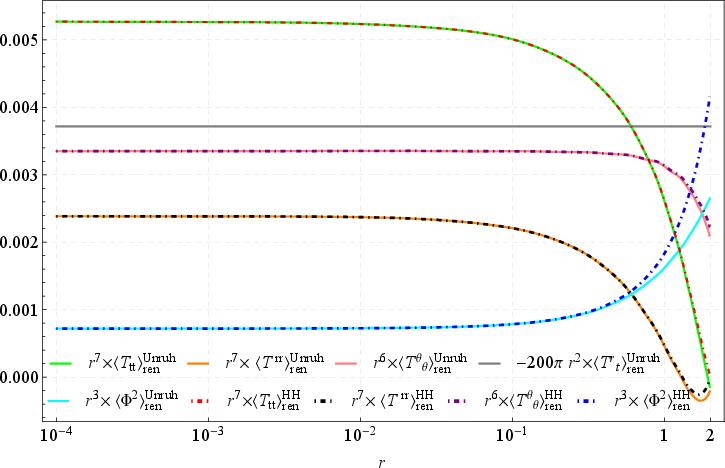
Figure 1: Complete Schwarzschild-interior RSET and vacuum polarization from the event horizon down to r≃10−4, showcasing the ultraviolent scaling and relative hierarchy of tensor components.
Ultraviolet Scaling and State-Independent Leading Order
A core result is that near the spacelike singularity, the diagonal mixed RSET components admit a universal scaling law:
⟨Tab⟩ren∼r−6τab,
where τab is a finite, well-determined tensor. Numerical extraction yields explicit coefficients for each component. The vacuum polarization similarly scales as r−3, and the Unruh-state flux component scales subleadingly as r/M∼10−40. The state-dependent off-diagonal flux is suppressed by r/M∼10−41 relative to the diagonal entries; therefore, for both the Unruh and Hartle–Hawking states, the leading ultraviolet behavior of the stress tensor is identical.
The limiting tensor is highly anisotropic, violating the dominant energy condition: principal pressures exceed the energy density, which is a "super-stiff" regime in the effective fluid analogy. However, in both states, the null-null component of the stress-energy tensor—the quantity entering the Raychaudhuri equation—remains strictly positive and divergently strong close to the singularity.
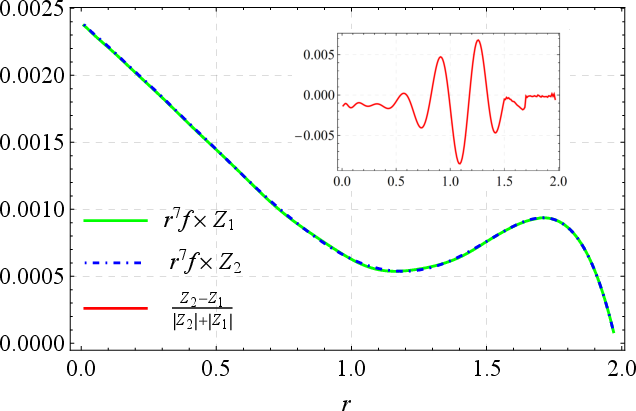
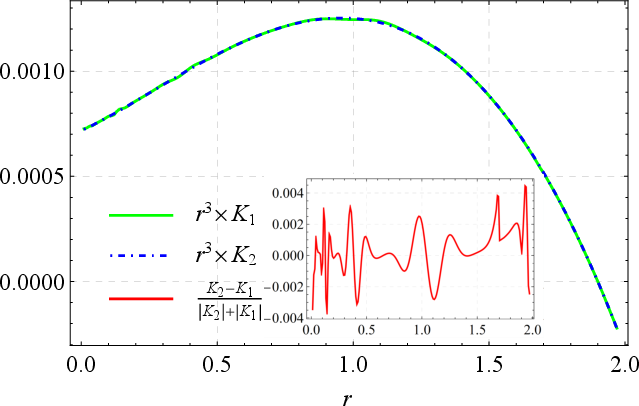
Figure 2: Global validation of the interior RSET in the Unruh state; conservation law and trace identity residuals confirm the numerical precision across the black hole interior.
Raychaudhuri Dynamics and Focusing Contributions
This work's most significant finding is the identification of a divergent, positive-definite local source term in the Raychaudhuri equation for null congruences. The calculated RSET yields a positive r/M∼10−42, enforcing a focusing effect on nearby geodesics:
r/M∼10−43
with r/M∼10−44 at leading order. This stands in contrast to heuristic expectations (and some effective models) wherein quantum vacuum effects might induce null energy violation and thereby a "defocusing" smoothing of the classical singularity. The leading semiclassical correction, as computed here, exacerbates null focusing.
The result is robust to standard finite renormalization ambiguities. All local curvature ambiguities (cosmological constant, Ricci, or quadratic terms) are subleading or vanish in the Schwarzschild interior, confirming that the dominant scaling and sign of the ultraviolet tensor are physically meaningful and not artifacts of regularization.
Comparison to Prior Work and Practical Implications
Prior studies on quantum backreaction in black hole interiors were restricted to partial observables, such as vacuum polarization or fluxes near Cauchy horizons, which are insufficient for a complete determination of local geometric evolution or singularity regularization. The present computation extends much further into the deep ultraviolet regime and provides the necessary tensorial data for rigorous backreaction analyses. In toy models and alternate approaches (e.g., loop quantum gravity corrections, generalized uncertainty-principle modifications), leading-order quantum stress is sometimes posited to provide repulsive or defocusing effects. However, standard quantum field theory in curved spacetime for the Schwarzschild vacuum, as established here, yields the exact opposite: a focusing, diverging source at the singularity.
Practically, this calculation supplies stringent constraints for any proposal aiming to resolve the Schwarzschild singularity via semiclassical effects. Any such mechanism must offset or overwhelm the divergent, focusing vacuum polarization stress identified here. The results suggest that local semiclassical effects alone, in fixed background quantizations, do not yield singularity resolution via quantum null energy defocusing.
Theoretical Implications and Future Directions
The findings reinforce the understanding that the leading quantum corrections in black hole interiors act to intensify, not soften, the classical singularity, at least for minimally coupled scalar fields in four dimensions. This conclusion is local and does not entail—or rule out—singularity resolution through full dynamical backreaction, nonperturbative quantum gravity effects, or global semiclassical analyses.
Extending this approach to more general settings—including charged, cosmological, or rotating black hole interiors—will be necessary to assess the universality of the identified ultraviolet dominance of vacuum polarization. Moreover, using the computed RSET as a source in a self-consistent, backreacted semiclassical evolution will be essential for drawing global conclusions about geodesic completeness and the endpoint of gravitational collapse in semiclassical gravity.
Conclusion
This work delivers the first controlled, complete calculation of the renormalized quantum stress-energy tensor throughout the interior of a four-dimensional Schwarzschild black hole, resolving outstanding questions regarding the nature and sign of quantum sources near the spacelike singularity. The leading-order, state-independent tensor scales as r/M∼10−45 and produces divergent null focusing. Thus, quantum fields, in the standard semiclassical framework, enhance local focusing near the singularity rather than providing a defocusing or regularizing effect. The results serve as a benchmark for theoretical models of quantum gravity and singularity resolution, and as a foundation for future studies of backreaction and the fate of strong curvature regions in black hole interiors.