- The paper introduces a simulation framework using a small LLM (qwen2.5:7b) to generate safe, YAML-based scheduling policies for deadline-aware V2X in 5G/6G networks.
- It outlines a hierarchical control where the policy is generated every 10s and enforced at 100ms intervals, ensuring deterministic execution and runtime shielding for safety.
- Experimental results show that in high-density scenarios, the adaptive LLM-rApp/xApp method improves critical DC-PRR by up to 5.6 percentage points over conventional scheduling strategies.
Agentic-V2X: Small LLM Agents for Deadline-Aware V2X Scheduling in 5G/6G Networks
Architectural Overview
The paper introduces Agentic-V2X, a simulation-based framework that integrates small LLM agents into the hierarchical controller architecture of 5G NR V2X (Vehicle-to-Everything) networks. The approach leverages a Manhattan-style urban grid mobility scenario Figure 1, simulating vehicular communication with SUMO, ns-3, and the 5G-LENA module. The architecture is aligned with O-RAN paradigms, distinguishing non-real-time (rApp-style) policy generation from near-real-time (xApp-like) deterministic execution. A small LLM (qwen2.5:7b) operates periodically—outside the critical scheduling loop—as a structured policy generator, with rigorous schema validation and repair mechanisms to ensure policy safety. The validated policy is enforced by a lightweight xApp-like controller at a high-frequency cadence, adapting per-service scheduler weights for deadline-sensitive, heterogeneous V2X services.
System Model, Policy Generation, and Validation
The system models a single NR cell serving mixed V2X traffic classes: teleoperated driving (ToD), cooperative awareness (AIC), HD map sharing, and sensor sharing. Scheduler weight adaptation is realized through hierarchical control: the LLM generates a structured YAML policy (containing service priorities, weight bounds, and explicit safety constraints) at a slow 10s interval, while the xApp enforces validated policies every 100ms. Policy validation inspects schema completeness, admissible ranges, consistency between baseline weights and bounds, and enforces nonzero background service weights and minimum critical thresholds. Runtime shielding includes rollback strategies and dynamic UL/DL balancing to prevent performance degradation.
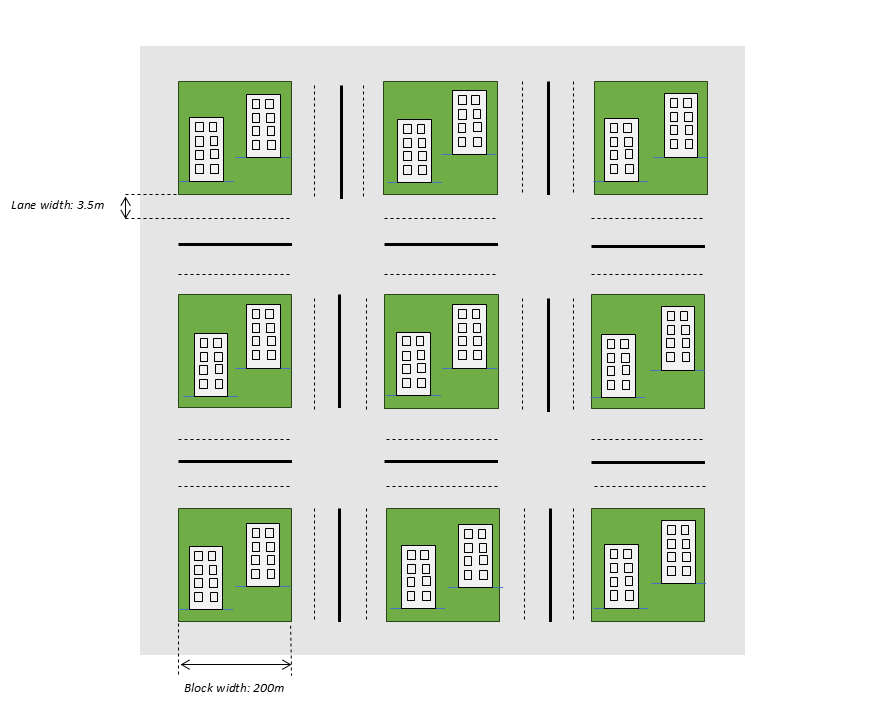
Figure 1: Manhattan-style Urban grid used for vehicular mobility and V2X simulation.
Experimental Campaign and Evaluation Metrics
A full factorial campaign (3 densities × 7 seeds × 6 methods = 126 runs) evaluates Agentic-V2X against proportional fair (PF), static expert, balanced expert, heuristic xApp, static LLM, and adaptive LLM-rApp/xApp methods. Metrics include deadline-constrained packet reception ratio (DC-PRR), per-service reliability, tail latency, deadline violation rate, background throughput, fairness, policy validity, repair/rejection counts, and safety interventions. Paired analysis leverages the identical mobility seeds across all methods for rigorous statistical comparison.
Results: Reliability, Latency, and Trade-offs
The adaptive LLM-rApp/xApp approach exhibits strict policy validation: all generated policies were accepted, no unsafe YAML reached the scheduler, and fallback/rollback mechanisms were invoked only in bounded corrective cases. Critical-service reliability (DC-PRR) trends demonstrate competitive performance at peak density: at 30 vehicles, adaptive LLM-rApp/xApp yields a mean critical DC-PRR of 65.4%, outperforming PF (59.8%) and static LLM (63.7%) for high-load critical flows Figure 2. However, the adaptive method underperforms at lower densities, with higher violation rates and weaker latency profiles.
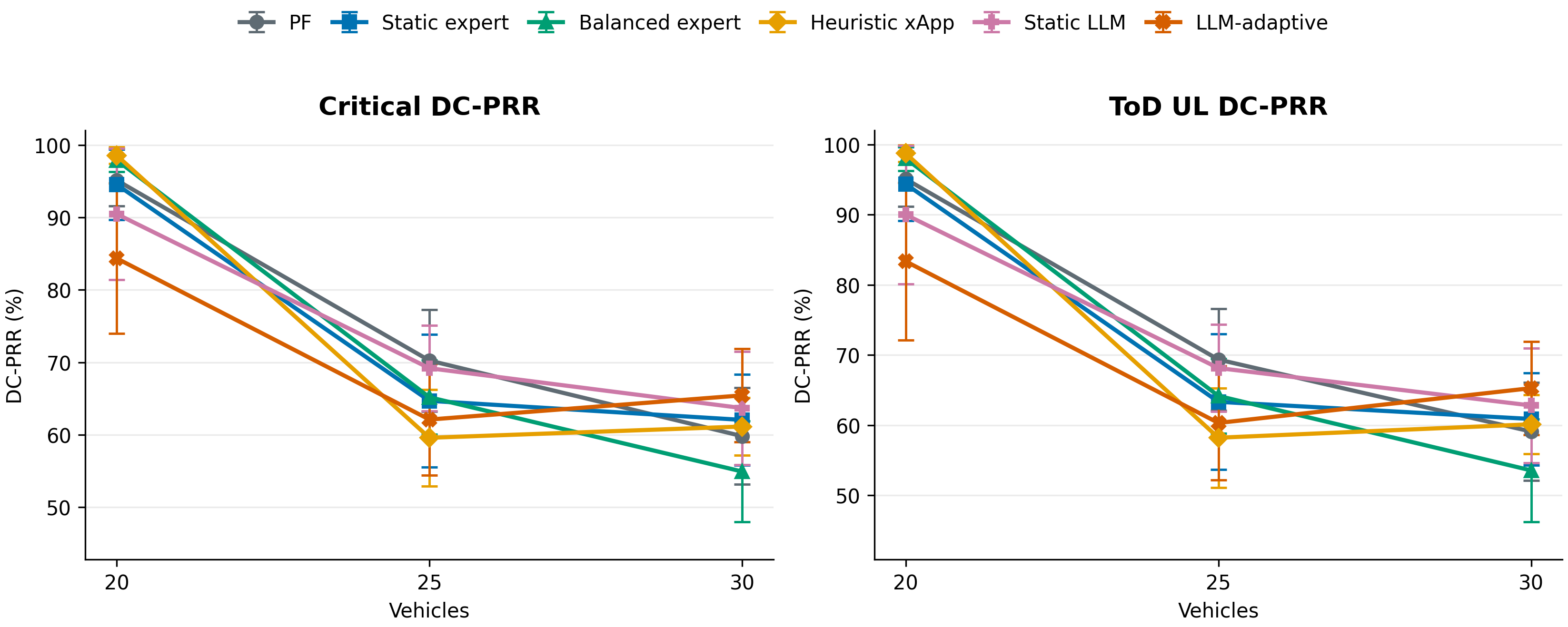
Figure 2: Reliability trends by density; left: critical DC-PRR, right: ToD UL DC-PRR with standard errors.
Component breakdowns reveal density-specific strengths; at 30 vehicles, adaptive LLM-rApp/xApp achieves the highest ToD UL reliability, preserving critical flow deadlines under congestion Figure 3.
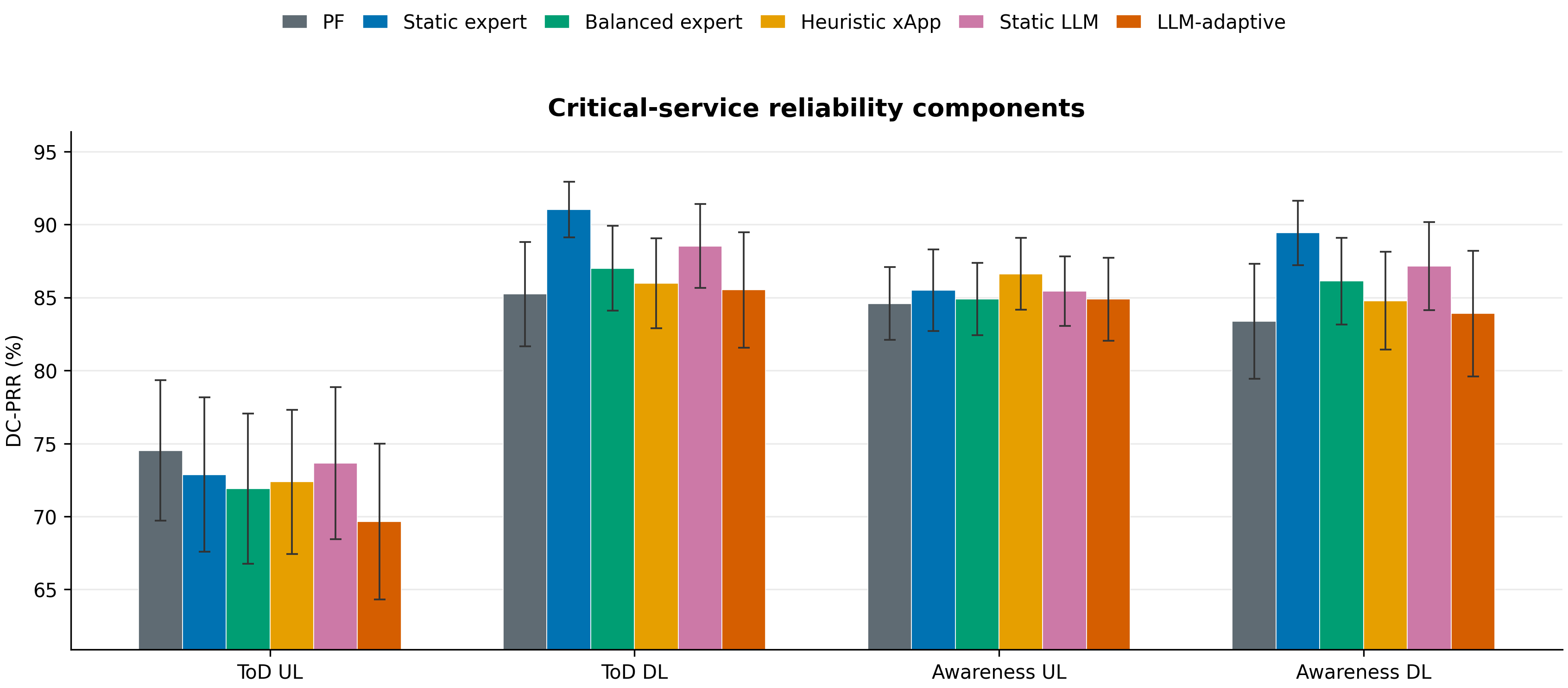
Figure 3: Overall critical-service DC-PRR components across all densities and seeds.
Medium-density regimes (25 vehicles) see adaptive LLM-rApp/xApp excelling in background throughput preservation (mean 14.51 Mbps), with reduced tail latency (mean critical p95 max latency 1329.3 ms). Aggregate results and paired statistical tests indicate adaptive LLM-rApp/xApp is not universally dominant in critical reliability but demonstrates favorable performance in select operating points (Figure 4, Figure 5).
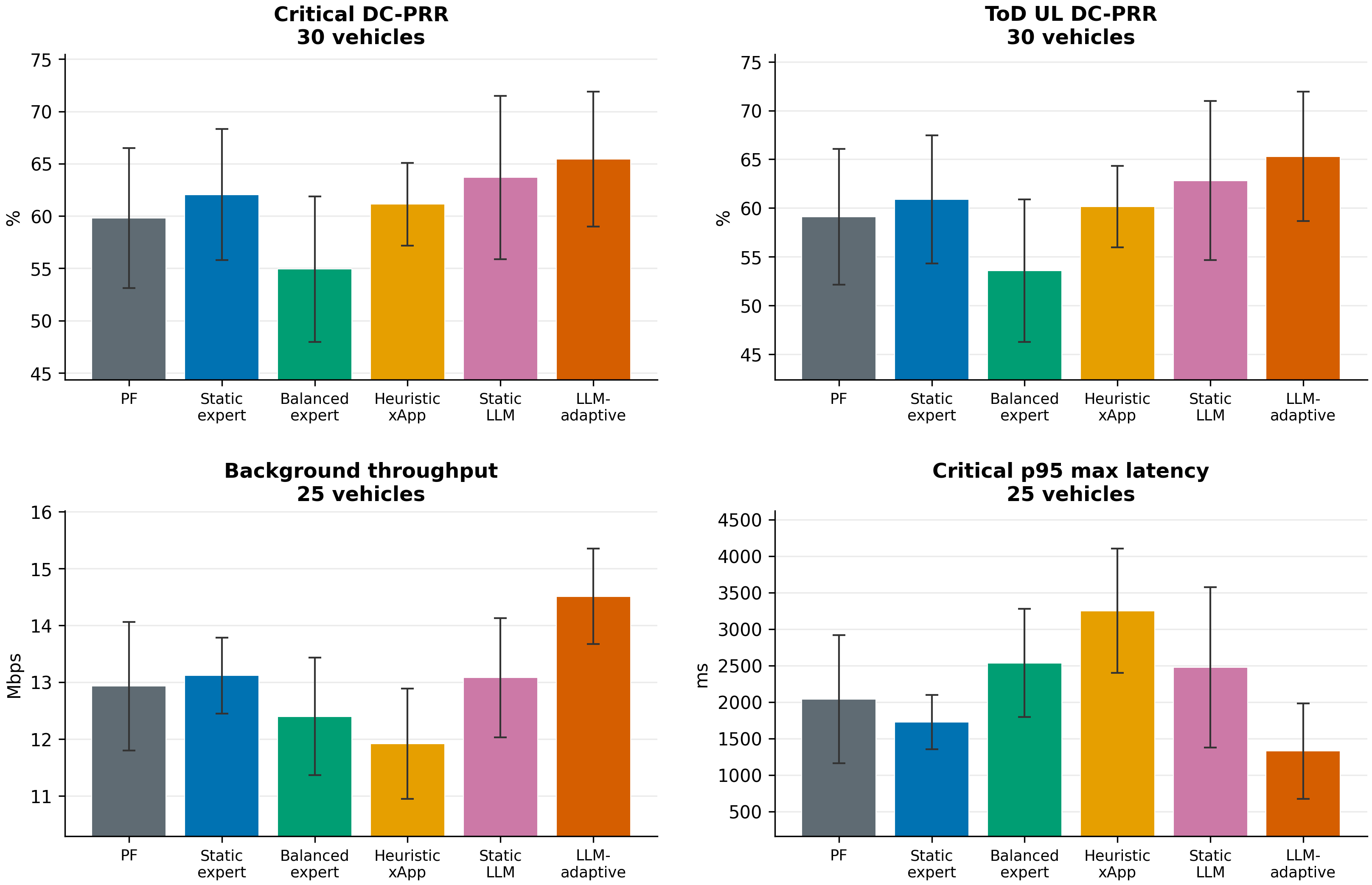
Figure 4: Operating points where adaptive LLM-rApp/xApp is strongest: high-density reliability and medium-density latency/throughput.
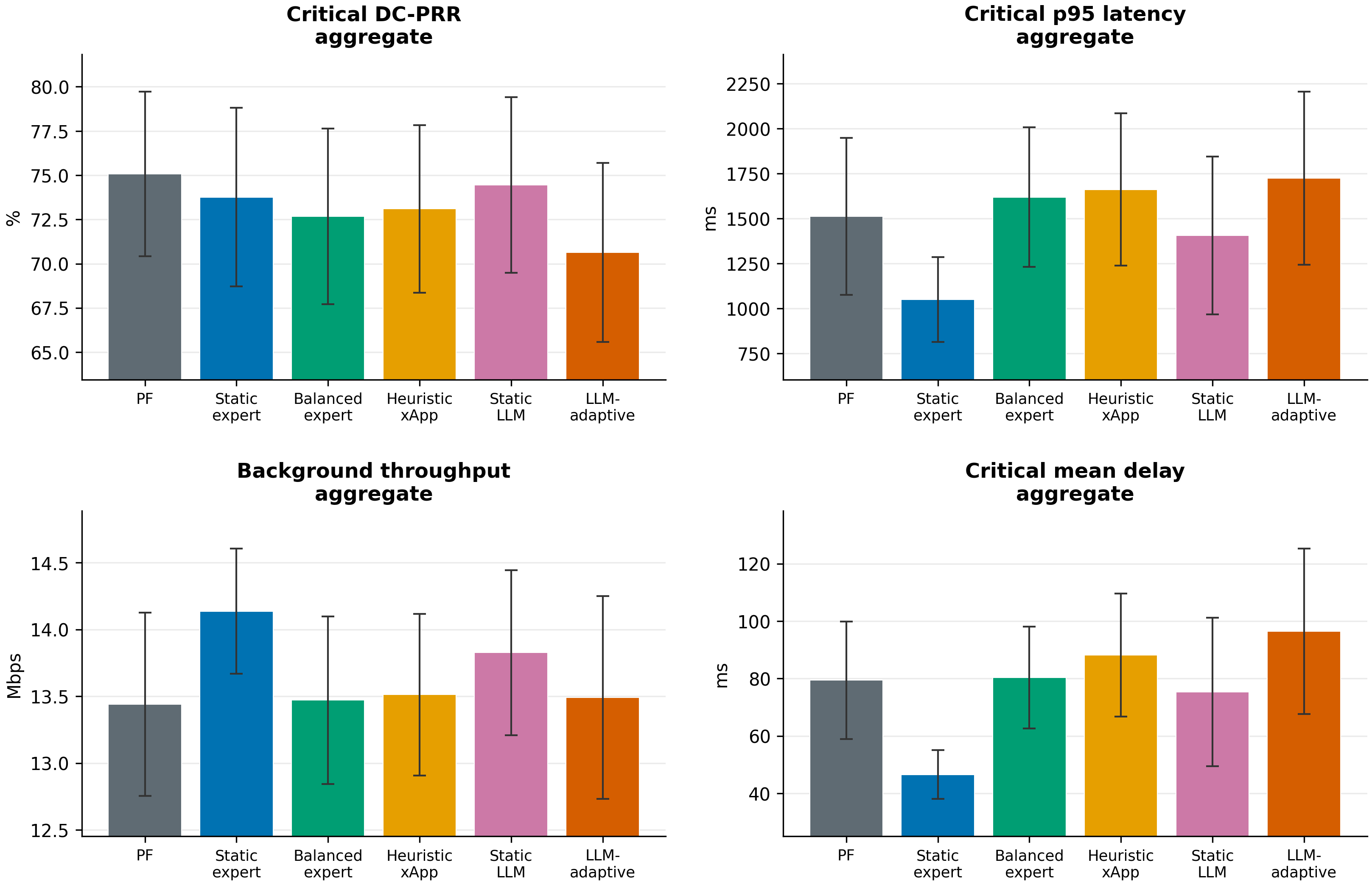
Figure 5: Aggregate performance trade-offs; higher is better for DC-PRR/throughput, lower is better for violation and latency.
Statistical paired differences confirm non-dominance in aggregate DC-PRR, but in high-density scenarios, adaptive LLM-rApp/xApp achieves up to +5.6 percentage points over PF and a 71.4% paired win rate Figure 6.
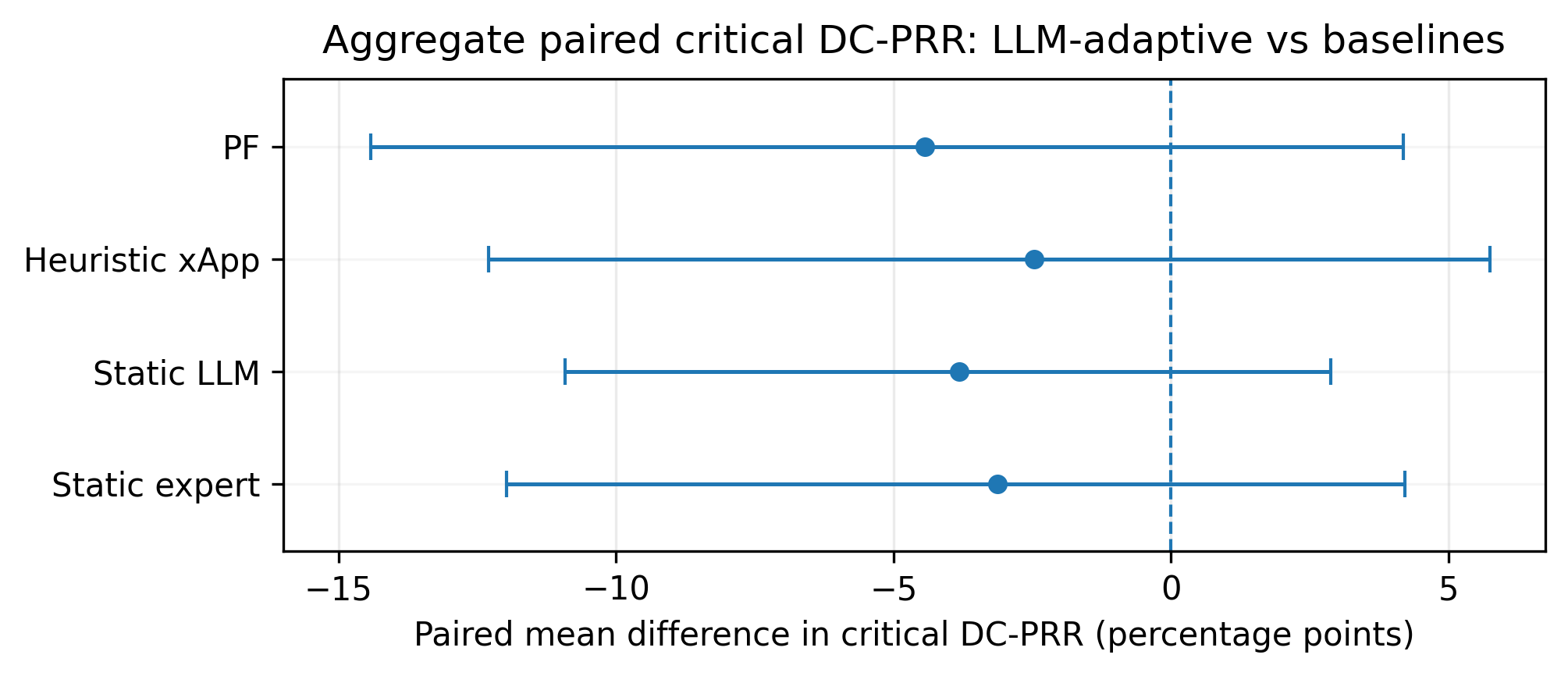
Figure 6: Aggregate paired critical DC-PRR differences for adaptive LLM-rApp/xApp over selected baselines.
Practical Control Overhead and Architectural Implications
The LLM agent operates strictly out-of-band for scheduler actuation; with moderate generation latency (mean ~8.4s), it is decoupled from the fast actuation loop. The xApp controller remains lightweight (mean execution overhead <0.03 ms per step), enabling safe, bounded adaptation without direct model inference latency risks. The policy schema, validation, and runtime shielding demonstrate that stochastic LLM policy outputs can be reliably harnessed within a deterministic safety envelope. This ensures no unsafe policies reach the scheduler—even under adverse or ambiguous LLM outputs.
Discussion, Limitations, and Future Directions
Agentic-V2X validates the feasibility of delegating bounded scheduler policy creation to small LLMs, provided rigorous validation and fallback mechanisms are enforced. The adaptive controller is architecturally competitive—particularly under high-density congestion—without replacing deterministic methods. Aggregate performance remains below static expert policies; density-specific strengths highlight the utility of adaptive LLM policy generation where contention is acute.
The study is simulation-based, limited to one NR cell and one small LLM instance (qwen2.5:7b), with fixed control periods (10s for LLM, 100ms for xApp). Results are not directly transferable to hardware, and sensitivity to schema or prompt design is left for future work. Multi-cell scenarios, O-RAN interface integration, and richer policy schemas are indicated as next steps.
Conclusion
Agentic-V2X demonstrates that small LLM-based policy agents can safely generate competitive, executable scheduling policies for deadline-aware V2X traffic in 5G NR, subject to rigorous validation and deterministic enforcement at the controller layer. Adaptive LLM-rApp/xApp excels in high-density regimes and preserves critical reliability and background throughput trade-offs in selected operating points, while remaining below static expert baselines in aggregate. The architecture validates hierarchical control with LLM policy assistants as a practical, safe alternative for complex, heterogeneous V2X scheduling, emphasizing policy generation rather than direct real-time actuation.