- The paper presents FLOAT Drone with a novel coaxial dual-rotor design and integrated control surfaces that decouple lateral force generation from vehicle attitude.
- The paper demonstrates a 58.5% reduction in target-facing lateral airflow and a 24% increase in thrust-to-power ratio, validated through CFD and experimental tests.
- The paper employs a nonlinear control allocator and L1 adaptive controller to achieve robust 6-DoF wrench generation, enabling precise manipulation in confined spaces.
FLOAT Drone: Fully Actuated Coaxial UAV for Physical Interaction with Lateral Airflow Reduction and Adaptive Control
Introduction and Motivation
The FLOAT Drone addresses critical limitations in aerial physical interaction by providing a UAV platform optimized for exerting controllable, multi-DOF contact wrenches while minimizing aerodynamic interference in close-proximity tasks. Traditional multirotor UAVs are underactuated, relying on vehicle tilt to generate horizontal forces, inherently coupling force with attitude and redirecting rotor-induced airflow toward nearby targets. Fully actuated alternatives employing fixed or variable-tilt rotors typically incur increased mechanical complexity, physical footprint, and still suffer from undesirable lateral airflows when generating horizontal forces. FLOAT Drone's core innovation is a compact coaxial dual-rotor design augmented with servo-driven control surfaces immersed in the rotor wake, decoupling lateral force generation from gross vehicle attitude and direct rotor thrust vectoring.
Mechatronic Design and Airflow Characterization
Compact Coaxial Architecture
FLOAT Drone utilizes a coaxial dual-rotor stack, reducing the horizontal projection relative to canonical multirotors while providing sufficient propulsion margin for manipulation and payload. Empirical testing demonstrated a 24% improvement in thrust-to-power ratio and a 66% increase in maximum thrust at the prototype operating conditions, compared to equivalent single-rotor systems Figure 1.
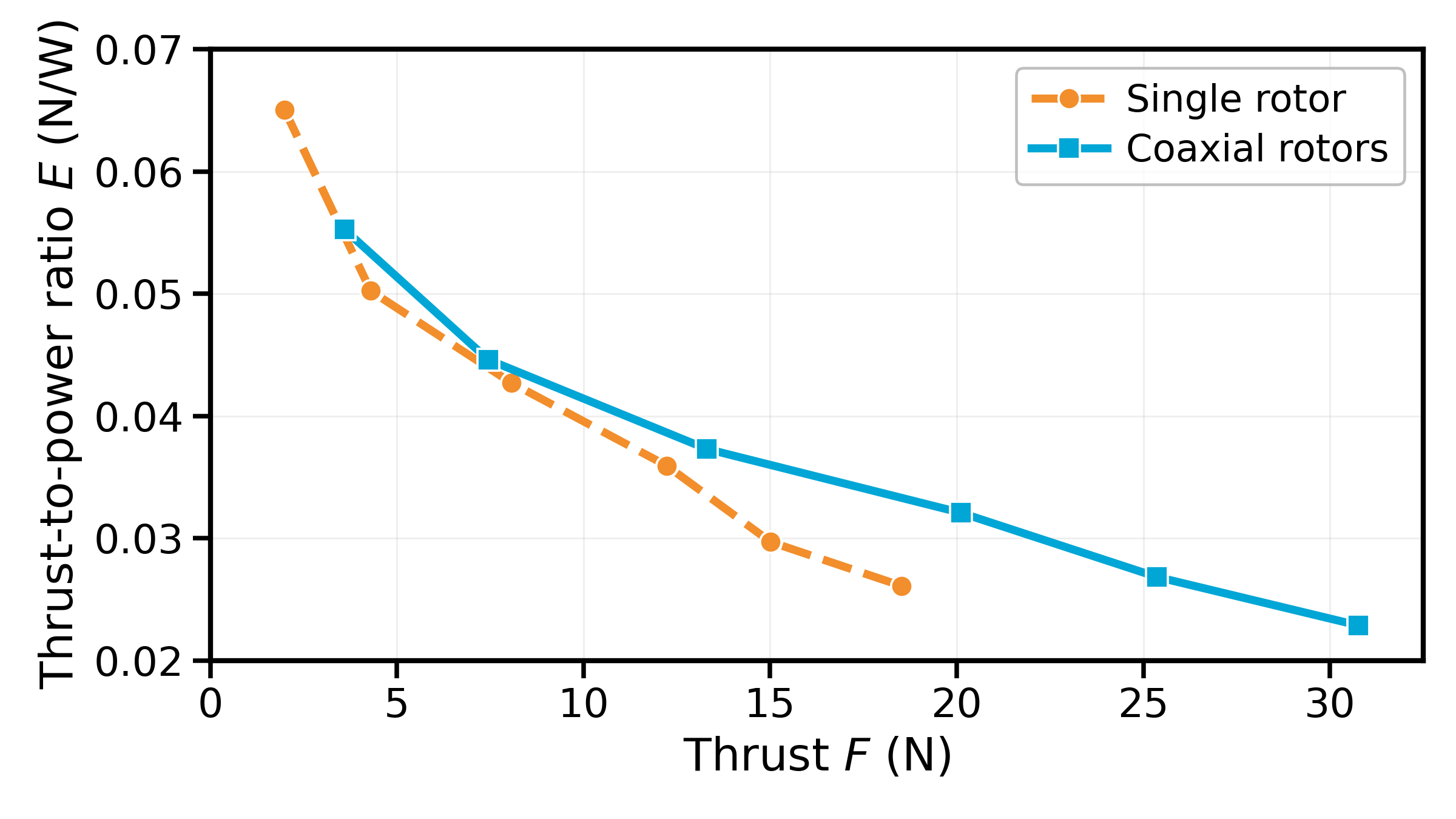
Figure 1: Thrust-to-power characteristics highlighting the coaxial dual-rotor’s efficiency gain over a single-rotor layout.
Lateral Force Generation with Reduced Airflow
Lateral forces are generated via servo-driven control surfaces placed in the high-speed rotor downwash, eliminating the need for body or rotor tilting. This mechanism produces horizontal aerodynamic forces through localized wake deflection, maintaining the primary rotor flow along the vertical axis. CFD-based force-matched comparisons between the control-surface and tilted-rotor mechanisms confirm that the FLOAT design reduces target-facing lateral airflow by 58.5% in mass-flow rate and 49.4% in normal momentum flux under equivalent force generation (Figures 2–4).
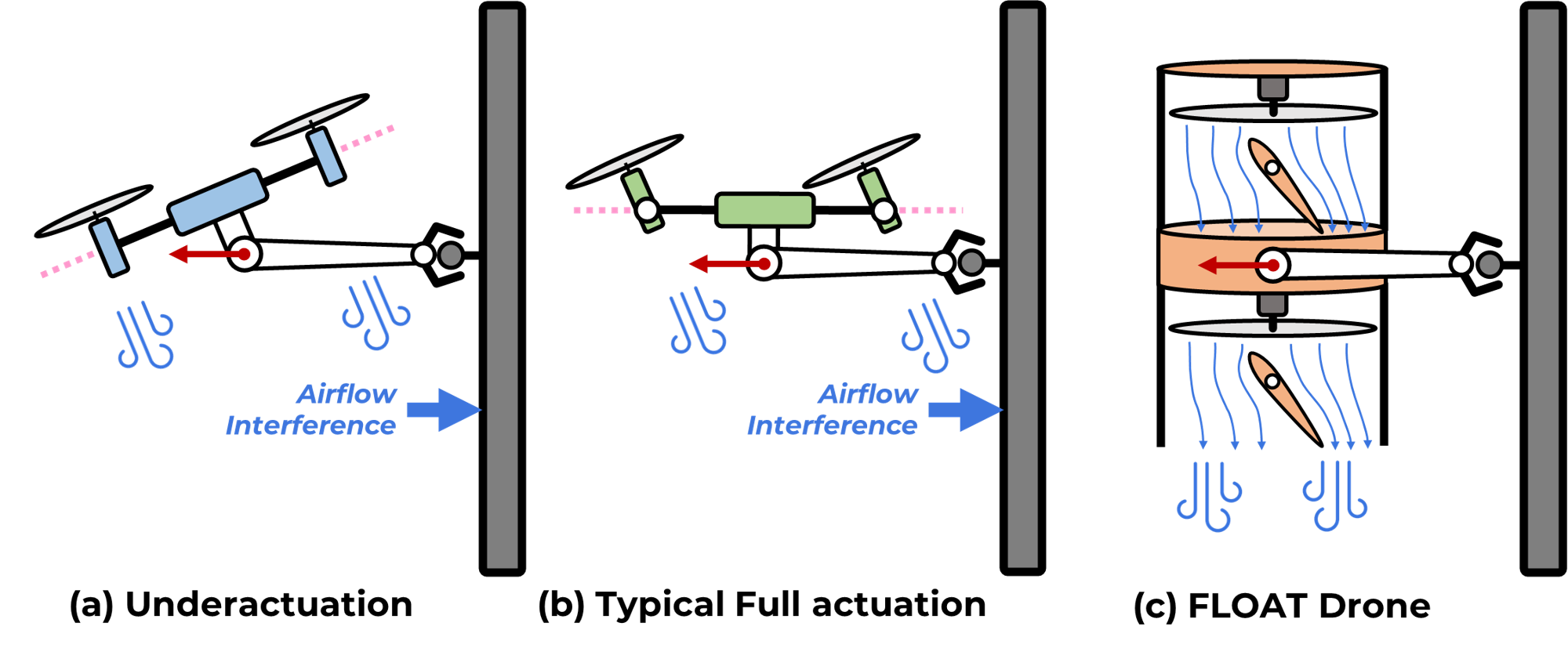
Figure 2: Schematic comparison of lateral-force generation mechanisms: body tilting, rotor-thrust vectoring, and control-surface actuation in FLOAT Drone.
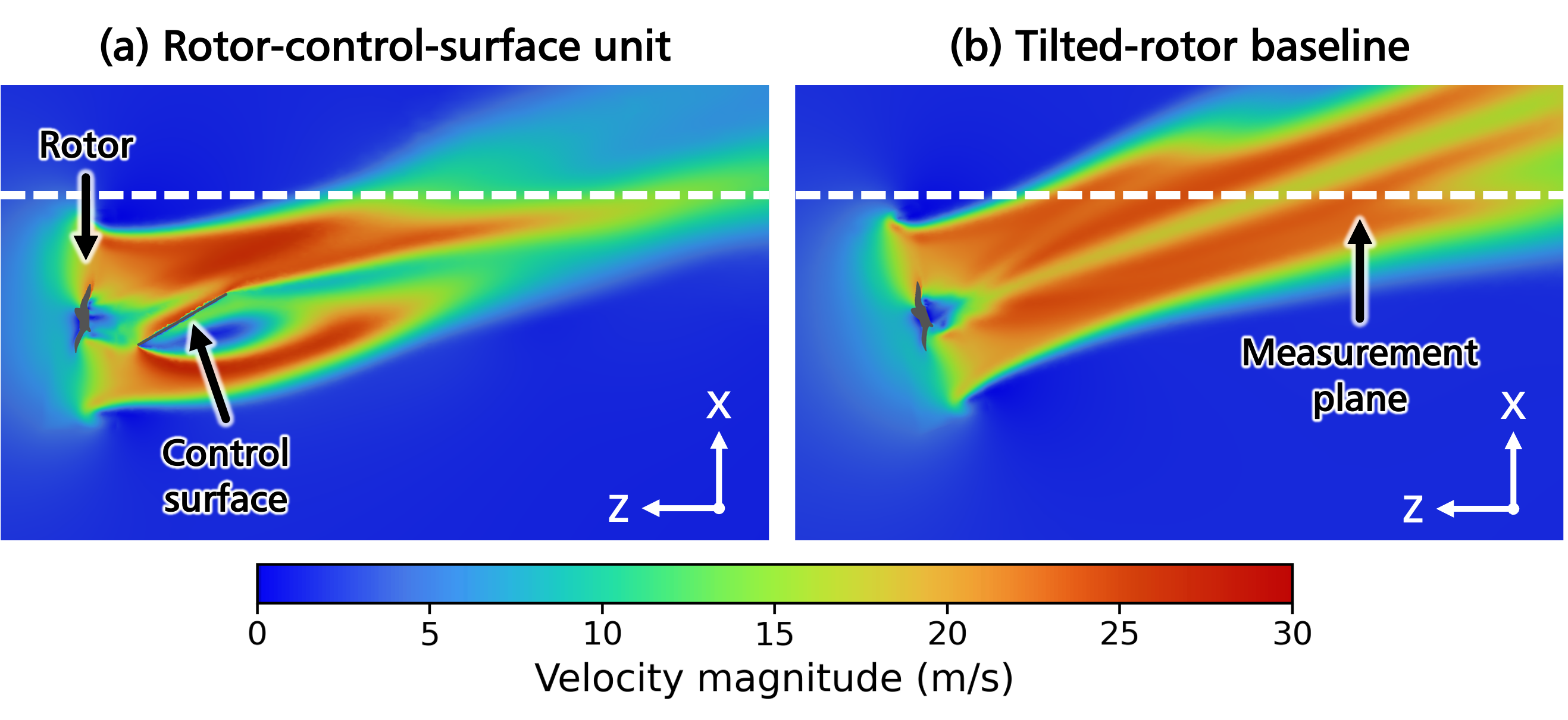
Figure 3: CFD velocity contours at matched Fx/Fz; FLOAT maintains vertical wake orientation, unlike the tilted-rotor baseline.
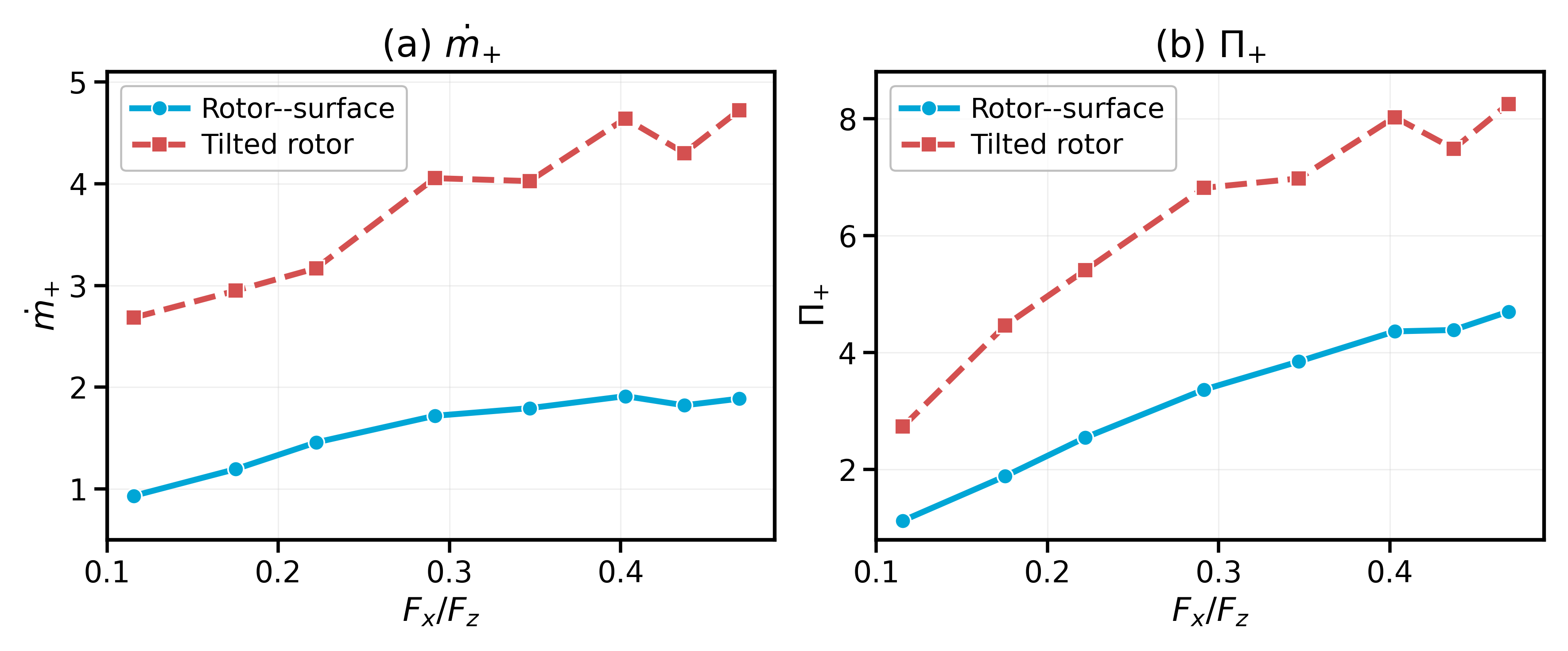
Figure 4: Quantitative reduction in target-facing mass flow and momentum flux achieved by the control-surface mechanism in FLOAT, supporting minimized aerodynamic disturbance in close-proximity tasks.
Wrench Generation Principle
The architecture enables full 6-DoF wrench authority: the coaxial rotors control vertical thrust and yaw torque, while differential/common actuation of vertically distributed control surfaces independently produces lateral forces and in-plane torques Figure 5.
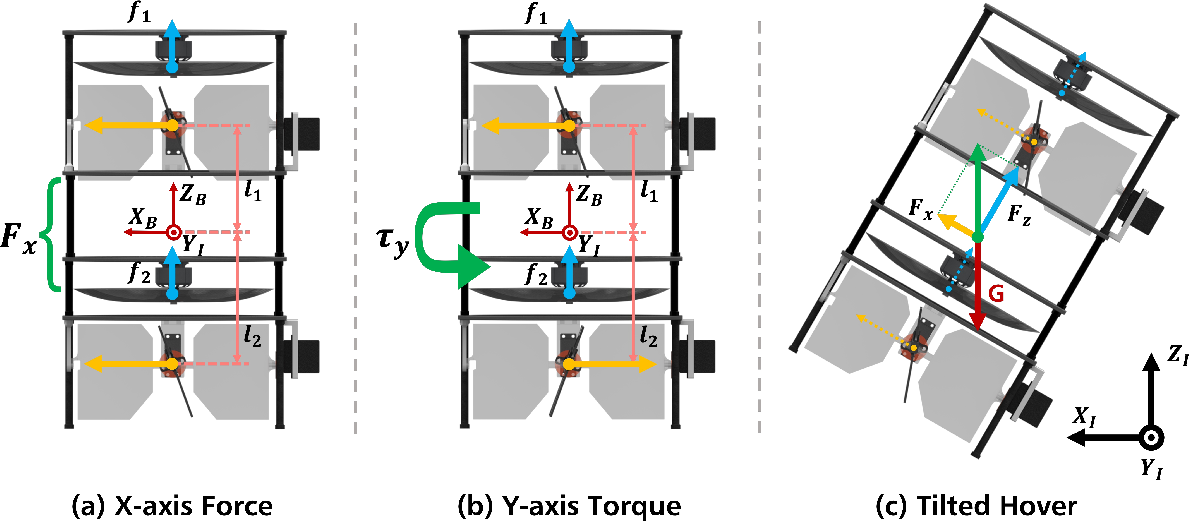
Figure 5: 6-DoF wrench-generation schematic: lateral force via common control-surface actuation and roll/pitch torque via differential actuation.
Prototype Implementation
The UAV achieves a compact form factor (312 mm circumscribed diameter, 1.85 kg mass, 225 s hover) suitable for physical interaction in constrained environments. The system’s modularity allows mounting minimal end-effectors such as a side hook for manipulation tasks Figure 6.
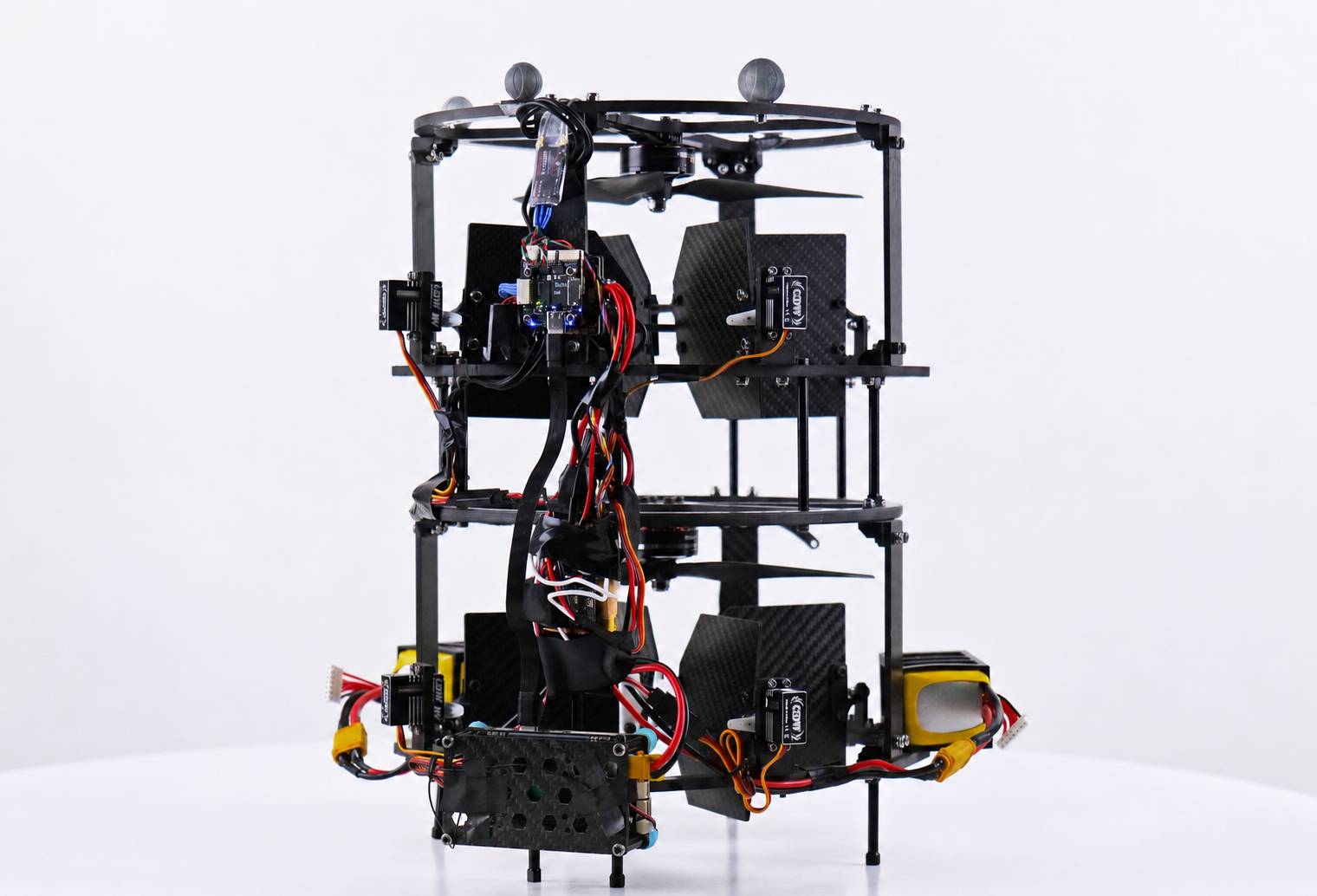
Figure 6: The upgraded FLOAT Drone prototype, integrating coaxial rotors with four servo-driven control surfaces.
High-Fidelity Aerodynamic Modeling and Nonlinear Allocation
Nonlinear Actuator-Force Mapping
Operating control surfaces within the confined rotor wake introduces pronounced nonlinearities: thrust loss, wake distortion, and coupling effects obscure linear input-output relationships. CFD analysis delineates these phenomena, revealing non-monotonic force production with respect to surface deflection angles and tangible cross-coupling Figure 7.
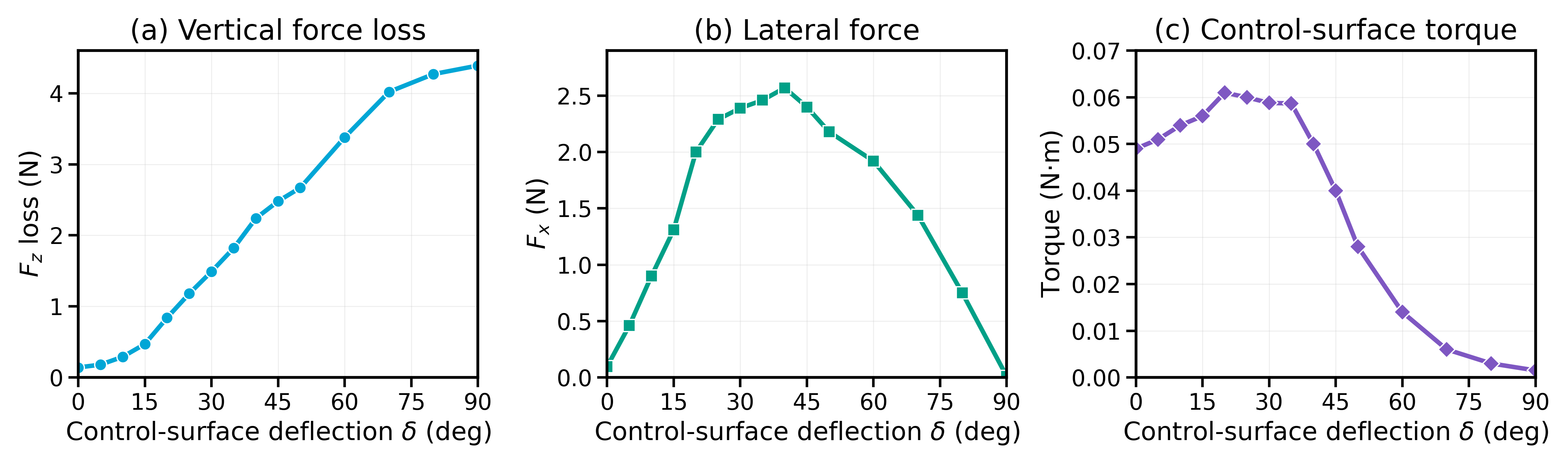
Figure 7: CFD results: control-surface deflection modulates lateral force and thrust loss nonlinearly.
High-density static force measurements across actuation domains are used to identify a pruned second-order polynomial model for the actuator-to-wrench mapping, achieving R2>0.93 in all major channels (Figures 8–9).
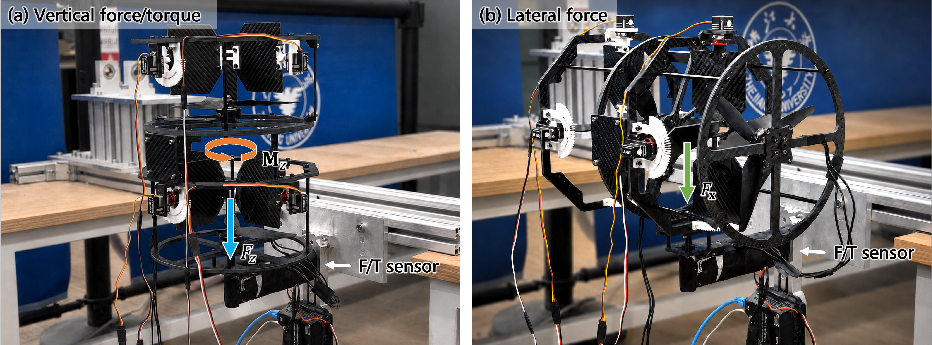
Figure 8: Force-measurement experimental setups for identification of vertical and lateral force channels.
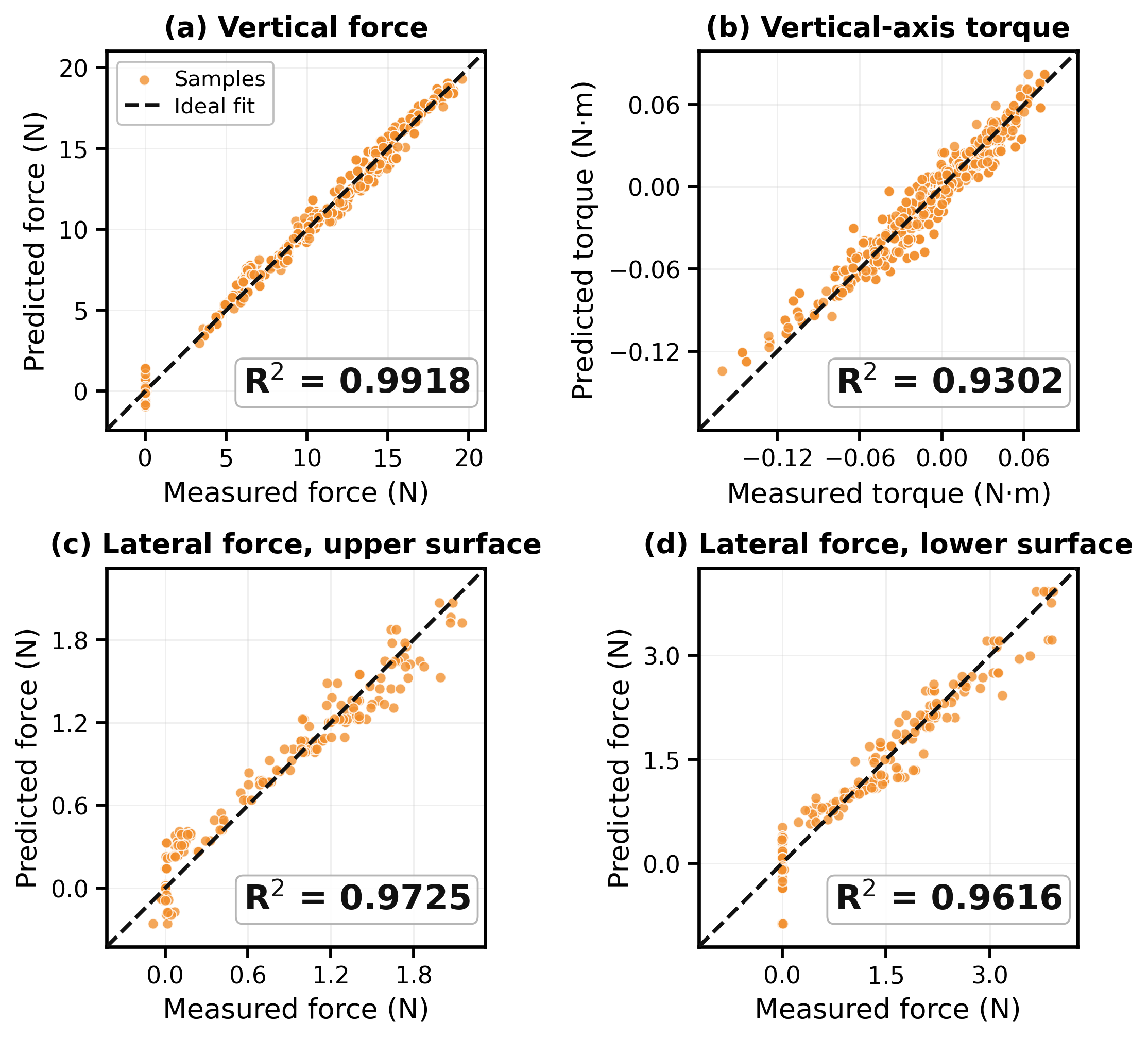
Figure 9: Empirical validation of the polynomial aerodynamic wrench model.
Nonlinear Control Allocation
The identified model is embedded in an online constrained nonlinear allocator (via CasADi/IPOPT), mapping desired 6-DoF wrenches to actuator commands while respecting saturation constraints. Average solution time is 2.95 ms at 100 Hz control rates, ensuring suitability for real-time embedded execution Figure 10.
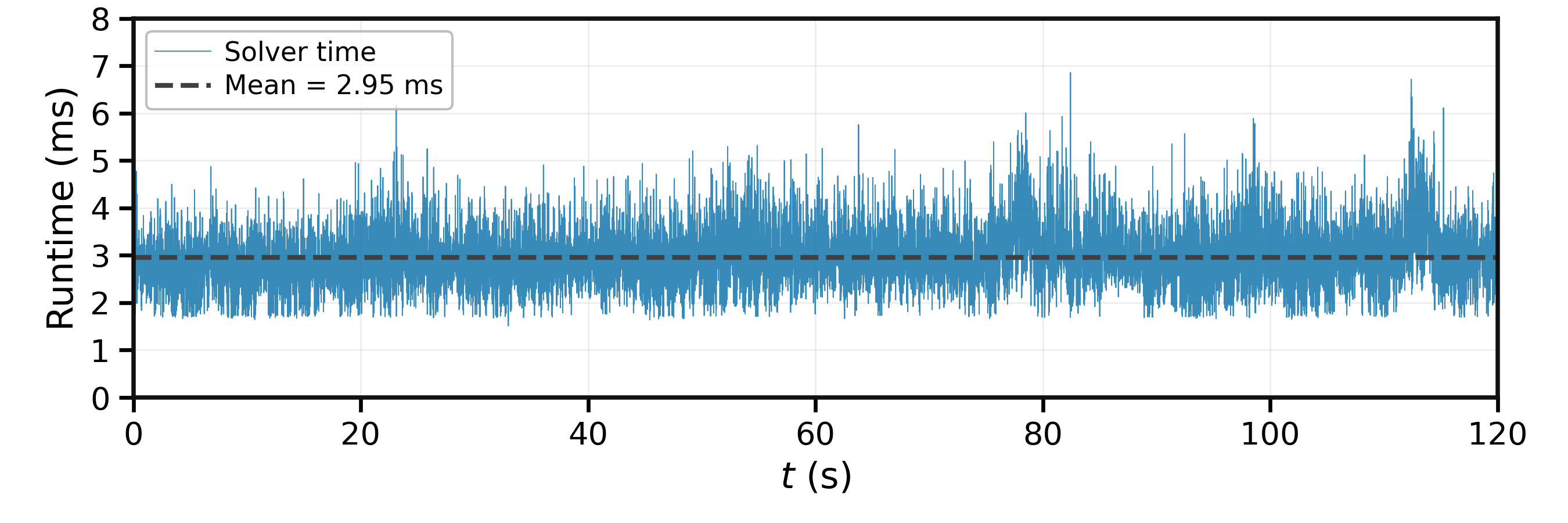
Figure 10: Runtime profile of the nonlinear allocator confirming 100 Hz real-time feasibility.
Geometric L1 Adaptive Control Architecture
The closed-loop system cascades an SE(3) geometric controller, an L1 adaptive augmentation, and the nonlinear allocator Figure 11. The geometric layer provides nominal trajectory and attitude tracking, while the L1 module estimates and rejects matched disturbances (e.g., unmodeled aerodynamics, ground/payload/contact forces) by updating an internal acceleration-level disturbance state and applying filtered compensation at the wrench command level. This enables fast adaptation with robustness to measurement noise, without requiring onboard force/torque sensors.
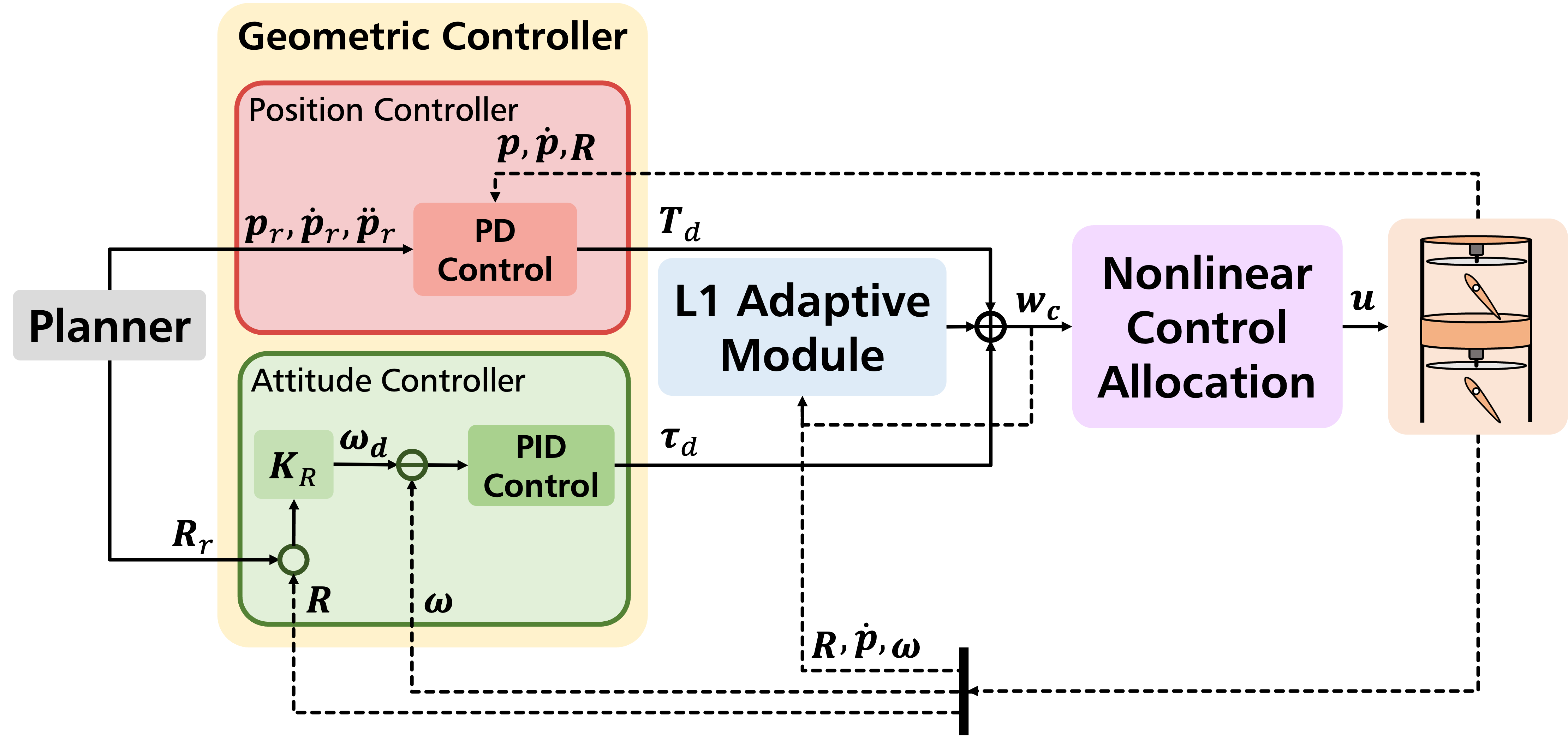
Figure 11: Closed-loop architecture integrating geometric control, L1 adaptation, and model-based allocation.
Experimental Evaluation
Lateral-Force Authority and Minimal Attitude Deviation
FLOAT achieves up to 30% vehicle weight in steady-state lateral force with under 2.3° attitude deviation, outperforming underactuated multirotors that must tilt ~17° for equivalent horizontal force Figure 12.
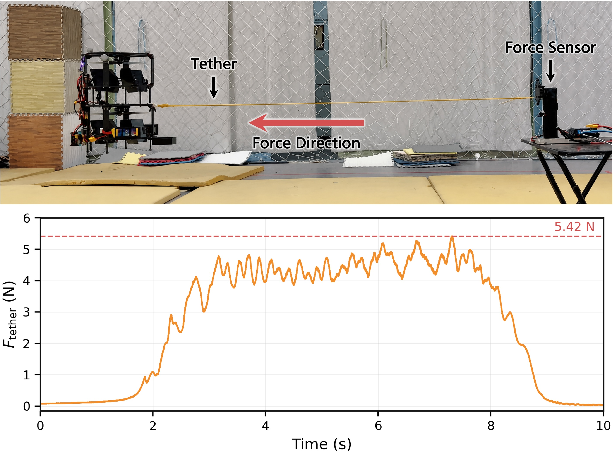
Figure 12: Experimental setup and lateral-force measurements demonstrating FLOAT’s decoupled force generation.
Tracking, Attitude Transition, and Disturbance Rejection
Comparative tests with linear allocation (LCA), nonlinear allocation (NLCA), and L1 adaptive augmentation (L1-LCA/NLCA) highlight several key capabilities:
- Trajectory Tracking: The NLCA + L1 combination yields the lowest RMSEs and maximal ∣ez∣ in 3D tracking Figure 13.
- Attitude Maneuvers: FLOAT maintains altitude through ±20∘ pitch transitions with minimal altitude deviation Figure 14.
- Disturbance Rejection: The system demonstrates robust recovery from strong ground effect, sudden 100 g/200 g payload attachment, and persistent actuator-model mismatch, with L1-NLCA maintaining stable flight where non-adaptive controllers fail (Figures 15–17).
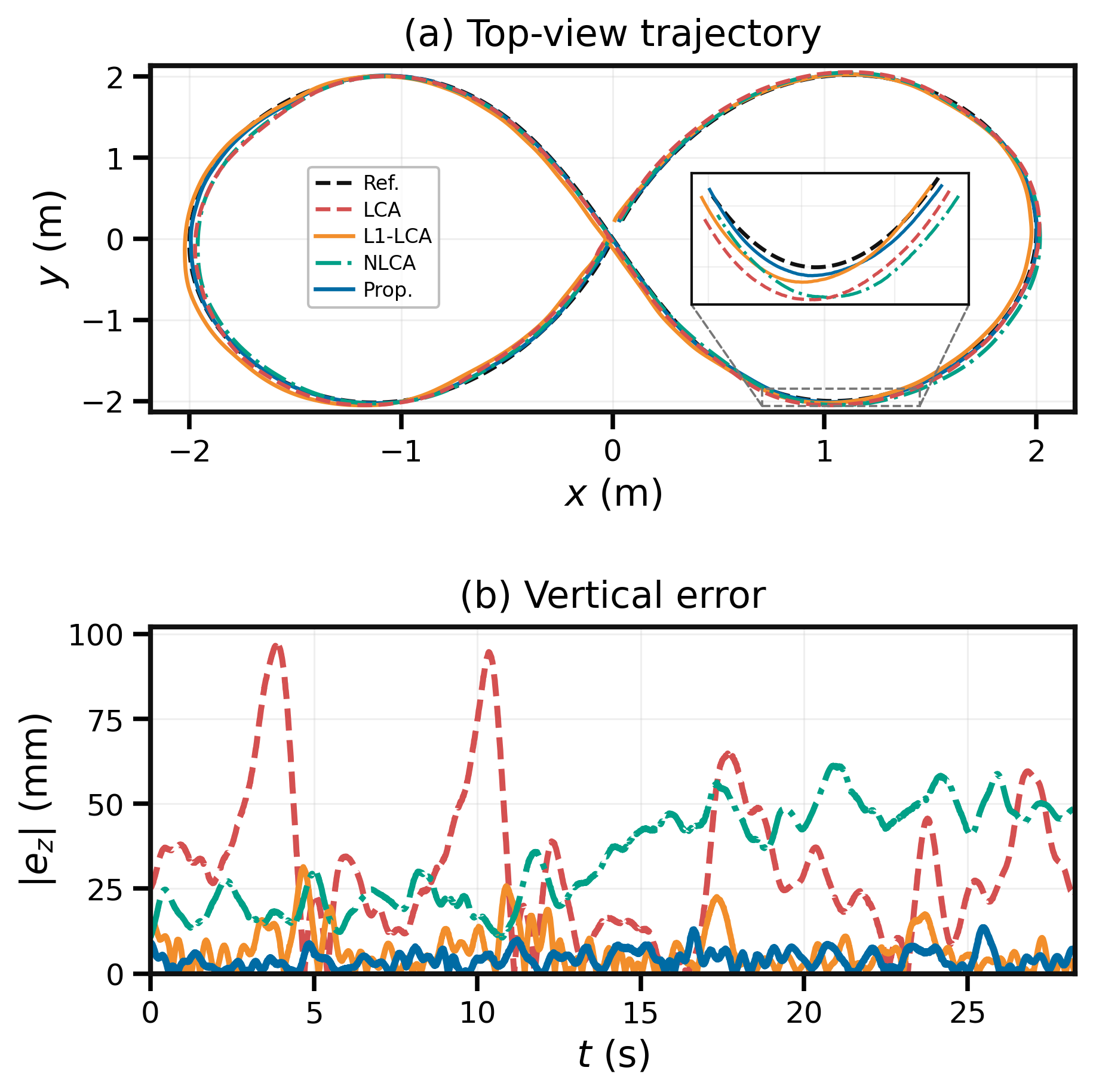
Figure 13: 3D trajectory tracking performance indicating precise spatial error regulation by the proposed controller.
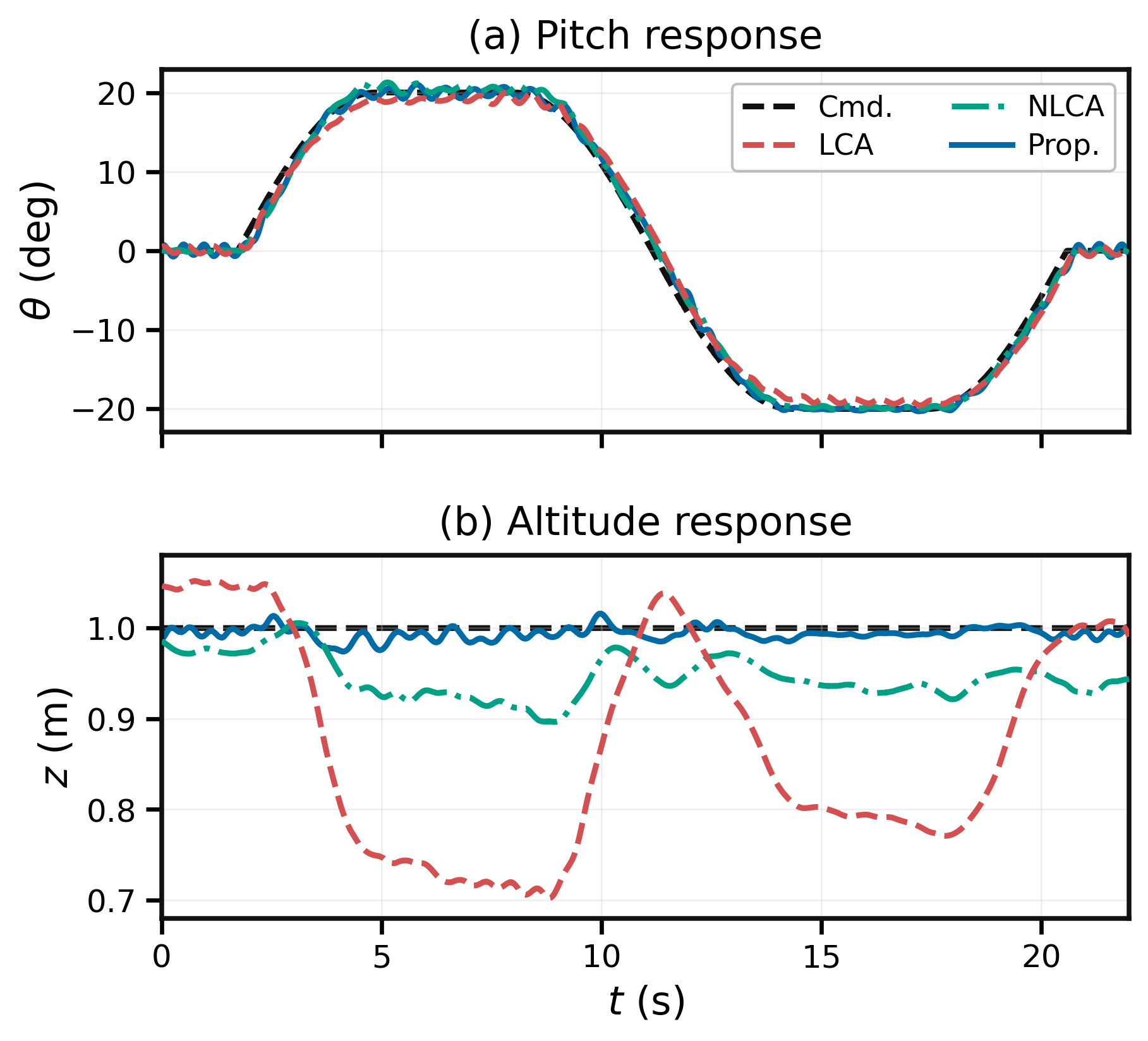
Figure 14: Hovering attitude transitions illustrate effective altitude maintenance across rapid pitch maneuvers.
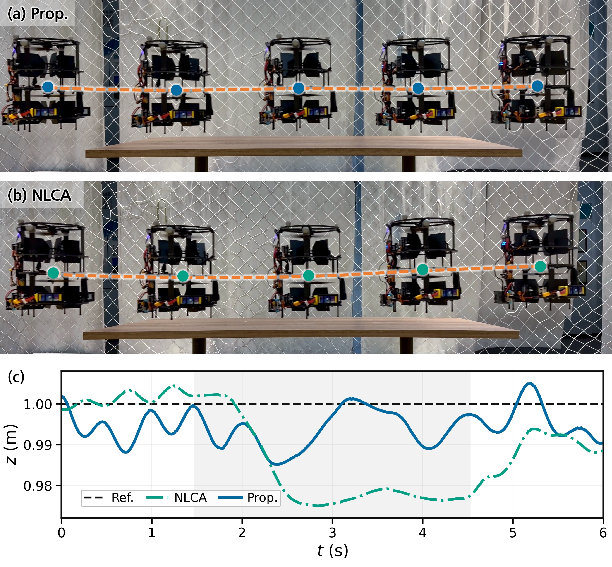
Figure 15: Ground-effect disturbance test; the controller with adaptive compensation shortens recovery and suppresses error.
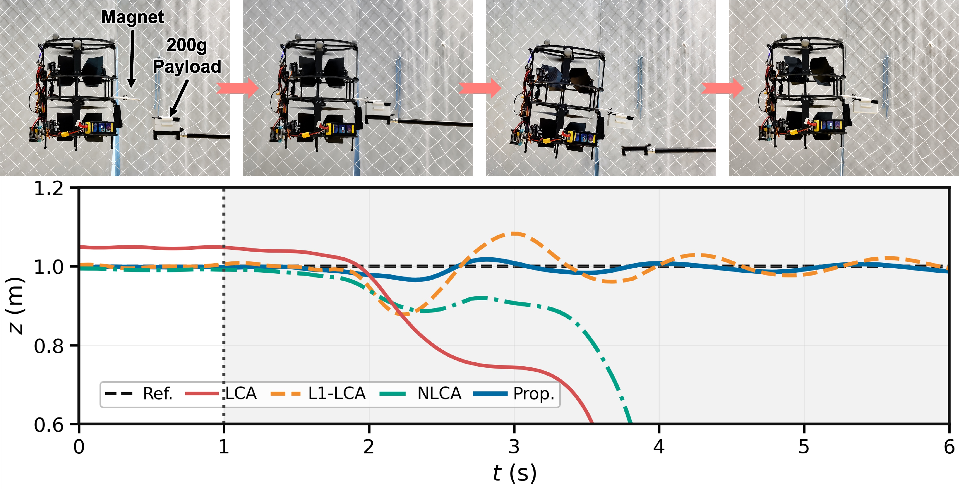
Figure 16: Step response to 200 g payload attachment; only adaptive controllers prevent loss-of-control events.
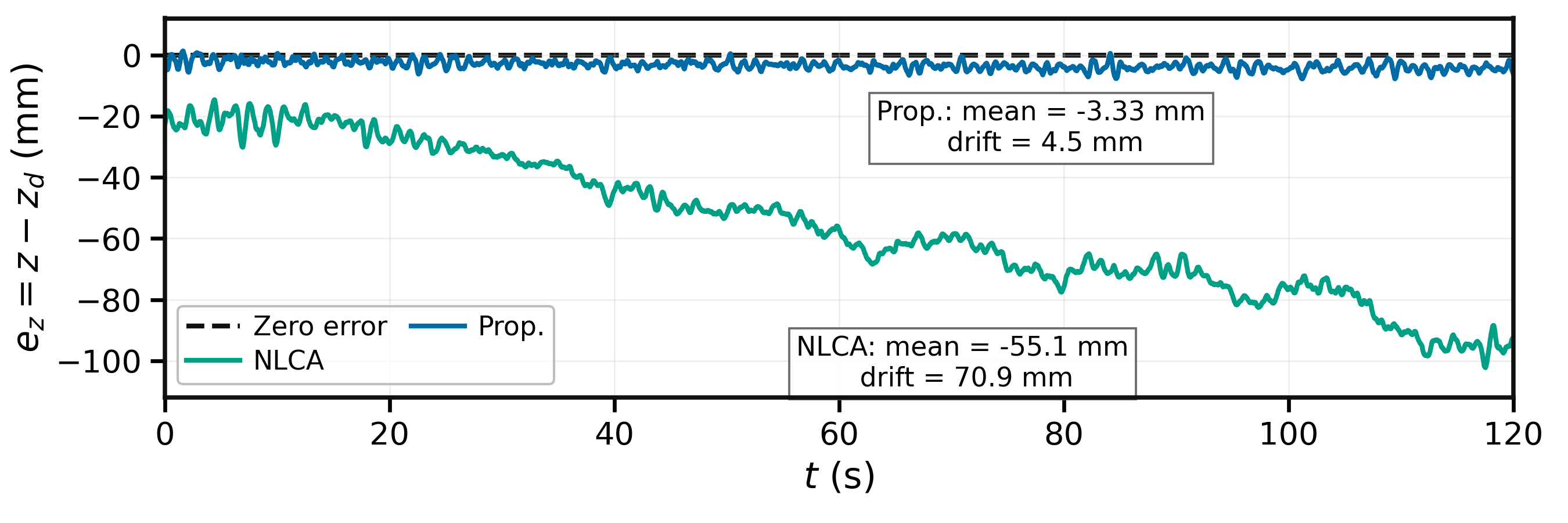
Figure 17: Extended hover showcasing steady-state altitude-error rejection.
Physical Interaction Demonstration
The system executes close-proximity drawer push–pull tasks through a 2 cm clearance, exhibiting accurate force application and off-axis tracking without large attitude excursions. Maximum attitude deviation remains 3.41°, and translation error stays below 12.2 mm, demonstrating practical utility in manipulation scenarios with strict spatial constraints.
Implications and Future Directions
FLOAT Drone substantiates that high-precision, fully actuated aerial physical interaction can be achieved within a compact form factor, without relying on bulky or mechanically complex tilt-rotor assemblies. The reduction in lateral airflow introduces significant advantages for tasks near delicate objects or in cluttered environments, directly addressing the interference observed in legacy actuation schemes. The use of nonlinear allocation, together with data-driven aerodynamic modeling and robust adaptive augmentation, provides a foundation that can accommodate future extensions to more dexterous end-effectors or collaborative multi-agent manipulation settings.
Upcoming research trajectories should target the integration of modular, multi-DOF end-effectors; comprehensive autonomy pipelines for tasks such as target localization, grasping, and force-modulated manipulation in unstructured environments; and formal certification of dynamic performance envelopes, potentially facilitating aerial robots in inspection, assembly, or responsive maintenance.
Conclusion
FLOAT Drone introduces a compact, fully actuated UAV solution capable of exerting 6-DoF wrenches while minimizing interaction-disturbing airflow. Through the synthesis of servo-driven control-surfaces, high-fidelity aerodynamic modeling, nonlinear real-time allocation, and robust R2>0.930-augmented geometric control, the platform demonstrates state-of-the-art flight accuracy, disturbance rejection, and manipulation competence in confined proximity. The framework convincingly extends the operational frontier for aerial robots tasked with close-proximity manipulation and interaction.