- The paper introduces DS-SAC, a deterministic method for robust geometric model estimation using density-driven residual search and recursive partitioning.
- It leverages structured forward and backward search with adaptive thresholding to achieve high AUC scores and reduced runtime in homography, fundamental, and essential matrix tasks.
- The approach offers polynomial complexity and reproducible performance, making it a practical alternative to stochastic RANSAC variants in real-time applications.
DS-SAC: Deterministic Density-Based Sample Consensus for Geometric Model Estimation
Overview and Motivation
Robust geometric model estimation underlies core tasks in computer vision, notably pose estimation, image matching, and 3D reconstruction, where inlier-outlier discrimination in correspondence sets is critical. The dominant paradigm, RANSAC, operates via stochastic minimal sampling, which degrades in performance with high outlier ratios or large minimal sample sizes. Many RANSAC variants seek improved efficiency, scoring, or model refinement, but all retain fundamentally random exploration of the hypothesis space. In contrast, deterministic consensus maximization methods (branch-and-bound, convex relaxations) offer systematic search but face high computational overheads and limited scalability to large point sets.
DS-SAC introduces a deterministic alternative that bypasses repeated random sampling by exploiting dense regions in the residual space. By initializing the model with all available points and employing structured forward and backward residual search, recursively partitioning the correspondence set via signed residuals, DS-SAC pursues high-consensus models with polynomial complexity.
Methodology
The DS-SAC algorithm operates as follows:
- Global Initialization: The model is first estimated using all available correspondences. This provides a reliable base for subsequent refinement, avoiding early stochastic variance.
- Forward Search: The kernel (residual threshold for selecting points) is gradually reduced by percentile Δp; at each step, points nearest to the current model are selected, and the model is re-estimated, striving for denser residual regions.
- Inlier Optimization: For each candidate model during forward search, an inlier set is constructed using a fixed threshold; further local optimization is performed if the support falls below the minimal sample size.
- Backward Search: From the locally best forward search model, the kernel is expanded—exploring wider neighborhoods to mitigate local minima trapping and improve refinement.
- Recursive Partitioning: After each forward/backward search cycle, the partition is split by signed residuals, recursively applying the search strategy to subpartitions, continuing until a minimum partition size pmin.
- Post-Tuning: Final refinement is conducted by threshold relaxation (from loose to strict), continually updating the model if improvements are realized.
This systematic framework achieves a balanced trade-off between deterministic exploration and computational feasibility, achieving polynomial complexity (O(N2) in worst-case, O(NlogN) best-case).
Homography Estimation
DS-SAC achieves the highest AUC scores: $26.74$ (@5∘), $40.9$ (@10∘), $56.38$ (@20∘), and lowest median pose error (pmin0) among all compared techniques. Runtime per image pair (pmin1s) is lowest, substantiating computational efficiency. Notably, even with slightly fewer inliers than LO-RANSAC, selected inliers yield superior pose accuracy, evidencing geometric selectivity.
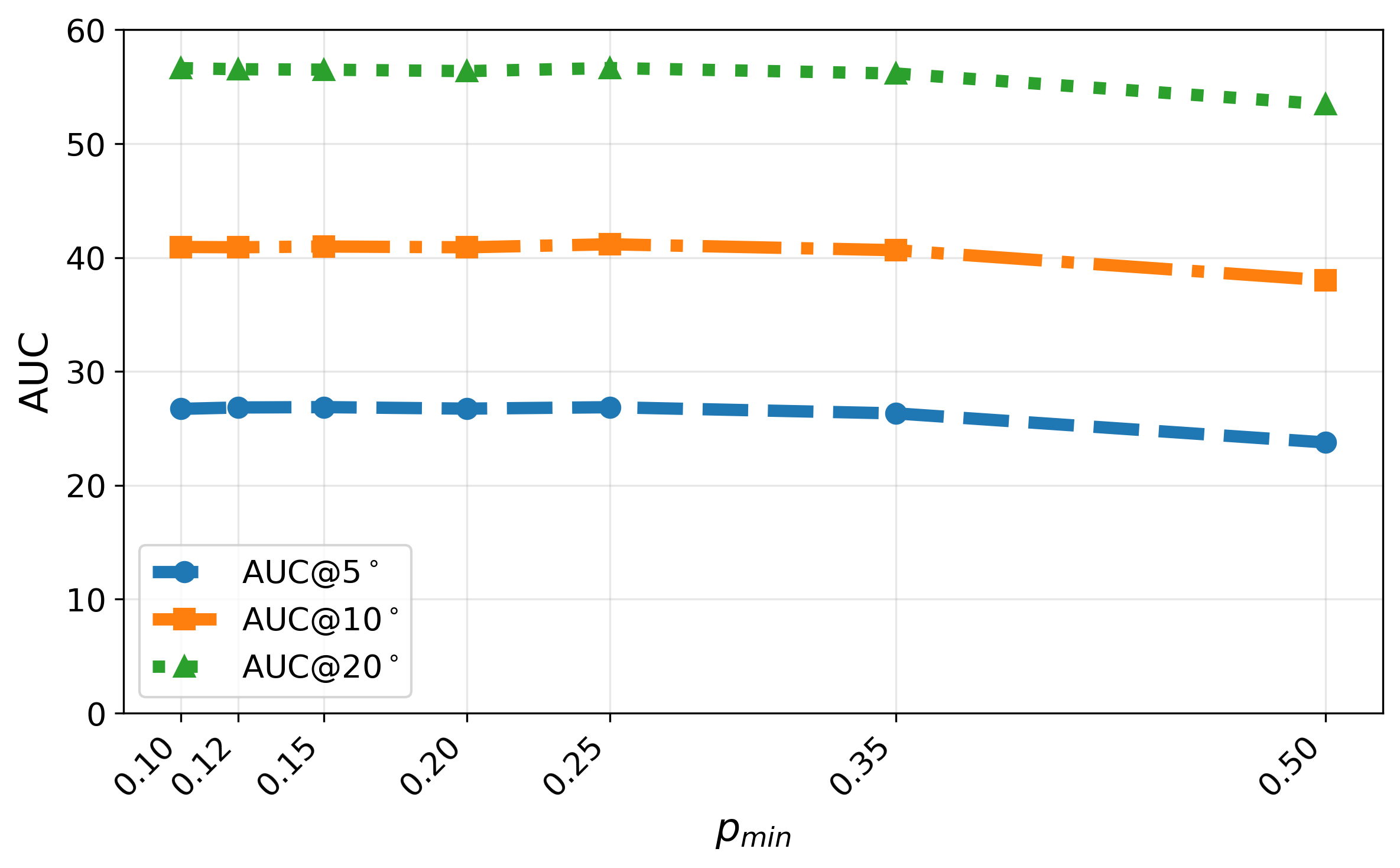
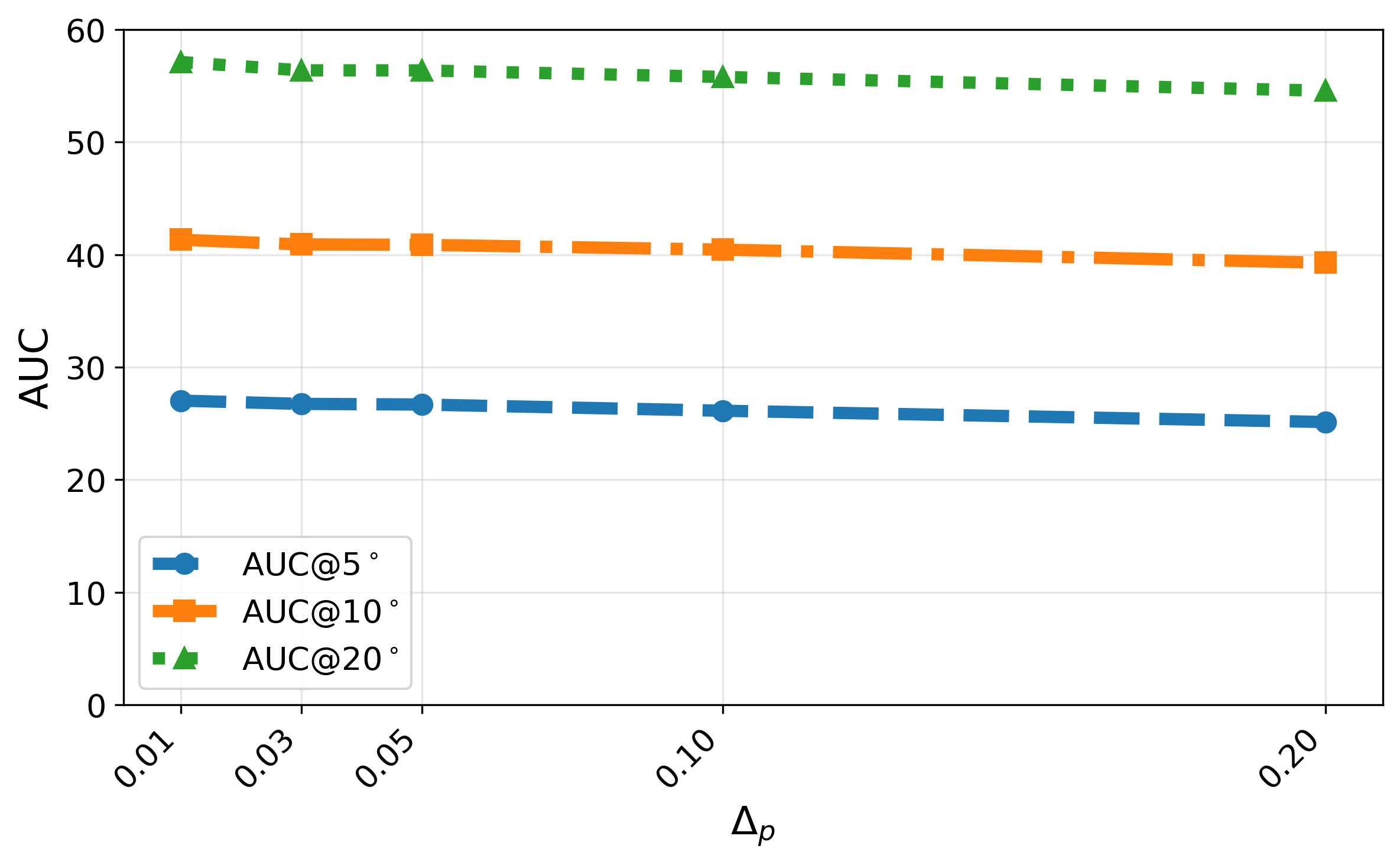
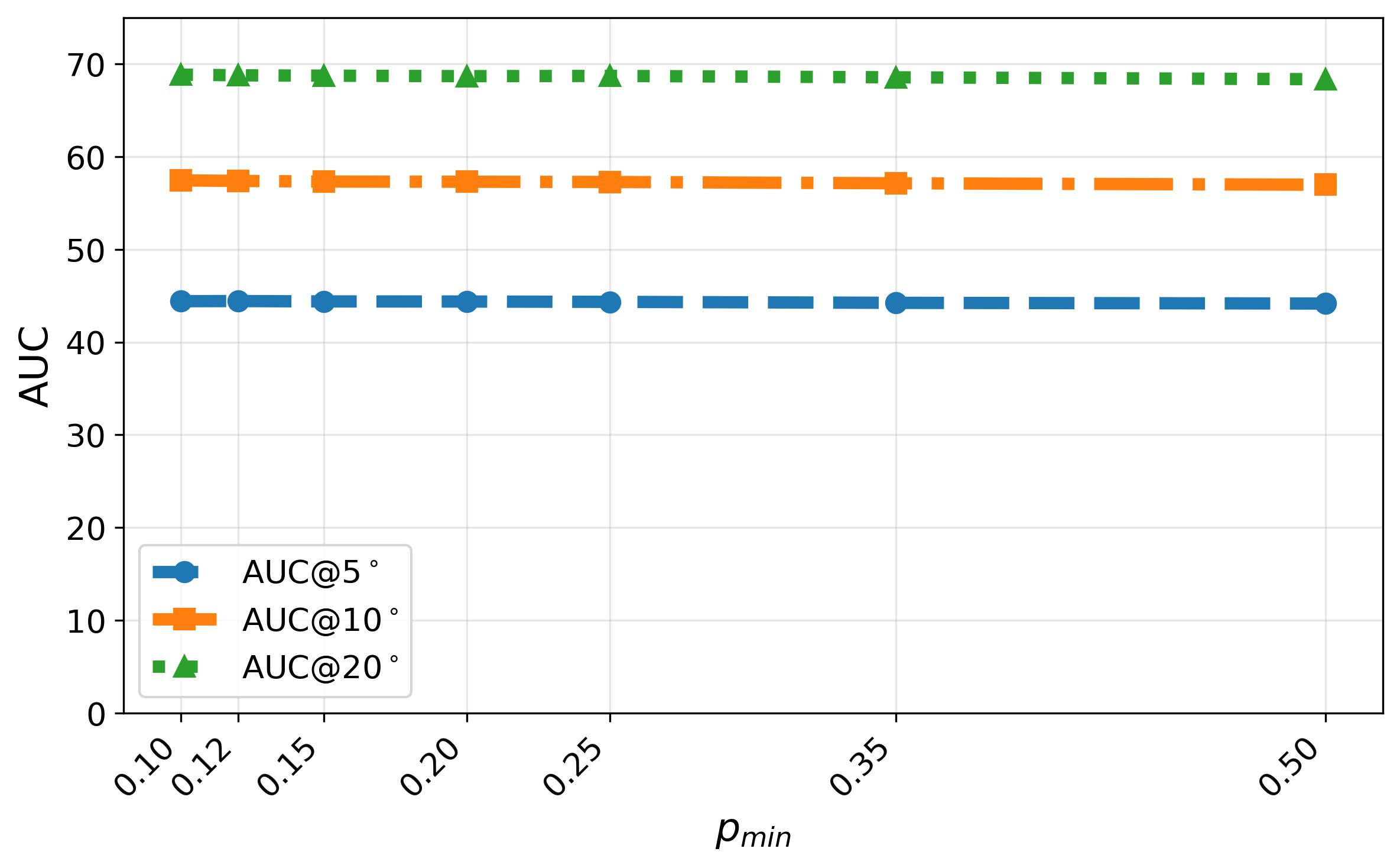
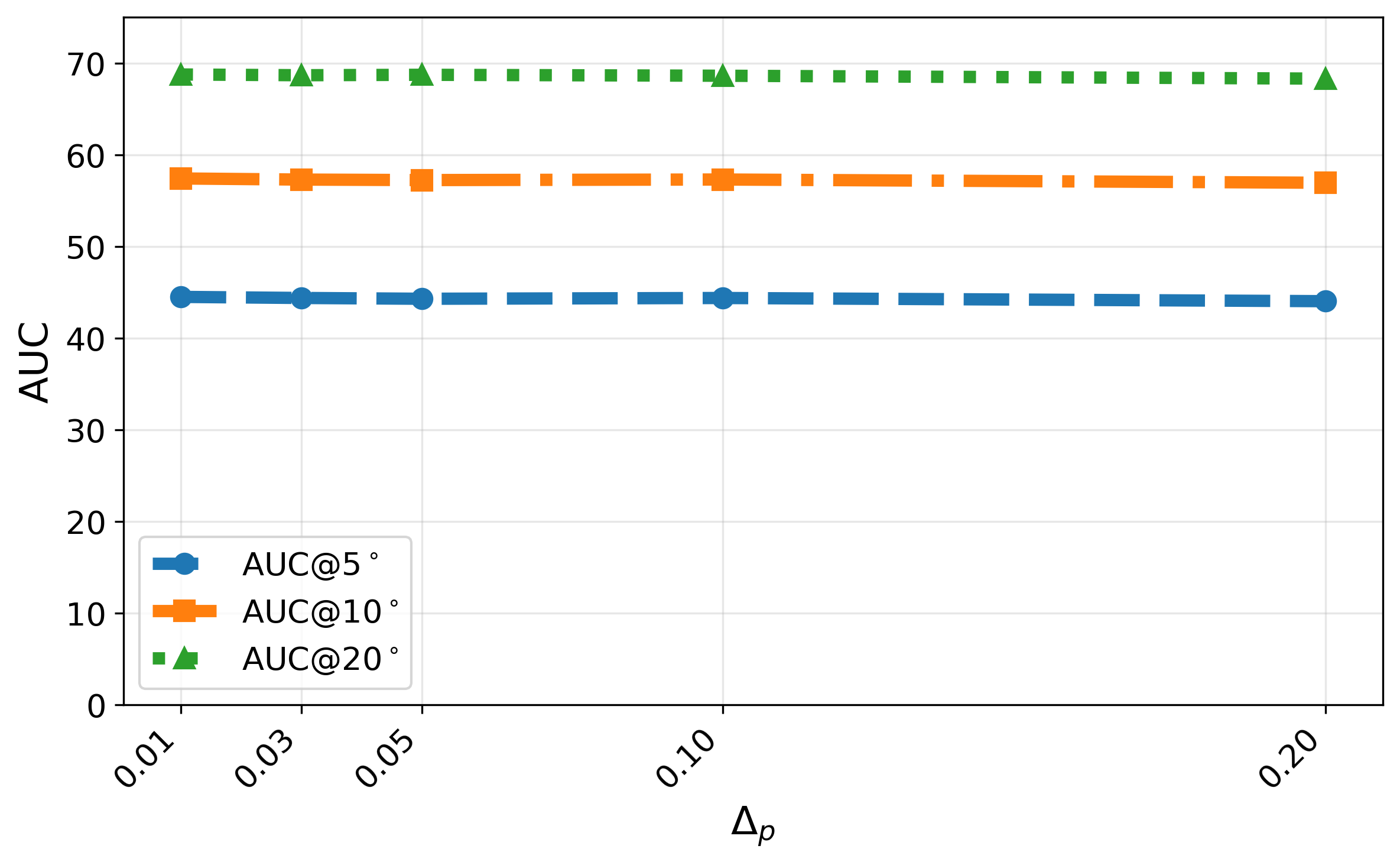
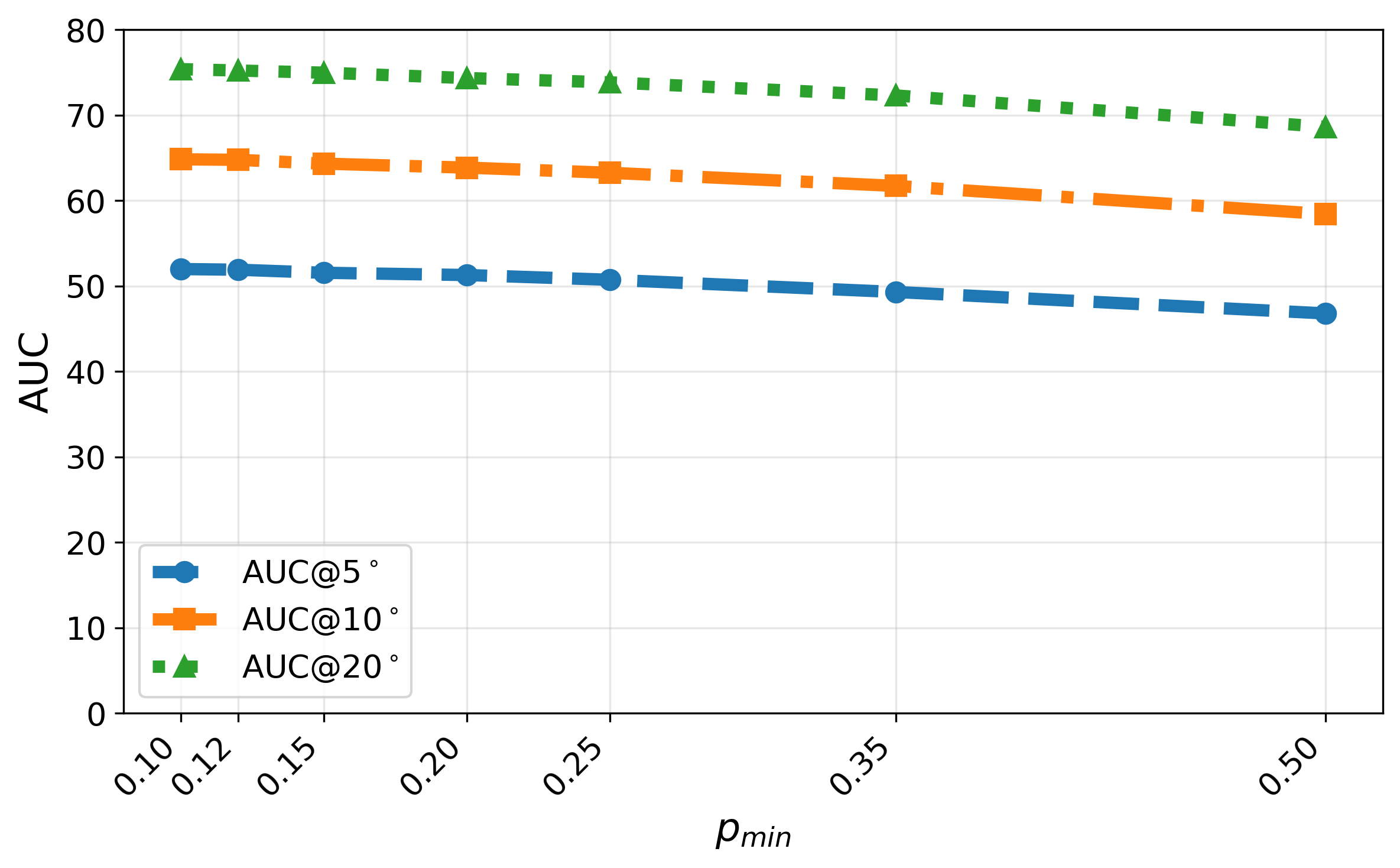
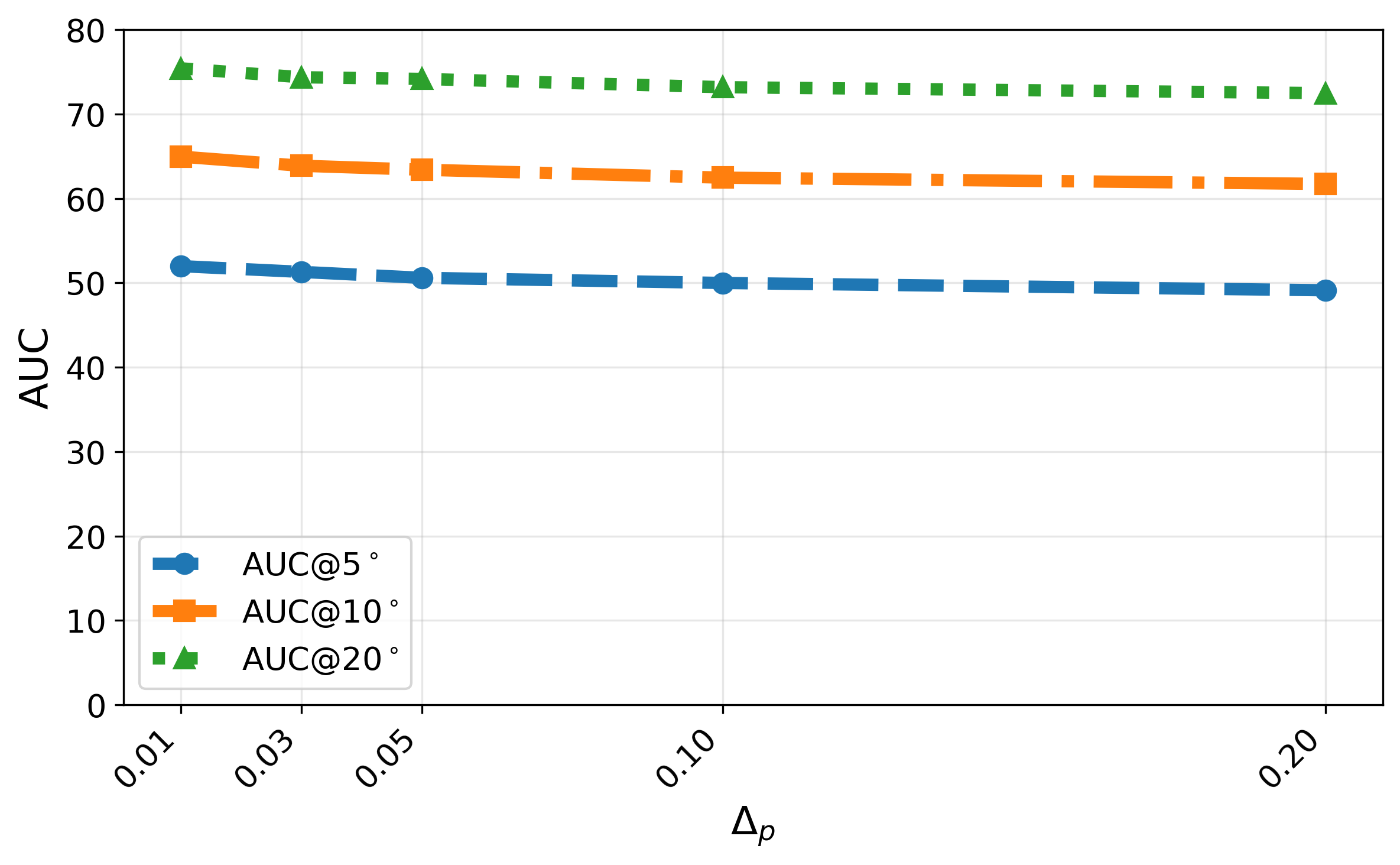
Figure 1: HM: AUC vs.\ minimum partition size (pmin2). DS-SAC displays robust AUC across partition thresholds, minimizing sensitivity.
Fundamental Matrix Estimation
DS-SAC improves upon GC-RANSAC and LO-RANSAC in all accuracy metrics: pmin3 (@pmin4), pmin5 (@pmin6), pmin7 (@pmin8) AUC; median error is pmin9. DS-SAC achieves near-maximal inlier counts while excelling in pose accuracy and runtime (O(N2)0s).
Essential Matrix Estimation
AUC values: O(N2)1, O(N2)2, O(N2)3 for O(N2)4, O(N2)5, O(N2)6—highest among all contenders. Median pose error (O(N2)7) is competitive, runtime (O(N2)8s) is notably lower than MAGSAC and GC-RANSAC.
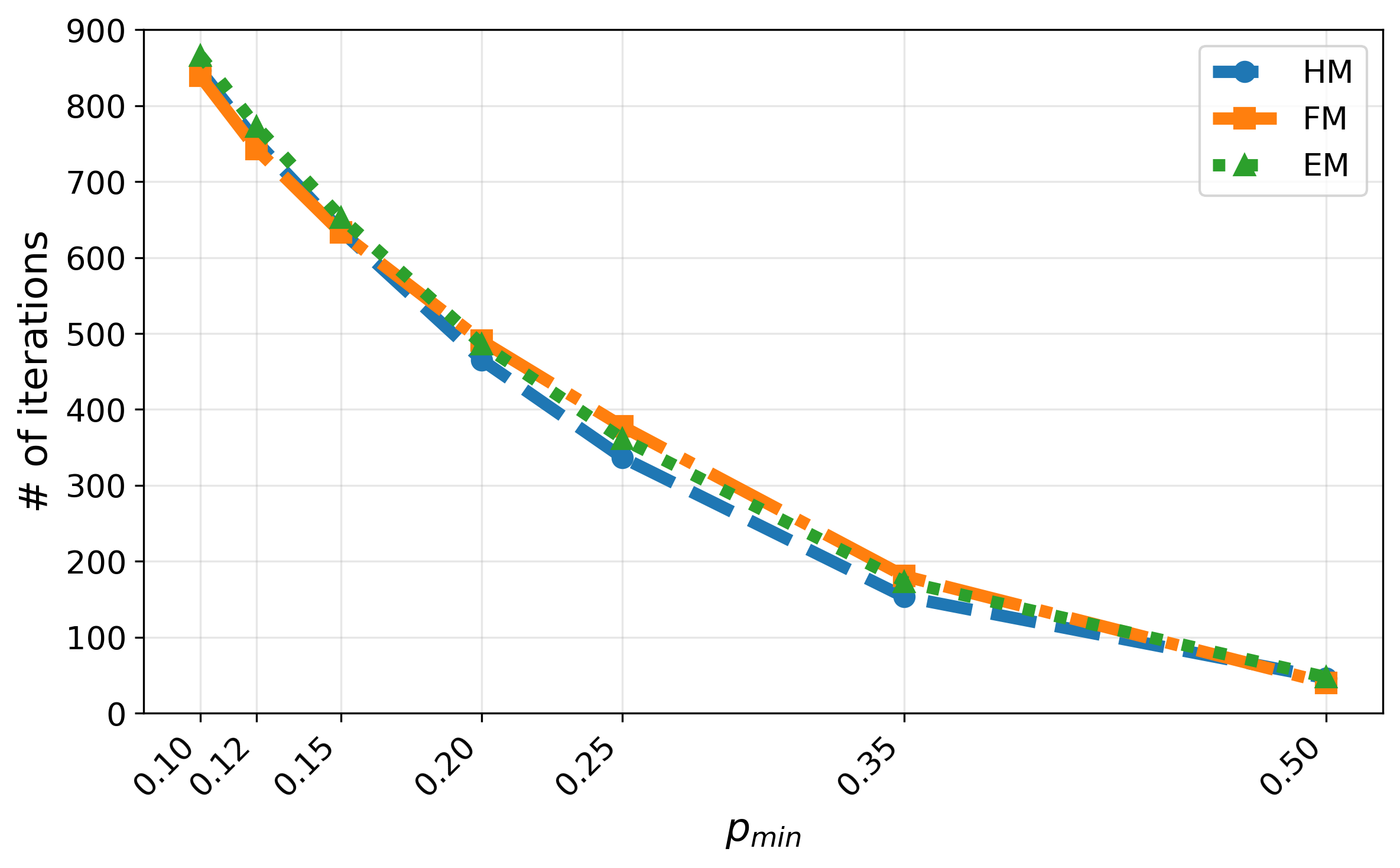
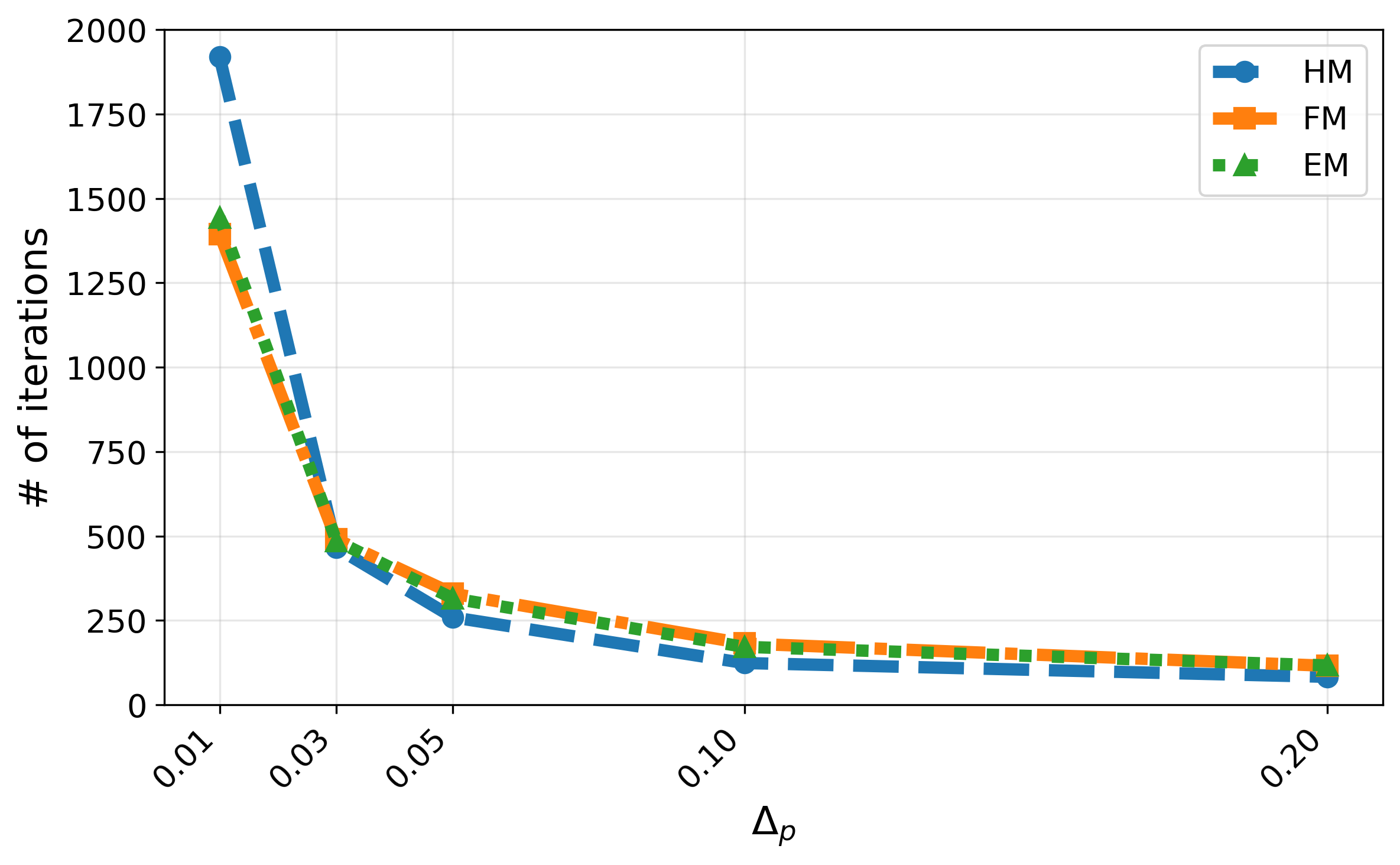
Figure 2: Number of iterations vs. minimum partition size (O(N2)9). DS-SAC exhibits nearly linear scaling in iterations versus partition granularity, offering control over computational expenditure.
Sensitivity and Ablation
Parameter sensitivity analysis indicates DS-SAC is notably robust to variations in O(NlogN)0 and O(NlogN)1, retaining high AUC even for coarse partitioning or aggressive step sizes. The ablation study demonstrates backward search and post-tuning are most impactful for epipolar geometry tasks (FM/EM), minimally for homography. For runtime-critical applications, disabling backward search can induce significant savings with only marginal accuracy losses.
Theoretical and Practical Implications
DS-SAC disrupts the stochastic sample-centric foundations of robust estimation by centrally exploiting deterministic density searches and global recursive partitioning. This approach particularly benefits high-outlier, large-scale correspondence sets, avoiding exponential sampling costs of RANSAC, while also circumventing the brittle and problem-specific relaxations found in deterministic global optimization schemes.
By achieving superior pose recall, competitive median pose errors, and reduced runtime in homography, fundamental, and essential matrix tasks, DS-SAC is demonstrated as a practical robust estimator for geometric vision pipelines. The method’s deterministic design is inherently reproducible and favorable for integration in real-time and large-scale matching scenarios.
From a theoretical perspective, DS-SAC confirms the viability of residual space density as a discriminative prior for robust estimation and motivates further exploration of parameter-free, data-driven partitioning/mining strategies in the consensus space.
Speculation on Future AI Directions
DS-SAC’s balance between deterministic robustness and computational tractability is poised to influence future geometric estimation frameworks, including real-time SLAM, large-scale localization, and vision systems operating under severe noise/outlier conditions. Extensions may include more sophisticated partitioning heuristics (potentially leveraging learned residual distributions), adaptive threshold mechanisms, or integration with neural-guided consensus maximization to fuse deterministic searches with data-driven priors. Further, DS-SAC’s paradigm may generalize to other domains requiring robust estimation over contaminated data, including medical imaging or autonomous navigation.
Conclusion
DS-SAC overcomes stochastic limitations and computational hurdles of existing robust estimators by systematic density-based residual search and recursive signed partitioning. The method demonstrates strong empirical performance in multiple geometric tasks, with consistent accuracy and outstanding efficiency. DS-SAC represents a practical, scalable, and theoretically grounded alternative for robust geometric model estimation, likely to influence subsequent developments in vision-based AI estimation and related domains.