- The paper introduces a dual synthesis framework—using snapshot and evolutionary approaches—to model and predict Galactic pulsar yields for SKA surveys.
- The paper employs FFT correction factors and multi-frequency recalibration to refine pulsar spectral indices and improve faint pulsar recoverability.
- The paper outlines survey optimization strategies that balance sensitivity and survey speed while mitigating RFI effects to enhance pulsar detection.
Pulsar Survey Design and Population Modelling for the SKA
Introduction and Motivation
The Square Kilometre Array (SKA) is engineered for transformational progress in pulsar astrophysics, with a principal objective of discovering, timing, and characterizing the Galactic pulsar population. This paper presents a rigorous methodology and analysis framework for quantifying the expected pulsar yields from all-sky, blind surveys utilizing both SKA-Low and SKA-Mid in their various planned assembly stages. The underlying philosophy is to optimize survey sensitivity and yield under practical system, radio frequency interference (RFI), and observational constraints, while leveraging improved models for pulsar spectral, spatial, and luminosity distributions.
Population Synthesis Approaches
The analysis is founded on two complementary population synthesis techniques: (1) the "snapshot" approach, and (2) a forward-evolutionary approach incorporating magneto-rotational and luminosity evolution parameter inference.
Snapshot Synthesis
The snapshot method is based on psrpoppy simulations, aiming to reconstruct intrinsic Galactic pulsar properties consistent with the known sample and selection biases. Key advances include incorporating the duty cycle-dependent Fourier detection efficiency correction Figure 1, yielding more realistic recoverability of faint, narrow-dutycyle pulsars and driving later recalibration of spectral index parameters.
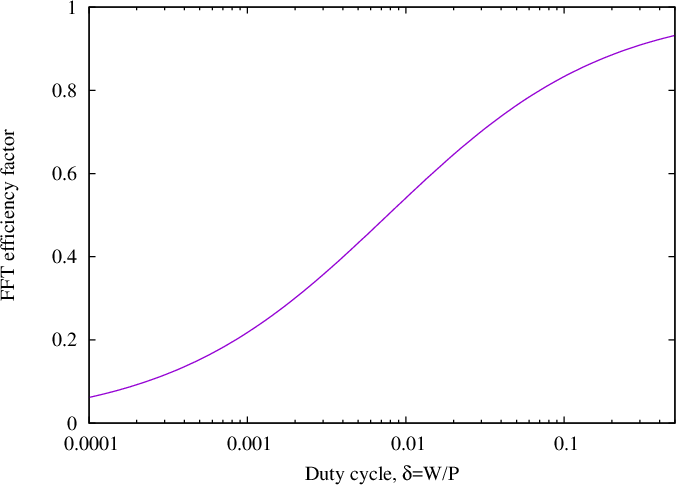
Figure 1: The FFT correction factor as a function of duty cycle, showing strong sensitivity suppression for slow, narrow-duty cycle pulsars compared to phase-coherent search methods.
The recalibration employs a grid search in mean (μ) and standard deviation (σ) of the spectral index distribution, producing a robust solution at μ=−1.45±0.05, σ=0.15±0.015 that self-consistently reproduces the yields of archival multi-frequency (70 cm, 20 cm, 6.5 GHz) Parkes surveys Figure 2.
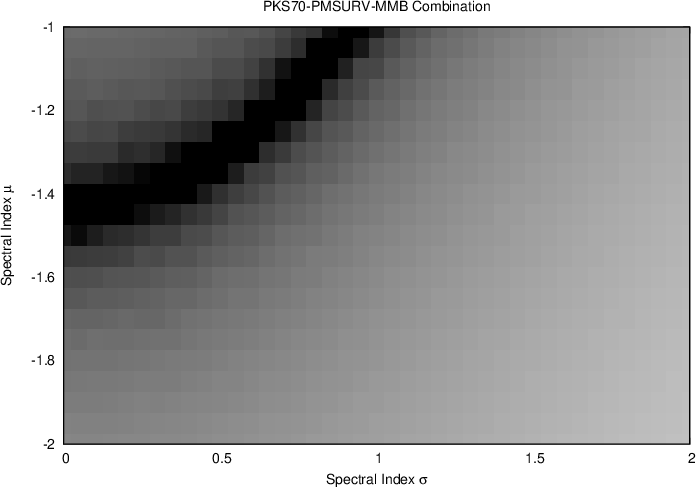
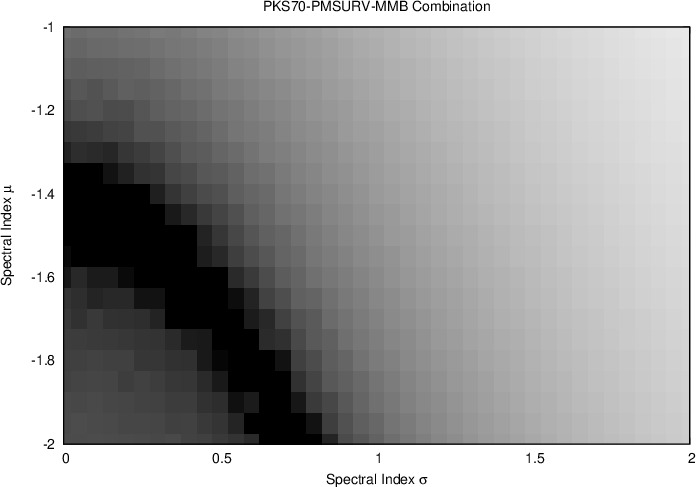
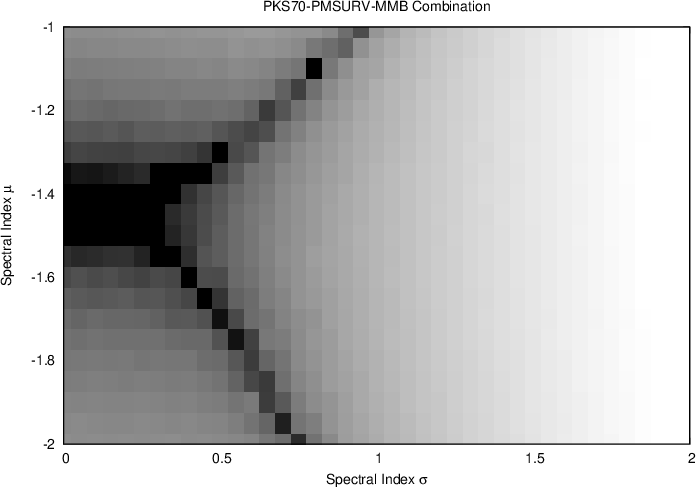
Figure 2: Observational constraints in the (μ, σ) plane for the spectral index distribution; best-fit values reproduce the multi-frequency survey yields.
Evolutionary Synthesis
The evolutionary route employs updated population models with ML-based inference of magneto-thermal, rotational, and luminosity parameters, forward-evolving pulsars from their birth phase-space distribution. Posterior sampling is performed via simulation-based inference (see Figure 3 for parameter covariances and credible intervals), with parameters recalibrated using the newly determined narrower spectral index distribution to maintain cross-consistency with the snapshot approach.
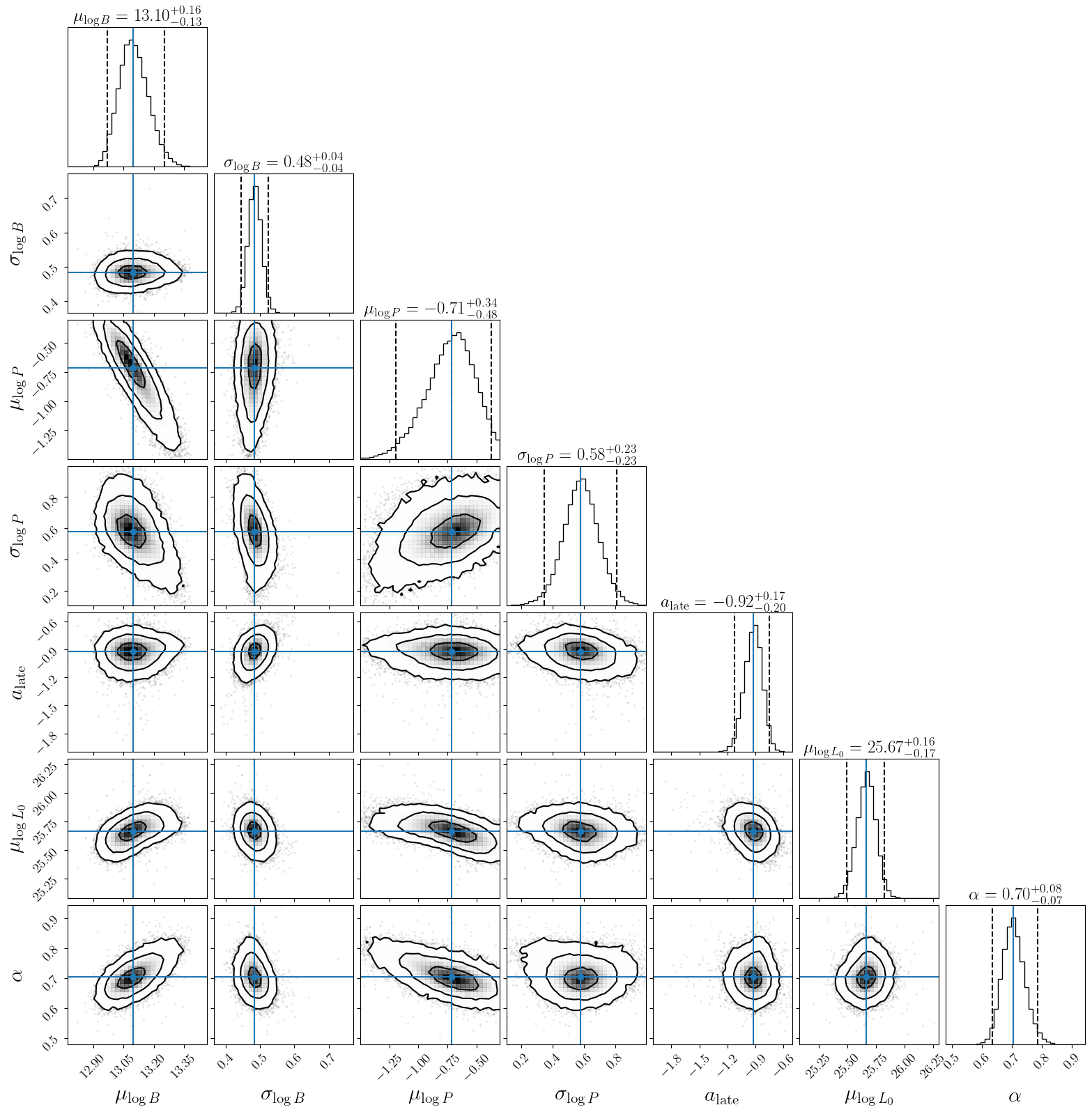
Figure 3: Posterior distributions for key birth and evolution parameters governing the Galactic pulsar population, with credible intervals, as constrained by SKA-relevant survey samples.
SKA Instrumentation Parameters and Survey Optimization
A meticulous instrument model informs all survey strategy analysis. The SKA-Mid and SKA-Low arrays are modular and built out in specific "array assemblies" (AA* and AA4), with the cumulative element distributions shown in Figure 4. Survey configurations are controlled by available tied-array beams, sub-array size, instantaneous bandwidth, and pointing duration—all key parameters for balancing sensitivity and survey speed for wide-area tiling at multiple frequencies.
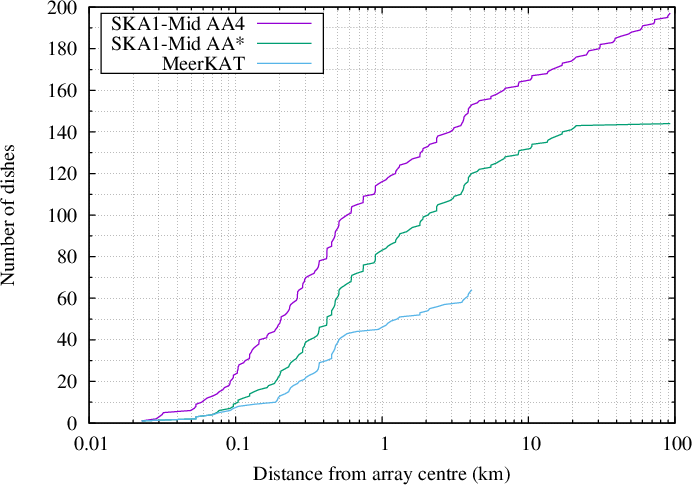
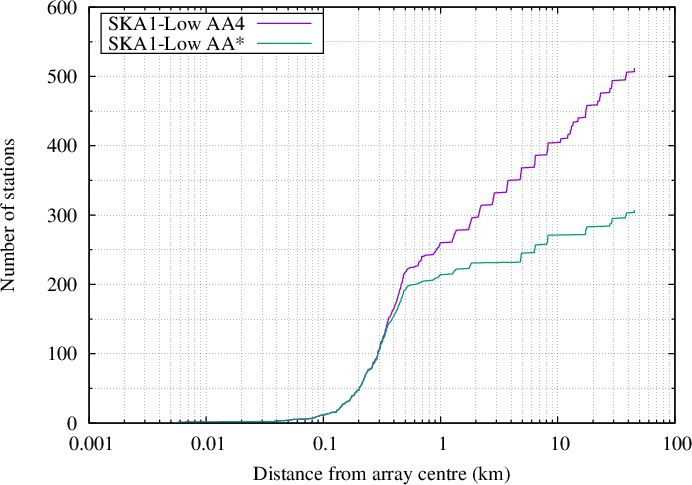
Figure 4: Cumulative distribution of SKA-Mid dishes and SKA-Low stations as a function of core radius; the AA4 buildout is notably denser.
Survey speed optimization is critical. For SKA-Mid, the survey speed figure-of-merit peaks for sub-arrays within the inner ∼1 km diameter, balancing sensitivity and field of view Figure 5. For SKA-Low, the survey speed is relatively robust to core station thinning, justifying the inner ∼1 km as the reference sub-array for both AA* and AA4 Figure 6.
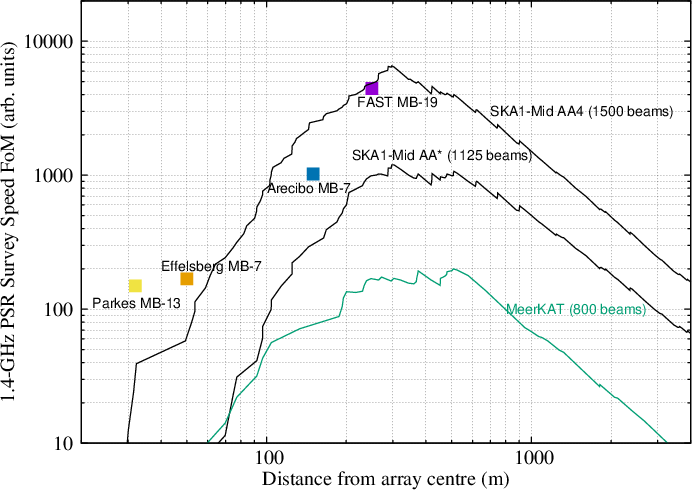
Figure 5: Survey speed at 1.4 GHz as a function of SKA-Mid array radius, with optimal trade-off achieved at intermediate core radii.
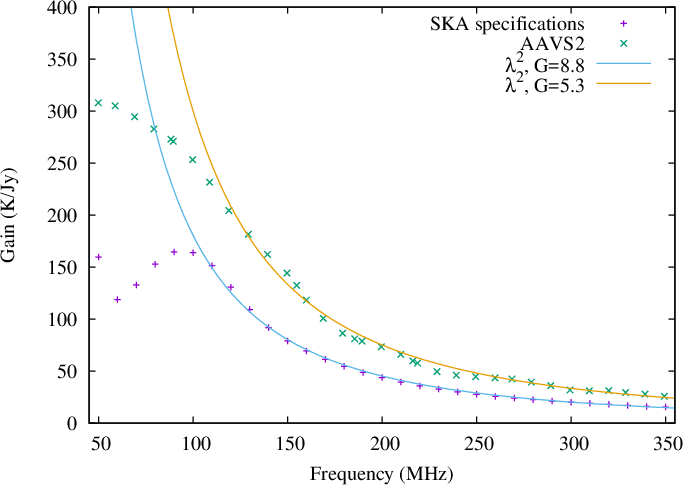
Figure 7: Measured and simulated gains at zenith for SKA-Low arrays confirm effective area targets are exceeded, especially above the dense-sparse transition frequency.
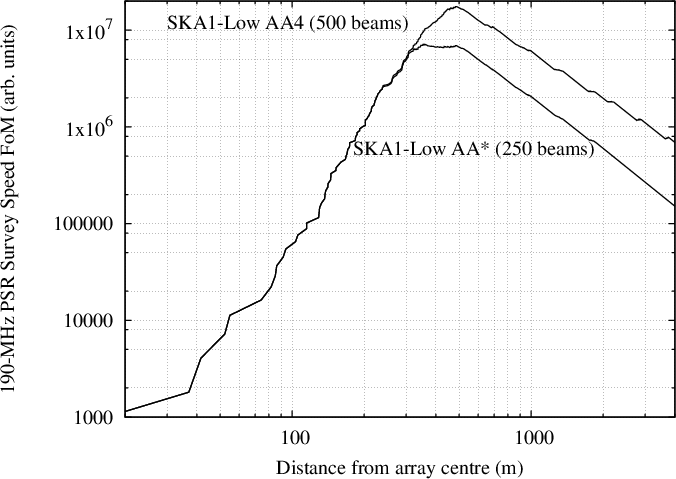
Figure 6: SKA-Low survey speed as a function of array radius further demonstrates minimal impact of the outer station deficit between AA
and AA4 on pulsar search efficacy.*
The authors present three composite survey strategies with distinct latitude coverages in the Mid and Low frequency bands, depicted in Figure 8. This enables transparent analysis of survey tradeoffs for distinct scientific aims.
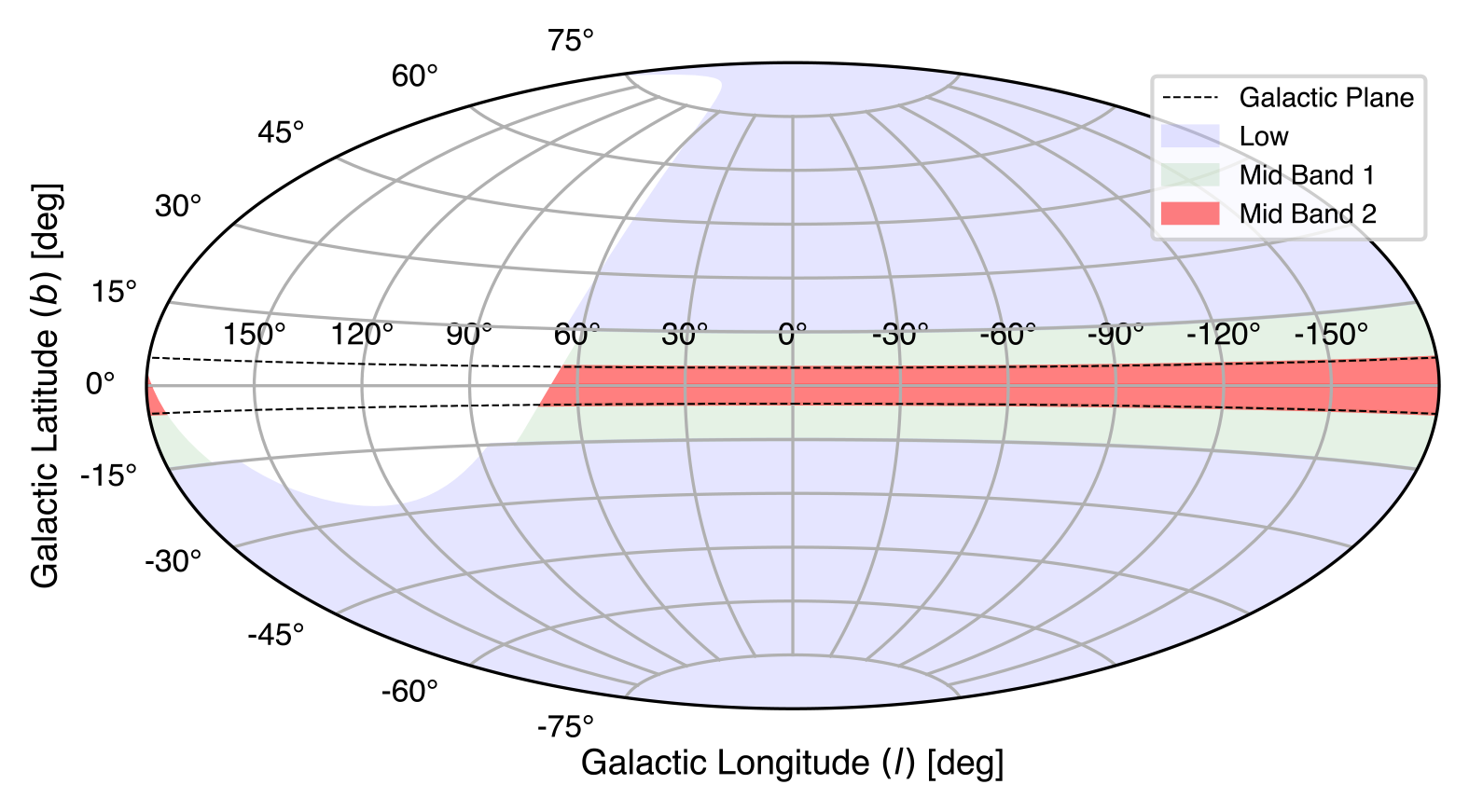
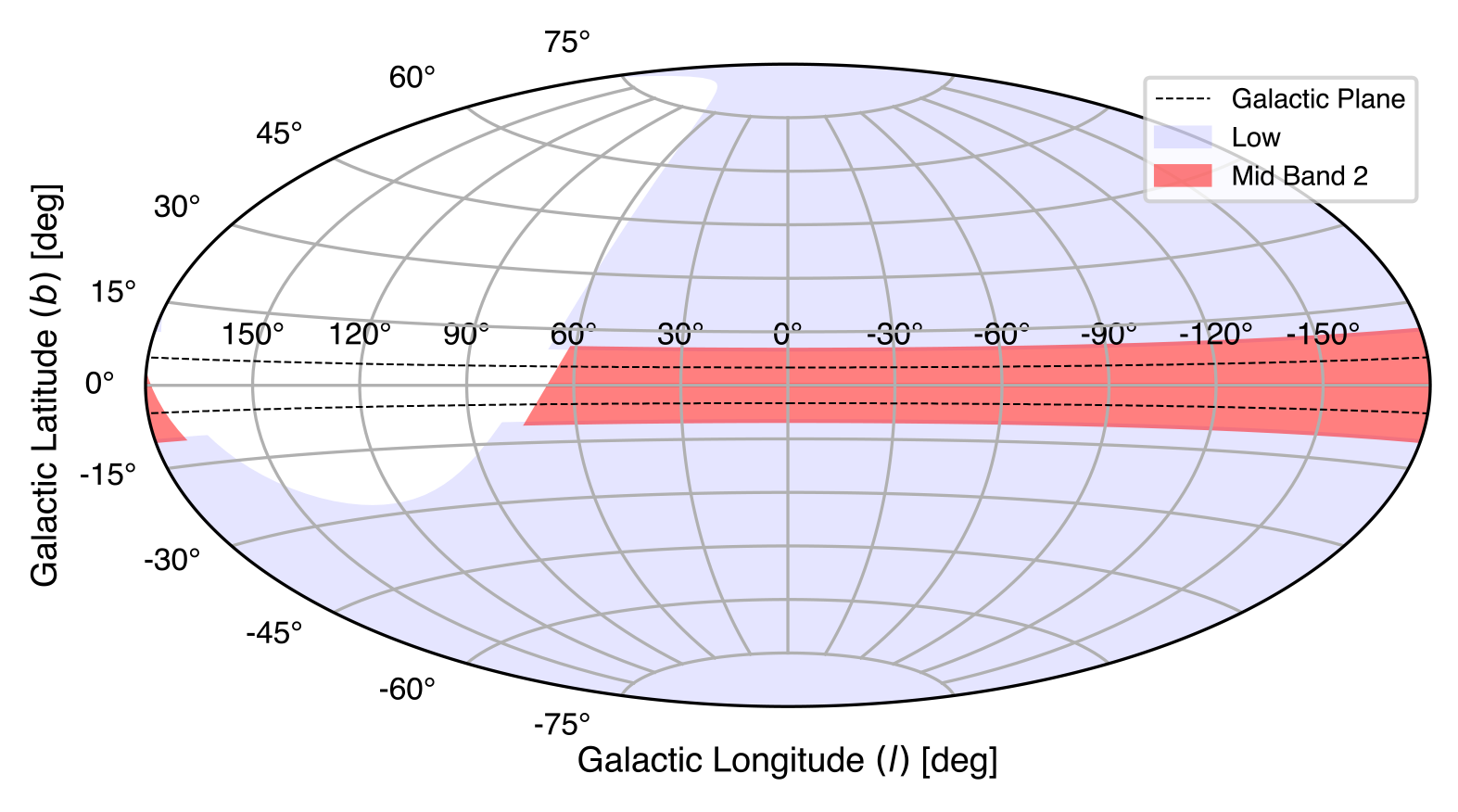
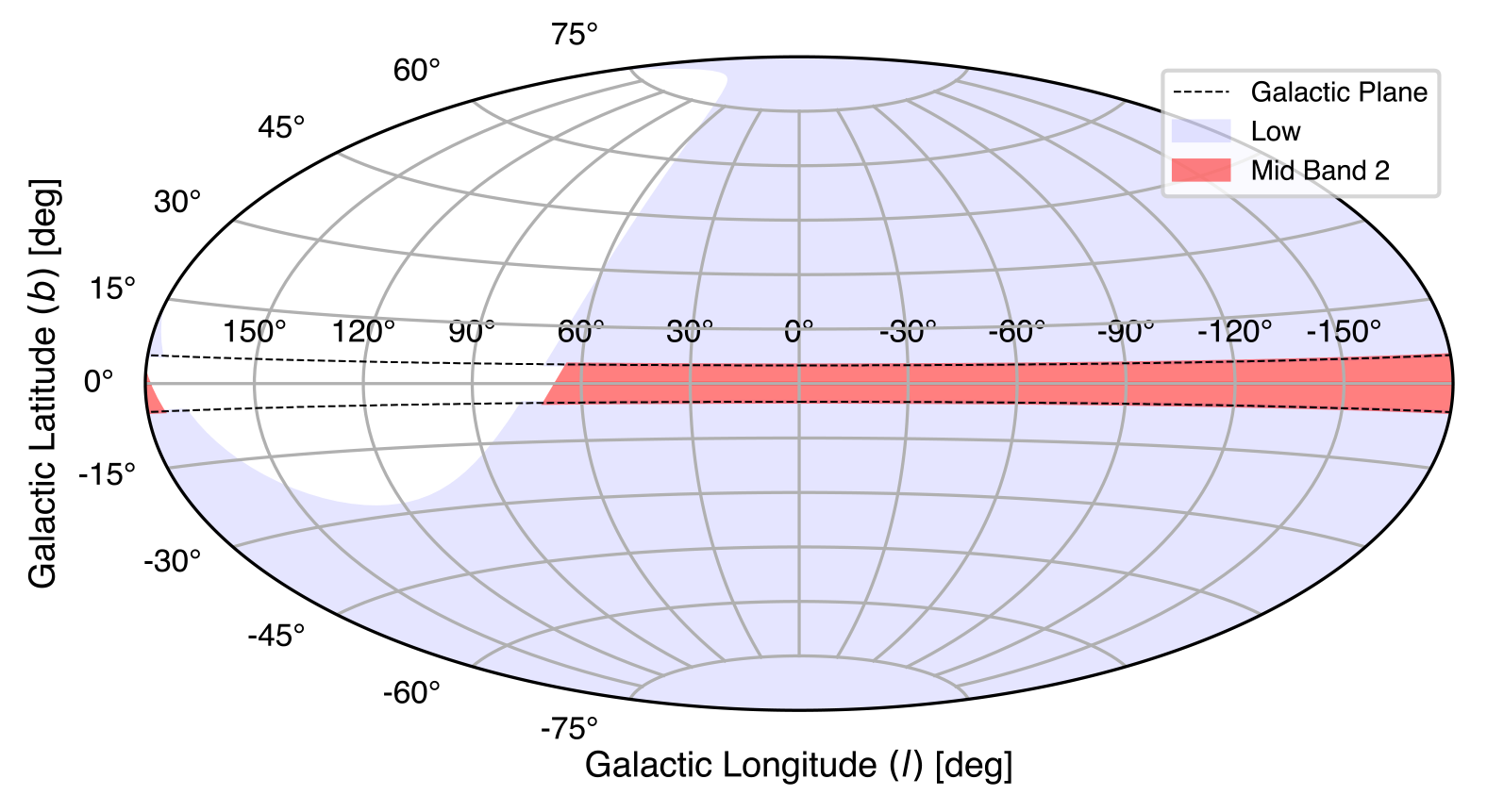
Figure 8: Sky coverage (Galactic coordinates) of three composite survey options—SKA-Low (blue), SKA-Mid Band 1 (green), Band 2 (red)—under various latitude constraints.
Predicted Yields and Systematic Uncertainties
Both synthesis approaches are run on the suite of survey options. The snapshot analysis predicts ∼10,000 slow pulsar and ∼800 MSP yields for AA*, with an increase to σ0 higher for AA4. For maximal Mid coverage, yields of up to σ1 slow pulsars and σ2 MSPs are possible in favorable configurations. The evolutionary synthesis produces consistent total numbers but with a substantially larger fraction of the yield sourced from SKA-Low, a direct consequence of its modeling of pulsar aging and Galactic migration away from the plane.
Aitoff projections in Figure 9 display a typical realization of the spatial distribution of expected detections by method, band, and array assembly. Notably, the evolutionary model produces a more vertically extended distribution, in direct contrast to the snapshot approach.
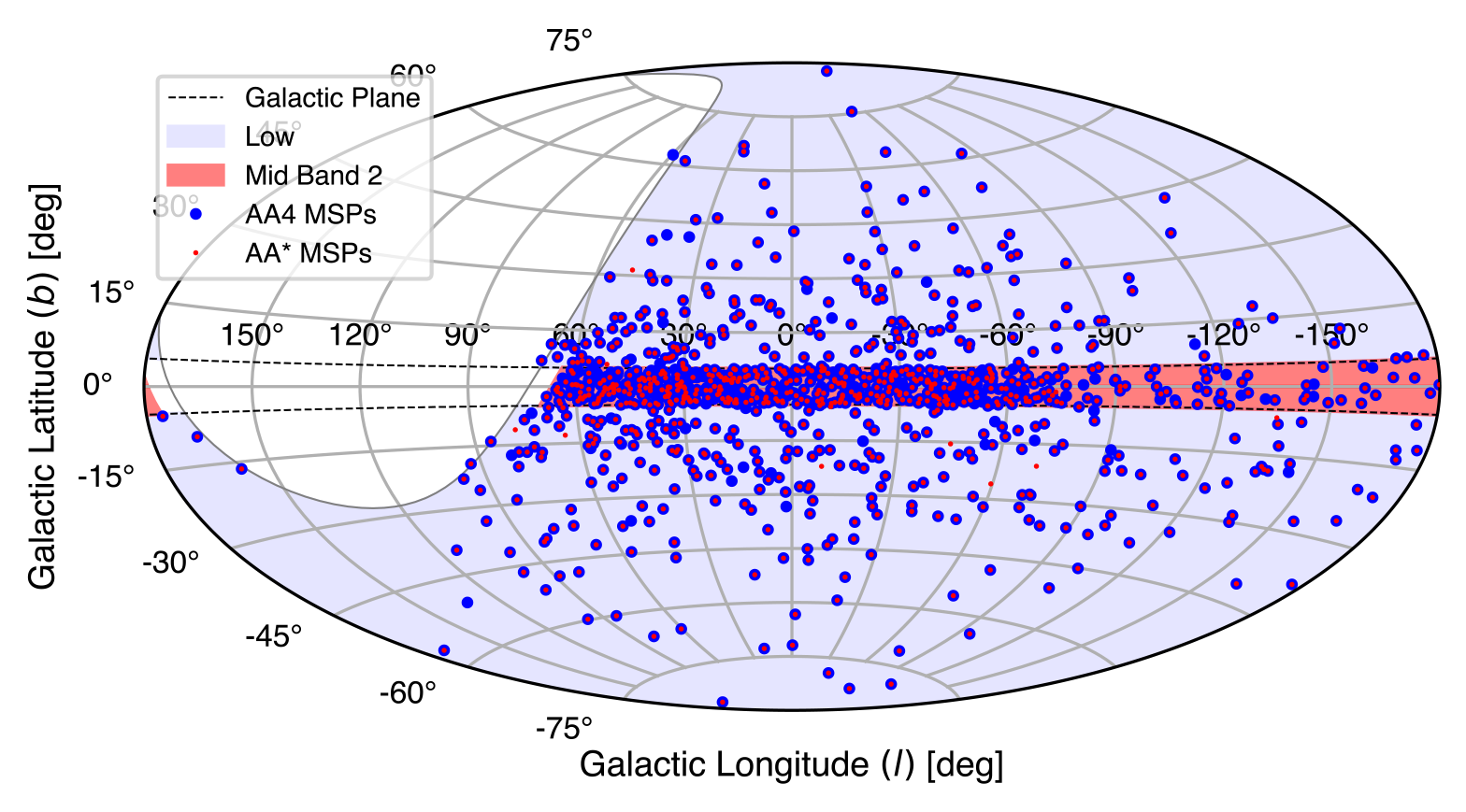
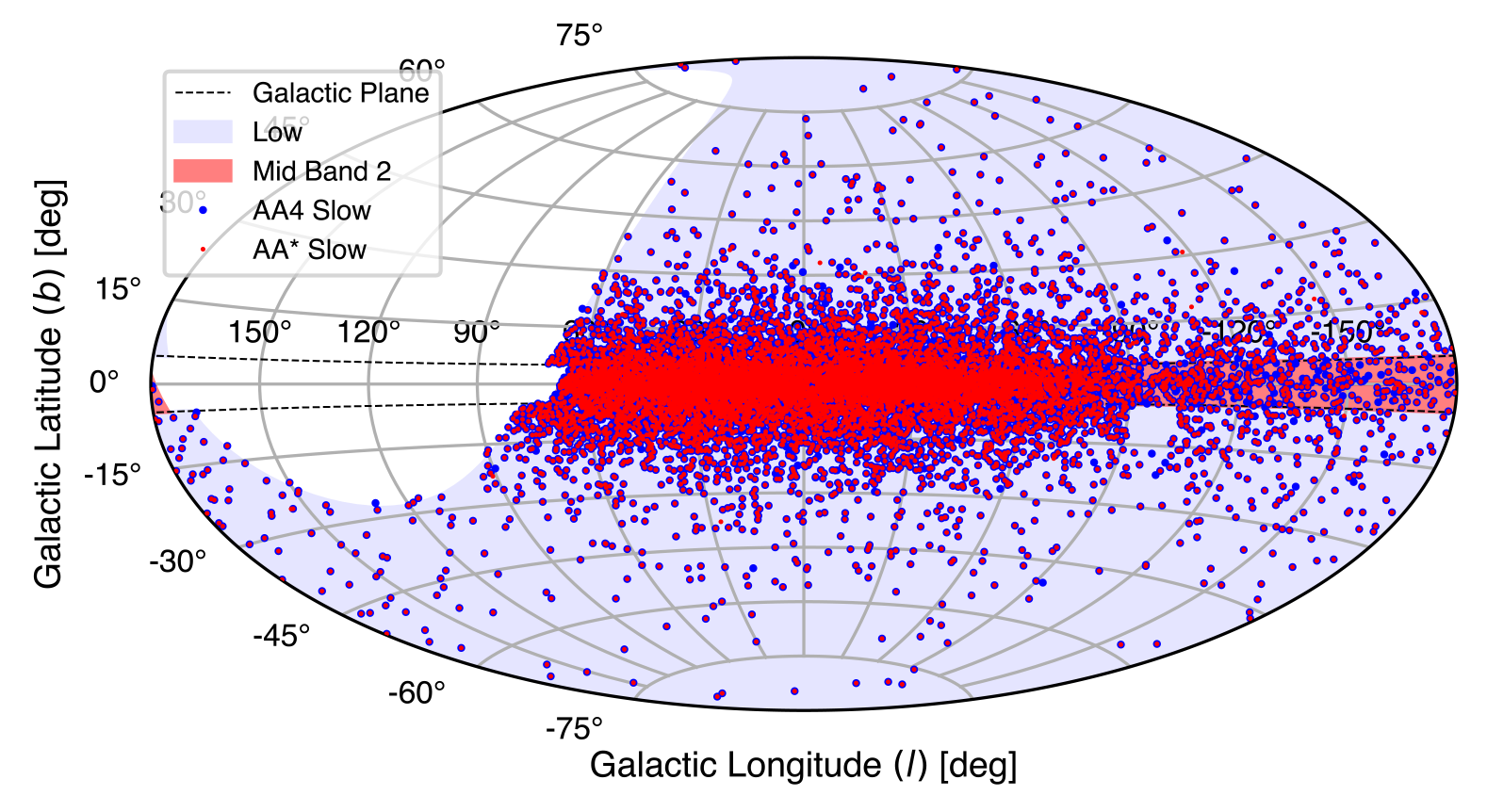
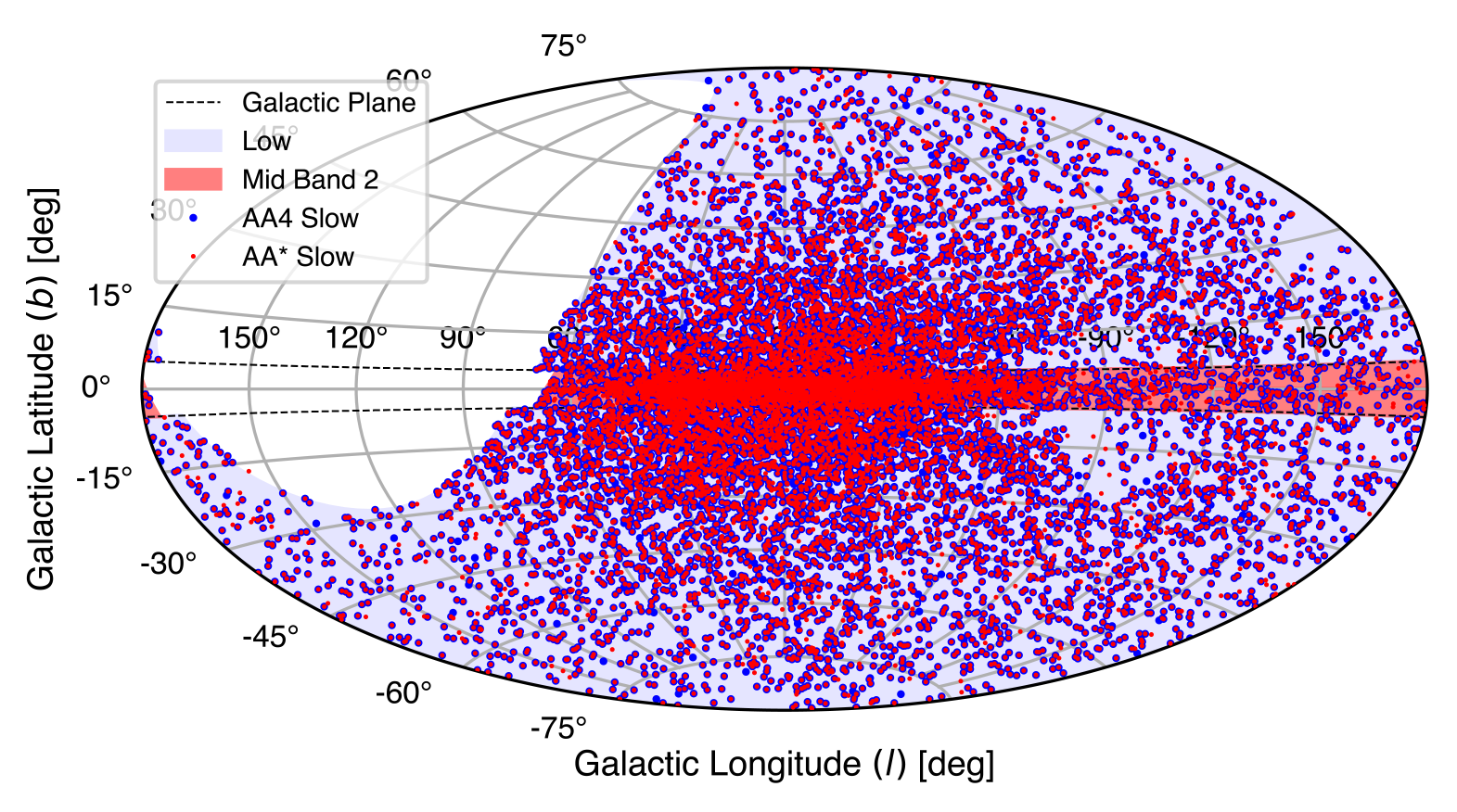
Figure 9: Simulated Galactic sky distributions of detected pulsars for Survey Option 3, highlighting the difference in off-plane yield between population synthesis methodologies.
The authors emphasize that the total counts are upper limits in the absence of observing time constraints, and real RFI conditions, the true discovery rates for MSPs in blind surveys will necessarily be lower (as most previous discoveries arise from deep targeted or multi-wavelength searches).
Population Modelling and Survey Systematics
A significant discussion is devoted to the systematic uncertainties affecting both the survey simulations and population inferences. Key points include:
- Unmodeled incompleteness and inconsistent documentation of previous pulsar survey results, especially for blind Fourier-transform detections, propagate ambiguities in luminosity and spectral index calibrations.
- Differences in spectral index width, luminosity laws, and vertical σ3-scale height prescriptions can substantially bias the predicted distribution of on-plane vs. off-plane pulsars, as exemplified by the divergent Low/Mid yield ratios between snapshot and evolutionary frameworks.
- The RFI environment is increasingly adverse across all frequencies, but especially in the L-band. Early commencement of pulsar surveys, maximizing clean and commensally useful high time-resolution data, is advocated to mitigate the impact of further RFI deterioration.
Scientific Implications and Future Directions
The expanded SKA pulsar census will provide transformative samples for diverse science: population statistics of exotic sub-populations (e.g., double NS binaries), constraints on the high-mass equation of state, strong-field gravity tests, and gravitational wave detection via PTAs.
The scale of the discoveries is robust to systematics at the σ420% level but could further improve with rigorous, standardized reporting of future and archival survey parameters (signal-to-noise, detection mode, true flux densities, context, and selection cuts). This will enable iterative population model refinement as SKA detections accumulate.
Further, the contrasting results between snapshot and evolutionary methods—especially for high-latitude, aged pulsar populations—underscore the necessity of constraining the velocity and magnetic field evolution parameters with the SKA census. Analyses of birth rates, velocity kicks, field decay, and radio "death" lines will benefit from this expanded, unbiased catalog, with implications for understanding neutron star formation channels and their electromagnetic, gravitational, and multi-messenger signatures.
Conclusion
This work establishes a benchmark for expected SKA pulsar yields under diverse survey strategies and highlights systematic sources dominating uncertainties in Galactic population inferences. The SKA will augment the slow pulsar sample by σ510,000 objects and MSPs by σ6800–1300, with a bias toward SKA-Low for discovery efficiency and off-plane science. Achieving the theoretical potential of SKA surveys will require sustained observational campaigns, mitigation of RFI—especially at higher frequencies—and a concerted effort toward comprehensive, standardized survey reporting for both SKA and pre-SKA datasets.
Ultimately, the SKA pulsar census will critically inform the landscape of neutron star astrophysics, providing unparalleled constraints on stellar endpoints, magnetospheric physics, binary evolution, and fundamental physics via PTAs.

