- The paper presents a novel model-agnostic framework that employs disentangled prompt learning for unified image restoration across complex composite degradations.
- It introduces innovative loss objectives—identity, ratio-control, intermediate, and permutation-invariant—to achieve precise intensity modulation and order-invariant outcomes.
- Extensive evaluations on a custom composite degradation dataset demonstrate state-of-the-art PSNR/SSIM performance, confirming practical viability in real-world settings.
Disentangled and Controllable Composite Image Restoration with CURE
Introduction
The paper "CURE: Controllable Unified Image Restoration for Complex Degradations" (2607.03044) introduces a model-agnostic training framework for unified image restoration under composite degradation scenarios. CURE is designed to address the intrinsic challenges arising from entangled and interdependent degradation factors—such as haze, rain, snow, low-light, blur, noise, or JPEG compression—by enabling fine-grained and structured user control over restoration intensity and selectivity within all-in-one architectures. The methodology exploits disentangled prompt learning, integrating four complementary learning objectives, and demonstrates substantial quantitative and qualitative improvements on composite degradation benchmarks.
Framework and Methodology
CURE is formulated as a disentangled restoration pipeline built upon a text-guided encoder-decoder baseline. The framework leverages four loss-driven objectives:
- Identity Embedding and Loss: Enforces an identity operation where restoration can be bypassed, preserving input content by employing a constant identity embedding vector and a dedicated reconstruction constraint.
- Ratio-Control Embedding and Loss: Enables continuous control over restoration intensity by linearly interpolating between identity and degradation embeddings, regulated by a mixing parameter w.
- Intermediate Loss: Supervises stepwise partial outputs to ensure independent removal of each degradation, mitigating error propagation in sequential restoration.
- Permutation-Invariant Loss: Enforces restoration outcome consistency irrespective of degradation removal order, addressing order-sensitivity issues in composite settings.
These objectives are integrated as additional loss terms without altering the model architecture, facilitating application to diverse controllable restoration frameworks.
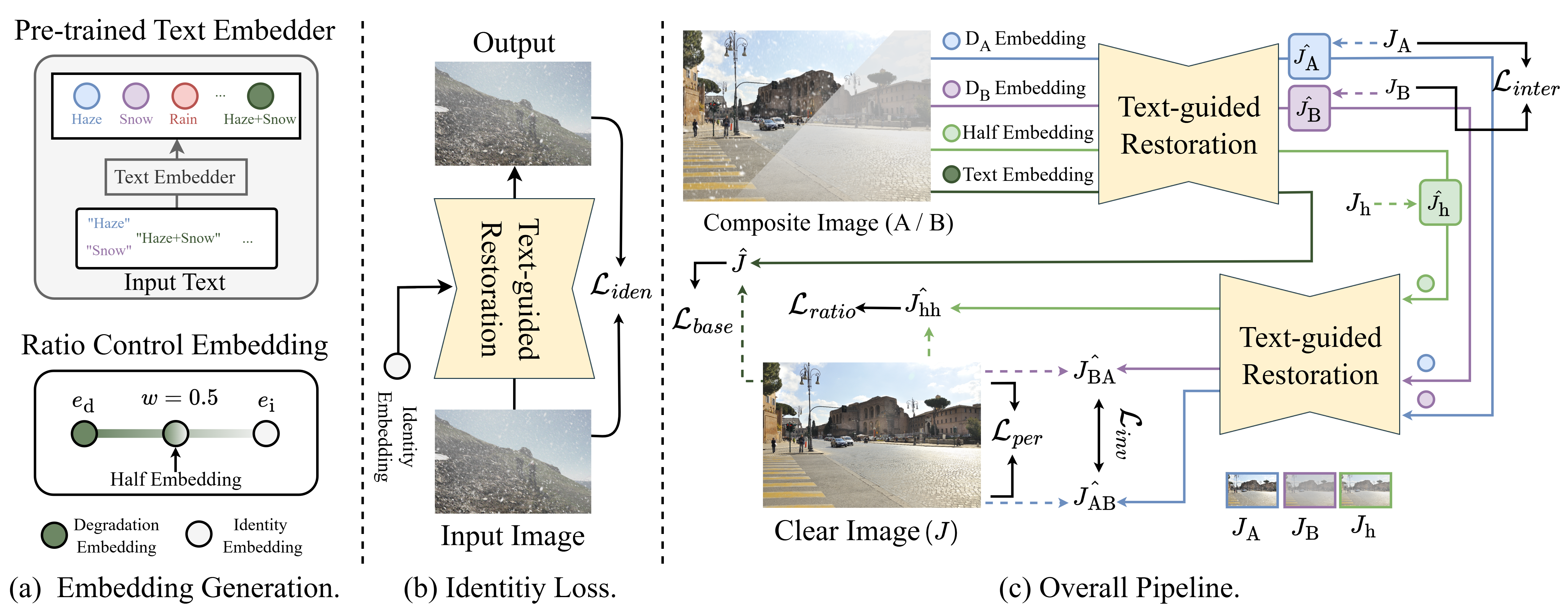
Figure 1: Architecture of CURE, including ratio-control embedding generation, identity loss, and unified restoration pipeline for composite degradations.
Composite Degradation Dataset
To enable controllable training and evaluation, the authors develop the Controllable Composite Degradation Dataset (CCDD-11), implementing reproducible protocols for generating composite images, selective removal pairs, and half-intensity degraded images. This dataset significantly enhances diversity—especially in rain mask variability—thereby offering stronger supervision signals for disentangled restoration. Additional experiments involve digitally degraded images with blur, noise, and JPEG compression, demonstrating generalization beyond weather-specific artifacts.
Evaluation and Numerical Results
Quantitative comparisons are provided across a broad spectrum of state-of-the-art single-task, all-in-one, and text-guided restoration baselines. CURE achieves state-of-the-art PSNR/SSIM for composite degradations, with OneRestore+CURE (Text) scoring 28.28 PSNR and 0.87 SSIM on CCDD-11, outperforming previous unified methods by significant margins.
Identity Preservation: CURE demonstrates near-perfect identity operation with input-output PSNR over 57 on all degradation types (average deviation: <0.01), whereas OneRestore's "clear" prompt yields PSNR <24, confirming reliable content preservation.
Ratio Control: The ratio-control embedding delivers linear, fine-grained intensity modulation. Classification accuracy—measured for various w—tracks with restoration intensity, achieving >95% accuracy at w≈0 (identity) and <1% at w=1 (full restoration), validating controllable degradation removal.
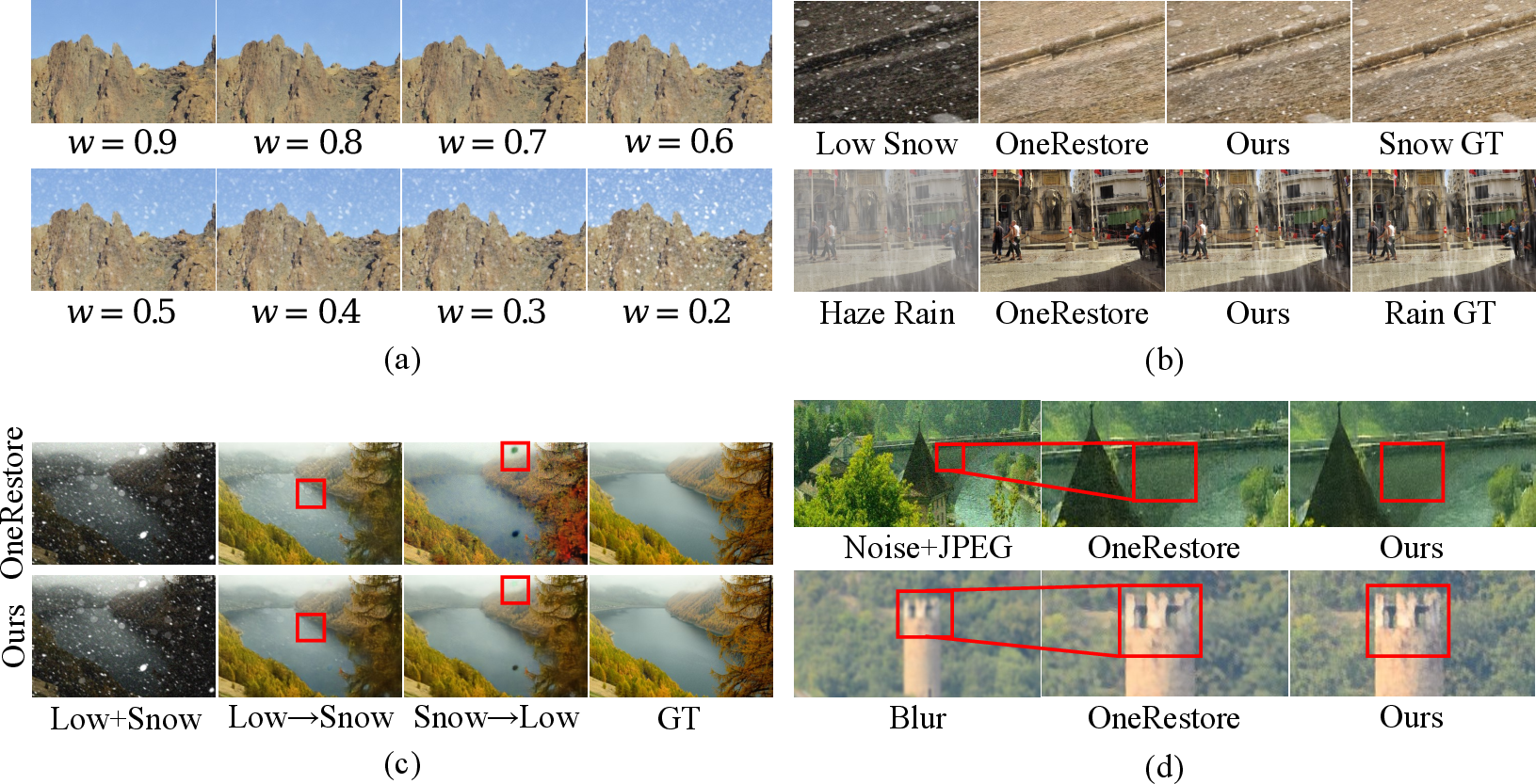
Figure 2: Qualitative validation of ratio-controlled restoration, selective degradation removal, and order invariance for composites and digital artifacts.
Selective Restoration: CURE facilitates isolation and removal of individual degradations from mixtures, consistently outperforming baselines by 5–7 dB PSNR in two-composite and triple-composite tasks. Classification accuracy of remaining degradations post-selective restoration exceeds 93\%, indicating effective disentanglement.
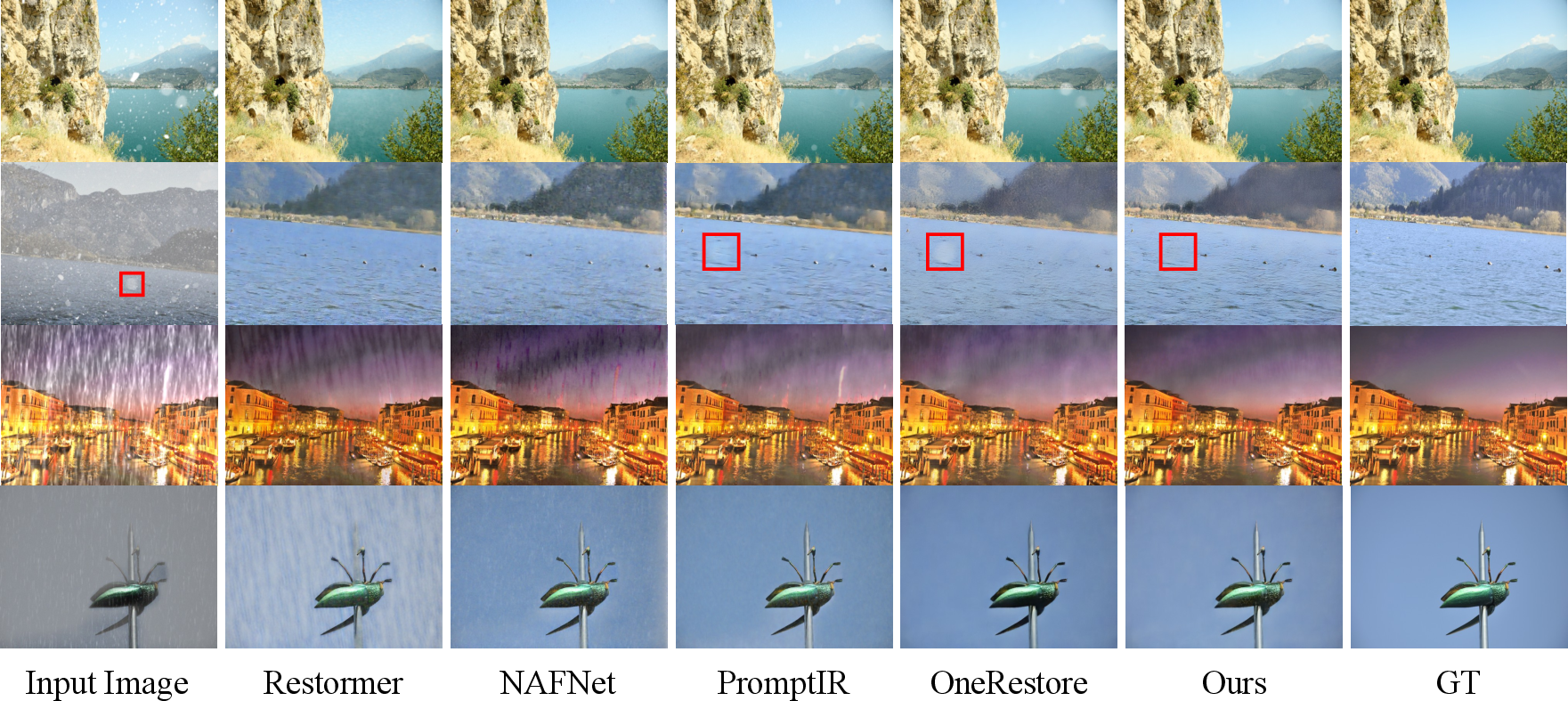
Figure 3: CURE delivers superior visual restoration across diverse composite degradations, outperforming PromptIR and OneRestore in artifact removal.
Order-Invariance: The permutation-invariant loss yields stable restoration irrespective of sequence, mitigating the order-dependent artifacts observed in OneRestore and other prompt-based baselines.
Real-World and Digital Generalization
CURE, when evaluated on real-world datasets (low-light, haze, rain, snow), achieves competitive NIQE scores and outperforms prior methods in no-reference assessments. Controlled experiments on Blur-Noise-JPEG composites confirm CURE's effectiveness extends beyond weather phenomena—ratio control, selectivity, and order-invariance generalize to digital degradation domains.
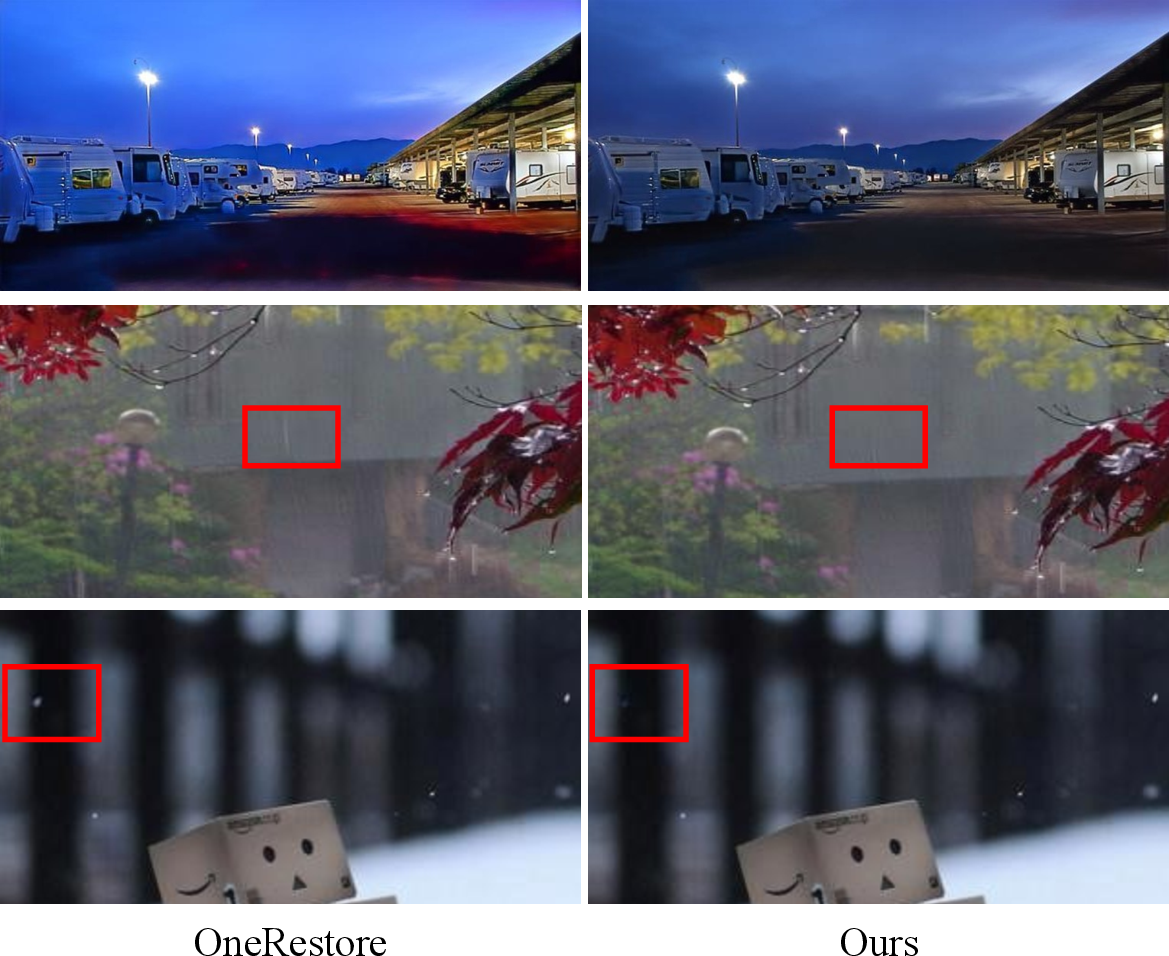
Figure 4: Restoration results on real-world benchmarks showcase CURE's robustness and adaptability across real image degradations.
Ablation and Analysis
Systematic ablations validate each loss term's contribution—identity, ratio-control, intermediate, and permutation-invariant losses individually and collectively yield monotonic PSNR improvements, with all terms combined producing the maximal gain (PSNR increase >0.5 vs. prior best). The framework is trainable with only half-intensity supervision, yet achieves reliable control over arbitrary intensity ratios via embedding interpolation.
Implications and Future Directions
CURE reframes all-in-one restoration as a controllable, disentangled task, supporting both user-guided intensity modulation and selective removal at scale. The implications are substantive: practical deployment in autonomous driving, robotics, and image preprocessing pipelines benefits from flexible restoration policies and reduced error propagation. Theoretical advances include modeling composite degradations as independent, controllable axes, facilitating downstream interpretability and robustness.
Limitations remain for scalability—effectiveness diminishes with four or more spatially varying degradations due to combinatorial explosion and capacity constraints. Future research will investigate scalable architectures for high-order composite restoration and spatially localized prompt embedding, potentially leveraging diffusion priors and vision-language interaction for enhanced generalization.
Conclusion
CURE establishes a model-agnostic, disentangled prompt learning paradigm for controllable composite image restoration. It achieves robust intensity modulation, target selectivity, and order invariance while outperforming prior all-in-one and text-guided baselines on quantitative and qualitative benchmarks. The approach lays a foundation for compositional, user-adaptive restoration in both synthetic and real-world image domains, with significant potential for further advancement in scalability and spatial control.
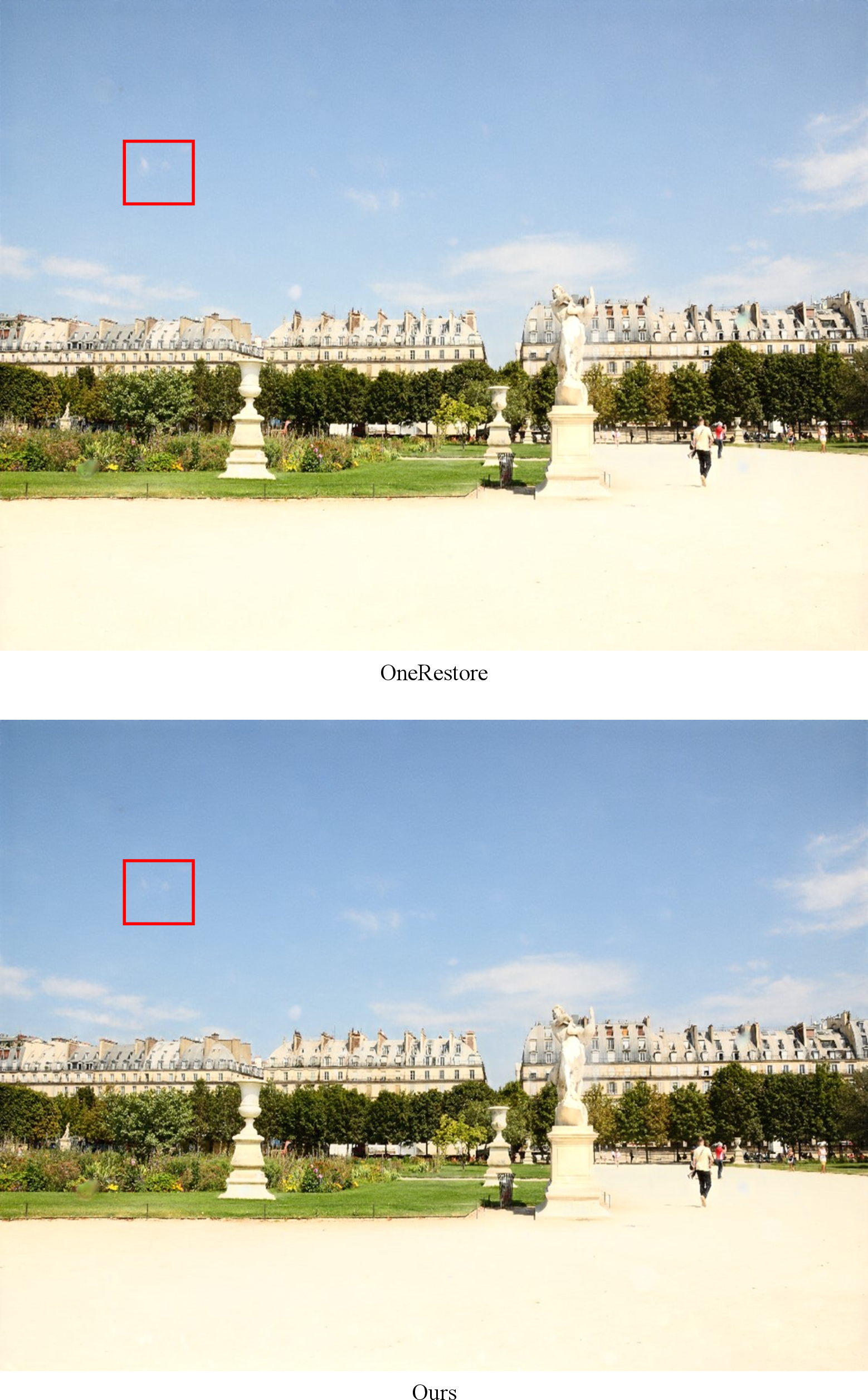
Figure 5: Comparison of Haze+Snow image restoration between OneRestore and CURE, exhibiting improved artifact removal and fidelity.
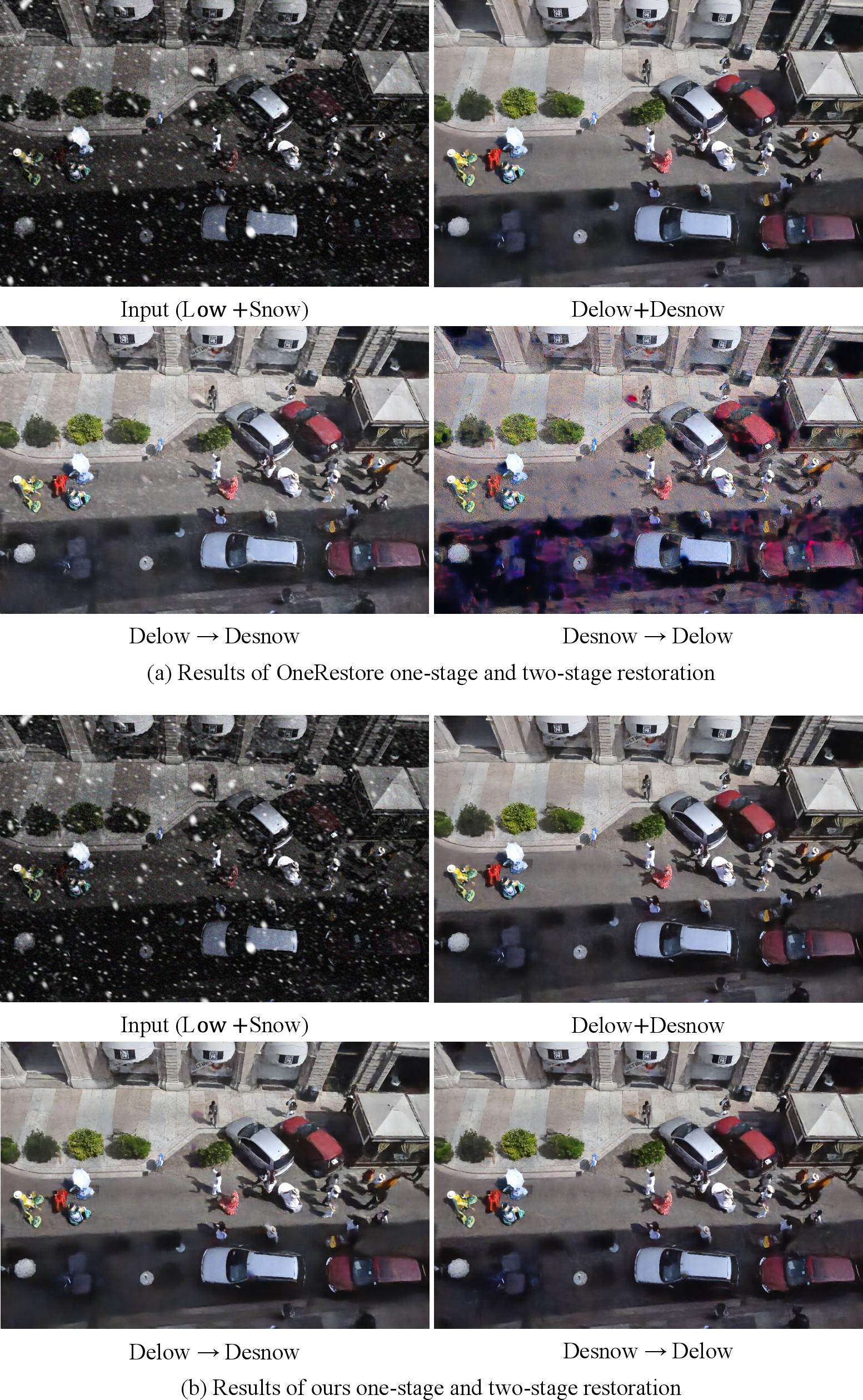
Figure 6: Order-invariant restoration in composite degradations, illustrating CURE's consistency across single-stage and multi-stage restoration approaches.
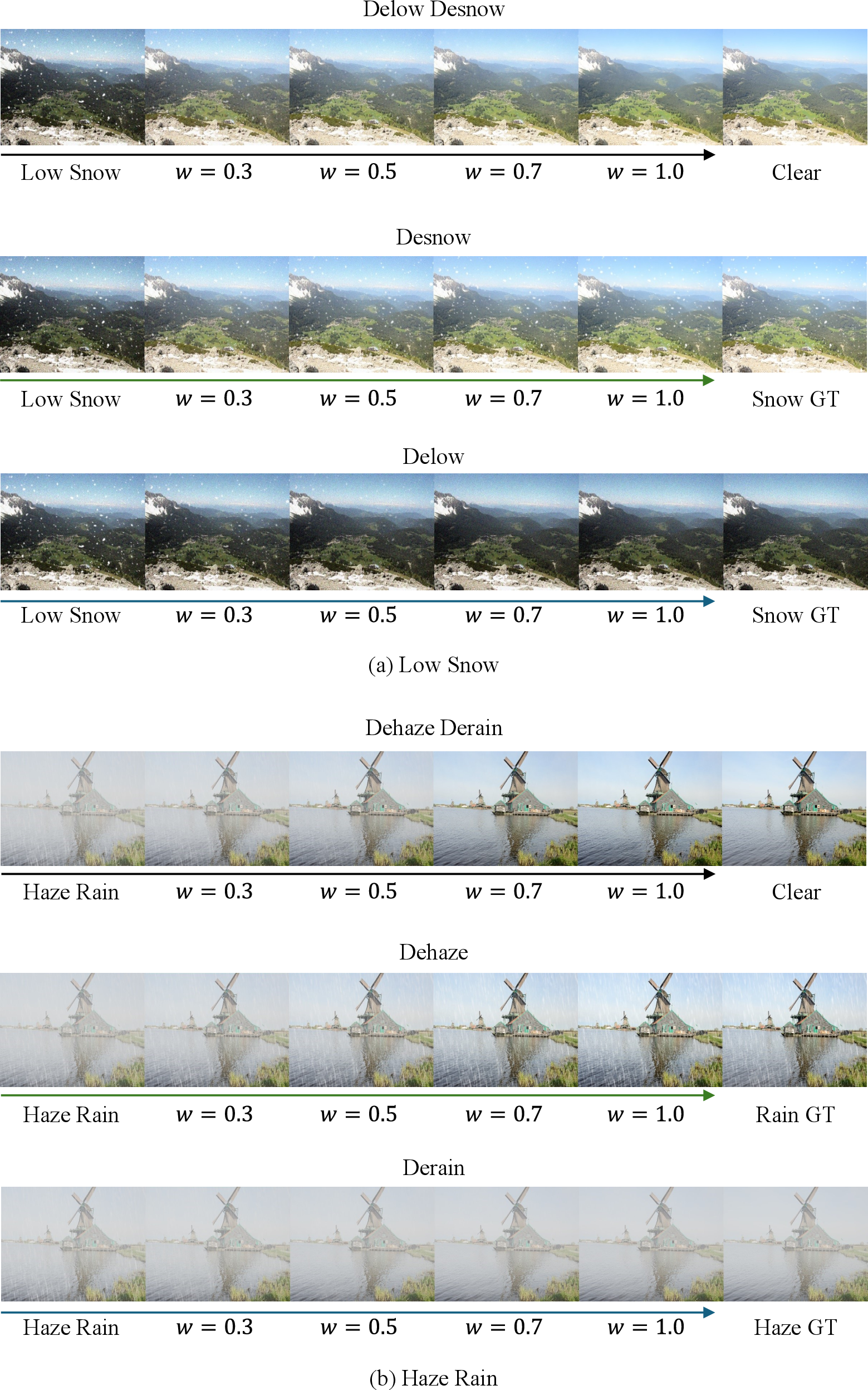
Figure 7: Example outputs showcasing simultaneous ratio control and selective restoration, confirming CURE's fine-grained modulation capability.