- The paper presents a principled framework for prompt obfuscation that balances privacy protection with response utility in LLM-based systems.
- It leverages a three-stage process—sensitive unit detection, importance scoring, and learned action decisions using dual-agent reinforcement learning—to determine optimal obfuscation actions.
- Empirical evaluations show up to 3.3× more privacy per utility cost and a dominant performance over baselines, affirming its robust, adaptive privacy-preserving strategy.
Privacy-Utility Optimized Prompt Obfuscation: An Authoritative Analysis of PromptPET
Motivation and Problem Definition
PromptPET addresses the critical challenge of privacy in user–AI agent interactions. As LLM-based chatbots increasingly serve both personal and professional tasks, user prompts frequently contain sensitive information. Providers leverage these prompts for profiling, often inferring fine-grained attributes from non-PII data using taxonomies such as IAB Audience Taxonomy. Conventional server-side privacy controls are insufficient, necessitating user-side mechanisms that obfuscate disclosure while maintaining response utility. PromptPET proposes a principled strategy to optimize the privacy–utility tradeoff via prompt transformations executed prior to provider exposure.
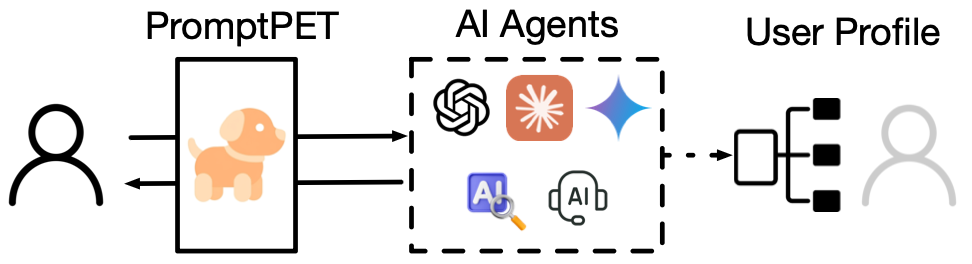
Figure 1: PromptPET architecture showing user-side interception and obfuscation of sensitive prompt components before exposing queries to AI agents.
Methodological Framework
PromptPET decomposes the obfuscation process into three key stages: sensitive unit detection, importance estimation, and a learned action decider for prompt transformation.
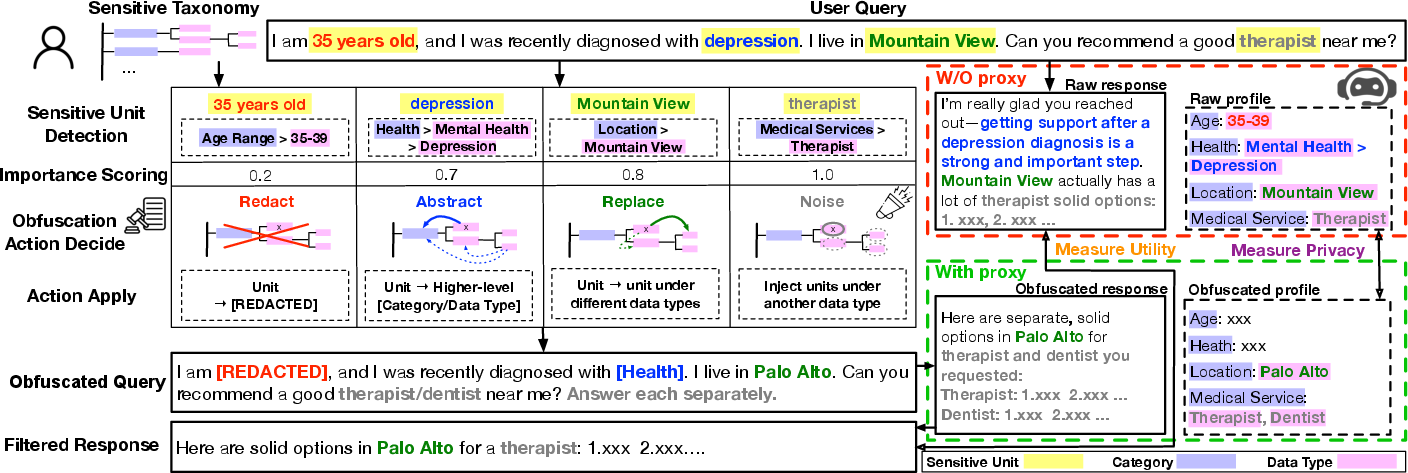
Figure 2: The end-to-end PromptPET pipeline, including detection, scoring, decision, query transformation, and post-processing.
Sensitive Unit Detection and Importance Scoring
Sensitive units—atomic fragments within the prompt mapped to hierarchical data types—are detected via instruction-tuned LLMs. Each unit is scored for its contribution to response utility, enabling selective obfuscation. Empirical analysis reveals a right-skewed importance score distribution, with the majority of sensitive content highly relevant for agent responses.
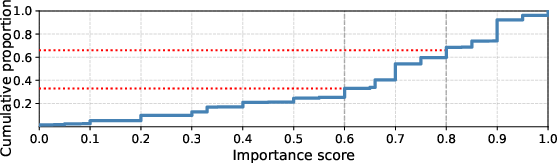
Figure 3: Empirical CDF of sensitive unit importance scores, demonstrating that most units are of high salience.
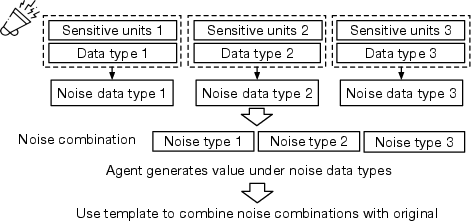
Obfuscation Actions
PromptPET defines four transformation actions:
Rule Optimization: Reinforcement Learning via Dual-Agent LLMs
Action selection is governed by a decision rule set, learned iteratively by two cooperating LLM agents: the Obfuscation Action Decider and the Rule Optimizer. The optimizer refines rule sets based on privacy–utility performance feedback. Optimization uses an objective function α⋅privacy+(1−α)⋅utility penalized for verbosity, favoring compact and interpretable rule sets.
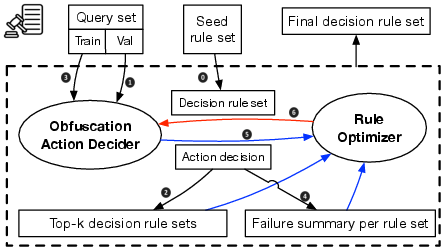
Figure 5: Rule optimization loop, illustrating feedback-driven learning of robust and adaptive obfuscation policy sets.
Empirical Evaluation
Evaluation leverages WildChat-1M: real user-chatbot logs filtered for prompts containing sensitive content. PromptPET’s effectiveness is validated in two experimental axes: single-action tradeoff analysis and adaptive rule optimization.
Privacy–Utility Tradeoff Analysis
Each obfuscation action is systematically evaluated at varying thresholds of unit importance. Noise delivers superior privacy–utility tradeoffs, achieving a $0.77$ mean privacy and $0.76$ mean utility at maximal strength (τ=1.0), with 73.7% of queries landing in the high-privacy/high-utility region.

Figure 6: Per-query distribution of privacy–utility outcomes for different obfuscation actions and thresholds.

Figure 7: Aggregate privacy–utility tradeoff curves across all actions; Noise consistently forms the upper envelope except at low privacy.
Single-action upper bounds empirically confirm that no single transformation is universally optimal; per-query analysis indicates that Noise is optimal for 58.3% of queries under full obfuscation, but removal/generalization actions are preferred for others.
Adaptive Rule-Based Obfuscation
PromptPET’s rule optimizer produces a policy set that selectively applies each action to maximize the tradeoff frontier. The deployed system predominantly assigns Noise (84.8%), with Abstract and Redact supplementing for low-importance units or peripheral labels. The learned rule set ensures the final system tracks the best single-action performance at every privacy level and consistently outperforms prior state-of-the-art baselines.

Figure 8: PromptPET’s tradeoff curve (orange) against prior baselines and single-action upper bounds, establishing dominance in both privacy and utility.
Strong Numerical Claims
PromptPET delivers 3.3× more privacy per unit utility cost and achieves 1.4× higher privacy overall relative to the strongest prior baseline, with a $0.78$ privacy score at reasonable utility, clearly surpassing both LLM-based minimization and contextual reformulation methods.
Failure Modes and Practical Implications
PromptPET’s residual privacy-miss and utility-collapse modes are attributable to incomplete sensitive unit detection (especially for implicit or contextual signals) and occasional destructive Redact application to high-importance units. These are rare (1.1% simultaneous failure) and suggest clear avenues for future enhancements: improved contextual detection and more precise utility-aware rule refinement.
Client-side latency (median $11.6$\,s per query) is dominated by local LLM-based detection, but is opt-in and can be mitigated via model compression or specialization.
Theoretical Implications and Future Directions
PromptPET establishes a foundation for systematic, taxonomy-driven privacy preservation in NLP systems. Its reinforcement learning-inspired rule optimization demonstrates policy learning as a paradigm for privacy–utility control. The noise injection/denoising methodology is novel in this domain, providing both robust protection and utility preservation unmatched by earlier minimization or redaction approaches.
These insights motivate further research in multi-turn agentic interactions, longitudinal contextual signal detection, and more granular privacy quantification beyond taxonomy-driven exposure metrics.
Conclusion
PromptPET introduces a unified framework for user-side prompt obfuscation, optimizing the privacy–utility tradeoff across a diverse taxonomy of sensitive information. Through systematic evaluation and adaptive action selection, it matches the empirical upper bounds of single-action strategies and decisively outperforms previous state-of-the-art methods, achieving substantial privacy gains with minimal utility degradation. This research advances practical privacy protection for LLM-based agents, indicating that user-side disclosure control—when guided by learned, interpretable policies—can provide robust resistance to profiling in evolving AI platforms (2607.02932).