- The paper reveals that hyperon–kaon correlations provide a direct probe for baryon number transport dynamics in p+Au collisions using AMPT and UrQMD simulations.
- The paper employs advanced event-mixing techniques and Earth Mover's Distance to isolate genuine correlation signals from combinatorial backgrounds.
- The paper finds that correlation strength decreases with collision energy and varies with hyperon strangeness, setting a baseline for future experimental tests.
Hyperon–Kaon Correlations as a Probe of Baryon Number Transport in p+Au Collisions
Introduction: Baryon Number Transport and Strange Hadron Production
The transport of net baryon number from initial projectile rapidity toward mid-rapidity is a central feature of relativistic heavy-ion and hadron–nucleus collisions. The persistent mid-rapidity baryon excess, quantified by ratios such as Λ/Λˉ>1, signals efficient baryon number transport (BNT) mechanisms operating beyond perturbative valence quark exchange. Gluon (baryon) junction models posit that a topologically non-trivial Y-shaped gluonic configuration, rather than the quark line, carries baryon number over large rapidity intervals. The dynamical separation of baryon number and quark flavors is especially manifest in strange baryon (hyperon) production, where ssˉ pairs are generated and strangeness neutrality must be preserved—embedding correlations between hyperons and associated kaons.
The study "Studying baryon number transport dynamics via hyperon-kaon correlations in p+Au collisions at \sqrt{s_{_{\rm NN}}}=20,39,and62$ GeV" (2607.02867) systematically investigates these hyperon–<a href="https://www.emergentmind.com/topics/kaon" title="" rel="nofollow" data-turbo="false" class="assistant-link" x-data x-tooltip.raw="">kaon</a> correlations as a direct probe of BNT and fragmentation mechanisms, using event-by-event analysis in multi-phase transport (<a href="https://www.emergentmind.com/topics/a-multi-phase-transport-model-ampt" title="" rel="nofollow" data-turbo="false" class="assistant-link" x-data x-tooltip.raw="">AMPT</a>) and Ultra-relativistic Quantum Molecular Dynamics (UrQMD) simulations.</p>
<h2 class='paper-heading' id='mechanism-of-hyperon-and-kaon-production'>Mechanism of Hyperon and Kaon Production</h2>
<p>The paper dissects possible hyperon ($\Lambda,\Xi,\Omega)formationroutes,differentiatingbetweengeneralassociatedproduction—wherebaryonnumberistransportedandeachnew\Lambda/\bar{\Lambda}>1$0 valence quark in the hyperon is counterbalanced by an associated kaon through $\Lambda/\bar{\Lambda}>1$1 pair creation—and processes where both hyperon and anti-hyperon are created from vacuum. The gluon junction fragmentation scenario is shown to naturally accommodate the transfer of baryon number to hyperons, a process inherently correlated with emission of associated kaons.
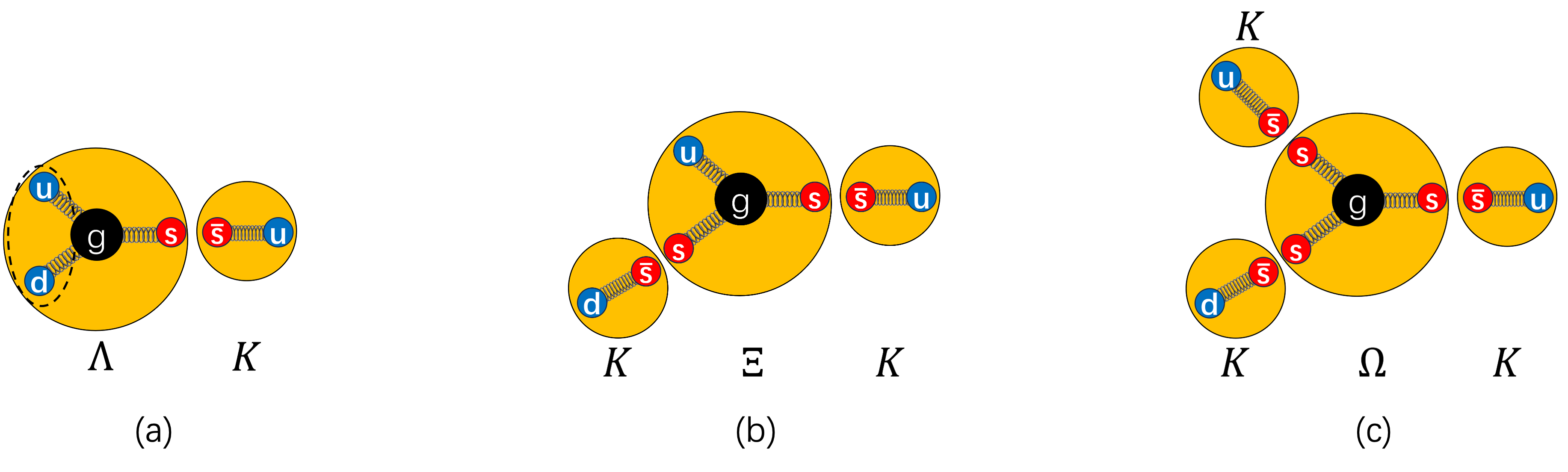
Figure 1: Schematic illustration of proton fragmentation into (a) $\Lambda/\bar{\Lambda}>1$2 with one kaon, (b) $\Lambda/\bar{\Lambda}>1$3 with two kaons, and (c) $\Lambda/\bar{\Lambda}>1$4 with three kaons, corresponding to one, two, and three $\Lambda/\bar{\Lambda}>1$5 pairs broken, respectively.
To clarify the production topology, two limiting scenarios are illustrated:
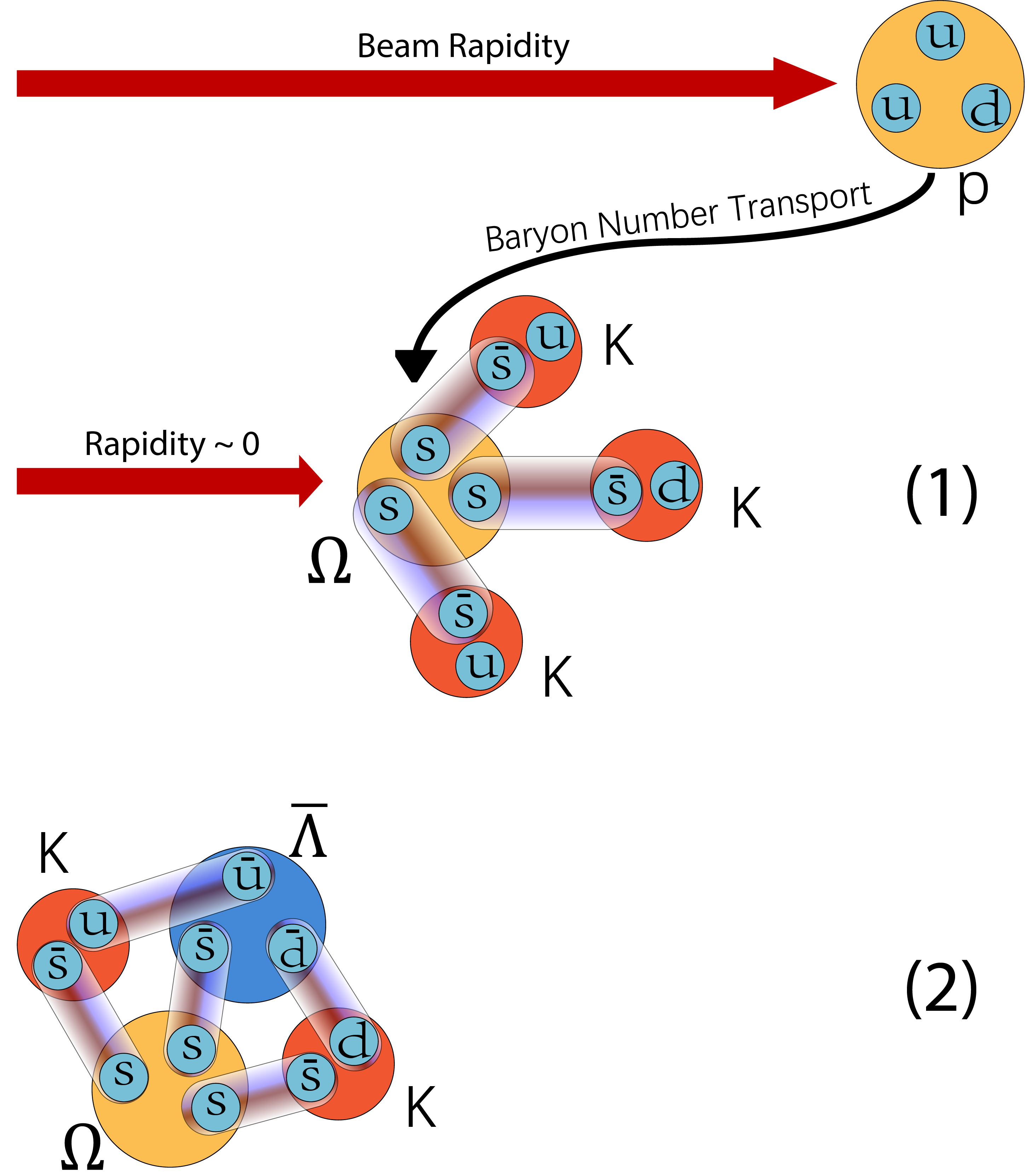
Figure 2: Schematic illustration of two production mechanisms: (1) proton baryon number transported via general associated production, (2) complete pair production from vacuum with no baryon number transfer.
The structure and strength of hyperon–kaon correlations contain direct information regarding the rapidity gap traversed by baryon number, the degree of gluon field involvement, and the fragmentation scheme dependence.
Methodology: Event-Mixed Pair Distributions and Background Subtraction
Using AMPT (with string melting) and UrQMD (hadronic transport with resonance/string excitation), minimum-bias $\Lambda/\bar{\Lambda}>1$6 events at $\Lambda/\bar{\Lambda}>1$7, $\Lambda/\bar{\Lambda}>1$8, $\Lambda/\bar{\Lambda}>1$9 GeV are analyzed. Hyperon–kaon pairs are constructed both from same-event and mixed-event samples, allowing the removal of uncorrelated combinatorial backgrounds.
A critical variable is the relative rapidity $Y$0 between hyperon and kaon, constructed so as to preserve the proton-going ($Y$1) and Au-going ($Y$2) directions. Detector pseudo-rapidity acceptances are imposed to estimate experimental sensitivity.
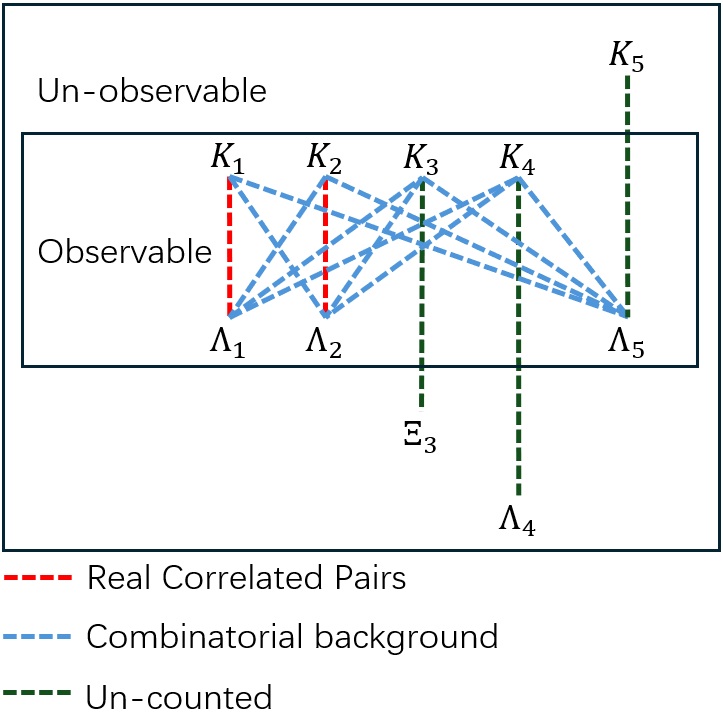
Figure 3: Schematic decomposition of the same-event distribution, distinguishing genuine correlated pairs from combinatorial background.
Genuine correlation extraction employs background subtraction, utilizing the difference between same-event and appropriately normalized mixed-event distributions.
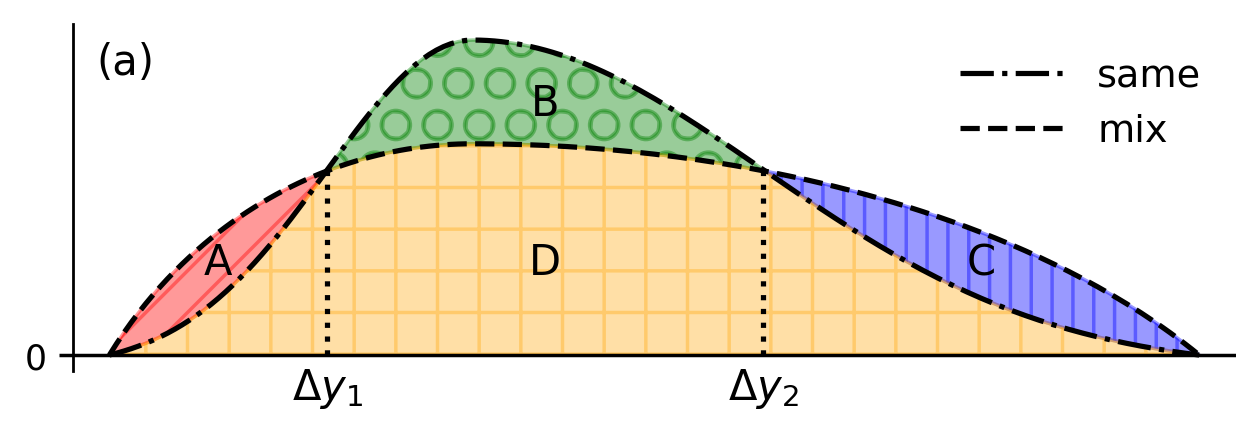
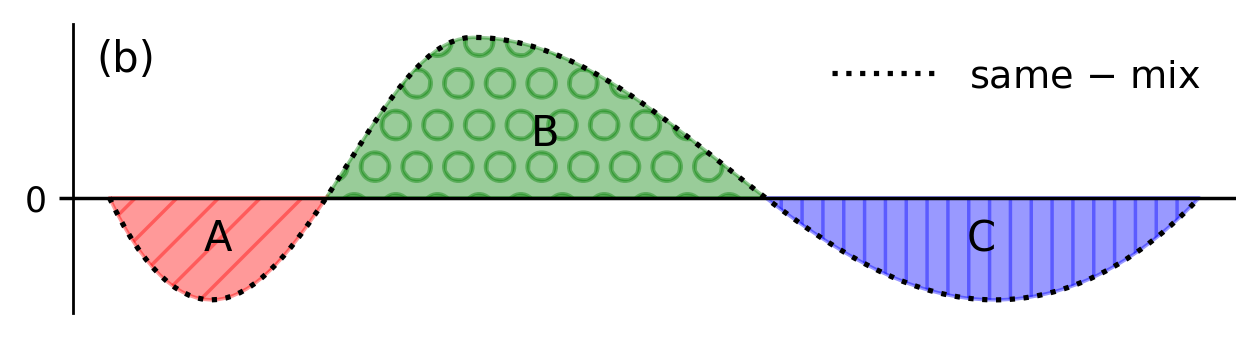
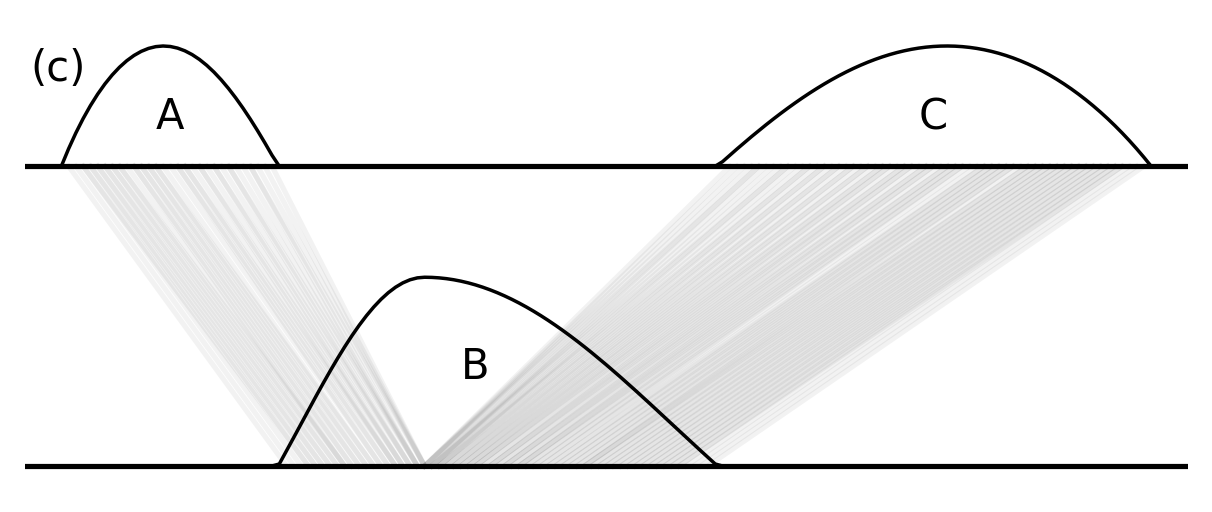
Figure 4: (a) Same-event (dash-dotted) and mixed-event (dashed) pair distributions; (b) the resulting difference; (c) the optimal transport between negative and positive regions, representing true hyperon–kaon correlation.
Quantification of Correlations: Optimal Transport Distance
To systematically quantify correlation strength and shape, the authors adopt the one-dimensional Wasserstein (or earth mover's) distance (EMD), which measures the minimal "work" needed to redistribute the excess in the difference distribution from negative to positive regions. The signed version, Y3, conveys the directionality (i.e., whether kaons are preferentially faster or slower relative to the hyperon).
This approach offers a robust, model-independent quantification of hyperon–kaon correlation structure in rapidity.
Results: Rapidity Correlation Structure and Energy/Model Dependence
Pair Distributions
The Y4–Y5 and Y6–Y7 pair rapidity distributions are presented for both all-phase-space and mid-rapidity detector acceptance.
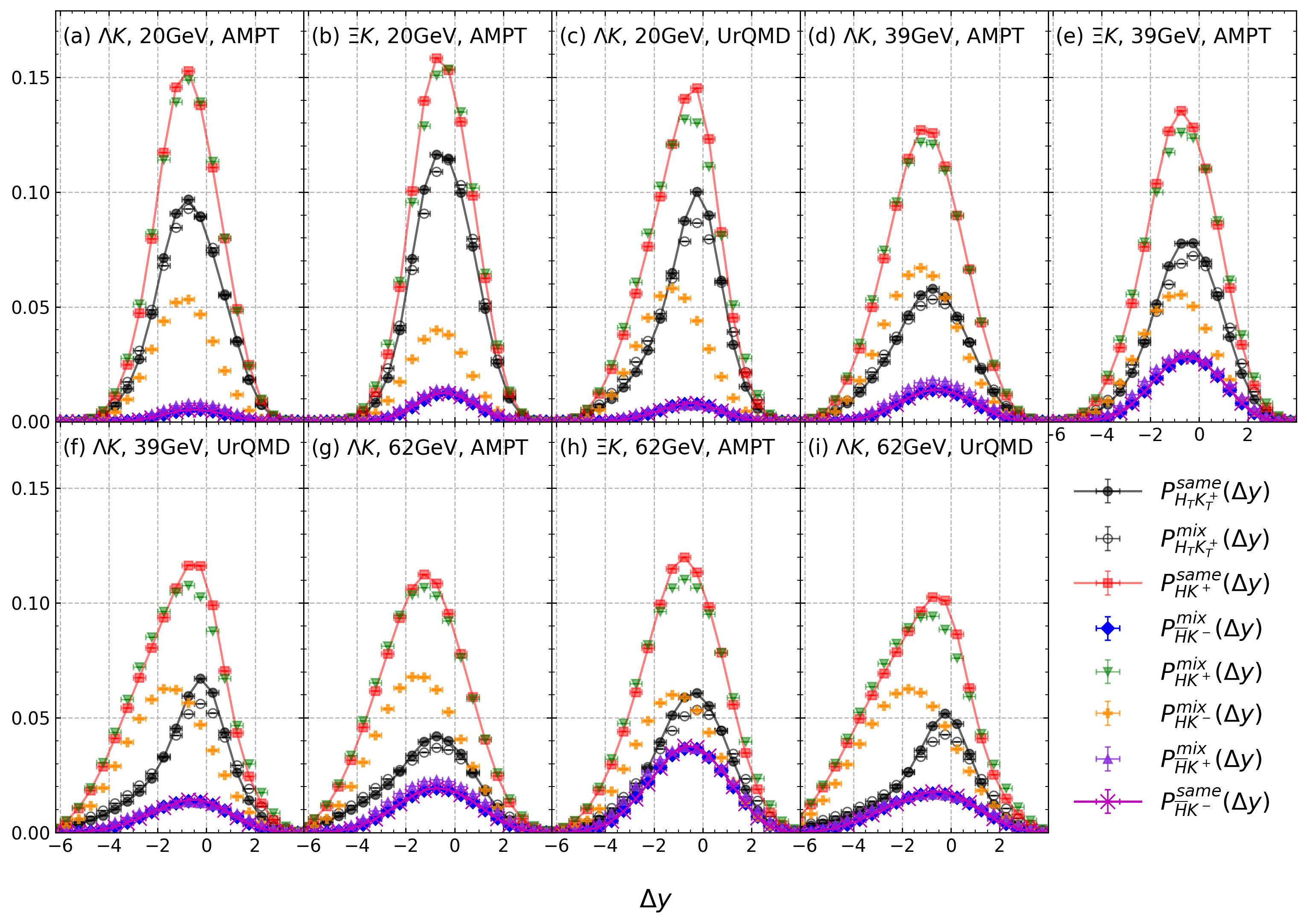
Figure 5: The AMPT and UrQMD results for Y8–Y9 and ssˉ0–ssˉ1 pair distributions in ssˉ2+Au at ssˉ3 GeV (full acceptance).
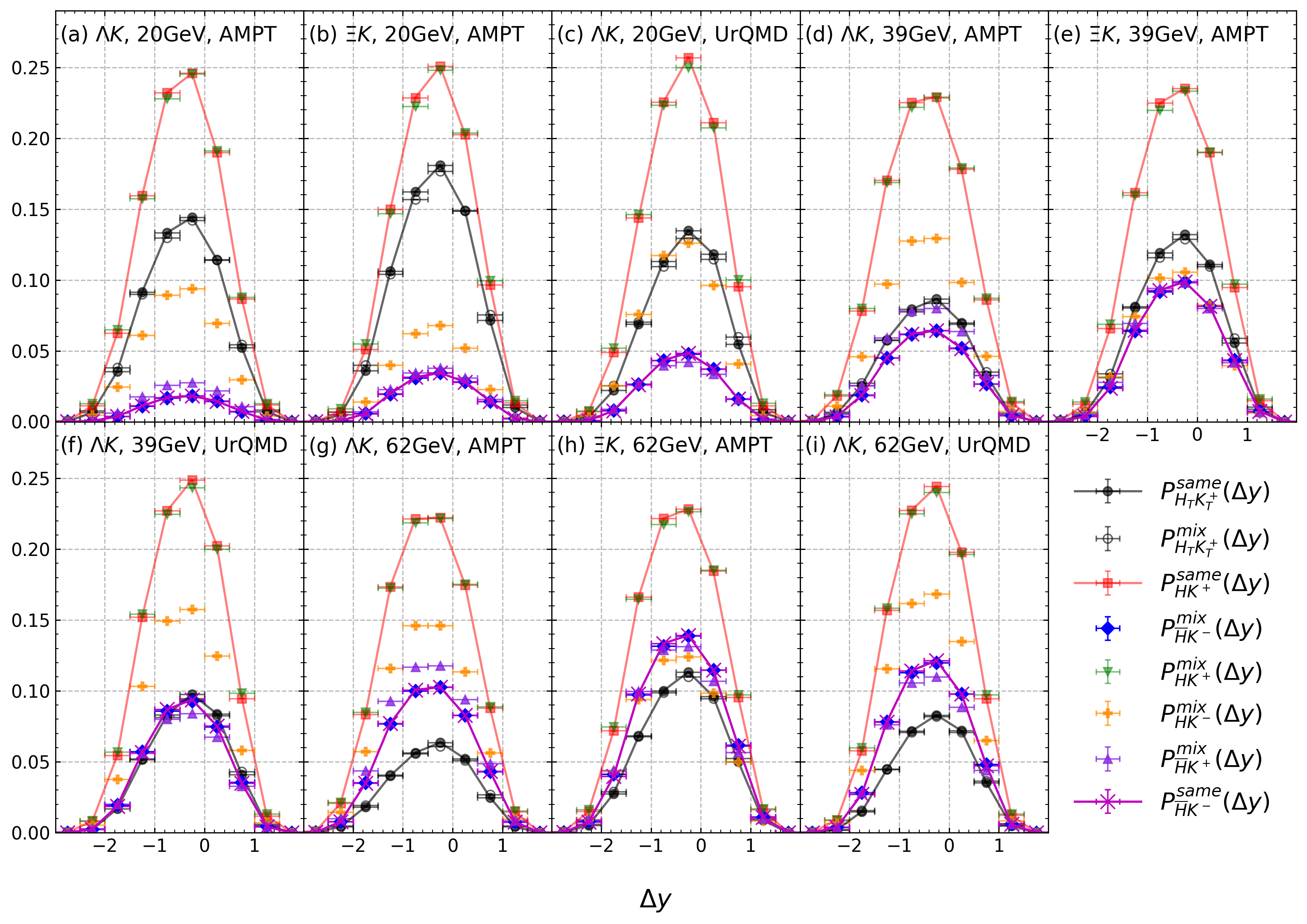
Figure 6: Corresponding pair distributions within the detector acceptance ssˉ4.
The data exhibit a stronger presence of pair production (unrelated to baryon number transport) at higher energies, reducing the relative prominence of BNT-driven features.
Hyperon–Kaon Correlation Functions
The central observables, ssˉ5 and ssˉ6, reveal a pronounced correlation within a constrained ssˉ7 window, reflecting the phase-space signature of BNT.
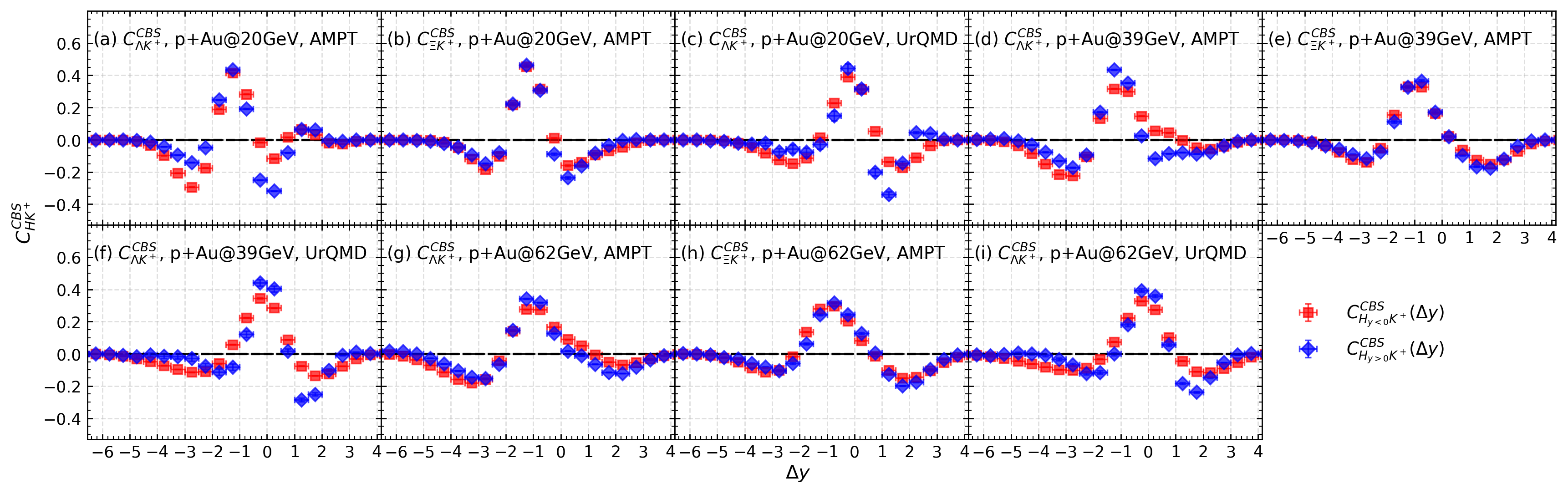
Figure 7: AMPT and UrQMD correlation functions ssˉ8 and ssˉ9 in p+Au0+Au, separated into hyperon emission directions (full acceptance).
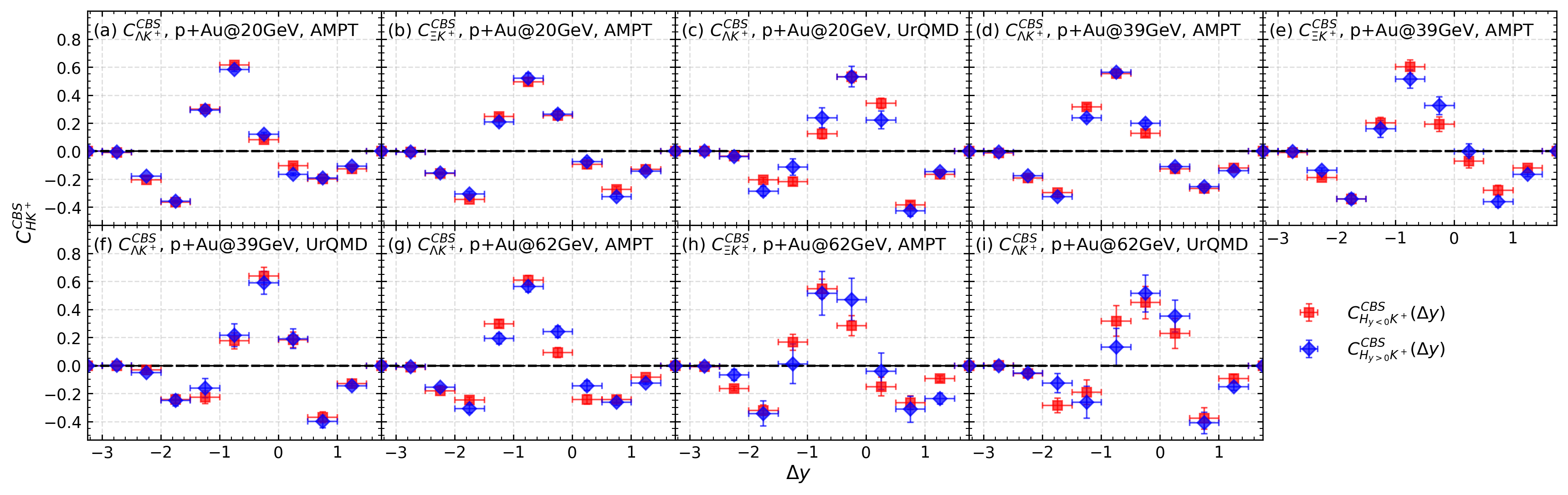
Figure 8: Same correlations within p+Au1 experimental coverage.
A marked difference is observed between hyperons in the proton-going versus nucleus-going directions, with forward hyperons providing the clearest BNT signal. The correlation strength is consistently larger for more highly-strange hyperons and decreases with collision energy, a result consistent—within the valence-quark transport paradigm—with increased suppression of baryon number migration at higher energies.
Quantitative Analysis: EMD and Directional Effects
The extracted EMD and EMDp+Au2 values are shown as a function of energy and hyperon species.
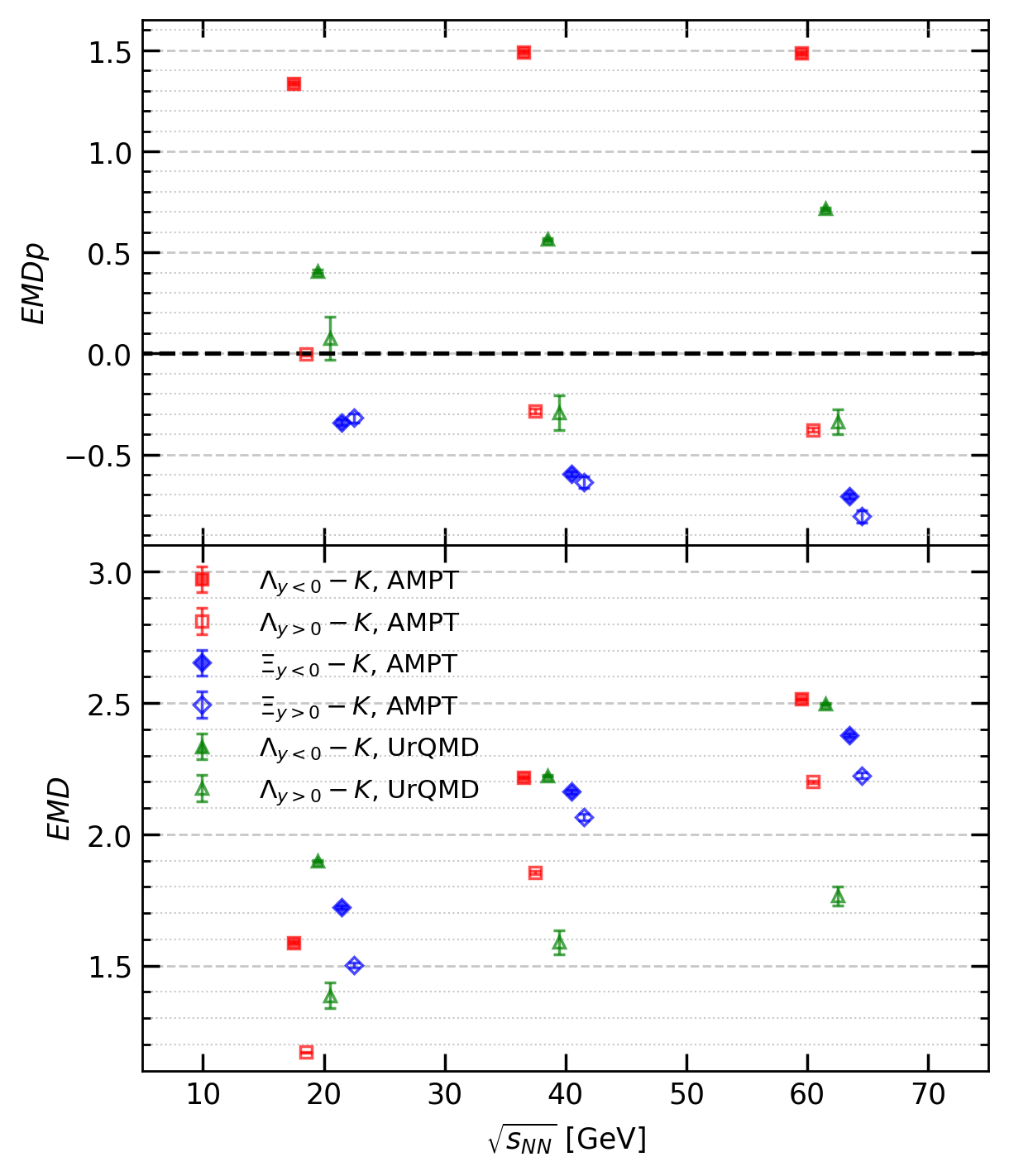
Figure 9: Energy and direction dependence of the EMDp+Au3 and EMD metrics in p+Au4+Au, full acceptance. Larger (more positive) EMDp+Au5 denotes faster correlated kaons.
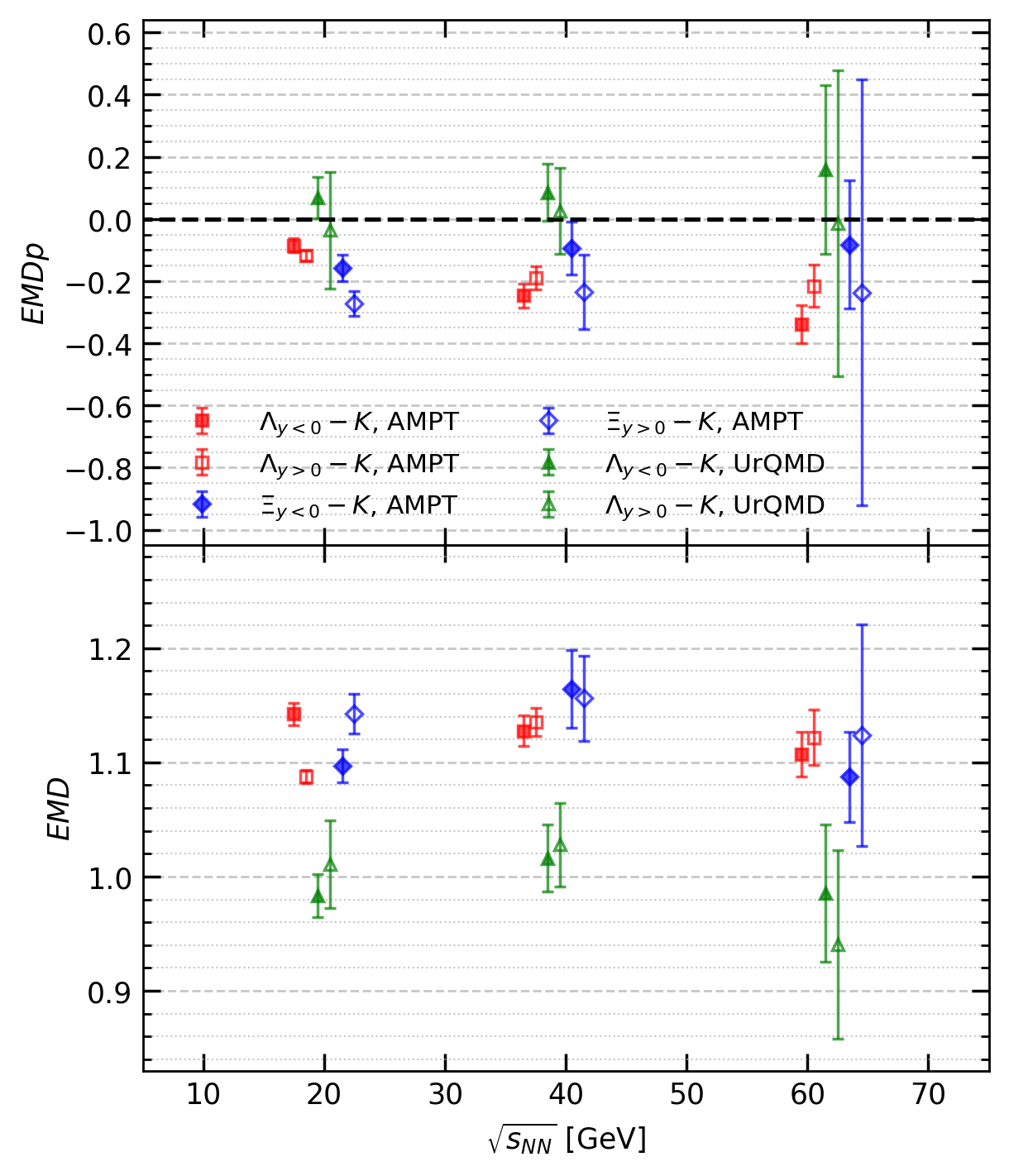
Figure 10: Same analysis in detector acceptance (p+Au6).
Across both models, the results show:
- A strong, positive rapidity preference for kaons associated with forward (projectile-going) hyperons, especially at lower energies,
- A monotonic decrease of EMDp+Au7 with increasing p+Au8,
- The correlation strength (EMD) increases with energy, but the separation between emission directions (proton/Au going) diminishes under mid-rapidity acceptance,
- p+Au9 hyperons exhibit signals more robust against pair production dilution,
- Model differences (AMPT vs. UrQMD) are more pronounced for Au-going ,0, likely reflecting differences in hadronic rescattering and strangeness transport implementation.
These trends are quantitatively inconsistent with baryon–junction-dominated BNT, which would predict the opposite energy and rapidity dependence for hyperon–kaon correlations.
Implications and Prospective Developments
This study establishes hyperon–kaon rapidity correlations—and their optimal transport quantification—as direct, experimentally accessible probes of baryon number transport at the hadronic/partonic level in ,1+A reactions. The results presented serve as a null hypothesis (valence quark transport without nontrivial gluonic junction propagation) and set benchmarks for future high-acceptance experiments at RHIC and LHC.
The formalism allows systematic discrimination between baryon junction and quark line scenarios, with experimental deviation from these model predictions serving as a unique indicator of gluonic field transport. The demonstrated sensitivity to both collision energy and hyperon strangeness content solidifies the approach's relevance in detailed QCD matter tomography.
Conclusion
The paper presents a robust analysis framework for the study of BNT via hyperon–kaon rapidity correlations, grounded in a precise, combinatorial-background-subtracted event-mixing technique and quantified with optimal transport theory. Detailed simulations show that forward hyperons provide the most sensitive probe, with model-agnostic observable patterns established as a baseline for future experimental exploration of nontrivial QCD topologies such as baryon junctions. The methodology will underpin efforts to uncover the microscopic carriers of baryon number in strongly interacting matter.