- The paper demonstrates that photon catalysis optimally generates squeezed cat states by saturating stellar fidelity, achieving >99% overlap with target states.
- It employs a resource-theoretic framework using the stellar rank formalism to quantitatively benchmark non-Gaussian state complexity.
- The study compares PC with Gaussian Boson Sampling-like protocols, offering practical insights into loss tolerance and quantum error correction applications.
Optimal Stellar Rank Approximation of Squeezed Cat States via Photon Catalysis
Introduction and Motivation
Optical bosonic quantum computation mandates the reliable generation and manipulation of non-Gaussian quantum states, with negative Wigner functions being essential for quantum computational advantage and bosonic quantum error correction. Squeezed Schrödinger cat states and related non-Gaussian resources are challenging to produce experimentally, especially under practical constraints of current photonic hardware. Probabilistic, heralded protocols like photon catalysis (PC) offer experimentally accessible avenues, but a rigorous characterization of their resource requirements and optimality—considering both state fidelity and complexity—remains largely undeveloped.
This work provides a formal, quantitative treatment of photon catalysis for the generation of non-Gaussian target states, focusing on the generation of squeezed cat states with high fidelity and minimal resource overhead. Central to the analysis is the use of the stellar rank formalism, a resource-theoretic measure that enables hierarchical classification of non-Gaussian complexity and informs the optimality of PC-based state engineering. The study benchmarks PC against Gaussian Boson Sampling-like (GBS-like) methods, addresses the impact of losses, and explores ancillary benefits such as squeezed Fock state generation for quantum error correction.
Photon Catalysis Protocol and Resource Quantification
The considered PC protocol involves the interference of a single-mode squeezed vacuum with a low-photon-number Fock state at a beam splitter, followed by photon-number-resolving detection (PNRD) on one of the outputs (Figure 1). The heralded output is generally a non-Gaussian state whose structure and quality depend on the squeezing magnitude, beam splitter transmissivity, and the initial Fock number statistics.
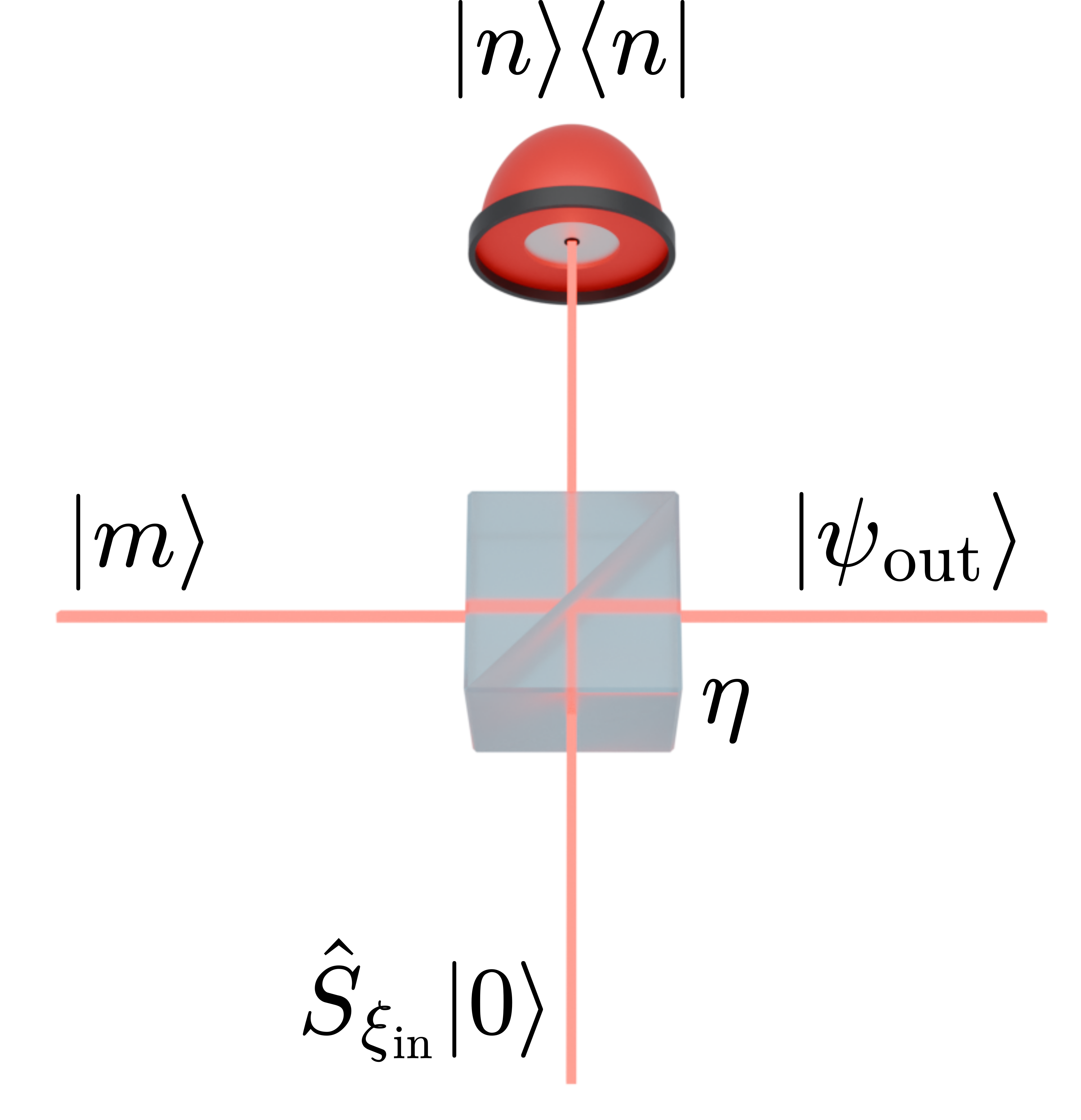
Figure 1: Photon catalysis comprising the interference of a squeezed state vector S^ξin∣0⟩ and a Fock state ∣m⟩, followed by PNRD on one output port, yielding the output state ∣ψout⟩.
The state engineering task is to maximize the fidelity between the heralded output and a target squeezed cat state under fixed non-Gaussian resource constraints, as quantified by the stellar rank—defined as the minimal Fock support of the non-Gaussian "core" required to generate the state via Gaussian unitaries. The PC protocol's output possesses stellar rank N=m+n, with m the input Fock number and n the heralded outcome.
Stellar Rank Optimality and Fidelity Analysis
The stellar rank formalism enables systematic benchmarking: for a given target state, the stellar fidelity FN is the maximal attainable overlap with any state of stellar rank N. The analysis includes explicit calculation of optimal parameters (splitting ratio, squeezing, displacement) that yield PC outputs saturating the stellar fidelity for both even and odd cat states, as well as more general resource states. The fidelity maximization is supported by efficient computational techniques leveraging un-truncated, analytic expressions in the Fock basis.
The approximation quality is illustrated in Figure 2, which shows the behavior of the fidelity and the optimal PC parameters as functions of beam splitter transmissivity, with output states achieving F>99% under realistic resource regimes.
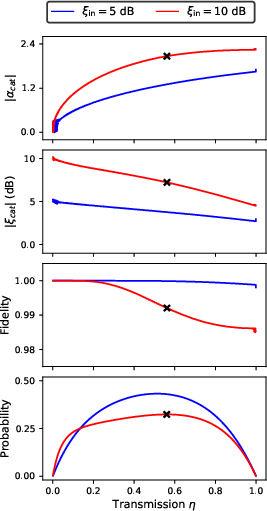
Figure 2: Optimum approximation between the PC output state and target squeezed cat states, versus beam splitter transmissivity and input squeezing level.
A detailed comparison of Wigner functions and density matrices for optimally matched target and output states (Figure 3) further quantifies the quality of the engineered state.
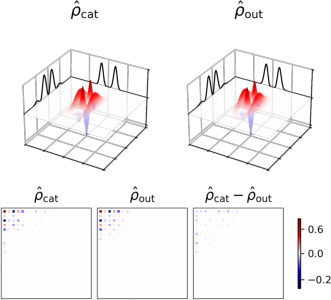
Figure 3: Wigner representation and density matrix elements of matched target cat state and catalysis output, illustrating fidelity F=99.26%.
The dependence of maximum achievable fidelity on the cat amplitude and stellar rank (Figure 4) reveals a threshold phenomenon: for amplitudes above a rank-dependent value ∣m⟩0, the stellar fidelity undergoes a transition, and the optimal Gaussian unitary shifts from squeezing-dominated to displacement-dominated regimes, with a corresponding drop in attainable fidelity.
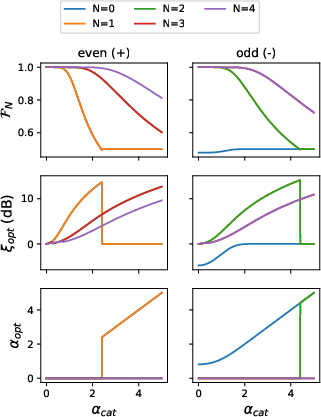
Figure 4: Maximum achievable fidelity between cat state and states of stellar rank ∣m⟩1, exhibiting threshold behavior in ∣m⟩2.
Wigner function representations for various cases (Figure 5) offer further insight into the geometric mechanism by which stellar rank-limited approximations cover support in phase space.
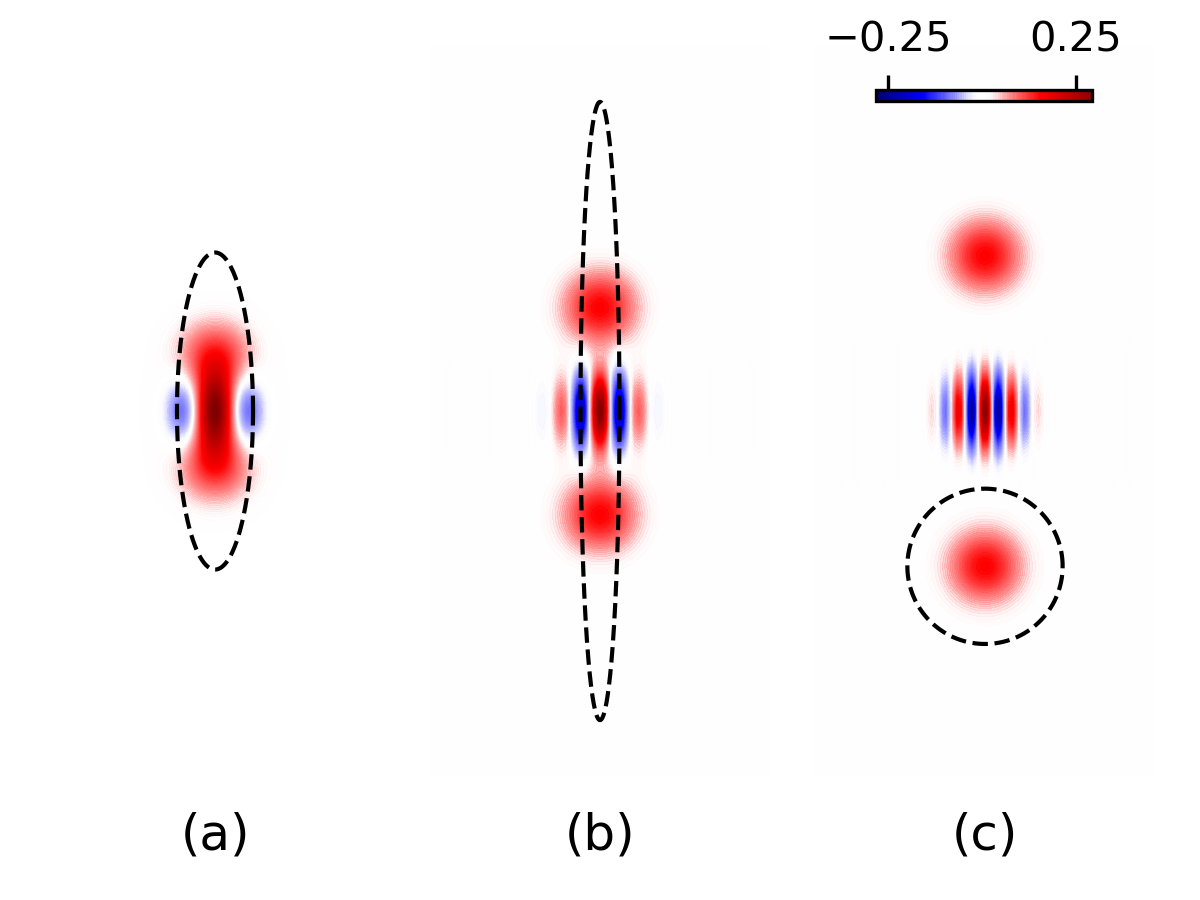
Figure 5: Wigner functions of even cat states (color maps) versus optimal Gaussian approximations (dashed contours), for varying cat amplitudes; the transition illustrates the geometrical intuition of the stellar rank limitation.
Comparison with Gaussian Boson Sampling-Inspired Protocols
The study provides a quantitative benchmark of catalysis protocols against GBS-like schemes employing only Gaussian resources and PNRD. Figure 6 depicts the GBS-like protocol configuration, and Figure 7 presents the success probability as a function of key parameters for both PC and GBS.
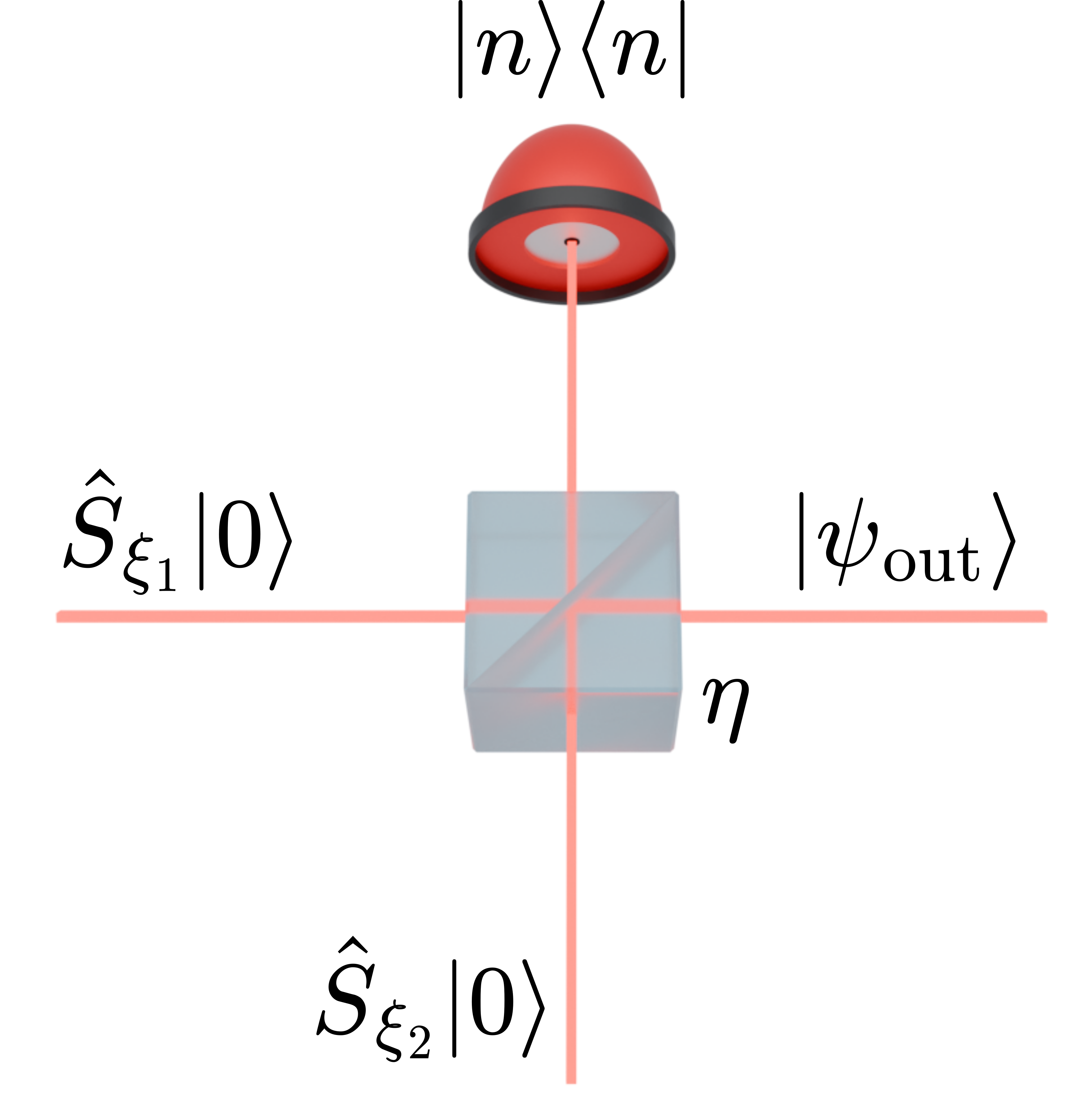
Figure 6: GBS-like scheme for comparison, with two squeezed input states interfering on a beam splitter, with PNRD heralding.
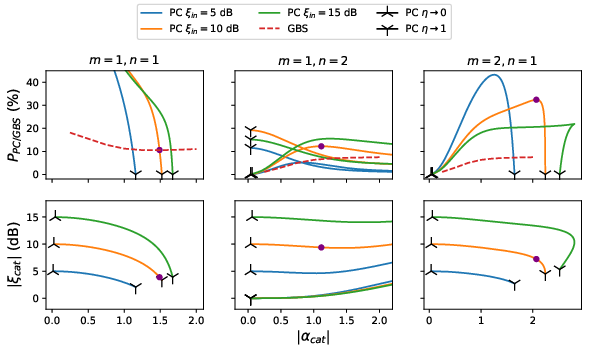
Figure 7: Success probability ∣m⟩3 for photon catalysis and ∣m⟩4 for the GBS-like protocol, versus the cat amplitude ∣m⟩5.
The results demonstrate that PC, when equipped with deterministic single-photon sources (quantum dot technology now achieving ∣m⟩6 efficiency), can significantly outperform GBS-like approaches in success probability for a broad range of cat amplitudes and target fidelities. This holds even after accounting for non-unit input efficiencies. The analysis further delineates regimes where output squeezing and amplitude combinations are attainable, highlighting the advantages and limitations of both schemes.
Loss Tolerance and Mixed-State Considerations
A pivotal aspect is the systematic modeling of sources of experimental loss, including input state generation, propagation, and detection inefficiencies (Figure 8). The authors employ a Hilbert space truncation and analytic transformations under lossy channels to analyze performance degradation.
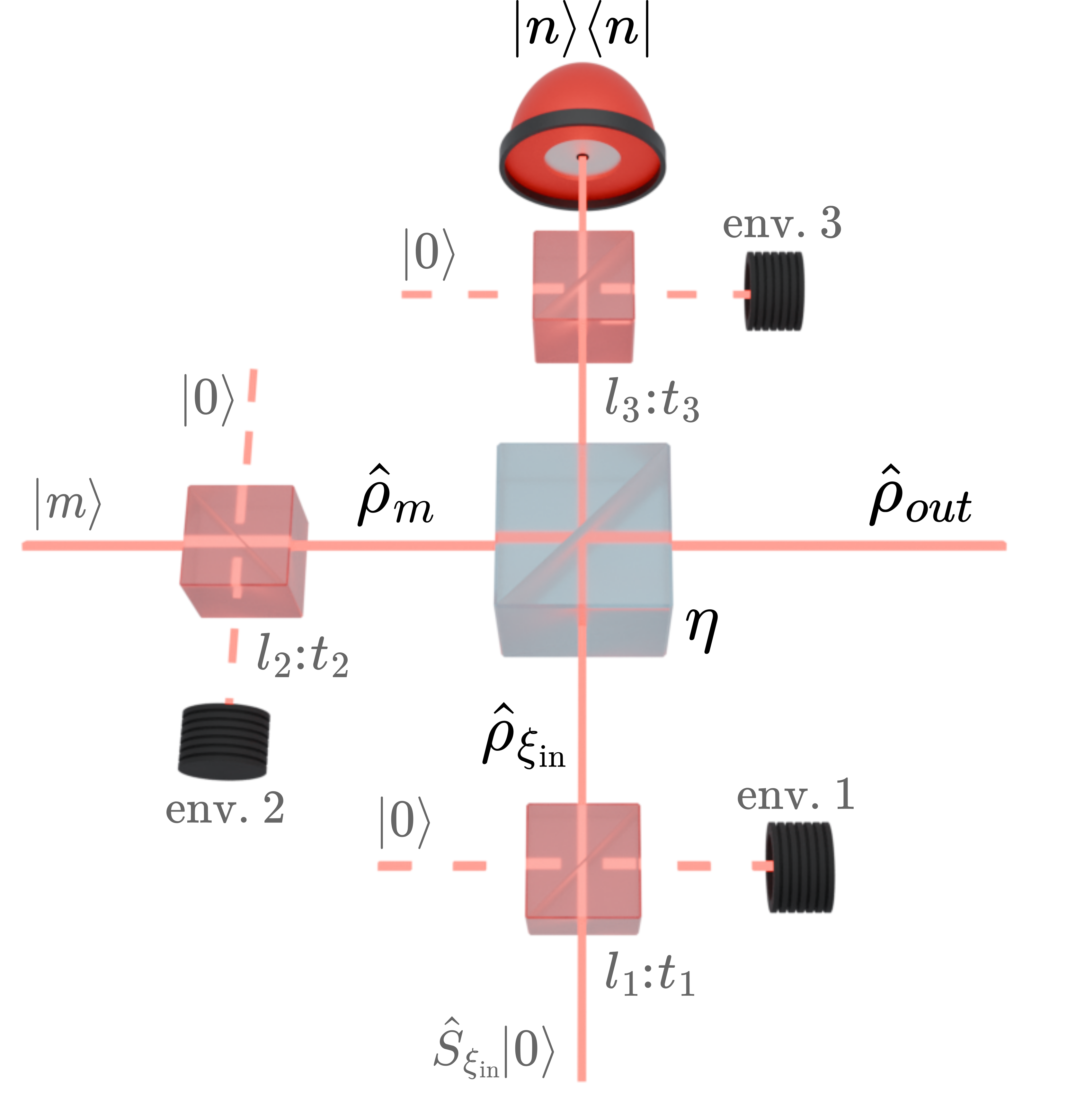
Figure 8: Schematic of loss modeling in the catalysis protocol, with virtual beam splitters representing losses in all relevant arms.
Figures 12 and 13 illustrate the dependency of target state fidelity, heralding probability, Wigner negativity, and optimal parameters as functions of the loss on each protocol arm. Even under substantial losses, non-classicality (Wigner negativity) can persist, providing a lower bound for practical usefulness of the output states.
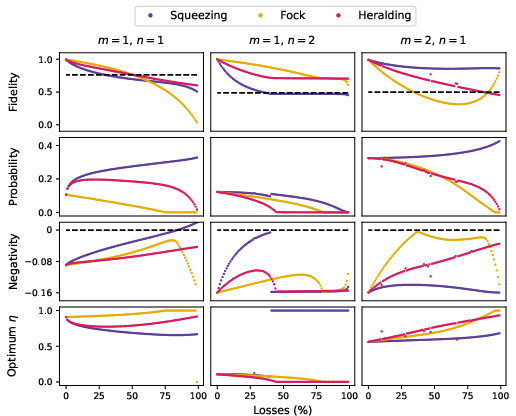
Figure 9: Effect of single-channel losses on output fidelity, success probability, Wigner negativity, and optimal ∣m⟩7.
Comprehensive multi-loss analyses (Figure 10 and Figure 11) map the combined tolerated loss budgets for surpassing Gaussian fidelity and retaining Wigner negativity, respectively.
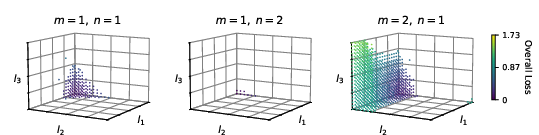
Figure 10: Multi-channel loss analysis, showing volume of parameter space where Gaussian fidelity is surpassed under fixed squeezing.
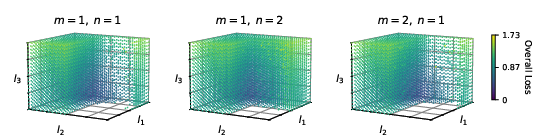
Figure 11: Regions of three-loss-parameter space where Wigner negativity is preserved, indicating robustness of non-Gaussianity against optical losses.
Resource-Efficient Generation of Quantum Error Correction States
The protocol is extended to the preparation of other relevant non-Gaussian states, notably squeezed Fock states, which are valuable for bosonic error correction codewords. The analysis provides explicit conditions on input parameters enabling the heralded generation of orthogonal logical codewords, quantifies maximal output squeezings, and presents corresponding heralding success probabilities.
Theoretical and Practical Implications
The paper establishes the proven optimality of PC for producing squeezed cat states within the resource class defined by the stellar rank: no other protocol with the same bounded number of photon additions/subtractions can achieve higher fidelity. This provides an explicit resource-performance bound, guiding state engineering strategies as photonic technology matures. The results demonstrate practical viability using contemporary deterministic single-photon emitters.
The framework and results also serve as a rigorous guide for scaling up photonic state engineering for error correction and quantum advantage demonstrating experiments, providing resource thresholds, tolerable loss budgets, and realistic estimates on success rates.
Future directions include higher-rank state engineering exploiting multi-photon inputs and heraldings, multi-mode generalizations as enabled by recent advances in tensor decomposition techniques, and the analysis of iterative or cascaded protocols using the stellar rank framework for performance benchmarking.
Conclusion
This work delivers a comprehensive, resource-theoretic analysis of photon catalysis for the optimal preparation of squeezed cat states, providing both rigorous numerical and analytic tools to benchmark non-Gaussian photonic state engineering protocols. The results set explicit resource and performance thresholds, demonstrate the practical superiority of PC over GBS-like techniques under realistic conditions, and quantify the impact of losses. The stellar rank formalism is validated as a powerful tool for resource quantification, guiding experimental and theoretical progress in photonic quantum information science (2607.02427).