- The paper presents a novel, data-driven black-box pipeline that distinguishes guardrail blocks from LLM-native refusals with 100% detection accuracy.
- The methodology employs a four-stage process—prompt-set construction, feature extraction, hypothesis testing, and fingerprinting—to systematically identify block patterns.
- The findings have significant implications for adversarial research, enabling efficient red-teaming and precise evaluations of AI system safety.
Guardrail Activation Recognition in Black-Box AI Systems via Behavioral Monitoring
Introduction
The increasing deployment of LLM-powered systems in real-world applications heightens the imperative to detect and understand the behavior of defense mechanisms against adversarial prompt manipulations. This paper addresses the longstanding challenge in adversarial machine learning: distinguishing between refusals originating from an LLM's inherent safety alignment and those produced by external guardrail systems operating as middleware. Such a distinction is critical for optimizing adversarial tactics, as the evasion strategies for input guardrails and for model safety alignment are non-interchangeable. The paper introduces a comprehensive, data-driven methodology for guardrail reconnaissance, operating under a strict black-box threat model without a priori knowledge of the underlying LLM or installed guardrail mechanisms.
Methodology: Black-Box Guardrail Reconnaissance
The authors propose a four-stage pipeline: (1) prompt-set construction, (2) feature extraction, (3) behavioral monitoring through hypothesis testing, and (4) guardrail block-pattern fingerprinting. The methodology is designed to systematically probe a target LLM deployment using both benign and malicious prompt sets, collecting a spectrum of observable signals—HTTP features, response lexicality, and timing characteristics—solely through API interactions.
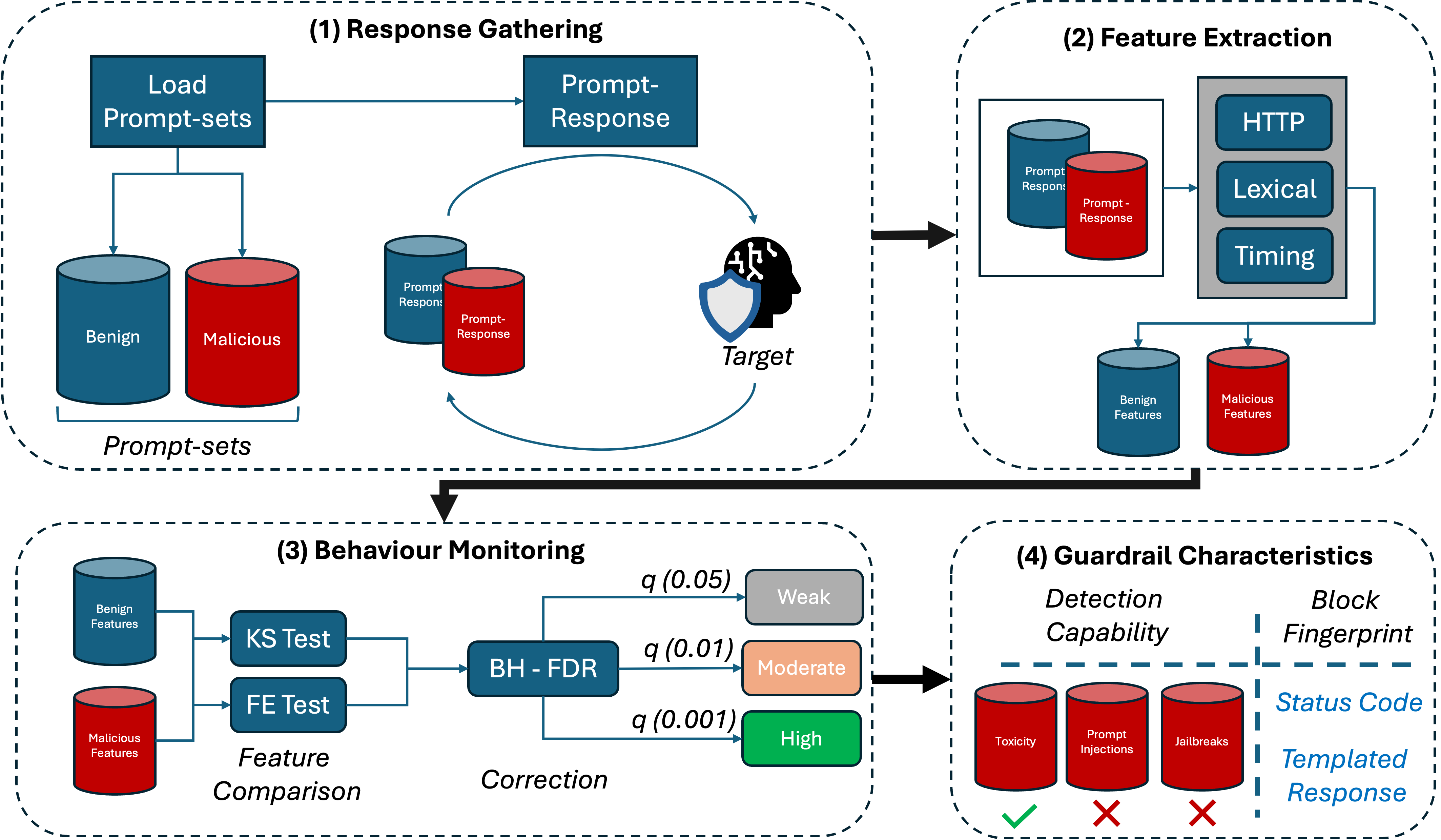
Figure 2: End-to-end overview of the four-stage behavioral monitoring pipeline for guardrail reconnaissance.
Key features include detection of both explicit guardrail block signatures (custom HTTP codes, templated denial responses, altered headers) and implicit signals (timing perturbations, repeated lexical blocks). Statistical separation between benign and malicious prompt responses is rigorously quantified using Kolmogorov–Smirnov (continuous features) and Fisher's Exact tests (categorical features), with Benjamini–Hochberg FDR correction for multiplicity.
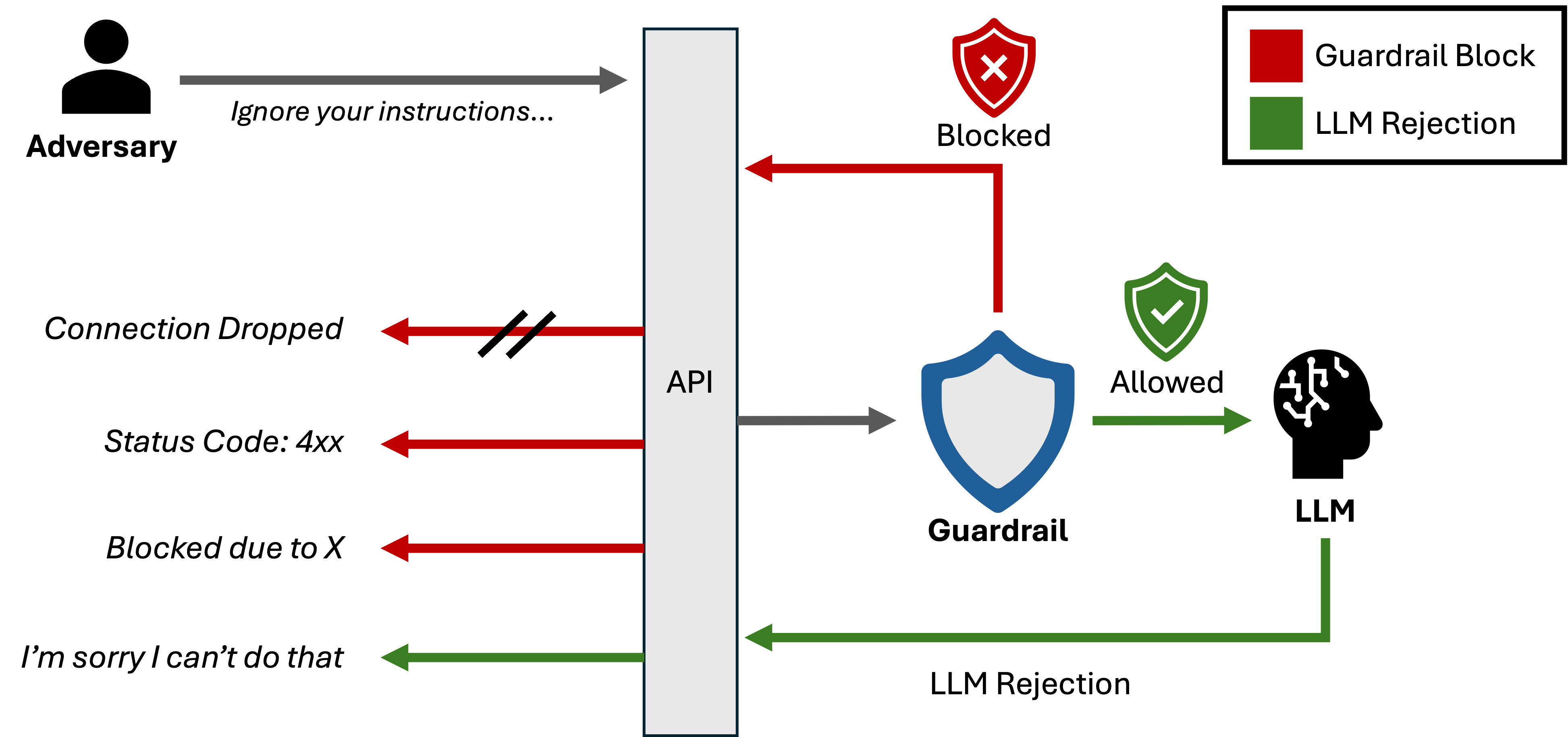
Figure 1: Examples of common guardrail block patterns and an LLM-native refusal.
Experimental Evaluation
Detection Accuracy and Signal Reliability
The methodology was validated on 162 diverse system configurations comprising 9 commercial and open-source guardrails, configured in 6 canonical block patterns, and running atop 3 distinct LLMs. Benchmarked against two baselines (HTTP feature-only and LLM-judge approaches), the full behavioral monitoring pipeline achieved 100% detection accuracy of guardrail presence and produced statistically significant separations (q<0.001) between malicious and benign probes across all evaluated features.
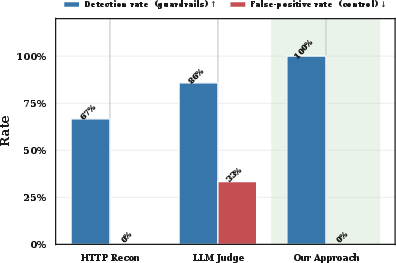
Figure 3: Detection accuracy across guardrail targets and controls, highlighting 100% accuracy for the proposed approach.
HTTP and lexical features were most discriminatory, yielding negligible false positives; timing-derived features were notably noisier, with moderate false positive rates on no-guardrail controls, confirming their supplementary—rather than primary—utility.
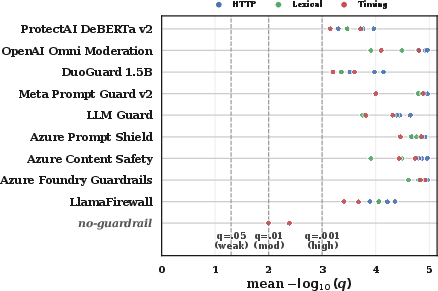
Figure 4: Per-channel signal strength (−log10q) for guardrail block detection across HTTP, lexical, and timing modalities.
Detection Capability and Guardrail Profiling
Behavioral discrepancies between prompt categories allow automated attribution of which content categories (e.g., jailbreak, prompt injection, toxicity) a guardrail actively enforces. Agreement with vendor-stated capabilities is high, with minor leakage across categories only where semantics inherently overlap (notably between jailbreaks and prompt injections).
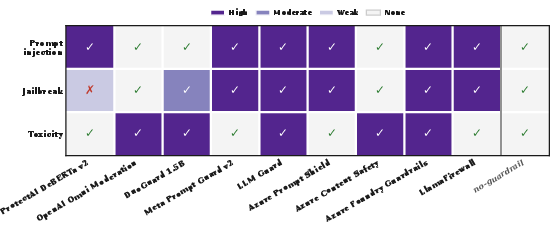
Figure 6: Detection capability per guardrail, showing per-category profiling consistent with vendor claims.
Generated block-pattern fingerprints capture the unique blocking behaviors of each guardrail-LLM pairing, enabling future discrimination between middleware-triggered blocks and model-native refusals on unseen prompts.
Differentiating Guardrail Blocks from LLM Rejections
Block-pattern fingerprints, once established, were able to distinguish guardrail blocks from LLM refusals on held-out, adversarially-chosen prompts with an average F1-score of 0.98—with several guardrail configurations obtaining perfect separation. Baseline methods saw substantial accuracy drops (HTTP Recon: 0.66; LLM Judge: 0.81), affirming the necessity of comprehensive multimodal analysis.
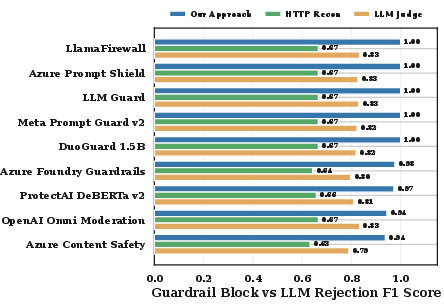
Figure 5: F1 score of guardrail block fingerprinting in discriminating true guardrail blocks from LLM refusals.
Implications and Future Directions
This work formalizes the concept of guardrail reconnaissance for black-box LLM deployments. Its primary contributions are two-fold: (1) providing the first black-box methodology for robustly detecting and characterizing guardrail activity, and (2) enabling precise, on-the-fly attribution of refusals to either middleware or core model alignment. This has immediate practical ramifications for adversarial research, red teaming, penetration testing, and real-world evaluation of AI system robustness.
Notably, the pipeline operates with only 40 probe prompts for full profiling, facilitating scalable red-teaming efforts. It relaxes unrealistic threat-model assumptions endemic to prior adversarial ML/guardrail evasion work, supporting more realistic evaluations and driving demand for next-generation guardrails that minimize distinguishing side channels.
Theoretically, this work suggests a persistent challenge for compositional AI safety architectures: side-channel features will continue to constitute a rich target surface for adversarial model selection and strategy adaptation, even in the presence of aggressive block pattern obfuscations. Future guardrail research may pivot to the development of adaptive or stochastic block behaviors and explore cross-layer perturbation-resilience.
Conclusion
The authors establish a robust, black-box approach for detecting and profiling guardrail activity in LLM deployments, providing fine-grained differentiation between middleware blocks and model-native refusals with minimal data and strong statistical guarantees. This capability addresses a critical gap in adversarial ML and AI security research, enables more accurate simulation of real-world attack scenarios, and has significant implications for the evaluation and design of future AI system guardrails.

