- The paper presents a unified framework combining physics-informed neural networks and graph neural networks to reconstruct physically consistent multipath RF maps.
- The approach integrates explicit 2.5D environmental priors, physics-aware loss functions, and spatial graph refinement, enabling robust cross-scene generation and in-scene completion.
- Empirical results show significant RMSE reductions and improved CIR alignment over traditional methods, highlighting its potential for advanced 6G and digital twin applications.
Scene-Conditioned PINN-GNN for Multipath RF Maps: Unified Modeling and Robust Generalization
Introduction and Motivation
Accurate modeling of spatial radio frequency (RF) propagation characteristics is foundational for next-generation wireless systems, especially for 6G scenarios demanding ultra-reliable low-latency communications (URLLC), high-precision localization, and environment-aware optimization. Conventional channel modeling approaches—either physics-driven (e.g., ray tracing, empirical path loss models) or classical spatial interpolation—fail to reconcile the need for both physical fidelity and computational efficiency, particularly in non-line-of-sight (NLoS) and highly non-stationary urban settings.
Recent advances using deep learning—including convolutional architectures, GANs, and diffusion models—reformulate RF map construction as a form of image generation. However, these predominantly image-centric methods quantize continuous-valued multipath parameters and typically focus only on scalar field predictions such as path loss, discarding fine-grained multi-parameter propagation features and violating subtly the underlying electromagnetic (EM) constraints. Furthermore, such approaches lack the necessary inductive bias to generalize with sparse data or to new (cross-scene) environments.
The paper "Scene-Conditioned PINN-GNN for Multipath RF Maps: Cross-Scene Generation and In-Scene Completion" (2607.01777) addresses these deficiencies with a unified architecture that tightly couples physics-informed neural networks (PINNs) and graph neural networks (GNNs) to faithfully reconstruct multi-parameter, physically consistent RF maps with strong generalization for both cross-scene generation and in-scene completion under severely limited data and heterogeneous environmental representations.
The proposed method targets two practically critical tasks:
- Cross-scene generation: inferring the full spatial multipath parameter tensor in previously unseen environments conditioned only on a 2D or 2.5D environment map and transmitter configuration.
- In-scene completion: reconstructing high-fidelity multipath field with only sparse set of receiver measurements (when environmental map is unavailable), leveraging prior observations and embedded physical knowledge.
Multipath channels are parameterized at each receiver location as a fixed-length tensor—encoding up to L=5 multipath components each with path gain, time of arrival (ToA), elevation angle, and azimuth angle—using truncation or zero-padding as required by the local physical multipath richness.
Architecture: Scene-Conditioned PINN-GNN Framework
The hallmark of the proposed system is its integration of a PINN and a GNN into a unified, end-to-end trainable framework:
- Scene condition encoder extracts spatially aligned feature fields from either 2D (binary occupancy) or 2.5D (explicit height) environmental maps, with task-aware geometric profiling for strong line-of-sight (LoS)/NLoS discrimination Figure 1.
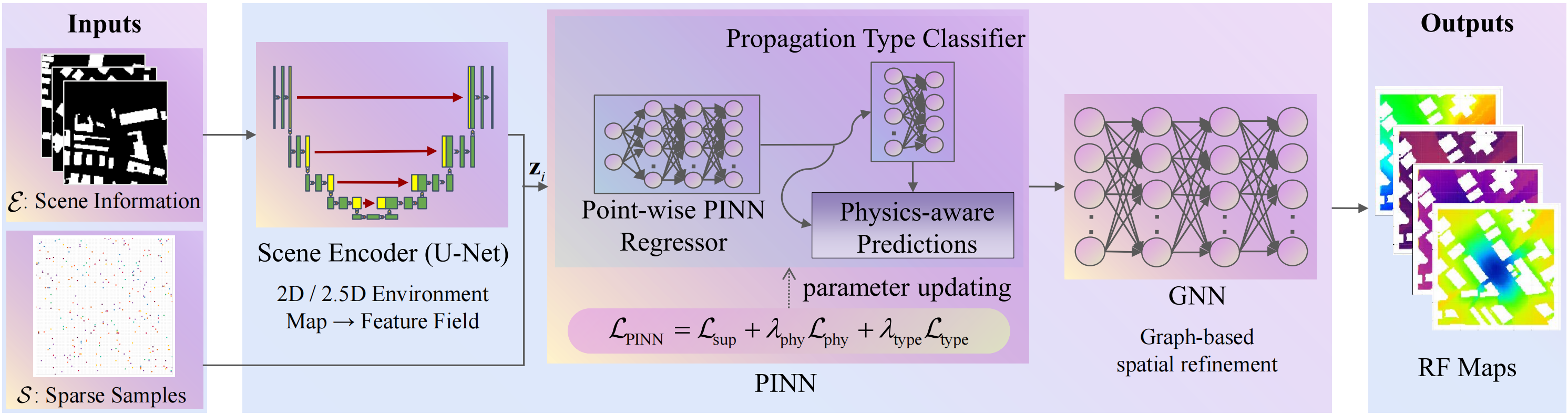
Figure 1: The PINN-GNN architecture leverages scene-adaptive encoding and physics-informed prediction, followed by graph-based spatial refinement.
- Physics-guided PINN predictor imposes electromagnetic domain constraints by encoding context (receiver geometry, environment, and sparse observations) and learning a nonlinear mapping to multipath parameters. Key architectural mechanisms include propagation type classifiers (LoS/reflection/diffraction/scattering), soft constraint weighting (via entropy-based gating), and physics-aware activation for parameter outputs.
- Spatial GNN refiner constructs a k-nearest-neighbor graph over prediction locations, using a residual GraphSAGE architecture to enforce spatial smoothness, suppress outlier artifacts, and maintain local and global geometric consistency.
Notably, the architecture flexibly adapts to both geometry-conditioned (cross-scene) and data-conditioned (in-scene) task regimes by seamlessly modifying input conditioning, with environment-/observation-guided features set to zero as appropriate for mode switching.
Physical Consistency and Loss Functions
Strong numerical results are attributed to the composite loss, consisting of:
- Supervised MSE loss over available (measured or simulated) multipath parameters.
- Physics-aware regularization: encodes propagation-type-adaptive ToA/gain constraints, ranking and pairwise multipath consistency, and LoS angular alignment. Propagation-type priors are adaptively weighted by confidence inferred via auxiliary classifiers and smoothed by entropy gating.
- Propagation-type consistency loss: cross-entropy regularization to synchronize predictions with physical propagation modes.
This strategy tightly couples domain knowledge (e.g., geometric LoS delay, free-space loss, angular consistency) to the learning objective, which is crucial for successfully constraining predictions under severe supervision sparsity and cross-domain generalization.
Evaluation: Metrics, Datasets, and Baselines
Evaluation is comprehensive and multifaceted:
- Datasets: OpenPathNet (urban scenes, 3,000+ training environments), DeepMIMO (indoor scenario), and simulated USTC campus. Simulated ray-tracing data is used for quantitative fidelity.
- Baselines: RadioUNet, RME-GAN, and RadioDiff (image-based, first-path-only methods) and Kriging (classical interpolation). Ablations exclude physics or GNN components or decouple the modules (no joint training).
- Metrics: Map-level RMSE, NMSE, SSIM (first-path gain); tensor-level (all parameter) RMSE; and a novel peak-weighted dynamic time warping (PW-DTW) score to measure channel impulse response (CIR) alignment in both amplitude and delay (sensitive to both dominant and weaker multipath peaks).
Empirical Results
Cross-Scene Generation
The full PINN-GNN model, particularly with 2.5D inputs (explicit height), consistently outperforms all baselines:
- Lowest map-level RMSE (0.0171) and NMSE (0.0040) and highest SSIM (0.9725), exceeding state-of-the-art diffusion models.
- Ablations demonstrate the essentiality of both physical constraints and spatial graph learning: RMSE increases sharply without PINN components or GNN refinement. Separate (non-joint) training always yields inferior performance, confirming the need for a holistic, unified optimization (see Figure 2).
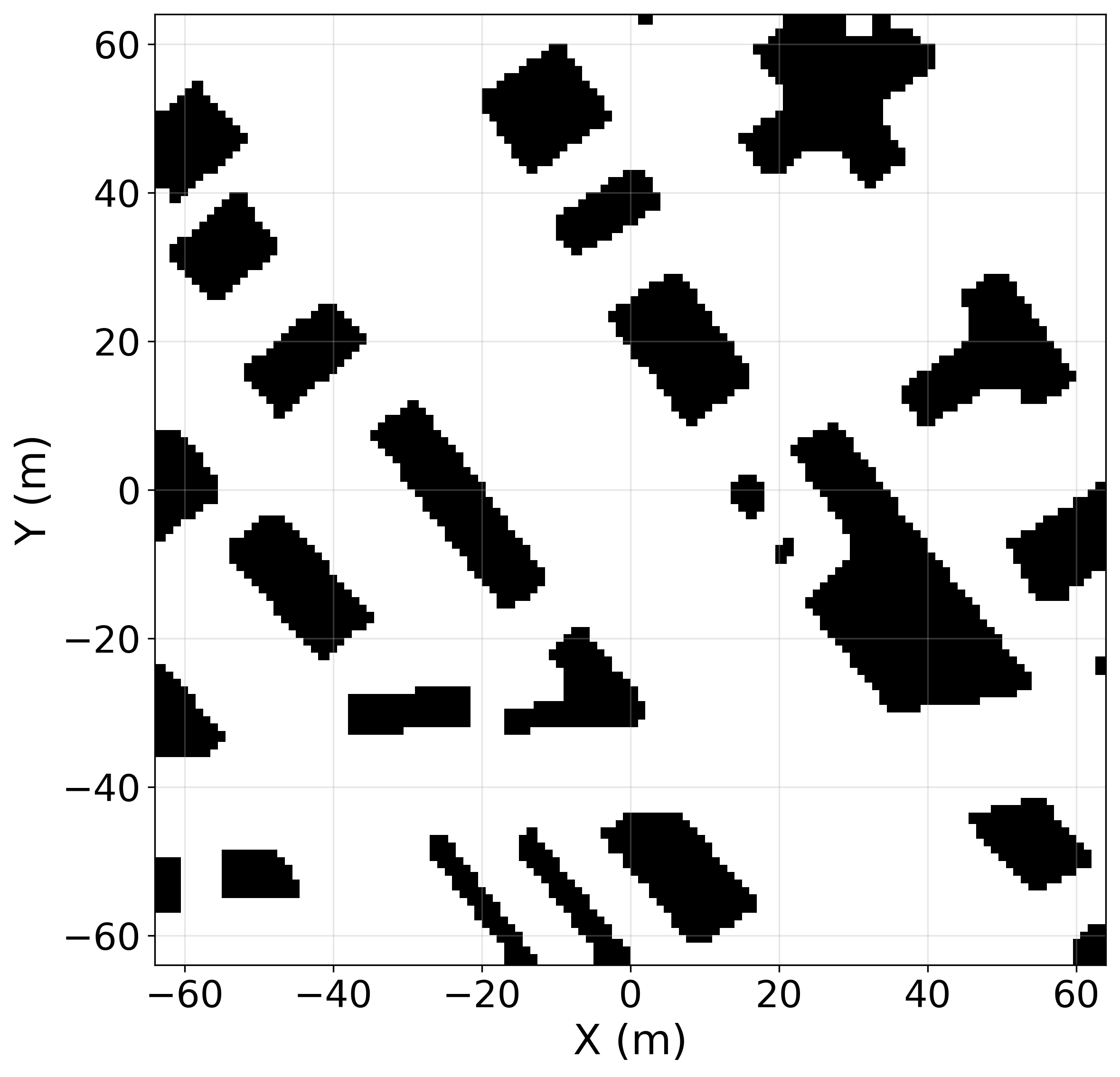
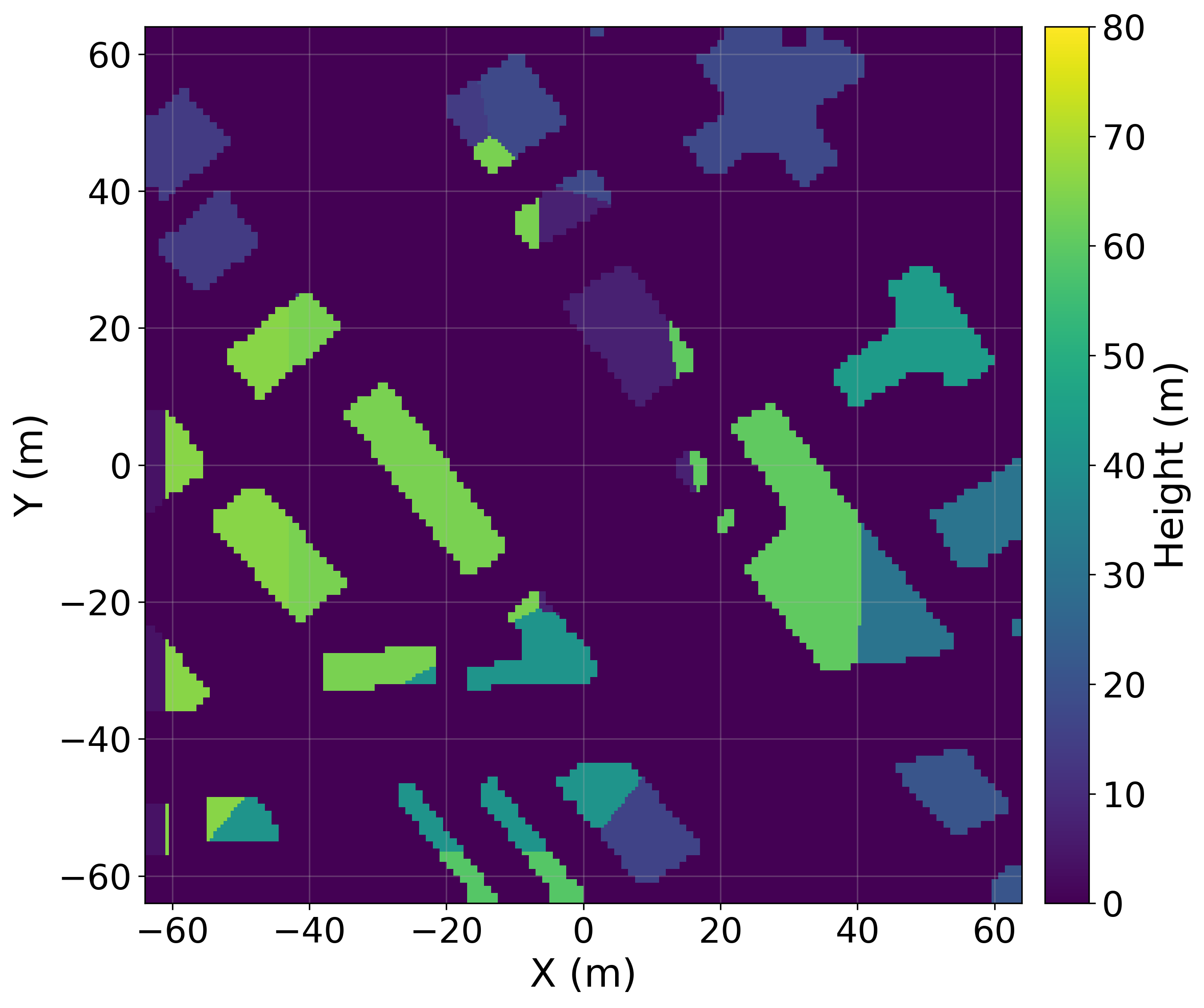
Figure 3: Scene environmental representations—2D (occupancy) and 2.5D (height-aware)—are used for geometric conditioning.
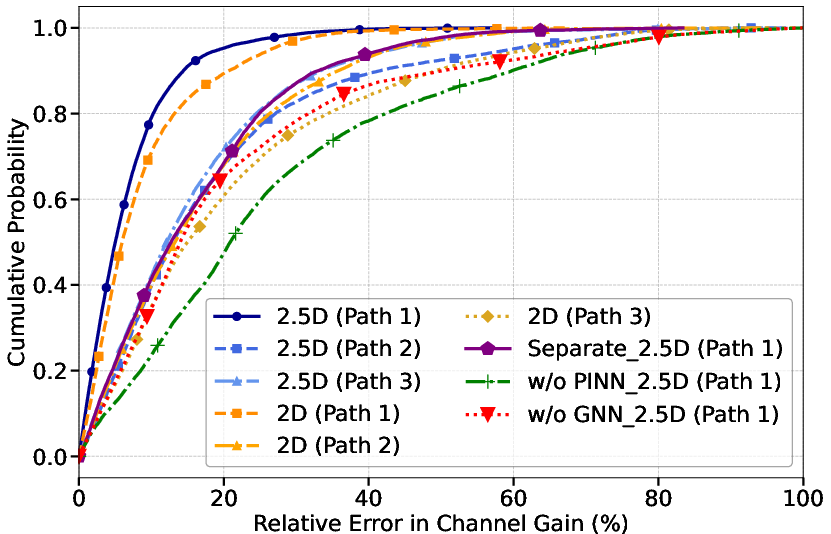
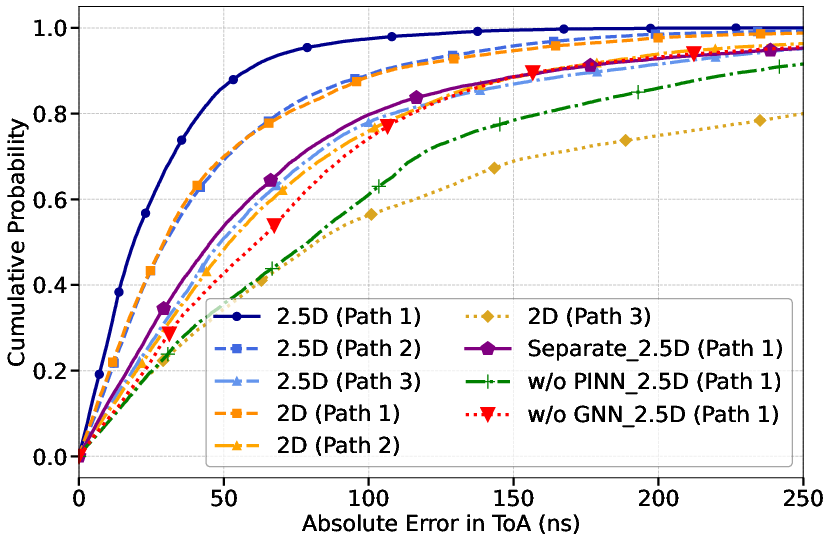
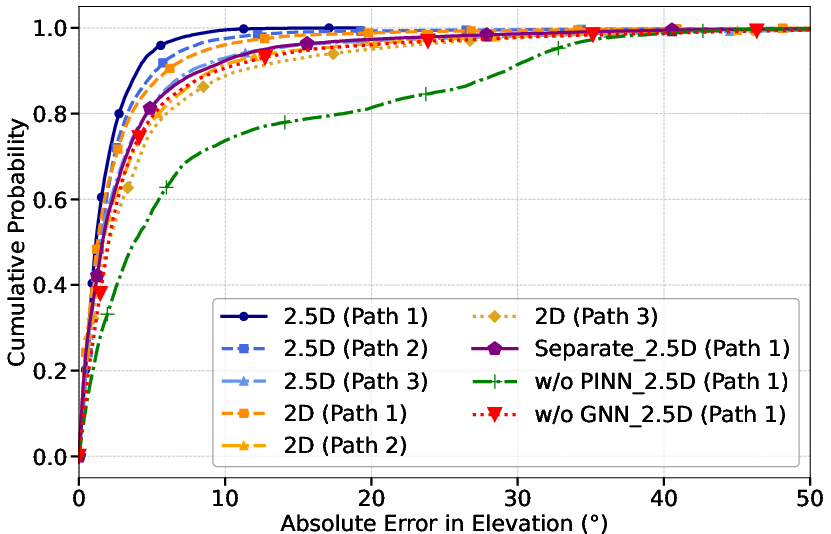
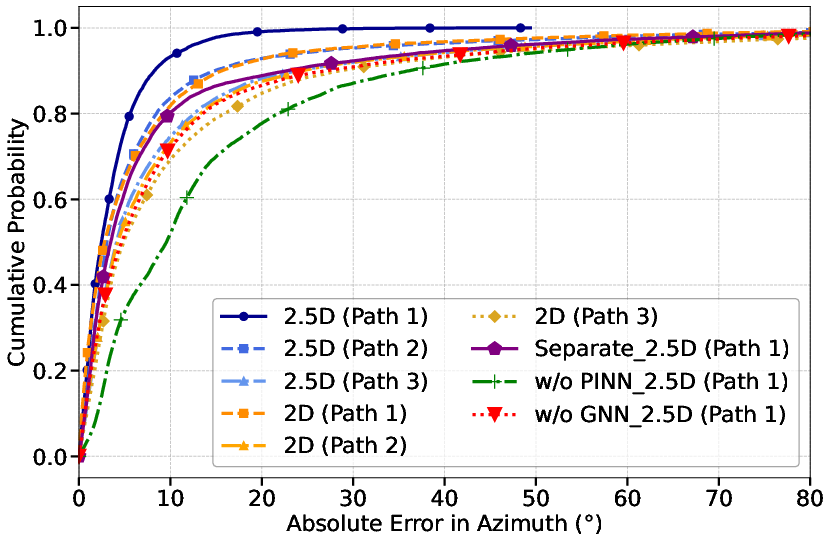
Figure 2: CDFs of multipath prediction errors for cross-scene generation demonstrate clear superiority of the proposed approach for all parameters, especially with 2.5D inputs.
Performance gains are particularly pronounced for ToA and angular estimation, where error distributions under ablation variants exhibit significant long tails, indicating divergence in the absence of physical regularization. Joint optimization with explicit height maps further sharpens the model's ability to resolve NLoS and diffraction paths.
The proposed method effectively aligns CIR peaks—quantitatively validated by the lowest PW-DTW scores and visually by strong qualitative correspondence in synthesized CIRs Figure 4.
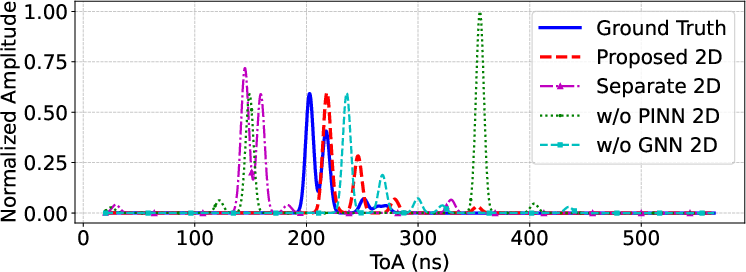
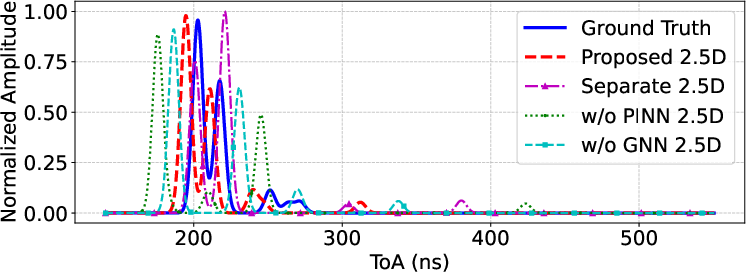
Figure 4: Comparison of CIRs in cross-scene generation showcases precise delay and amplitude alignment of dominant multipath peaks under the full 2.5D PINN-GNN model.
In-Scene Completion
In sparse-sample regimes, the PINN-GNN framework demonstrates dramatic robustness advantages:
- Approximately 50% RMSE reduction versus Kriging in challenging outdoor environments (scenario S2).
- Over 90% of first-path gain errors under 20%, and substantial reductions in ToA and angle errors, even for higher-order multipath components Figure 5.
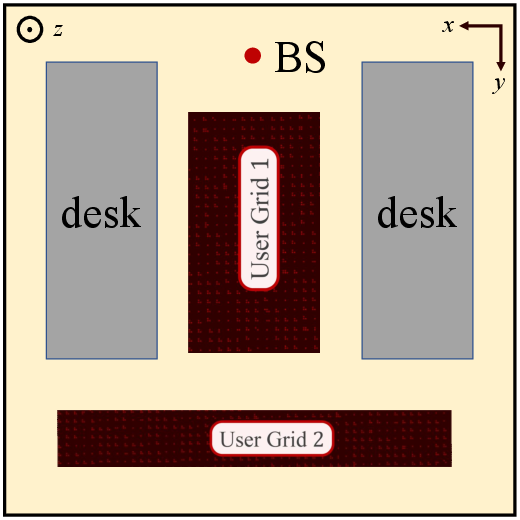
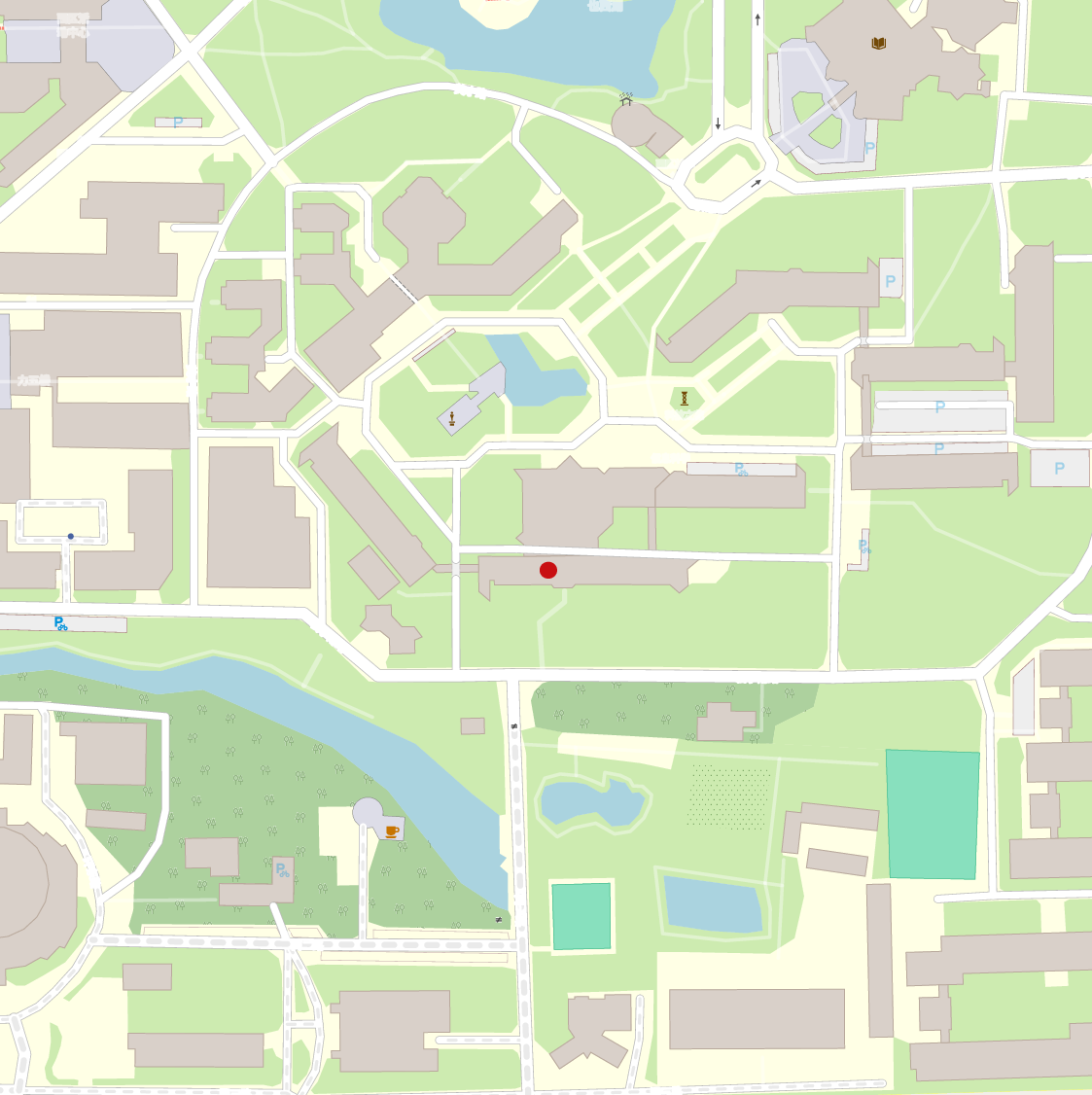
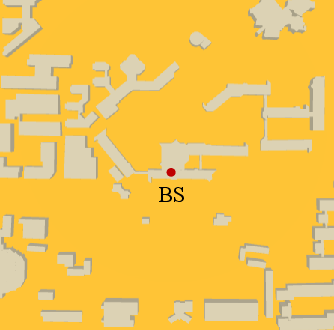
Figure 6: Simulated scenarios include indoor settings (DeepMIMO) and large-scale outdoor campus environments (USTC).
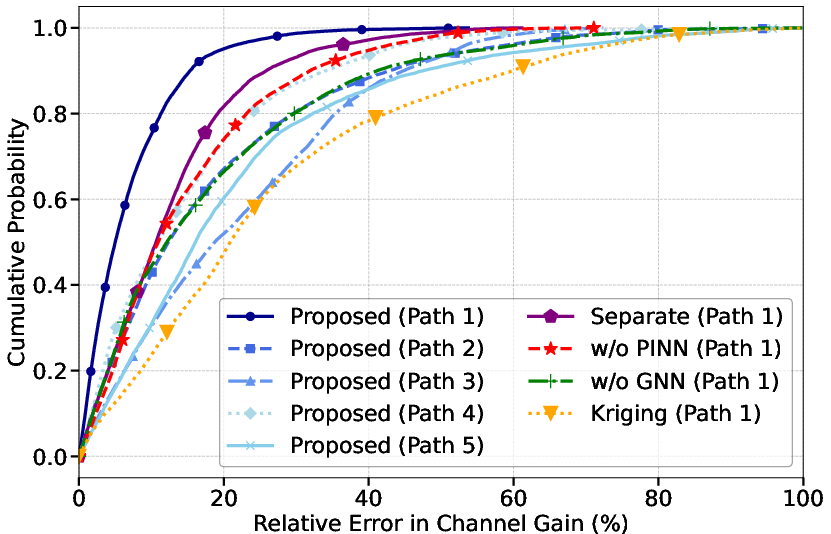
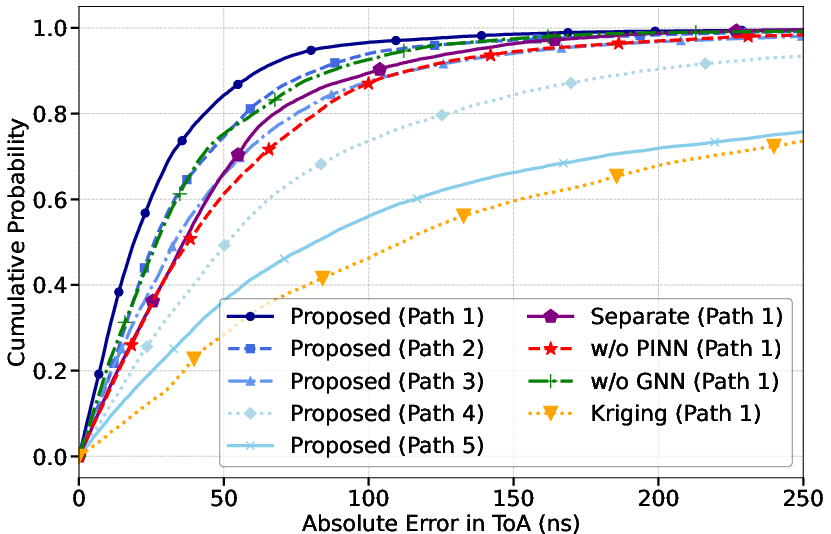
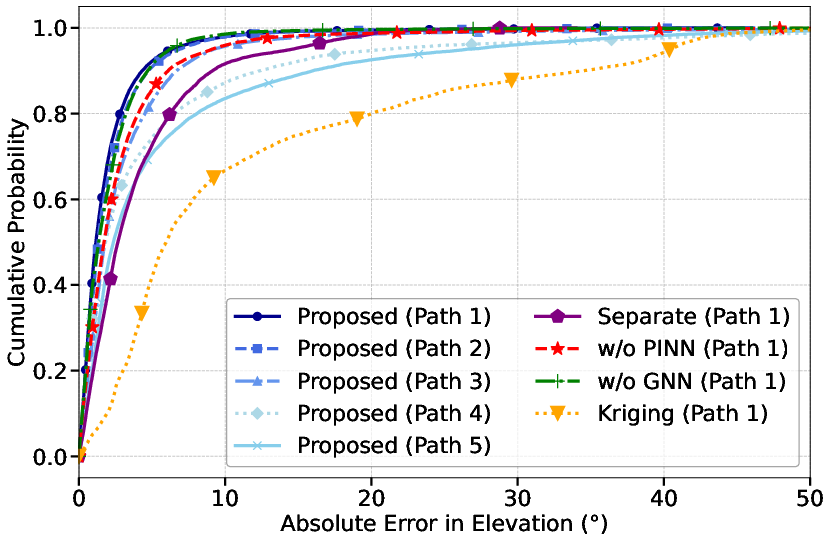
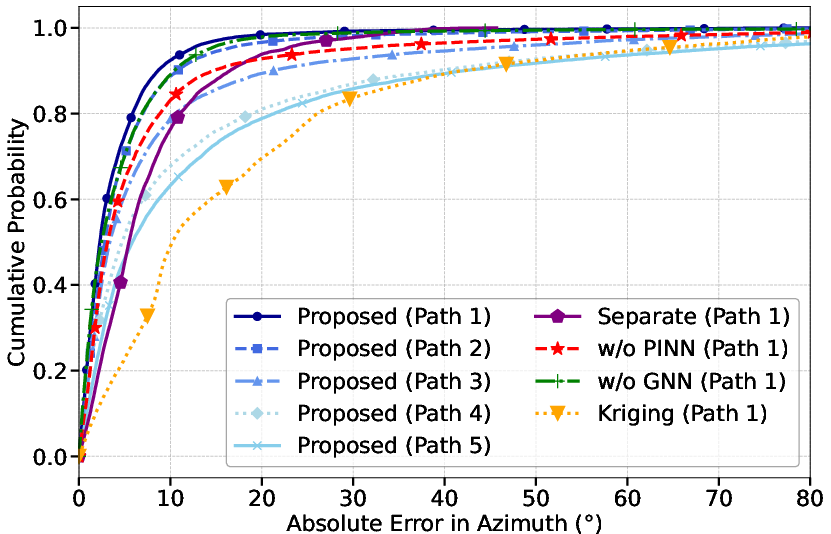
Figure 5: CDFs of multipath prediction errors (in-scene completion, S2): predicted parameters exhibit tightly concentrated error distributions versus wide-ranging errors for baselines.
PW-DTW and visualized CIRs confirm the method's ability to recover correct delay-domain fingerprinting, even under severe observation sparsity, directly attributing success to embedded EM constraints.
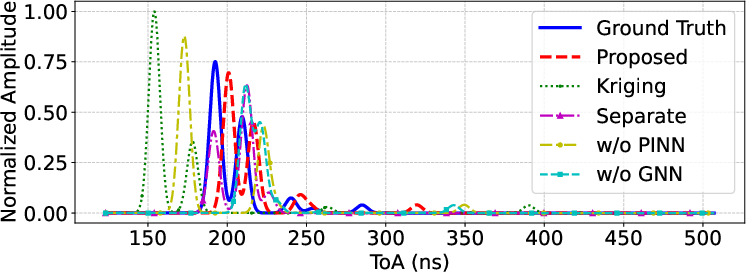
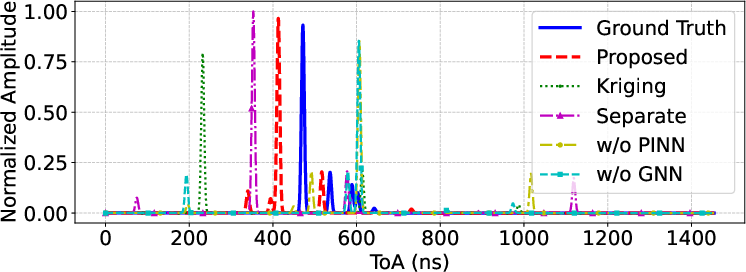
Figure 7: Channel impulse response comparison (in-scene completion): PINN-GNN accurately reconstructs multipath structure versus Kriging and physics-ablated variants.
Implications and Future Directions
The intersection of physics-informed and graph-based architectures in this work establishes a high-water mark for RF map construction in complex environments, especially under practical constraints (sparse observations, uncertain or partial environment priors, and strong NLoS/multipath effects). The joint treatment of physics constraints and spatial topology robustness is empirically validated to be greater than the sum of its parts—a finding that suggests broader applicability in wireless AI beyond only channel mapping, such as proactive ISAC, real-time trajectory planning, and digital twin wireless twins where generalization is paramount.
Notably, the demonstrated value of explicit 2.5D geometric priors motivates integration of further environmental semantics (e.g., dynamic obstacles, multi-frequency or massive MIMO effects). As 6G deployments bring even greater environmental complexity and volume, scalable, physically consistent, and spatially aware learning frameworks such as PINN-GNN will be critical. Further research could extend this paradigm to online adaptation, uncertainty quantification, or joint communication-sensing scenarios, and explore efficient data acquisition methods for richer cross-modal supervision.
Conclusion
This work introduces a unified scene-conditioned PINN-GNN framework for multipath RF map construction that, for the first time, achieves physically faithful, robust, and generalizable reconstruction of multi-parameter channel fields under both cross-scene and in-scene completion regimes. The approach sets a new standard via integration of physics-guided parameter regression and graph-based spatial smoothing, surpassing both deep generative and traditional statistical baselines. The implications for high-fidelity digital twins, intelligent channel state inference, and adaptive 6G network design are immediate and significant, with the core methodology extensible to a broad class of inverse problems in wireless AI.

