- The paper introduces X-VAE, a two-stage model that uses autoencoder latent codes to derive data-adaptive Gaussian mixture priors.
- It improves latent space alignment and reduces mode collapse by decoupling prior estimation from the VAE training process.
- Experimental results on MNIST, CelebA, and synthetic data show lower FID scores and robust convergence, validating its efficiency.
eXact-Prior Variational Autoencoder (X-VAE): Data-Adaptive Priors for Improved Latent Modeling
Introduction and Motivation
Variational Autoencoders (VAEs) represent a seminal generative modeling framework, but their expressive power is fundamentally limited by the standard assumption of an isotropic Gaussian prior over latent variables. This simplification, though analytically convenient, leads to persistent prior–posterior mismatch, degraded sample realism, and latent space collapse, especially in structured or multimodal datasets. While prior works introduce more expressive priors—such as VampPrior, flows, or hierarchical variants—these typically increase model complexity or computational cost.
The eXact-Prior Variational Autoencoder (X-VAE) addresses this mismatch by abandoning the fixed Gaussian prior in favor of a dataset-adaptive Gaussian (or Gaussian mixture) prior learned from the latent embeddings of a separately pretrained autoencoder (AE). This design decouples prior estimation from probabilistic learning, enabling the latent prior to better reflect the empirical structure of the data while maintaining the analytic tractability of VAEs.
X-VAE Architecture and Latent Priors
The X-VAE workflow consists of two distinct stages: (1) AE pretraining to learn a structural manifold; (2) statistical prior extraction from the AE latent codes, forming a fixed prior used in the downstream VAE.
The architecture supports both unimodal and multimodal priors. For the unimodal case, the empirical mean and covariance of the AE encodings define the multivariate Gaussian prior. For more complex datasets, a diagonal Gaussian Mixture Model (GMM) is fit to the AE codes (typically with component count K equated to the latent dimensionality).
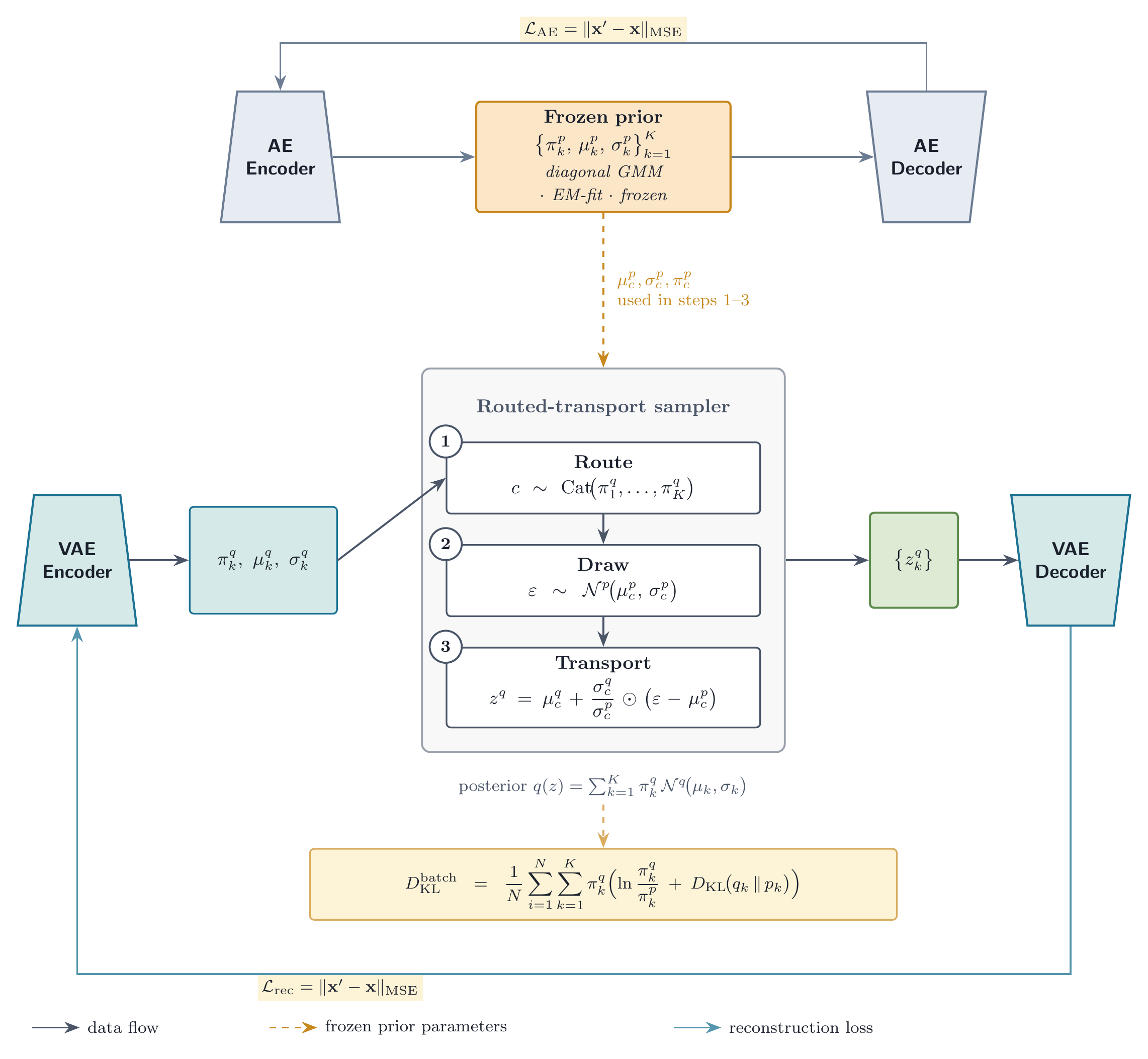
Figure 2: Architecture of the proposed X-VAE. Top: a deterministic autoencoder is trained to learn latent codes; a K-component diagonal Gaussian mixture is fit on these codes for the fixed prior. Bottom: VAE training aligns the encoder’s posterior to this empirical prior via per-coordinate routed transport and closed-form KL.
A key innovation is the routed transport mechanism: at each latent dimension, a prior mixture component is sampled (routed categorically), and the noise is "transported" through a parameterized affine mapping to the encoder’s posterior, yielding analytically tractable reparameterization gradients and a KL objective that admits a sum of categorical and closed-form Gaussian terms.
Generation-time flexibility is introduced by a global scaling parameter α controlling the variance of the sampling distribution: increasing α encourages generative diversity, while reducing it yields higher fidelity reconstructions, thus providing an explicit and practical tradeoff knob.
Training Objective and Theoretical Properties
The X-VAE preserves the attractively simple ELBO structure of the standard VAE, with the critical difference that the KL divergence is now measured between the encoder’s Gaussian or mixture posterior and the AE-derived fixed prior. For the single-Gaussian case, the KL term is closed-form. For the GMM, the training objective leverages a tight sampled upper bound on the mixture KL, decomposed into categorical (component assignment weight) and Gaussian (per-component posterior–prior) terms.
This construction yields several benefits:
- Exact Empirical Data Alignment: The prior is anchored to the observed training distribution, providing principled regularization and improved manifold alignment.
- Zero Additional Prior Parameters: The prior is computed once from AE codes and frozen, avoiding the training or inference cost of parametric prior networks.
- Maintained Generative Tractability: All operations (reparameterization, KL, sampling) remain closed-form or efficiently computed, preserving fast and stable optimization.
- Explicit Diversity Control: The α scaling parameter decouples exploration-fidelity tradeoff from model retraining.
Experimental Results
Experiments on three regimes—synthetic three-clustered data, MNIST, and CelebA—systematically evaluate the approach against standard VAEs, hierarchical variants, learned (VampPrior) and mixture-of-Gaussians priors, and Gumbel-Softmax hybrids. Metrics include reconstruction MSE, Fréchet Inception Distance (FID), Inception Score (IS), and ablation by routing and component assignment.
Reconstruction and Generation Quality
On CelebA, the X-VAE (particularly the (K−1)+1 routing configuration) achieves the lowest FID ($80.40$), outperforming all competitor models including the most flexible learned priors, even with a moderate KL penalty. On MNIST, X-VAE configurations achieve FID gains over standard VAE and parity with hierarchical/learned approaches; the full sweep reveals that transport fraction tuning can yield marginal additional improvements.
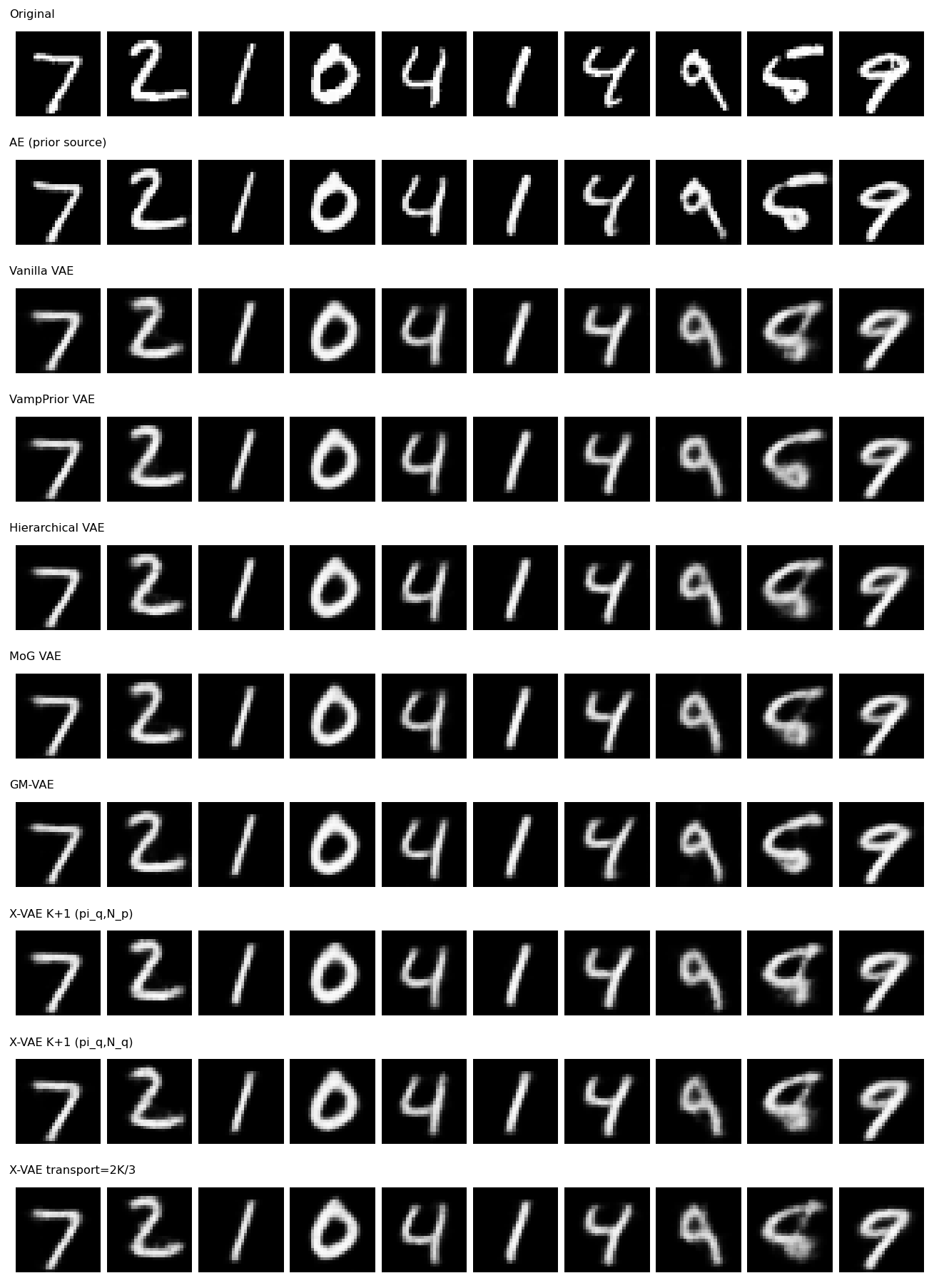
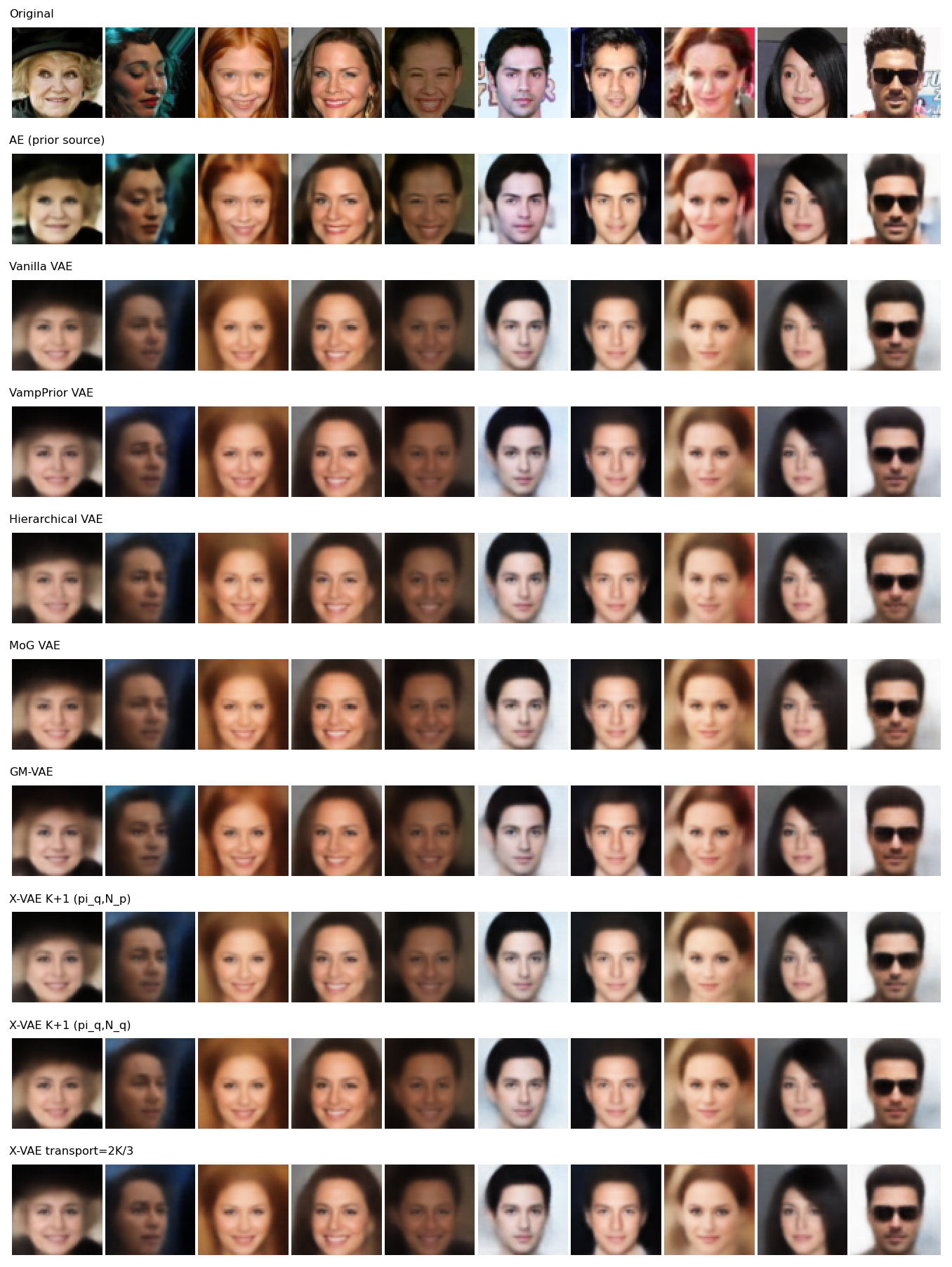
Figure 4: Left: MNIST reconstructions; Right: CelebA reconstructions. X-VAE retains visual detail comparable to or better than flexible baselines, particularly in high-diversity, realistic settings.
Training Curves and Mode Coverage
Training curves for both datasets demonstrate stable convergence with competitive objective values. On synthetic clustered data, X-VAE uniquely preserves multimodal structure in both reconstructions and generations, while the standard VAE with isotropic prior collapses to degenerate mixtures.
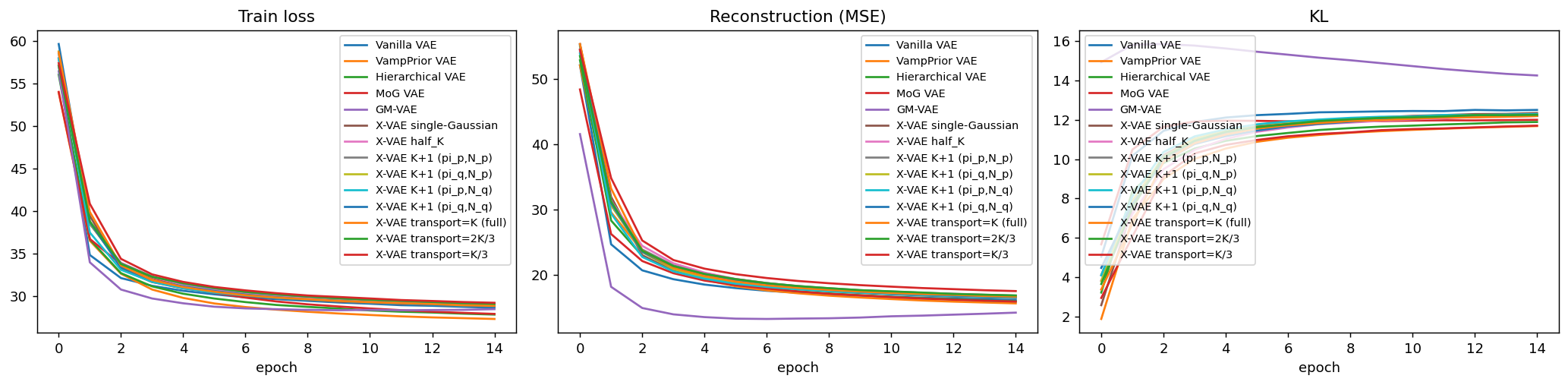
Figure 1: MNIST training curves (total objective, reconstruction, KL) for X-VAE and baselines. The KL remains moderate, and objective convergence is robust.
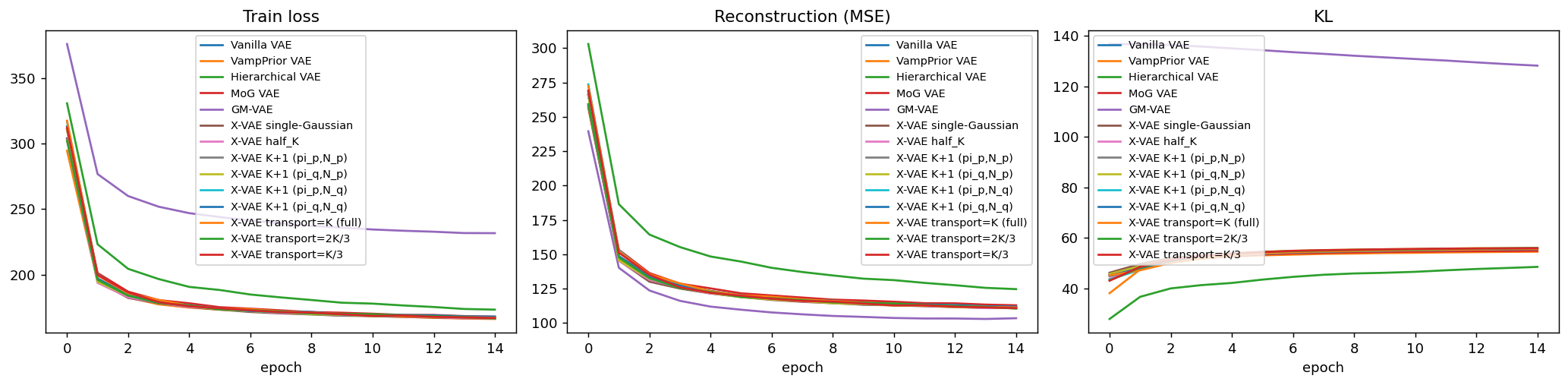
Figure 3: CelebA training curves for X-VAE and baselines, confirming stable optimization and consistent objectives.
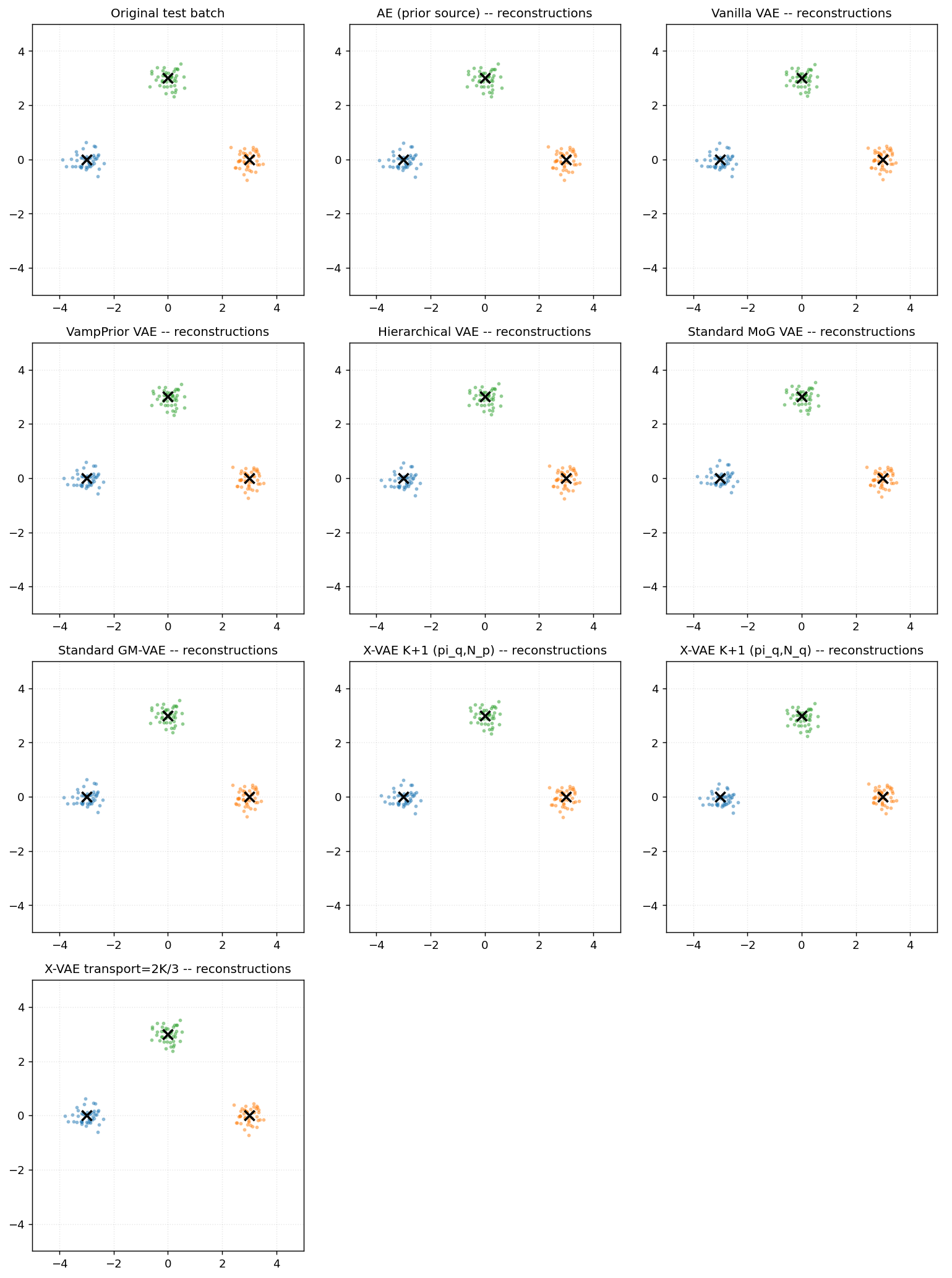
Figure 5: Clustered data—original, X-VAE, and standard VAE reconstructions. X-VAE reconstructs and samples all three clusters, while the standard VAE collapses modes.
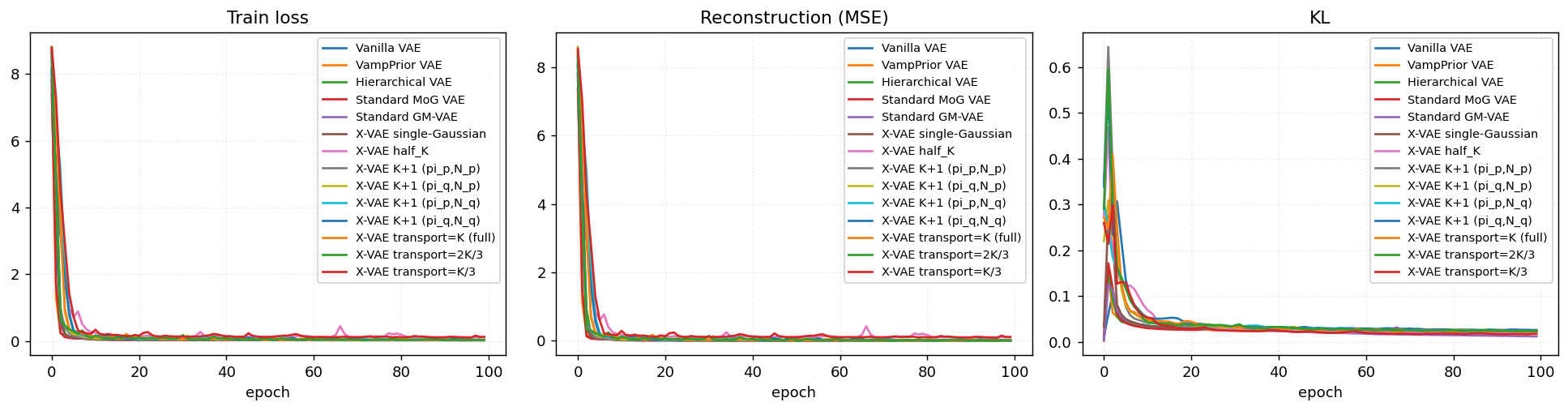
Figure 6: Clustered-data training curves, validating the stability and fidelity–KL tradeoff of the X-VAE mixture KL objective.
Sample Diversity and Controllability
Generated samples on CelebA demonstrate high-fidelity, diverse, and realistic faces spanning pose, lighting, and semantic attributes; controlling α modulates generative behavior as predicted.
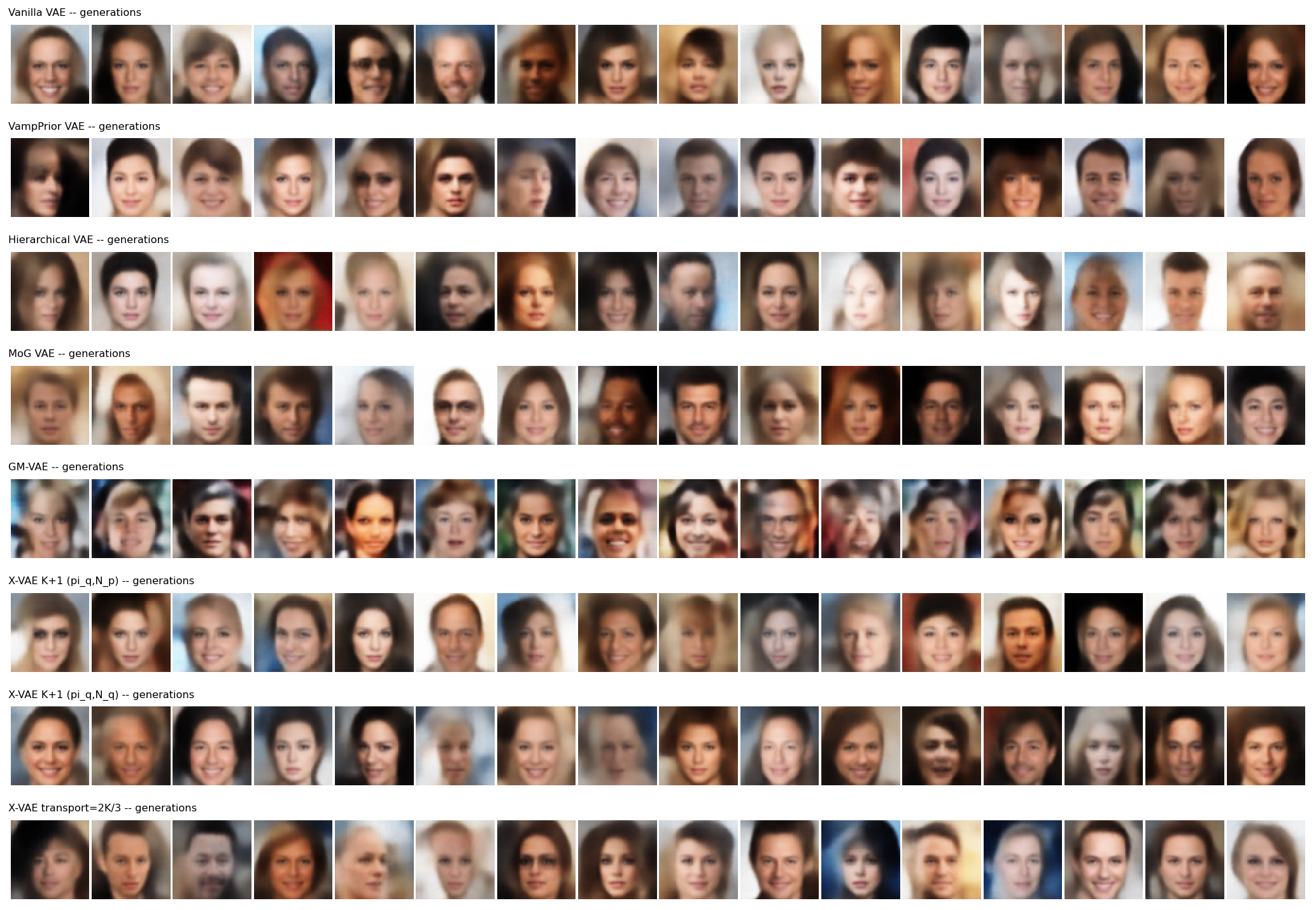
Figure 7: Generated samples for CelebA. X-VAE captures global and fine-grained variation, consistent with FID improvements.
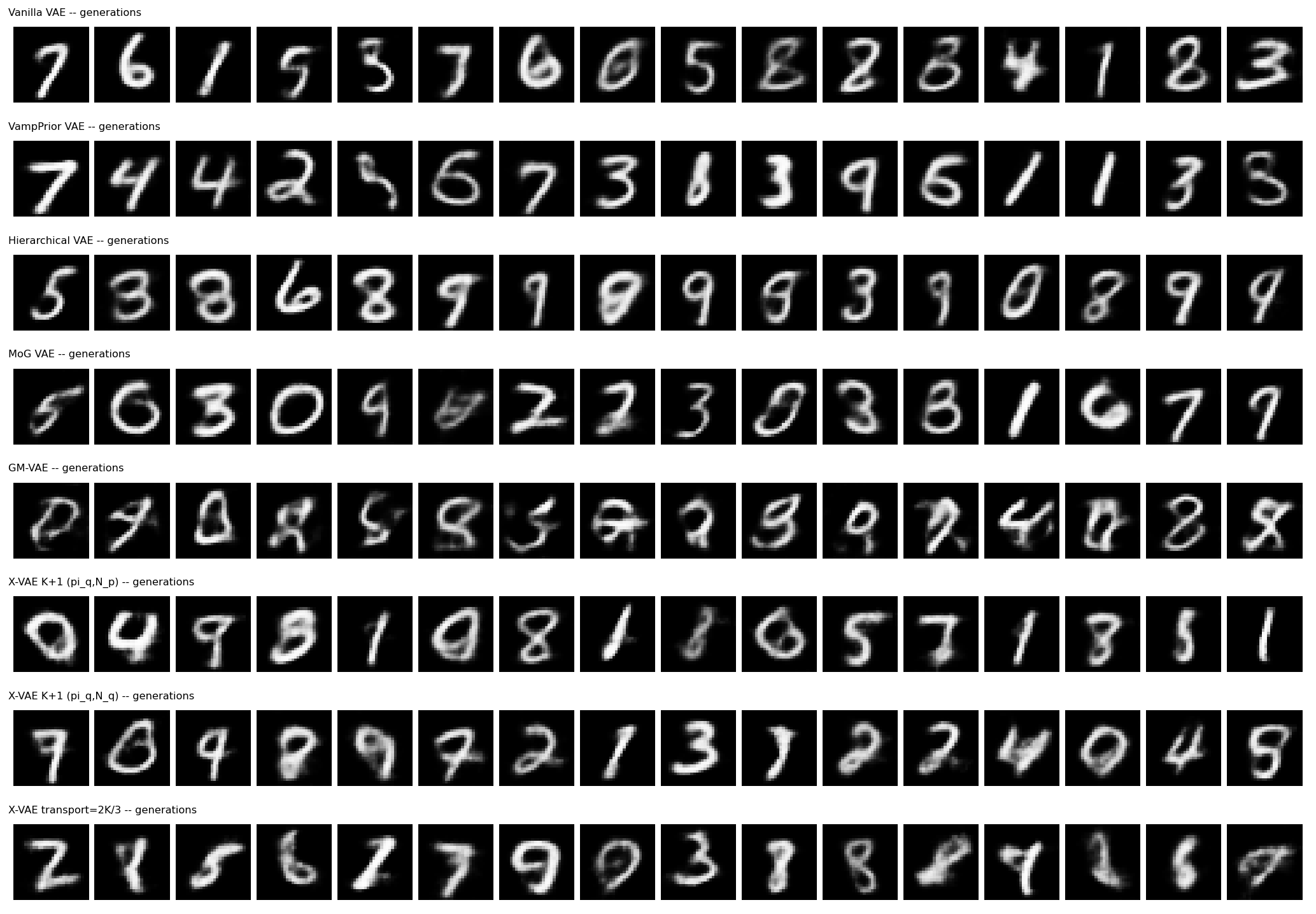
Figure 8: Generated samples for MNIST. X-VAE covers all digits and exhibits stroke variety.
On clustered data, all three modes are consistently sampled, while the standard VAE demonstrates mode dropping—a canonical failure mode mitigated by the empirical AE prior.
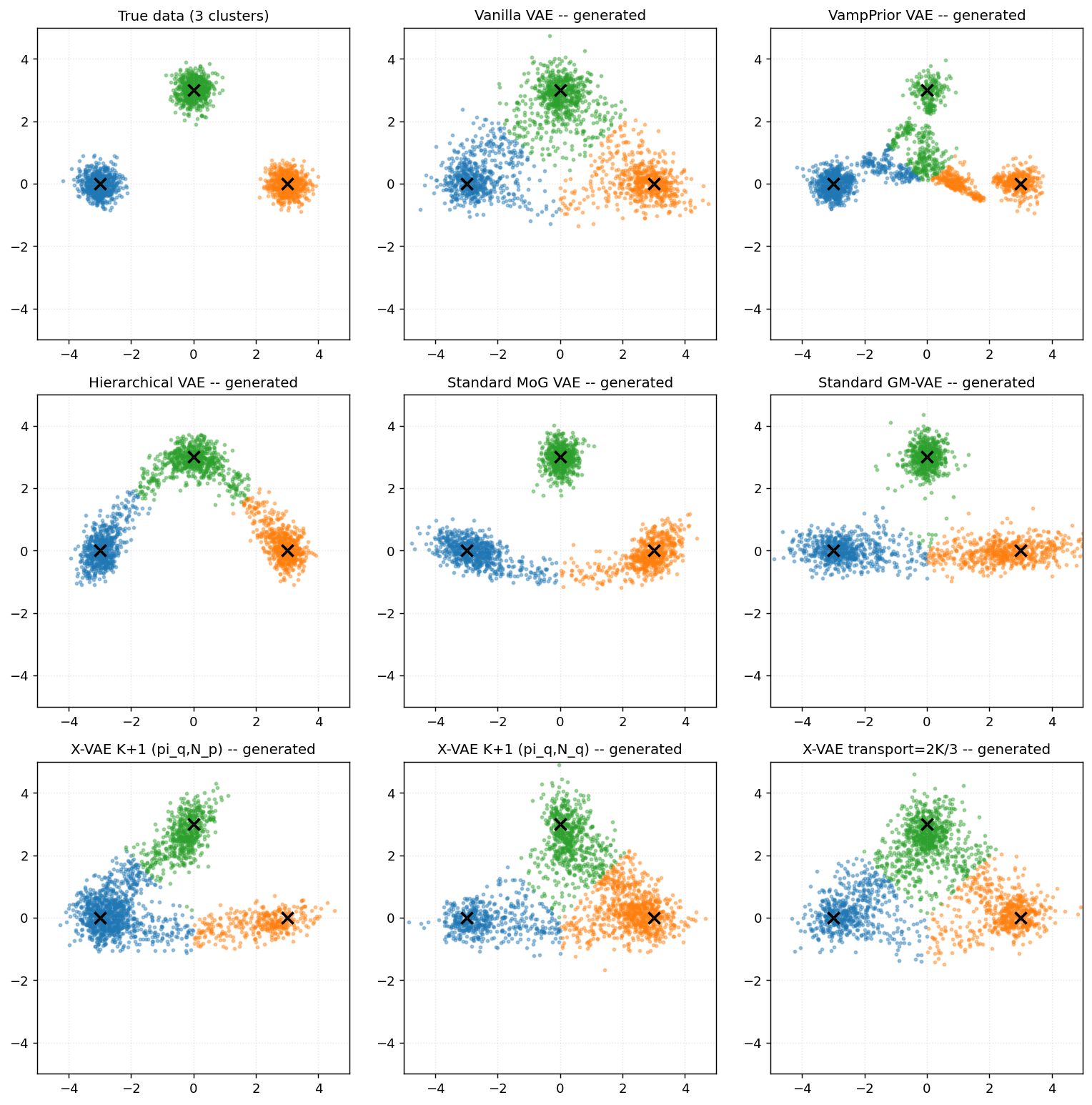
Figure 9: Generated samples for the three clustering dataset. X-VAE preserves multimodal support absent in baselines.
Implications, Limitations, and Future Directions
X-VAE rigorously demonstrates that anchoring priors in empirical latent statistics yields concrete improvements in generative modeling: improved realism, reduced mode collapse, and explicit variance–fidelity control, all without additional trainable parameters or network components. This approach is attractive for use cases demanding structurally constrained outputs, such as engineering design or scientific data synthesis, where both sample validity and diversity are critical.
There are, however, inherent limitations:
- AE–VAE Alignment Dependence: Quality and utility of the prior are bound to the expressivity of the autoencoder; architectural mismatch or inadequate AE training can propagate to downstream VAE performance.
- Diagonal Gaussian Mixtures: High-dimensional latent mixture fitting remains challenging; coordinate independence and component count selection remain open issues.
- No Joint Latent Adaptivity: The decoupling of prior fitting and VAE training avoids some complexity, but more expressive learned or jointly-optimized priors may offer marginal gains where dataset complexity demands.
Key avenues for future exploration include hierarchical X-VAE extensions, non-Gaussian or implicitly defined priors from AE codes, dynamically scheduled or learned scaling factors (α), and integration with powerful posterior approximations (flows or diffusion posteriors). Conditional and semi-supervised generalizations, as well as application to high-resolution, multimodal data, stand as important next steps.
Conclusion
X-VAE introduces a principled, computationally efficient mechanism for adaptive prior selection in VAEs by leveraging empirical latent distributions from pretrained autoencoders and a mixture-based routed transport architecture. Experiments demonstrate state-of-the-art quantitative and qualitative performance on both structured and unconstrained generative tasks, particularly under stringent multicluster and high-dimensionality regimes. The incorporation of controllable generative variance further extends its practical utility. Overall, X-VAE represents a substantial advance in the tractable, robust alignment of latent codes to the manifold structure of real data, with broad implications for both foundational generative modeling research and domain-specific generative design.

