- The paper presents an end-to-end dual-hypothesis framework with a learned gating module that dynamically selects between route-led and image-led predictions.
- The methodology leverages cross-attention between SD-map-derived navigation cues and visual data to deliver a 10.5% reduction in ADE and up to 28% improvement in FDE on turning scenarios.
- Experimental results on a diverse dataset demonstrate that the gating strategy selects the optimal prediction branch in about two-thirds of cases, ensuring robustness against sensor noise and map inaccuracies.
SD-RouteFusion: Ego-Trajectory Prediction with SD-Map Route Conditioning
Introduction and Motivation
Ego-trajectory prediction is central to autonomous driving stacks, enabling anticipatory planning and robust navigation. Traditional methods often rely on HD maps for granular context, but these maps are costly, non-scalable, and require continuous updates due to evolving road infrastructures. SD maps, in contrast, are widely available, cost-effective, and natively used in production vehicles for navigation, but present challenges due to their limited geometric fidelity. "SD-RouteFusion: Ego-Trajectory Prediction with SD-Map Route Conditioning" (2607.01139) proposes an end-to-end approach—SD-RouteFusion—that leverages SD-map-derived navigation routes, fusing them with camera input and vehicle kinematics to yield robust long-horizon ego-trajectory predictions suitable for scalable, real-world deployment.
Methodology
SD-RouteFusion incorporates a modular architecture that processes three distinct inputs: a front-facing camera image, SD map-derived navigation route, and ego-vehicle kinematics. The core architectural innovation is its dual-hypothesis design, generating route-led and image-led trajectory predictions, and employing a learned gating classifier to arbitrate between the two at inference.
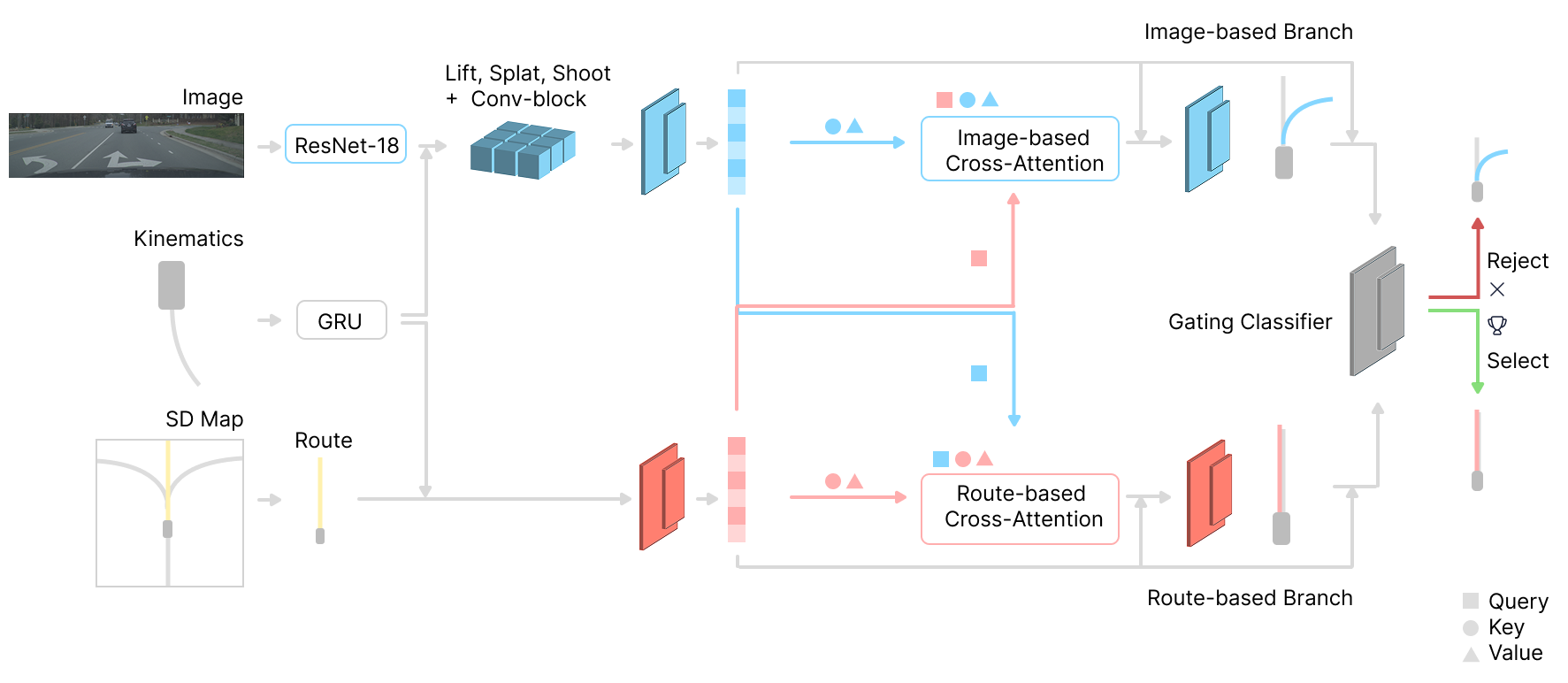
Figure 1: Schematic of SD-RouteFusion's architecture, highlighting the dual prediction branches and gating strategy.
The SD-route is generated by seeking the most plausible path between start and end points (derived from the vehicle's actual trajectory) via OpenStreetMap queries, applying path search and robust matching. Given inevitable noise from localization drift or map inaccuracies, SD-RouteFusion ensures resilience by not hard-fusing modalities but explicitly selecting the most reliable prediction.
Each input modality—image and route—is embedded via distinct perception and lightweight MLP feature extractors. Cross-attention mechanisms allow for inter-modality feature exchange: the route-informed branch receives local visual context, and vice versa. Both branches then predict full future trajectories, supervised independently with L2 losses.
The gating module receives the embeddings, trajectory predictions, and their disagreement, outputting a branch selection. This mechanism is critical for robust handling of ambiguous or corrupted route priors, as it can bypass unreliable modalities dynamically.
Dataset and Experimental Regime
The experimental framework builds upon an internal extension of the Zenseact Open Dataset (ZOD), comprising 480,000 scenarios collected across 10 European countries and the US East Coast.
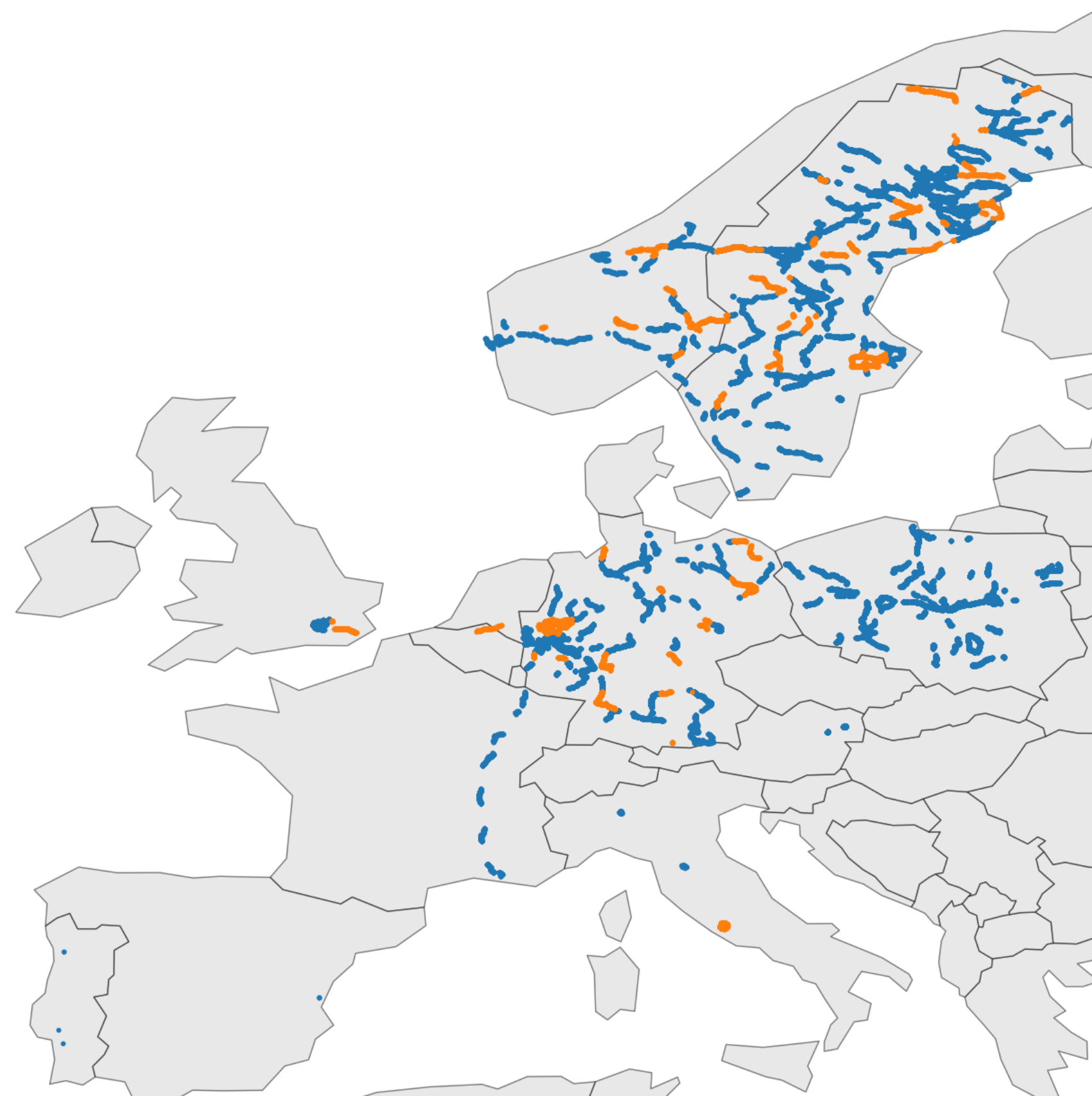
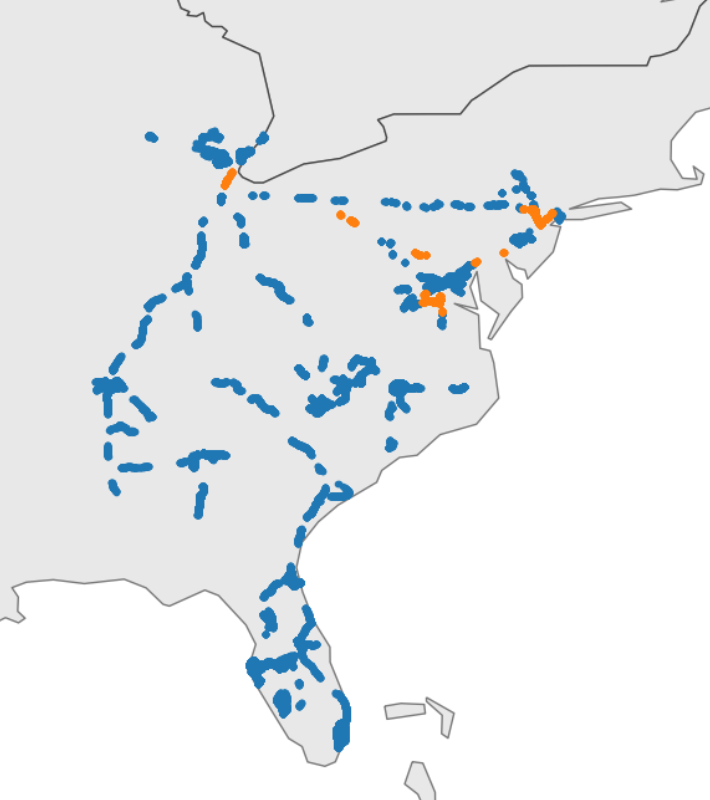
Figure 2: Geographical coverage of the internal dataset described in the paper.
Each scenario includes monocular front-facing imagery, full ego-vehicle state sequences, and 8-second ground-truth future trajectories. This scale, geographical diversity, and sensor configuration afford rigorous evaluation of robustness to map errors and environmental variability. To support reproducibility, an SD-route generation toolkit using public data is released alongside the code.
Results
Quantitative Analysis
SD-RouteFusion outperforms strong baselines, showing that conditioning on SD-map routes provides a 10.5% reduction in Average Displacement Error (ADE) compared to an image-and-kinematics baseline, and the cross-attention with gated fusion yields a total 16.9% ADE reduction at an 8-second prediction horizon. On turning scenarios, where route intent is most critical, Final Displacement Error (FDE) improvement is even more prominent, with a 28% relative reduction.
Ablation illustrates the superiority of the late-stage gating: blending image and route predictions via early fusion degrades robustness under input corruption—an issue resolved by the explicit selection strategy.
Qualitative Analysis
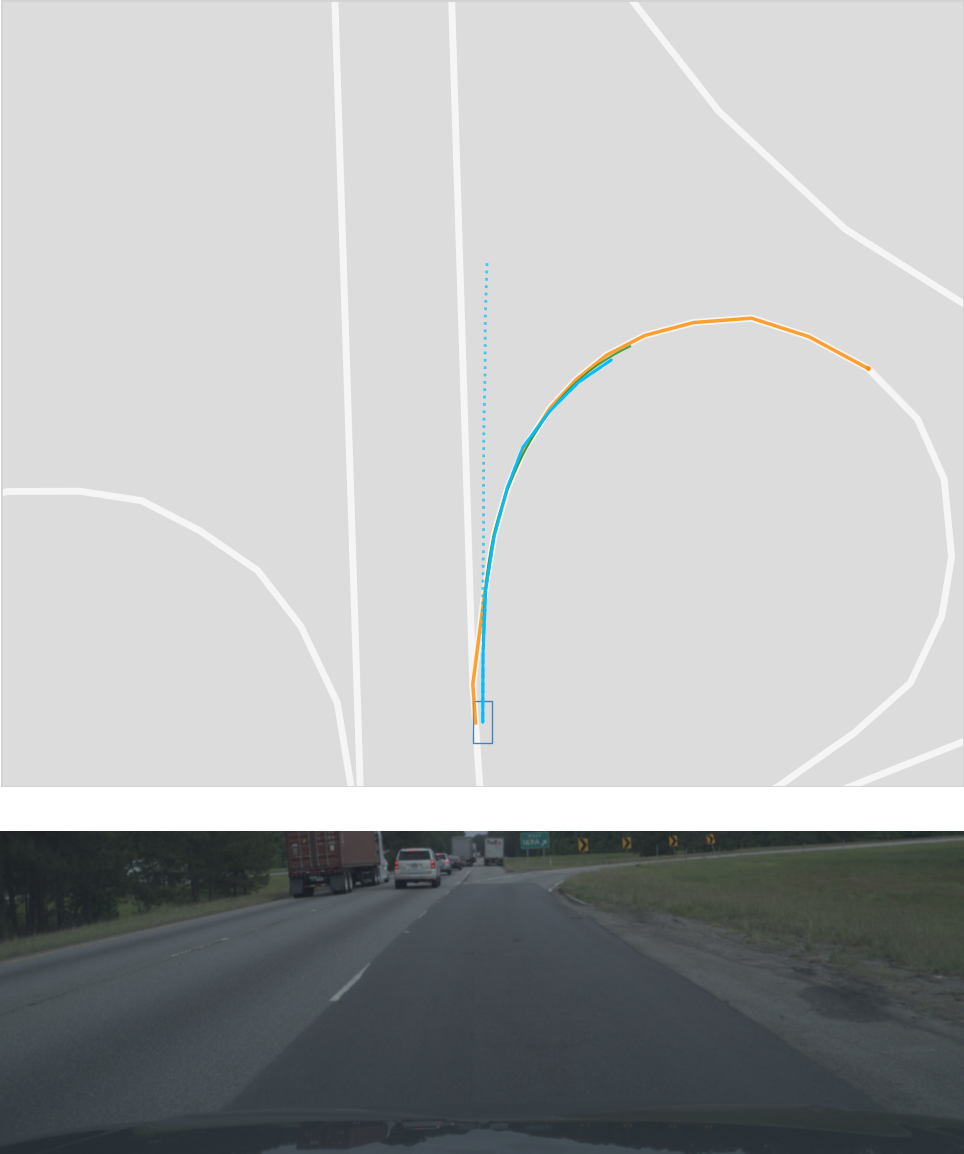
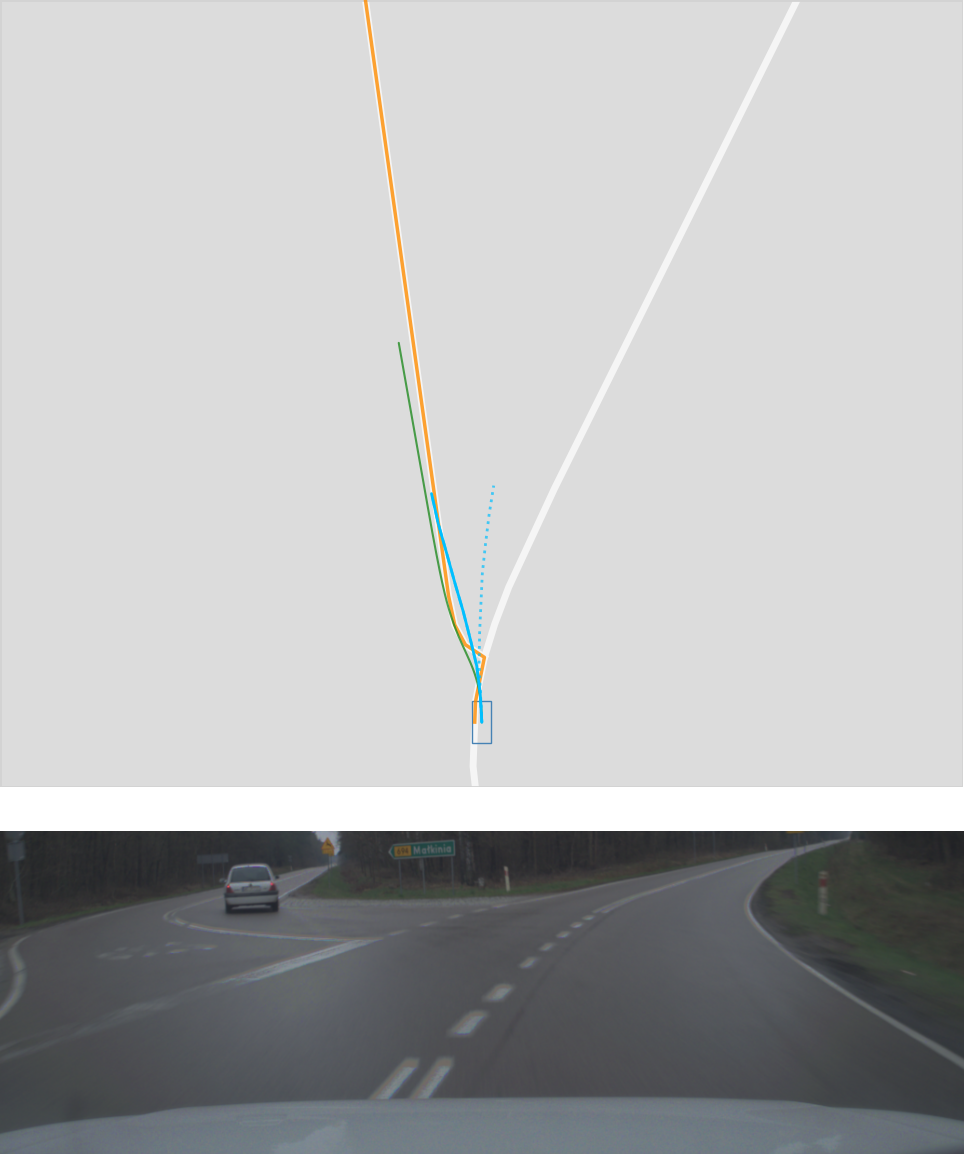
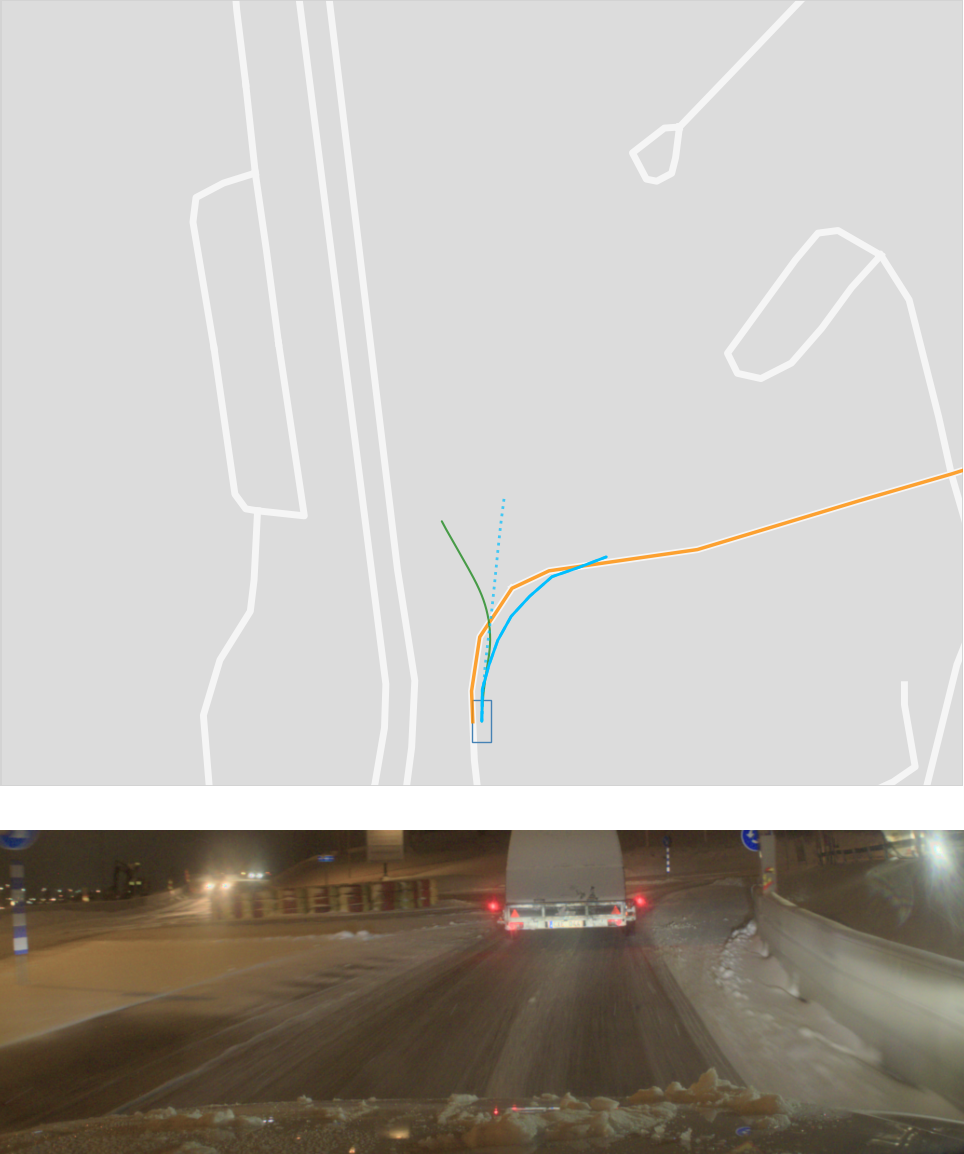
Figure 3: The gating module correctly resolves visual-ambiguity by prioritizing route-based prediction when necessary.
The gating classifier dynamically switches between hypotheses based on real-time input reliability. In challenging scenes with occlusions or ambiguous visual cues, the model selectively trusts the route branch, while recovering from routing errors (due to localization failure or map staleness) by prioritizing image-based predictions when needed. In practice, the gating policy selected the route-led branch in approximately two-thirds of all test cases.
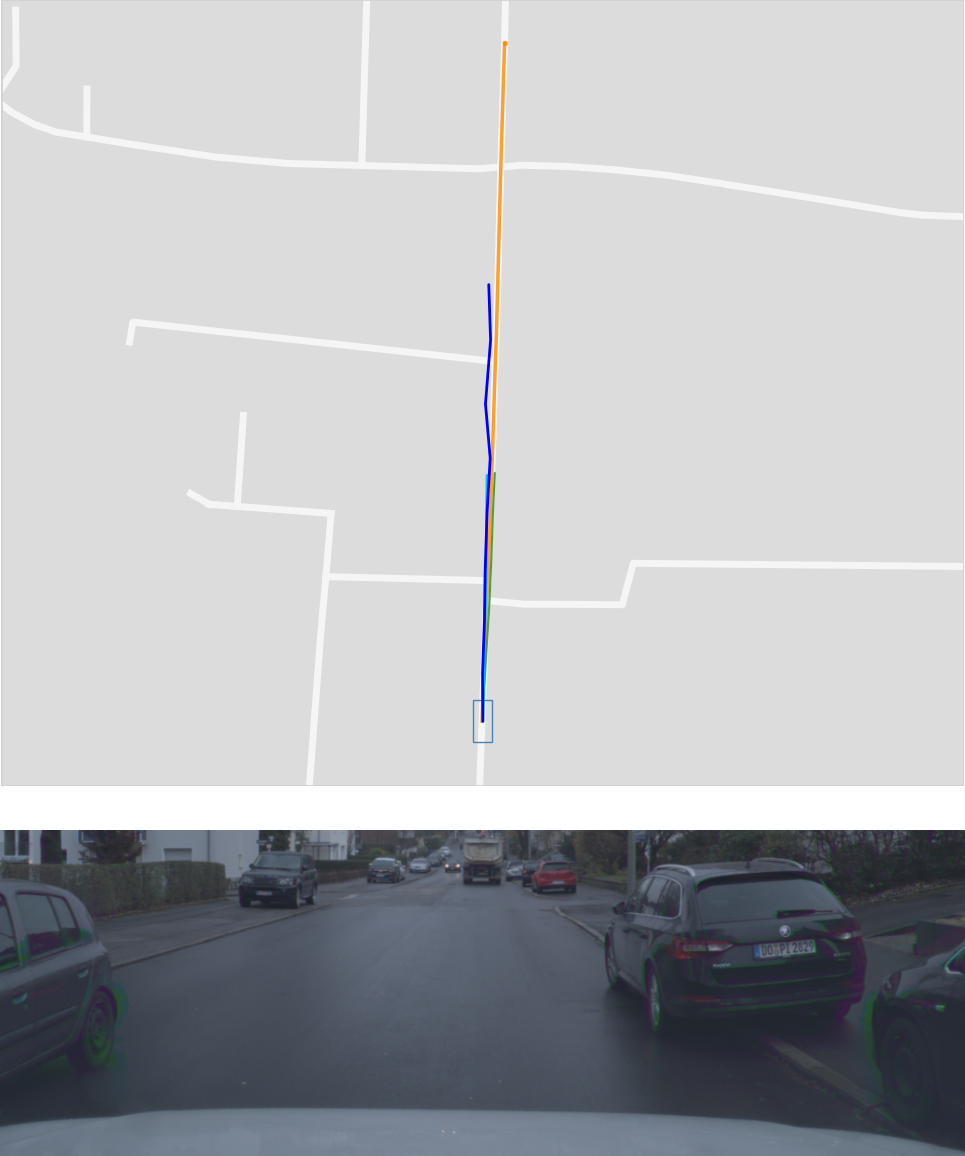
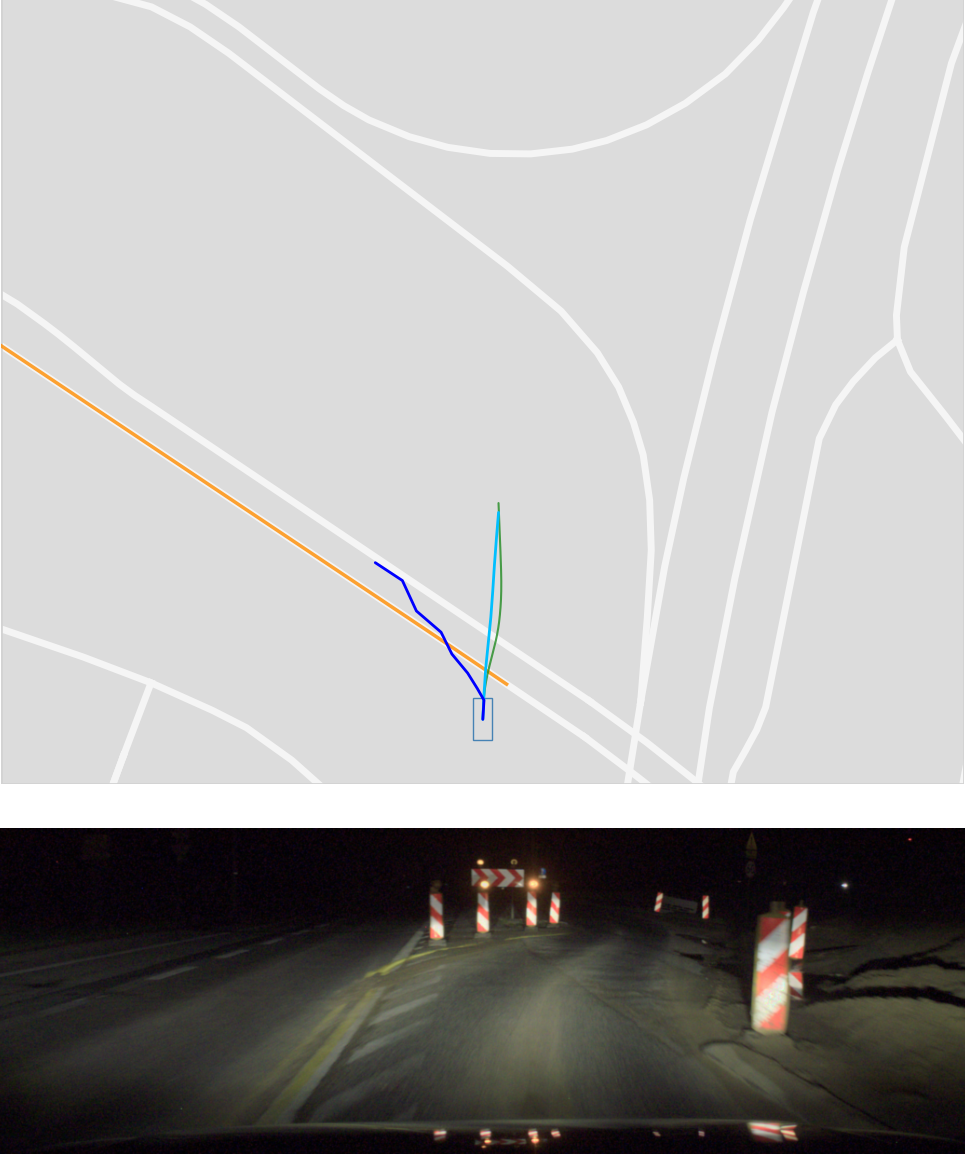
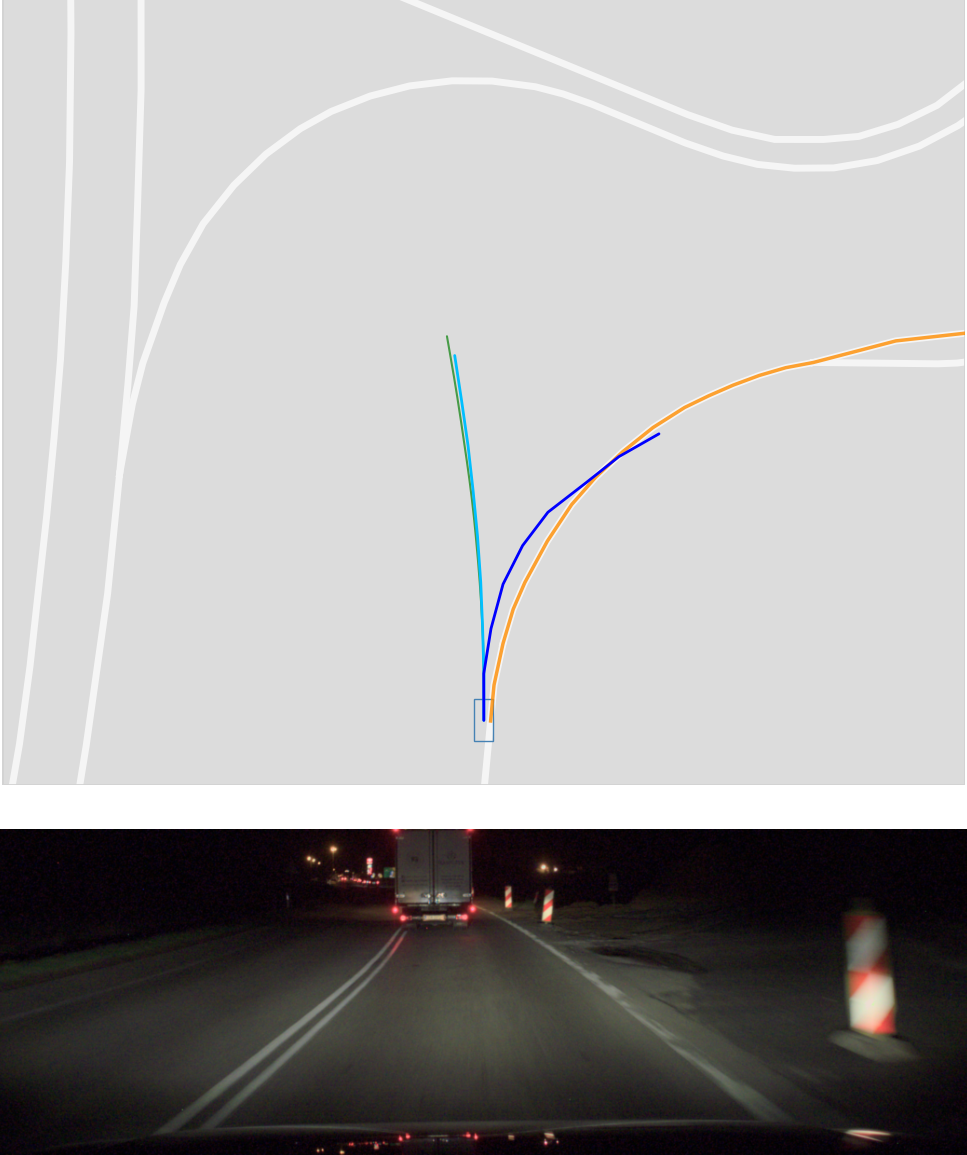
Figure 4: SD-RouteFusion accurately incorporates vehicle kinematic variation in urban contexts.
Additional scenarios illustrate the model's resilience to both visual and route modality failure, maintaining high fidelity in ego-motion prediction even under adversarial conditions such as outdated maps or mislocalizations.
Implications and Future Directions
SD-RouteFusion demonstrates that production-grade navigation signals—readily retrievable from SD maps—are powerful long-horizon semantic priors for learned trajectory prediction. By explicitly fusing route priors and vision in a way that is robust to modality-specific corruption, the framework concretely bridges the gap between research solutions that assume idealized map access and the constraints of scalable vehicle fleets.
Practically, this work presents a strong alternative to HD-map-centric models, especially in regions or scenarios where HD maps are unavailable, unreliable, or unsustainable to maintain. Theoretically, the dual-hypothesis/gated framework introduces a paradigm in sensor fusion for prediction tasks, suggesting that late (branch-selective) fusion can outperform naive blending under real-world noise regimes.
Future developments should investigate deeper integration of route-conditioned prediction with downstream planning stacks, online adaptation to dynamically varying SD-map quality, uncertainty quantification in gating decisions, and extension to multi-agent interaction scenarios. As the released SD-route generation toolkit can be applied to other public datasets, benchmarking across diverse environments and map qualities is anticipated.
Conclusion
SD-RouteFusion (2607.01139) provides a scalable, robust, and interpretable approach to ego-trajectory prediction, exploiting globally available SD-map navigation routes without dependence on HD map infrastructure. The late-stage gating of complementary trajectory hypotheses yields state-of-the-art performance in large-scale, real-world settings and suggests a practical path for deploying map-conditioned prediction in production autonomous vehicles. The study empirically validates the sufficiency of SD-map-derived intent for modern motion prediction, supporting both the continued relevance of route conditioning and advances in conditional sensor fusion at scale.