- The paper introduces a universal susceptibility-corrected kinetic uncertainty relation (S-KUR) that bounds current precision in open quantum systems.
- It employs quantum Fisher information to quantify partial dynamical activity, overcoming limitations of classical jump counts in coherent regimes.
- The S-KUR is validated using a double quantum dot model, revealing enhanced precision even under strong system-reservoir coupling.
Susceptibility-Kinetic Uncertainty Relations for Quantum Systems: An Expert Analysis
Overview and Main Contributions
The paper "Susceptibility-kinetic uncertainty relations for quantum systems" (2607.01035) provides a systematic extension of kinetic uncertainty relations (KURs)—which constrain current fluctuations in stochastic dynamics—to the domain of open quantum systems, accommodating effects such as coherence, strong coupling, and non-Markovianity. By introducing the concept of partial dynamical activity (PDA) quantified via quantum Fisher information (QFI) associated with rescaling system-reservoir coupling, the authors derive a universal susceptibility-kinetic uncertainty relation (S-KUR). This S-KUR places a nontrivial upper bound on the precision of arbitrary transport observables—including charge and energy currents—valid for general open quantum systems irrespective of coupling strength or regime.
Classical KURs relate the precision of a current to the dynamical activity (number of jumps) in a stochastic trajectory. In quantum systems, a direct definition of dynamical activity is inapplicable due to coherence and continuous measurement ambiguity. The authors address this by defining a partial dynamical activity AV(t) via the QFI associated with a parameter θ that rescales the system-reservoir coupling in the total Hamiltonian (see Figure 1):

Figure 1: Schematic of a quantum system S coupled via operator V^ to reservoirs, parameterized by rescaling θ.
The central result is a universal bound: S(X)(J(X))2≤KV,
where
- J(X)=(J(X)+M)/2 includes not only the steady state current J(X) but also a susceptibility correction M (quantifying the response of the current to the coupling strength),
- S(X) is the corresponding zero-frequency noise,
- KV is the steady-state PDA rate, and
- the bound is experimentally accessible using susceptibility measurements.
The derivation relies on the quantum Cramér-Rao bound and exploits the information geometry induced by the system-reservoir coupling parameter. Importantly, this formalism holds in regimes far beyond weak coupling and Markovian approximations.
Connection to Existing Theories
The work establishes a comprehensive framework that unifies and extends prior results in multiple directions:
- Classical and GKSL Limits: For weak coupling and Markovian dynamics (GKSL), the PDA reduces to the quantum jump-counting activity, and the S-KUR recovers earlier KURs [Prech2025Jan]. In these limits, the bound coincides with classical KURs on transition counts.
- Information-Geometry: The PDA generalizes previously defined Fisher information-based activities for time-rescaled or protocol-driven dynamics, directly connecting uncertainty relations to quantum estimation theory.
- Measurement-based Approaches: In the weak-coupling regime, the PDA converges to survival/activity measures obtained from repeated projective measurements and to bounds derived from classical measurement record probabilities.
Quantum Transport: Double Quantum Dot as a Testbed
The application of the S-KUR is demonstrated using a double quantum dot (DQD) model comprising two quantum dots coupled coherently and each connected to its own reservoir. DQD systems are pivotal in mesoscopic quantum transport and quantum thermodynamic devices.
The figure below showcases the practical violations of classical local KURs and the validity (and often tightness) of the S-KUR for the DQD particle current as a function of reservoir bias:
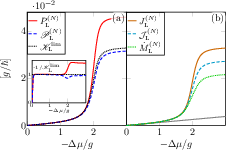
Figure 2: Comparison between classical KUR and S-KUR for the DQD as a function of bias θ0: the S-KUR is always valid and frequently saturated, while the classical bound can be violated due to quantum coherence.
Key numerical findings include:
- Marked violation of classical-KURs in the presence of strong interdot coupling and coherence, with the classical precision bound being surpassed, especially in the regime where both DQD eigenstates are within the bias window.
- The S-KUR remains satisfied and, in many regimes, is nearly saturated, indicating its tightness, particularly at low temperatures and for pure or nearly pure environmental states.
- The susceptibility correction θ1 plays a critical role in ensuring the bound holds, even when coherent transport leads to classically forbidden enhancements in precision.
The contrast between the behavior of the S-KUR for particle and energy current is further elucidated in additional figures beyond the main text.
Discussion: Theoretical and Practical Implications
Theoretical Implications
- Generalizability: The S-KUR applies to arbitrary open quantum systems, including regimes of strong system-bath coupling, non-Markovian reservoirs, and non-stationary driving, without reliance on specific system symmetries or the weak-coupling approximation.
- Unification: By rooting dynamical activity in QFI, the formalism bridges classical stochastic process theory, quantum estimation theory, and quantum thermodynamics. It elucidates the structure and limitations of precision bounds in the quantum regime and encompasses various previously disparate approaches as limiting cases.
- Tightness and Optimality: Cases where the S-KUR is saturated correspond to optimal estimation scenarios, and the optimal observable for estimating coupling strength can be inferred via saturation of the bound.
Practical Implications
- Experimental Accessibility: The bound relies on the susceptibility term, which is measurable in platforms where system-reservoir coupling can be tuned experimentally. This enables empirical testing and exploitation of the S-KUR in realistic quantum thermal devices, quantum transport setups, and quantum sensors.
- Quantum Design Principles: The results provide concrete guidelines for optimizing precision in quantum devices—informing both device design in quantum metrology and quantum information processing.
Future Directions
- Simulation and Optimization: Direct evaluation of the full PDA may be computationally prohibitive in generic nonequilibrium systems; efficient numerical or approximate methods for QFI in open systems will be essential.
- Non-steady-state Regimes: While the framework allows for time-dependent and transient applications, comprehensive treatments in periodically driven and finite-size/bounded systems warrant deeper investigation.
- Extension to Multipartite and Interacting Systems: The extension of S-KURs to collective transport, strongly correlated quantum systems, and reservoirs with memory remains an open direction.
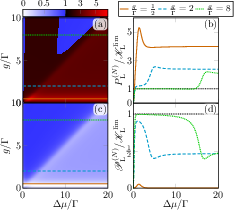
Figure 3: Violation of classical KURs and saturation of S-KUR in DQD transport as system parameters (coupling, bias) are varied; the S-KUR is robust even where classical bounds fail.
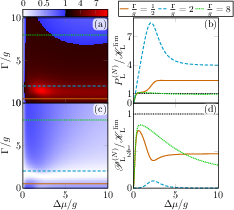
Figure 4: S-KUR validity across a range of temperature and coupling strengths in the DQD; higher temperatures degrade both precision and bound tightness due to enhanced thermal fluctuations.
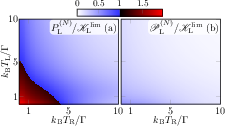
Figure 5: Comparison of the local classical KUR and S-KUR for energy current in the DQD; saturation is not as pronounced for the energy current.
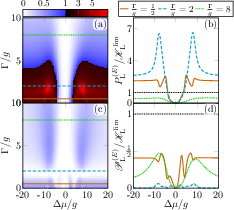
Figure 6: Behavior of the classical KUR and S-KUR in DQD energy transport as coupling and bias are adjusted.
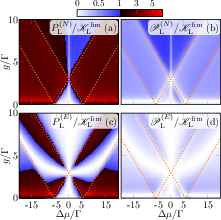
Figure 7: Comparison of classical KUR (left panels) and S-KUR (right panels) for both particle and energy currents in various DQD parameter regimes.
Conclusion
This work sets a new standard for quantum kinetic uncertainty relations by establishing a universal, susceptibility-corrected bound on the precision of currents in open quantum systems. The S-KUR, derived from the quantum Fisher information associated with system-reservoir coupling rescaling, is broadly valid and experimentally relevant. It captures quantum enhancements in precision that violate classical limits, and provides both theoretical unification and practical tools for the analysis and design of quantum thermodynamic and transport systems. These results suggest future research directions at the intersection of quantum estimation, open quantum systems, and quantum device engineering.