- The paper introduces RT-SFOD, a training adaptation framework that integrates dual modules to enhance pseudo-label quality and mitigate feature collapse.
- It achieves state-of-the-art performance with 1.4–3.5% mAP improvements, 1.3× higher throughput, and roughly half the parameters compared to conventional methods.
- The architecture preserves YOLOv10’s real-time inference efficiency by confining additional computations to training, thus ensuring scalable deployment.
Real-Time Source-Free Object Detection: Technical Summary and Insights
Introduction and Problem Setting
Source-Free Object Detection (SFOD) addresses the practical constraint of adapting object detectors pre-trained on a labeled source domain to an unlabeled target domain, with the critical caveat that source images are strictly inaccessible during adaptation. Although this constraint is motivated by privacy, legal, and operational factors in real-world applications such as autonomous driving and surveillance, most prior SFOD work employs computationally heavy detectors (Faster R-CNN, various DETR variants) that impose substantial latency and memory overhead, impeding their deployment in latency-sensitive environments. The manuscript titled "Real-Time Source-Free Object Detection" (2606.31834) proposes RT-SFOD—a training-time adaptation framework built on the efficient, NMS-free, dual-head YOLOv10 backbone, which is specifically devised for real-time deployment, and demonstrates substantial improvements across the accuracy–latency–model-size Pareto frontier.
Technical Contributions
RT-SFOD is based on analyzing the failure modes of vanilla mean-teacher (MT) self-training in the source-free, dual-head, NMS-free context of YOLOv10. The work isolates two critical adaptation bottlenecks: (1) pseudo-label quality produced by the dual heads; (2) representational collapse of feature diversity under domain shift. These are addressed via two targeted modules:
- DHF (Dual-Head Pseudo-Label Fusion): Selectively fuses high-precision, duplicate-free O2O (one-to-one) head predictions as anchors, with non-redundant high-confidence O2M (one-to-many) predictions, which recover objects missed by O2O, while tightly controlling label noise.
- MARD (Multi-scale Adaptive Representation Diversification): Regularizes multi-scale features with variance and covariance constraints, directly mitigating collapse in feature diversity induced by the domain shift, and ensuring discriminative power is retained.
These are strictly training-time modules; the runtime performance, as inferred from the architecture, remains that of unmodified YOLOv10.
Empirical Results
Accuracy-Speed-Size Pareto Analysis
RT-SFOD delivers state-of-the-art performance on standard SFOD domain shifts (Cityscapes→Foggy Cityscapes, Sim10k→Cityscapes, KITTI→Cityscapes, Cityscapes→BDD100k). It consistently outperforms previous Faster R-CNN/DETR-based and the specialized SF-YOLO methods on mAP, with 1.4–3.5% absolute mAP improvements, 1.3× higher throughput, and roughly 2× fewer parameters when controlled for model scale.
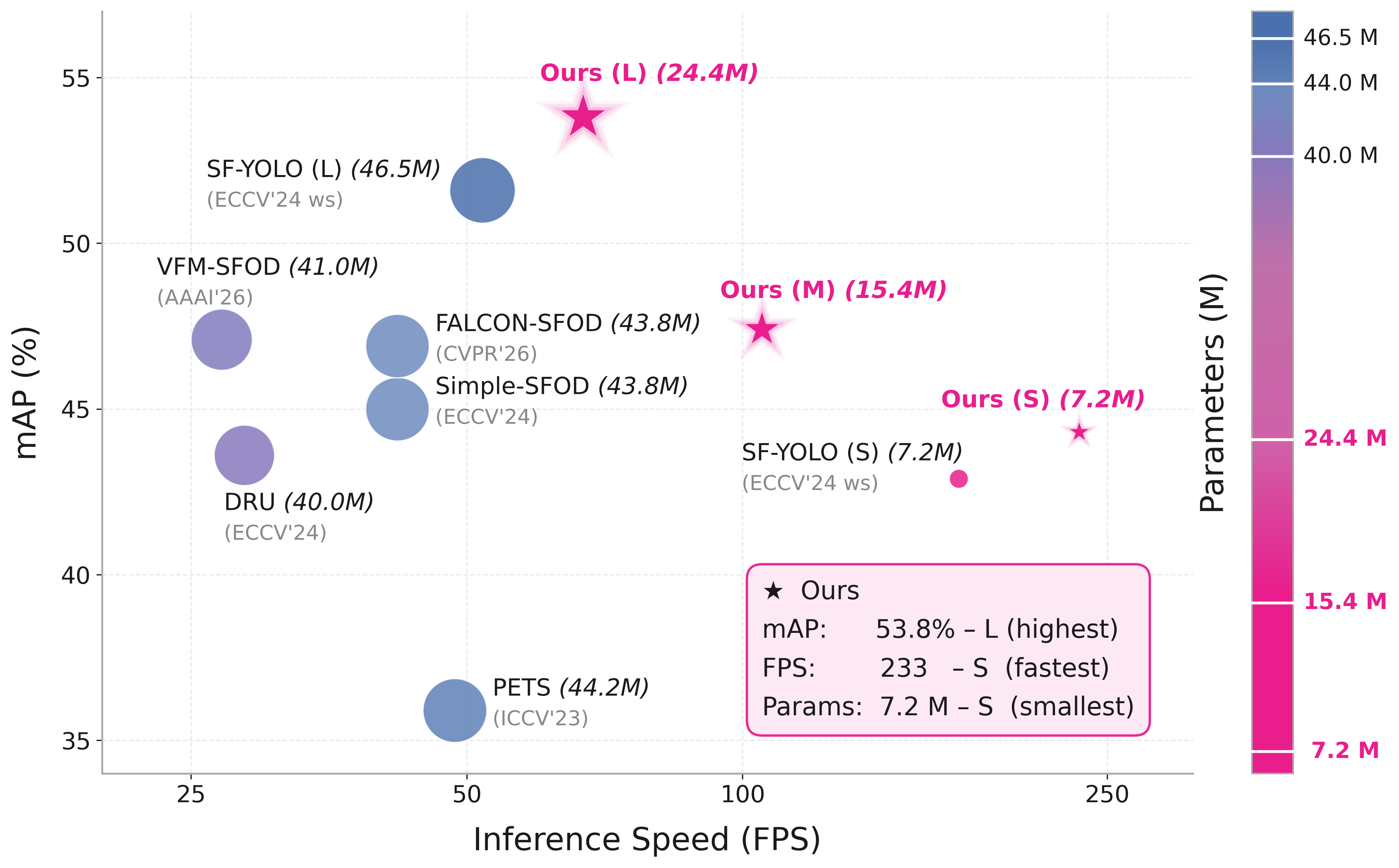
Figure 1: RT-SFOD achieves best-in-class accuracy-latency-parameterization trade-off among all SFOD methods on Cityscapes→Foggy Cityscapes.
Pseudo-Label Quality Improvements
The effect of DHF is documented by examining the precision, recall, and F1 evolution of different pseudo-label selection schemes. O2O pseudo-labels, while precise, miss a substantial fraction of objects. O2M labels cover more instances but greatly increase label noise, degrading F1. DHF, via a selective IoU-based fusion, achieves a dominant F1, with pseudo-labels exhibiting both high precision and significantly improved recall versus naive schemes. During training, as adaptation progresses, the F1 of pseudo-labels generated by DHF increases steadily, demonstrating stable and effective self-supervision.
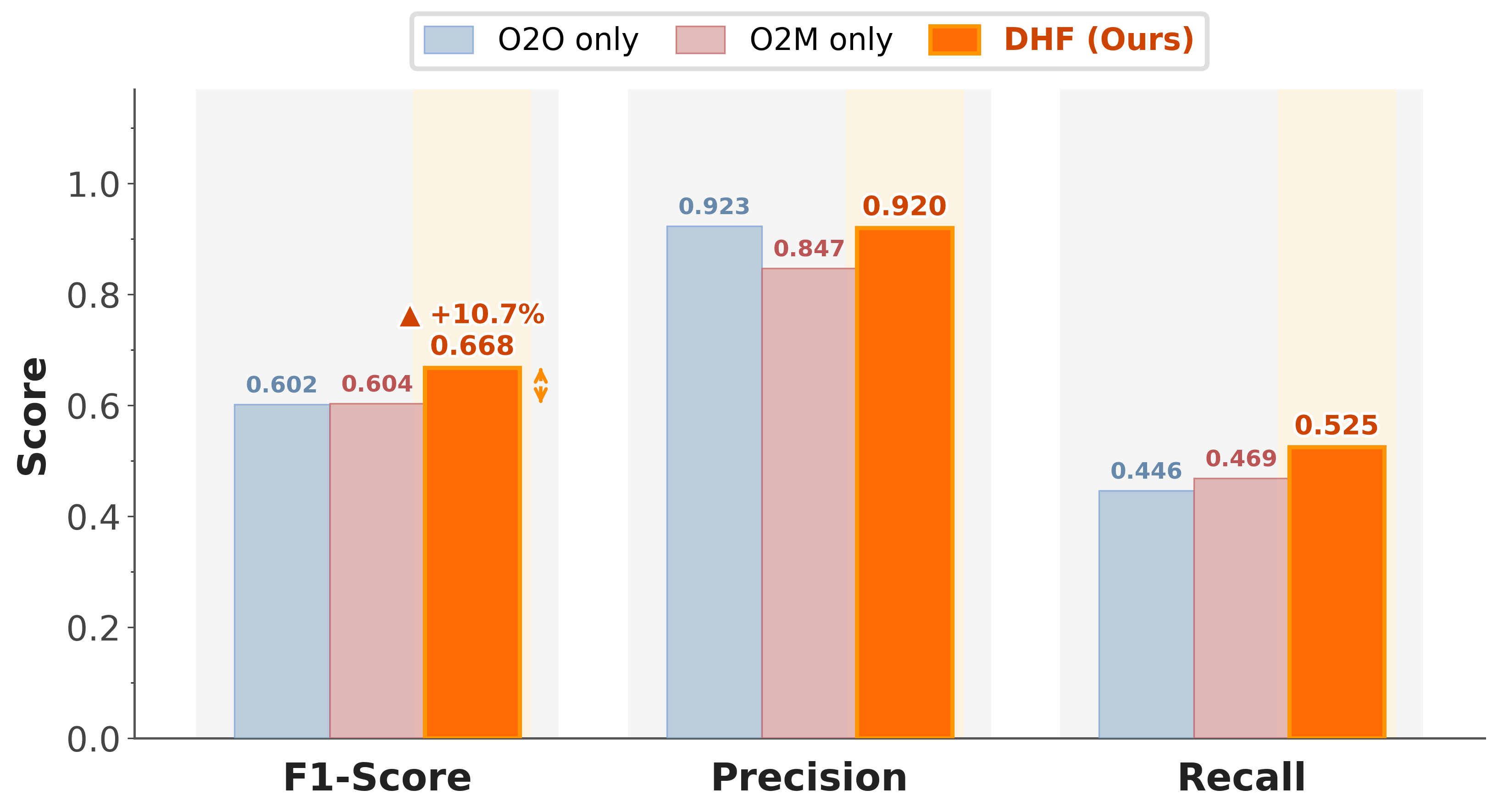
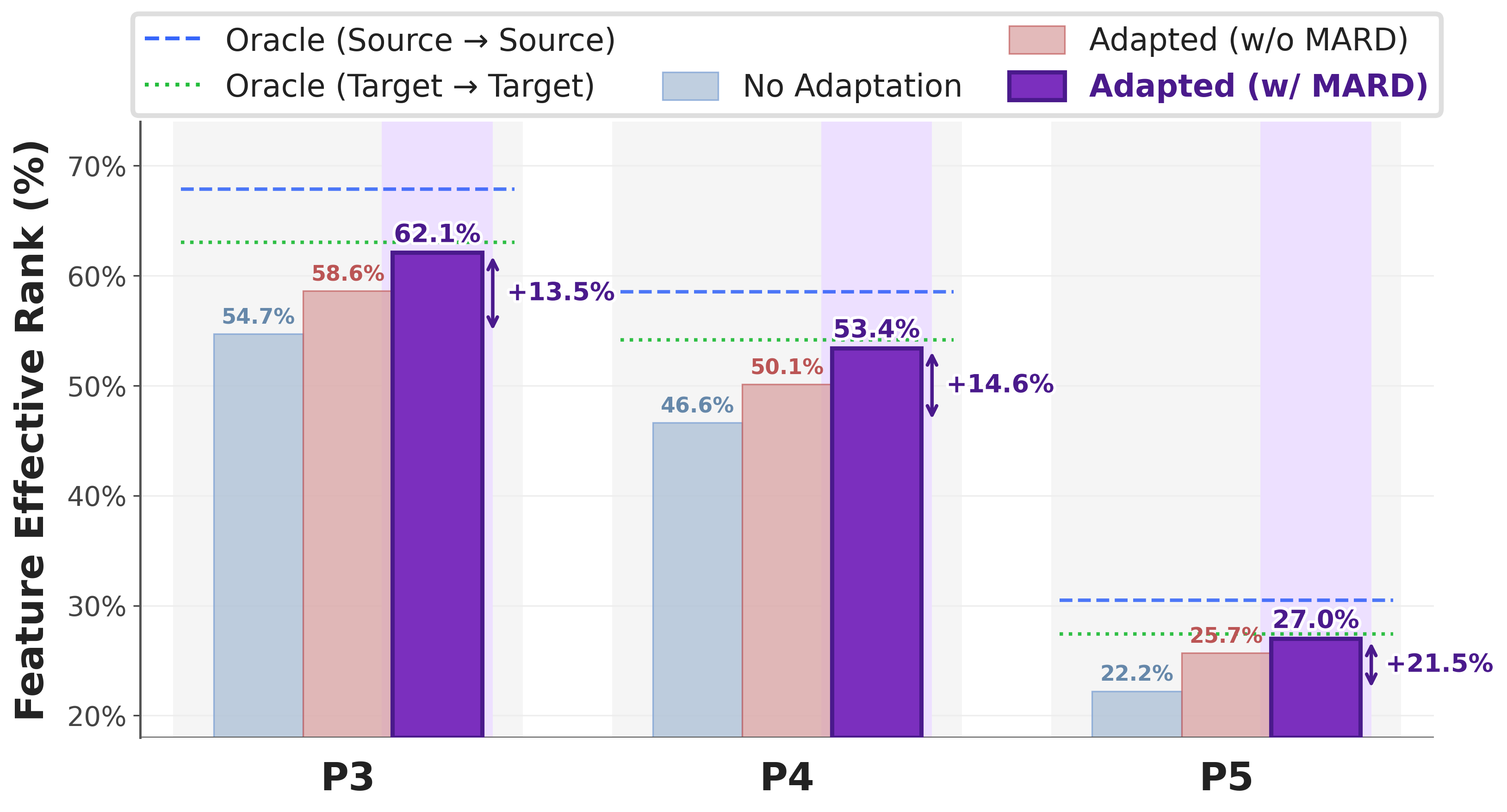
Figure 2: (a) DHF achieves the highest pseudo-label F1-score compared to O2O and O2M alone with standard post-processing; (b) MARD recovers multi-scale feature diversity lost to domain shift.
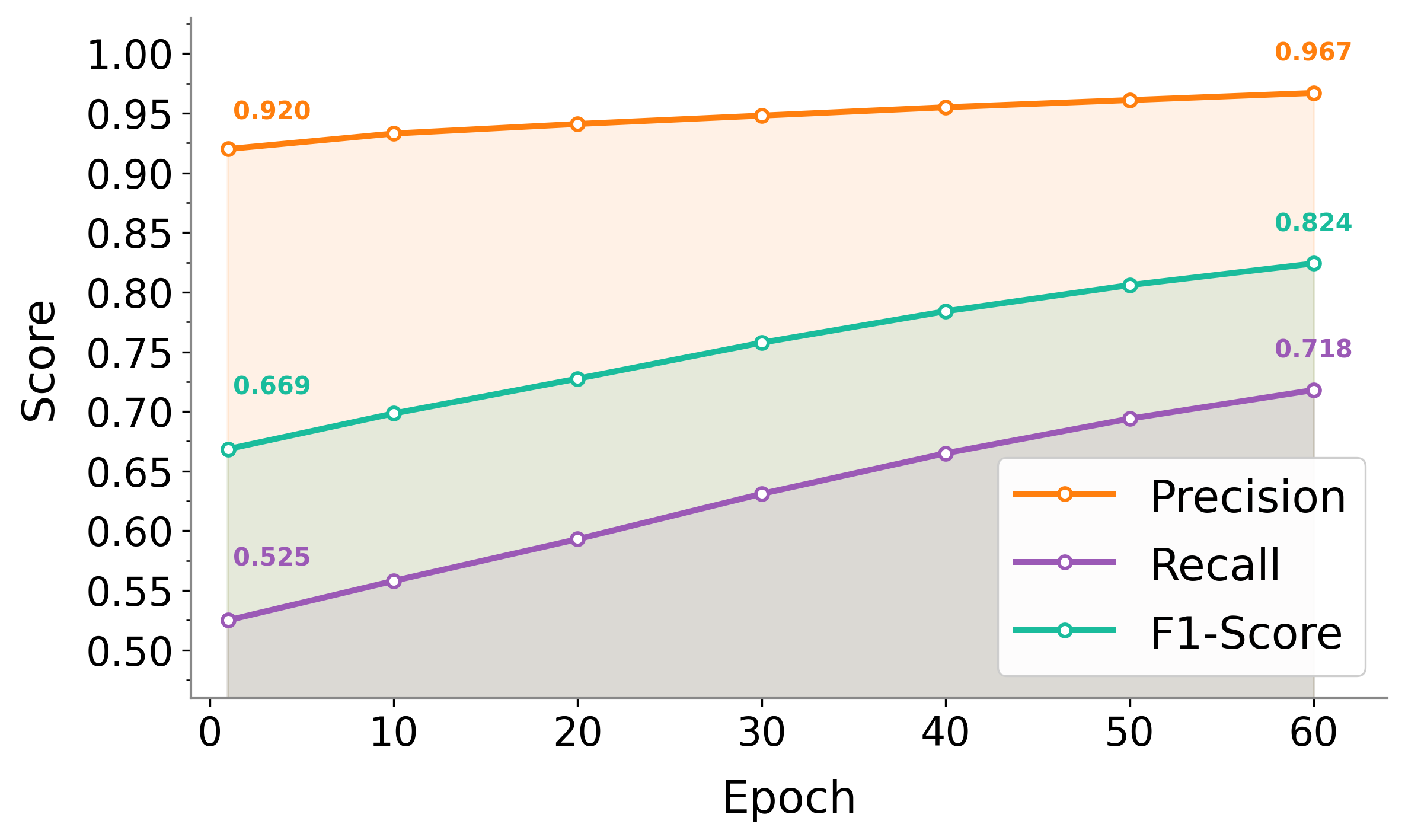
Figure 3: Over adaptation epochs, DHF pseudo-label precision, recall, and F1-score all consistently improve, demonstrating curriculum effects from increased target alignment.
Mitigation of Feature Collapse
Domain shift induces significant reductions in the effective rank of PAN-level feature maps in YOLOv10—quantifying the degree of feature collapse. The MARD loss, via per-channel variance maximization and off-diagonal covariance minimization, restores the majority (76–84%) of the effective rank lost to shift—far surpassing the recovery achievable via vanilla MT (26–48%).
Figure 2: MARD restores channel diversity (effective rank) nearly to the target-domain oracle levels, outpacing vanilla MT.
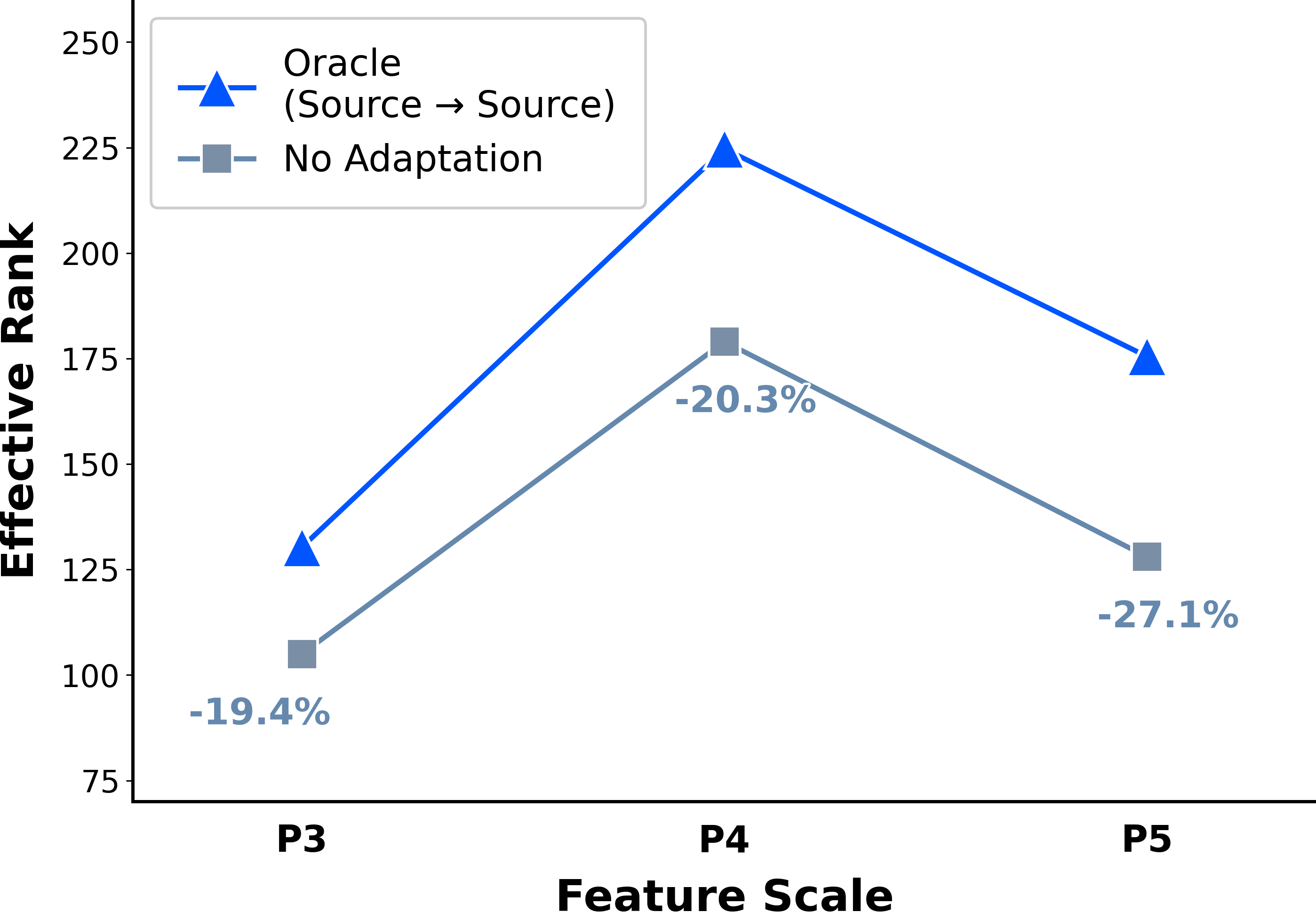
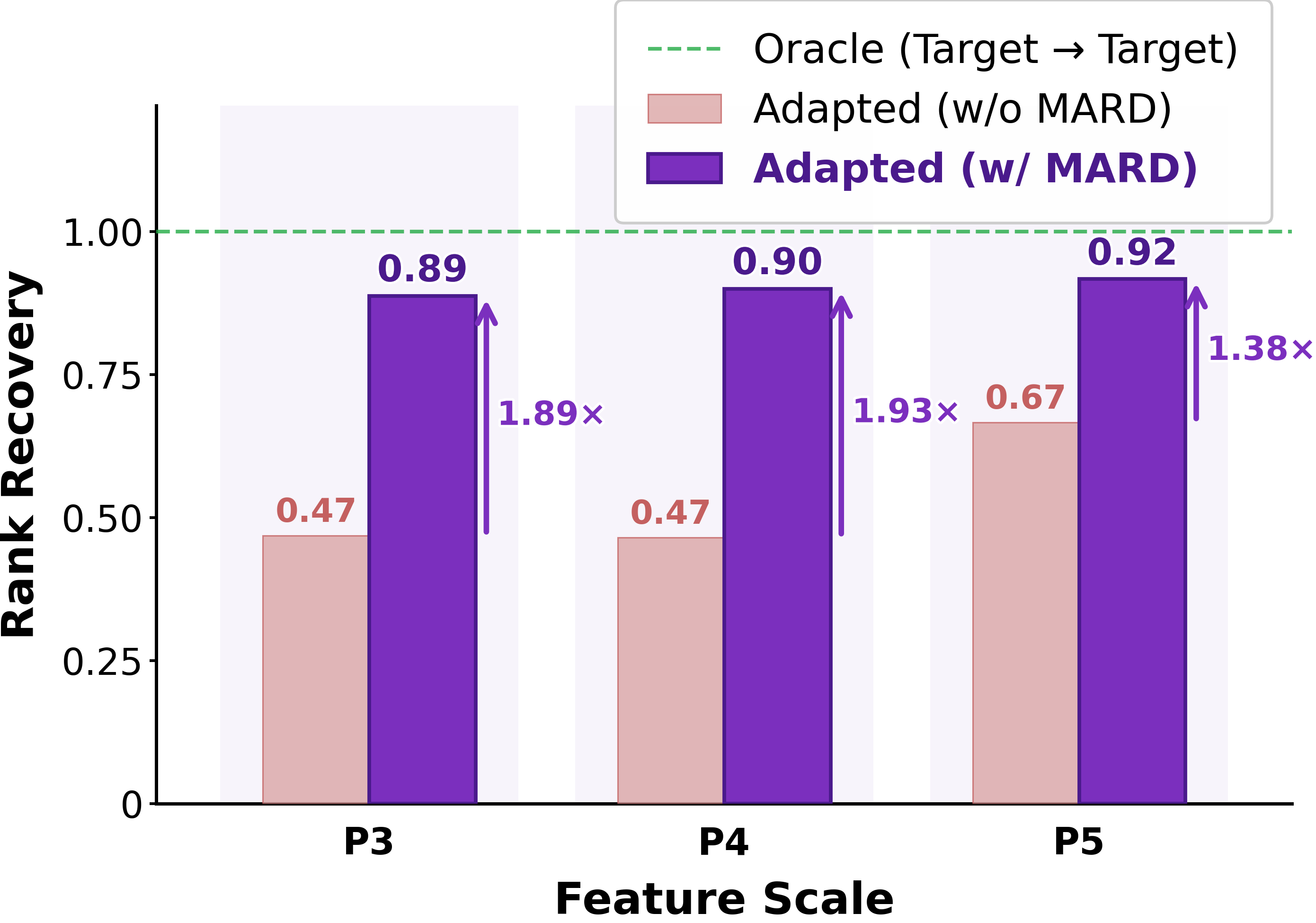
Figure 4: Normalized rank recovery confirms that MARD closes the majority of the domain-shift-induced discriminability gap.
Qualitative feature-space analysis demonstrates reduced cosine similarity among foreground object features when MARD is used, confirming higher inter-class/instance separability and feature efficacy under domain shift.
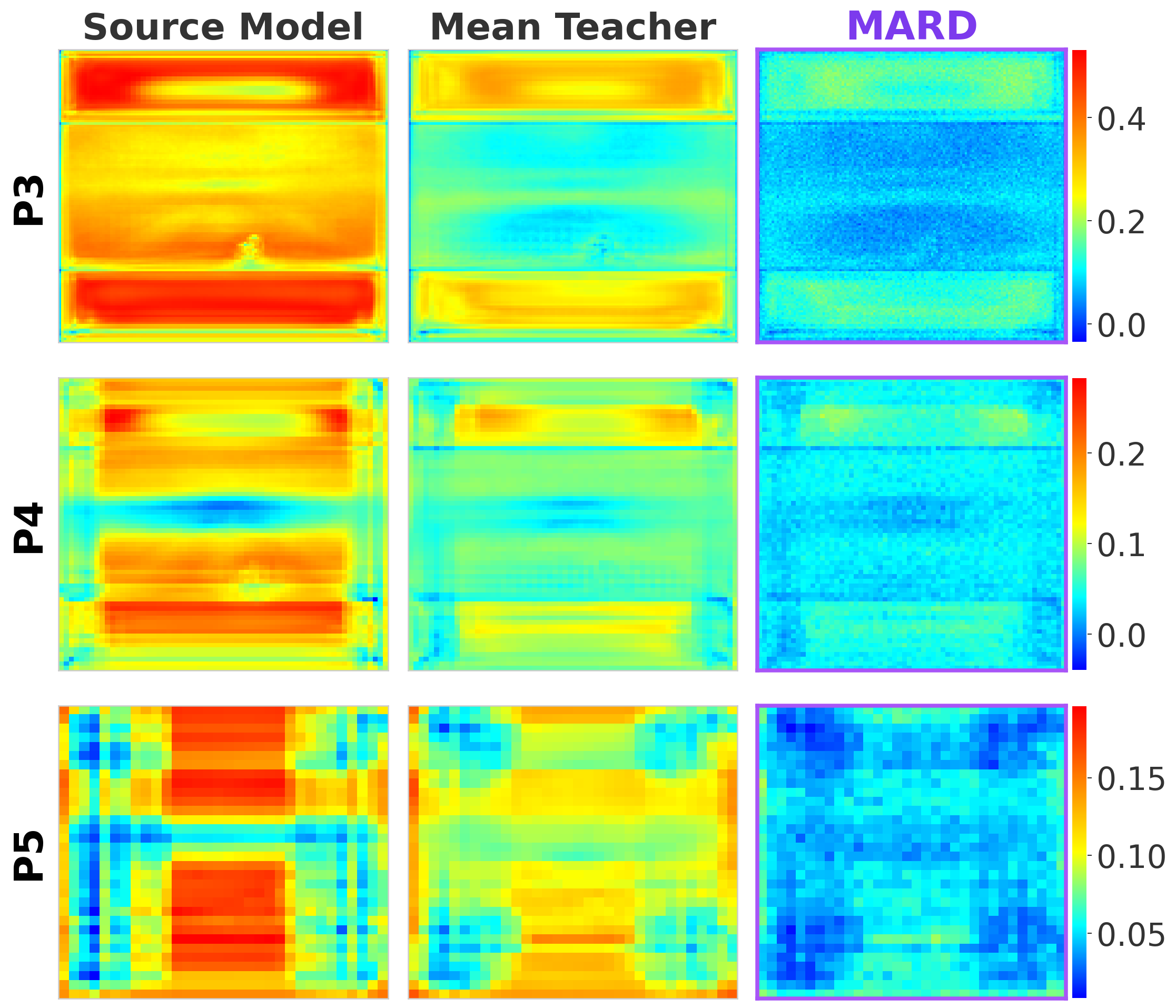
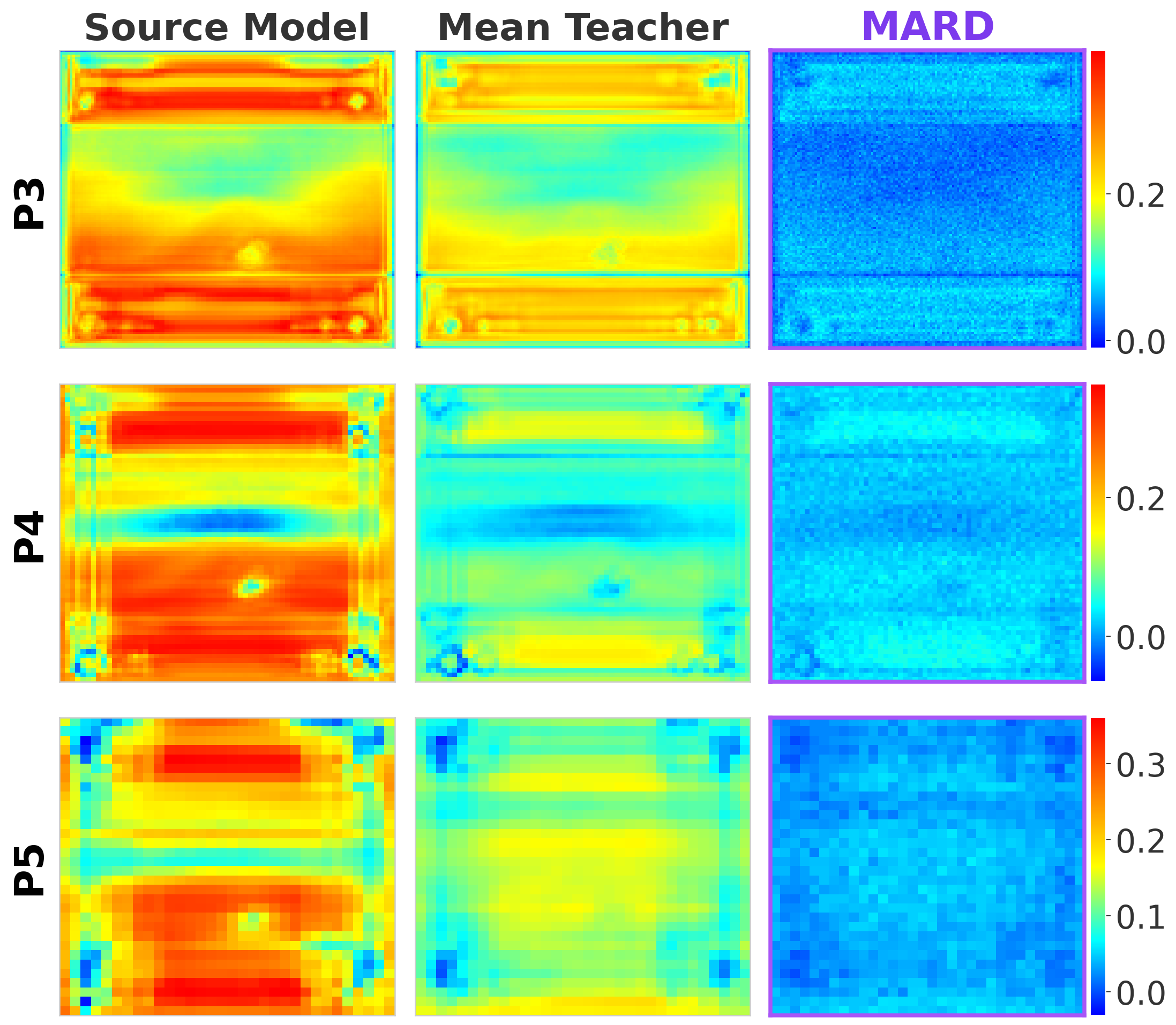
Figure 5: MARD-regularized models maintain lower feature similarity (better diversity) across scales and shifts.
Qualitative and Failure Case Analysis
RT-SFOD, in challenging fog, retains detection quality where both the source-only and vanilla MT models exhibit numerous missed objects, poor localization, and misclassification.
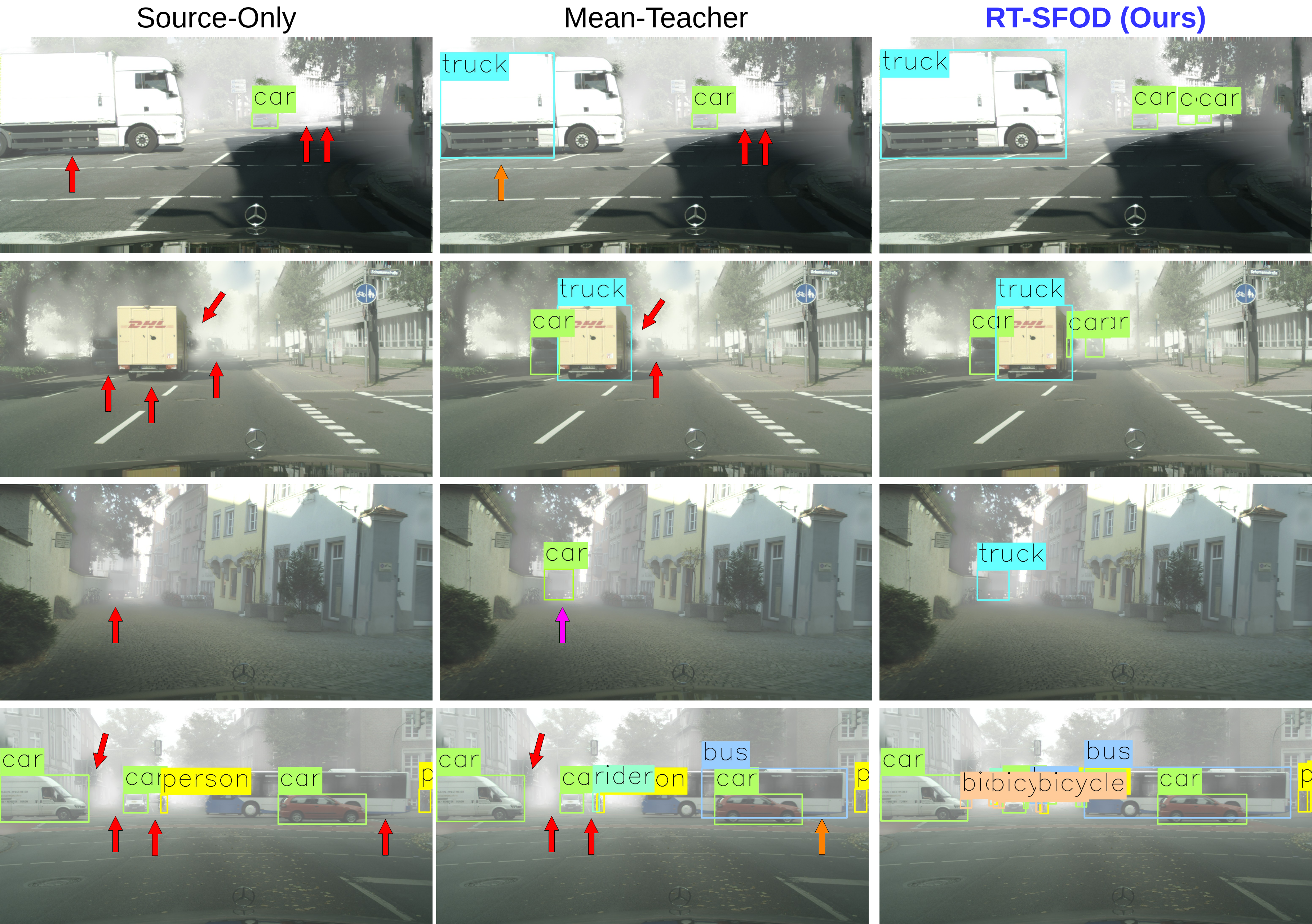
Figure 6: Qualitative scene comparison highlights RT-SFOD’s superior recovery of missed objects and improved localization.
RT-SFOD’s detections remain robust even for partially occluded/truncated objects and unfavorable visibility—critical for automotive safety and urban perception systems.
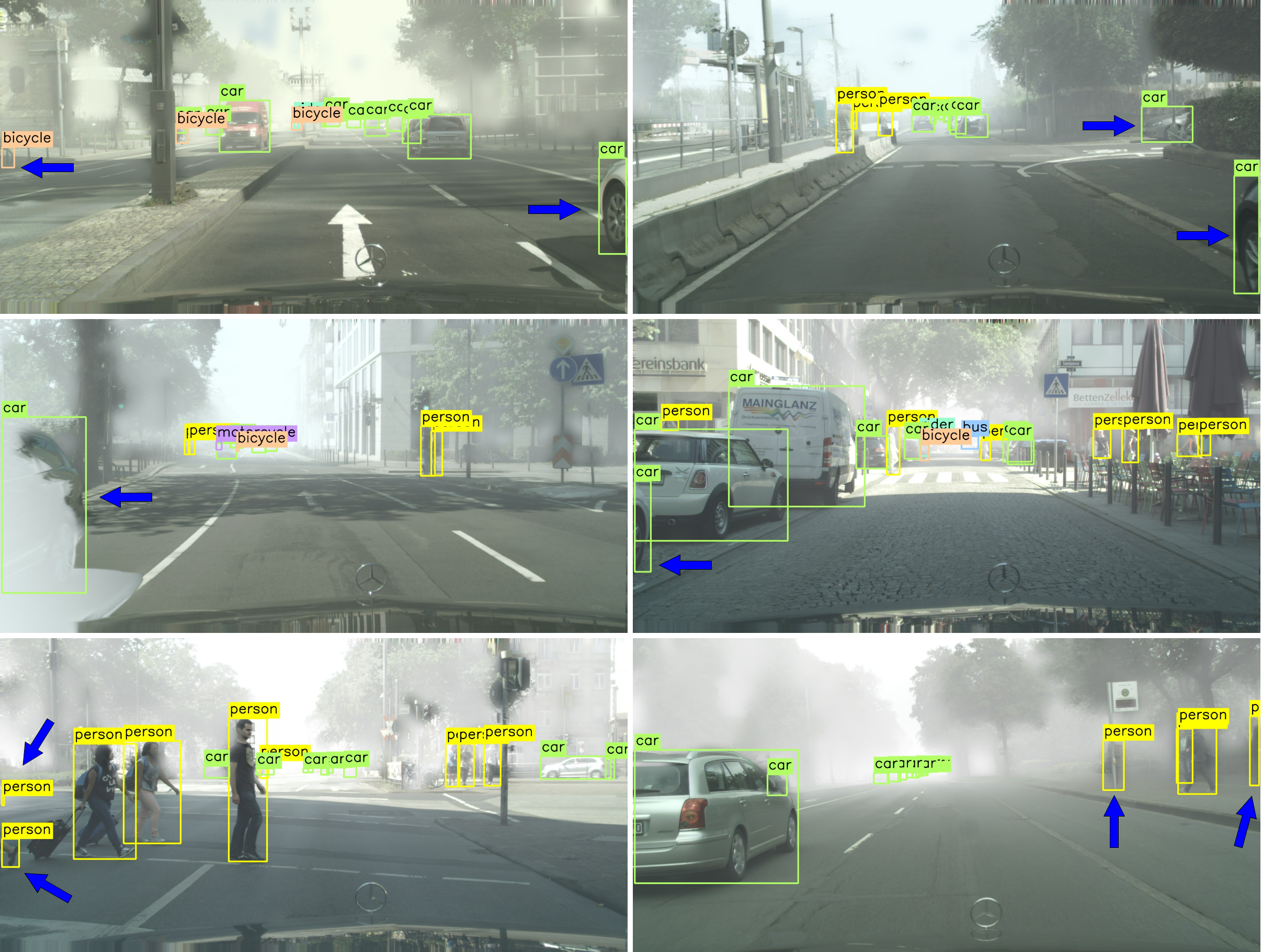
Figure 7: RT-SFOD reliably detects heavily occluded and truncated objects in foggy scenes, unlike baseline methods.
Failure cases are primarily restricted to extremely crowded scenes of small objects or severe visual degradation (dense fog, overexposure) that limit visual cues beyond what is reliably available even to humans.
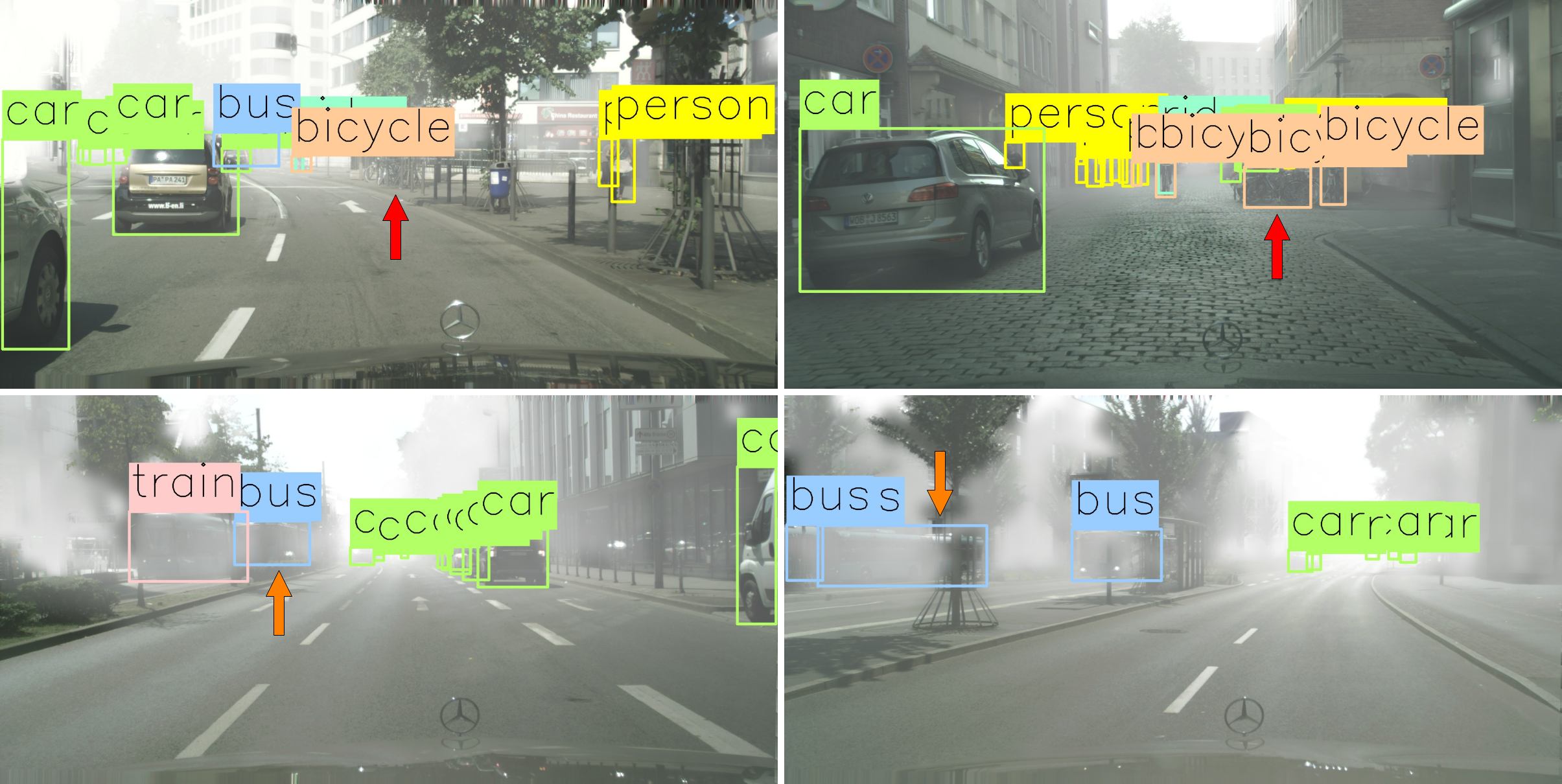
Figure 8: Error modes mainly involve clusters of small objects and extreme visual degradation.
Training Efficiency and Generalization
RT-SFOD’s adaptation is robust to hyperparameter variations: main thresholds (pseudo-label confidence, MARD weight, EMA momentum) show ≤1.5 mAP variation over wide sweeps, and all ablations and empirical runs use shared hyperparameters. The memory and training time overhead introduced by DHF and MARD (1–17%) is marginal as these are applied only during adaptation, not inference.
Notably, the architecture-agnostic nature of DHF and MARD enables RT-SFOD to generalize across not just YOLOv10, but other dual-head NMS-free detectors (YOLOv26, MS-DETR, Mr. DETR), with consistent mAP gains (+2.0–2.8). Single-head detectors do not benefit from DHF, confirming the specific advantage conferred by the dual-head structure.
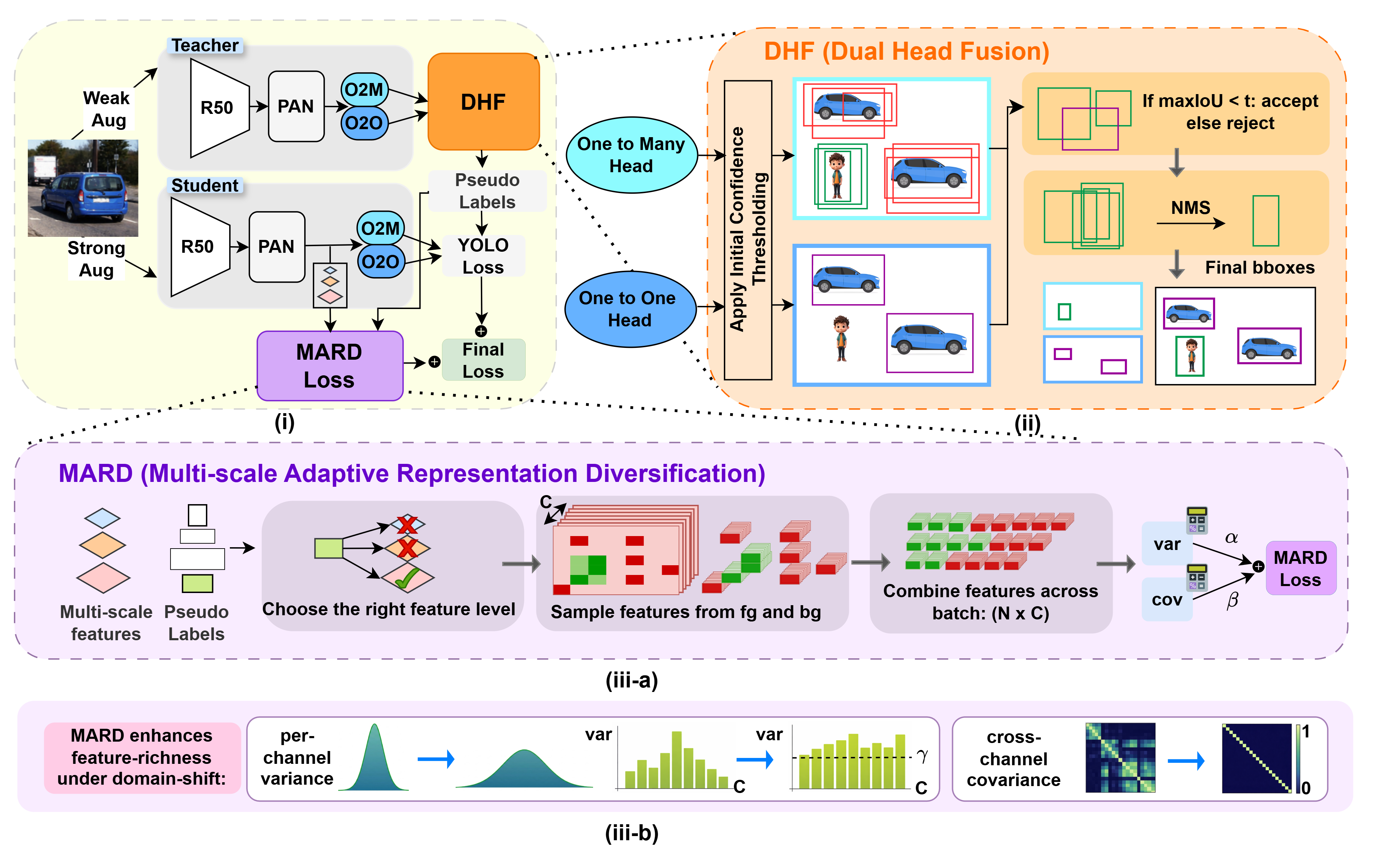
Figure 9: Schematic of RT-SFOD framework with integration of DHF, MARD, and mean-teacher adaptation cycle.
Theoretical and Practical Implications
The main theoretical observation is that domain shift in SFOD fundamentally induces feature collapse at the multi-scale representation level, not merely marginal distribution divergence; regularizing feature diversity (MARD) is therefore critical. Also, in dual-head architectures, naïve pseudo-label fusion is fundamentally suboptimal: highly precise but incomplete labels from the O2O head must be extended in a constrained fashion with the O2M head.
Practically, this enables real-time, source-free domain adaptation with detection backbones that optimize not just for accuracy but for latency and deployment resource constraints. The entire adaptation process is architecture-compliant: no inference-time modifications or computational penalty, preserving the parameter and throughput advantages of YOLOv10 and related models.
Limitations and Outlook
RT-SFOD’s benefits are applicable only for dual-head, NMS-free architectures; single-head detectors revert to prior approaches such as SF-YOLO confidence-thresholding. There remain residual edge-case errors under extreme visual conditions and densely-packed small-object scenes, reflecting intrinsic limits of observed feature evidence rather than specific architectural deficiencies.
Future directions include (1) extension of pseudo-label fusion mechanisms tailored for transformer-based NMS-free detectors beyond the present dual-head paradigm, (2) dynamic or content-aware adaptation of hyperparameters in the absence of labeled target validation sets, and (3) integrating uncertainty and out-of-distribution detection into the pseudo-label selection/feature regularization process to further control error propagation.
Conclusion
"Real-Time Source-Free Object Detection" (2606.31834) establishes a new state-of-the-art for efficient, real-time domain-adaptive object detection in the source-free regime. By dissecting the weak links of mean-teacher adaptation in NMS-free dual-head architectures, and introducing DHF and MARD, it achieves superior mAP, throughput, and model size simultaneously, while maintaining broad generality across dual-head designs. The framework delivers scalable adaptation suitable for industrially relevant real-world applications constrained by latency and memory, marking a significant step for practical domain-adaptive vision.