- The paper establishes that electronic correlation energy is directly proportional to quantum magic (M2) in weakly and moderately correlated systems.
- The paper introduces the contextual subspace method to systematically reduce quantum resource requirements by fixing stabilizer generators.
- The paper demonstrates a nearly universal linear relationship between recovered correlation energy and magic, providing clear benchmarks for quantum simulation complexity.
Correlation as Quantum Magic in Electronic Structure Hamiltonians
Overview
The paper "Correlation is magic in electronic structure Hamiltonians" (2606.31799) establishes a rigorous, quantitative correspondence between electronic correlation in many-electron systems and the quantum resource known as "magic"—non-stabilizerness—measured via the 2-stabilizer Rényi entropy (M2). By systematically analyzing ground states of electronic structure Hamiltonians across a large molecular dataset, and leveraging the contextual subspace (CS) projection method, the authors demonstrate that for weakly- and moderately-correlated systems, both the correlation energy and the Hartree-Fock (HF) reference weight are essentially proportional to M2. This work both elucidates the operational meaning of magic in chemistry and validates the CS method as a resource-aware approach for controlling quantum complexity in chemical simulations.
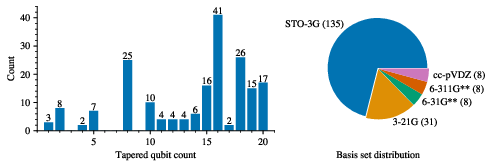
Figure 1: Qubit count and basis set distributions for the 190 species included in the Symmer Hamiltonian dataset used for this work [symmer_hamiltonian_database].
Quantum Resource Theory, Stabilizer Rényi Entropy, and Electronic Structure
Entanglement is insufficient to quantify the non-classicality that enables quantum advantage: many highly entangled states are efficiently classically simulable due to their stabilizer structure. The relevant resource for simulating quantum systems beyond the Clifford class is "magic," or non-stabilizerness. The stabilizer Rényi entropy (Mα) provides a computable monotone for non-stabilizerness; in particular, M2 is both experimentally accessible and satisfies monotonicity under free (Clifford) operations.
In the context of quantum chemistry, the electronic structure problem involves characterizing the eigenstates of the molecular Hamiltonian. Hartree-Fock restricts the ground state to a single Slater determinant (a stabilizer state after mapping to qubits), whereas full configuration interaction (FCI) methods incorporate superpositions across determinants, accessing correlation effects invisible to HF.
The difference between the FCI and HF energies—the correlation energy—quantifies the true quantum many-body character. The degree to which the ground state departs from the HF reference encapsulates the electronic correlation and, as this work shows, this directly maps to the state's quantum "magic."
Analytical Results: Magic Encodes Correlation
The authors prove that for states ∣ψ⟩ with large overlap with a reference stabilizer state ∣STAB⟩ (as is the case for weakly or moderately correlated molecular systems, where HF is a good approximation):
Mα(∣ψ⟩)≈(α−1)ln22α(1−∣⟨ψ∣STAB⟩∣2)
This result is nonperturbative for the Mα magic in the reference regime (∣⟨ψ∣STAB⟩∣2≈1). For quantum chemistry, the squared overlap is the HF reference weight, so M2 is directly proportional to correlation, measured either as weight outside the HF determinant or as the portion of the correlation energy recovered by a given state.
They further show that for post-Hartree-Fock methods modeled as perturbations to the HF Hamiltonian, the correlation energy recovered is proportional to M20:
M21
as long as the system is not in the strongly-correlated (multi-reference) regime.
The Contextual Subspace Method as a Resource Dial
The contextual subspace (CS) method partitions a Pauli-encoded Hamiltonian into a non-contextual (classically simulable) part and a contextual correction. By projecting into subspaces where subsets of stabilizer generators are fixed, one systematically lowers both the correlation energy and the quantum resource cost (as quantified by magic).
A central analytic result is that projection into a smaller contextual subspace monotonically reduces the magic of the ground state, and correspondingly, the recovered correlation energy.
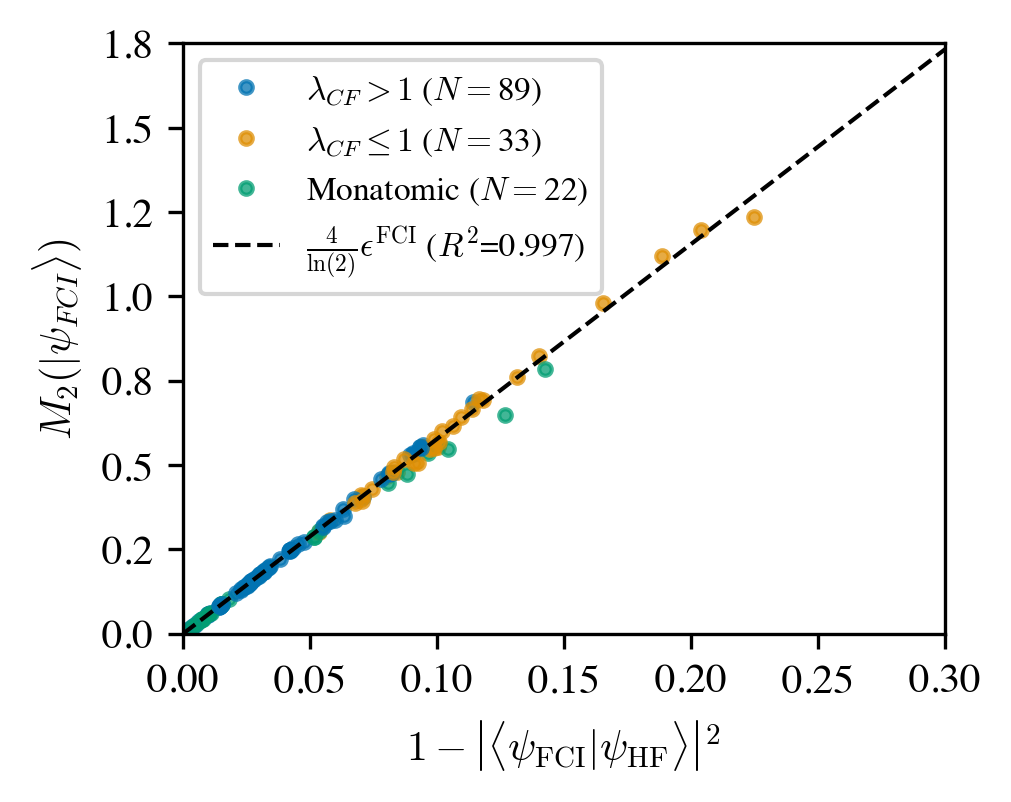
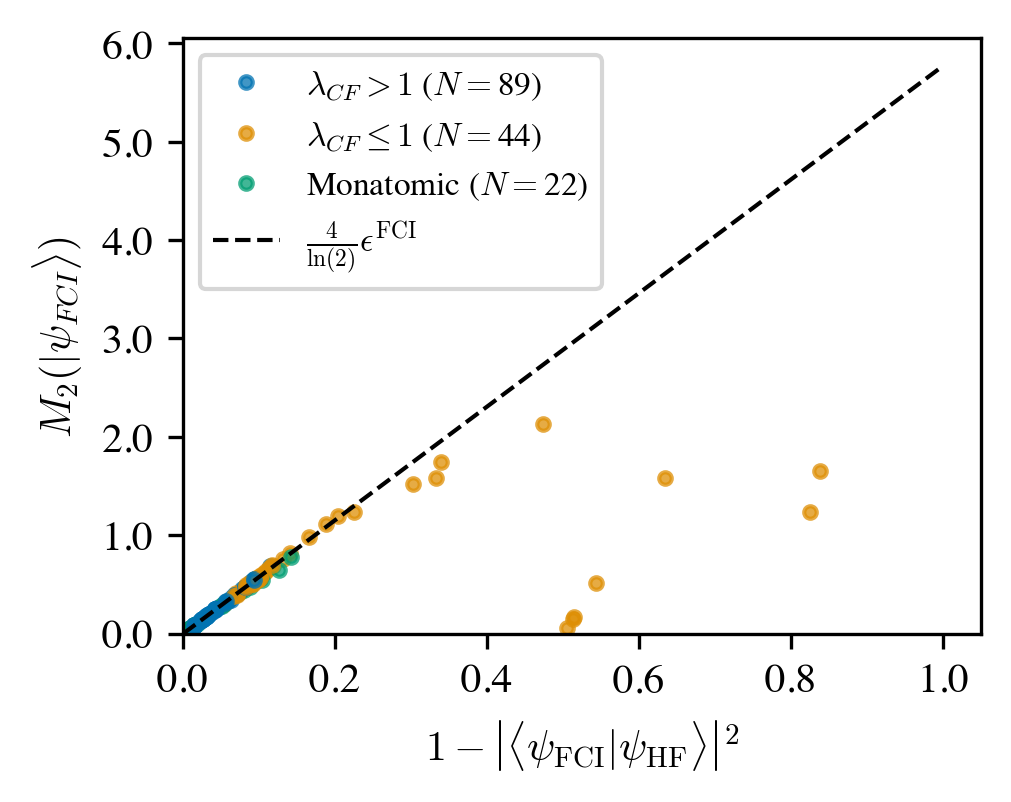
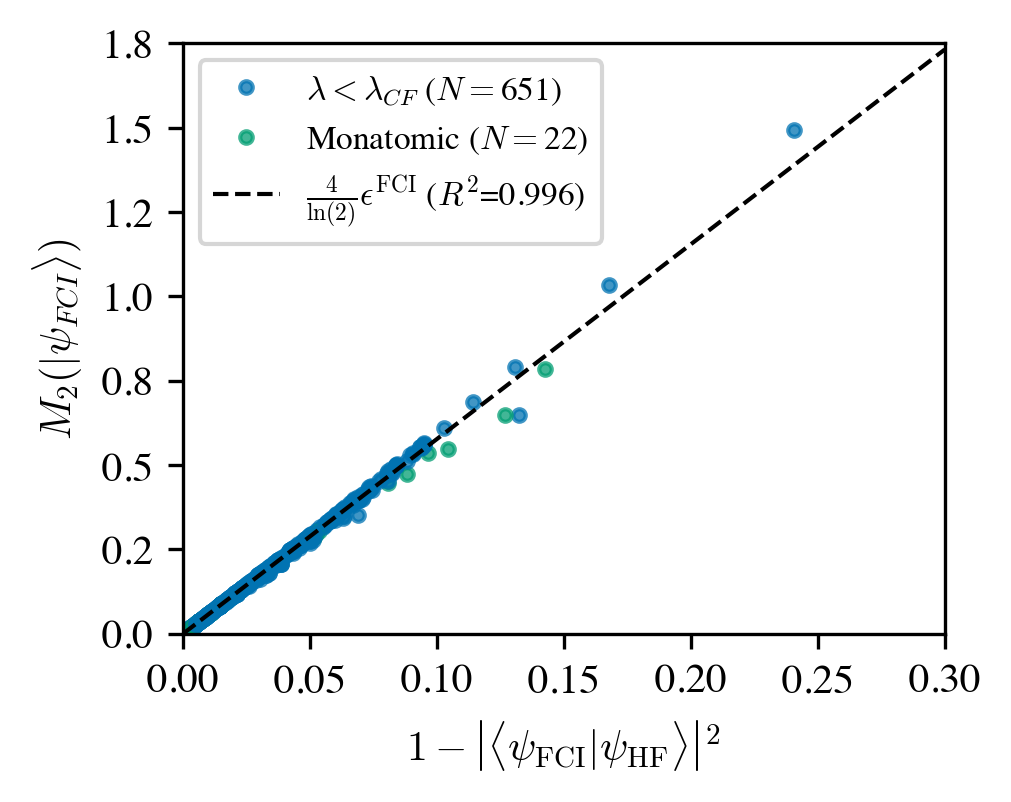
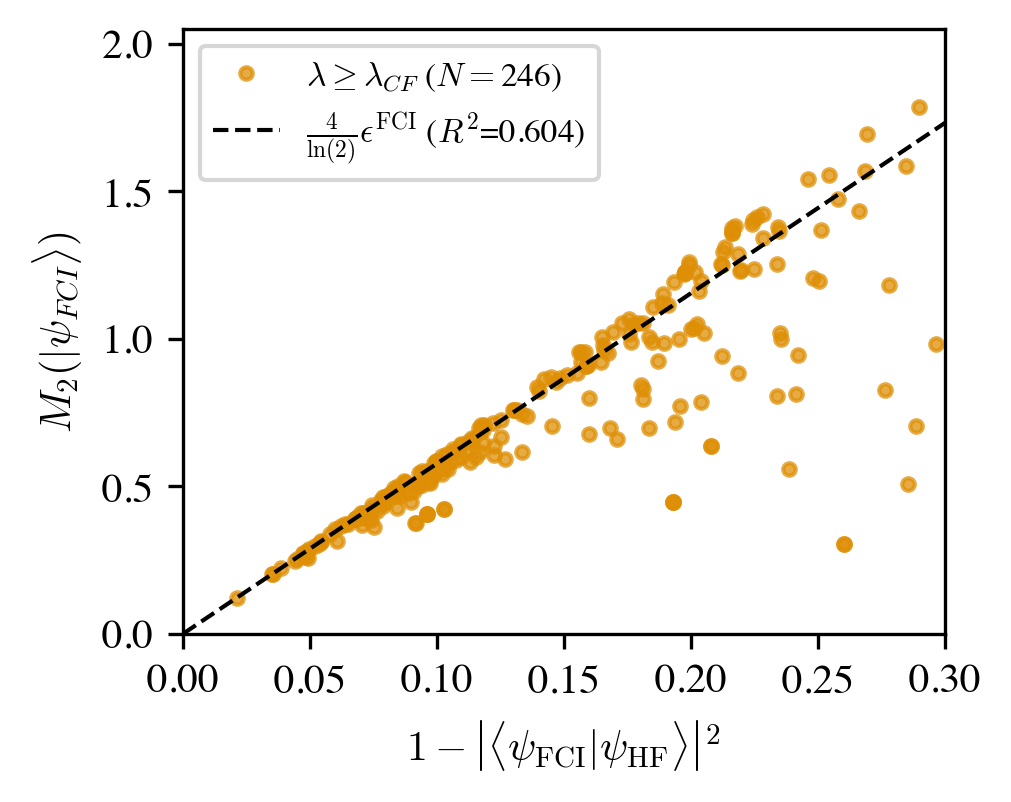
Figure 2: SRE of FCI ground states M22 and distance from the Hartree-Fock reference state M23, illustrating the predicted linear relation.
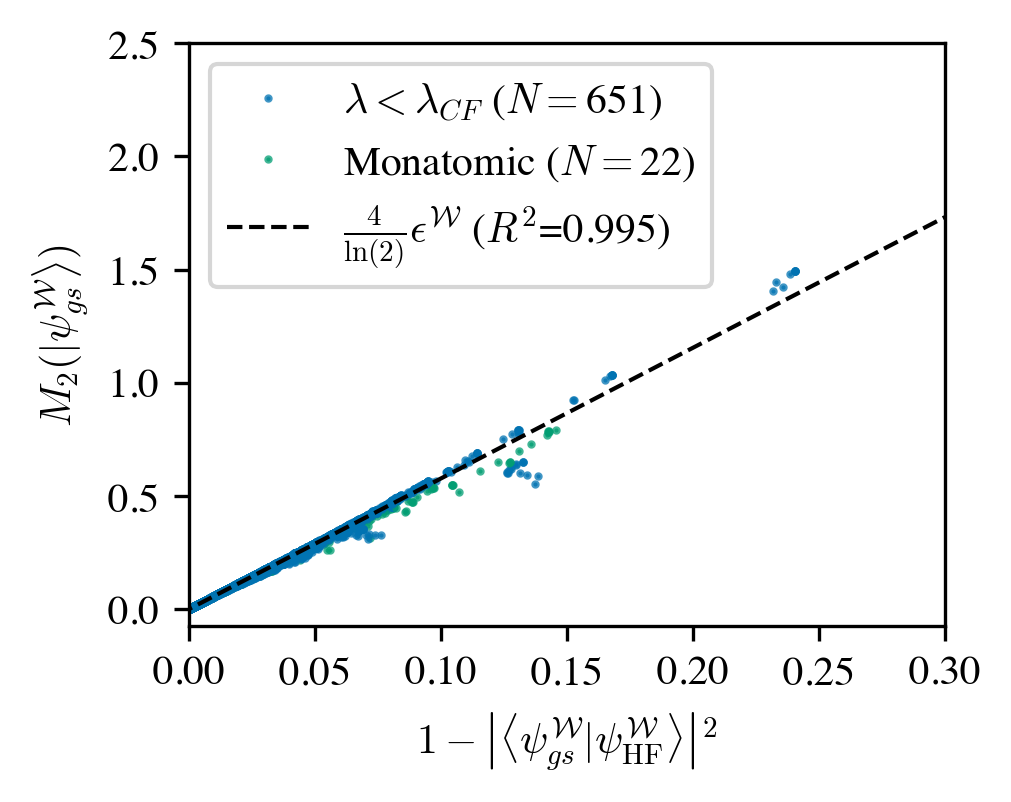
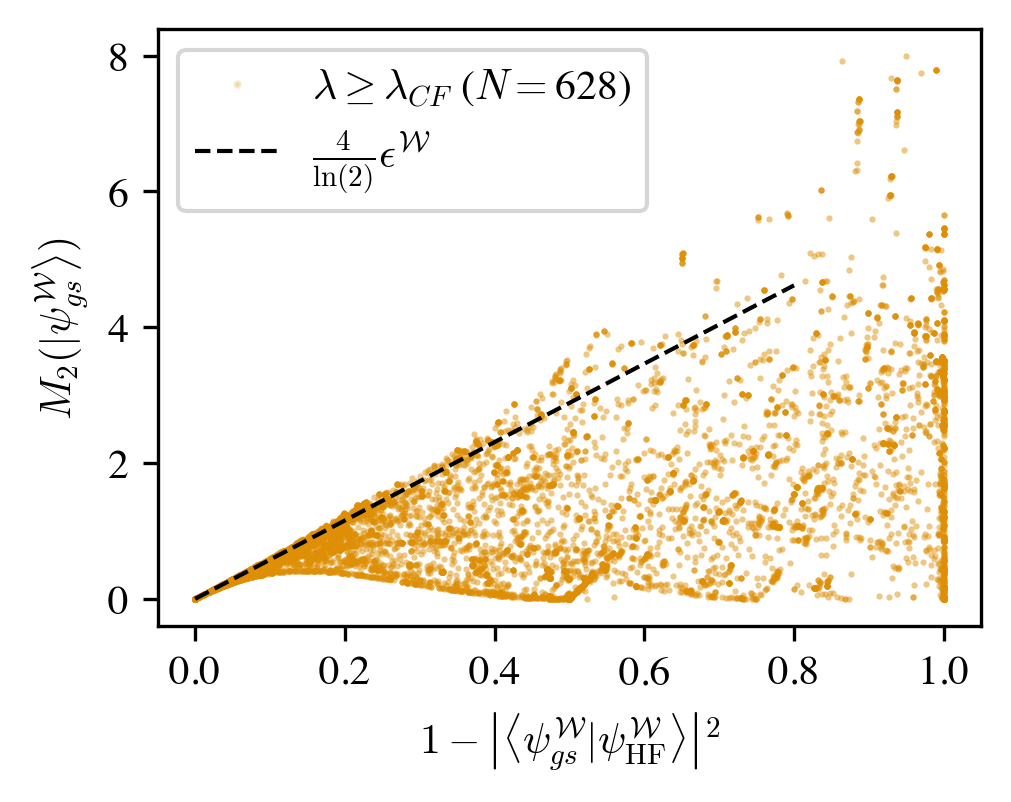
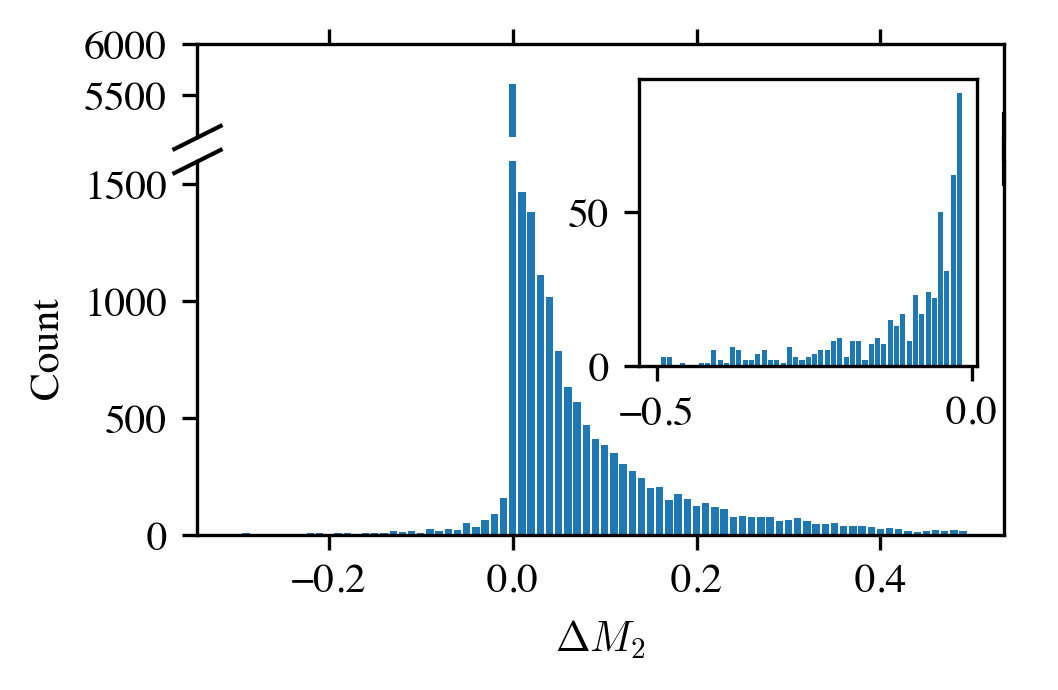
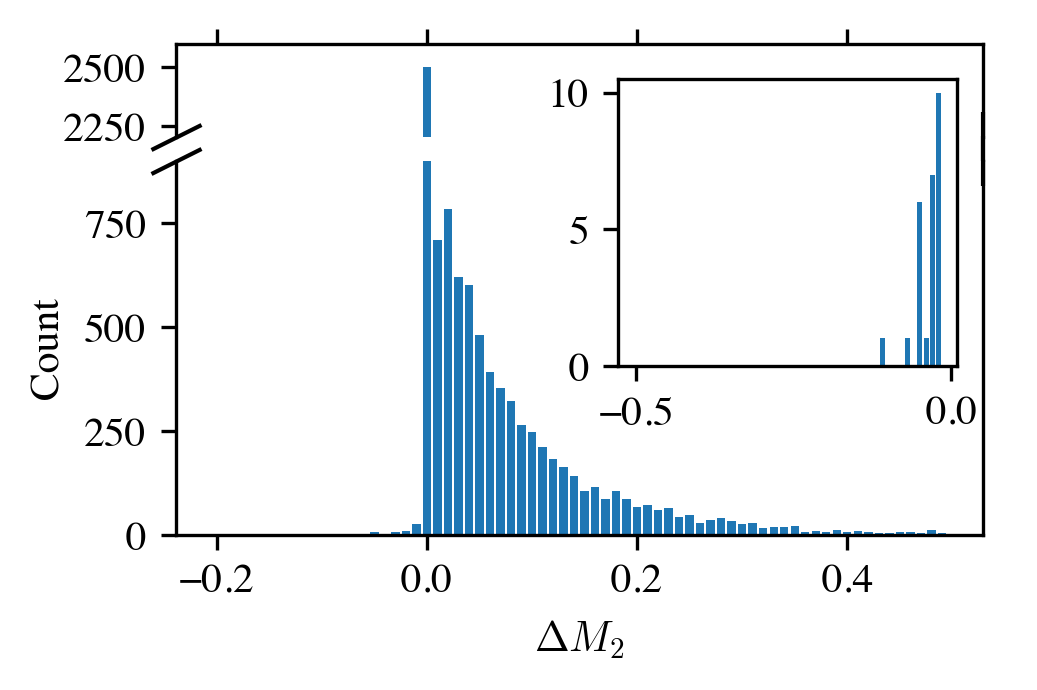
Figure 3: SRE of contextual subspace ground states M24 as a function of distance from the projected HF reference, generalizing the result to approximate ground states.
Numerical Results
A comprehensive dataset of 190 molecular species (yielding 1594 Hamiltonians after basis set and geometry variations), encoded via Jordan-Wigner transforms and subjected to symmetry tapering, enables a robust statistical test of the theory.
Key findings include:
- For all weakly/moderately correlated systems (HF-FCI overlap M25), the magic M26 of the ground state is in excellent agreement with the theory (see Figures 2 and 3). Outliers occur only beyond the Coulson-Fischer point, where HF becomes a poor reference.
- For CS ground states, as the contextual subspace grows (i.e., as more generators are unfixed, increasing quantum resource requirements), both the magic and the recovered correlation energy increase monotonically.
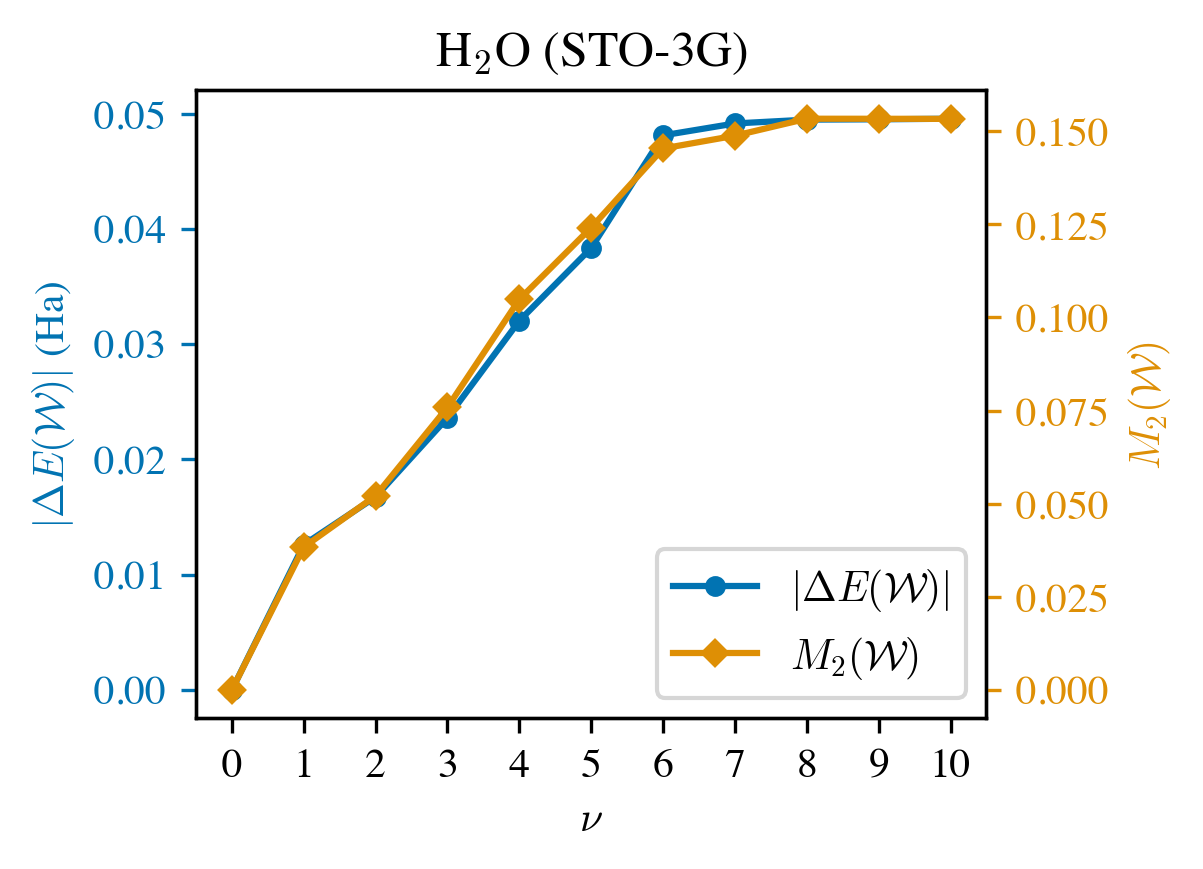
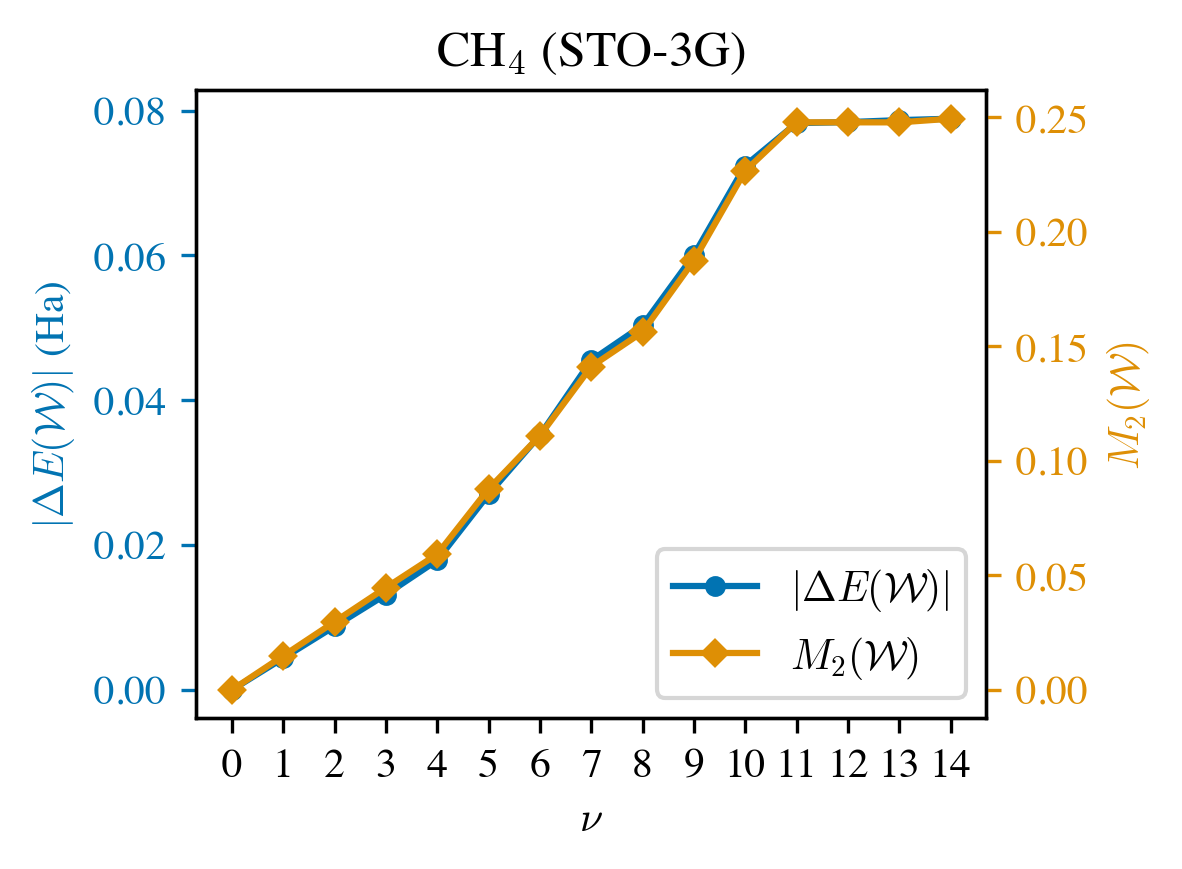
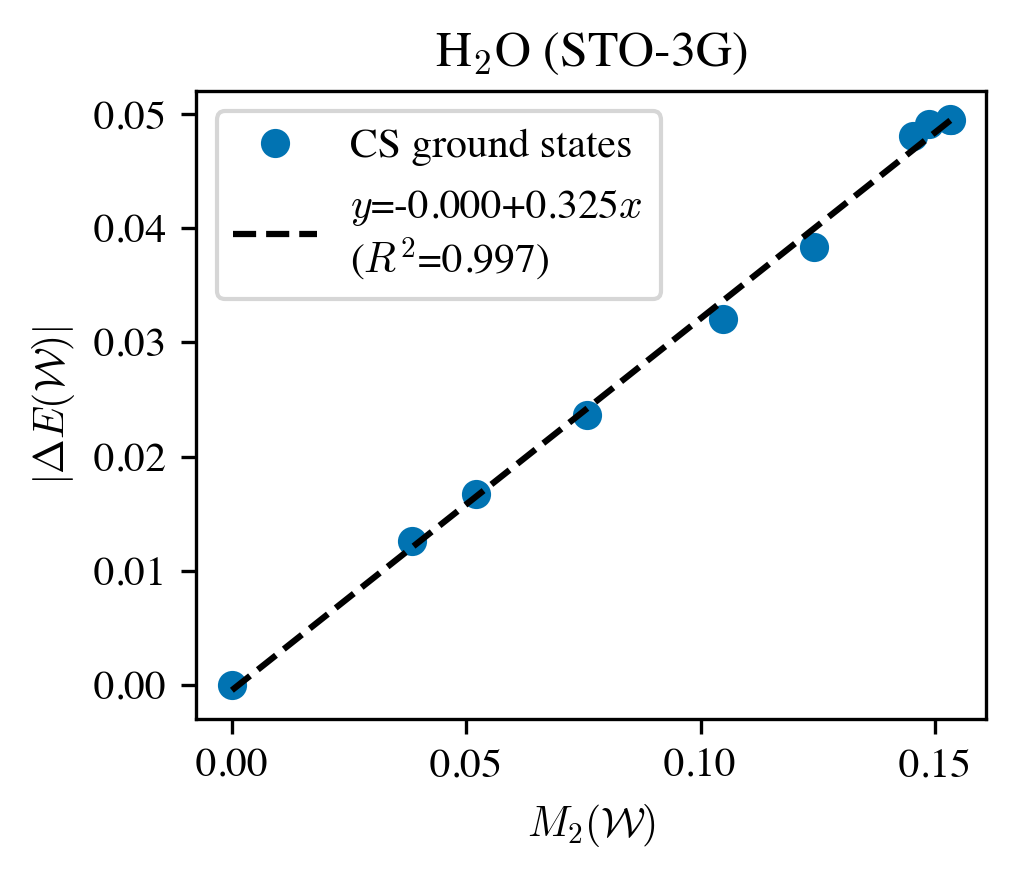
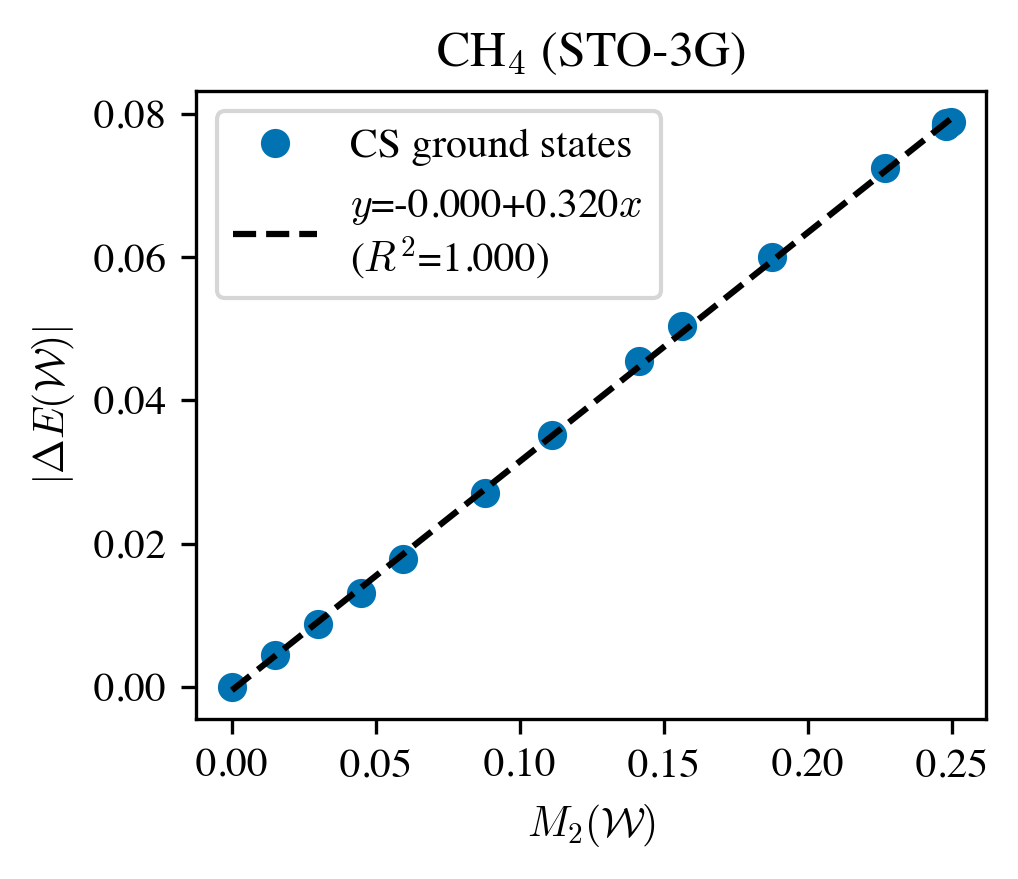
Figure 4: (a) and (b): Magnitude of correlation energy M27 and M28 of CS ground states for HM29O and CHMα0, showing joint monotonic increase with subspace size.
- Across the entire dataset, a nearly universal linear relationship is observed between the fraction of the recovered correlation energy and the normalized magic (see Figure 5). The slope is close to unity for weakly- and moderately-correlated systems.
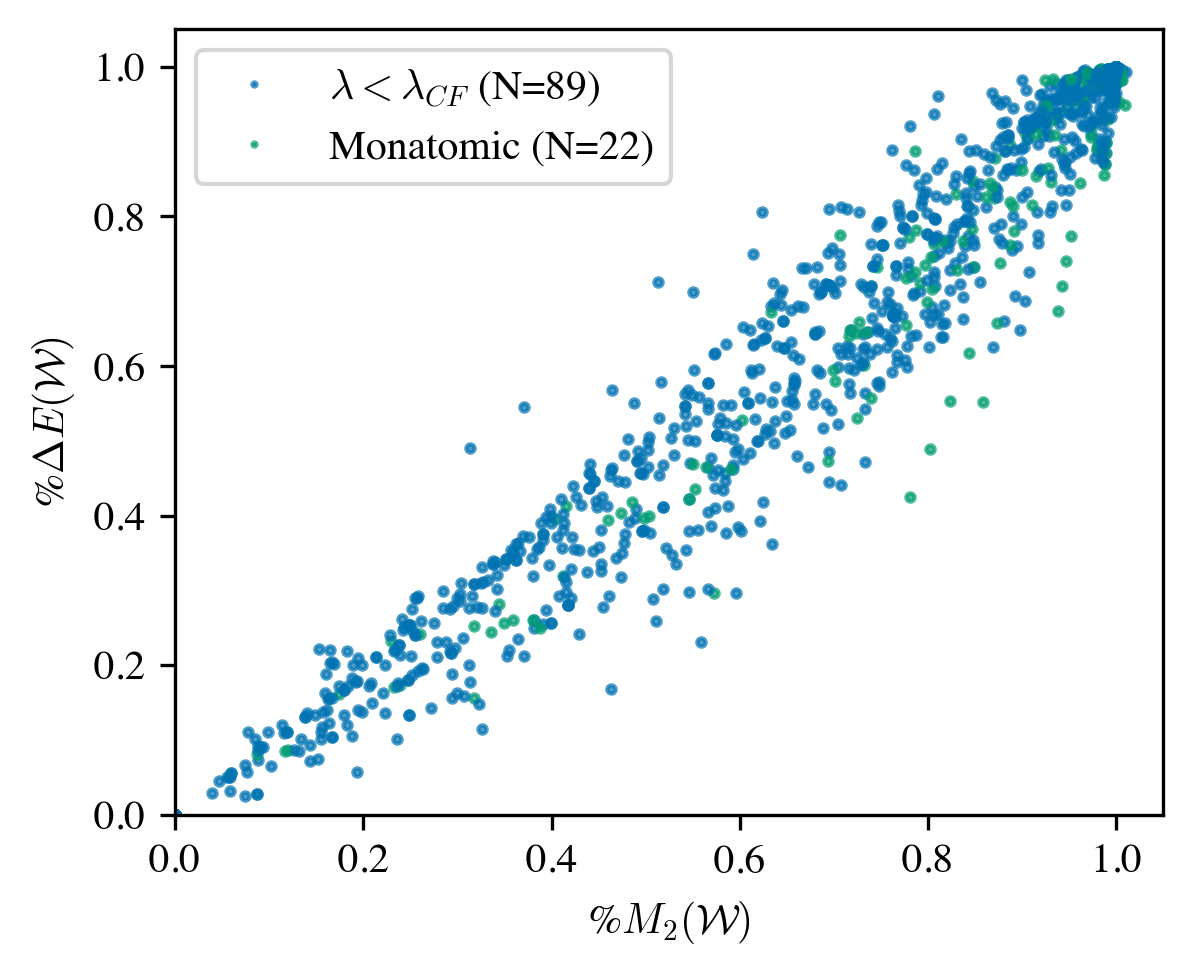
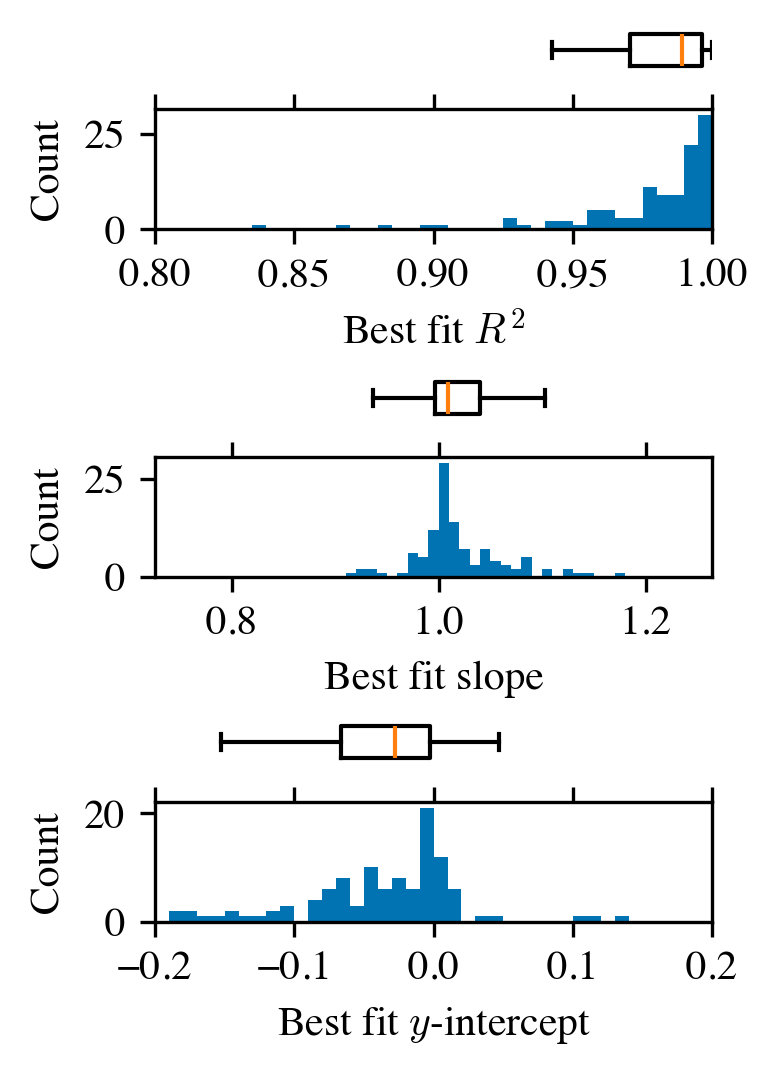
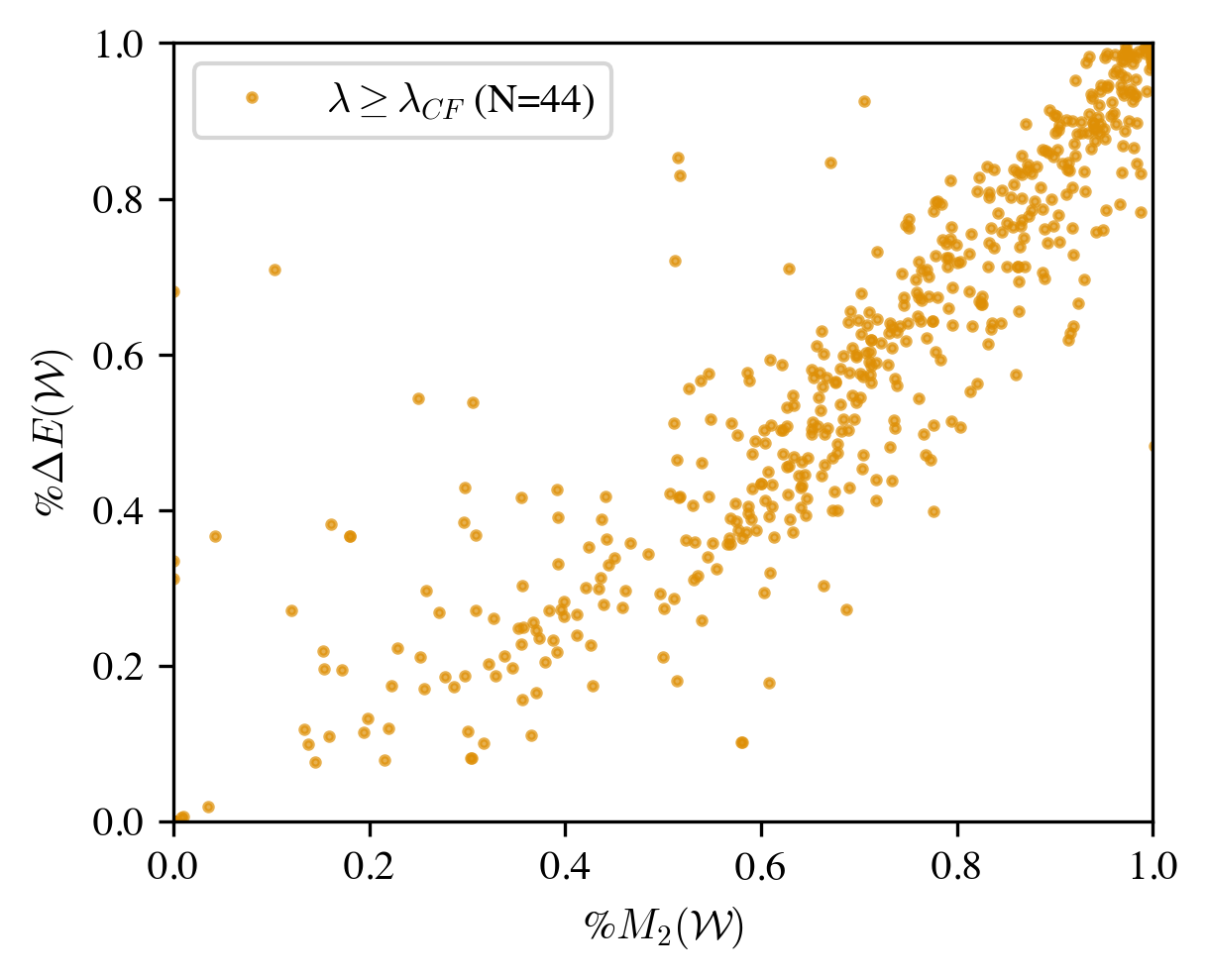
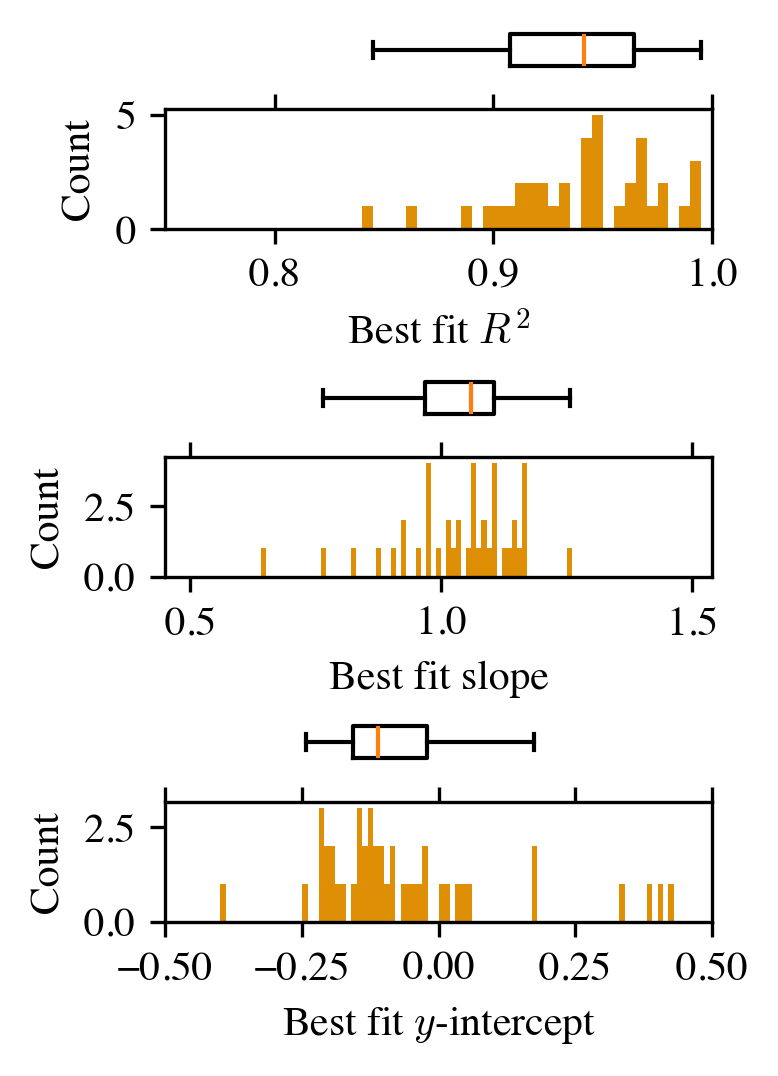
Figure 5: (a) Fractional correlation energy Mα1 vs fractional magic Mα2 for multiple species; (b) Distribution of best-fit slopes and offsets.
- Beyond the Coulson-Fischer point and in the multi-reference regime, the correspondence breaks down, as expected, due to large deviations from the single-reference character assumed in the analytic arguments.
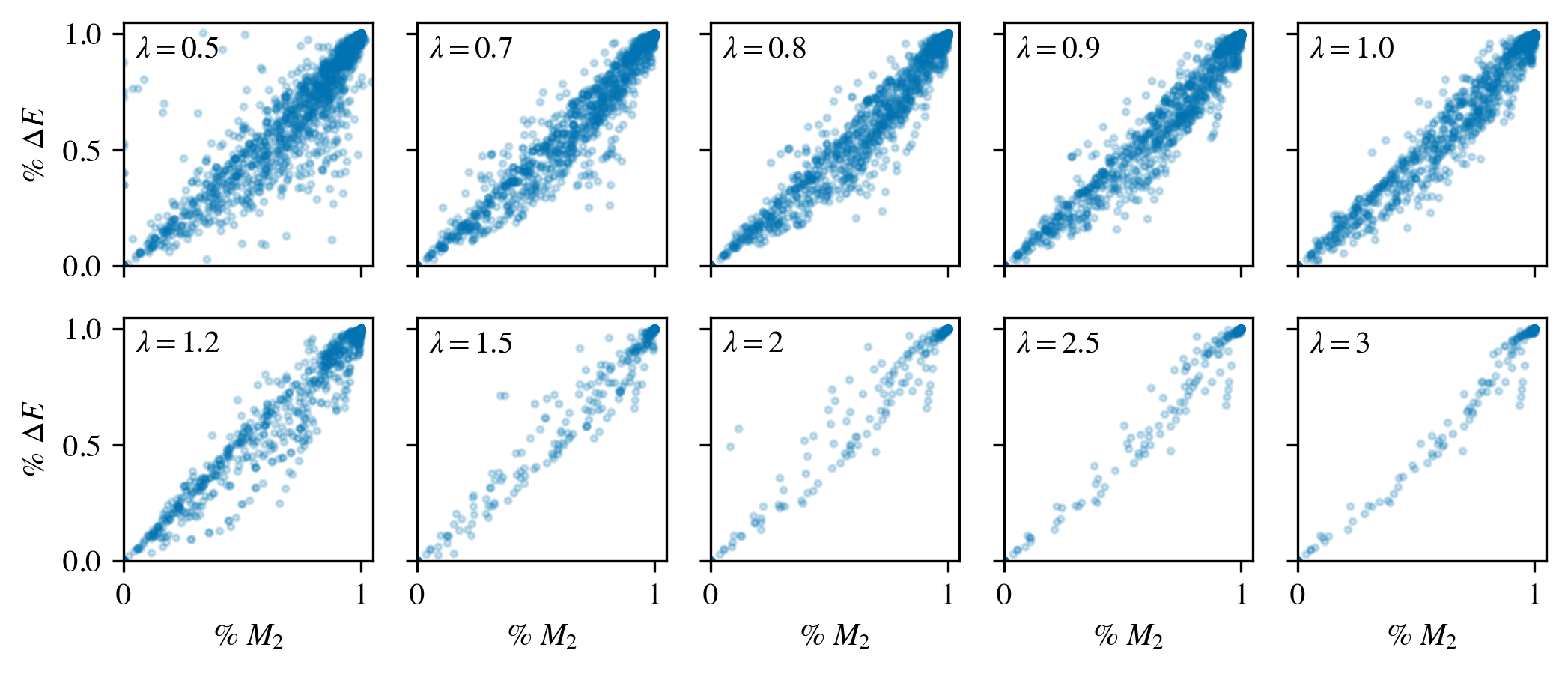
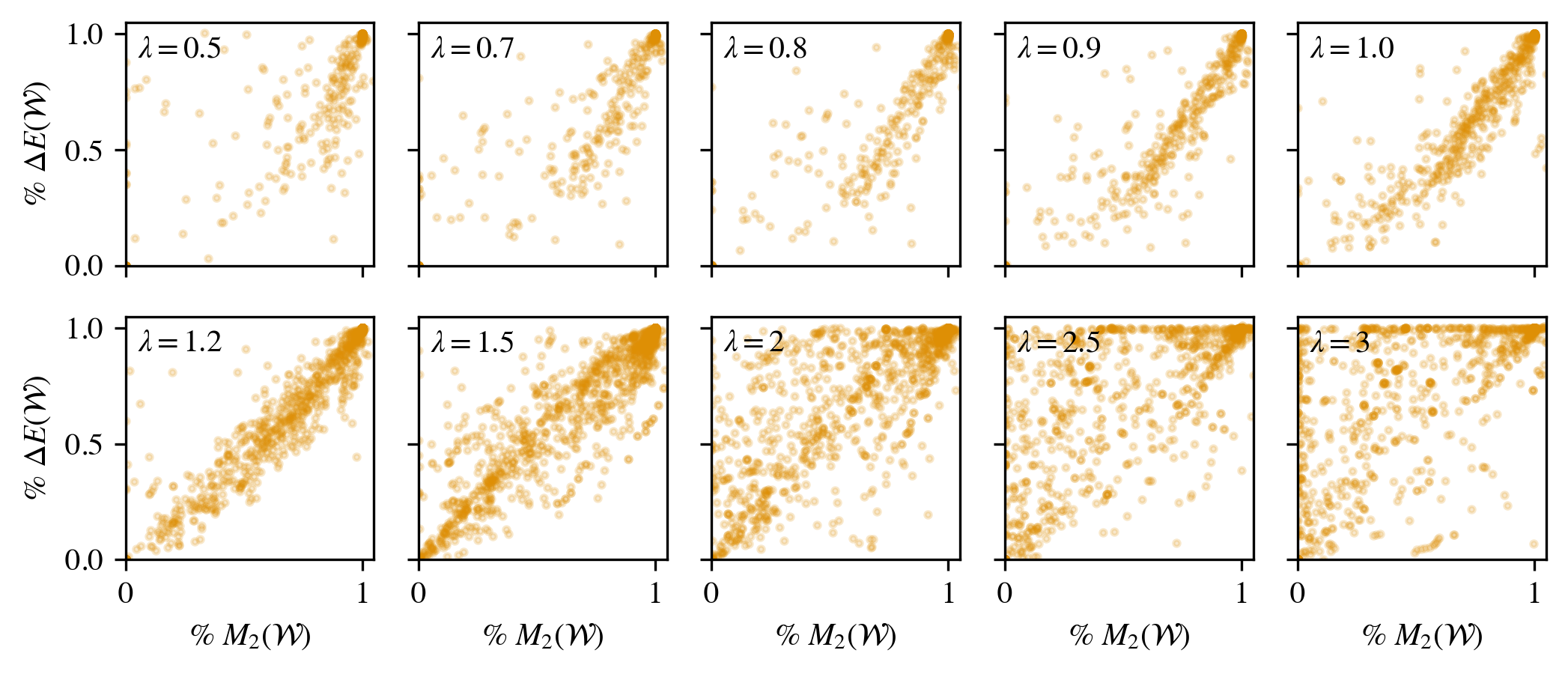
Figure 6: Fractional correlation energy Mα3 vs Mα4 for (a) below and (b) above the Coulson-Fischer point, showing robust linearity in the former and breakdown in the latter.
Implications and Future Directions
The identification of quantum magic (non-stabilizerness) as a quantitative marker for electronic correlation fundamentally ties quantum information resource theory to the domain of quantum chemistry. This enables:
- Practical Estimation: Mα5 can be estimated from the HF reference weight, allowing prediction of quantum simulation complexity from standard quantum chemistry output, prior to explicit quantum computation.
- Resource-Aware Algorithms: The CS method is validated as a systematic way to interpolate between classically tractable and fully quantum regimes, tuning resource usage with a quantifiable measure (Mα6).
- Role of Non-Classicality: The results reinforce the view that non-classical resources beyond entanglement—here, magic/contextuality—are essential for simulating correlated fermions and achieving quantum advantage over classical algorithms.
- Paths for Improvement: In strongly correlated systems, the breakdowns indicate the need for improved references, potentially via methods such as CAFQA or GAS-SCF, to better capture stabilizer proximity.
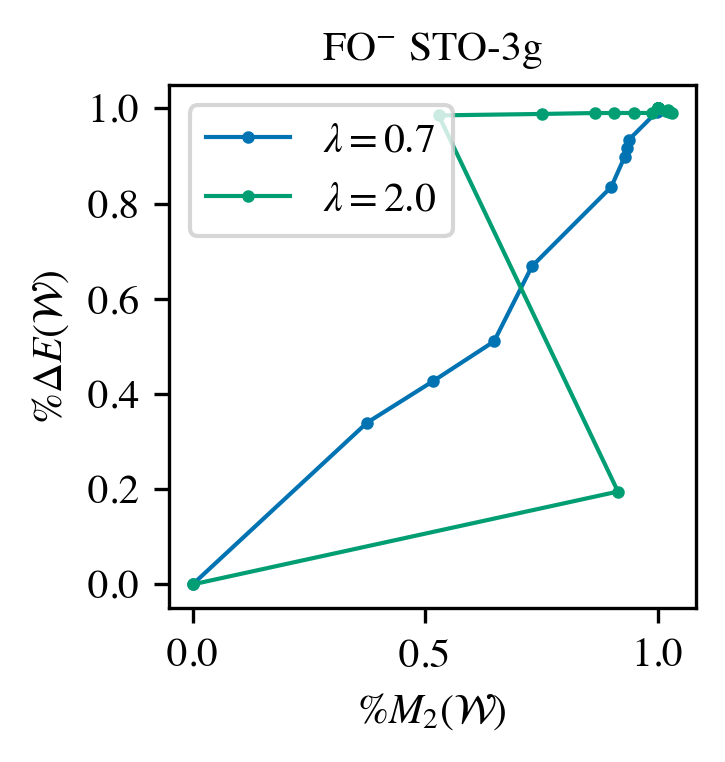
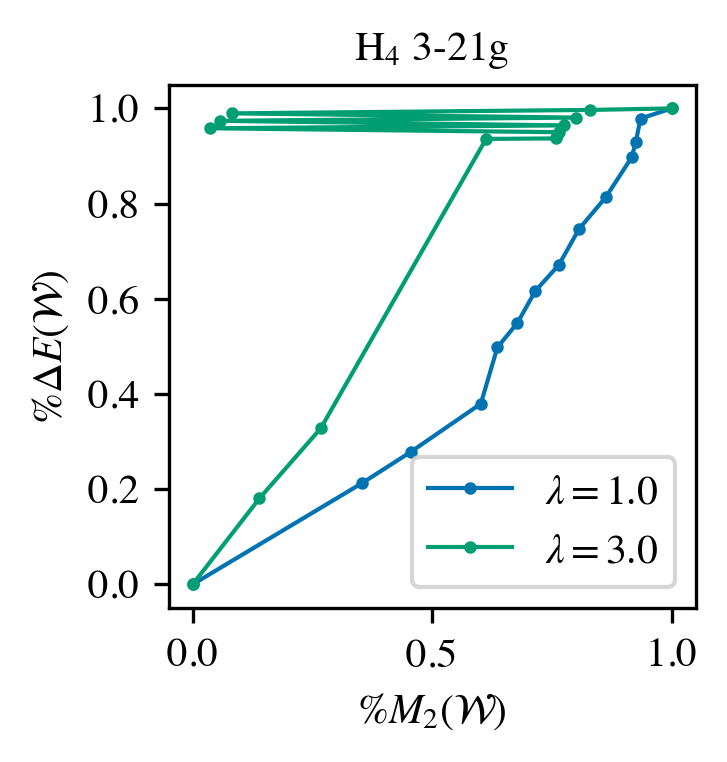
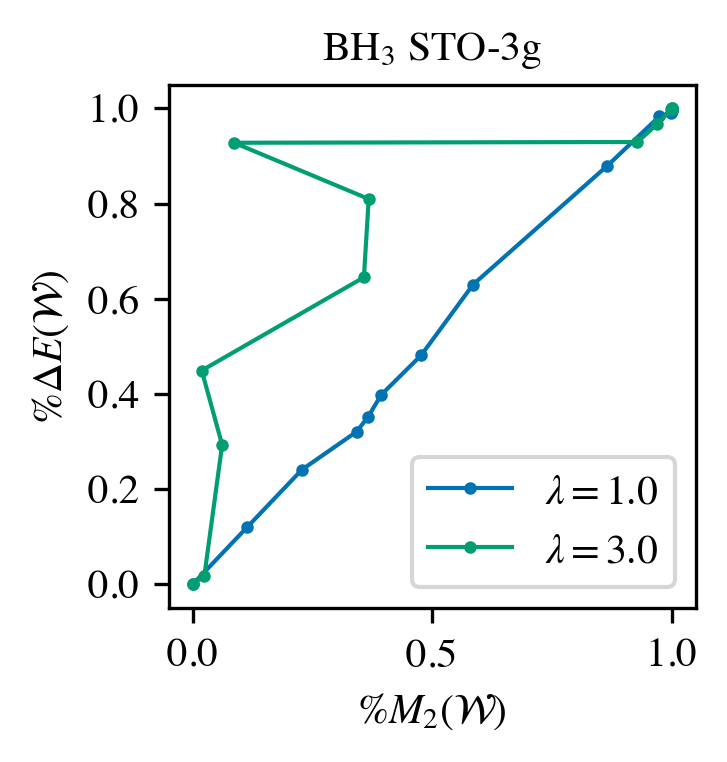
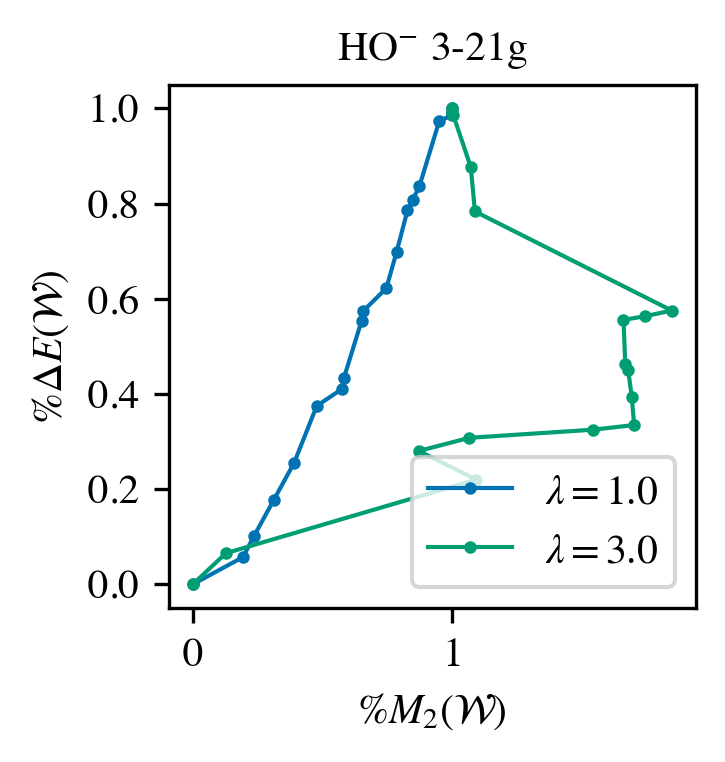
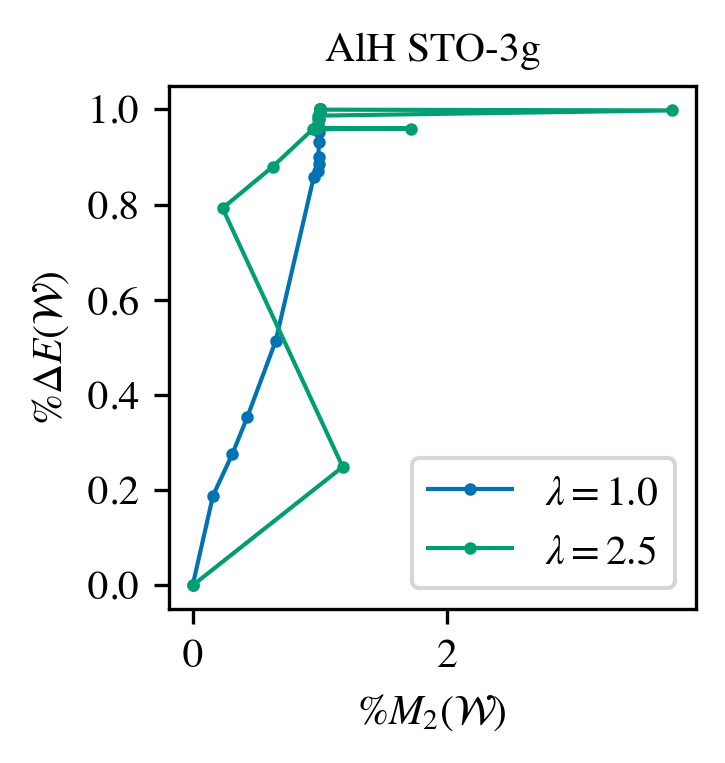
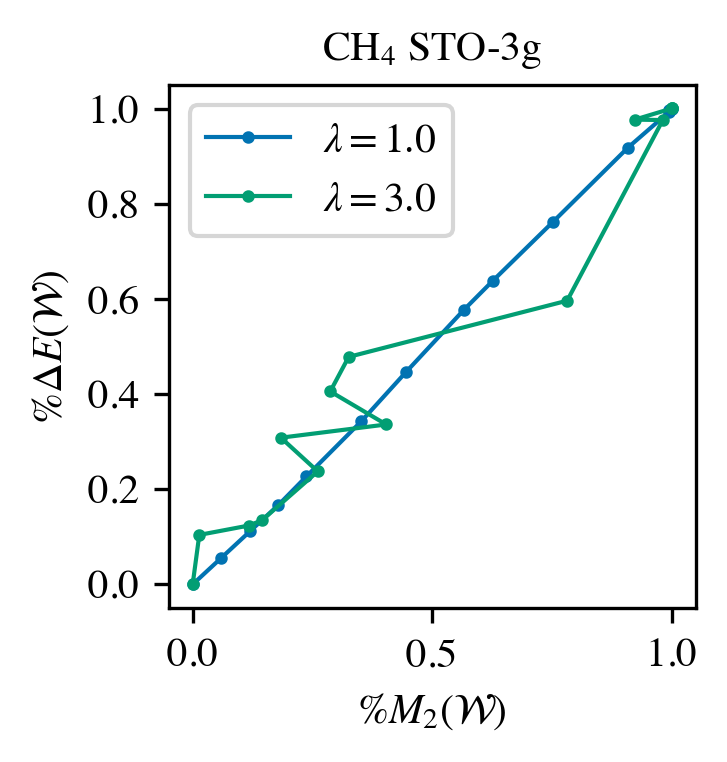
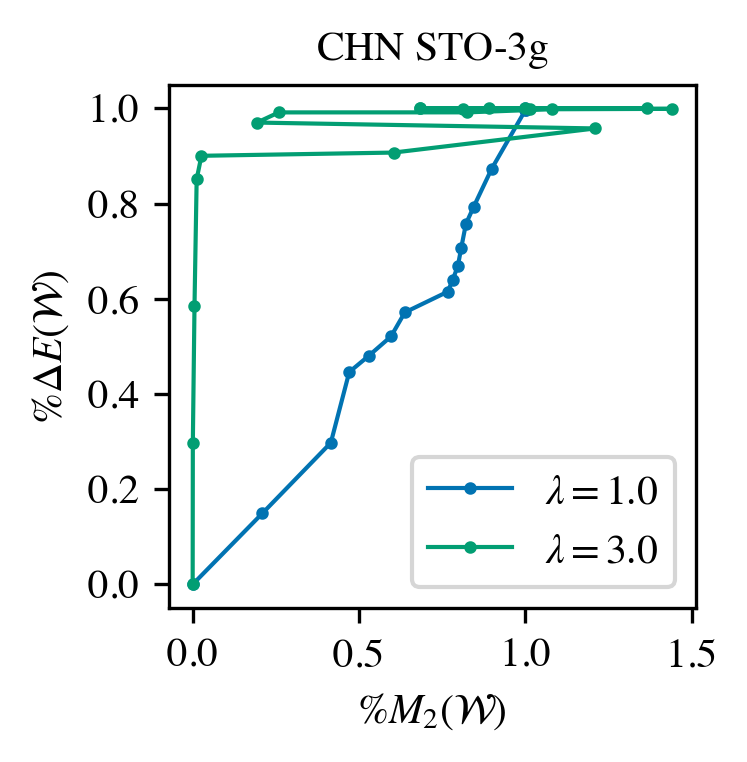
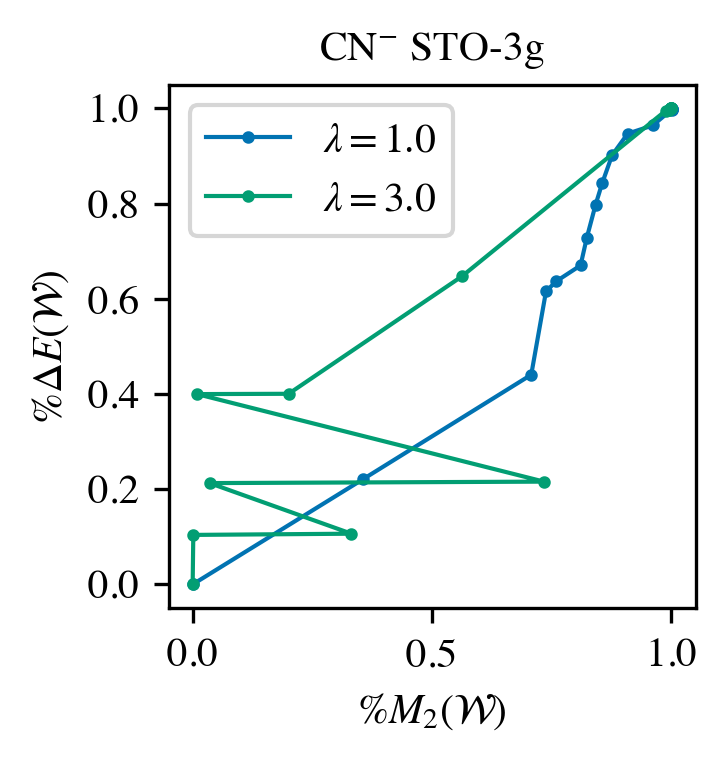
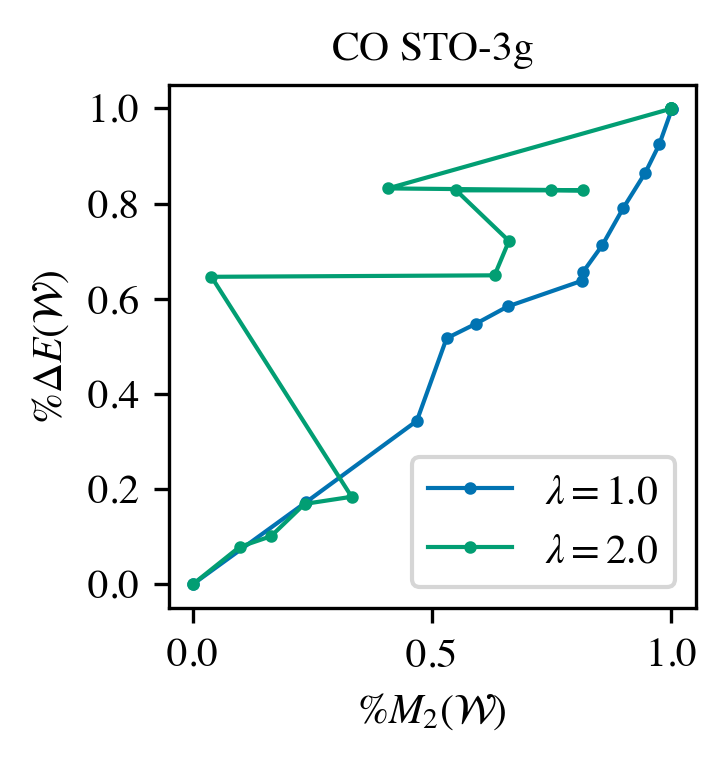
Figure 7: (a)-(i) Simulations of selected molecules across the Coulson-Fischer point. Below this point, monotonic linearity is observed; above, the relation can break down or become non-monotonic.
Conclusion
This work rigorously establishes that for weakly- and moderately-correlated molecular electronic structure problems, the fundamental quantum resource—magic, as measured by the 2-stabilizer Rényi entropy—provides a direct quantification of correlation. The CS method enables precise, monotonic adjustment of quantum resources, offering a principled bridge between classical and quantum regimes. Beyond furthering theoretical understanding, these results provide a practical toolkit for both benchmarking quantum simulators and guiding the design of NISQ-era quantum algorithms targeting challenging quantum chemistry calculations.