- The paper presents first comparative empirical evidence showing a stark US-centric intensity in robocall activity with a 19:1 call ratio between US and international targets.
- It employs a novel dual-mode honeypot infrastructure that collected over 8.7 million call records from 65 countries, enabling detailed analysis of campaign structure and linguistic patterns.
- Advanced clustering and transcript similarity analyses reveal coordinated scam campaigns and dynamic attacker adaptation, informing technical and policy countermeasures.
Robocalls: Transnational Analysis and Empirical Insights from Multimodal, Multilingual Honeypot Data
Introduction
The paper "Robocalls: A Worldwide or US-only Problem? Analyzing Spam and Fraud in International Phone Calls" (2606.31790) delivers the first comparative empirical study of international versus US robocall activity based on a large-scale, multinational honeypot system. The authors present a new multimodal, multilingual open dataset comprising 8.7 million call detail records (CDRs), 839 manually verified robocall transcripts, and 677 call audio recordings from 65 countries. Leveraging over 100,000 globally distributed phone numbers across a 9-month observation window, the research quantitatively and qualitatively contrasts robocall prevalence, campaign structure, linguistic properties, and operational behavior between US and international targets.
Experimental Infrastructure and Dataset
The methodological core is a dual-mode honeypot architecture. In passive mode, the system records inbound call metadata without answering, minimizing influence on caller behavior and maximizing data on unsolicited interactions. In interfering mode, calls are answered and a multilingual warning about call recording is played, after which calls are recorded for subsequent content analysis. This approach is notable for its scale—over 100k phone numbers, yielding approximately 9.6 million raw calls—and for being the first to systematically deploy such an infrastructure internationally.

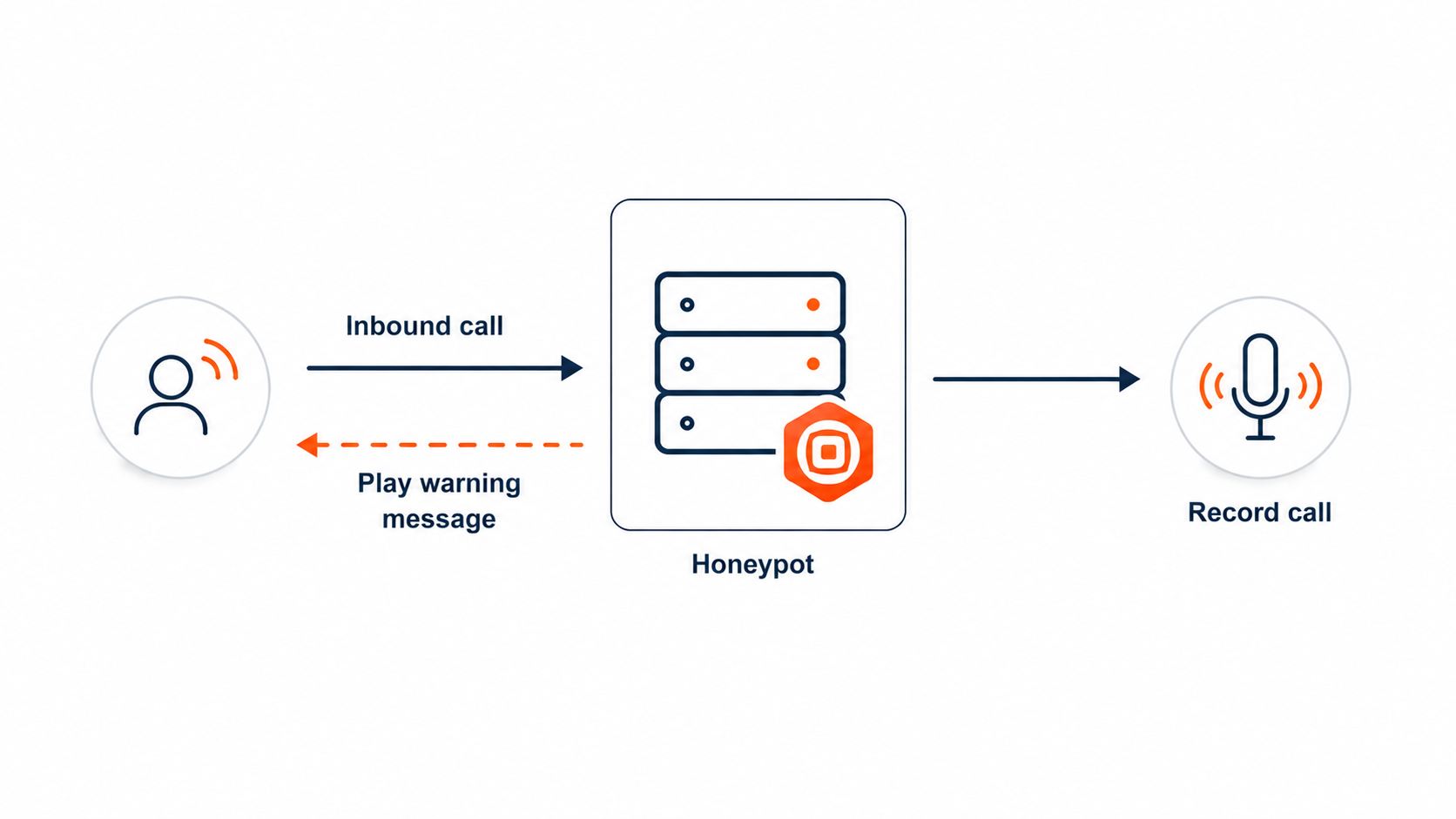
Figure 2: The two honeypot modes: passive (metadata-only, non-interfering) and interfering (active warning, call recordings).
Ethical and legal considerations directed stringent anonymization of metadata and verification by human annotators of all released recordings and transcripts. Notably, only caller IDs with at least two calls are included in analyses, and singletons are excluded as likely human misdials.
Empirical Characterization of Robocall Volume and Patterns
A key numerical result is the US-centricity of robocall activity:
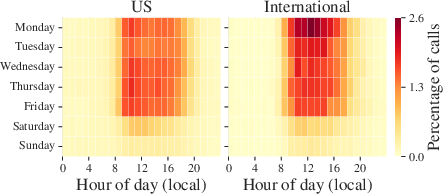
Temporal analysis reveals:
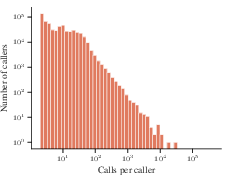
Call distribution is heavy-tailed:
Neighbor spoofing (spoofing caller IDs to match callee regions) is dominant:
- 89.9% of all calls display a caller country code matching the callee.
- Cross-border attack patterns, e.g., Nigeria is the top non-domestic source for 35 US states.

Figure 4: Global map of dominant external robocall source countries per target nation.
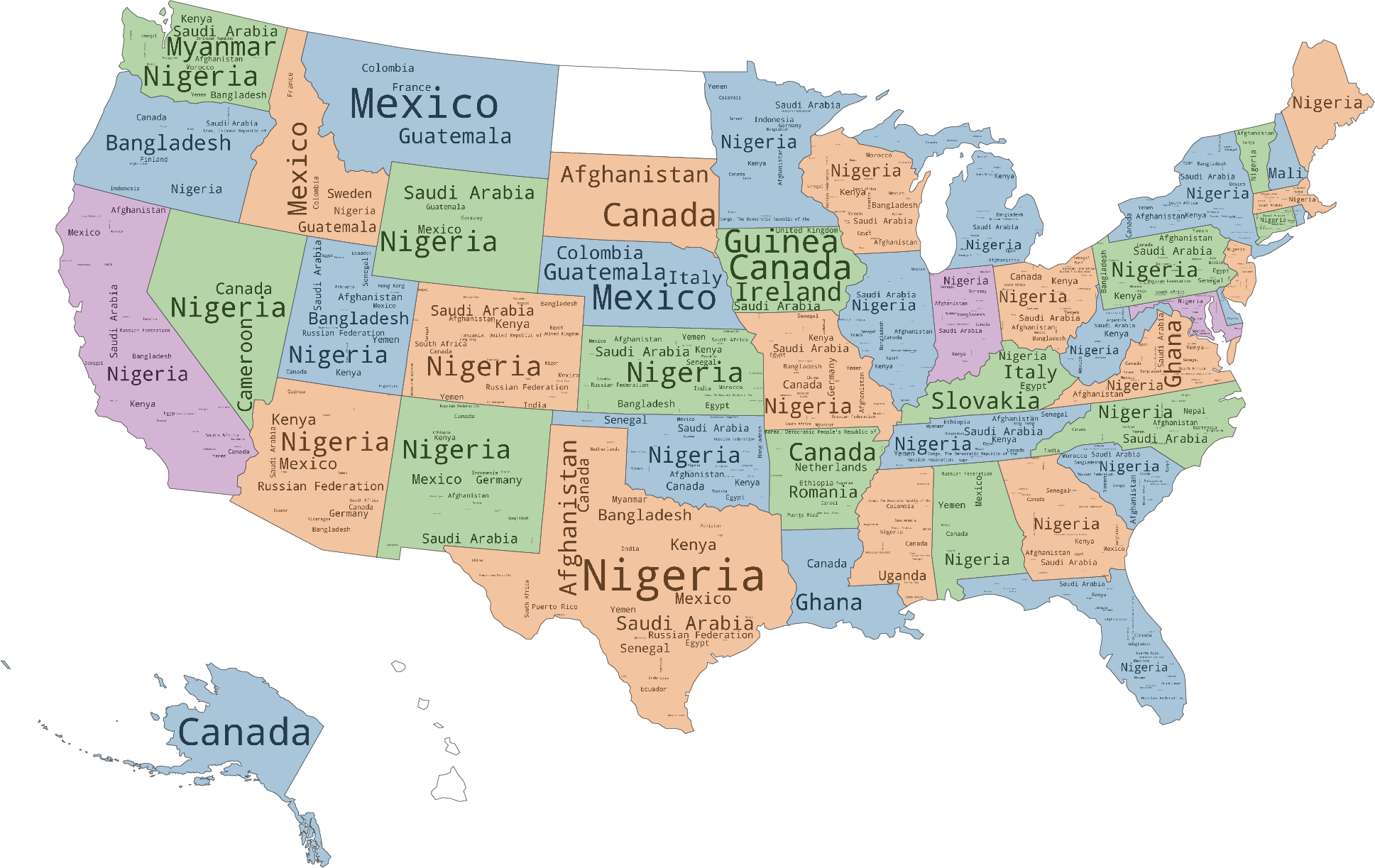
Figure 5: US state view of dominant non-domestic robocall sources, with Nigeria prominent.
Campaign Structure and Actor Organization
To detect structural coordination, the authors construct graphs linking caller IDs that target the same honeypot numbers within 24-hour windows and cluster these via weighted Leiden community detection.
- Group-size distribution is heavy-tailed; most clusters contain few actor IDs, but a small minority are large.
- Critically, message similarity within clusters (mean cosine similarity 0.728 US, 0.629 international) far exceeds between-cluster similarity (0.516 US, 0.475 international); ratio uplift: 1.41× (US), 1.33× (Intl).
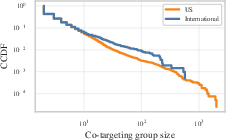
Figure 7: Size distribution of temporal co-targeting caller clusters: most groups are small, with a few large coordinated campaigns.
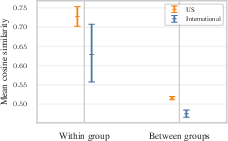
Figure 8: Within-group transcript embeddings exhibit significantly higher semantic similarity than between-group pairs, validating campaign structure inferred from metadata alone.
Call Content and Linguistic Analysis
Silence and Adversarial Adaptation
Analysis of audio recordings and VAD reveals that a substantial fraction of robocalls are "blank" (US: 75.22% silent; Intl: 58.98%), suggesting scout calls or use of Answering Machine Detection (AMD). A switch from passive to interfering honeypot mode—which plays a warning to the caller—produces a pronounced drop in call volume, supporting the hypothesis that attackers dynamically adapt to monitor responses.
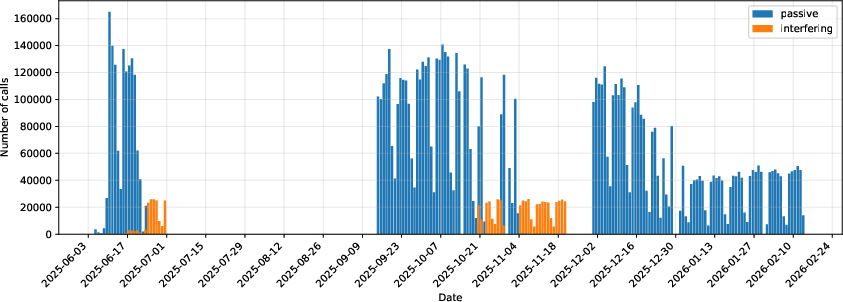
Figure 9: Daily call volume drops acutely when the honeypot begins answering and warning callers, consistent with AMD-based attacker adaptation.
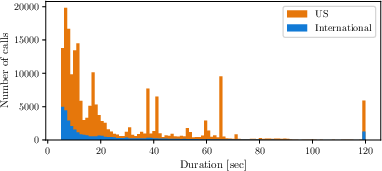
Figure 10: Call duration distribution with most calls <20s, characteristic of mass scanning and drop-off after preliminary detection.
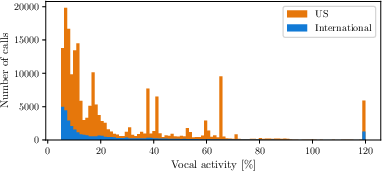
Figure 11: Proportion of vocal activity: a large fraction of robocalls have minimal or no speech, in line with previous findings.
Linguistic Distribution
- English dominates both domains (US: 92.35%; Intl: 59.44%), with Spanish and regionally prominent languages (Mandarin, Polish, Hindi) also represented.
- High-frequency word clouds by language and region display campaign-characteristic terms ("press", "loan", "payment", "credit") but also clear regional variation in phrasing and tactics:
- US robocalls: More likely to persuade targets to call a given number (33.6% of US transcripts contained a callback number, compared to only 1.8% internationally).
- International robocalls: Increased use of interactive instructions (e.g., pressing buttons) rather than callback inducement.
(Figure 13) and (Figure 14)
Figure 12: Word clouds and chord diagram illustrating flow of language-to-country in robocall targeting.
Automated and Manual Campaign Discovery
DBSCAN clustering on normalized transcript TF-IDF vectors, followed by manual campaign labeling and LLM categorization, surfaces the most prominent scam archetypes:
- US: Technology-oriented scams (notably Google business listing impersonations), grants/benefits scams, technical support fraud, and a significant non-malicious segment (legitimate public agency notifications).
- International: Prevalence of loan/debt/recovery scams, multilingual in execution (English, Hindi, Spanish), and political spam.
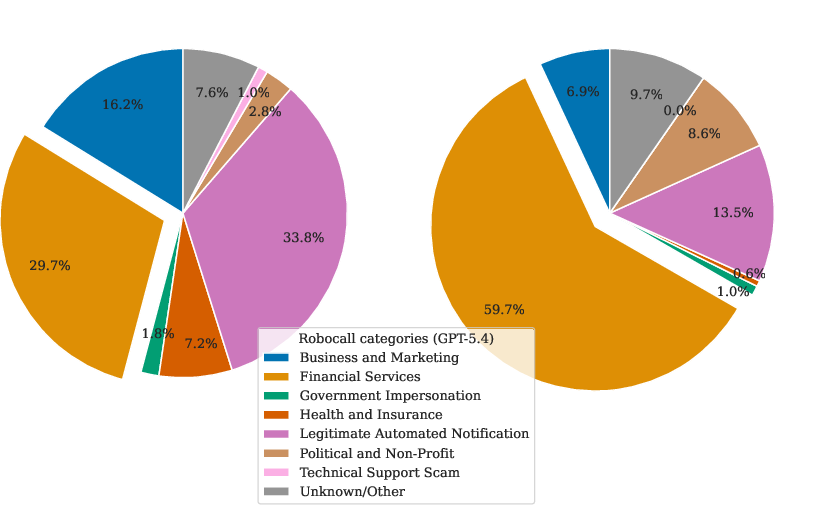
Figure 16: Robocall scam category breakdown: US is distinguished by dominance of tech support, business, and some legitimate notifications, while international campaigns skew toward financial/fraud scams.
Theoretical and Practical Implications
Robustness and Attacker Adaptability
The failure of STIR/SHAKEN and related caller authentication frameworks to curtail robocalling, particularly in transnational contexts, is repeatedly underscored. Attackers circumvent regional controls via international routing, multisource spoofing, and adapt dynamically to the presence of detection systems.
Multilinguality and Real-world Impact
The open, multilingual dataset establishes new benchmarks for real-time, multilingual robocall and fraud detection research, particularly for machine learning models robust to adversarial silence, cross-lingual transfer, and spoofed metadata.
Policy and Countermeasure Guidance
Key numerical results: US recipients are an order of magnitude more targeted than international numbers, and a minority of high-volume actors ("supercallers") are responsible for a large portion of activity. This supports interventions that disproportionately burden or block prolific / cross-regional attack infrastructure. Evidence for attacker AMD and campaign-level adaptation suggests that both technical and policy measures should be dynamic and resilient to rapid evolutionary evasion.
Limitations and Future Directions
Main limitations are driven by ethical constraints (e.g., mandatory warning messages in recordings, exclusion of singleton calls to reduce the probability of capturing human misdials) and technical variability (e.g., availability of numbers, treatment of international groups as a single block rather than per-country granularity).
The dataset and codebase provide a foundation for further research, including:
- Region-specific, language-agnostic detection models.
- Systematic adversarial studies on attacker adaptation to detection/warning signals.
- Collaboration with carriers and regulators for fine-grained, real-time threat intelligence fusion.
Conclusion
This study delivers clear empirical evidence that robocalls, while global, are of significantly higher intensity in the US relative to other countries, both in per-number and aggregate terms. The authors expound the structural, temporal, and linguistic features of robocall campaigns, highlighting attacker adaptation strategies in response to detection and deterrence. The release of a large, open, multimodal dataset marks a substantial resource for future robust robocall detection systems, cross-lingual anti-fraud research, and informs evolving regulatory and technical countermeasures addressing the persistent global challenge of fraudulent phone spam.