- The paper presents a new physics-based signal model in φ-OTDR that links cumulative phase changes and local amplitude variations to temperature perturbations in optical fibers.
- The authors validate the model using a coherent detection setup, achieving sub-1.5°C accuracy and sub-0.05°C/s rate uncertainty in temperature recovery.
- The work enhances distributed temperature sensing by enabling robust event detection and precise quantitative profile reconstruction, paving the way for advanced fiber-optic monitoring.
Distributed Temperature Sensing in φ-OTDR: Physics, Signal Modeling, and Quantitative Recovery
Introduction
Phase-sensitive optical time domain reflectometry (φ-OTDR) has established itself as a critical tool in distributed fiber-optic sensing, enabling detection of temperature, strain, and vibration over extended distances using conventional telecommunication fiber. This paper presents a rigorous theoretical and experimental analysis of distributed temperature sensing in coherent φ-OTDR systems, introducing a physics-based signal model that quantitatively relates the local and cumulative temperature changes along the fiber to measurable signal parameters, namely the amplitude and phase of the Rayleigh backscattered optical field. The work closes a significant gap in the understanding of temperature-perturbed φ-OTDR signals—previous approaches have been largely phenomenological or restricted by simplistic modeling assumptions.
Theoretical Framework: Temperature Effects in Rayleigh Backscattering
A central contribution of this work is the derivation of an analytical framework mapping local temperature perturbations to variations in amplitude and phase of the backscattered signal in a coherently detected φ-OTDR system. The backscattered field is modeled by summing over the electric field contributions from distributed microscopic scattering centers embedded in the fiber. Temperature changes perturb the refractive index via the thermo-optic effect and extend the fiber via thermal expansion, shifting both the logical center and physical reference point of each scattering zone.
The model clarifies that the measured phase encodes the cumulative temperature change from the interrogator to the point of measurement, while the amplitude exhibits predominantly local sensitivity. This integrative character of the phase—resulting from the optical path length accumulated along the fiber—forms the basis for robust temperature-event detection and high-resolution profile recovery in φ-OTDR. The shift of the logical scattering-zone center and that of the reference position due to thermal effects are shown to be nearly equal in magnitude but opposite in sign, enabling discrimination between local and integrated events.
Experimental Setup
A detailed experimental campaign validates the theoretical models. The φ-OTDR setup utilizes a narrow-linewidth CW laser, Mach-Zehnder modulator, and conventional single-mode fiber as the sensing medium. Temperature control in a defined 25 m segment allows precise application of heating and cooling profiles. The system employs a coherent receiver architecture with pulse coding to enhance SNR and spatial resolution.
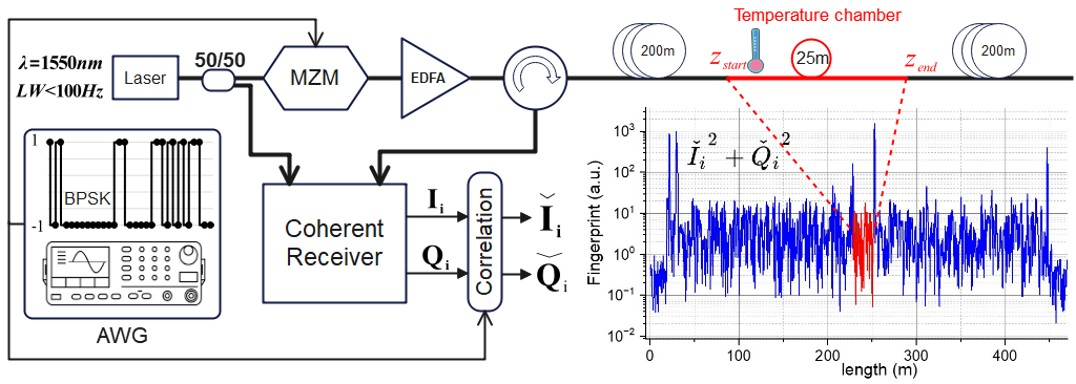
Figure 1: φ-OTDR experimental setup for quantitative distributed temperature validation.
Signal Analysis and Event Detection Algorithms
Signal processing leverages both amplitude and phase readouts. However, due to phase noise sources (particularly laser phase drift), differential phase analysis is used for robust event detection. The slow-time evolution of the second-order phase differential, Δψi,mk, provides a direct marker of temperature events: it remains stationary under static conditions, but demonstrates highly characteristic and spatially localized variations under heating or cooling.
Strong evidence of heating (positive peaks) and cooling (negative peaks) is observed in both the raw and averaged evolution of Δψi,mk along the fiber, enabling unambiguous detection and classification of temperature events, as well as precise estimation of their spatial extent.
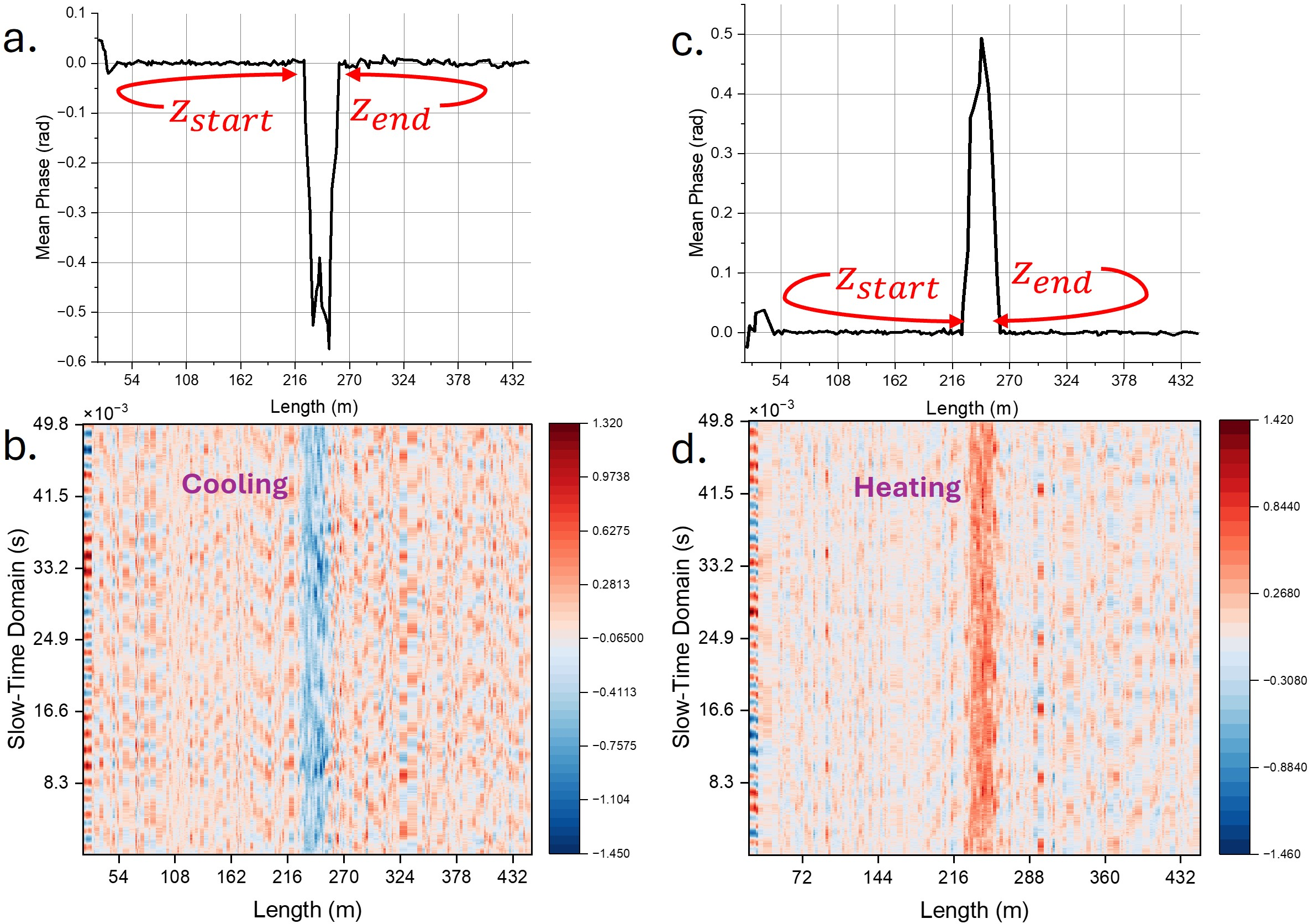
Figure 2: Evolution of the second-order phase differential function Δψi,m over slow time during heating and cooling, with averages revealing localized event boundaries.
Quantitative Temperature Profile Reconstruction
A major achievement of the proposed framework is its provision for closed-form quantitative recovery of both instantaneous temperature rates and absolute temperature profiles along the fiber. The cumulative nature of the measured phase translates into a linearly growing phase trajectory with slow time for each affected segment. Linear regression of the unwrapped differential phase yields the spatially resolved temperature rate, T˙i, with high precision by leveraging the theoretical proportionality constants derived in the model.
The reconstructed temperature profiles demonstrate quantitative agreement with the applied temperature patterns, both during heating and cooling cycles. Temporal recovery leverages local parabolic interpolation across discrete samples, achieving sub-1.5 °C uncertainty without reliance on empirical calibration procedures.
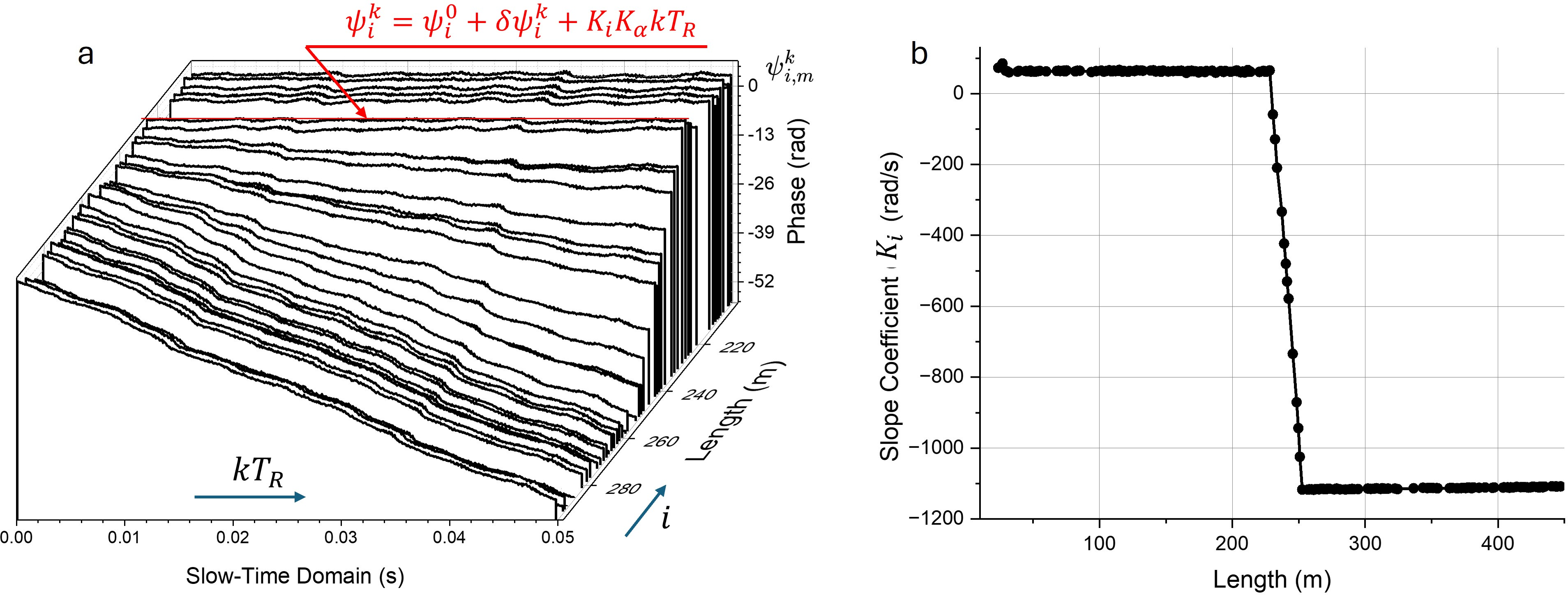
Figure 3: a) Slow-time evolution of the phase ψi,mk for different positions around the heated/cooled segment. b) Extracted slope coefficients Ki as a function of position, mapping the affected zone.
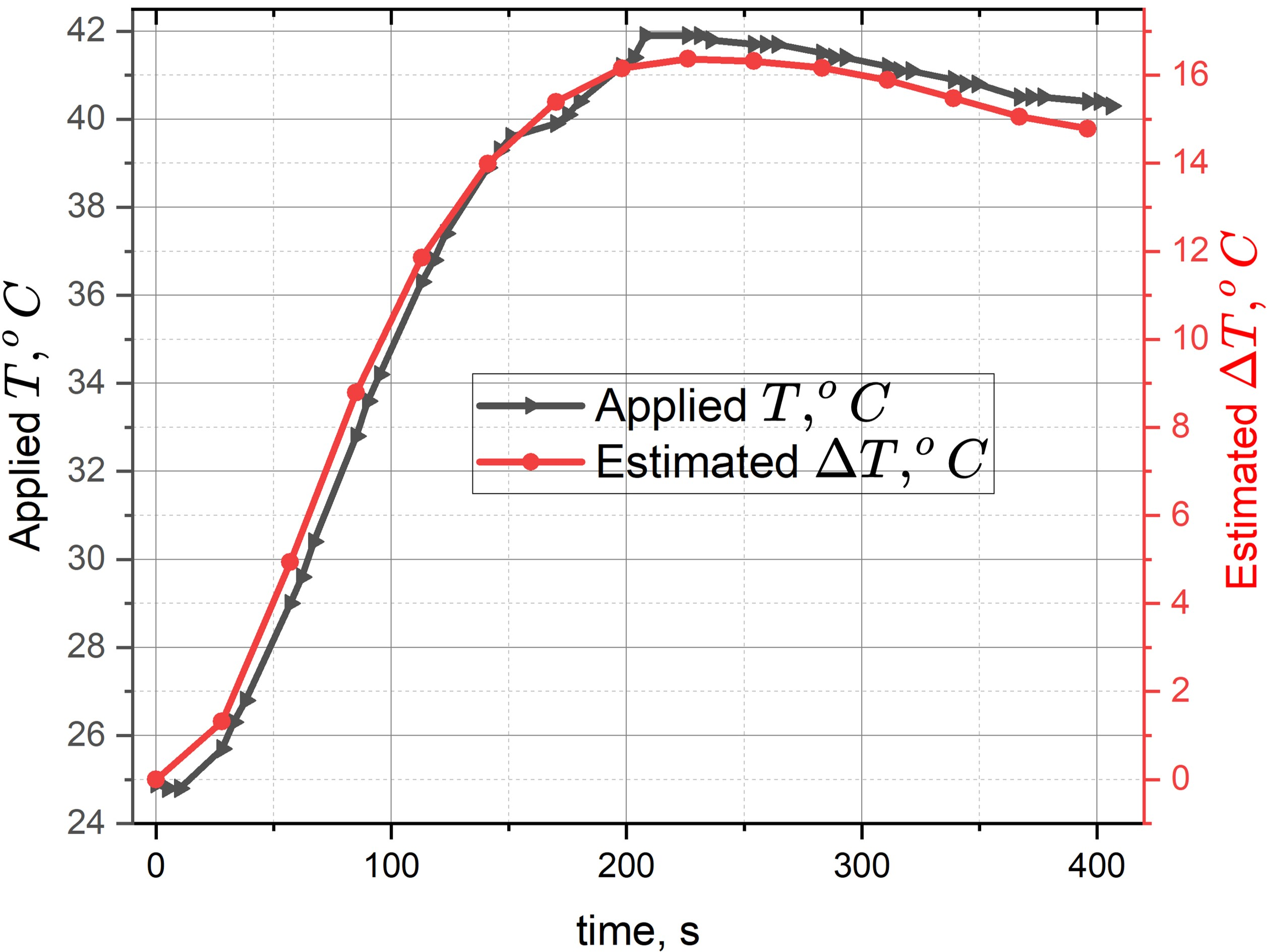
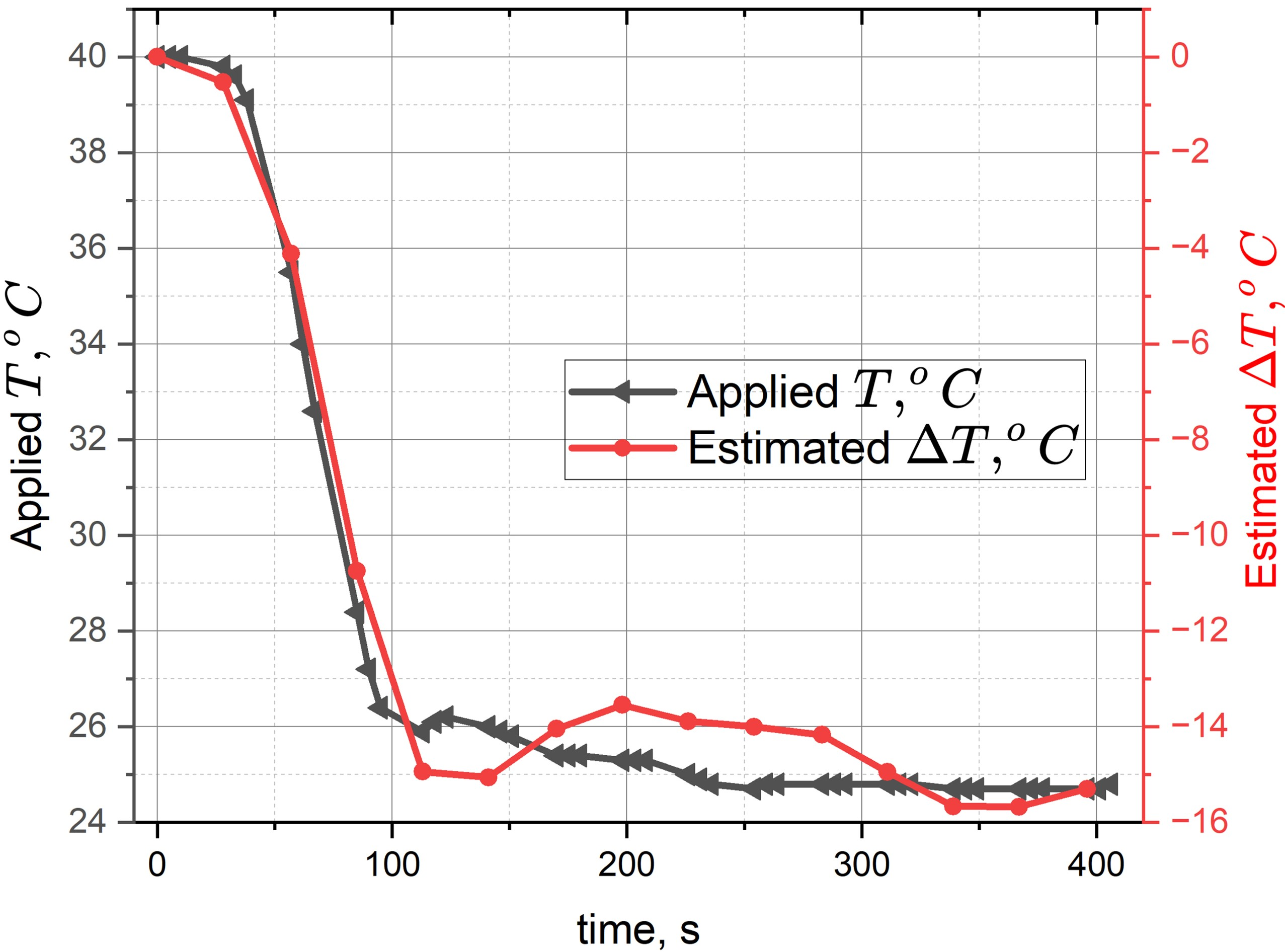
Figure 4: Applied versus recovered temperature profiles at a selected FUT segment during heating (left) and cooling (right), demonstrating accurate reconstruction.
Discussion and Implications
The paper's central claim—that the recovered phase in coherent φ-OTDR is fundamentally sensitive to the cumulative temperature between the interrogator and the sensing location—challenges the historically empirical approach to fiber-optic temperature sensing. The derived formalism provides not only predictive power over the measured signal, but also establishes a foundation for more complex algorithmic and potentially machine-learning-based approaches to distributed sensing.
This integrative approach enables:
- Improved spatial discrimination between genuine thermal events and confounding effects such as polarization-induced amplitude fading;
- Systematic modeling and simulation of distributed temperature sensing, aiding instrumentation design, calibration, and performance optimization;
- Data-driven enhancements, including hybrid physical-statistical reconstruction algorithms that incorporate model-derived constraints.
The framework is extensible to joint strain-temperature sensing, dynamic event detection, and may facilitate new applications—e.g., large-scale infrastructure or environmental monitoring via re-purposed telecom fiber—where modeling accuracy and interpretability are critical.
Conclusion
This work rigorously establishes the physics and signal processing fundamentals of temperature-induced perturbations in coherently detected φ-OTDR systems. It presents a unified analytical and experimental approach demonstrating that the measured phase carries integrated temperature information, while the amplitude remains locally sensitive. Strong numerical results, including sub-0.05 °C/s rate uncertainty and sub-1.5 °C temperature accuracy without complex calibration, validate the model and its associated algorithms. These contributions provide a robust theoretical and practical basis for next-generation distributed temperature sensing and model-aware, data-driven fiber-optic sensor networks.