- The paper introduces an empirically validated typology of undergraduate LLM reliance, categorizing Strategic, Instrumental, Dialogic, and Dependent types.
- It employs a sequential explanatory mixed-methods design (N=382) to reveal how AI literacy and expectancy-value beliefs predict differing intensities and types of reliance.
- The study finds that outcome measures misclassify strategic restraint, prompting a reevaluation of AI literacy curricula and assessment practices.
Typology and Predictors of LLM Reliance in Undergraduate Academic Writing
Theoretical Framework: Multidimensional Architecture of LLM Reliance
This study delivers the field’s first empirically validated typology of LLM reliance in undergraduate writing, operationalizing four qualitatively distinct types—Strategic, Instrumental, Dialogic, and Dependent—grounded in a two-tier predictive architecture. These forms are differentiated along two mechanistic dimensions: locus of cognitive control (authorial agency over ideation) and depth of critical evaluation of AI output. The theoretical model integrates the AI Literacy Framework (predicting typological direction), Expectancy-Value Theory (governing intensity of engagement), and the Presage-Process-Product Model as structural scaffolding that links distal student characteristics to process strategies and eventual outcomes.
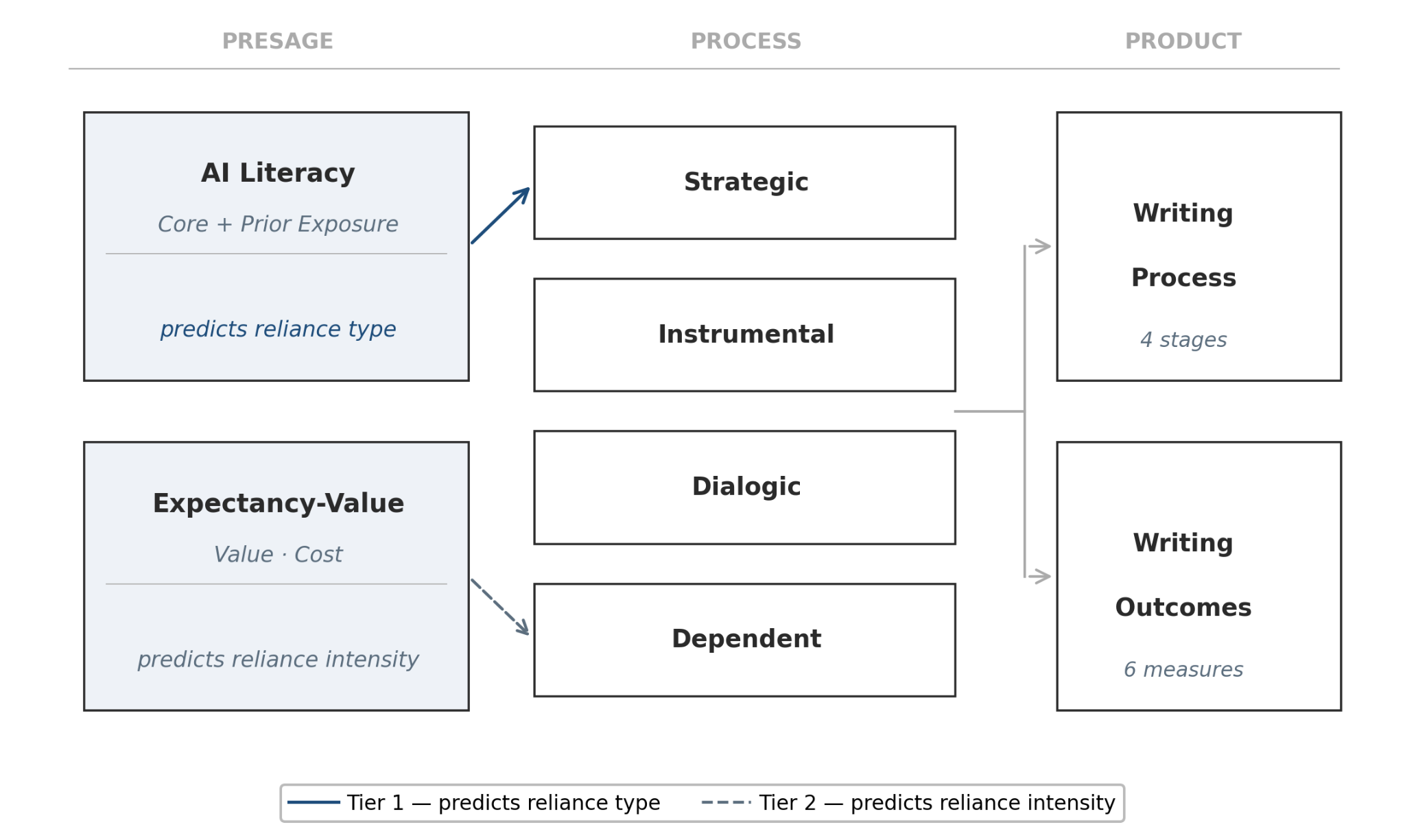
Figure 1: The two-tier predictive architecture governing LLM reliance, integrating AI literacy (type), expectancy-value (intensity), and 3P process structure.
The interaction between these frameworks produces functional independence: AI literacy mediates the adoption of critical, evaluative forms (Strategic, Dialogic), while expectational-motivational beliefs (efficacy/value/cost calculus) drive the global intensity of LLM engagement, irrespective of reliance type.
Empirical Validation: Four Types of LLM Reliance
Using a sequential explanatory mixed-methods design (N=382, 14 interviews, 396 qualitative responses), the study identifies four robust reliance patterns:
- Strategic: Metacognitively regulated, verification-intensive, author-driven engagement; highest AI-Lit, preservation of cognitive agency.
- Instrumental: Task-bounded, primarily mechanical use (rephrasing, outlining), minimal innovation or critical co-construction.
- Dialogic: Iterative, co-constructive engagement with the model as dialogic partner, but retention of authorial intent.
- Dependent: Wholesale outsourcing and uncritical acceptance, corresponding to cognitive offloading and metacognitive abdication.
Dominant reliance was split: Strategic (34.3%), Instrumental (30.9%), Dialogic (30.4%), Dependent (4.5%), with clear separation on every process/outcome measure.
Outcome Patterns and Measurement Artifacts
The study’s largest effect emerges in a paradoxical direction: Strategic users scored lowest on all AI-mediated writing process and outcome measures (Planning, Drafting, Revising, Editing, Quality, Self-Efficacy, Clarity, Grammar/Style, Originality, Critical Thinking), while Dependent users scored highest. Notably, this is an artifact of outcome scale design, not an empirical disadvantage—most outcome measures capture AI throughput (e.g., “I use generative AI tools to achieve X”) rather than true unaided writing quality or cognitive growth. Qualitative triangulation confirms that strategic restraint is penalized by current outcome measures, revealing a fundamental validity issue that confounds much of the comparative literature on LLM efficacy.
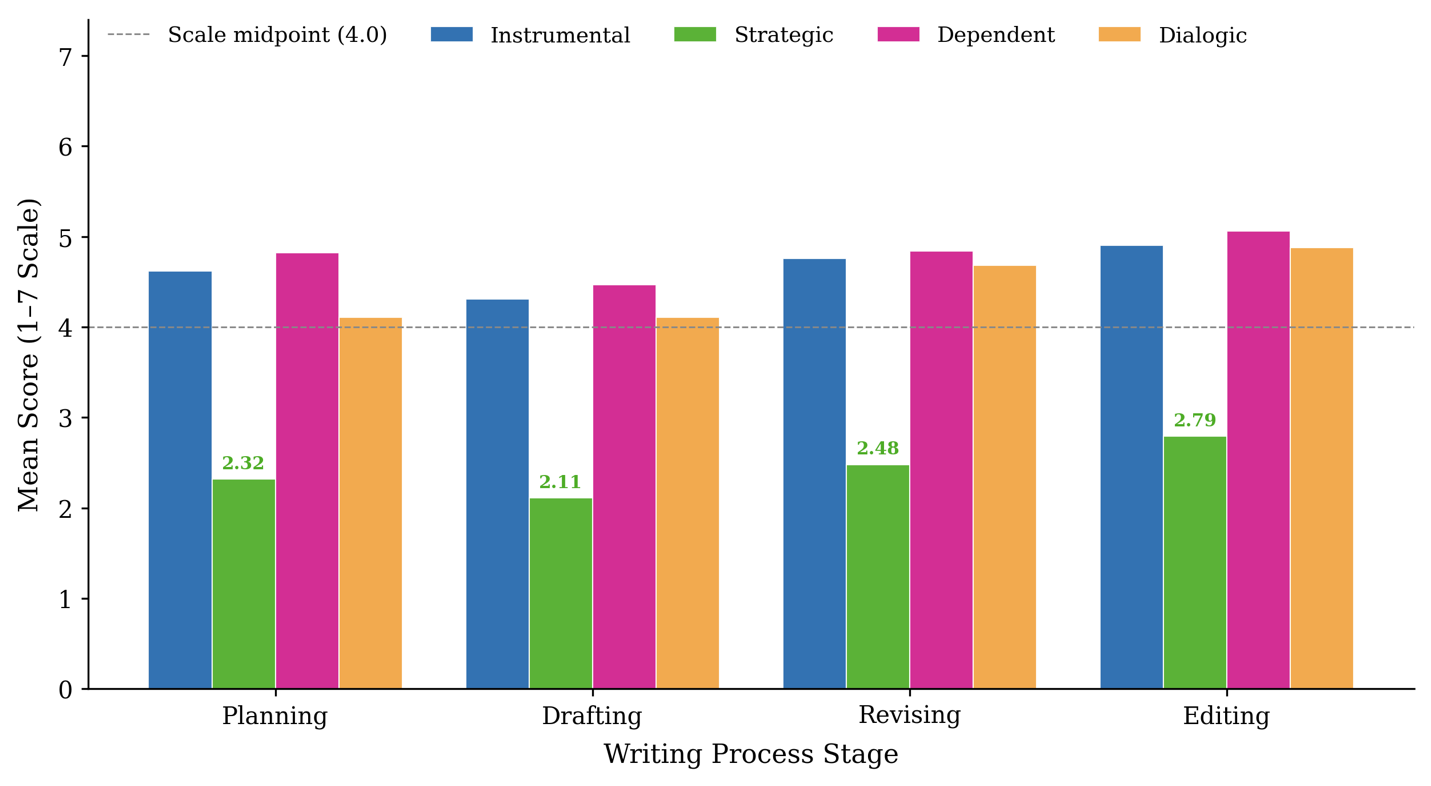
Figure 2: Distribution of AI-supported process engagement by reliance type; Strategic users report lowest AI involvement across all stages.
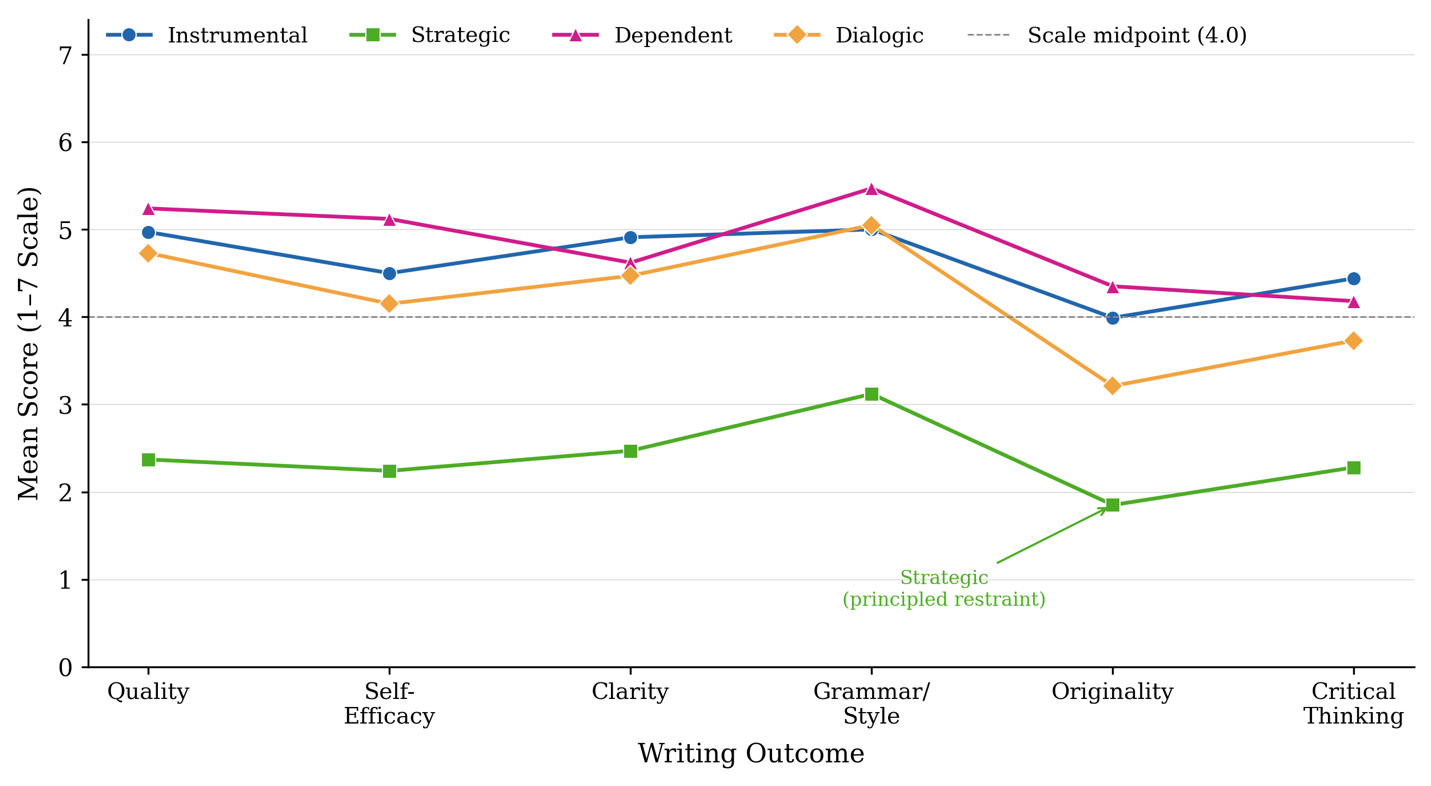
Figure 3: Mean AI-mediated outcome scores by reliance type; Strategic users score lowest due to minimal AI attribution, not lower writing quality.
Predictors of Reliance: Decoupling Intensity and Type
Multivariate regression models (R2=0.722) establish that reliance intensity is most strongly predicted by Expectancy-Value beliefs (β=0.630, ΔR2=0.256), encompassing expectancy for success and multifaceted utility value; prior LLM exposure is a secondary predictor. In contrast, AI literacy is the dominant determinant of reliance type: each unit increase in measured literacy confers a tenfold decrease in Dependent versus Strategic classification (OR=0.11, p<.001), a pattern robust across demographic controls.
Substantive moderation effects are also present. For originality, AI literacy amplifies the positive effect of reliance intensity (β=+0.092, p=0.012): higher-literacy users extracting greater creative benefit from LLMs without succumbing to dependency.
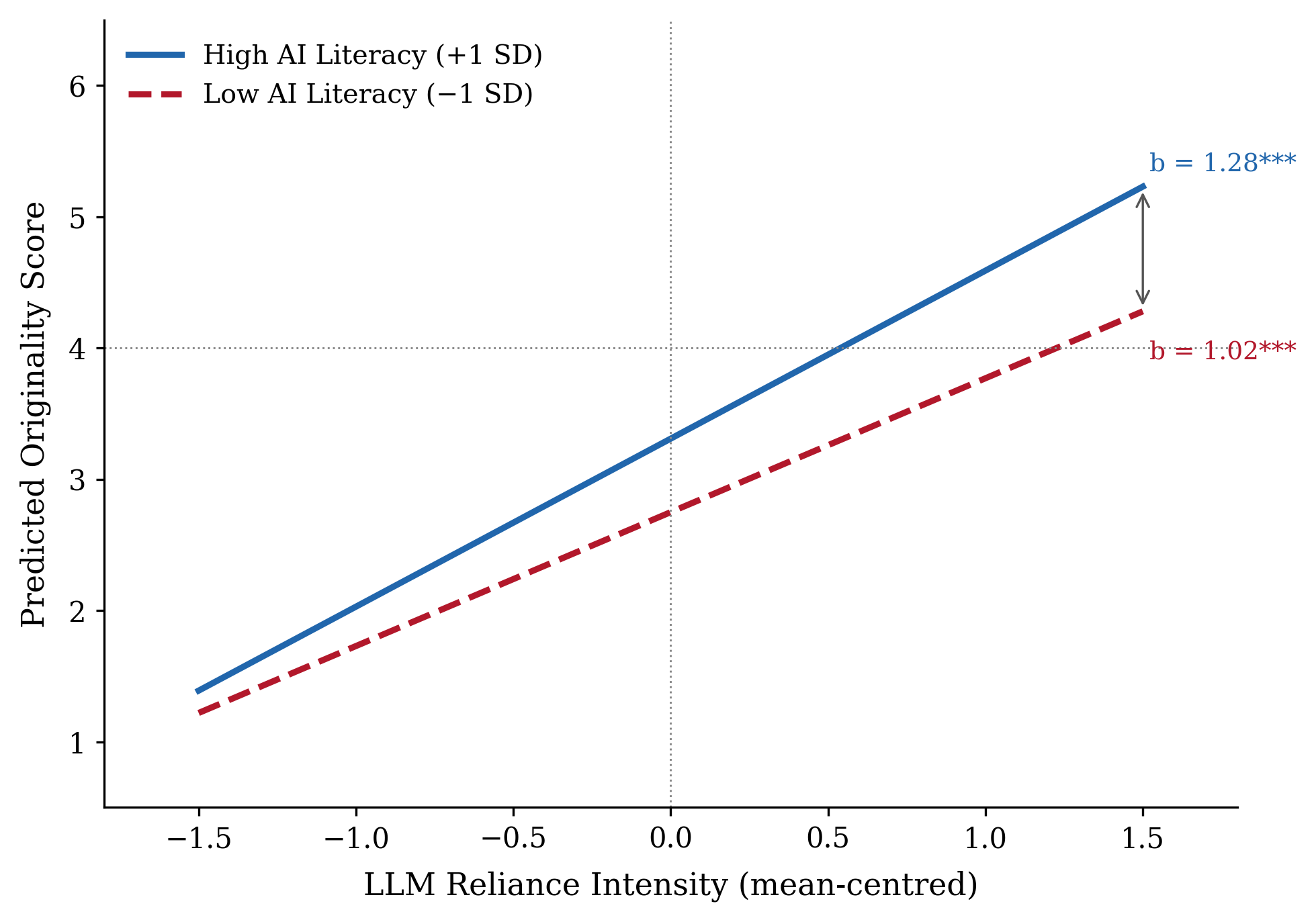
Figure 4: AI literacy significantly moderates the relationship between reliance intensity and originality.
Expectancy-Value beliefs moderate the intensity-outcome structure: high EVT attenuates grammar/style benefit saturation (β=−0.126, p=0.002), with the effect size diminishing among motivationally engaged users.
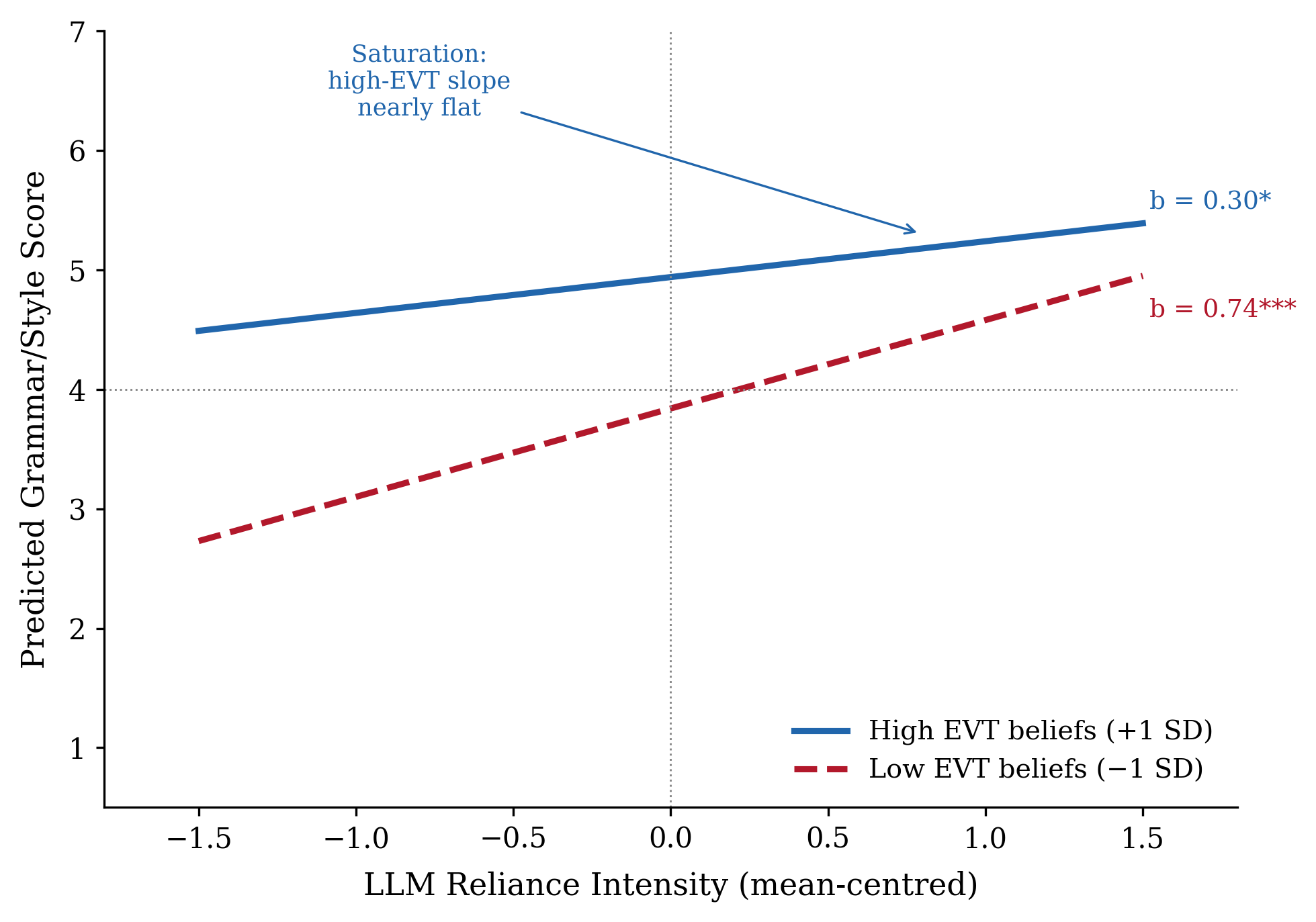
Figure 5: EVT beliefs attenuate returns of reliance intensity on grammar/style, confirming utility-driven saturation.
Qualitative Augmentation: Abstention and the Two-Model Architecture
Thematic analysis identifies a non-trivial minority (~13%) of principled abstainers—students who categorically refuse LLM engagement on ethical, epistemic, or environmental grounds. This abstention-mode population cannot be classified by either expectancy-value calculus or AI literacy; their low reliance scores conflate with strategic restraint but rest on fundamentally distinct motivational architectures. The resulting Two-Model Architecture posits negotiation-mode students (governed by EVT, decision calculus, AI-literacy modulation) and abstention-mode students (governed by categorical exclusion). Prior frameworks have failed to account for the latter.
Equity, Demographic Structure, and Institutional Context
First-generation status and MSI institutional context are salient structural predictors. At MSIs, where preparation heterogeneity is pronounced and more than half of students derive from minoritized or first-gen backgrounds, elevated reliance intensity is frequently a compensatory response to resource deficits, not “literacy deficit.” The study finds that first-generation status is the strongest demographic predictor of reliance intensity in the multivariate model.
The interaction between institutional conditions, AI literacy divides, and polices focused on surveillance over development collectively risk amplifying inequities: students with the lowest cognitive agency in AI engagement are rewarded under current assessment paradigms, and the most metacognitively regulated students are systematically misclassified as underperforming.
Implications and Future Directions
The practical and theoretical implications are direct:
- AI literacy curricula should not target reduction in LLM usage frequency, but rather adaptation toward evaluative, agency-preserving engagement. Intensity and direction must be decoupled in pedagogical design.
- Outcome measurement instruments require fundamental redesign. AI throughput should not serve as a proxy for writing quality. True outcome measures must assess unaided competence, transfer, and longitudinal growth.
- Motivational architecture (EVT) is essential for modulating intensity and must be explicitly targeted in interventions, not simply assumed as a background variable.
- Instruments must distinguish strategic restraint, principled non-use, and low exposure. Pooling these populations is conceptually and empirically invalid for regression-based interpretation.
Conclusion
This study resolves a major construct-validity error in the LLM reliance literature, establishing that reliance is inherently multidimensional—governed by distinct, non-interchangeable systems of literacy and motivational beliefs—and that both measurement and intervention must adapt to reflect this reality. The reliance typology and two-tier predictive system introduced here provide the basis for structural reform in AI literacy programs, outcome assessment, and policy at equity-critical institutions such as MSIs. The clarification that strategic, regulated engagement is penalized by existing outcome measures reframes ongoing debates about LLMs in higher education and compels a new scrutiny of both instruments and equity consequences.
Reference: "Four Types of LLM Reliance and Their Predictors Among Undergraduate Writers: A Mixed-Methods Study at a Minority-Serving R1 University" (2606.28749)