- The paper introduces a parameter-efficient quantum-inspired fast weight programmer (G-QKANFWP) that outperforms classical LSTM and traditional fast weight models in accuracy and parameter usage.
- It demonstrates high multi-step forecasting accuracy on the Abilene TM dataset with significantly reduced parameters compared to larger LSTM baselines.
- The study highlights that effective placement of the HQKAN module is critical for achieving resource-efficient and robust network traffic forecasting.
Parameter-Efficient Quantum-Inspired Fast Weight Programmers for Network Traffic-Matrix Forecasting
Introduction and Motivation
The paper "Parameter-Efficient Quantum-Inspired Fast Weight Programmers for Traffic-Matrix Forecasting" (2606.27821) investigates parameter-efficient recurrent architectures for accurate traffic-matrix (TM) prediction, particularly in environments with strict resource constraints such as edge and cloud-edge network control. Conventional approaches have incorporated high-capacity models using graph, transformer, or diffusion modules to exploit spatial-temporal structure in TM data. However, these are often unsuitable for online, budget-limited settings. The authors propose the deployment of quantum-inspired fast-weight programmers—specifically gated quantum-inspired Kolmogorov–Arnold network fast-weight programmers (QKAN-FWP)—to achieve high-accuracy multi-step TM forecasting under a fixed parameter and training budget.
Model Architectures
The core architectural innovation centers on different placements of the quantum-inspired HQKAN module within the fast-weight programming framework:
- G-QKANFWP: Employs a classical slow programmer to generate dynamic parameters for HQKAN serving as the fast programmer Figure 1.
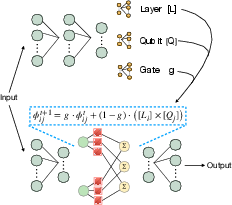
Figure 1: Architecture of G-QKANFWP, where a classical slow programmer updates HQKAN fast programmer parameters dynamically.
- GQKAN-FWP: Positions HQKAN in the slow programmer, maintaining a classical linear fast programmer.
- GQKAN-QKANFWP: Incorporates HQKAN modules in both slow and fast pathways, resulting in maximal architectural compression.
For comparison, two LSTM baselines (matched-size and larger) and a classical gated fast-weight baseline (G-FWP) are included. All models operate without explicit spatial encoders, graph modules, or transformer attention.
Experimental Design
A direct forecasting protocol is adopted on the Abilene TM dataset. Each input consists of a two-hour history (24 frames, each with 144 OD channels), and the models predict the next 20 frames (100 minutes) for all OD pairs in a single forward pass. All models are trained under uniform optimizer and epoch budget to isolate architecture effects.
Evaluation metrics include pooled RMSE over all test horizons and channels, horizon-specific RMSE (for 1, 10, 20-step prediction), validation-loss area under the learning curve (AULC), and OD-channel wins (channels with lowest per-channel RMSE).
Numerical Results and Analysis
Aggregate Accuracy and Efficiency
- G-QKANFWP achieves a pooled RMSE of 0.06897±0.00030, outperforming both the matched-size LSTM-S (RMSE $0.07155$) and the classical G-FWP baseline (RMSE $0.07038$).
- The larger LSTM-L has higher parameter count (36,624 vs. 8,189 for G-QKANFWP) with comparable RMSE ($0.06920$). Thus, G-QKANFWP delivers similar or superior accuracy with only 22.4% of LSTM-L’s parameters.
A detailed inspection indicates that the quantum-inspired placement yields measurable improvements. The G-QKANFWP variant, with HQKAN in the fast readout, exhibits the strongest aggregate results, confirming that parameter-efficient quantum-inspired modules can provide nontrivial gains in TM forecasting.
Matrix-Level Diagnostics
Qualitative analysis via test window matrix visualization demonstrates that low scalar error coincides with coherent matrix-level structure in predictions.
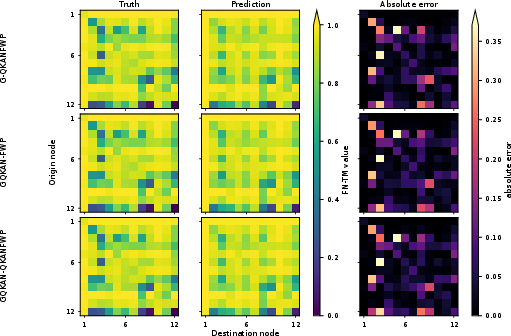
Figure 2: t+20 forecasting comparison for test window 275, showing ground truth, model prediction, and absolute error matrices in FN-TM space.
Channel-Level Dynamics and Convergence
- OD-channel wins: G-QKANFWP and GQKAN-FWP obtain 33 and 39 channel wins respectively (out of 144), substantially exceeding LSTM-S and G-FWP (8 each). LSTM-L achieves the highest channel win rate (52).
- Val-loss AULC: All quantum-inspired variants outperform LSTM-S and G-FWP in validation loss convergence, with G-QKANFWP matching LSTM-L in AULC, attesting to efficient training dynamics.
Selected OD channel traces further illustrate robust forecast shape fidelity for quantum-inspired models in winning channels.
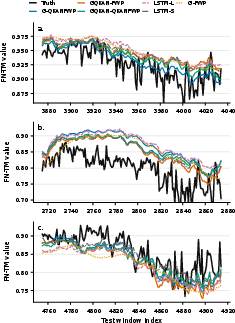
Figure 3: Prediction traces for t+20 ahead in selected OD channels where quantum-inspired models outperform classical baselines.
Contradictory and Bold Claims
The study asserts that the gain from G-QKANFWP is not solely attributable to the gated fast-weight framework: quantum-inspired HQKAN placement in the fast programmer directly contributes to improved forecasting performance. Additionally, the fully HQKAN-based, maximally compressed variant (GQKAN-QKANFWP) does not universally dominate; rather, placement and architectural balance are critical.
Theoretical and Practical Implications
From a theoretical perspective, the results underscore the efficacy of quantum-inspired nonlinear modules, specifically HQKAN, in temporal sequence modeling for spatially coupled TM data. Their integration into gated fast-weight frameworks establishes a new accuracy–parameter trade-off frontier for streaming applications. The finding that HQKAN’s effectiveness depends on architectural placement suggests nuanced mechanisms by which quantum-inspired nonlinearities interact with classical sequence models.
Practically, resource-conscious TM prediction—essential for network orchestration in edge/cloud-edge, SDN control loops, and online routing environments—can benefit from compact recurrent models like G-QKANFWP. The ability to deliver competitive accuracy with drastic parameter reductions makes these architectures well-suited for deployment on memory- and compute-constrained platforms.
Speculation on Future Directions
Future research should explore hybrid architectures combining G-QKANFWP with spatial or topology-aware modules, such as graph convolutional networks or diffusion operators, to exploit channel correlations more formally. Further hyperparameter sensitivity and inference cost benchmarking are warranted for production deployment. Extending evaluation to raw-scale prediction, diverse network datasets, and real-world edge hardware will be crucial for translating architectural advances to operational impact. Analysis of interaction between HQKAN placement, learning dynamics, and model convergence can yield deeper insights into the design of parameter-efficient temporal-spatial forecasters.
Conclusion
G-QKANFWP demonstrates superior parameter efficiency and forecasting accuracy compared to classical and LSTM recurrent baselines for direct multi-step TM forecasting. Architectural placement of quantum-inspired modules is critical, with HQKAN in the fast readout yielding optimal results. The evidence supports QKAN-FWP variants as compelling candidates for edge-deployed network traffic forecasting under stringent resource budgets, and motivates further exploration of quantum-inspired nonlinearities within compact sequence models for complex, high-dimensional prediction tasks.