Gravitational wave scattering at $\mathcal{O}(G^4)$: Murua construction and elliptics
Published 25 Jun 2026 in hep-th | (2606.27544v1)
Abstract: We compute the amplitude for the scattering of a gravitational wave off of a spinless point particle at fourth order in Newton's constant, using the worldline quantum field theory formalism. A decomposition of our master integrals incorporating Murua coefficients allows us to entirely bypass the cut subtraction needed to convert the scattering amplitude into the Magnusian, the latter being desirable as it maps directly onto the scattering phase shift in partial wave space. This is then matched to the prediction from black hole perturbation theory, proving that point-particle worldline quantum field theory accurately describes Schwarzschild black holes up to $\mathcal{O}(G4)$. Elliptic functions appear in momentum space for the first time for this process at this order.
The paper demonstrates the application of Murua coefficients to extract the Magnusian from a three-loop computation, achieving precise matching with black hole perturbation theory at O(G⁴).
It employs an advanced worldline QFT framework that reduces 73-loop diagrams to 20 master integrals, revealing elliptic function structures in the process.
The remarkable phase shift agreement (to <10⁻³⁴ precision) validates the point-particle model and informs future EFT corrections for gravitational wave modeling.
Gravitational Wave Scattering at O(G4): Murua Construction and Elliptics
Context and Motivation
The theoretical modeling of gravitational wave signals from compact binary systems necessitates high-precision computations in general relativity (GR), particularly as observational sensitivity advances. Effective Field Theory (EFT) methods, such as the worldline quantum field theory (WQFT) framework, have demonstrated robust applicability by modeling compact bodies as point particles augmented with higher-curvature corrections. However, the validity of this paradigm hinges on explicit matching to GR solutions, especially for non-spinning bodies where finite-size effects (encoded as quadratic-in-curvature Wilsonian corrections) are anticipated to become relevant only at the sixth post-Minkowskian order (6PM, O(G6)).
This paper advances the program of validating the EFT approach by focusing on the scattering of a gravitational wave off a spinless point particle, computed at the fourth order in Newton's constant (O(G4)), thereby demanding three-loop computations in WQFT. The central contributions are twofold: introducing an efficient Murua-coefficient-based construction to directly obtain the Magnusian (the logarithm of the S-matrix), and demonstrating the precise agreement between WQFT and black hole perturbation theory (BHPT) up to this order—including, notably, the appearance of elliptic functions in momentum-space integrals at O(G4).
Formal Structure and Matching Procedure
WQFT and Amplitude Construction
The WQFT action models a massive, spinless particle interacting with gravity:
Swl=−2m∫dτgμν(x)x˙μ(τ)x˙ν(τ),
where perturbative expansions are organized around flat space with κ=32πG and all interactions embedded into Feynman diagrams with dimensional regularization (d=4−2ε). The target observable is the scattering amplitude for an incoming and outgoing graviton with helicities (h1,h2):
⟨k2,h2∣iT^∣k1,h1⟩=(k2⋅v−k1⋅v)iMσ(θ,ϕ),
with explicit kinematic parametrization, polarization vectors, and spherical harmonics decomposition.
BHPT Phase Shifts and Amplitude Decomposition
Compact objects in GR, specifically Schwarzschild black holes, have their curvature perturbations solved within the BHPT framework. The amplitudes in a spherical wave basis have both helicity-preserving and reversing components, expressed as sums over spin-weighted spherical harmonics and phase shifts −2δℓ2P. The EFT-to-GR matching is achieved either at the amplitude level (with subtleties in vanishing components and regularization) or at the phase shift level via the Magnusian.
Extraction of the Magnusian: Murua Coefficients
Previous approaches required explicit cut subtractions to obtain the Magnusian from the amplitude. The current work adopts Murua coefficients (as defined in refs. Kim:2024svw, Brandhuber:2025igz, Gonzo:2026yha), which leverage diagrammatic causality-prescription combinatorics to aggregate the relevant Feynman integral contributions directly at the master integral level. For O(G6)0 active propagators, the Murua value O(G6)1 is constructed as a weighted sum over all causality prescription configurations, dramatically simplifying the extraction of infrared-safe, real quantities suitable for comparison with BHPT.
Multi-Loop Integration and Appearance of Elliptics
Seventy three-loop diagrams are reduced via integration-by-parts (IBP) to a basis of twenty master integrals. The solution employs the differential equations method, canonicalized to the form:
O(G6)2
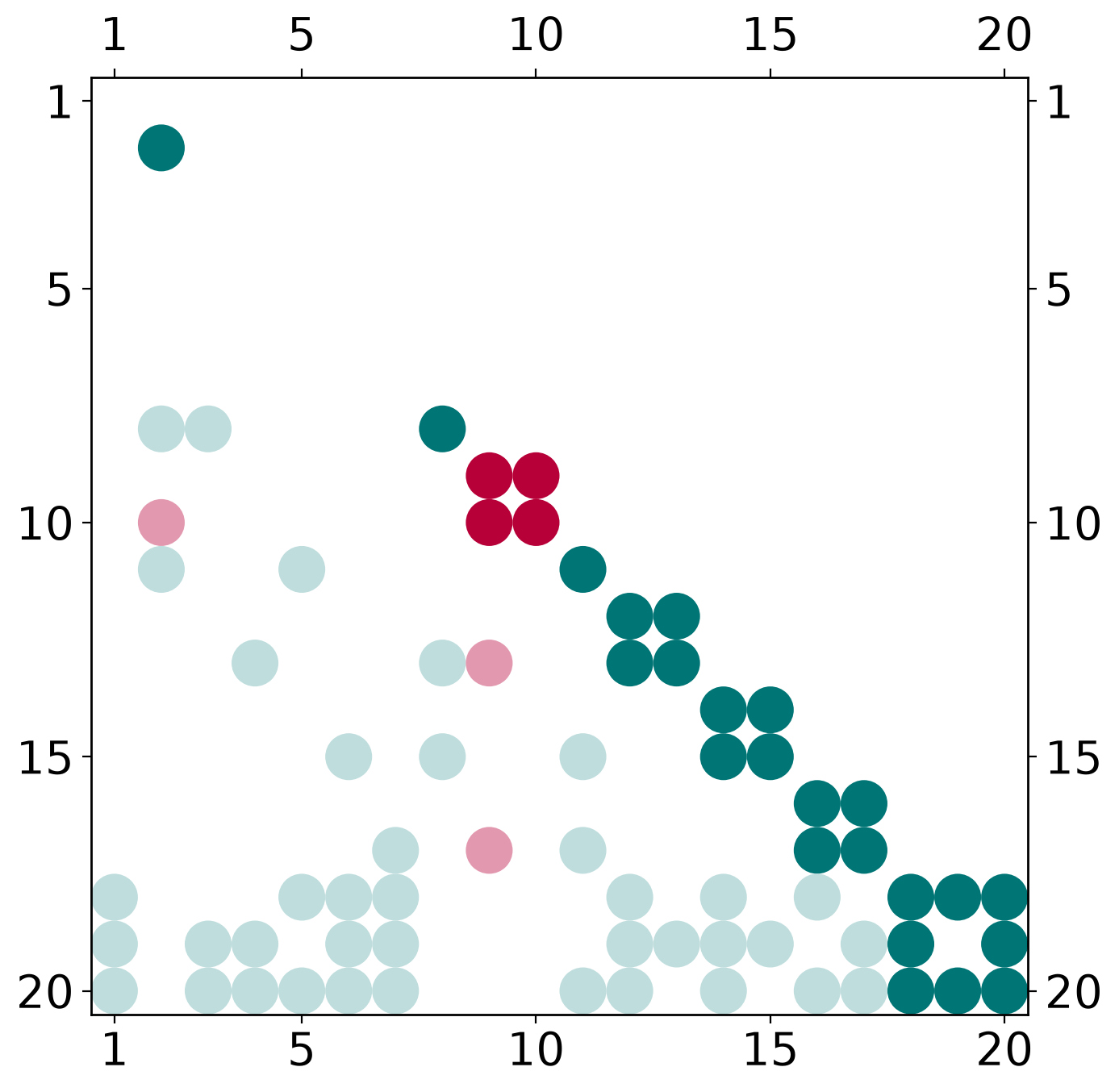
where a salient feature is the emergence of an elliptic sector governed by the Picard-Fuchs equation, whose solution is the complete elliptic integral O(G6)3 (Figure 1).
Figure 1: Canonicalized differential equation matrix O(G6)4, highlighting the elliptic sector and associated integral topologies.
Boundary constants are determined via high-precision numerical methods and analytical reconstructions. The region analysis reveals only two relevant regions (general and forward), distinct from the binary-scattering case where mixed-region scaling complicates the analysis.
Results: Magnusian and Phase Shift Matching
The Magnusian, computed via Murua-weighted master integrals, is decomposed into post-Minkowskian terms:
O(G6)5
with explicit expressions for O(G6)6 in terms of rational functions, polylogarithms, and elliptic integrals. The helicity-reversing component vanishes.
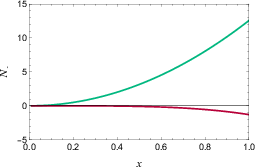
The Magnusian exhibits infrared finiteness and well-behaved forward (O(G6)7) and backward (O(G6)8) limits. Its projection onto spherical modes yields the phase shift, which matches the BHPT result numerically to extraordinary precision (O(G6)9 relative precision), confirming the point-particle equivalence up to O(G4)0.
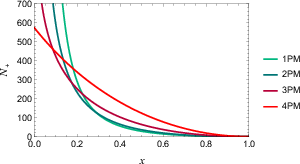
Figure 2: Plot of the Magnusian O(G4)1 versus O(G4)2, demonstrating absence of forward poles at 4PM and contrasting helicity-preserving/reversing behaviors.
Analysis of Amplitude Structure and Infrared Behavior
The amplitude O(G4)3 (with retarded-only propagators) is more involved than the Magnusian—containing deep infrared singularities, complex phases, and higher-weight iterated integrals. Consistency checks are performed using Weinberg's soft theorem: all infrared poles exponentiate correctly, directly relating higher-order contributions to lower-order, finite amplitude pieces via analytic relations. The amplitude's forward-limit divergence is quadratically resummed into a Newtonian phase, and after subtraction, exhibits at most a O(G4)4 divergence. This supports the identification of the Magnusian as an objectively superior matching observable due to its infrared safety.
Implications and Future Directions
The successful reproduction of the three-loop phase shift confirms the WQFT point-particle model's accuracy for Schwarzschild black holes up to O(G4)5. The Murua procedure streamlines the computation, obviating explicit cut analysis. The function space of the Magnusian is unexpectedly simple—even as elliptics appear at this order, iterated integral weight remains capped at two, and similar simplicity is anticipated at four loops. The forward-limit behavior suggests diminishing divergence with increasing PM order.
Beyond confirming the fidelity of the point-particle paradigm, the results inform the structure of EFT corrections at higher orders—non-minimal quadratic curvature operators will contribute at O(G4)6. The framework is extendable to spinning bodies via the bosonic oscillator formalism, setting the stage for analogous Kerr black hole matching. The analysis enhances understanding of IR-safe observables and drives exploration of all-loop function space properties.
Conclusion
This work establishes the worldline quantum field theory calculation (using Murua coefficients for efficient Magnusian extraction) as precisely matching black hole perturbation theory predictions for gravitational wave scattering at O(G4)7. The detailed numerical and analytical comparison, including the presence of elliptic integrals and infrared structure, substantiates the point-particle description's accuracy and introduces practical computational innovations. The approach is readily generalizable, and further investigation into function space, IR behavior, and extensions to spinning bodies will deepen the theoretical and practical impact on gravitational wave physics and quantum gravity modeling.