- The paper establishes a framework using lunar regolith as an archival substrate to constrain cumulative technogenic particulate production in the Galaxy.
- It models micron-scale technosignatures by analyzing ISM transport, survivability, and gentle impact conditions that allow engineered and non-intentional particles to be preserved.
- The study integrates machine vision with advanced laboratory techniques to transform null results into upper limits on artificial debris from past technological civilizations.
Micron-Scale Technosignatures and Lunar Regolith: Empirical Constraints on Galactic Technological Activity
Introduction and Conceptual Framework
This paper ("Micron-Scale Technosignatures: How a Cubic Metre of Lunar Regolith May Begin to Constrain the Number of Past Technological Civilisations in the Galaxy" (2606.24028)) systematically develops the conceptual, physical, and methodological bases for the search for micron-scale technosignatures in lunar regolith as a means of probing the density and nature of past Galactic technological civilizations. Building upon Arkhipov's proposal that engineered dust can accumulate on airless Solar System bodies over gigayear timescales, the authors define a taxonomy of technogenic grains—non-intentional "Arkhipov Particles" (APs) generated as waste, and deliberately engineered "Bracewell Particles" (BPs)—and analyze their transport, survivability, and detectability, using the Moon as an archival substrate.
This work integrates principles from planetary regolith science, ISM grain dynamics, impact modelling, and SETI theory. The approach reframes lunar SETA: rather than focusing on macroscopic relics, it uses the Moon's ∼4 Gyr exposure record as a time-integrated, statistically representative collector of microscopic technomaterial, allowing the translation of null results in defined regolith samples into upper bounds on cumulative Galactic technological activity.
Physical Transport and Survivability of APs and BPs
ISM Coupling, Survival, and Arrival Kinematics
The analysis rigorously quantifies the passage of micron-scale technogenic grains through the turbulent, multi-phase ISM, accounting for gas drag, magnetic coupling, and sputtering. For ∼0.3–1 μm refractory grains, survival times in the ISM can reach up to 109 yr, permitting transport over kiloparsec scales. The authors distinguish ISM "fast" (stellar-kinematic) and "slow" (ISM-flow) velocity regimes and anchor their constraints on empirical evidence that natural interstellar grains of similar scale routinely reach the Solar System [Sterken et al., 2019; 2023].
A key technical result is the identification and quantification of a "slow-arrival channel" for APs: Solar radiation pressure modulates incoming grain orbits such that a well-defined subset of grains (constrained by grain size, β, inclination, and impact parameter) can strike the Moon with relative velocities below 5 km/s, the empirical threshold for partial or full structural survival upon impact. The authors derive that the survivable arrival flux is reduced by a factor ∼10−4–10−3 relative to the raw interstellar grain influx, but this is compensated by the Moon's gigayear integration time and large surface area.
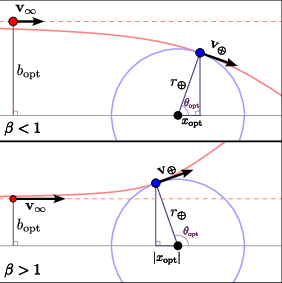
Figure 1: The optimal slow-arrival trajectory geometry for grains demonstrates the effect of Solar gravity and radiation pressure, defining the phase space for potential survival after impact with the Moon.
Lunar Regolith as an Archive
The lunar regolith is modelled as a stratified, impact-mixed archive, with depth-dependent mixing and preservation. Quantitative treatment of regolith gardening yields sampling times of ∼3.5 Gyr for 1 m3 volumes, with deeper layers corresponding to progressively older influx. Even highly processed grains or their microcrater residues can retain compositional, isotopic, or structural technosignatures, given robust materials or advanced microfabrication.
Detection Methodology: Machine Vision and Laboratory Analysis
Recognizing the necessity for high-throughput analysis in a large, complex particulate archive, the authors implement a multi-modal detection framework, centered on the YOLO-ET convolutional neural network object-detection system, empirically demonstrated on lunar-regolith analogue datasets.
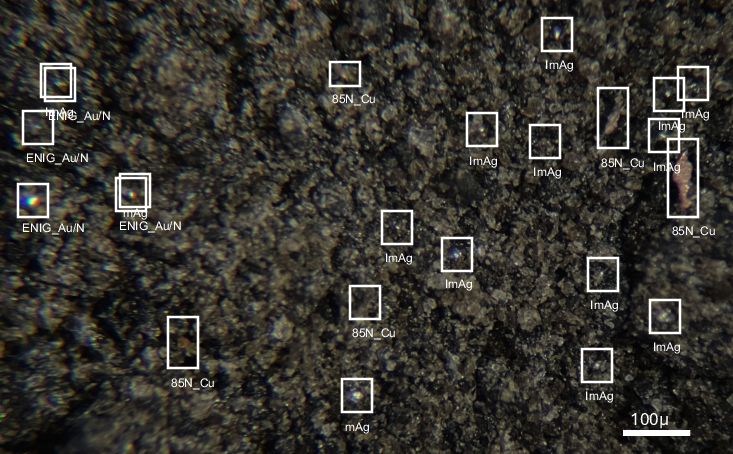
Figure 2: The YOLO--ET model automates grain-scale anomaly detection in heterogeneous regolith mixtures, streamlining candidate triage for laboratory forensic analysis.
Machine vision is employed for candidate triage, while high-specificity laboratory methods—SEM, EDS, SIMS, nano-CT, and FIB tomography—provide forensic discrimination capability, especially for identifying engineered morphologies or non-solar isotopic ratios indicative of technogenic origin. The regime extendibility to in situ lunar applications and integration with orbital anomaly-detection systems (e.g., YOLO-ETA) is discussed.
Model Constraints on Technological Civilizations
Conservative Constraints: Undirected APs from Megaswarms
By integrating the dynamical transport, arrival filtering, regolith mixing, and detection completeness, the authors compute formal 95% CL upper bounds on the cumulative ISM-dispersed AP mass per eligible Galactic star from a null detection of technomaterial in a 1 m3 regolith sample. The central result is that, for Solar-type stars able to radiatively expel such grains, the absence of APs excludes the scenario in which each emits more than about ∼0 of long-lived artificial particulate debris over Galactic history.
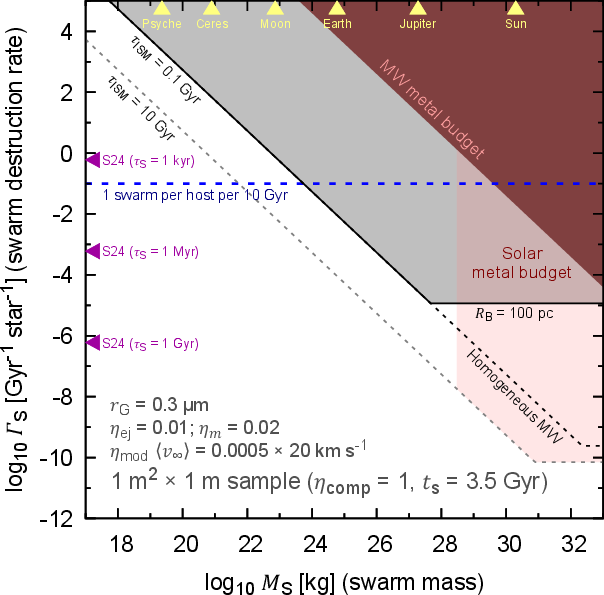
Figure 3: The excluded ∼1 parameter space for undirected megaswarm debris shows regions disallowed by null detection, with overlayed physical and observational constraints.
Improved constraints are possible given larger regolith volumes, additional lunar missions, or extension to asteroid or icy body samples. For megaswarm debris, the constraint space is orthogonal to that set by waste-heat/infrared SETI—bounding cumulative processed mass, not instantaneous energetics.
Deliberate Targeting: Engineered Delivery of BPs
The alternative regime, where Galactic civilizations intentionally seed BPs in the inner Solar System, is governed by delivery geometry, local deposition, and patch/exposure statistics. Here, much smaller released masses suffice for detectability: a globally homogeneous lunar seeding strategy requires ∼2–∼3 kg to ensure one BP per m∼4, while patch-wise seeding (∼5100 km∼6) brings the threshold to ∼7 mg per patch for detection with high completeness.
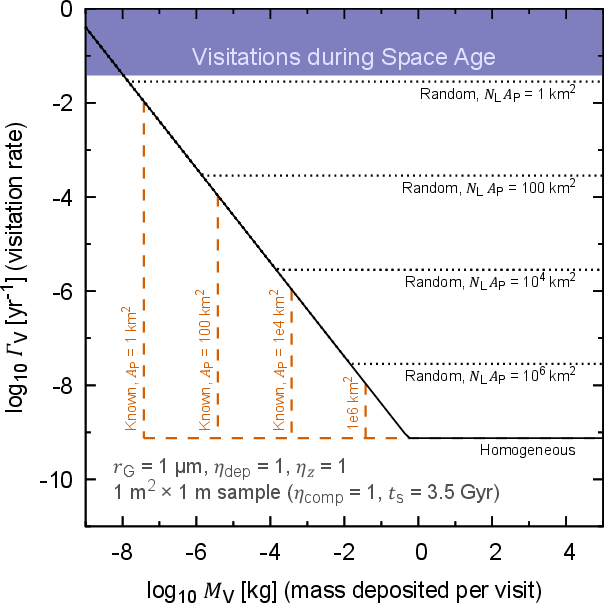
Figure 4: Deliberate BP delivery is constrained via the released mass–visitation rate phase space, distinguishing globally uniform from patch-seeded scenarios.
The model also addresses the probabilistic limits imposed by Solar System trajectory through spatially inhomogeneous AP "bubbles" and generalizes to alternate release architectures, including modern analogues (e.g., smart-dust deployment, intentional encode-matter dispersal).
Comparative Technosignature Merit and Implications
Sheikh’s "Nine Axes of Technosignature Merit" framework is applied, situating APs and BPs as highly favorable for detectability, duration, and observational tractability, given modern laboratory and computational facilities. APs score highly for extrapolation and inevitability from present-day spacefaring activity, while BPs provide especially rich informational content if detected.
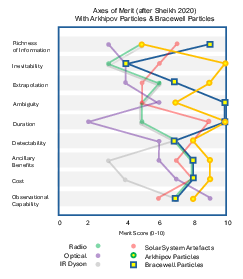
Figure 5: Comparative analysis of technosignature merit axes for APs and BPs shows distinct strengths in longevity and detectability compared to traditional SETI modalities.
This repositions particulate SETA as a material, rather than energy-centric, means of probing the prevalence and evolutionary timescales of advanced civilizations across Galactic history.
Conclusion
The methodology advanced in this work defines a credible and increasingly practical empirical pathway for constraining the industrial and communication histories of the Galaxy using the lunar regolith as an archival substrate. The demonstrated ability to derive strong, physically interpretable upper bounds—independent of contemporaneous ETI activity—on the integrated particulate technomaterial output of civilizations under explicit ISM and regolith-transport models, marks a pivot in SETI modalities. The analytic and methodological framework is readily extensible to other Solar System bodies and integrates naturally with in situ and orbital mission architectures.
Interpretations of null results are necessarily asymmetric; the discovery of a single AP or BP would have immediate and profound implications for Galactic-technological history, while progressive nulls increasingly restrict the parameter space for non-thermal technosignature-producing civilizations. Future directions include expansion of lunar sampling strategies, improvements in machine-vision–laboratory forensic interoperability, and refinement of ISM–regolith transport models to reduce systematic uncertainties in flux calculations.
This work thus establishes the scientific, technical, and conceptual roadmap for using micron-scale material evidence, grounded in rigorous planetary and ISM physics, as a quantitative probe of the frequency and nature of advanced extraterrestrial civilizations in the Milky Way.