- The paper proposes a tripartite framework evaluating Mapper algorithms on stability, cluster quality, and topological (shape) preservation.
- It systematically analyzes various Mapper variants—including Conventional, Ensemble, Multiscale, F-mapper, and Ball Mapper—using both synthetic and real datasets.
- The study highlights trade-offs among parameter sensitivity, clustering performance, and topological fidelity, offering practical guidelines for researchers.
Authoritative Summary of "A Three Axis Evaluation Framework for Mapper Algorithms" (2606.21688)
Introduction and Motivation
The paper presents a comprehensive evaluation framework for Mapper algorithms, a central tool in TDA for summarizing and visualizing high-dimensional datasets. Mapper's widespread applications—from genomics and neuroscience to finance and deep learning—are founded on its ability to reveal topological features and subgroup structures that are elusive to traditional statistical or ML approaches. Despite its popularity, the Mapper pipeline is notoriously sensitive to choices of lens function, cover resolution, and clustering strategy. This sensitivity complicates reproducibility and interpretation, particularly in scientific investigations where Mapper outputs underpin domain-specific hypotheses.
This work systematically proposes a tripartite evaluation framework structured around three axes: stability, cluster quality, and topological (shape) preservation. By analyzing multiple Mapper variants (Conventional, Ensemble, Multiscale, F-mapper, Ball Mapper) across synthetic and real datasets, the paper critically examines how these competing objectives interact, often in tension. Practical decision guidelines are derived for researchers deploying Mapper in applied settings, and open challenges are identified for principled future development.
Mapper Variants and Dataset Ground Truth
The authors dissect the Mapper pipeline and catalog its main algorithmic variants:
- Conventional Mapper: Baseline using a chosen lens, cover, and clustering. Edges encode overlapping clusters.
- Ensemble Mapper: Aggregates multiple Mapper instances using consensus mechanisms.
- Multiscale Mapper: Constructs a simplicial complex capturing higher-order cluster overlaps.
- F-mapper: Employs fuzzy membership-driven covers, leveraging FCM.
- Ball Mapper: Abandons lens-based selection, covering the data with balls in ambient space.
Ground truth for evaluation is established via parametric construction and persistent homology. For synthetic datasets (Swiss Roll with Hole, Noisy Circle), robust topological invariants (Betti numbers) are validated through bootstrap analysis. In high-dimensional settings (UCI Digits), instability and fragmentation phenomena are documented.
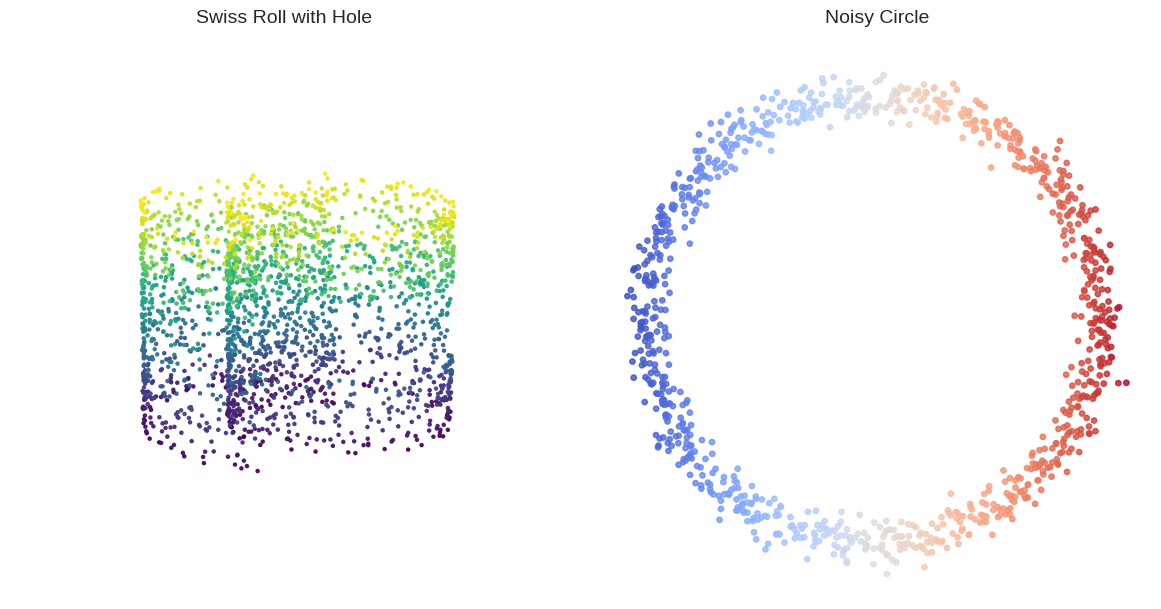
Figure 1: Swiss Roll with Hole and Noisy Circle provide controlled topological ground truths for evaluation.
Stability Analysis
Definitions and Theoretical Results
Stability is rigorously explored in two senses: empirical stability (robustness to parameter perturbations) and statistical stability (robustness to data sampling variation). Instability is quantified via graph-level measures (cycle ranks, node/edge counts) and coefficient of variation under resampling.
Key theoretical foundations include:
- Numerical measures of instability [23].
- Mapper–Reeb graph correspondence and bottleneck distance convergence [26,25].
- Two-Tier Mapper's parameter-insensitive clustering for biological data [21].
- Ball Mapper's geometric robustness guarantees under Hausdorff perturbation [12].
Experiments on synthetic data highlight volatility and artifacts in Mapper graphs, especially under resolution increases (the "topological explosion"), contrasted by the metric stability of Ball Mapper's lattice.
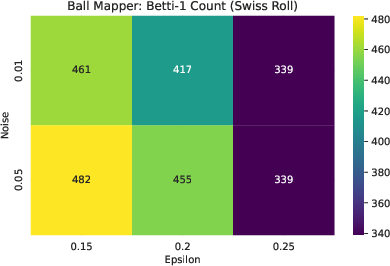
Figure 2: Heatmap visualizes Ball Mapper's persistent lattice effect—Betti numbers escalate with cover density rather than reflecting manifold topology.
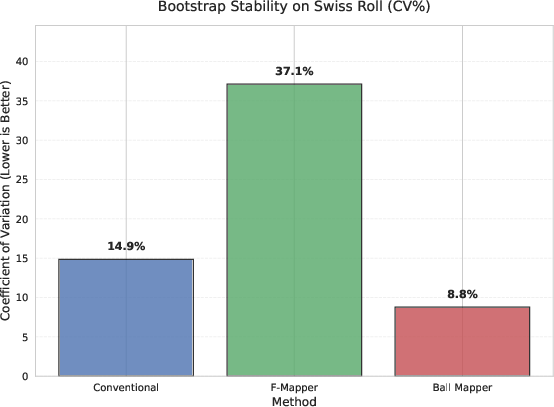
Figure 3: Bootstrap variability quantifies Mapper statistical stability; Ball Mapper exhibits lowest CV but encodes geometric artifacts.
Open problems include the lack of unified theory, absence of principled data-driven parameter selection, and insufficient metrics for Mapper graph comparison.
Cluster Quality Perspective
Cluster quality is assessed using internal (Silhouette Coefficient) and external (Normalized Mutual Information) metrics, applied to Voronoi-induced partitions of Mapper outputs. Critical findings:
- On continuous manifolds (Swiss Roll), all methods yield low silhouette scores, reflecting incompatibility of geometric clustering with manifold topology.
- On discrete structures (Noisy Circle), silhouette values align with intuitive circular clusters.
- Ensemble Mapper reduces parameter-driven volatility but does not always improve geometric compactness.
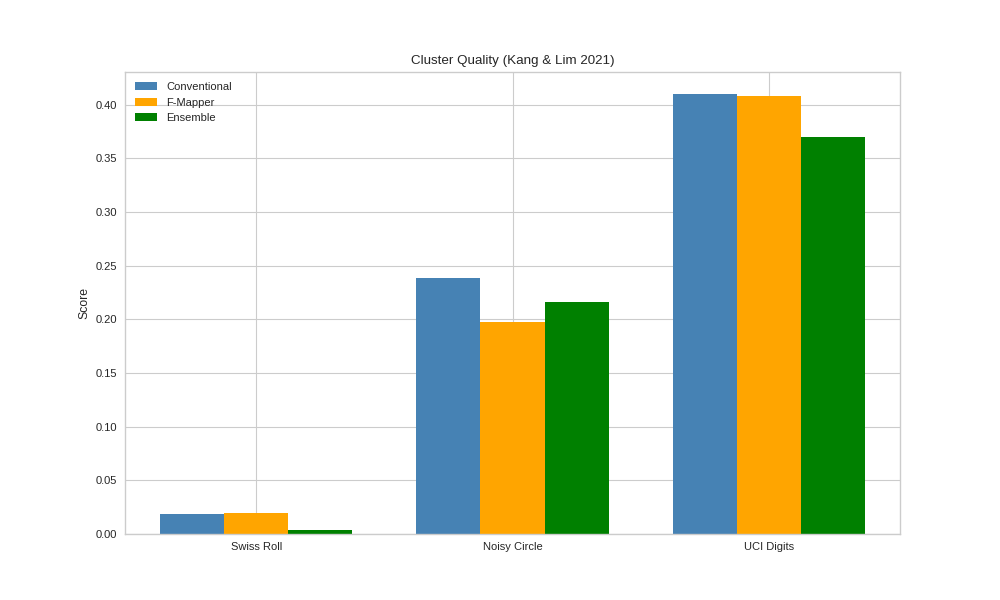
Figure 4: Cluster quality metrics demonstrate method sensitivity—low silhouette for Swiss Roll; Ensemble offers conservative clustering.
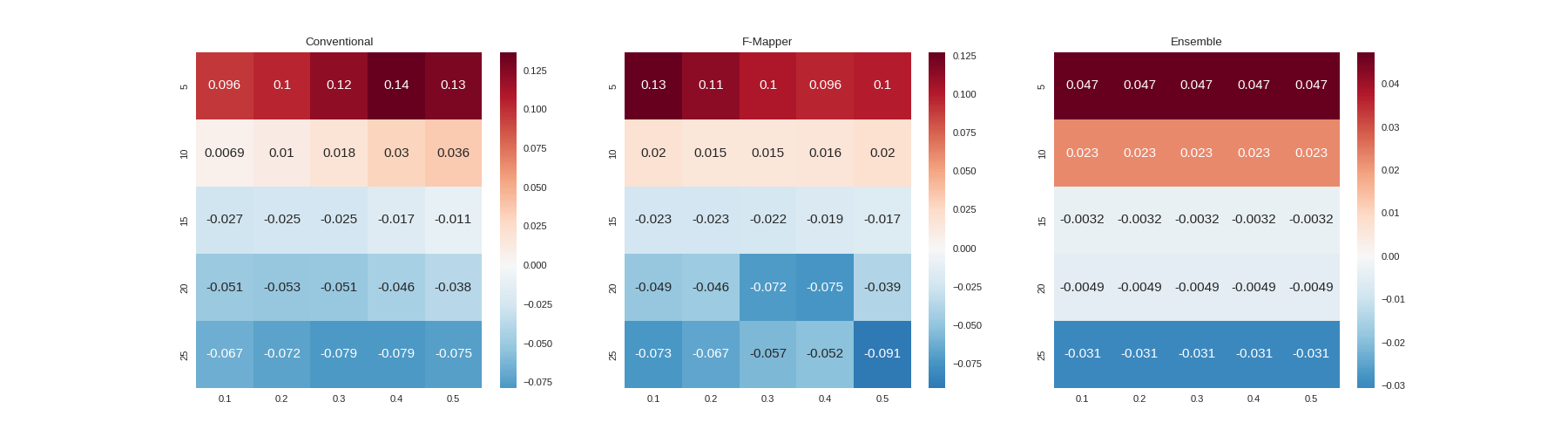
Figure 5: Parameter sensitivity heatmaps reveal fragmentation with increased resolution; Ensemble reduces volatility via consensus.
Lens function selection profoundly affects cluster outcome, but optimizing for geometric compactness can conflict with topological preservation. Current cluster quality indices inadequately capture the Mapper-induced topological structure, motivating development of new metrics.
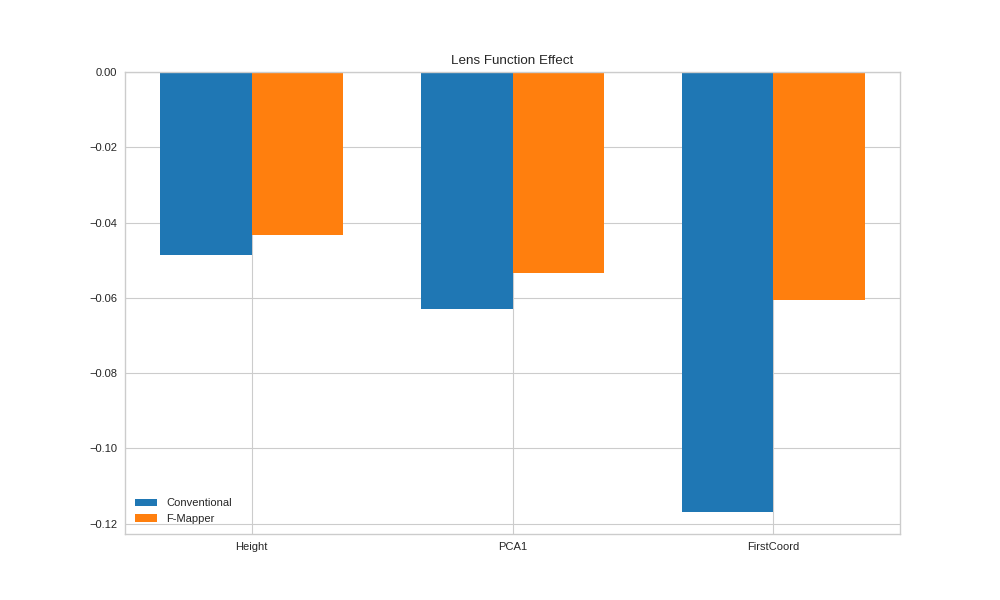
Figure 6: Lens function variants consistently yield low silhouette values, confirming limits of hard clustering on manifold datasets.
Topological and Shape Preservation
Mapper–Reeb Graph and Ball Mapper Dichotomy
A rigorous distinction is made between topological preservation (faithful recovery of Reeb graph topology induced by a function) and shape/metric preservation (robustness of geometric connectivity, independent of functional input).
- Conventional Mapper aims for Reeb graph approximation, subject to fragmentation and cycle proliferation at high resolution.
- F-mapper mitigates fragmentation by fuzzy memberships, trading off global connectivity for cluster quality.
- Ball Mapper captures coverage lattice, with Betti numbers reflecting geometry rather than intrinsic topology; its nerve is contained within the Vietoris–Rips complex.
Increasing cover resolution in Conventional Mapper triggers explosive cycle counts (spurious holes), while Ball Mapper preserves geometric coverage across noise levels, though with disconnected interpretations.
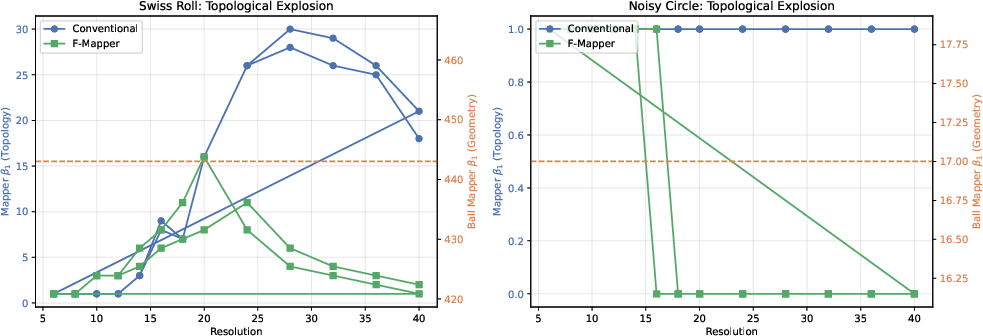
Figure 7: Topological explosion: Mapper's cycle counts increase sharply with resolution, diverging from ground-truth topology.
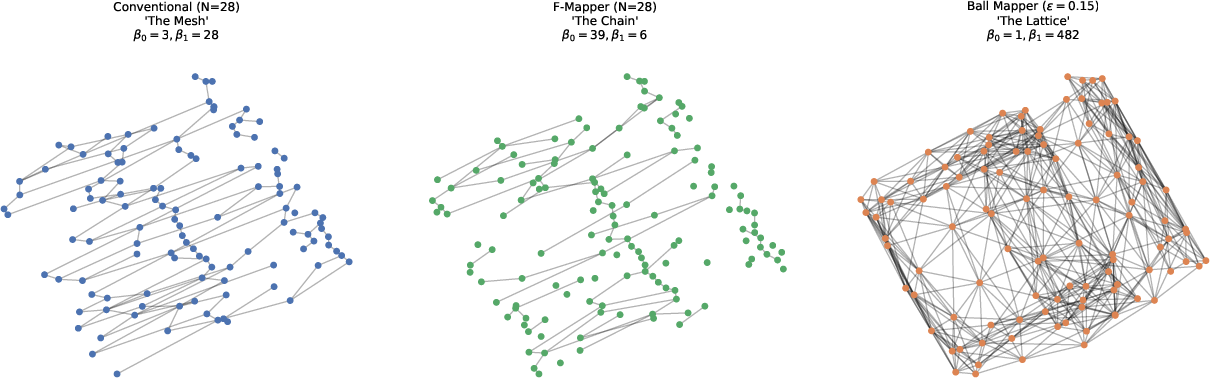
Figure 8: Structural comparison at fixed resolution highlights Mapper's skeletal output versus Ball Mapper's dense lattice covering.
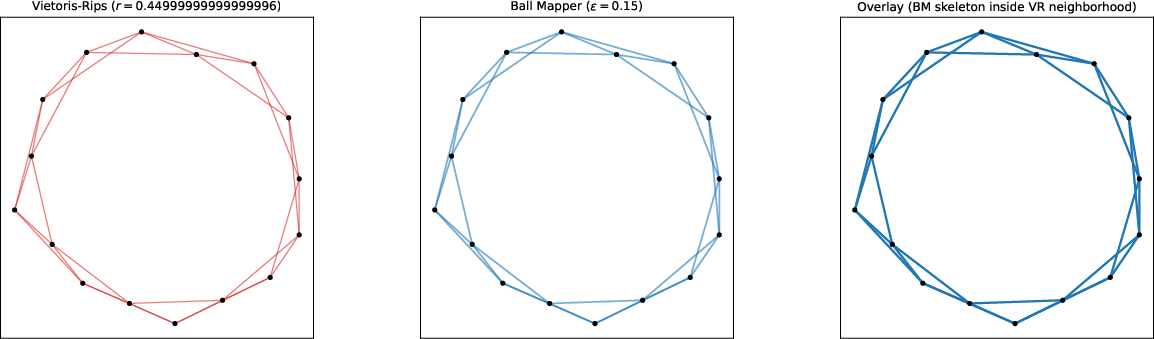
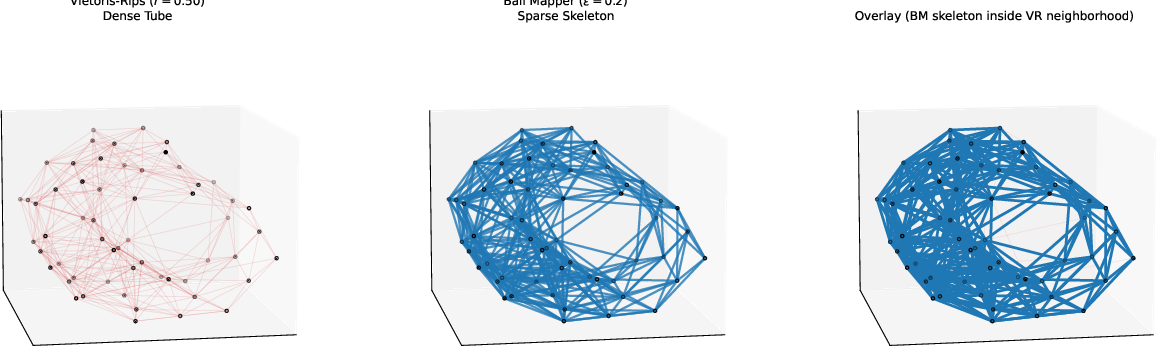
Figure 9: Ball Mapper's graph is geometrically contained within the Vietoris–Rips complex, confirming theoretical interleaving.
Integrative Comparison and Practical Guidelines
Across the three axes, trade-offs are evident:
- Stability does not guarantee cluster quality, nor does high cluster quality ensure topological faithfulness.
- Ensemble Mapper regularizes fragmentation (reducing disconnected components) but increases cycle complexity.
- Betti numbers are insufficient for meaningful preservation in dense settings; multi-objective metrics are necessary.
The decision framework recommends Conventional Mapper for exploratory analyses, Multiscale for theoretical rigor, Fuzzy variants for noisy boundaries, and Ball Mapper for lens-free metric analysis. Ensemble Mapper is valuable in settings where parameter instabilities are significant.
Implications and Future Directions
The analysis underscores that no Mapper variant is optimal across all axes or datasets. Open research directions include:
- Developing hybrid frameworks balancing topological correctness and geometric coverage.
- Data-driven parameter selection and metric design for principled Mapper evaluation.
- Extension of preservation theory under multivariate lenses and high-dimensional noise.
- Quantitative, interpretable evaluation metrics superseding visual intuition.
The work sets the foundation for robust, reproducible Mapper analysis in applied TDA, highlighting critical interdependencies between algorithmic choices and evaluation objectives.
Conclusion
This paper provides the most systematic comparative analysis to date of Mapper algorithms, dissecting stability, cluster quality, and shape/topology preservation. Through theoretical exposition and empirical experimentation, it demonstrates that optimizing Mapper along one axis often compromises another. The research charts the landscape for principled deployment and evaluation of Mapper, urging a multidimensional, data-adaptive perspective amid ongoing methodological evolution.

