- The paper presents GK-Mapper, which overcomes spherical clustering limits by employing adaptive ellipsoidal regions via the Gustafson-Kessel FCM.
- It provides a detailed theoretical stability framework, proving the differentiability and non-monotonic behavior of cluster memberships with respect to the fuzzifier parameter.
- Empirical results show that GK-Mapper yields sparser, more robust graphs and improved clustering quality in high-dimensional or anisotropic datasets.
GK-Mapper: A Stability Framework for Gustafson-Kessel Fuzzy Mapper Graphs
Introduction and Motivation
The paper "GK-Mapper: A Stability Framework for Gustafson-Kessel Fuzzy Mapper Graphs" (2606.21671) addresses two principal limitations in existing Mapper-based Topological Data Analysis (TDA) frameworks: (i) the restriction to spherical clusters in conventional Euclidean Fuzzy C-Means (FCM) and Shape Fuzzy C-Means Mapper (SFCM), and (ii) the lack of a stability theory for the Mapper graph structure with respect to fuzzifier parameter variations. By introducing the Gustafson-Kessel Mapper (GK-Mapper), which generalizes the covering from spherical to adaptive ellipsoidal regions using the Gustafson-Kessel FCM, the authors enable more accurate encoding of the geometry in anisotropic, high-dimensional datasets. Furthermore, through a detailed analytical treatment, they establish regularity, local and global graph stability, event structure, and empirical evidence for the superiority of the GK-Mapper, especially on complex and noisy data.
Background: Fuzzy Clustering and Mapper Variants
Fuzzy clustering assigns non-binary memberships to data points, which is critical in real-world scenarios where overlaps and uncertainty are the norm. Classic FCM uses Euclidean distances, thereby assuming (hyper)spherical cluster geometry, leading to misrepresentation in datasets with elongated, anisotropic clusters—a situation prominent in biomedical or point-cloud analysis.
The Mapper construction projects data through a filter function, builds a cover on the value space (typically intervals or balls), clusters preimages, and constructs the nerve/simplicial complex. The flexibility and interpretability of Mapper graphs have led to their adoption in numerous scientific domains. Fuzzy Mapper variants, especially SFCM, improve upon the hard partitioning of standard Mapper by introducing soft memberships, but only via Euclidean geometry.
The Gustafson-Kessel FCM addresses the limitation of spherical clusters by estimating adaptive Mahalanobis distances, capturing local covariance structure and modeling ellipsoidal clusters, which is essential for high-dimensional, real-world data distributions.
The GK-Mapper Algorithm
GK-Mapper directly replaces the FCM-derived cover in SFCM with the output of the GK-FCM. Each cluster yields an adaptive ellipsoidal region, with memberships reflecting Mahalanobis distances rather than Euclidean ones. After iterative convergence, thresholded memberships define the fuzzy cover sets, and the nerve graph is constructed by identifying overlapping clusters. This approach preserves the minimal parameterization of SFCM while lifting the geometric rigidity.
Theoretical Foundations: Regularity, Stability, and Critical Events
Membership Regularity
The main analytic result demonstrates that cluster memberships are differentiable (C1) functions of the fuzzifier m, given conditions of regularity and non-degeneracy (all data-cluster distances remain positive). The derivative is explicitly characterized, including contributions from both exponent changes and cluster/adaptive-matrix movement. Crucially, the membership function is not generally monotonic with respect to m, due to the possibility of cluster center and shape evolution.
Edgeless Zone and Stability Radius
A fundamental result is a characterization of the edgeless zone: for a fixed m, the Mapper graph becomes empty (edgeless) if the threshold t exceeds the maximum across all minimal pairs of memberships for each point (i.e., t>imaxj=kmaxmin{uij(m),uik(m)}).
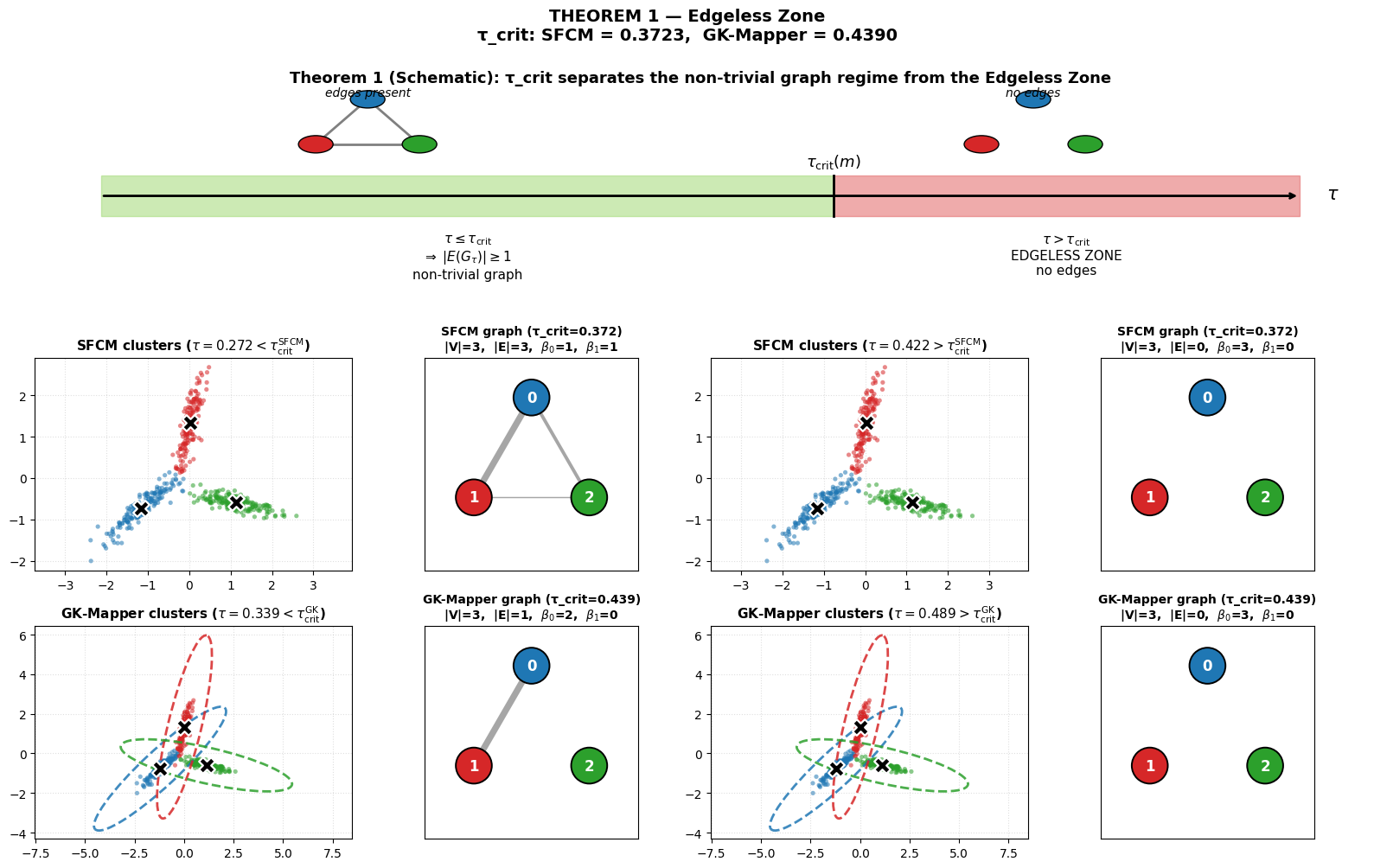
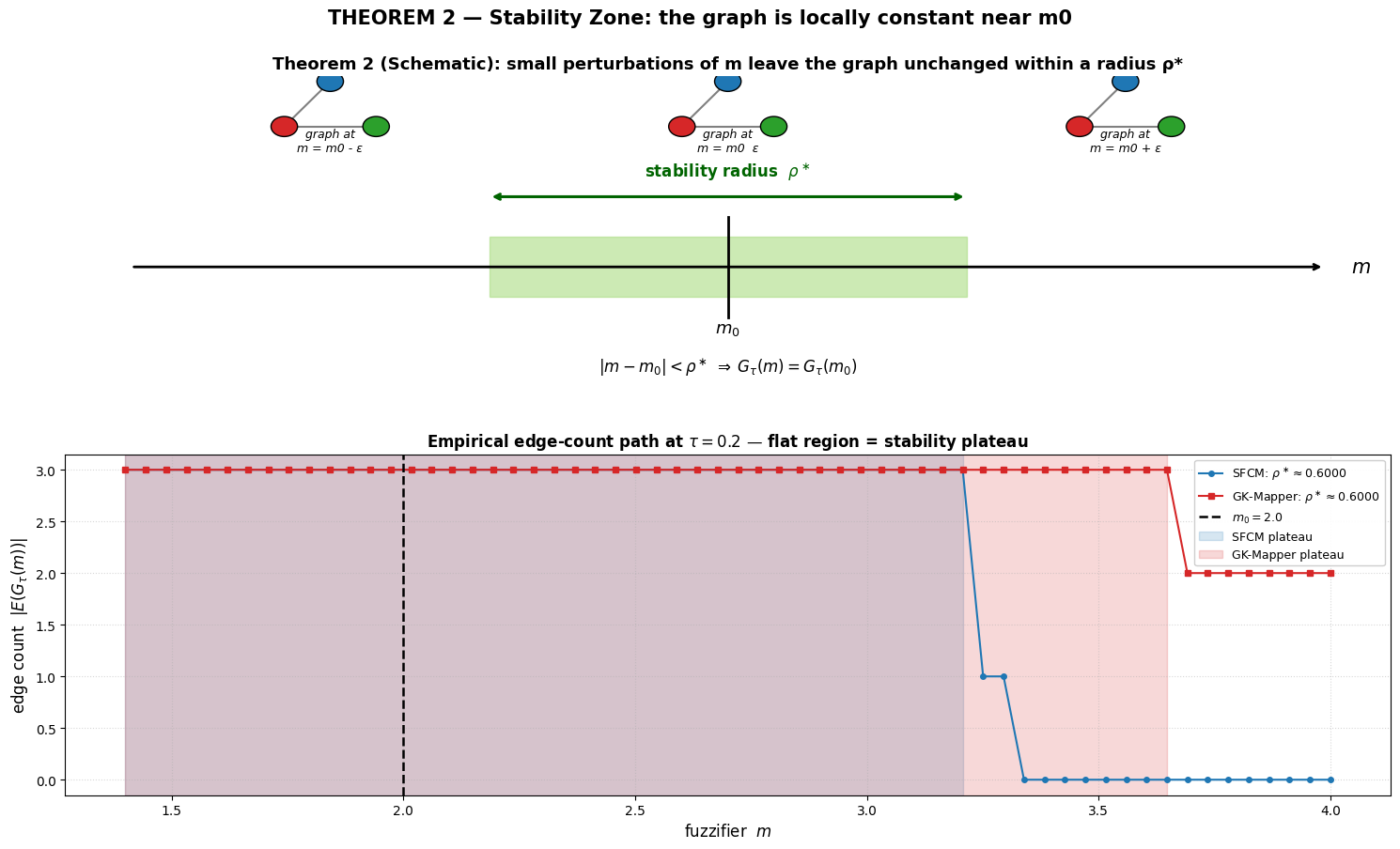
Figure 1: The critical threshold tcrit marks the transition into the edgeless zone for anisotropic ellipsoidal data at m0=2.0.
In addition, the local constancy of the graph is established: as long as no membership value crosses t in a neighborhood of m0, the Mapper graph is guaranteed invariant. The explicit stability radius m0 is given, bounding the permissible deviation in m1 around which the graph structure is maintained.
Edge Instability and Tight Change Bounds
All edge changes in the Mapper graph due to fuzzifier perturbations are precisely attributed to threshold-crossing events of the membership functions. The number of possible edge changes is sharply bounded in terms of the number of threshold crossings observed.
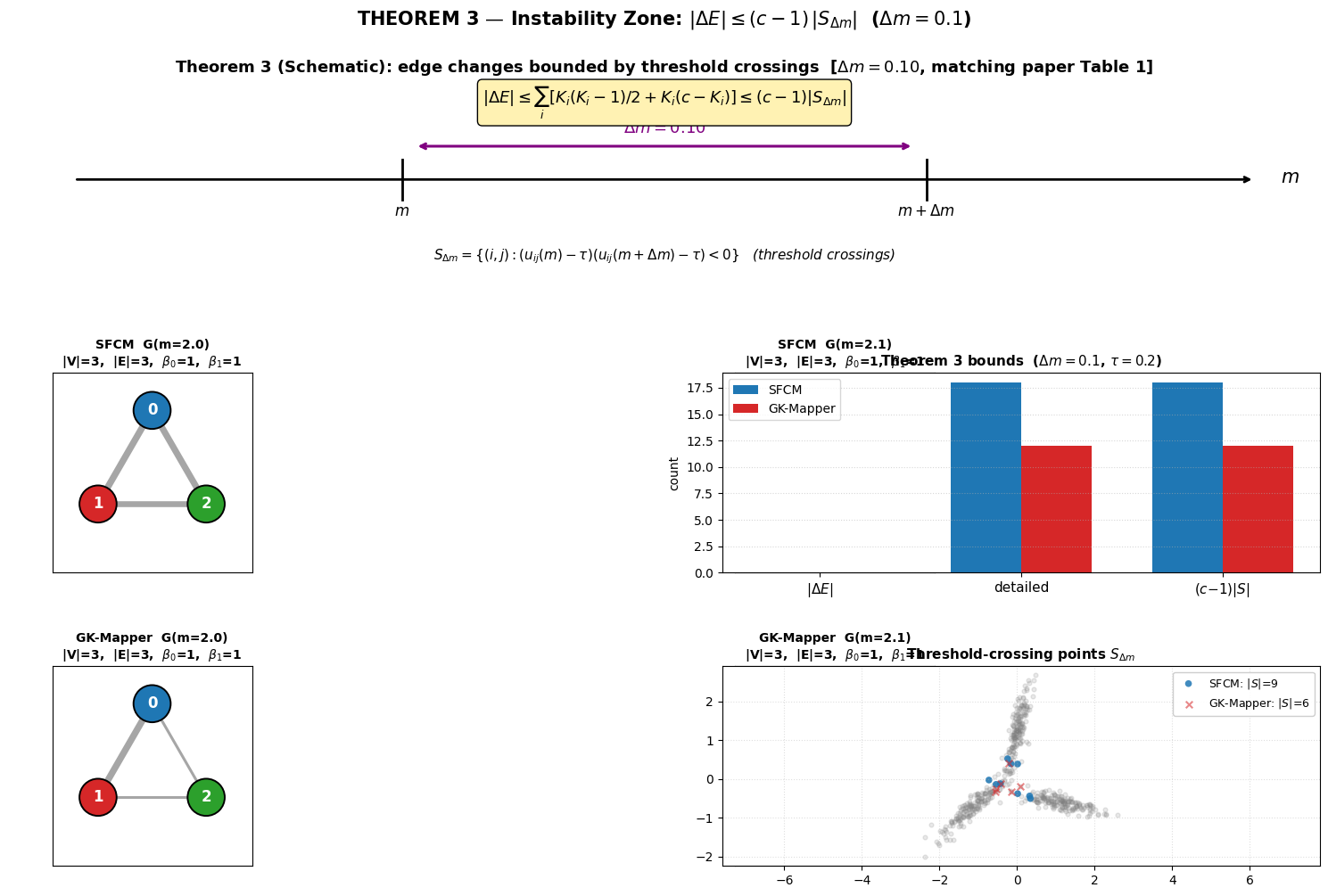
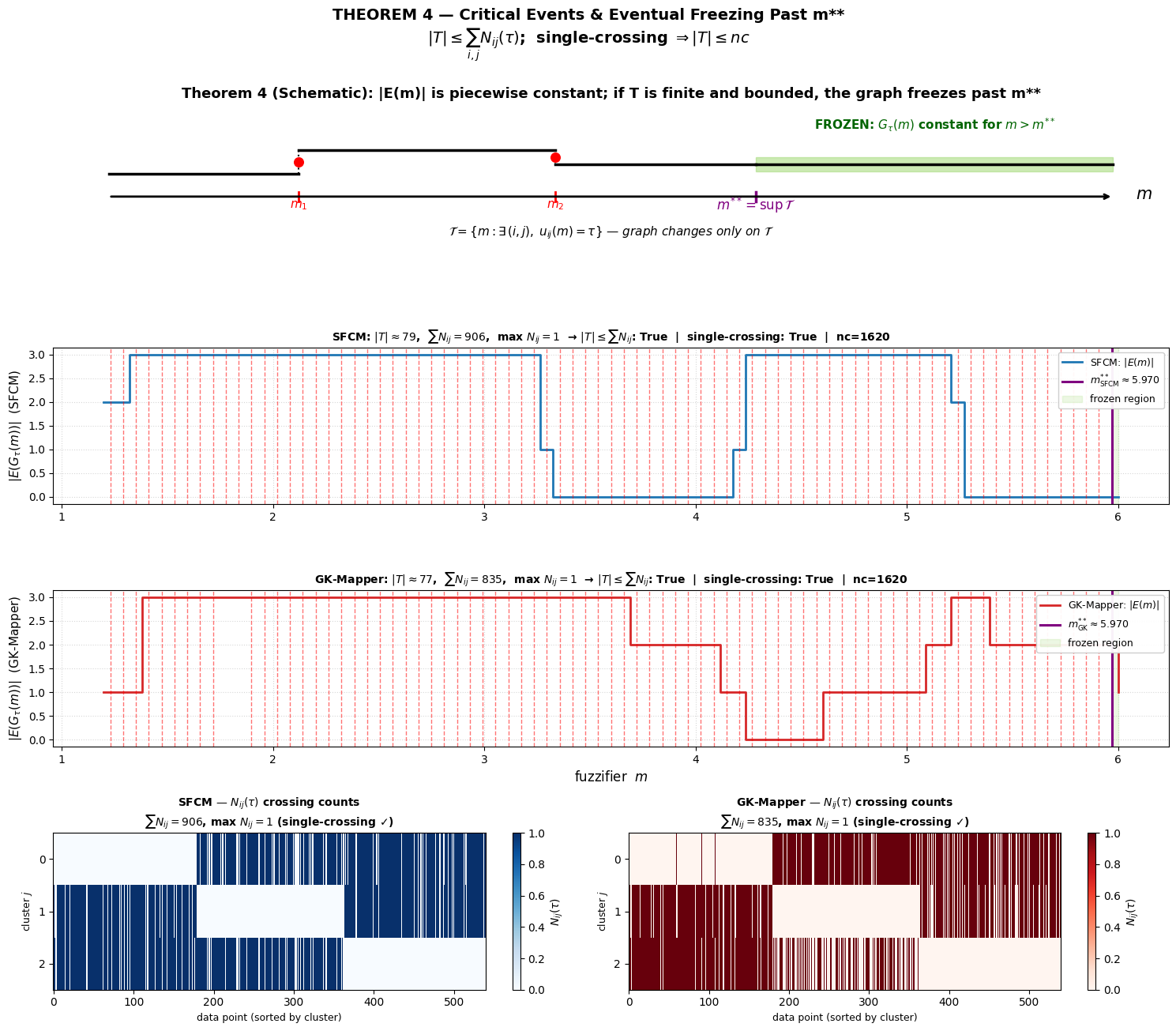
Figure 2: Schematic showing edge changes in the co-occurrence graph controlled by threshold crossings for the case of GK-Mapper and SFCM.
Critical Events and Freezing Behavior
Parametric variations in the fuzzifier m2 give rise to a finite or countable set of critical events (membership threshold crossings), and between these points, the Mapper graph is structurally constant. If the number of critical events is finite in a bounded region, a freezing threshold exists beyond which no further graph changes can occur for increasing m3.
Empirical Results and Numerical Findings
The empirical section systematically compares SFCM and GK-Mapper across five datasets of varying geometries and dimensions: synthetic isotropic (unit circle), synthetic anisotropic (ellipsoidal), the Stanford Bunny point cloud, the UCI Digits, and the Wisconsin Breast Cancer dataset.
Key results include:
- Threshold Range Extension: GK-Mapper systematically raises m4, thus allowing nontrivial (non-edgeless) graph structures across a much larger range of thresholds. For example, on the UCI Digits, SFCM yields m5, while GK-Mapper achieves m6.
- Increased Local Stability: GK-Mapper offers a higher empirical stability radius (m7) in 4/5 cases; for instance, on the Breast Cancer dataset, m8 (GK) vs. m9 (SFCM), implying GK-Mapper’s far greater robustness to fuzzifier variation.
- Graph Sparsification: In high-dimensional regimes with many clusters (e.g., m0 Breast Cancer), GK-Mapper yields dramatic sparsification of the Mapper graph (m1) compared to SFCM (m2), eliminating spurious overlaps caused by isotropic metric misfit.
- Structure-Rich Graphs and Edge Change Suppression: On the Stanford Bunny, GK-Mapper produces more topologically intricate graphs than SFCM (higher m3), with fewer observed edge changes for fixed perturbations.
- Clustering Quality: While label-matching metrics (ARI, matching score) do not universally favor either method, notable improvements are observed for GK-Mapper on complex, anisotropic or high-dimensional data (e.g., UCI Digits ARI rises from m4 to m5).
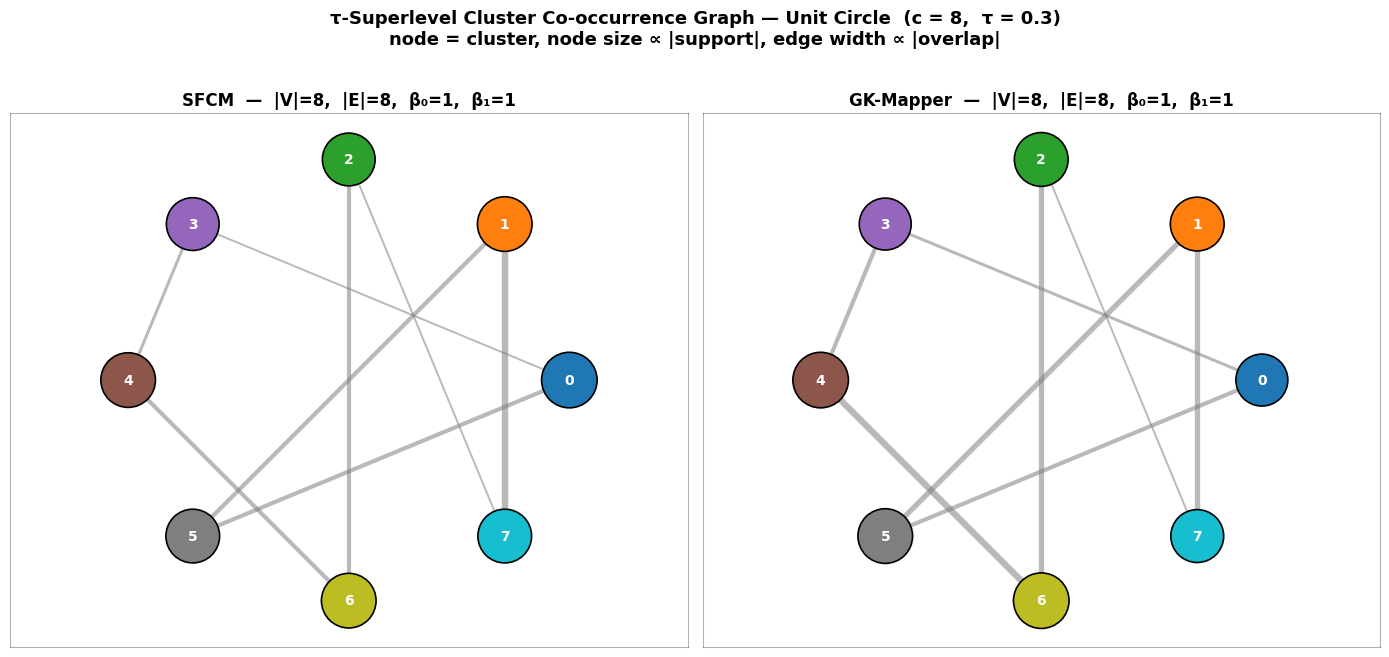
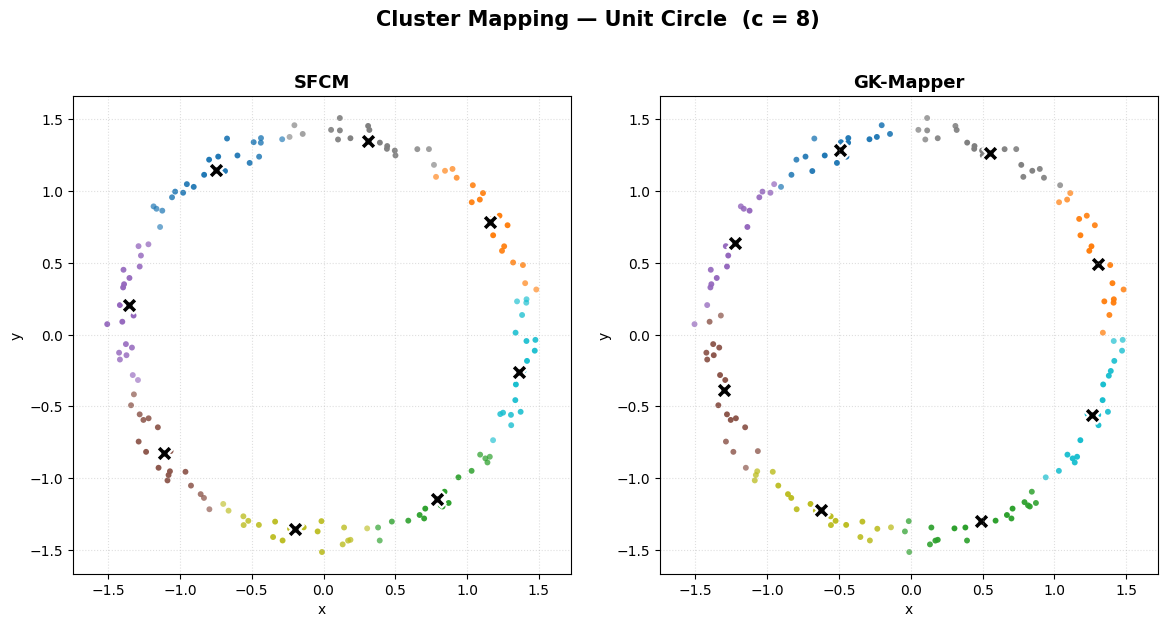
Figure 3: Co-occurrence graphs for the unit circle (m6, m7); both methods produce identical topologies (m8, m9).
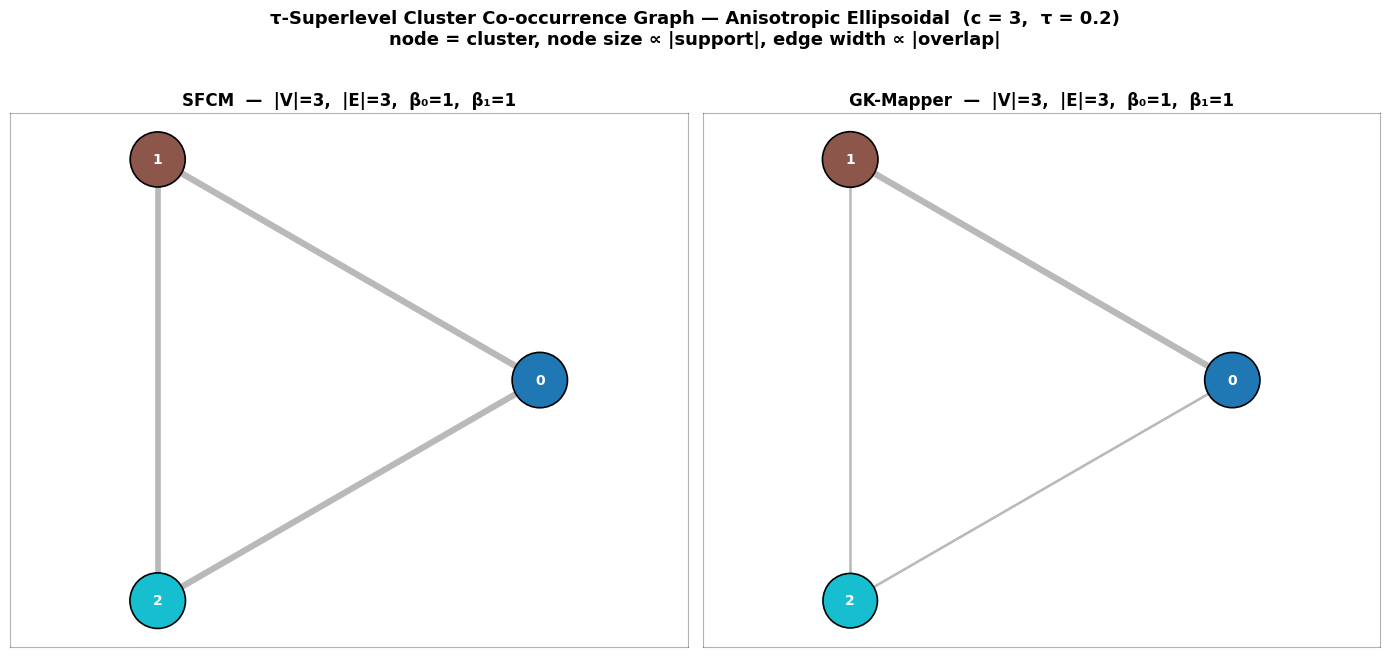
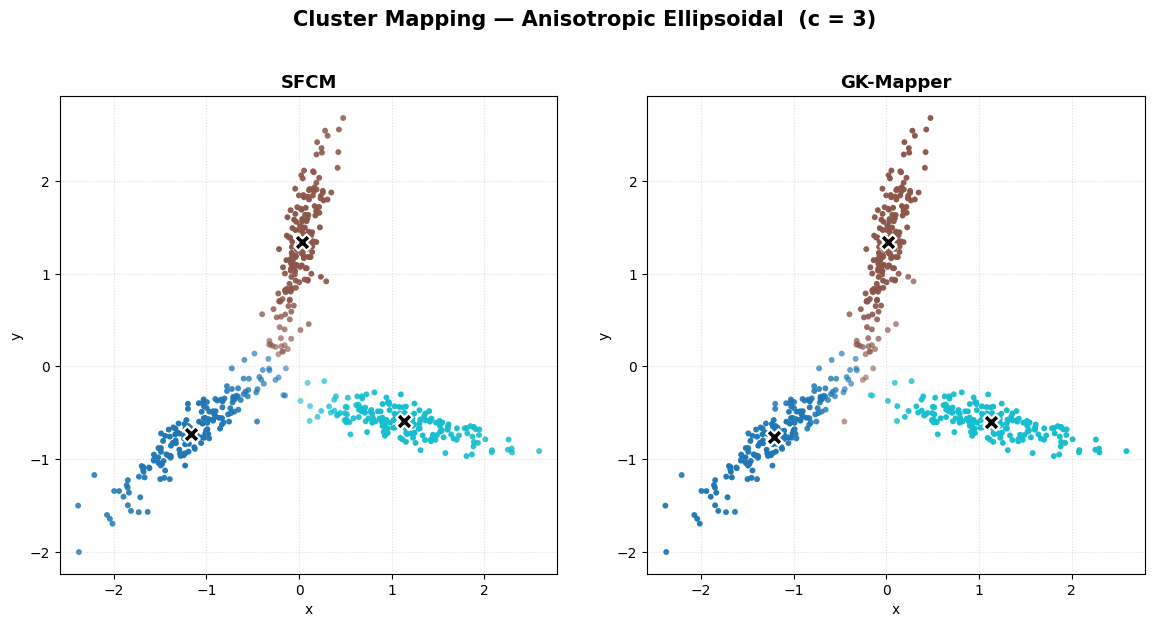
Figure 4: Comparison for anisotropic ellipsoidal clusters (m0, m1); both yield m2, m3, but GK-Mapper adjusts overlap strengths.
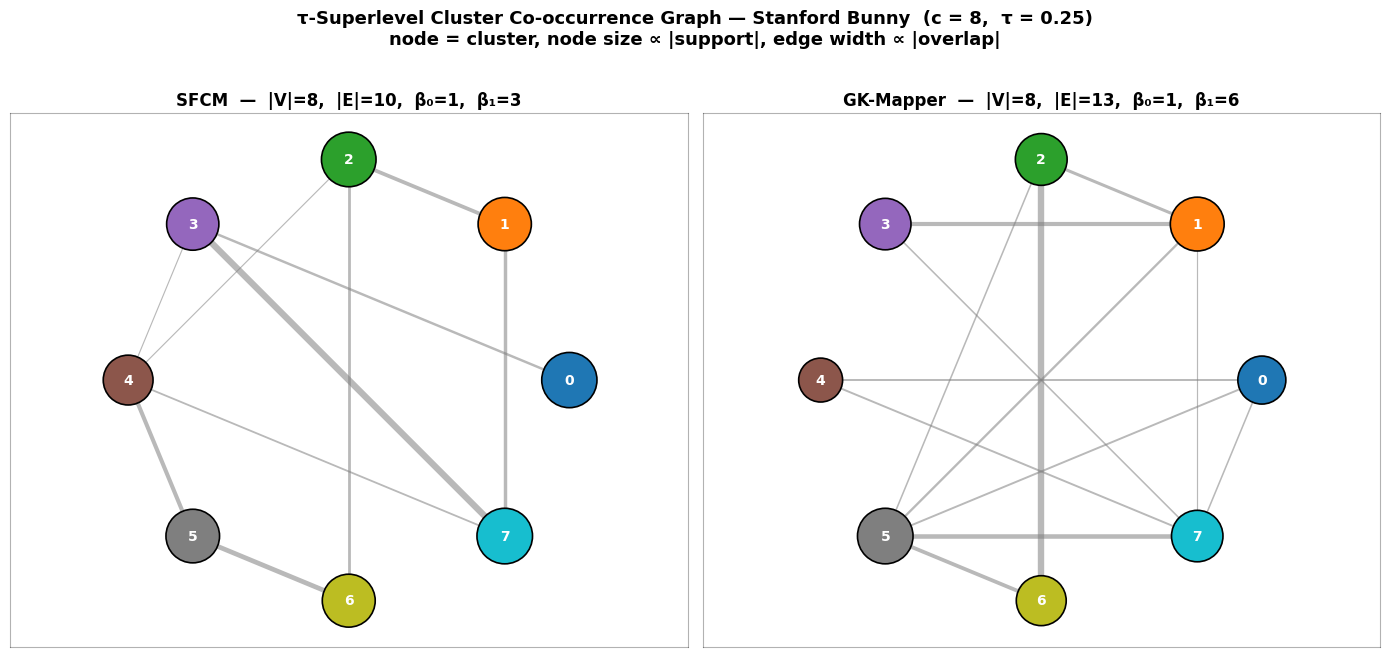
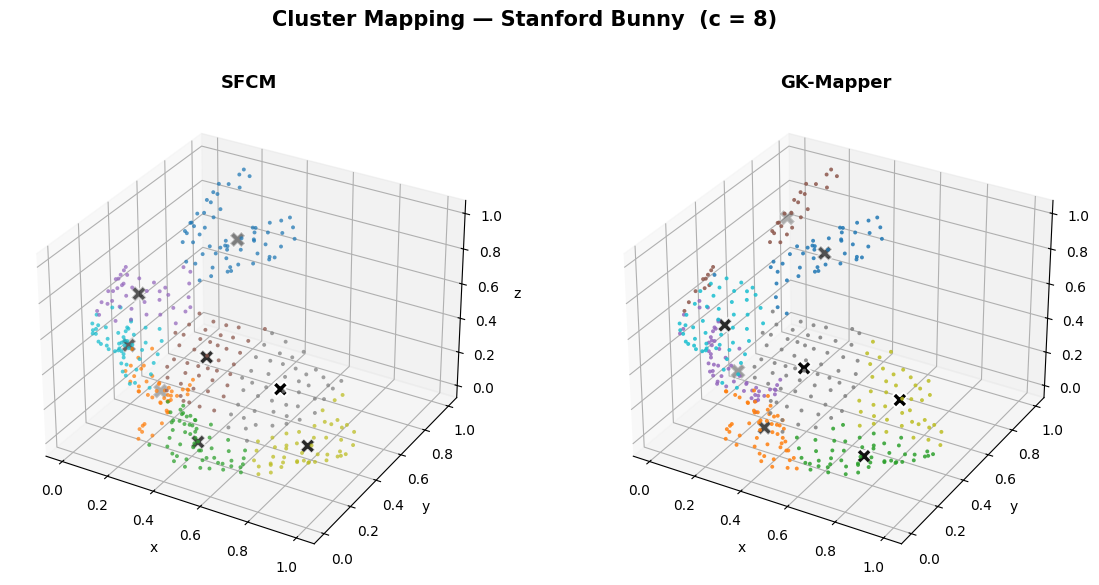
Figure 5: Stanford Bunny (m4, m5): GK-Mapper produces a denser, higher first Betti number (m6) compared to SFCM (m7).
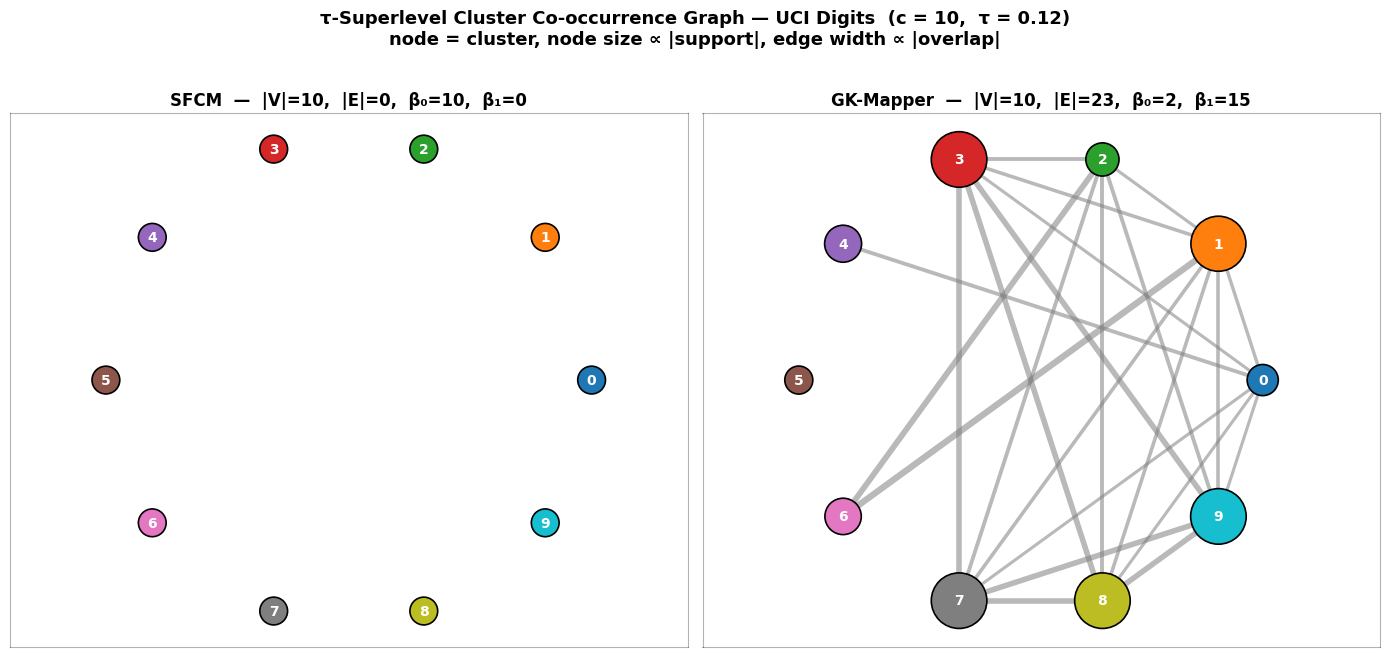
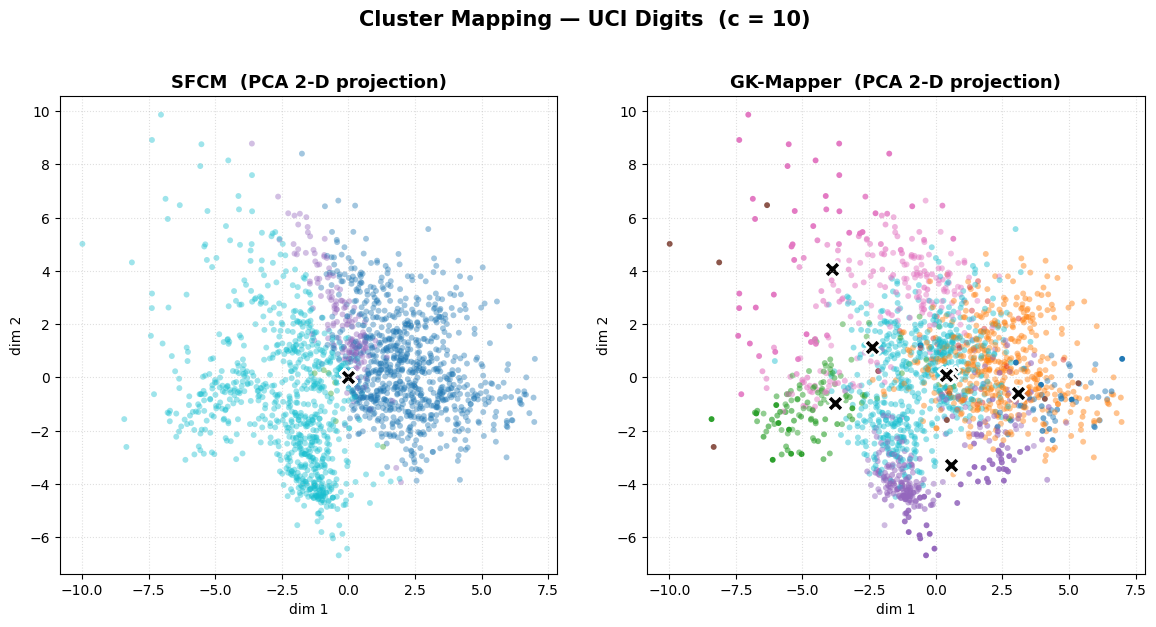
Figure 6: UCI Digits (m8, m9): SFCM is edgeless, GK-Mapper finds t0, t1.
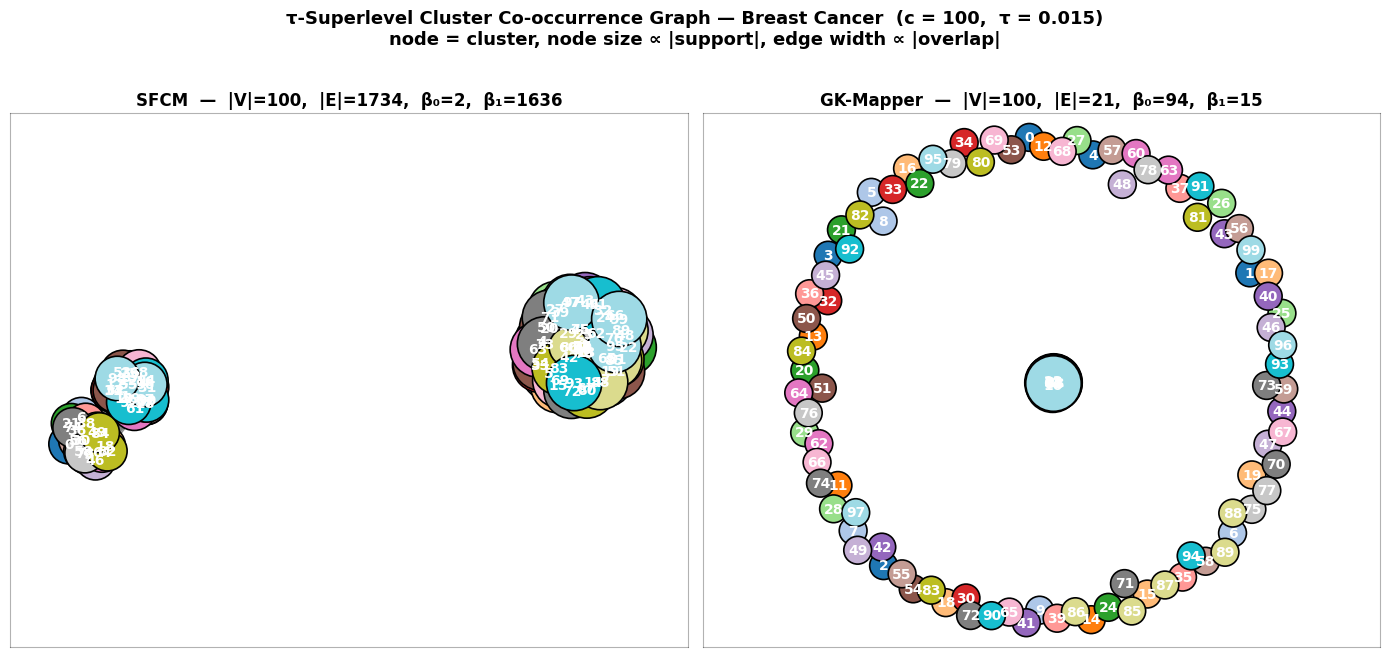
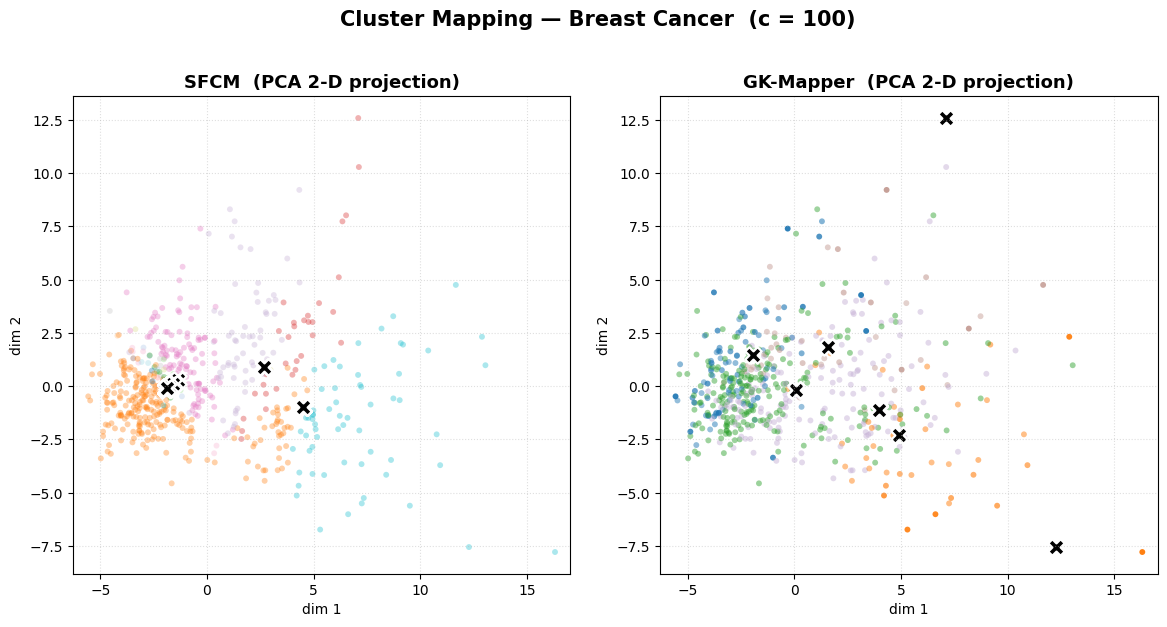
Figure 7: Breast Cancer (t2, t3): GK-Mapper yields a highly sparse graph, SFCM yields a dense, overlap-rich graph.
Implications and Future Directions
Theoretically, the paper bridges a central gap in TDA literature: the explicit analysis of local and event-driven structural stability for fuzzy Mapper constructions, with full accommodation of complex geometry via GK-FCM. The distinction between nontrivial zone, local stability, and agreement with external ground truth is systematically emphasized. Practically, the availability of substantially sparser, robust Mapper graphs with expanded working regimes in t4 space advances the usability of Mapper for high-dimensional and anisotropic data.
Future research directions include:
- Characterizing the global minimality and uniqueness properties of GK-FCM optimization paths.
- Analyzing the prevalence and mechanism of single-crossing behavior for the memberships.
- Integration of persistent homology and topological distances to extend the theoretical stability guarantees to other Mapper-derived structures.
- Application to real-world, multimodal biomedical and scientific datasets necessitating adaptive geometry handling.
Conclusion
GK-Mapper, as introduced and analyzed in this study, overcomes the central geometric and stability limitations of SFCM and its predecessors by employing ellipsoidal covers and delivering the first detailed—and computable—stability framework for fuzzy Mapper graphs. Empirical evidence supports the claim that GK-Mapper typically yields a broader, more stable, and interpretable Mapper graph structure, especially in geometrically nontrivial and high-dimensional regimes. Further work will extend these findings toward richer topological guarantees and integration with persistent invariants.

