- The paper demonstrates that the first negative moment of the optical conductivity (SWM sum rule) directly links quantum geometric length to multipartite entanglement.
- It reveals that while the correlation length diverges at the quantum phase transition, the quantum geometric length remains finite and exhibits an abrupt jump at critical doping.
- The study utilizes THz and FTIR spectroscopy with advanced Kramers–Kronig fitting to quantitatively correct the dielectric response through a quantum geometry framework.
Many-Body Quantum Geometry and Entanglement at the 3D Metal-Insulator Quantum Phase Transition
Introduction
The study investigates the interplay of quantum geometric lengths, multipartite entanglement, and collective dielectric and optical response near the three-dimensional metal-insulator quantum phase transition (MIQPT) in phosphorus-doped silicon (Si:P). It harnesses the first negative moment (SWM) sum rule of optical conductivity, which is fundamentally related to the zero-temperature quantum Fisher information and, hence, forms a lower bound on multipartite entanglement. The work provides an experimental protocol to probe many-body quantum geometry in a paradigmatic interacting and disordered system and critically interrogates the emergent length scales—quantum geometric length ℓ, correlation length ξ, and Bohr radius a—that govern the transition.
Experimental Approach: Probing Quantum Geometry with Optical Conductivity
The authors exploit THz time-domain spectroscopy (TDTS) and Fourier transform infrared (FTIR) reflectivity to precisely recover both real and imaginary components of the optical conductivity σ(ω) across a broad frequency and doping range in Si:P. The SWM sum rule,
S−1ab=ℏ2e2ne⟨ℓaℓb⟩=π2∫0∞ωRe σab(ω) dω,
relates the first negative moment of the optical conductivity to the squared quantum geometric length (⟨ℓaℓb⟩). In high-symmetry systems, this directly encodes the spatial spread of the many-electron ground state wavefunction and, equivalently, the scale of zero-point polarization fluctuations. For non-interacting band insulators, it reduces to the gauge-invariant trace of the quantum metric tensor; for real-space disordered interacting systems, it characterizes a many-body localization length.
The analysis extends prior techniques by applying advanced Kramers–Kronig consistent fitting to interpolate optical weight outside the measured window, thus accurately realizing the full SWM integral over experimental data.
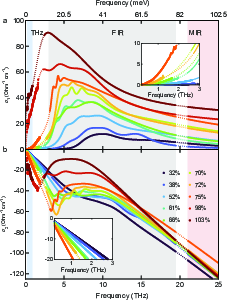
Figure 1: Frequency-resolved optical conductivity from THz and FTIR spectroscopy highlights the evolution of both real and imaginary components across the MIQPT as a function of P-dopant concentration.
Emergent Length Scales and Their Critical Behavior
A central result is the distinction between the quantum geometric length ℓ and the conventional correlation length ξ as one approaches critical doping. Far from the MIQPT, ℓ aligns with the Bohr radius, signifying that the quantum geometry of localized donor electrons is set by single-impurity characteristics. However, as the MIQPT is approached, ℓ is substantially enhanced—demonstrating a pronounced increase in the effective polarizability volume—but remains finite, only diverging abruptly at the transition itself. In contrast, ξ0—extracted from the scaling divergence of the static dielectric constant—diverges continuously upon approaching ξ1.
This non-monotonic relationship is explicitly visualized below.
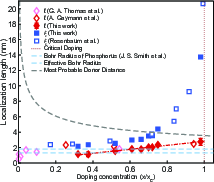
Figure 2: Doping-dependent evolution of quantum geometric length ξ2 and correlation length ξ3; ξ4 diverges at the MIQPT, while ξ5 remains finite and jumps discontinuously.
The authors highlight that, in three dimensions, the SWM sum rule is dominated by the high-frequency (UV) spectral weight. Consequently, ξ6 is largely insensitive to the low-frequency spectral redistribution that fuels the divergence in ξ7. This outcome is shown to generalize via scaling analysis: in ξ8, the quantum geometric length is noncritical, whereas the correlation length—and thus the associated dielectric response—is singular at the MIQPT.
Quantum Geometric Enhancement of the Dielectric Response
Beyond clarifying the distinct nature of ξ9 and a0, the doping-induced "puffing" of a1 provides a quantum geometric correction to the microscopic Clausius–Mossotti description of the dielectric function. This approach, which rescales the donor polarizability volume by a2, rectifies the nearly order-of-magnitude mismatch between standard mean-field predictions (Herzfeld criterion) and experimentally observed critical concentration. The corrected model predicts a critical doping within a320% of experiment.
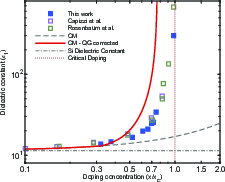
Figure 3: Doping evolution of the static dielectric constant; quantum geometry-corrected Clausius–Mossotti fit (red) matches divergence near MIQPT, while the uncorrected model (gray dashed) fails to capture the scale of a4.
This demonstrates that quantum geometric contributions—reflecting cooperative many-body effects and virtual dipole fluctuations—inherently renormalize the dielectric instability threshold.
Optical Sum-Rule Diagnostics and Robustness
The robustness of the SWM-derived quantum geometric length is further confirmed by spectral weight analysis. The normalized cumulative sum rule converges well below the measurement threshold, ensuring that a5 is not limited by unmeasured high-frequency response.
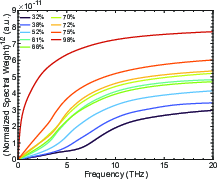
Figure 4: Normalized cumulative sum rule for the SWM integral verifies that contributions above the detection range are negligible, even as doping increases toward the metallic regime.
Multipartite Quantum Entanglement and Many-Body Physics
The SWM sum rule is directly proportional to the quantum Fisher information at a6, which serves as an experimentally accessible bound on multipartite entanglement. However, the leading component of the quantum Fisher information is the separable, local orbital response. The enhancement of a7 with doping is interpreted as predominantly arising from intersite dipole correlations—with the non-separable (entangled) component manifesting as the many-body contribution to the metric tensor. In Si:P, two primary channels govern interaction corrections: single-particle hopping, which sets a8 and drives metallicity, and dipole–dipole interactions, which exclusively augment a9 via quantum geometric (entanglement-driven) enhancement of the local polarizability volume.
Implications and Outlook
This work establishes a rigorous protocol for extracting many-body quantum geometric length and multipartite entanglement bounds in disordered, interacting systems via THz and infrared spectroscopy. The non-divergence and abrupt critical behavior of σ(ω)0 in three dimensions unequivocally establish σ(ω)1 as not being the critical length scale for the MIQPT—contrasting the situation in 1D Mott transitions and resolving open questions about many-body localization measures in the continuum limit. The quantum geometry-corrected Clausius–Mossotti treatment offers a minimalist yet quantitatively successful route to account for collective enhancements in dielectric response, grounding the Herzfeld criterion in the quantum mechanical architecture of static polarization fluctuations.
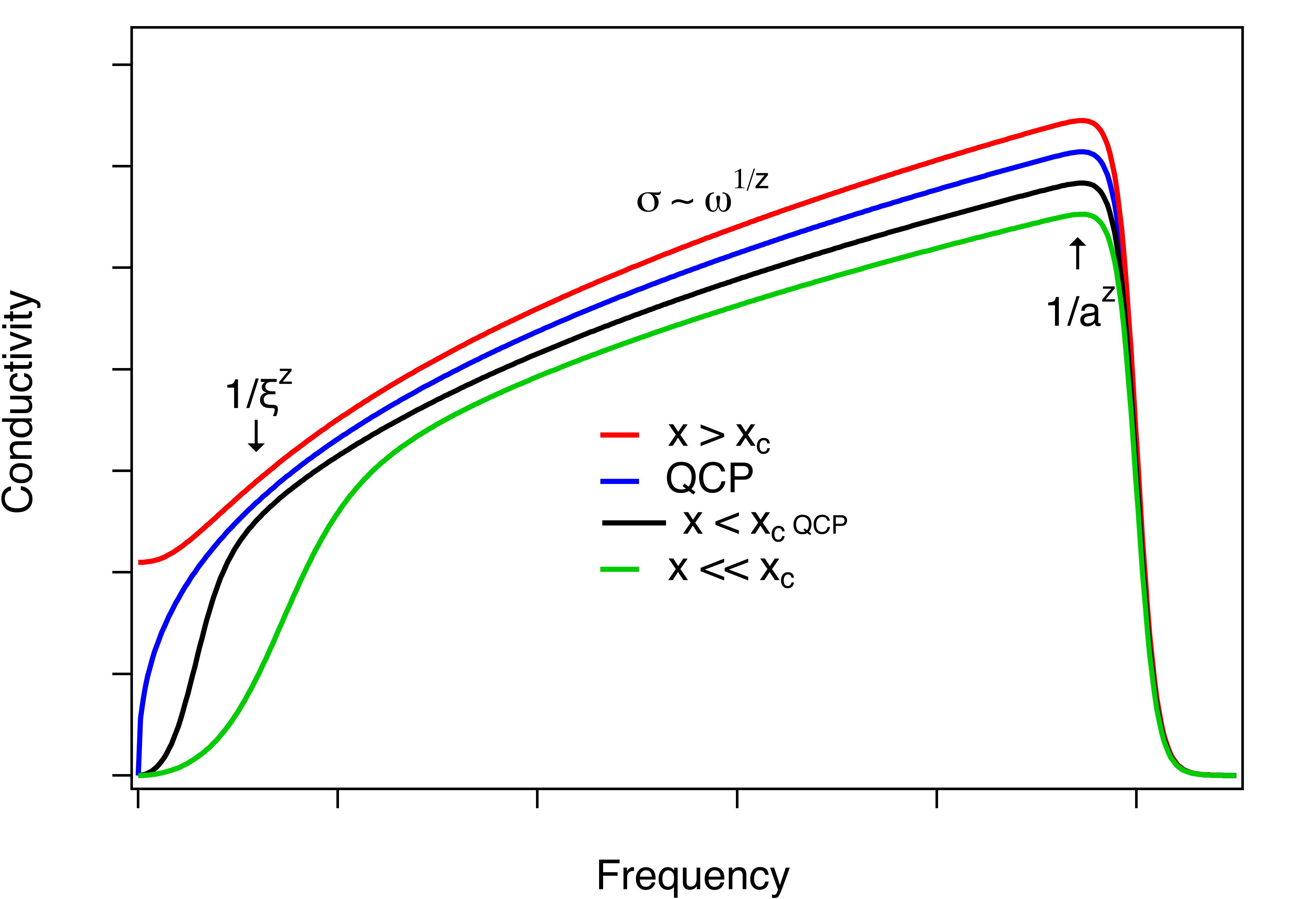
Figure 5: Schematic illustration of the optical conductivity spectral evolution through the MIQPT showing the redistribution of low-frequency (critical) and high-frequency (UV) spectral weight.
Conclusion
The paper delivers a comprehensive experimental and theoretical analysis of geometrical length scales and quantum information measures at the MIQPT in Si:P. By leveraging the SWM sum rule, it isolates the quantum geometric length as a robust, experimentally accessible, yet noncritical length distinct from the diverging correlation length characterizing the transition. The findings clarify the roles of local quantum geometry and collective dipole interactions in dielectric instabilities and underpin a quantum information-theoretic interpretation of cooperative electronic responses in disordered systems. These results provide a framework for systematic studies of geometric, entanglement, and localization properties in correlated quantum matter, with potential implications for the design and diagnosis of quantum functional materials.

