- The paper presents a novel computational framework for extracting wave-optics signatures of dark matter subhalos from saddle lensed images.
- It employs time-domain and adaptive numerical methods to regularize divergent contributions from open, hyperbolic saddle contours.
- Results show percent-level amplitude and phase modulations with parity asymmetry, enhancing subhalo detectability for LISA.
Wave-Optics Imprints of Dark Matter Subhalos on Strongly Lensed Gravitational Waves: Saddle Images and Detectability
Introduction
This work carries out a technical, quantitative analysis of wave-optics (WO) signatures imparted by cold dark matter (CDM) substructure onto strongly lensed gravitational waves (GWs), focusing specifically on the saddle-point images in a two-image lens system. The study develops the inferential formalism and computational methods required to assess the detectability of these WO imprints in the context of the LISA mission, and rigorously contrasts the saddle-point case to the previously addressed minimum image scenario. The results establish detailed numerical properties of the subhalo-induced distortion across a Monte Carlo ensemble, clarify the parity-dependent (de)magnification physics, and compute direct detectability statistics for population-representative MBHB sources.
Strong Lensing, Subhalo Populations, and the WO Regime
CDM predicts numerous low-mass, starless subhalos below the galaxy formation threshold, and the direct detection of their gravitational influence is both a critical and challenging discriminator among dark matter models. Strong lensing of GWs, particularly those arising from massive black hole binaries (MBHBs) at cosmological redshift, enables an interferometric regime where the GW wavelength is commensurate with subhalo-induced lensing time delays. This mediates WO effects—frequency-dependent amplitude and phase modulations of the GW signal, distinct from static geometric optics (GO) magnifications.
The analysis utilizes a two-level lens model: a macrolens comprised of a NFW host halo, central galaxy, and the most massive subhalos, and a stochastic WO subhalo population distributed near each image, generated via SASHIMI. The subhalo masses considered (102 to 109M⊙) correspond to the regime where their Einstein time delays overlap the LISA observational band.
The WO amplification factor for a macro image is evaluated using the Fresnel-Kirchhoff diffraction integral in the local image frame. For the minimum, this is tractable via closed-loop iso-Fermat contours, but the saddle image’s open, hyperbolic contours introduce significant numerical complexity, as the signal of interest is a small, logarithmically diverging residual on top of a large, divergent GO background.
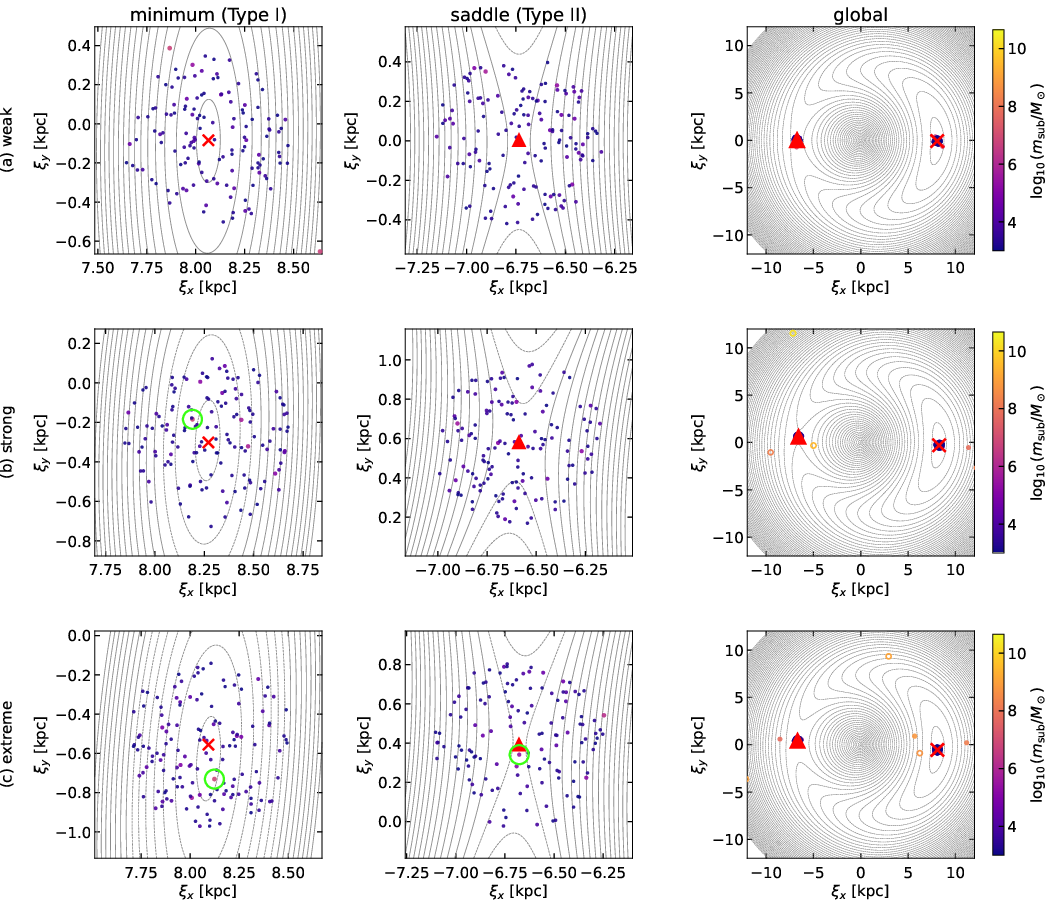
Figure 1: Iso-arrival-time topology for weak, strong, and extreme subhalo configurations; columns show the minimum, saddle, and macro lens plane for each realization.
The saddle-point analysis leverages a time-domain approach, separating an analytic macro GO template from a numerically obtained WO subhalo residual and analytically continuing with an asymptotic far-field tail. The main numerical object is the arrival-time co-area integral, which is evaluated with techniques adapted for the open, multi-branched saddle contours, including adaptive tracing and subtraction procedures to regularize divergent contributions. Validation is provided via comparison to area-integral “ground truth” methods, confirming precision at the sub-mill level.
Subhalo-Induced WO Modulations in Individual Images
Through a large ensemble of realizations, the study quantitatively characterizes per-image WO imprints. Typical GWs from MBHBs lensed by galaxies exhibit stochastic, frequency-dependent amplitude modulations at the percent level and phase modulations at O(10−2) radians, evident in both image parities.
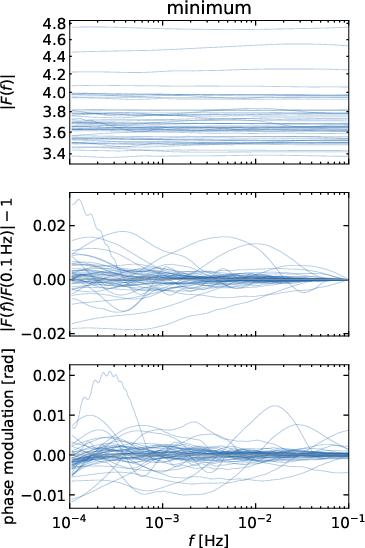
Figure 2: WO amplitude and phase modulation for 50 random minimum-image realizations.
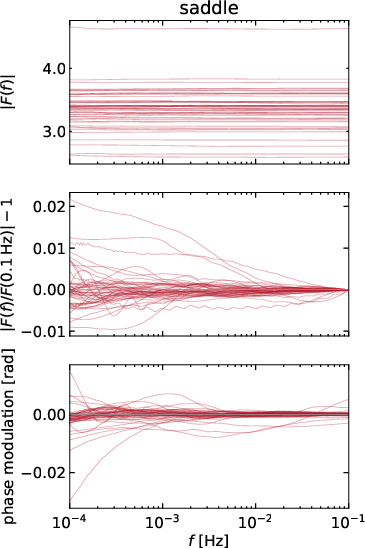
Figure 3: WO amplitude and phase modulation for 50 random saddle-image realizations; amplitude is comparable to the minimum.
The distributions of these modulations are broad but parity-blind in their fluctuation amplitude. Distributions for amplitude and phase modulation at representative frequencies (10−4 Hz and 10−3 Hz) demonstrate significant event-to-event variation and a degree of symmetry between parities.
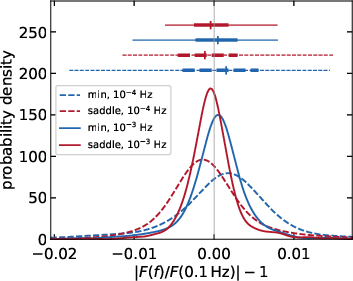
Figure 4: Distribution function of amplitude modulation at fixed frequencies for both image types.
The mean WO (de)magnification, however, exhibits a robust parity asymmetry: minimum images are, on average, subject to net WO magnification, while saddle images show a net demagnification. This trend is a direct analog of the saddle fragility first noted in flux ratio anomaly studies of lensed AGN, now elucidated in the WO regime. The effect correlates with the local tidal shear and is strongly dependent on proximity to the lens critical curve.
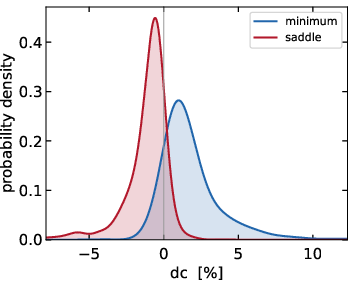
Figure 5: Ensemble distributions of net (de)magnification for minimum and saddle images; minima are statistically magnified, saddles demagnified.
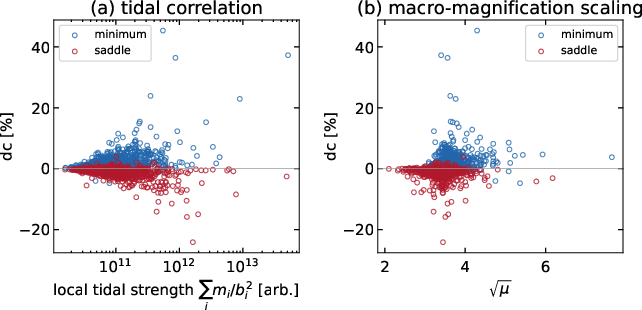
Figure 6: Correlation of (de)magnification with local tidal shear; opposite signs for minimum and saddle images.
Per-Event and Ensemble Detectability
The observable quantity is the band-averaged total lensed waveform, which is a coherent sum of the per-image signals. The formalism disentangles per-image transfer functions using cepstral and time-domain partitioning, robustly separating images by their large (≫ hours) macro time delays, and projects out components degenerate with lens and source extrinsic parameters—retaining only the frequency-dependent, non-absorbable WO features.
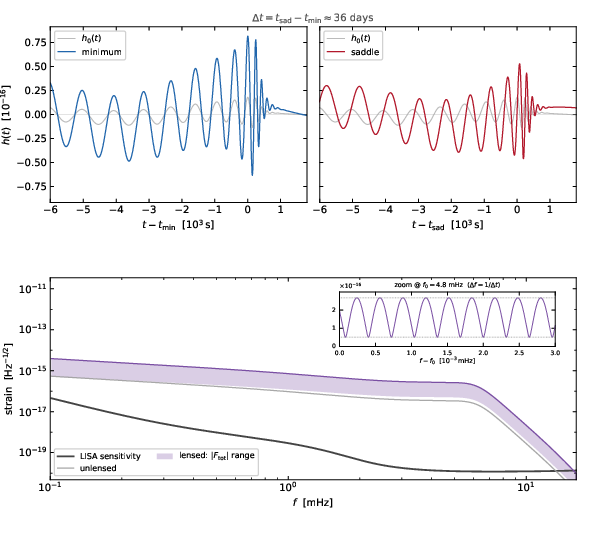
Figure 7: Illustration of how subhalo features imprint into the lensed signal: the macro interference is separated from the slow subhalo-induced modulation.
Matched-filter analyses yield detection significances ρsub for substructure. For fiducial MBHB sources (Mtot≃106M⊙, z=1.5), the combined detection significance exceeds 5σ for 109M⊙0 of subhalo realizations when the source is closely aligned to the lens caustic (109M⊙1). The saddle provides a contribution to the detection power comparable to the minimum, and both amplitude and phase channels are relevant, with amplitude dominating.
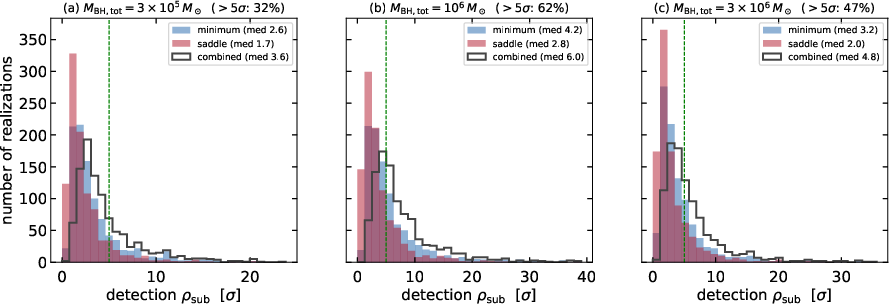
Figure 8: Distribution of subhalo detection significance for representative MBHB source masses and both image parities; vertical line marks 109M⊙2 threshold.
The detection fraction is a steep function of the source’s impact parameter (109M⊙3), with robust detectability concentrated to events with high macro magnification.
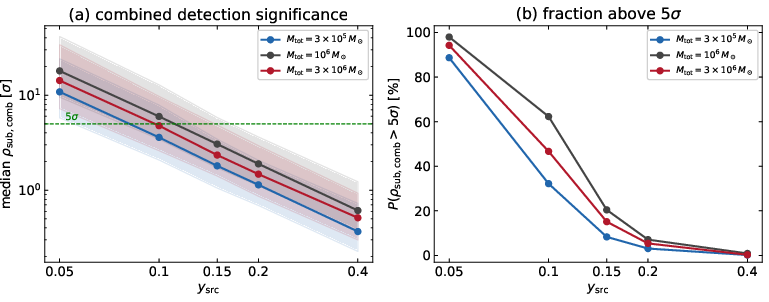
Figure 9: Median significance and fraction above 109M⊙4 as a function of 109M⊙5; efficient detection requires 109M⊙6.
Implications and Prospects
These results rigorously establish that strongly lensed GWs are an incisive probe of CDM substructure in mass ranges inaccessible to existing electromagnetic techniques (109M⊙7–109M⊙8). The observed percent-level modulations, their robust statistical parity asymmetry, and their detectability at high S/N all imply that even a handful of lensed MBHB events in LISA can yield strong constraints on subhalo abundance and density profiles, especially given that the mean parity asymmetry directly reflects the underlying tidal field statistics.
From a survey perspective, for optimistic LISA MBHB strong-lensing rates (109M⊙9200 over a mission), and after accounting for realistic caustic-skimming fractions and detection efficiencies, the methodology forecasts O(10−2)0–O(10−2)1 substructure detections across the mission. Scenarios with denser low-mass structures (e.g., PBHs, SIDM-induced core collapse) would enhance the WO signals and thus the constraining power.
On the theoretical front, the parity-dependent mean (de)magnification detected here serves as a WO-era extension of geometric saddle fragility and provides a diagnostic for discriminating alternative DM models with different subhalo mass distributions and concentration parameters.
Conclusion
This work presents a comprehensive, statistically robust framework for modeling, extracting, and evaluating WO imprints of dark matter substructure in strongly lensed GWs, highlighting the technical subtleties involved in saddle-point image analysis. By integrating a tailored time-domain method for the saddle amplification factor, validating against independent area methods, and constructing fully marginalized, physically-motivated detection statistics, the study demonstrates that LISA can probe the subgalactic dark sector population to percent-level imprints per-event. The methodology and results motivate future marginalized population studies, and establish the parity asymmetry in WO lensing as a key observable for next-generation dark matter searches with GW strong lenses.