- The paper demonstrates that dark matter subhalos break universal caustic relations in gravitational wave lensing, revealing anomalous image magnifications.
- The paper uses composite lens modeling with eSIS and NFW profiles from N-body simulations to analyze time delays and magnification ratios.
- The paper finds that increased subhalo concentration boosts high image multiplicity and introduces observable wave-optics interference in lensed signals.
Dark Matter Subhalos and Higher Order Catastrophes in Gravitational Wave Lensing
Introduction and Motivation
The paper investigates the impact of dark matter (DM) subhalos on the strong gravitational lensing of gravitational waves (GWs), focusing on the emergence of higher order catastrophes (caustics) and their observable consequences. While the role of subhalos in electromagnetic (EM) lensing is well established, their influence on GW lensing—especially in the strong lensing regime—remains underexplored. The authors address this gap by simulating composite lens models that include both a smooth galactic-scale halo and a realistic population of cold dark matter (CDM) subhalos, quantifying the resulting deviations from universal caustic relations and the occurrence of high-multiplicity image events.
The motivation is twofold: (1) GWs offer millisecond timing precision, enabling sensitivity to substructure-induced time delays that are inaccessible in EM lensing, and (2) the detection of strongly lensed GWs by current and next-generation detectors (LIGO, Virgo, KAGRA, LISA, ET, Cosmic Explorer) will provide a new probe of DM substructure on sub-galactic scales.
Composite Lens Modeling and Subhalo Populations
The main lens is modeled as an elliptical singular isothermal sphere (eSIS), with subhalos drawn from a mass function and concentration-mass (c–M) relation consistent with N-body simulations (Diemer-Joyce, with scatter). Subhalos are implemented as NFW profiles, and their spatial distribution is restricted to regions near the main halo's critical curves to optimize computational resources and focus on the most relevant lensing configurations.
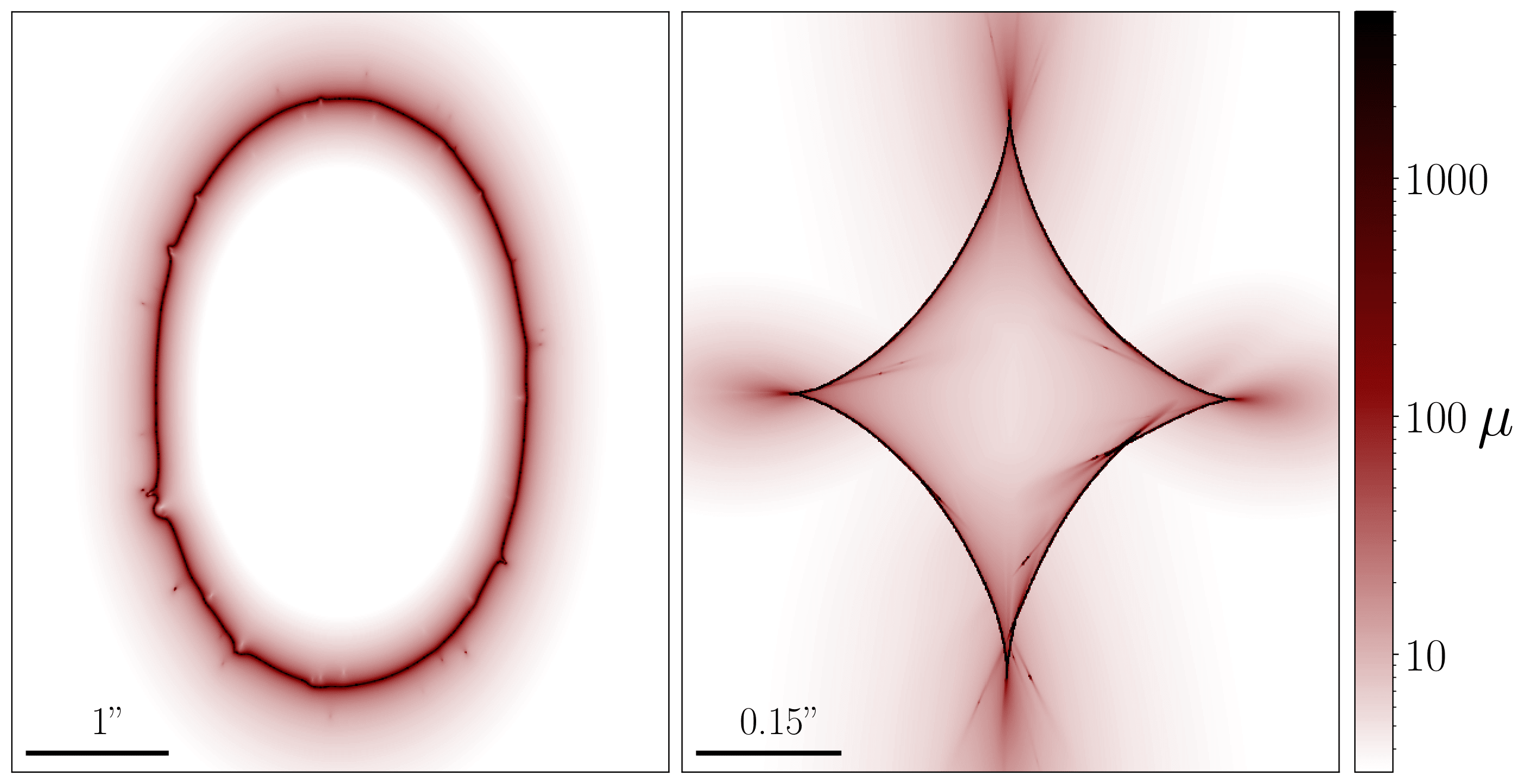
Figure 1: Magnification (μ) map of a galaxy with CDM subhalos, shown in both image and source planes for the high-concentration scenario.
The subhalo mass function normalization (Σsub) and concentration scaling are varied to assess their impact on lensing observables. The fiducial model considers subhalos down to 107M⊙, with number counts and concentrations as a function of mass shown in Figure 2.
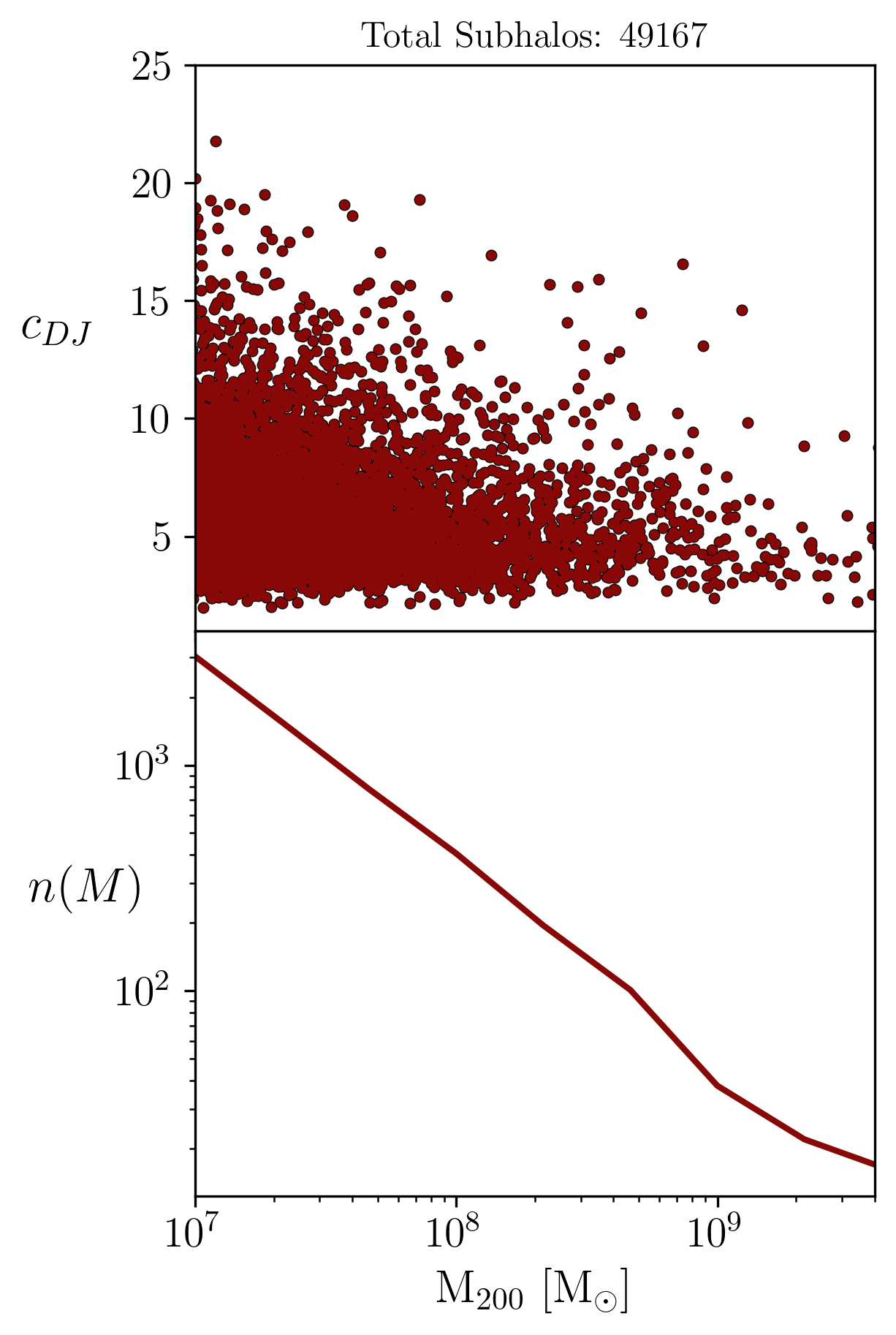
Figure 2: Subhalo concentrations (top) and number counts (bottom) as a function of mass for the fiducial model.
The analysis employs both geometric optics (GO) and wave optics (WO) regimes. In GO, image positions, magnifications, and time delays are computed via the lens equation and the Fermat potential. The relative magnification μr=∣μ1/μ2∣ and time delay ΔT between the two brightest images are key diagnostics. In WO, the amplification factor F(f) is computed via the Kirchhoff diffraction integral, with the stationary phase approximation (SPA) used for high-frequency GWs.
The universal relations for fold and cusp caustics in smooth potentials are reviewed: for sources near a cusp, the two brightest images must satisfy μr<2 at small M0; for folds, M1 as M2. Deviations from these relations signal the presence of substructure.
Subhalo-Induced Deviations: Breaking Universality and Image Multiplicity
The inclusion of subhalos leads to two distinct, observable effects:
- Breaking of Caustic Universality Relations: Subhalos perturb the main halo's critical curves, generating higher order caustics (e.g., swallowtail, butterfly catastrophes). This results in image pairs with M3 at short M4, violating the smooth-lens cusp relation.
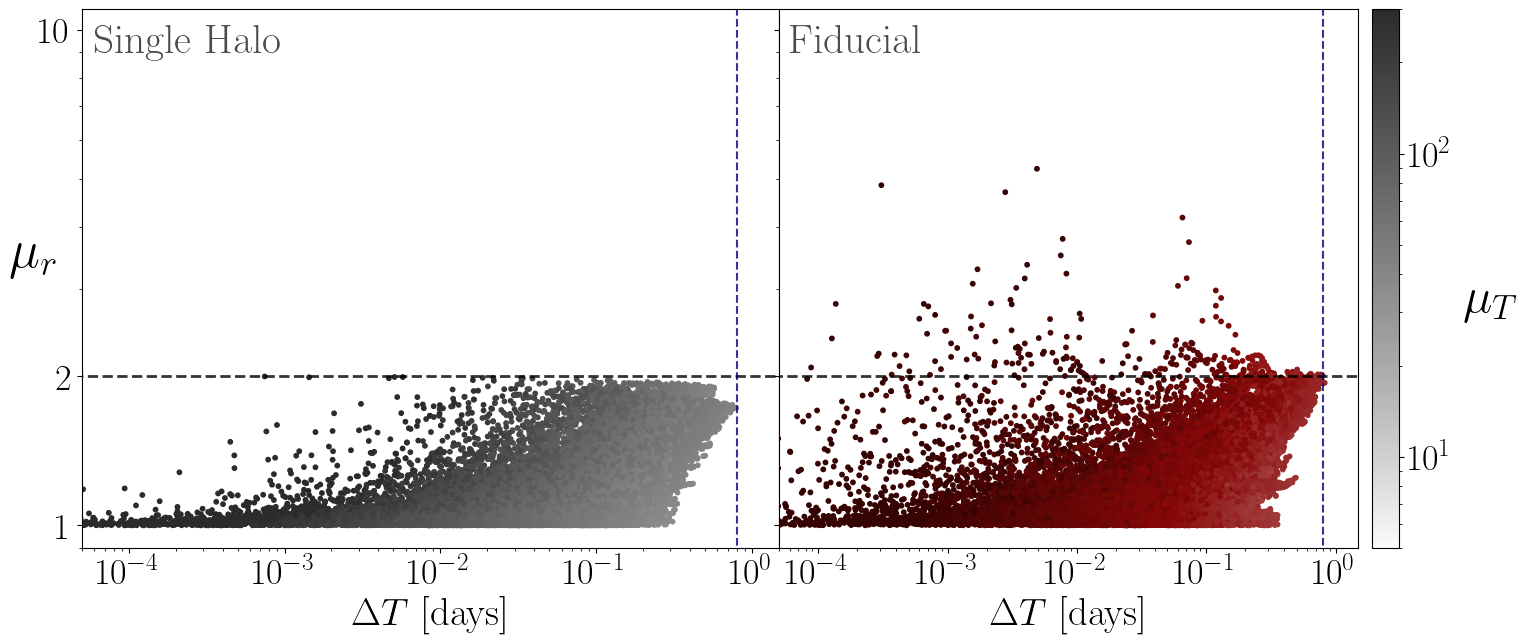
Figure 3: M5 vs. M6 for the two brightest images near caustics, without (left) and with (right) subhalos. Subhalos enable M7 at low M8, exceeding the cusp limit.
- High Image Multiplicity: Subhalos can create additional caustics, leading to more than three highly magnified images for a single source. The probability of observing M9 is sensitive to subhalo concentration and number density, with high-concentration models showing a significant increase.
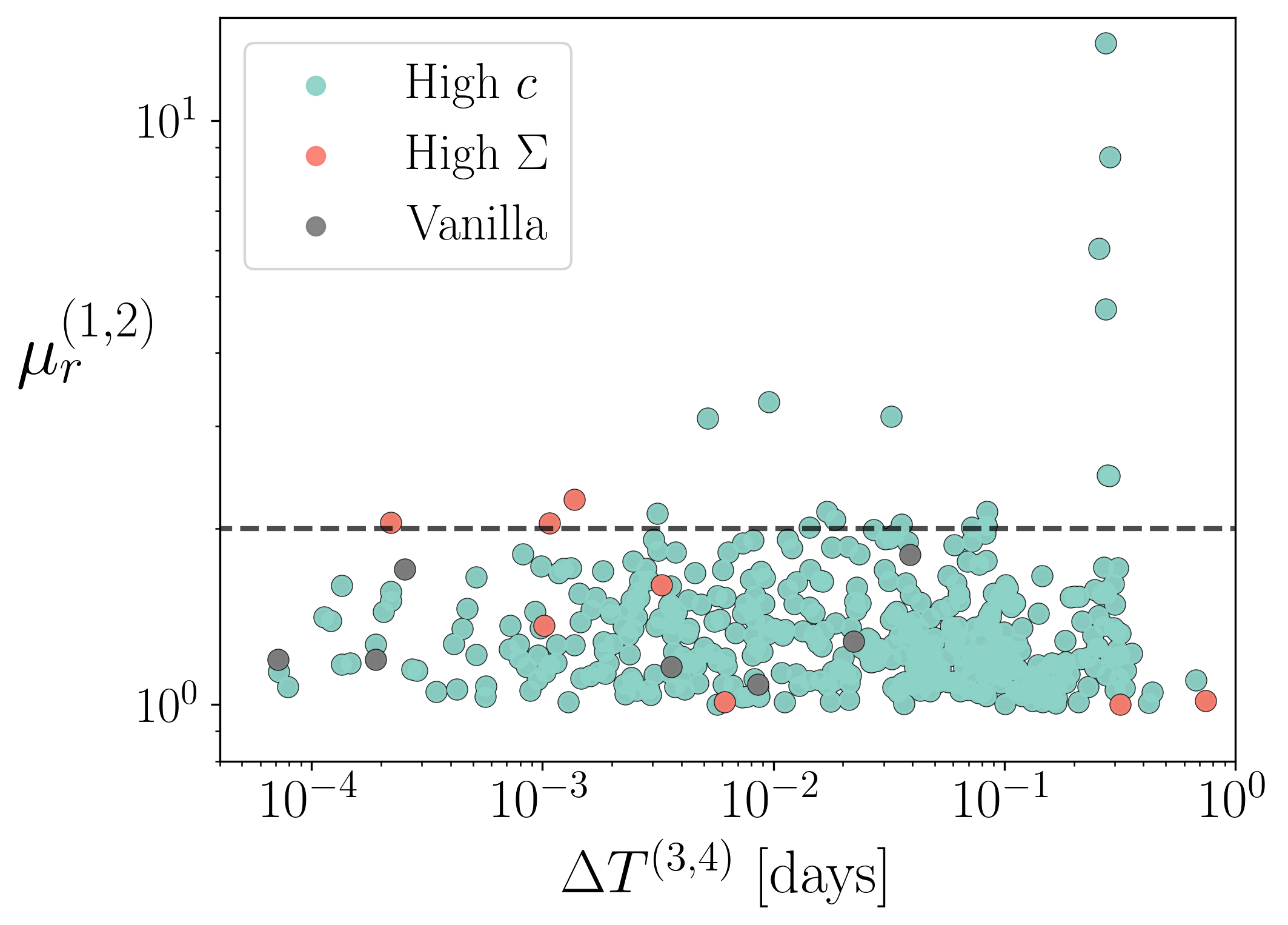
Figure 4: Relative magnifications of the brightest and second brightest images vs. time delays of the third and fourth brightest images, highlighting short N0 pairs from higher order/nested caustics.
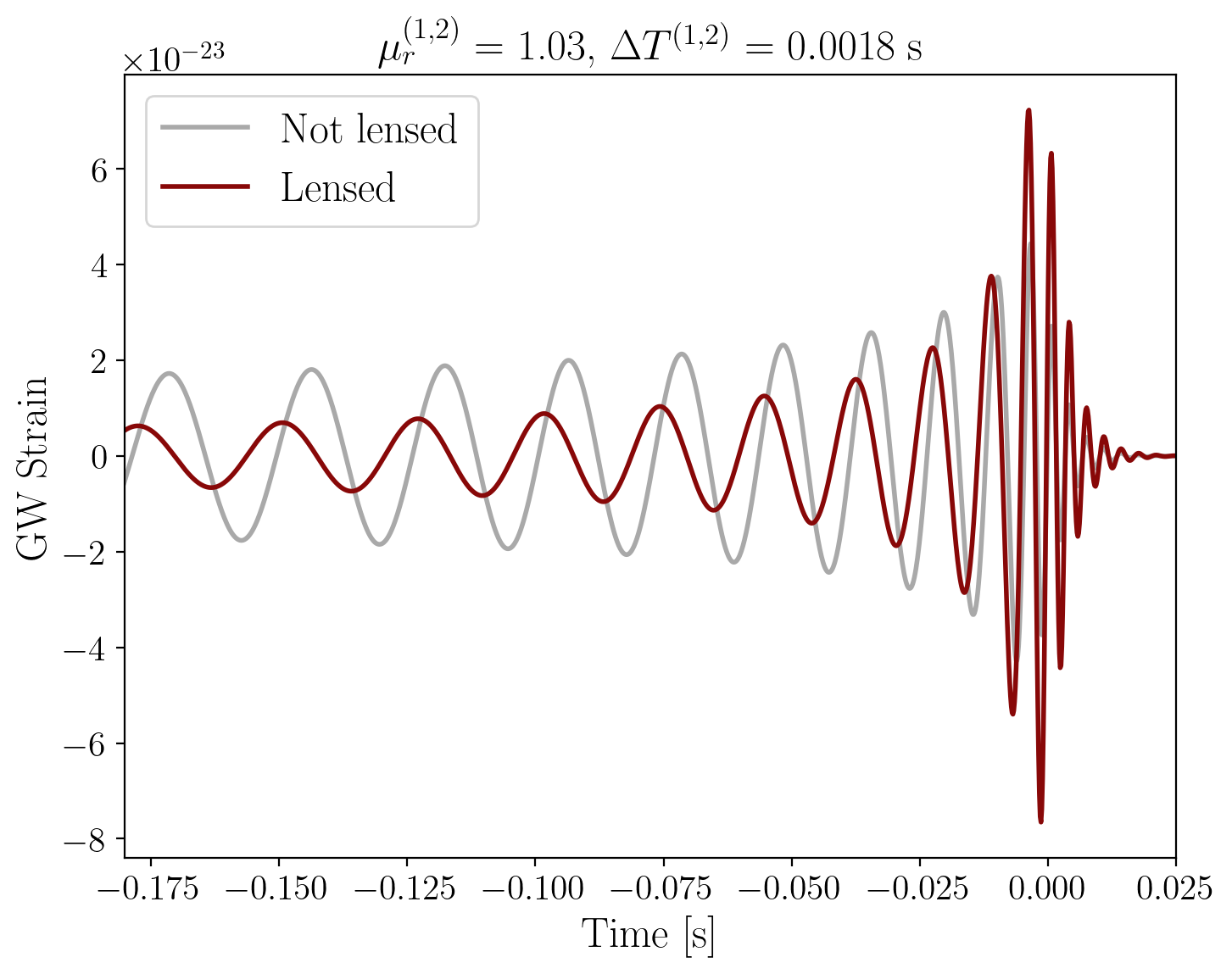
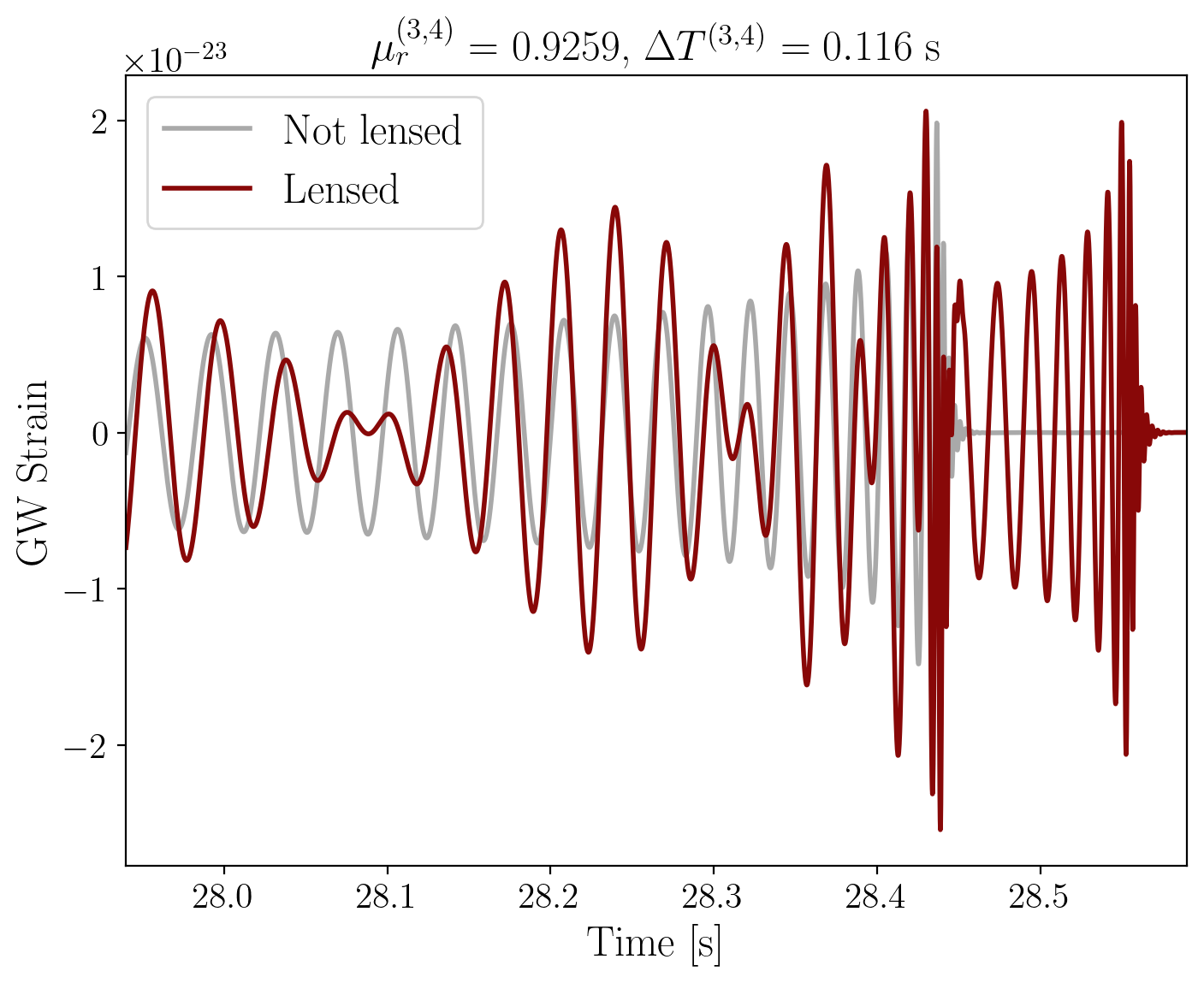
Figure 5: Lensed GW strains for a source within a higher order caustic, showing multiple overlapping image arrivals.
Sensitivity to Subhalo Properties
The rate of universality-breaking events and high-multiplicity images is highly sensitive to the N1–N2 relation. Increasing subhalo concentrations (e.g., N3) dramatically raises the fraction of source plane area exhibiting N4 and N5. In contrast, increasing the number density (N6) has a milder effect unless concentrations are also high.
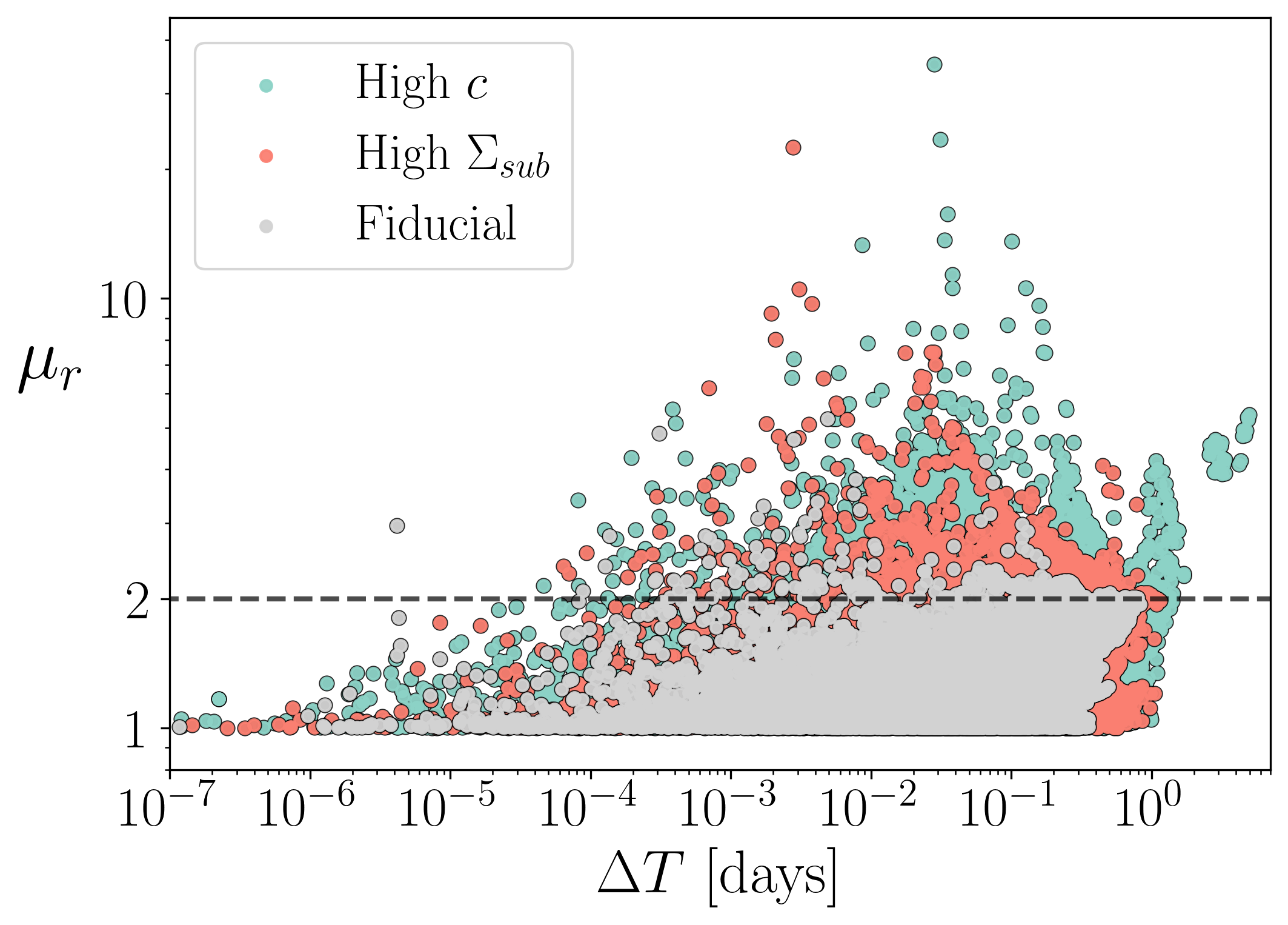
Figure 6: Relative magnifications and time delays for the highest concentration and number density models, compared to the fiducial case.
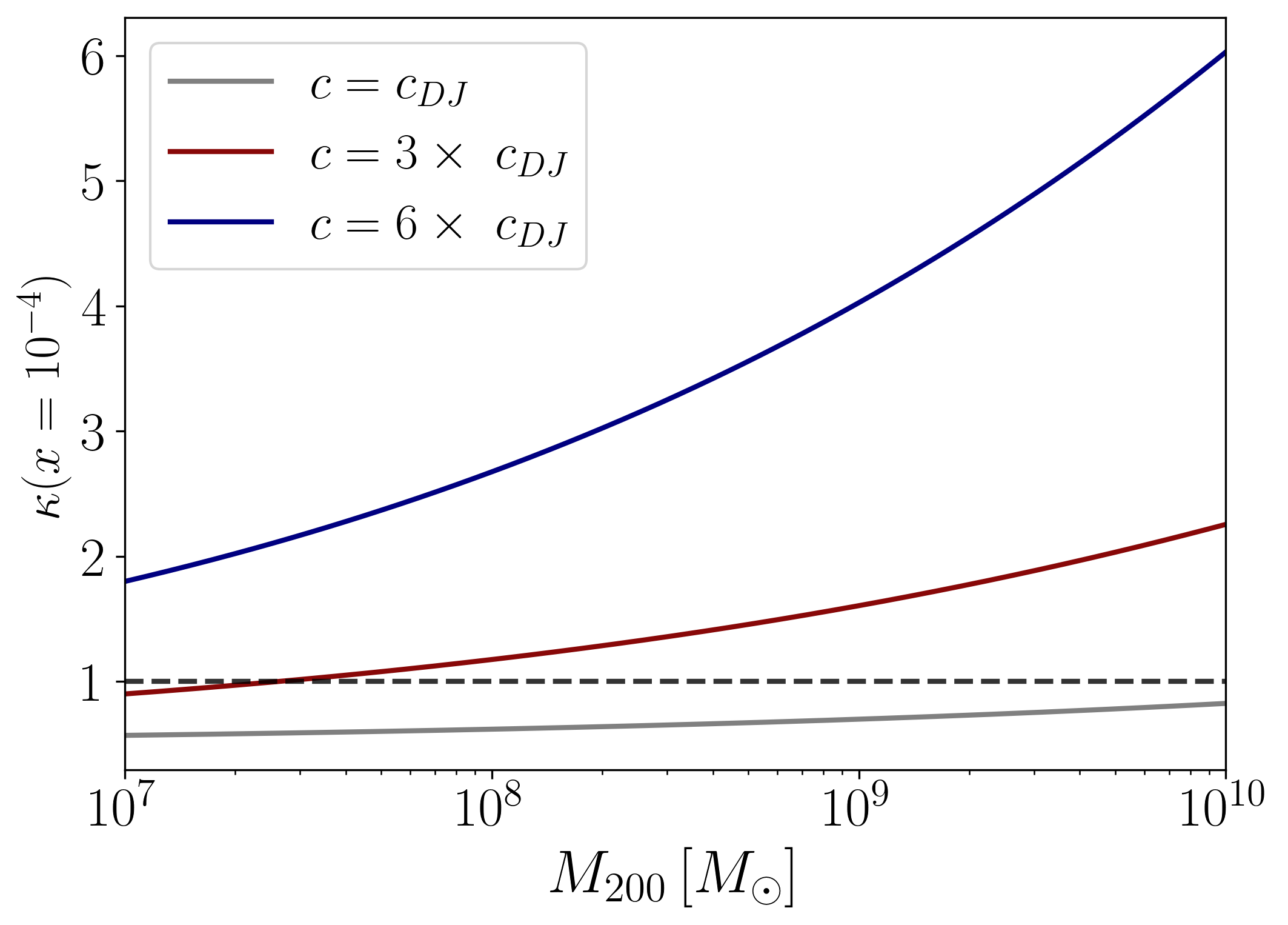
Figure 7: Central convergence of NFW subhalos near the main halo's critical curves. Only high-concentration subhalos exceed the strong lensing threshold (N7), enabling nested caustics.
Higher Order Catastrophes: Swallowtail and Butterfly
The paper provides a detailed analysis of the formation and observables of higher order catastrophes induced by subhalos. By placing a massive subhalo near a fold or cusp of the main halo, the authors generate swallowtail and butterfly caustics, respectively.
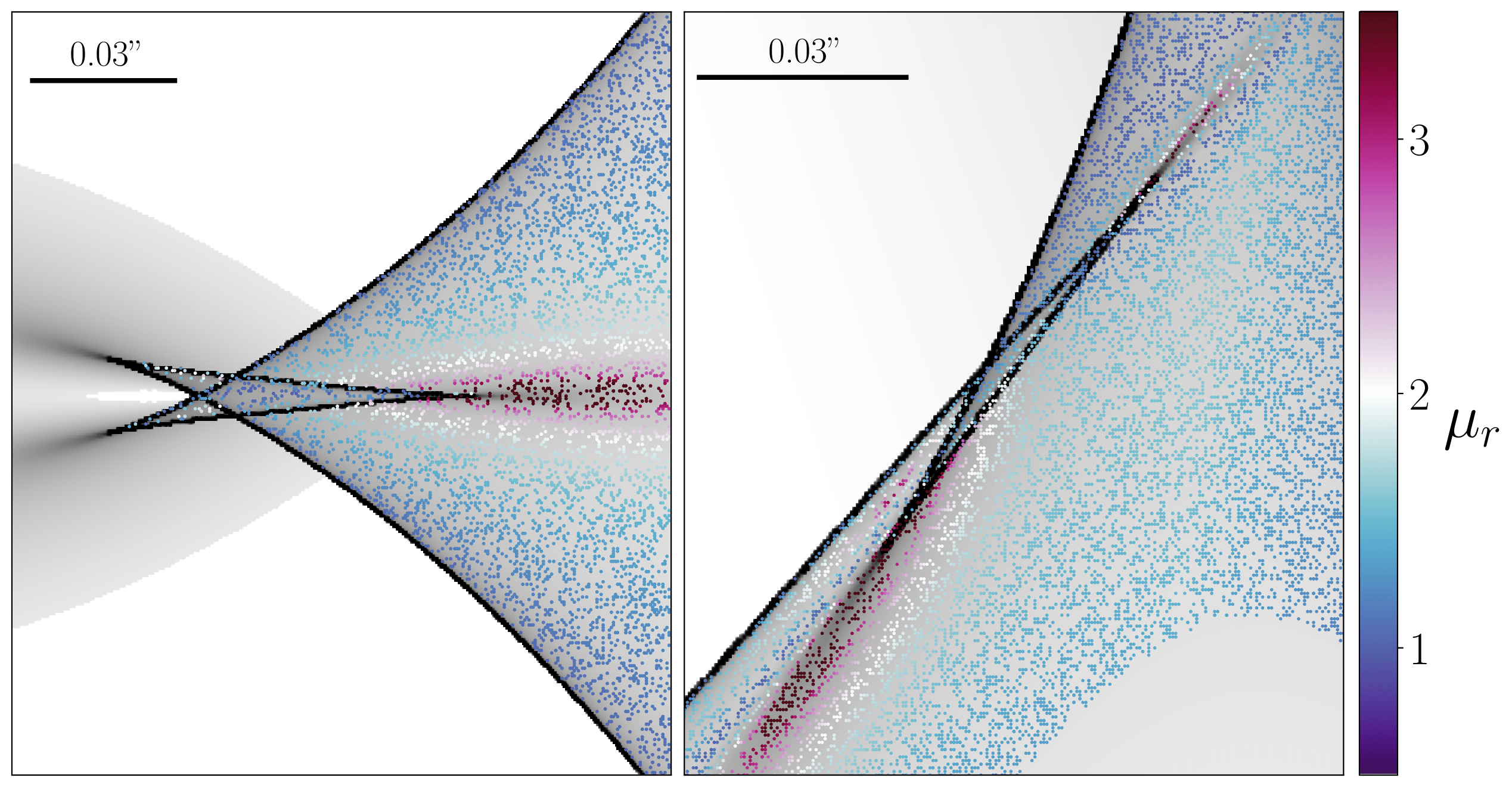
Figure 8: Source plane magnification map near perturbed cusp (butterfly) and fold (swallowtail) catastrophes, with N8 color-coded.
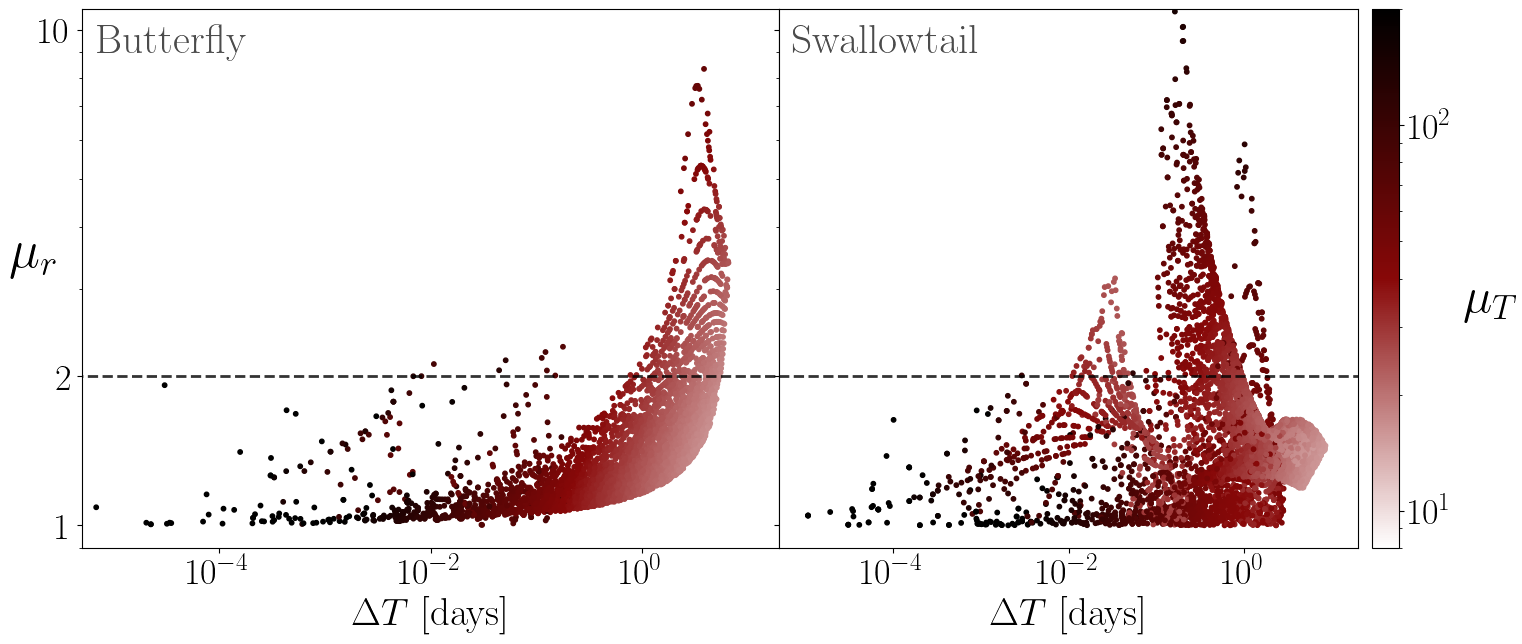
Figure 9: Relative magnifications and time delays for the butterfly and swallowtail catastrophes, showing high N9 at short μ0.
These catastrophes produce characteristic bifurcation sets and image configurations, with the number of real roots (images) determined by the control parameters of the generating function. The resulting lensing observables (e.g., μ1–μ2 distributions) are qualitatively distinct from those of standard fold/cusp caustics.
Wave Optics Phenomena
The presence of compact subhalos increases the probability of observing wave-optics effects (interference, diffraction) in lensed GWs. The time-domain amplification factor μ3 exhibits structure near highly magnified images, with the regular and singular components encoding the impact of substructure.
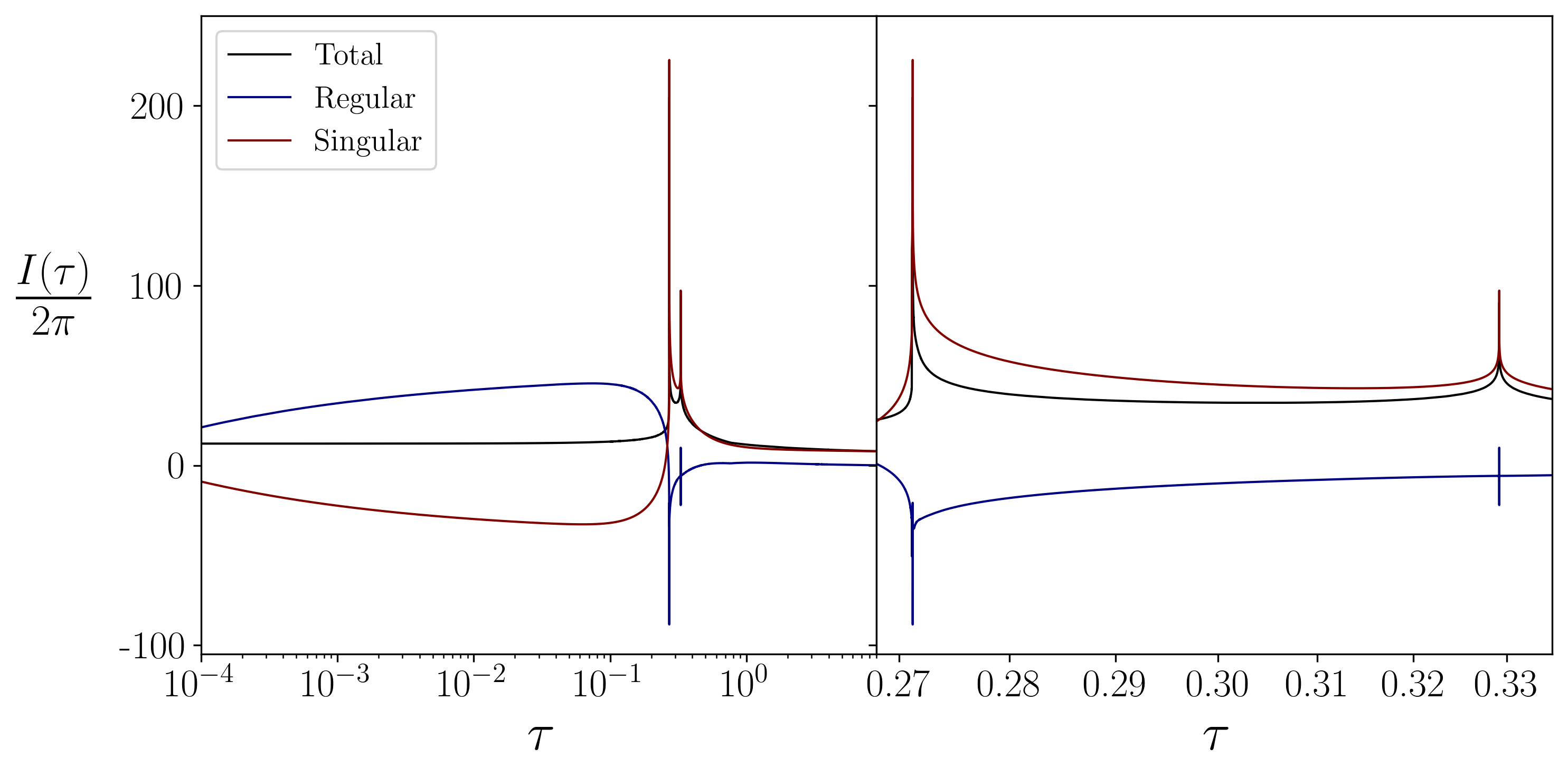
Figure 10: Time-domain amplification factor μ4 and its components for a source in a higher order caustic.
These features can produce frequency-dependent oscillations in the GW signal, not reproducible by smooth or point-mass lenses, and are especially relevant for long-wavelength sources or high-concentration subhalos.
Implications and Future Directions
The results have several important implications:
- Astrophysical Probes of DM: Strongly lensed GWs provide a direct probe of DM substructure down to μ5 and potentially lower, with sensitivity to both the abundance and internal structure (concentration) of subhalos.
- Model Discrimination: The strong dependence on the μ6–μ7 relation enables discrimination between CDM and alternative DM models (e.g., warm, fuzzy, self-interacting DM) that predict different subhalo properties.
- Parameter Estimation and Cosmology: Subhalo-induced anomalies can bias lens mass inference and time-delay cosmography if not properly modeled, necessitating more sophisticated parameter estimation frameworks for lensed GW events.
- Multi-messenger Synergy: Combining GW and EM lensing data can break degeneracies and provide complementary constraints on subhalo occupation and baryonic content.
- Detection Prospects: The predicted rates of universality-breaking and high-multiplicity events are within reach of upcoming GW detectors, motivating targeted searches for these signatures.
Conclusion
This work demonstrates that DM subhalos induce observable, non-universal features in the strong lensing of GWs, including violations of the cusp relation and the production of higher order catastrophes. The sensitivity of these effects to subhalo concentration and abundance provides a powerful new probe of DM microphysics. As GW lensing observations become available, the methodology and predictions presented here will be essential for interpreting anomalous lensing events and constraining the nature of DM substructure.