- The paper demonstrates that conditional generative models (cDDIM and cFMM) can synthesize high-fidelity, site-specific MIMO channels using limited ground-truth data.
- cFMM achieves a 63× reduction in sampling latency while maintaining robust angular profile accuracy compared to cDDIM.
- Synthetic channels enhance downstream tasks such as CSI compression and beam alignment, reaching near-optimal performance with minimal measurement data.
Site-Specific MIMO Channel Generation via Diffusion and Flow Matching
Introduction and Motivation
The paper "Site-Specific MIMO Channel Generation via Diffusion and Flow Matching: Fidelity, Efficiency, and Downstream Utility" (2606.20098) presents a rigorous evaluation of generative modeling paradigms—conditional denoising diffusion implicit models (cDDIM) and conditional flow matching models (cFMM)—for synthesizing high-fidelity site-specific MIMO channel matrices. The primary application is the augmentation of limited ground-truth (GT) measurement data for AI-native wireless networks, thereby mitigating the prohibitive cost associated with extensive measurement campaigns. Both models are conditioned on UE location, enabling the preservation of site-specific spatial features critical to real-world deployment scenarios.
Model Architectures and Conditioning
The investigation centers on two distinct generative frameworks with a shared representation and neural backbone:
- cDDIM: Employs iterative reverse denoising, mapping Gaussian noise to channel matrices through a learned noise estimator. Sampling quality is governed by the number of denoising steps but incurs substantial latency for high-dimensional matrices.
- cFMM: Constructs a deterministic velocity field between the latent and channel distributions, leveraging an ODE-based transport for sample generation, requiring significantly fewer solver steps.
Both architectures use a U-Net-type convolutional backbone with residual connections and support per-channel conditioning via learned embeddings, facilitating explicit spatial consistency and context-awareness.
Fidelity Assessment
Statistical fidelity is evaluated through physical-channel metrics:
Dominant Beam Mismatch and Angular Profiles: The spatial correlation between synthesized and GT channels is quantified using dominant beam index distances and beamspace power cosine similarity. Both cDDIM and cFMM exhibit robust performance, maintaining high angular consistency even in rich multipath regimes such as LoS+NLoS at 3.5 GHz Figure 1.
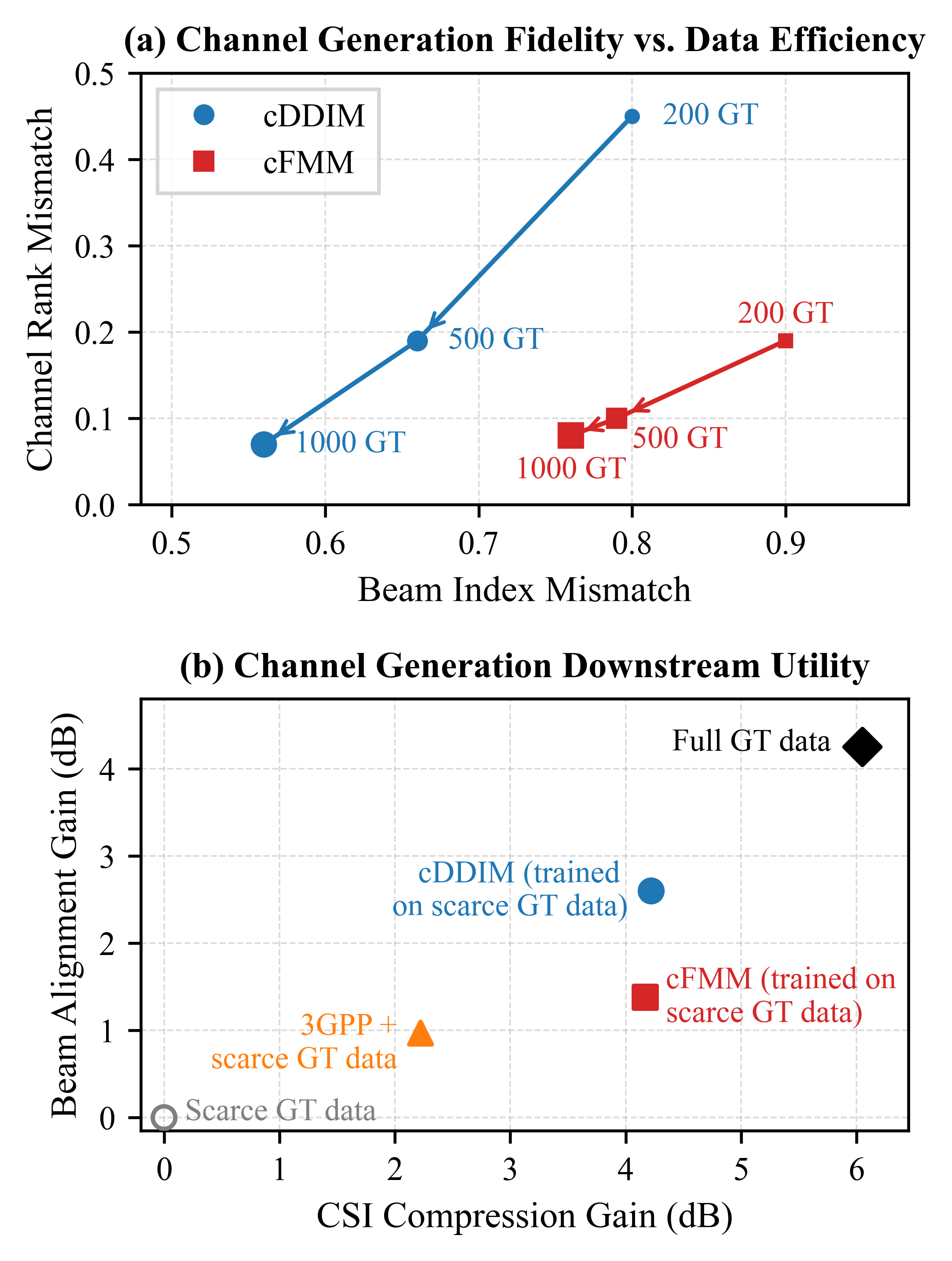
Figure 1: Average mismatch metrics vs. number of GT training samples; shows beam index distance and Wasserstein distance for both cDDIM and cFMM.
Effective Rank Preservation: The effective rank distribution, a proxy for channel spatial richness, is compared using Wasserstein distances. cDDIM demonstrates superior rank fidelity in LoS scenarios, while cFMM more accurately captures multipath-induced distribution spread in LoS+NLoS cases Figure 2.
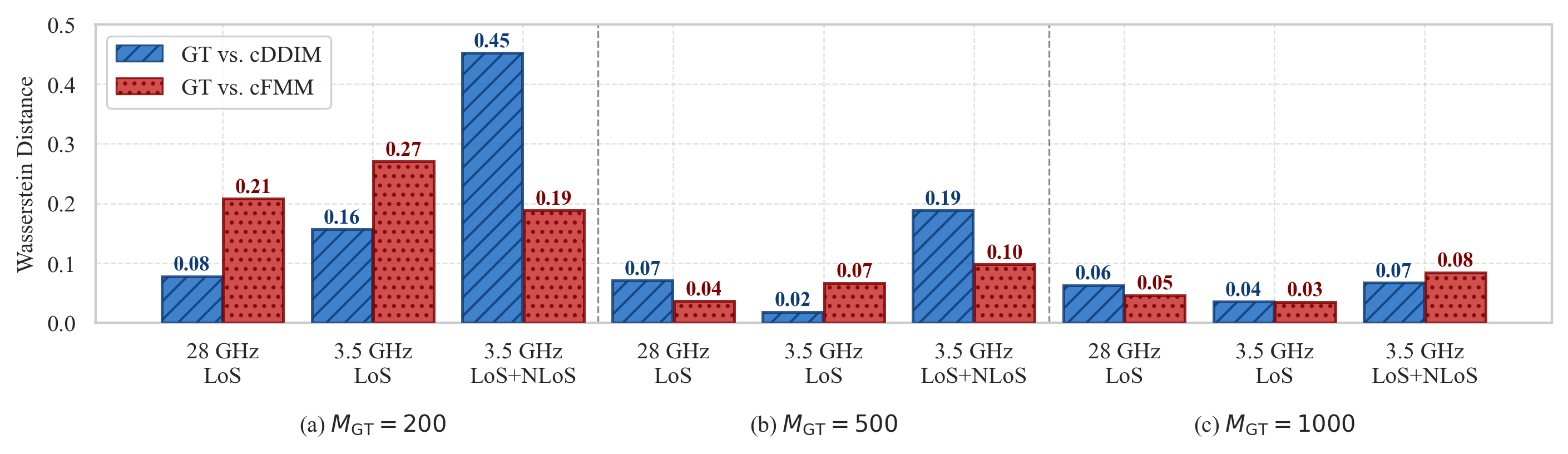
Figure 2: Wasserstein distance between effective-rank distributions, highlighting fidelity scaling with GT sample size.
Data Efficiency: Both models yield substantial fidelity gains with only 200–1000 GT samples, indicating efficient utilization in low-data regimes (Figures 7, 8).
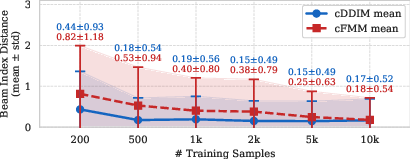
Figure 3: Mean and standard deviation of beam index difference as a function of training set size.
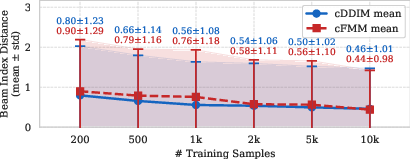
Figure 4: Similar analysis for LoS+NLoS scenario, reinforcing data-efficient learning.
Sampling Latency and Generation Efficiency
Sampling efficiency is critically examined by varying the number of generation steps:
- cFMM attains 63× lower sampling latency per channel than cDDIM for comparable cosine similarity metrics Figure 5.
- The dominant beam and angular profile accuracy saturate rapidly with cFMM, enabling real-time channel augmentation.
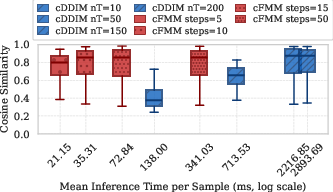
Figure 5: Cosine similarity vs. inference time; demonstrates cFMM's superior efficiency.
Downstream Learning Utility
CSI Compression: Augmented datasets with cDDIM/cFMM-generated channels facilitate dramatic NMSE gains in CRNet-based compression tasks versus both raw GT data and stochastic 3GPP augmentation. At 3.5 GHz LoS, NMSE improves by over 5 dB with synthetic augmentation and approaches the performance of a full 10k-sample GT reference Figure 6.
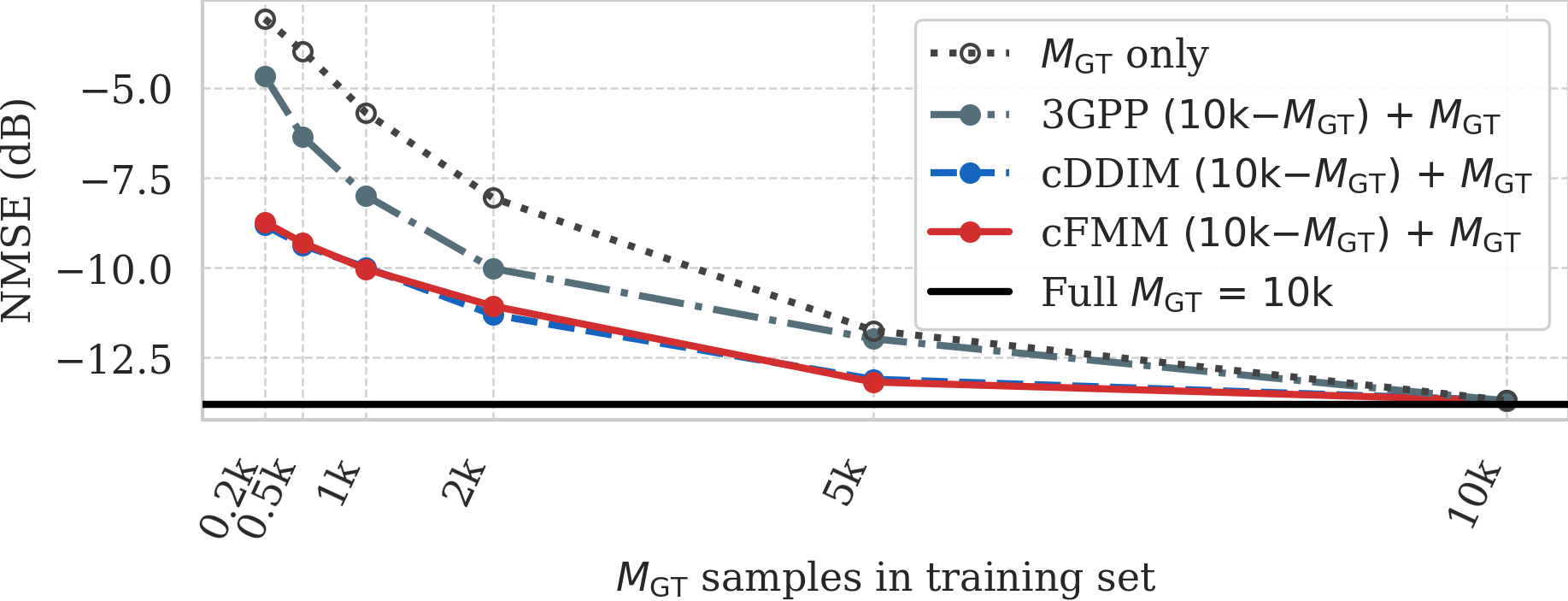
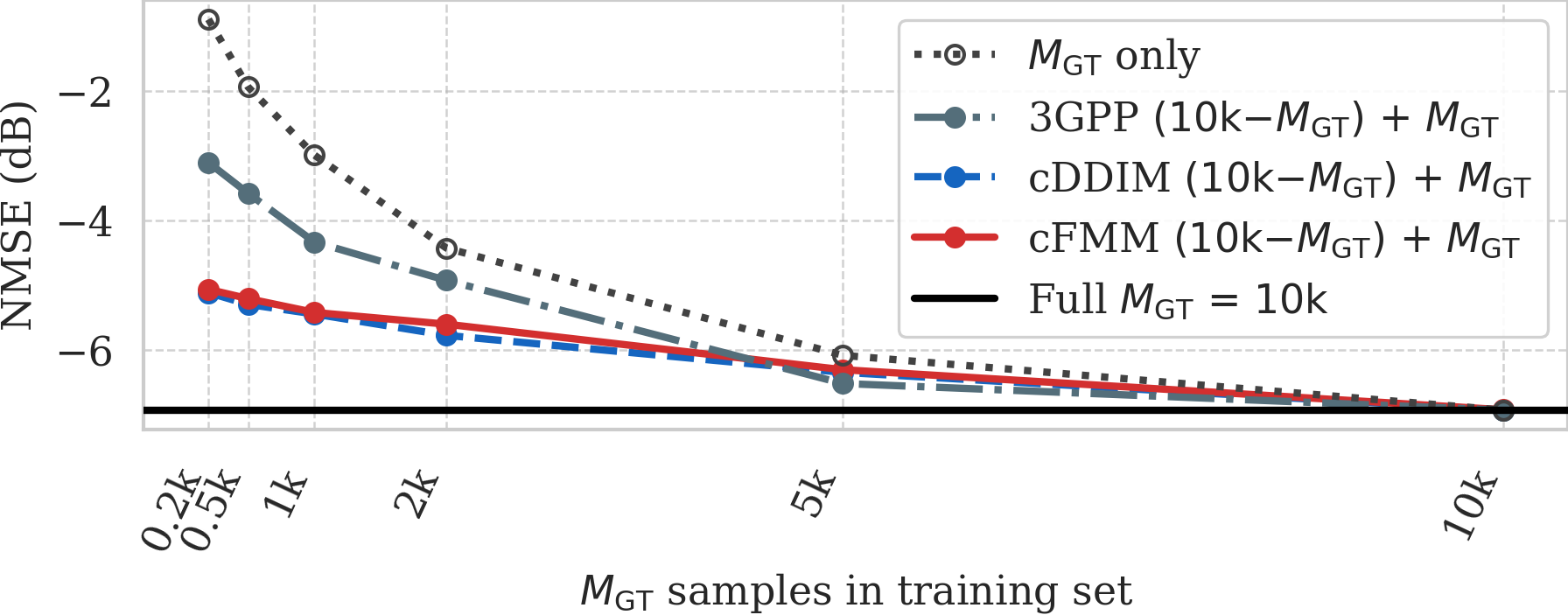
Figure 6: NMSE comparison for CSI compression under varying augmentation sources and GT sample sizes.
Beam Alignment: At 28 GHz, beam aligners trained on synthetic channels significantly outperform those trained with limited GT or 3GPP data, achieving in cDDIM cases performance within ~1 dB of the optimal MR baseline (see Figure 1). cFMM, despite slightly lower accuracy, maintains competitive performance and correspondingly much faster generation.
Theoretical Implications
The results substantiate that conditional generative wireless channel models can preserve site-specific propagation characteristics—critical for physical layer learning—without reliance on expansive measurement sets. The robustness across propagation scenarios (28 GHz, 3.5 GHz, LoS and NLoS) and dimensionalities confirms the generalizability and adaptability of the proposed frameworks. The fidelity–efficiency trade-off illuminated by cFMM advocates for deterministic transport-based generative modeling in latency-sensitive or large-scale synthetic data regimes.
Practical Impact and Future Directions
Synthetic augmentation with cDDIM/cFMM models enables precise downstream physical-layer modeling (e.g., CSI feedback, beamforming) in AI-native systems. The demonstrated efficacy in limited-data scenarios directly lowers barriers to site-specific model deployment and evaluation. Future work may explore extension to temporally conditioned channel models, integration with multi-modal environmental data (e.g., OSM, RT), and hybrid generative-discriminative ensemble architectures for end-to-end physical-layer optimization.
Conclusion
The paper provides a comprehensive technical exposition and benchmarking of conditional diffusion and flow-matching paradigms for site-specific MIMO channel generation. Both cDDIM and cFMM achieve high statistical fidelity and downstream task utility, with cFMM offering an advantageous fidelity–latency profile. These findings underscore the practical and theoretical utility of generative modeling in wireless communication, establishing a foundation for scalable AI-native channel modeling workflows.