- The paper presents a novel digital twin-based toolchain that generates high-fidelity 3D city environments and UAV trajectories for realistic XL-MIMO channels.
- It introduces a CDDIM-driven generative foundation model that accurately reconstructs complete channel responses from partial observations.
- Empirical results demonstrate robust performance in channel extrapolation, estimation, classification, and localization under severe masking conditions.
Digital Twin-Based XL-MIMO Channel Generation and Generative Foundation Modeling for Low-Altitude Economy
Introduction and Motivation
The development of reliable and high-resolution wireless communication links is a critical enabler for the low-altitude economy (LAE), which encompasses aerial vehicles such as UAVs operating in urban and suburban environments. Extremely large-scale multiple-input multiple-output (XL-MIMO) offers promising prospects for robust connectivity and spatially-resolved sensing, but the unique propagation characteristics—specifically, 3D mobility and strong near-field effects—lead to severe data scarcity and model mismatch when leveraging existing open-source channel datasets. These limitations present a significant barrier for systematic design and evaluation of both physical-layer and data-driven wireless algorithms tailored to LAE XL-MIMO systems.
To address these gaps, the paper introduces LAETwin-XL, a digital twin-based channel generation toolchain, and an associated large-scale dataset capturing realistic LAE scenarios. On top of this dataset, a conditional denoising diffusion implicit model (CDDIM)-based generative foundation model is proposed to learn transferable channel representations from partial, spatially-incomplete observations—a scenario highly relevant for practical large-scale antenna systems. A downstream adaptation paradigm leveraging lightweight, task-specific heads enables efficient and parameter-economic fine-tuning for multiple downstream tasks in both channel acquisition and exploitation. The entire framework is comprehensively validated in a suite of benchmarks, establishing new performance regimes for low-altitude XL-MIMO scenarios.
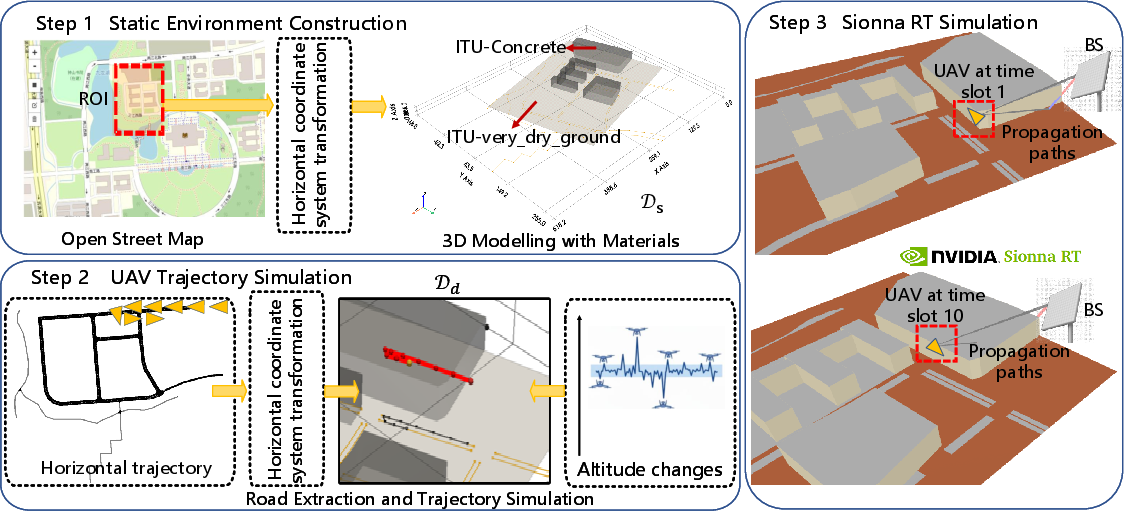
A comprehensive digital twin (DT)-based modeling suite is the foundation for the dataset. The pipeline integrates the following steps:
A transformation pipeline aligns spatial coordinates between SUMO trajectories and static environmental maps, ensuring high-fidelity integration of spatially-resolved movement and scene data.
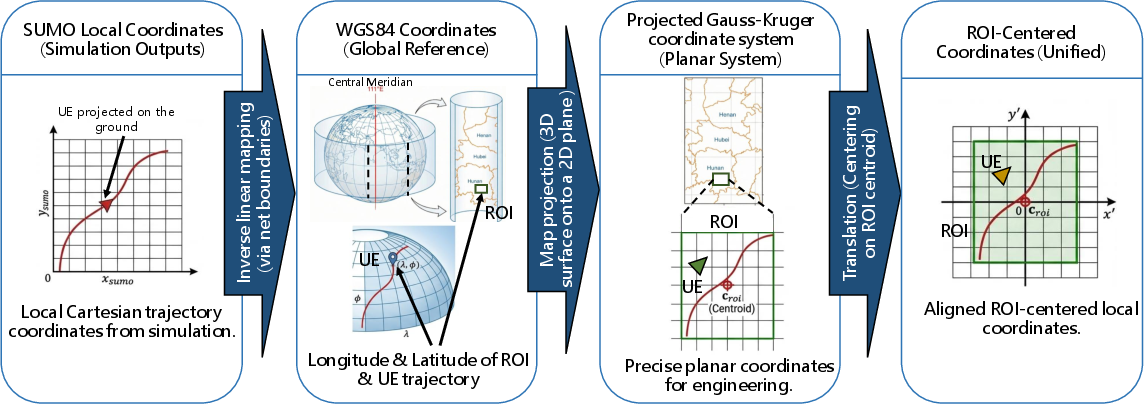
Figure 2: Horizontal coordinate system transformation of SUMO trajectories and WGS84 scenes.
Unlike prior datasets (e.g., DeepSense 6G, DeepMIMO, CAVIAR6G), LAETwin-XL uniquely offers customizable 3D environments, per-antenna channel responses, and near-field modeling, with support for road-guided and free-flying UAV operation.
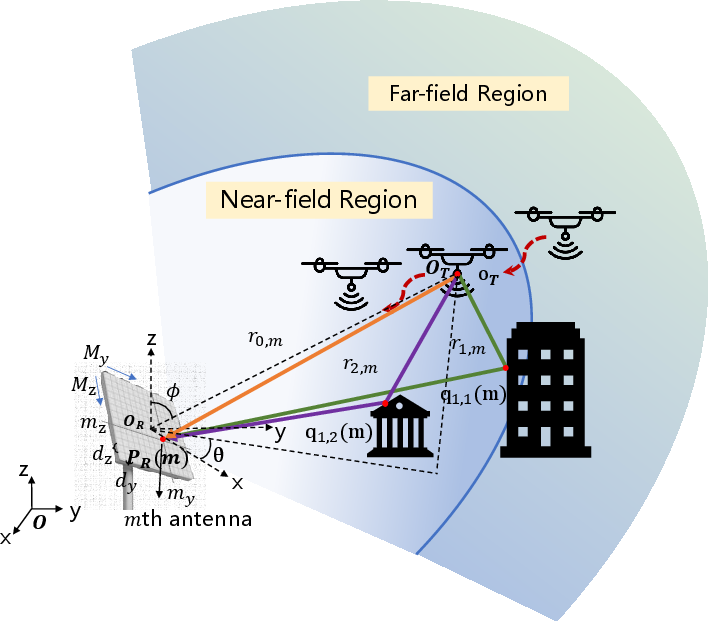
Figure 3: XL-MIMO-assisted LAE system with UAV uplink to a ground UPA at the BS.
CDDIM-Based Generative Foundation Model
The primary contribution is a generative channel modeling framework for XL-MIMO arrays under incomplete antenna observations, explicitly designed for the challenging partial-CSI regime. Instead of conventional regression or masked modeling (such as BERT-based approaches), the model utilizes the CDDIM diffusion paradigm, modeling the conditional distribution of the full channel given partial observations.
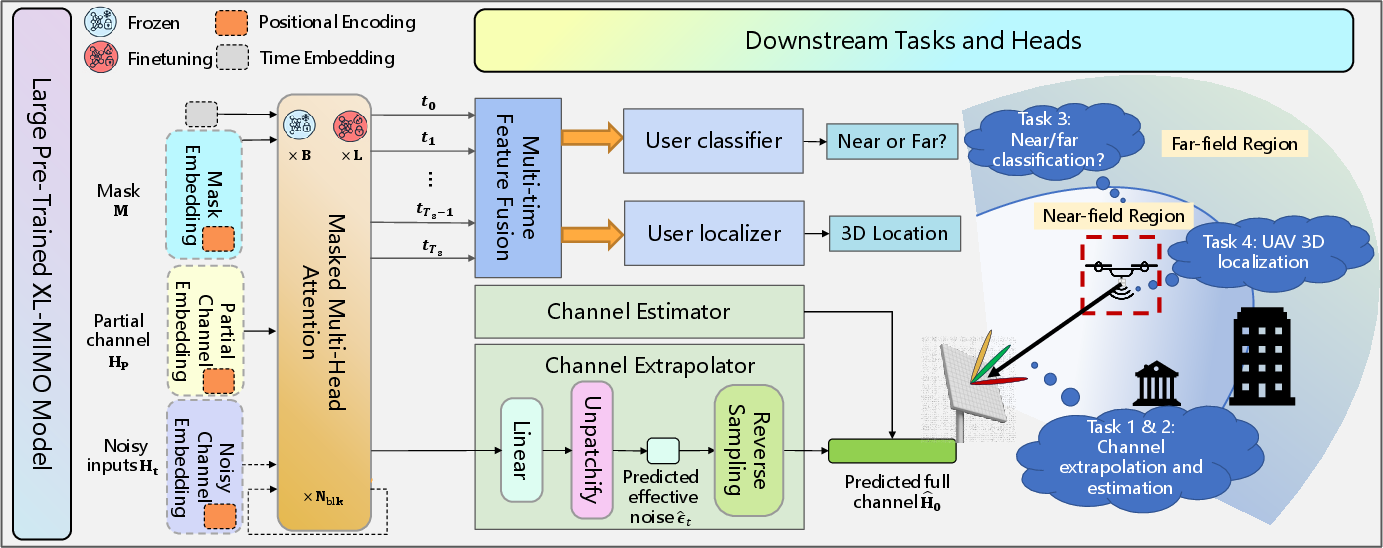
Figure 4: Overview of the proposed large generative foundation model with downstream fine-tuning.
Distinctive features include:
- Transformer backbone with position encodings: Rather than image-centric convolutions, the model employs a Transformer with masked multi-head attention, leveraging spatial coordinates and diffusion timestep embeddings to capture relevant global and non-shift-invariant features inherent to 3D, near-field MIMO channels.
- Conditional forward and reverse processes: The noisy forward process injects variance-preserving Gaussian noise conditioned on observation masks, and the CDDIM reverse process reconstructs the full channel deterministically.
- Unified pretraining and adaptation: The conditional backbone feeds downstream heads (classification, localization, estimation), supporting efficient, multitask adaptation with frozen lower layers for parameter efficiency.
Channel Acquisition and Exploitation via Downstream Fine-Tuning
The framework is designed to unify channel “acquisition” (e.g., extrapolation, estimation) and “exploitation” (e.g., classification, localization) through shared pretraining, with modular, task-specific heads and minimal data-driven fine-tuning.
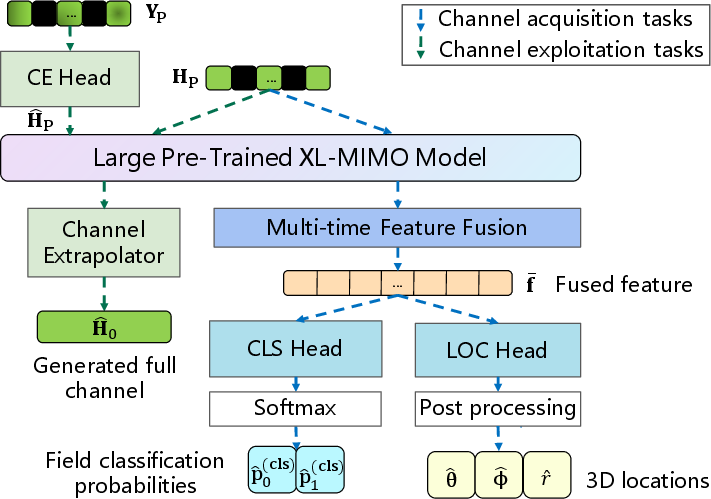
Figure 5: Evaluation and downstream adaptation paradigm: channel acquisition (zero-shot/fine-tuning) and exploitation.
For noisy pilot-based channel estimation, a U-Net denoising head precedes the Transformer backbone, leveraging the generative prior for robust recovery in high-SNR and severe masking regimes.
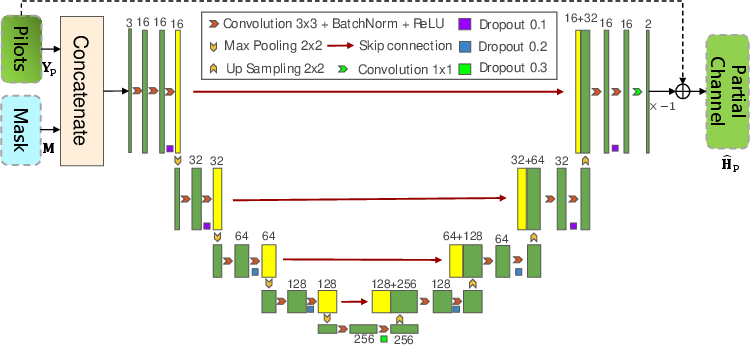
Figure 6: U-Net architecture-based denoising head for channel estimation.
Feature fusion from multiple diffusion steps provides robust and discriminative representations for non-acquisition tasks.
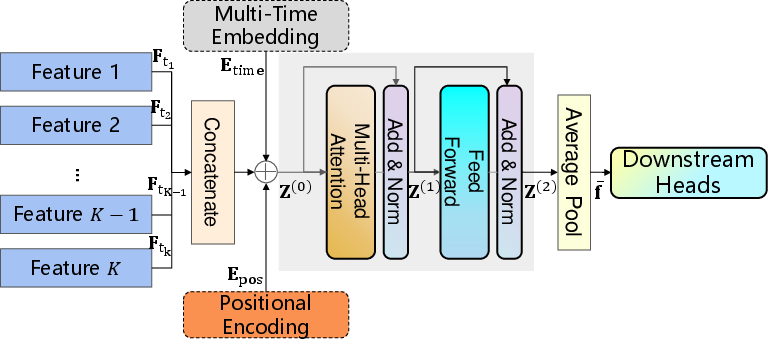
Figure 7: Attention-based multi-time feature fusion for downstream prediction.
Numerical Results and Analysis
The generative foundation model surpasses masked modeling (LWM), U-Net-based CDDIM baselines, and CGANs by over 15 dB in NMSE, maintaining strong performance (NMSE ≈ −20 dB) even at 80% masking. Visualizations evidence preservation of angular and distance features for channels extrapolated from small subsets of observed antennas, demonstrating the recovery of near-field characteristics vital to XL-MIMO operation.
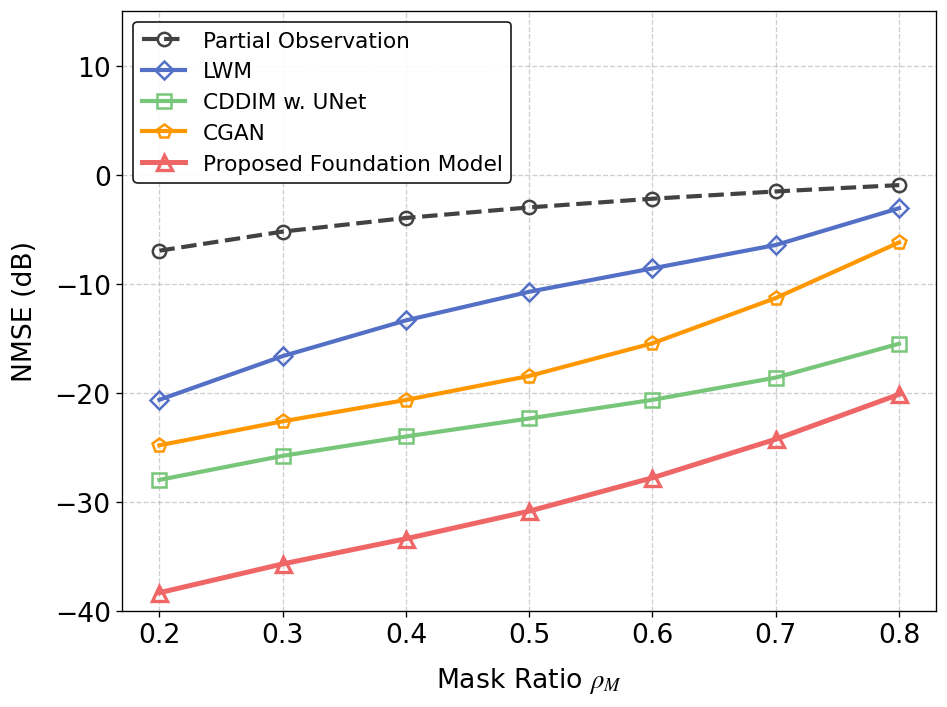
Figure 8: Comparison of channel extrapolation performance using different models under various mask ratios.
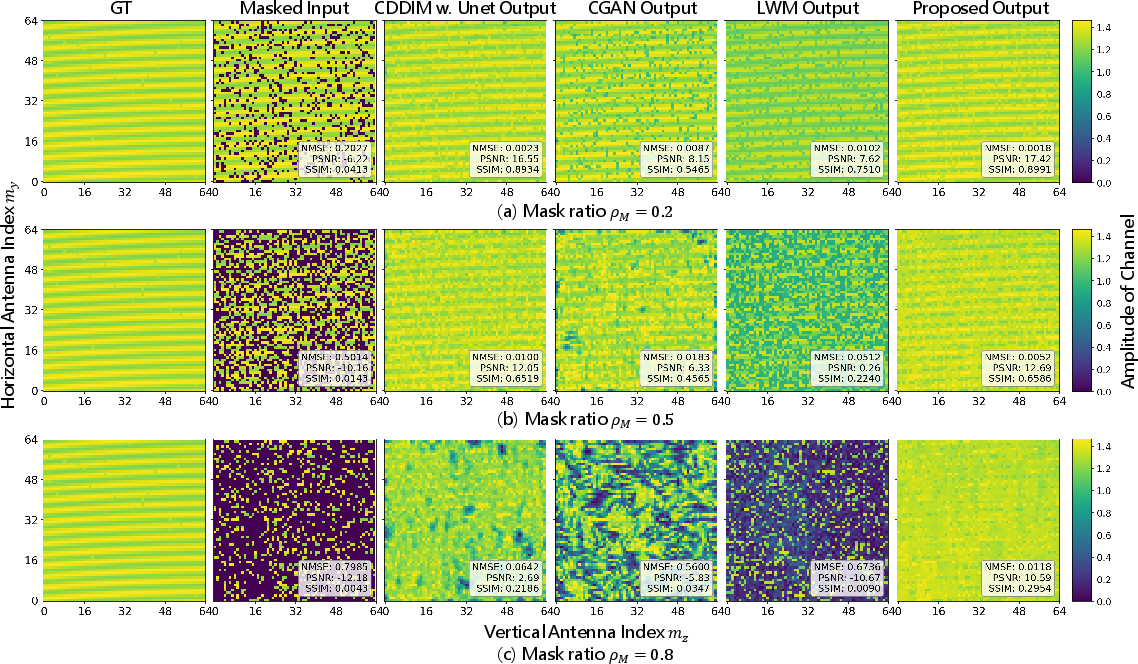
Figure 9: Visual comparison of extrapolated channel amplitudes generated by different models under various mask ratios.
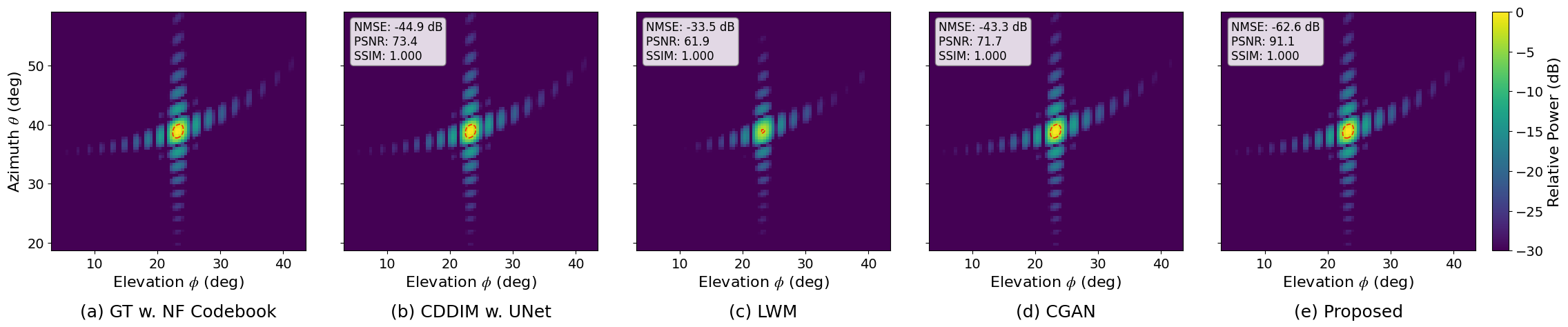
Figure 10: Angular-domain channel visualizations using different models (ρM=0.5); red dashed lines: −3 dB contours.
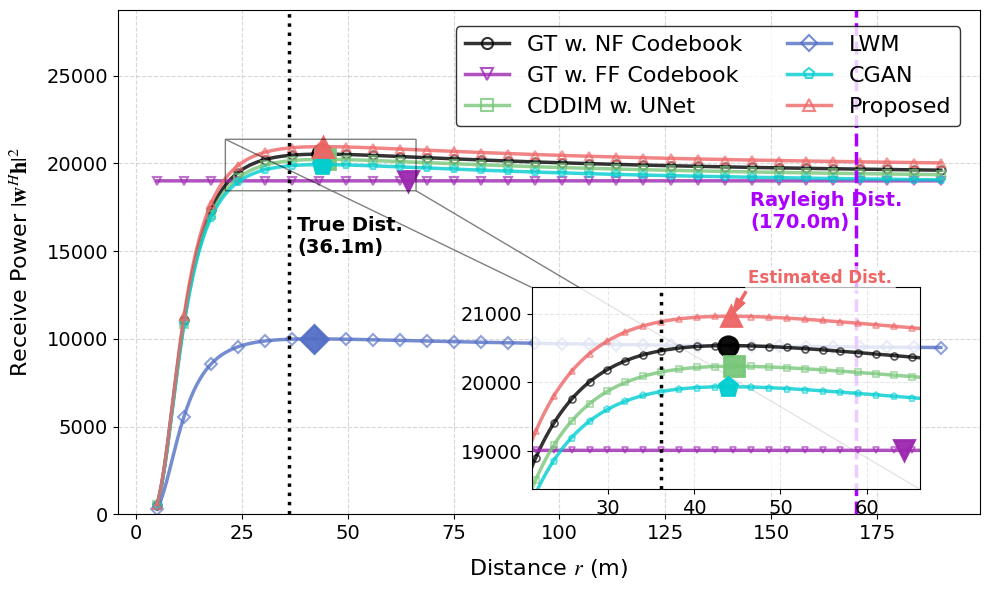
Figure 11: Polar-domain receive power distributions across range for extrapolated channels.
Channel Estimation
Under a wide SNR range and variable antenna selection ratios, the proposed method is markedly more robust than training-from-scratch and convolutional baselines (ChannelNet), particularly when ρs is low and the SNR is moderate to high. The foundation model enables accurate estimation when observed antennas are sparse, even as conventional methods degrade.
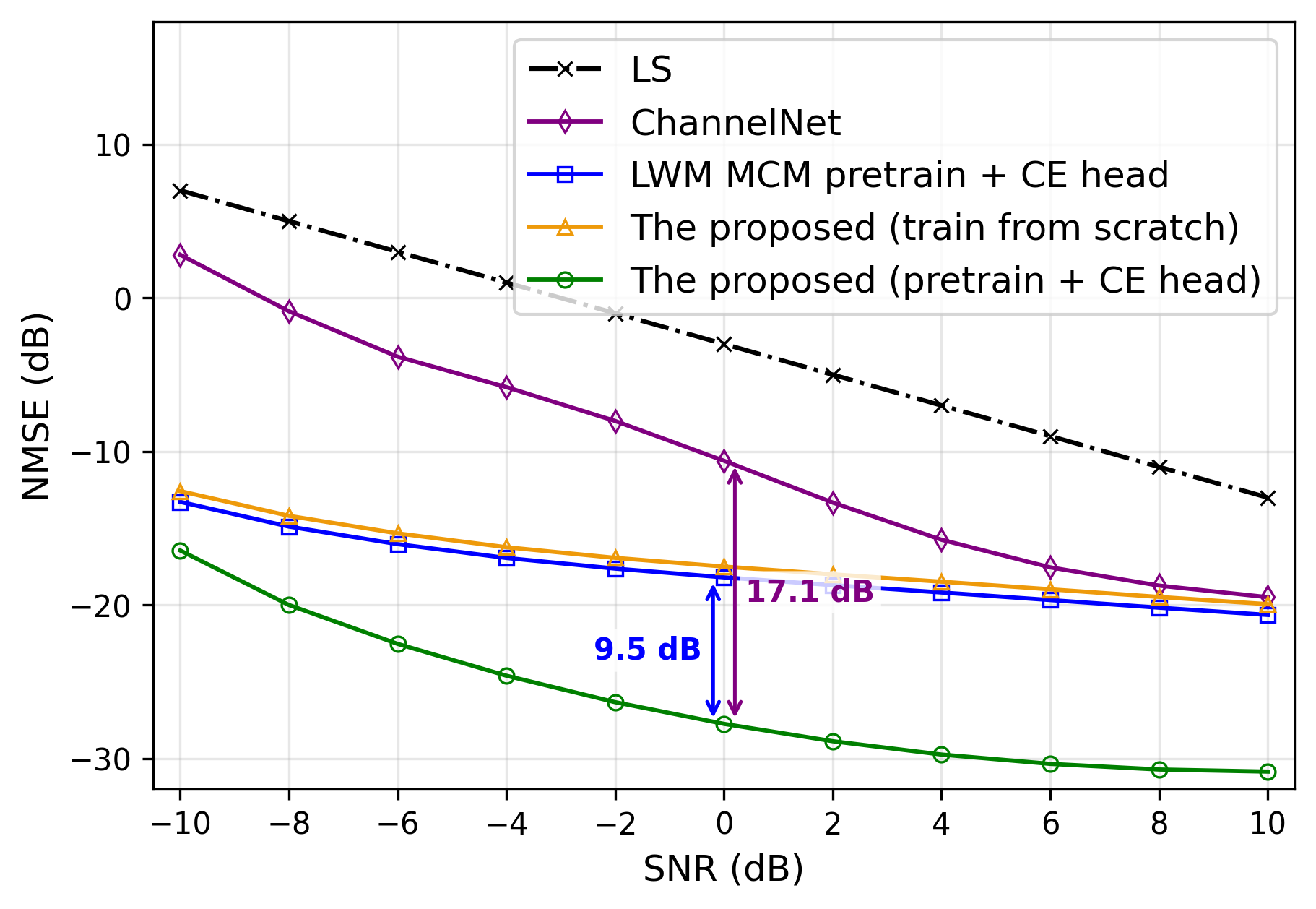
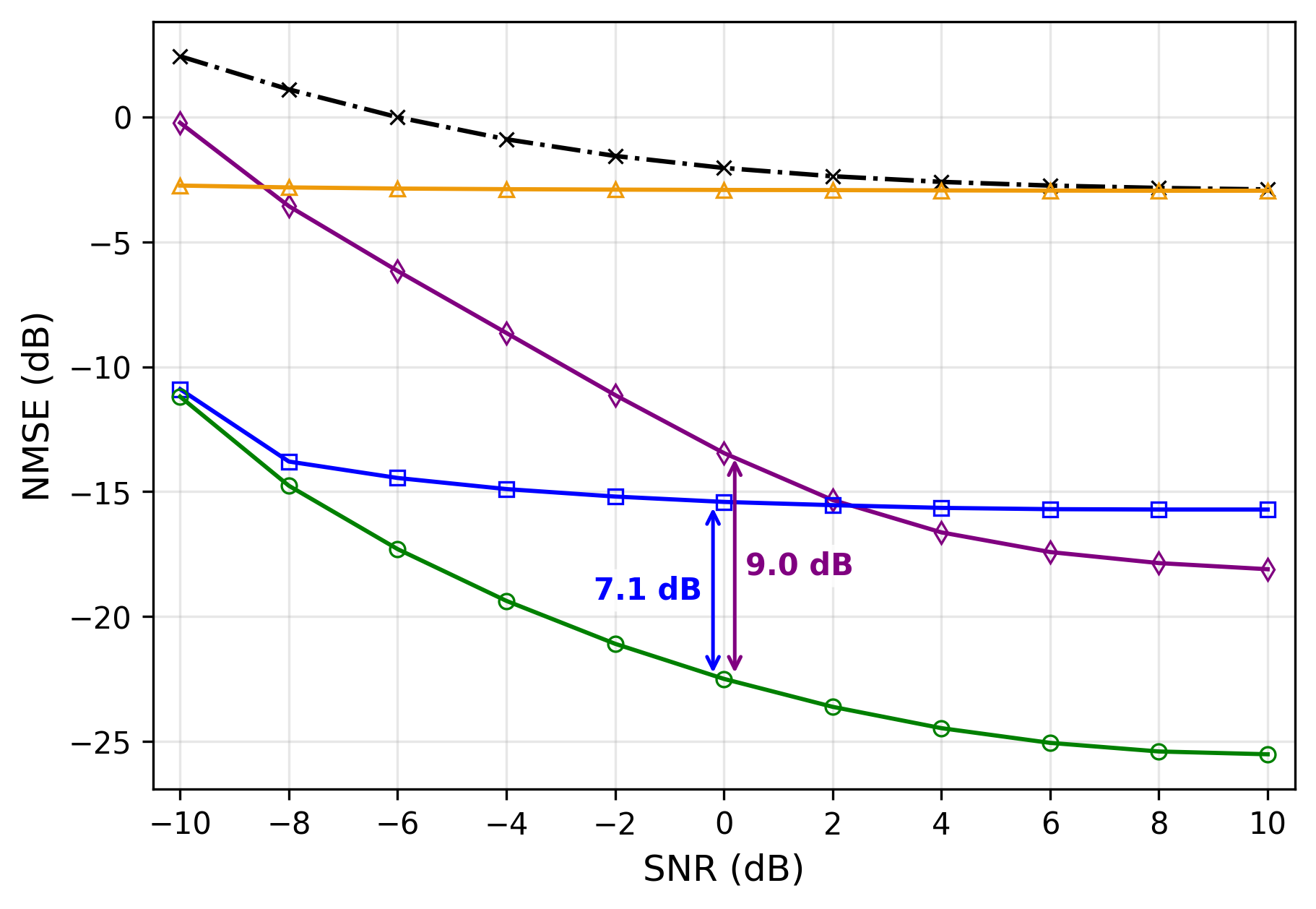
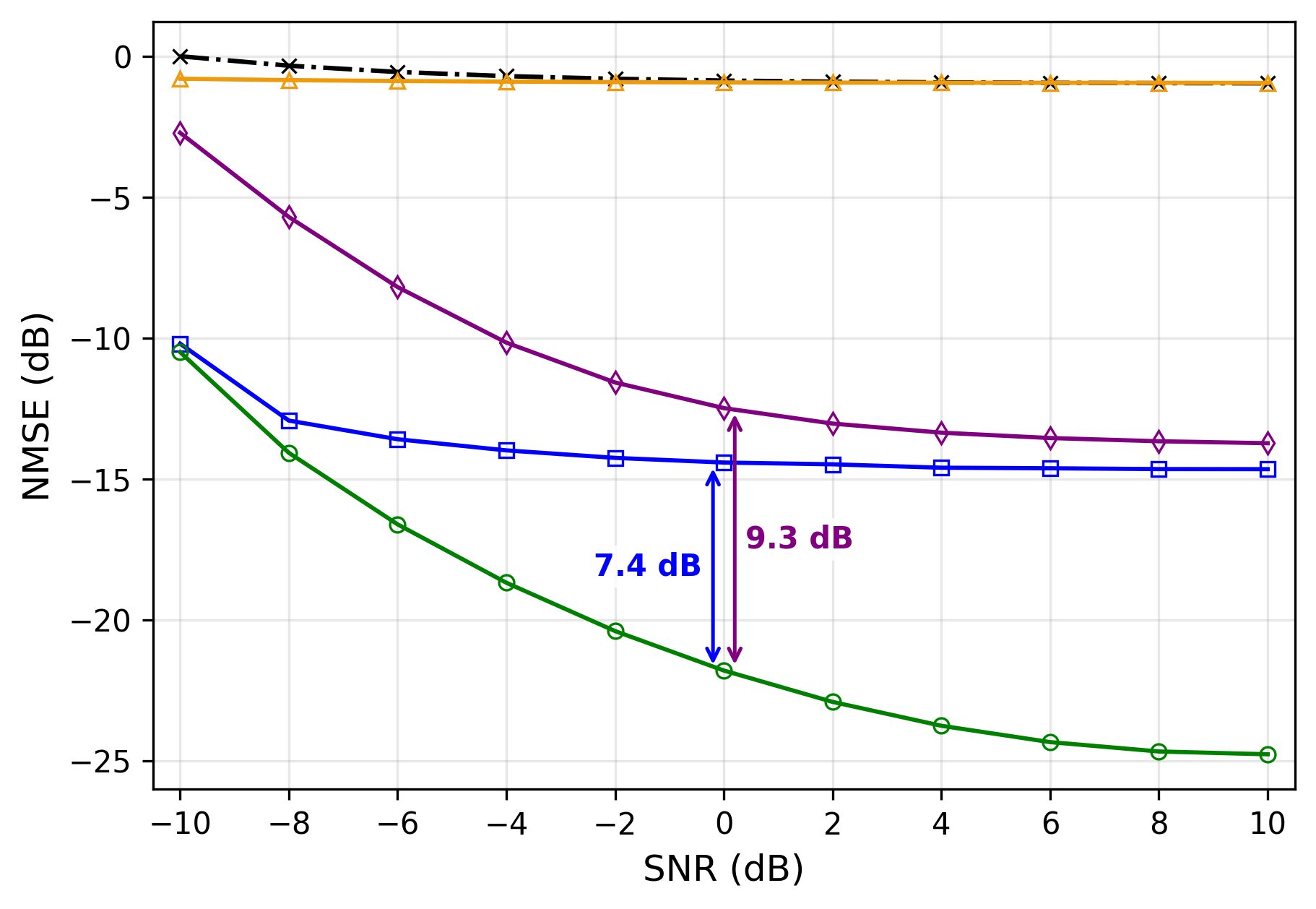
Figure 12: Comparison of channel estimation performance versus SNRs under different antenna selection ratios.
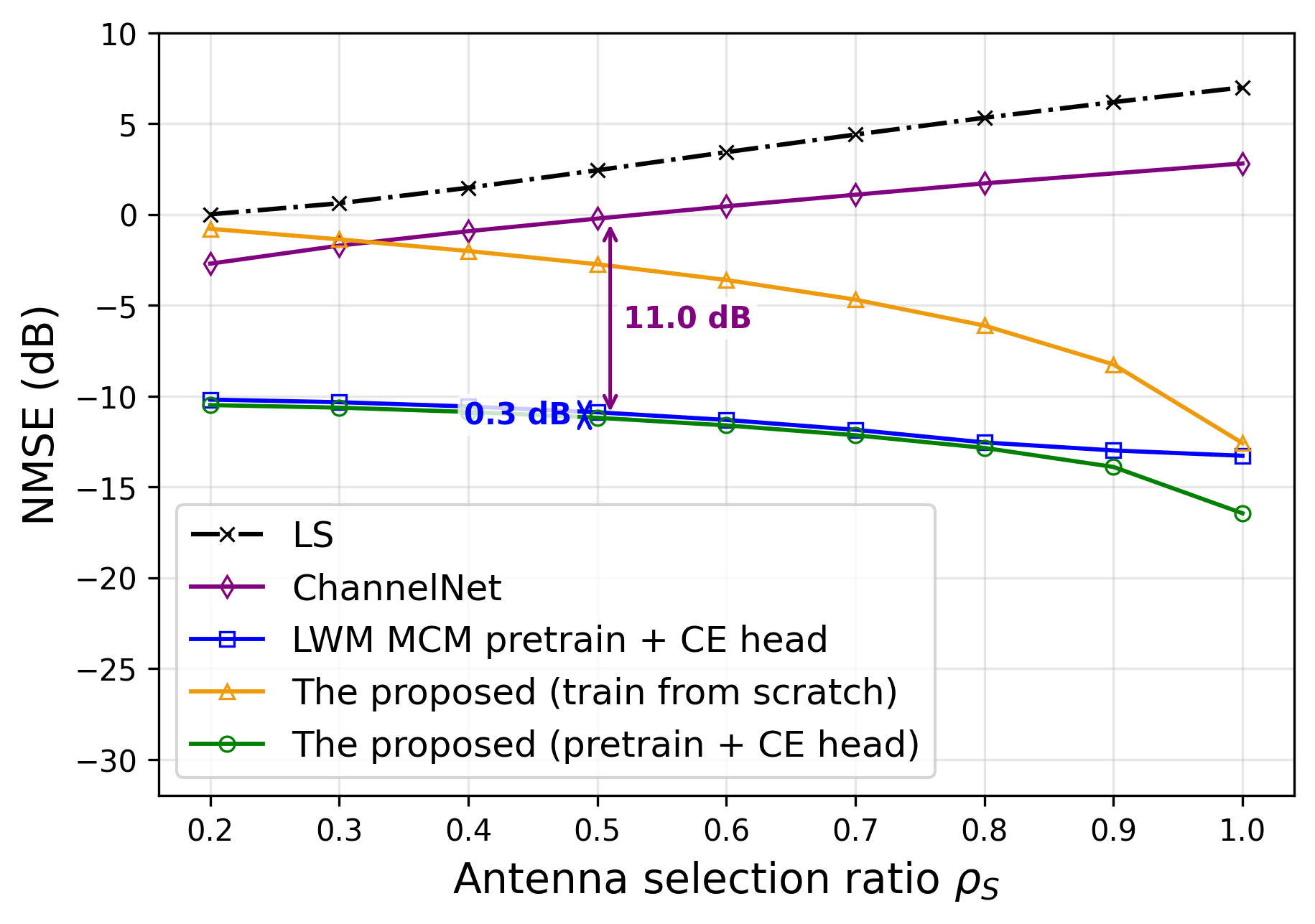
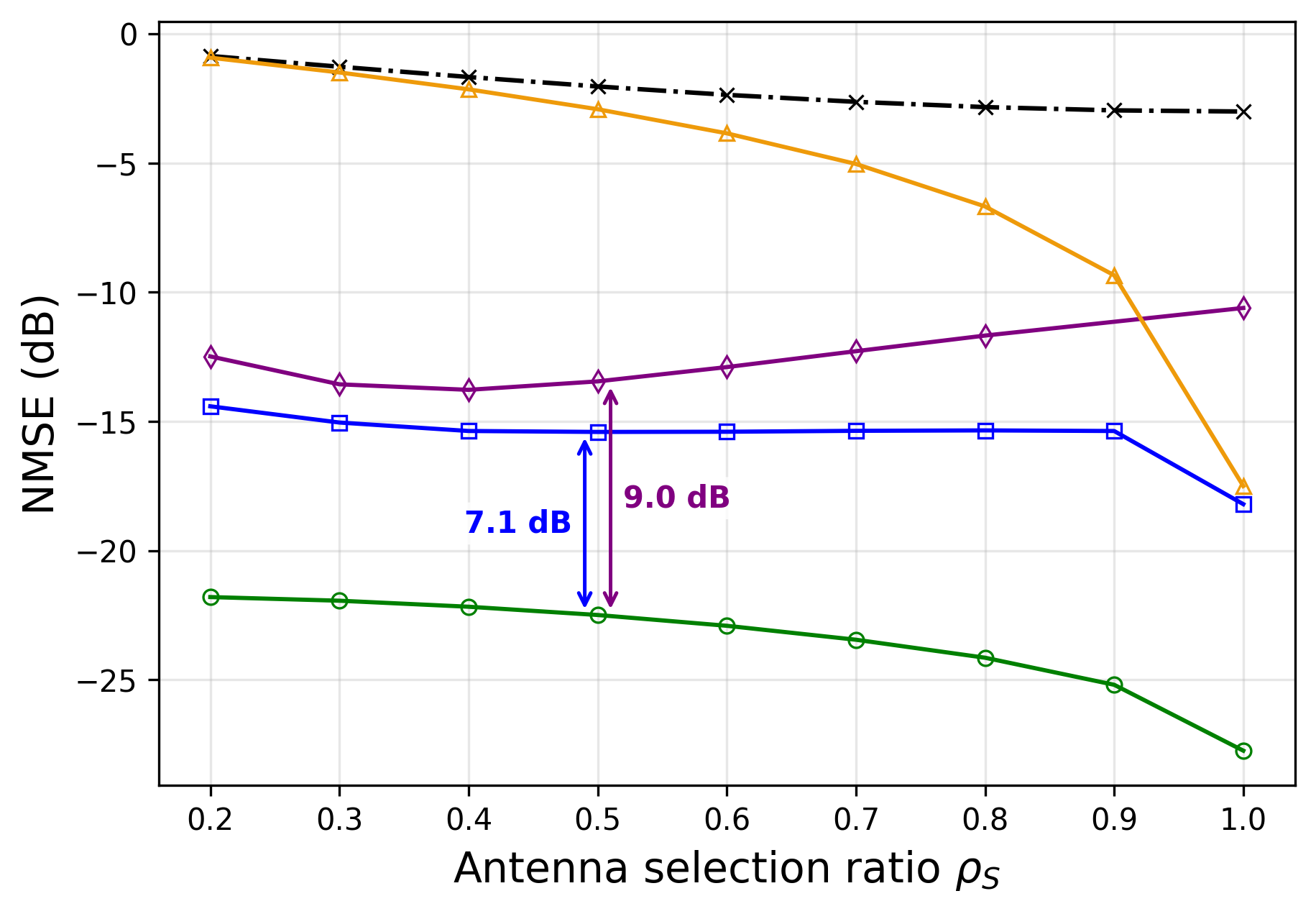
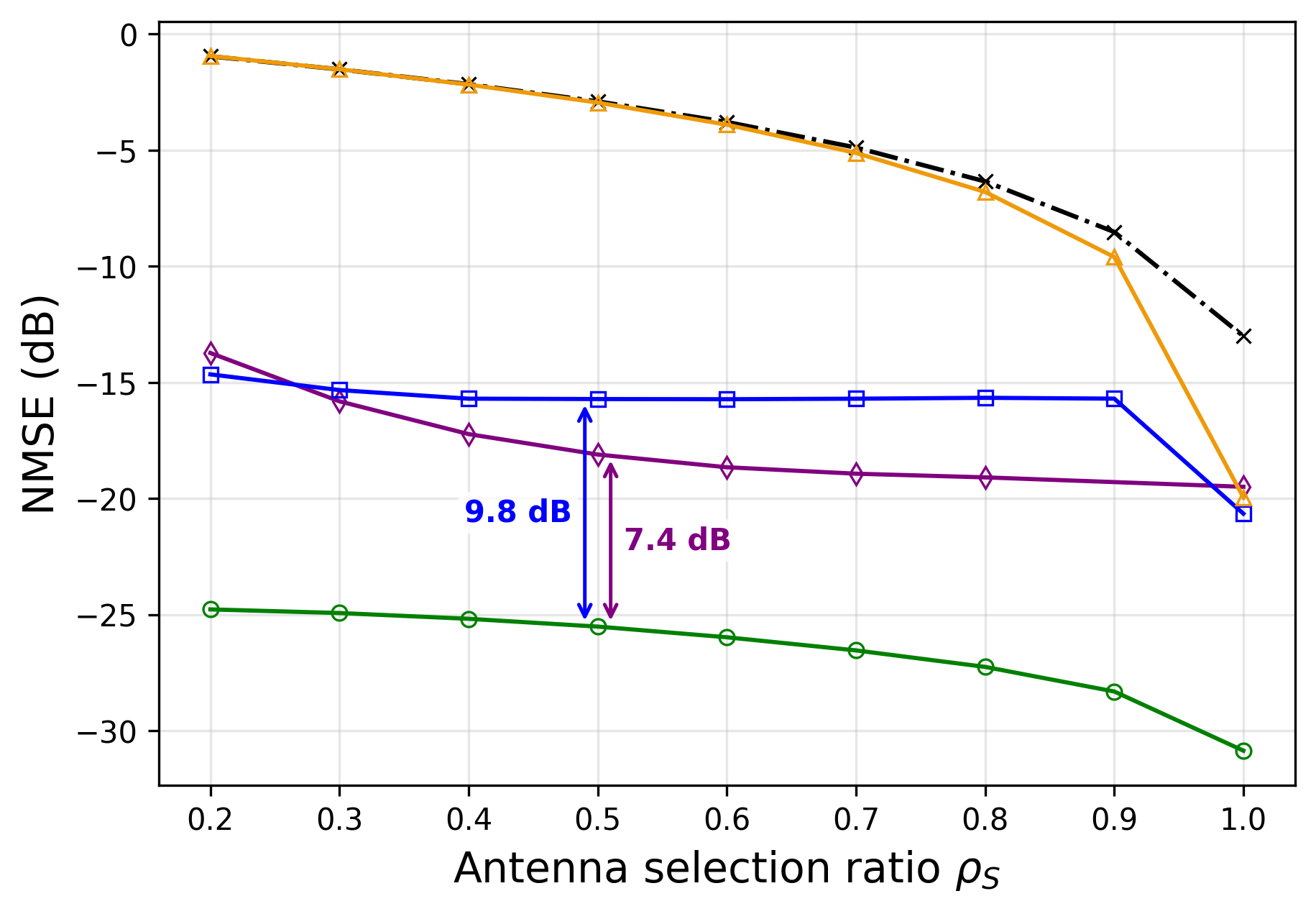
Figure 13: Comparison of channel estimation performance versus antenna selection ratio under different SNRs.
User Classification and Localization
Ablation and Computational Overhead
Ablation studies show that the selection of diffusion steps, backbone depth, and fine-tuning strategy starkly influence performance and efficiency. A 10-layer Transformer, selective unfreezing of top layers, and a five-timestep feature fusion jointly yield optimal trade-offs.
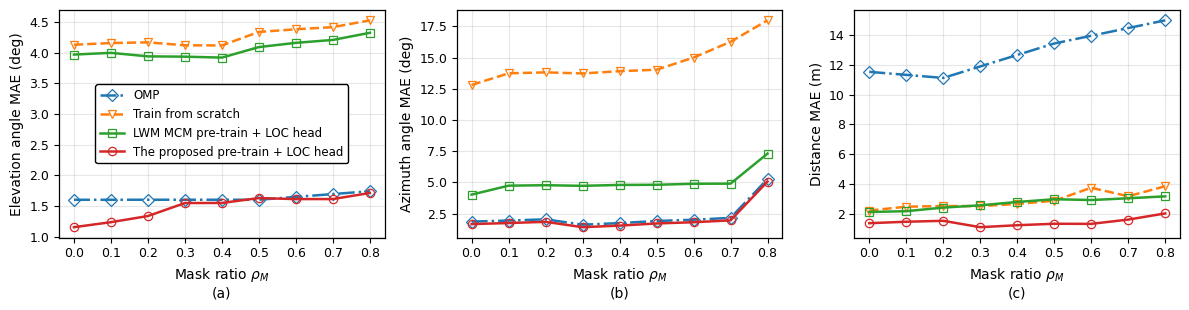
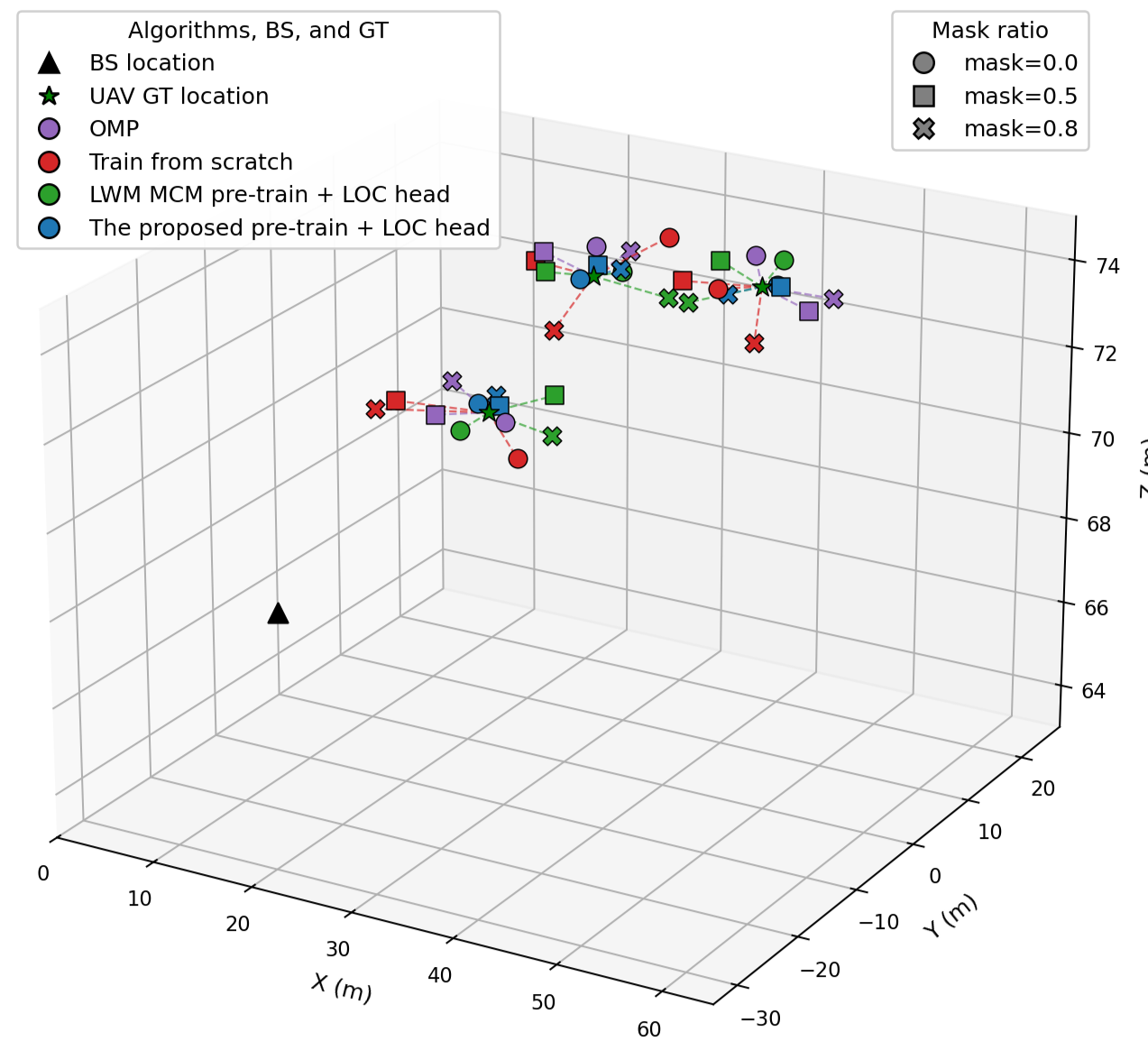
The overhead analysis demonstrates that the main parameter cost is in the reusable backbone/fusion modules. Task-specific heads are lightweight (∼0.003–3M params). Channel acquisition tasks incur higher latency due to iterative sampling, but downstream exploitation tasks (classification/localization) can be executed in sub-millisecond timescales by limiting diffusion steps, with negligible performance loss.
Theoretical and Practical Implications
Practically, the combination of a physics-grounded DT channel engine and a generative foundation model bridges the gap between simulation and deployment for emerging XL-MIMO systems in LAE. The diffusion-based approach yields transferable, robust channel priors, enabling parameter-efficient, unified models for diverse tasks—including those not anticipated in the pretraining phase.
Theoretically, this work advances foundation modeling in wireless communications, demonstrating the limitations of masked modeling for spatially-incomplete CSI and establishing CDDIM-based pretraining as a superior paradigm for high-dimensional, nonshifting 3D wireless data.
This framework also poses clear future directions: cross-validation against real-world XL-MIMO testbeds as they emerge, further algorithmic acceleration (e.g., via fast diffusion or hardware-aware sampling), and exploration of generalization properties in even more heterogeneous environments or device settings.
Conclusion
This paper presents an integrated toolchain and generative learning framework for LAE XL-MIMO, underpinned by a DT-based dataset and a CDDIM-powered foundation model. State-of-the-art results are demonstrated for channel extrapolation, estimation, and higher-level wireless inference under severe information loss. The approach establishes a practical roadmap for large-model-based wireless intelligence in 6G-era low-altitude systems, unifying channel acquisition and exploitation within a scalable, robust paradigm. Future avenues include real-world deployment validation and further optimization of generative sampling efficiency.