- The paper introduces a unified minimizing-movement framework that isolates normal evolution to guarantee unconditional energy stability in geometric gradient flows.
- It employs admissible tangential motion constraints in FEM discretizations to preserve mesh quality and ensure unique solvability.
- Numerical experiments demonstrate improved robustness and convergence for mean curvature and surface diffusion flows compared to classical schemes.
A Minimizing-Movement Framework for Geometric Gradient Flows with Admissible Tangential Motion
Introduction
This work presents a unified minimizing-movement framework for geometric gradient flows, emphasizing parametric finite element (FEM) methodologies where the tangential velocity component is treated via admissible variational constraints. The framework supports both mean curvature flow and surface diffusion flow under the L2(Γ) and H−1(Γ) metrics, respectively. The novelty lies in isolating the normal evolution through the dissipation metric while imposing admissibility-based tangential motion constraints, thereby ensuring unconditional energy stability, unique solvability, and robust mesh preservation.
The gradient flows considered here are motivated by interface motion in physical systems, such as grain coarsening, biomembrane morphodynamics, and solid-state dewetting. The evolution equations are formulated as normal-velocity laws:
V={ϰ,mean curvature flow −Δsϰ,surface diffusion flow
which are the gradient flows of the surface area in the L2 and H−1 metrics, respectively. The FEM framework discretizes the continuous problem in space and time, leading to sequences of polyhedral surfaces. The normal geometric evolution arises from minimizing a functional combining an appropriate metric dissipation and a discrete Dirichlet energy, while tangential motion is encoded via weak constraints.
The admissibility condition—that the identity map is always feasible—enables preservation of unconditional energy stability in the presence of tangential constraints. This is formalized for general weak-constraint variational problems, guaranteeing stability through direct comparison with the identity evolution.
Discrete Schemes and Tangential Motion Selection
Classical Schemes
The framework recovers two widely-used structure-preserving methods as canonical cases:
- Barrett–Garcke–Nürnberg (BGN) scheme: Arises from unconstrained minimization for the classical geometric flows, yielding implicit tangential velocities that are highly mesh-conformal in three dimensions.
- Dual Minimal Deformation Rate (MDR) scheme: Emerges from imposing a constraint that enforces a minimal tangential deformation rate, proven to improve mesh regularity especially for small time-steps.
Novel Admissible Schemes
Two new admissible, energy-stable variants are introduced:
- Admissible BGN (ad-BGN) scheme: Modifies the classical BGN constraint at the discrete level by enforcing it with mass-lumped vector curvatures and a nodal vertex normal, ensuring admissibility is not lost during discretization.
- Relaxed MDR (r-MDR) scheme: Softly enforces the MDR tangential constraint by incorporating a tunable penalization of tangential deformation, balancing mesh regularity with flexibility in the motion.
Both methods are shown to maintain unconditional stability and unique solvability given natural mesh non-degeneracy conditions.
Energy Stability and Existence/Uniqueness
The core analytical finding is that, under the admissibility condition, not only do the proposed schemes admit a unique fully discrete solution at each time-step, but they also guarantee unconditional energy stability at the discrete level. This is reflected in discrete analogues of the continuous energy dissipation laws. The stability proofs crucially rely on the identity map serving as a comparison map within the variational minimization, a possibility only preserved by admissible constraint structures.
Numerical Experiments
A comprehensive suite of numerical tests is conducted to evaluate the geometric accuracy, mesh quality, robustness, and long-time behavior of all schemes—BGN, MDR, ad-BGN, and r-MDR—across a range of challenging scenarios:
Shrinking Sphere under Mean Curvature Flow
All methods achieve near second-order convergence in geometric error norms, with discrepancies in nodal L2 errors due to parametrization effects.
Pinching Dumbbell (Mean Curvature Flow)
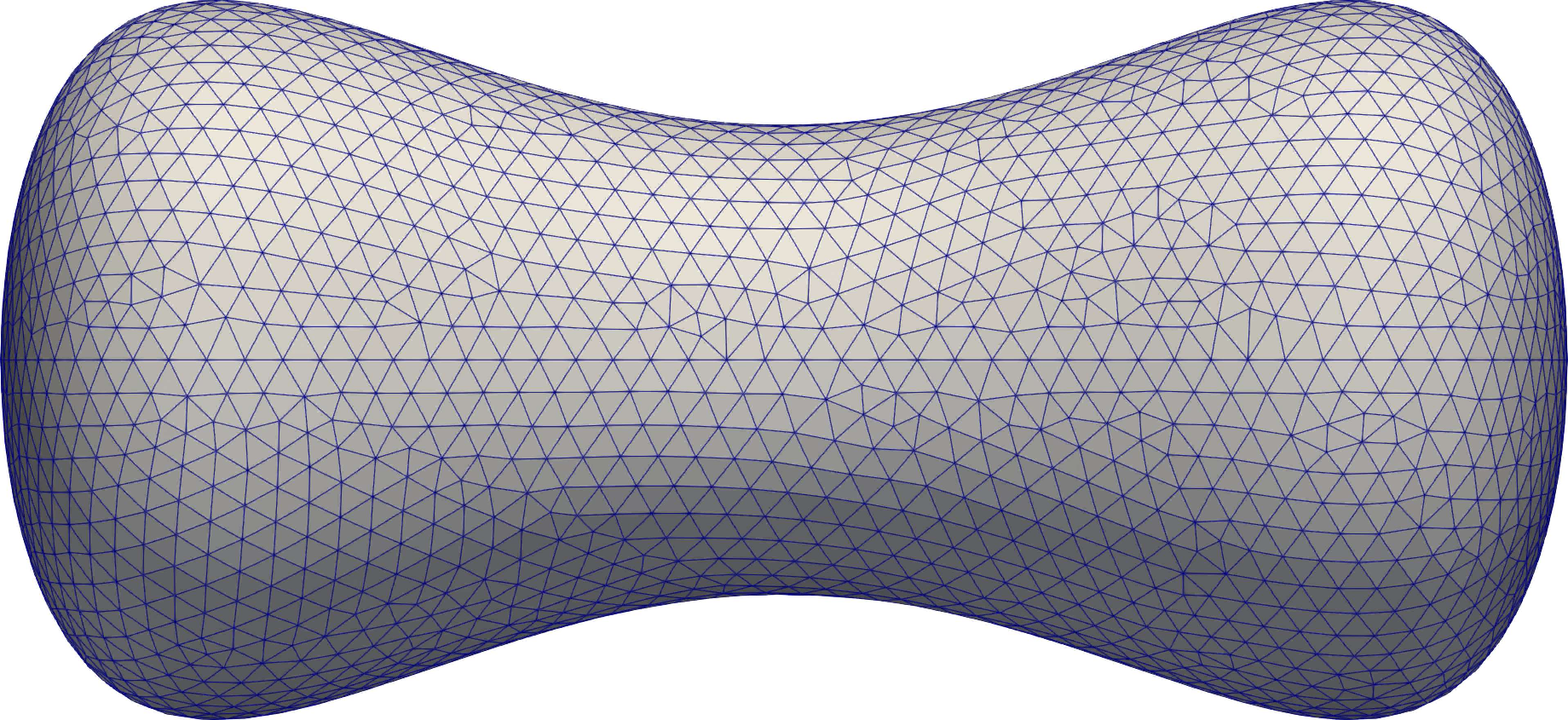
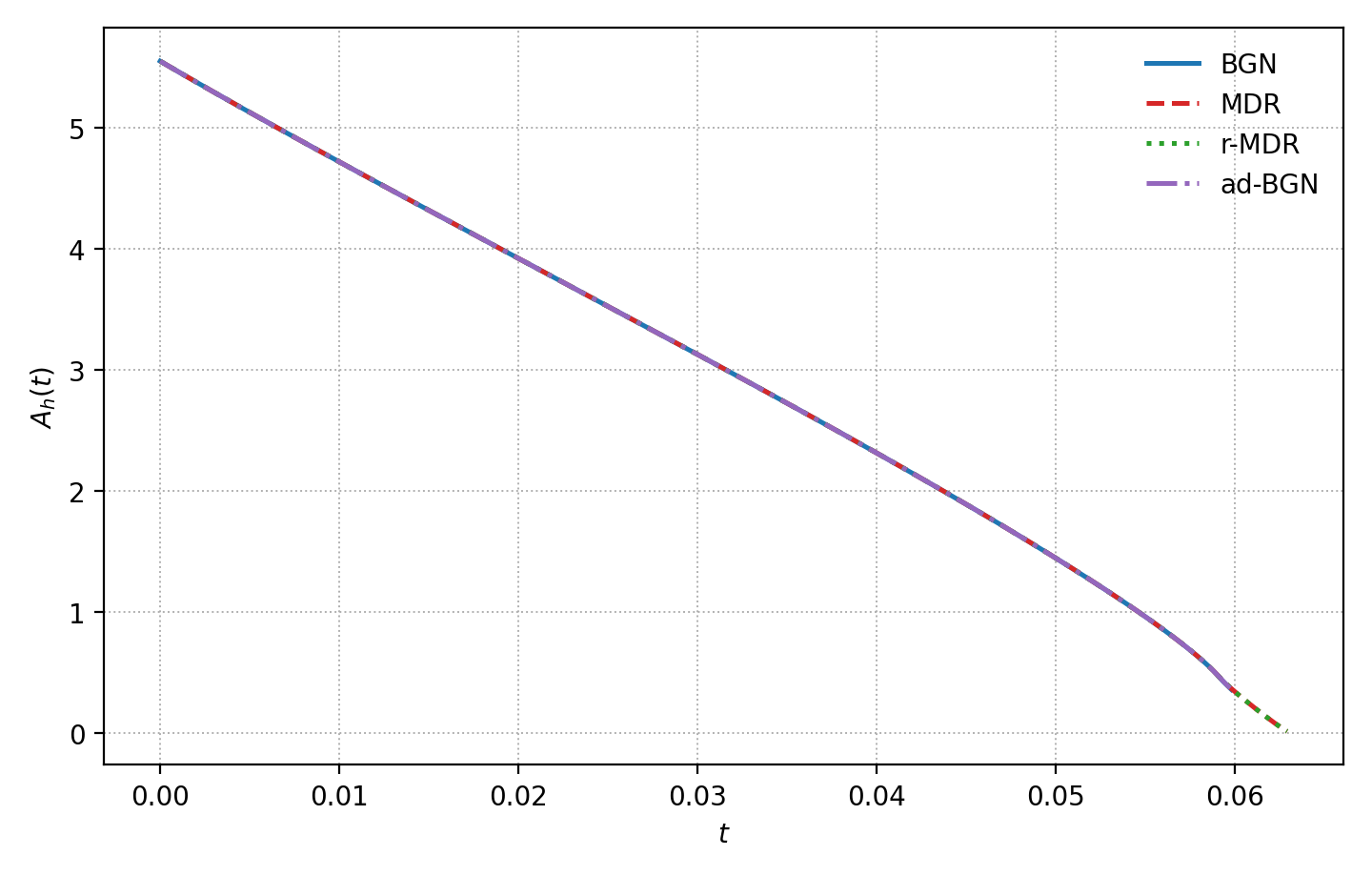
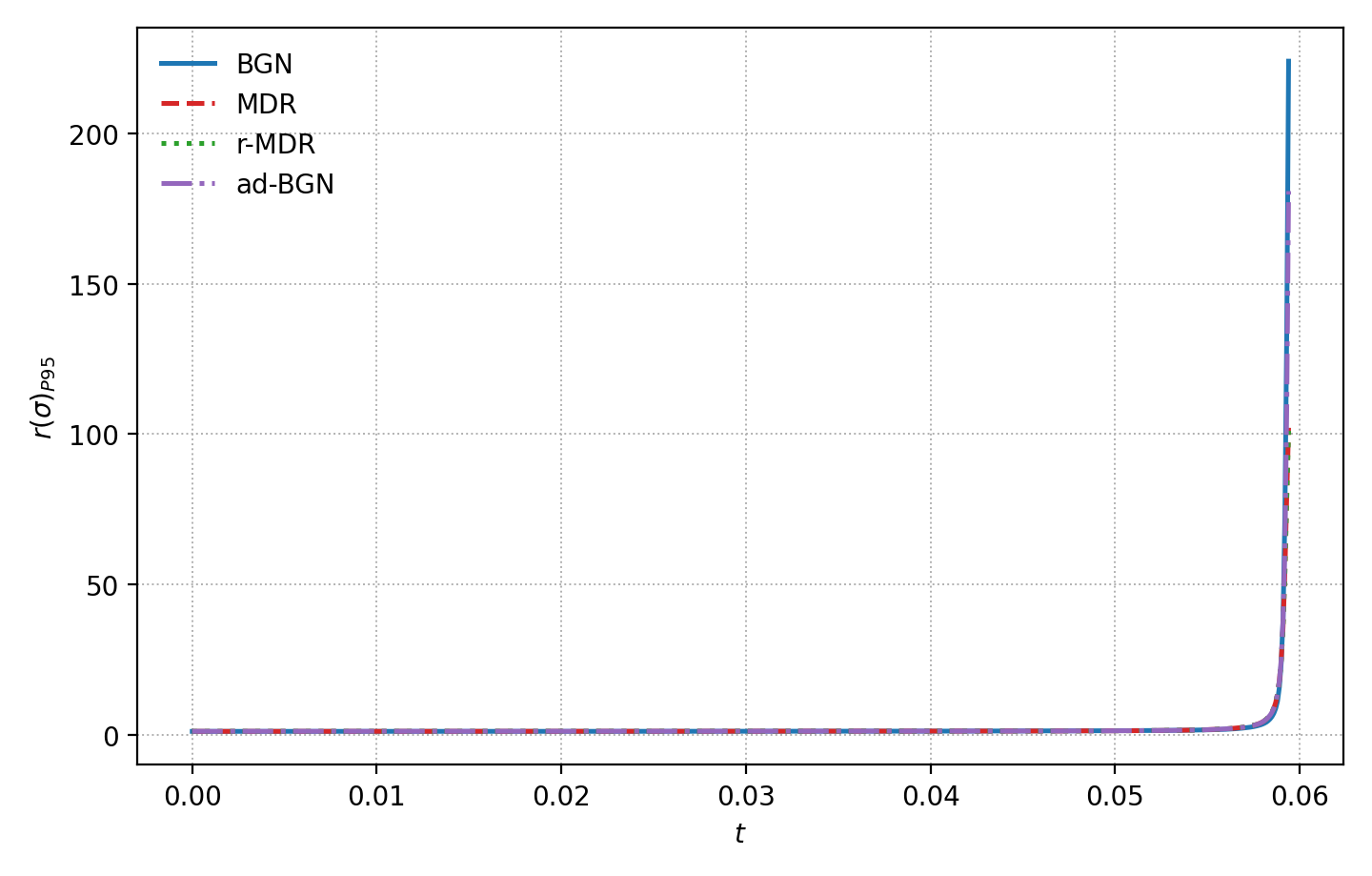
Figure 1: The initial polyhedral surface, surface-area decay, and the mesh-quality statistic rp95m in the pinching dumbbell test.




Figure 2: Polyhedral surfaces at t=0.0597 in the pinching dumbbell test.



Figure 3: Late-stage polyhedral surfaces for ad-BGN, MDR, and r-MDR.
All admissible schemes demonstrate extended computability and mesh integrity deep into the pinch-off regime, whereas the classical BGN scheme fails due to mesh degeneration before the topological singularity.
Perturbed Torus (Mean Curvature Flow)
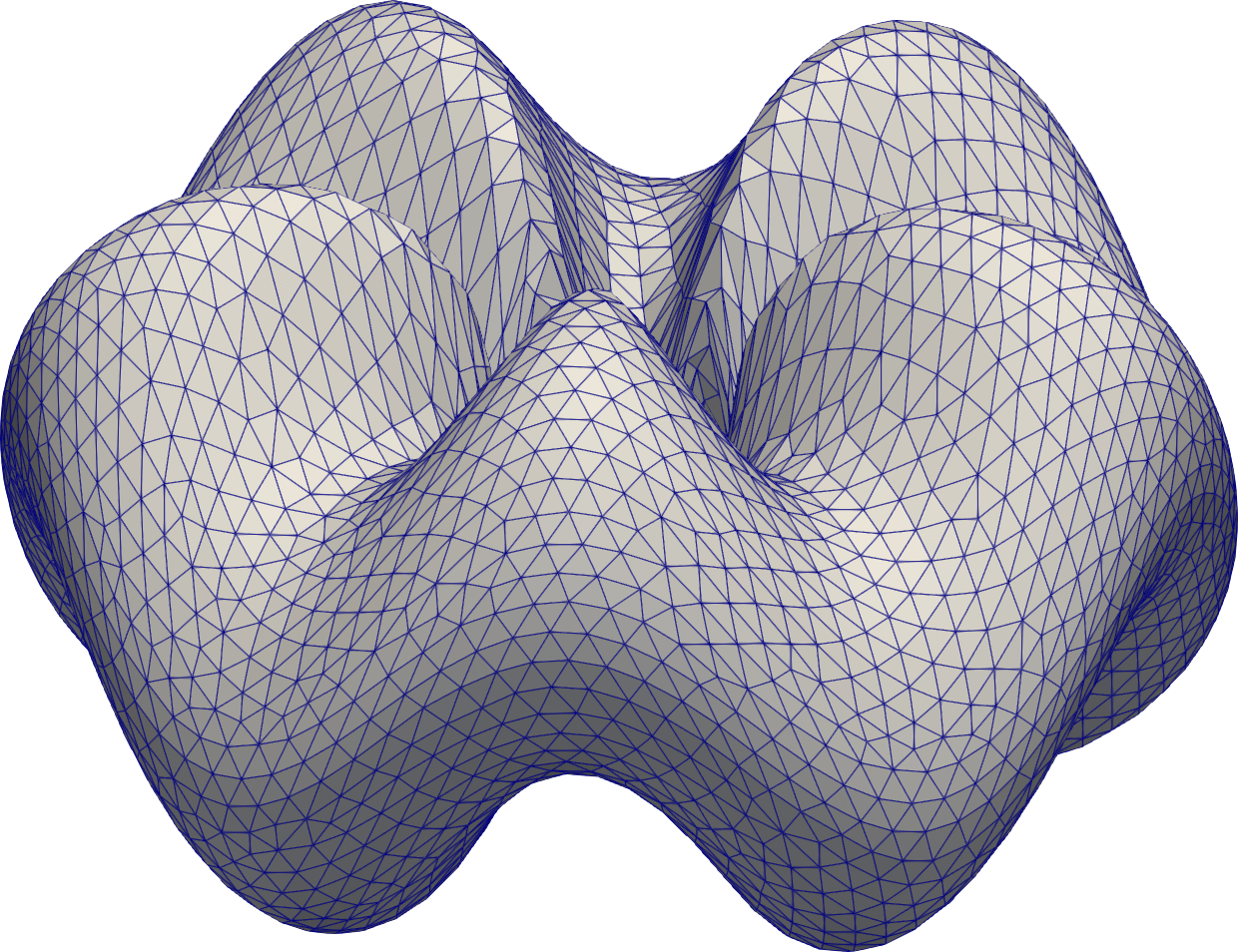
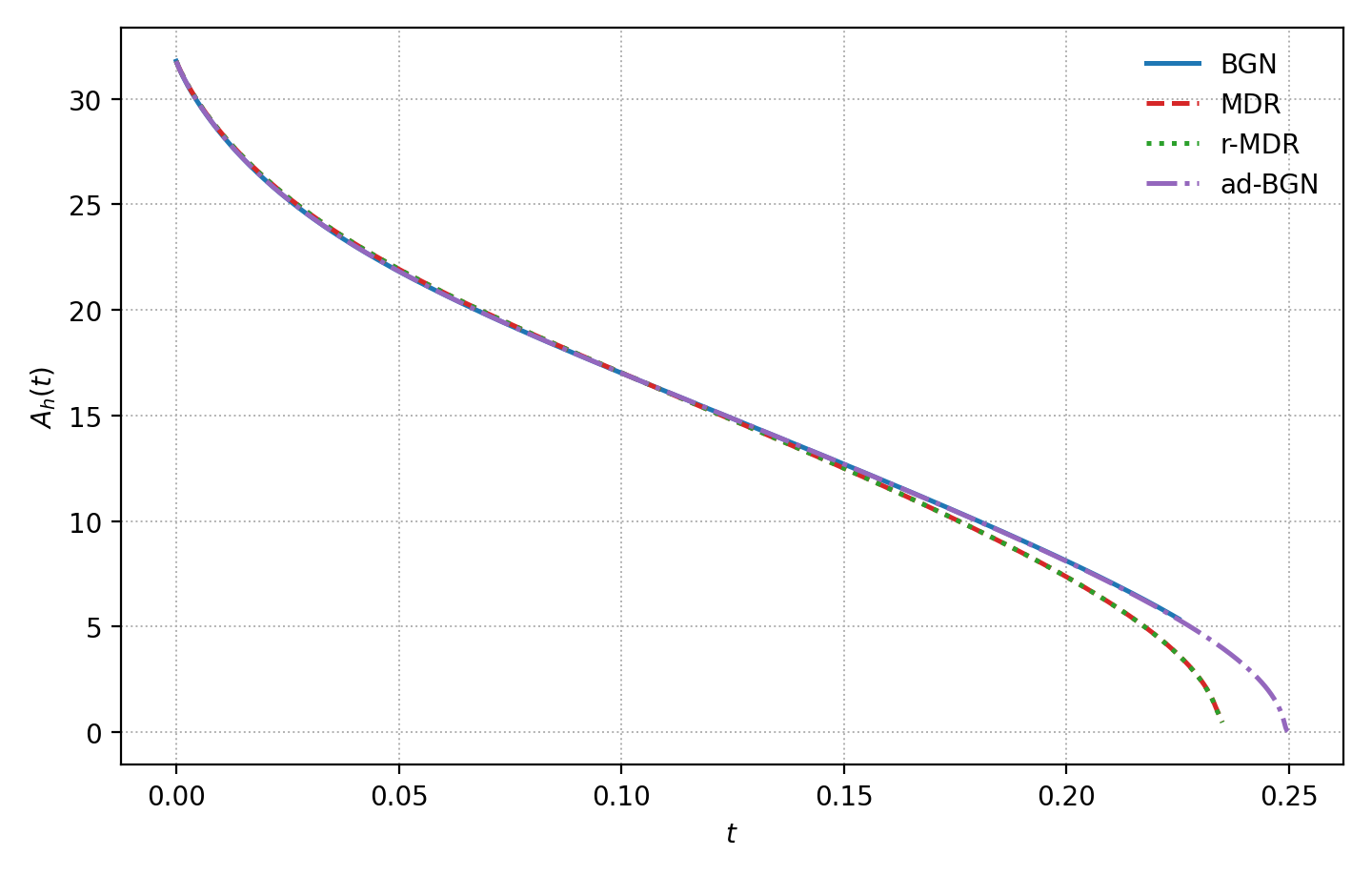
Figure 4: Perturbed torus test: (a) the low-quality initial mesh and (b) the monotone decay of the surface area.
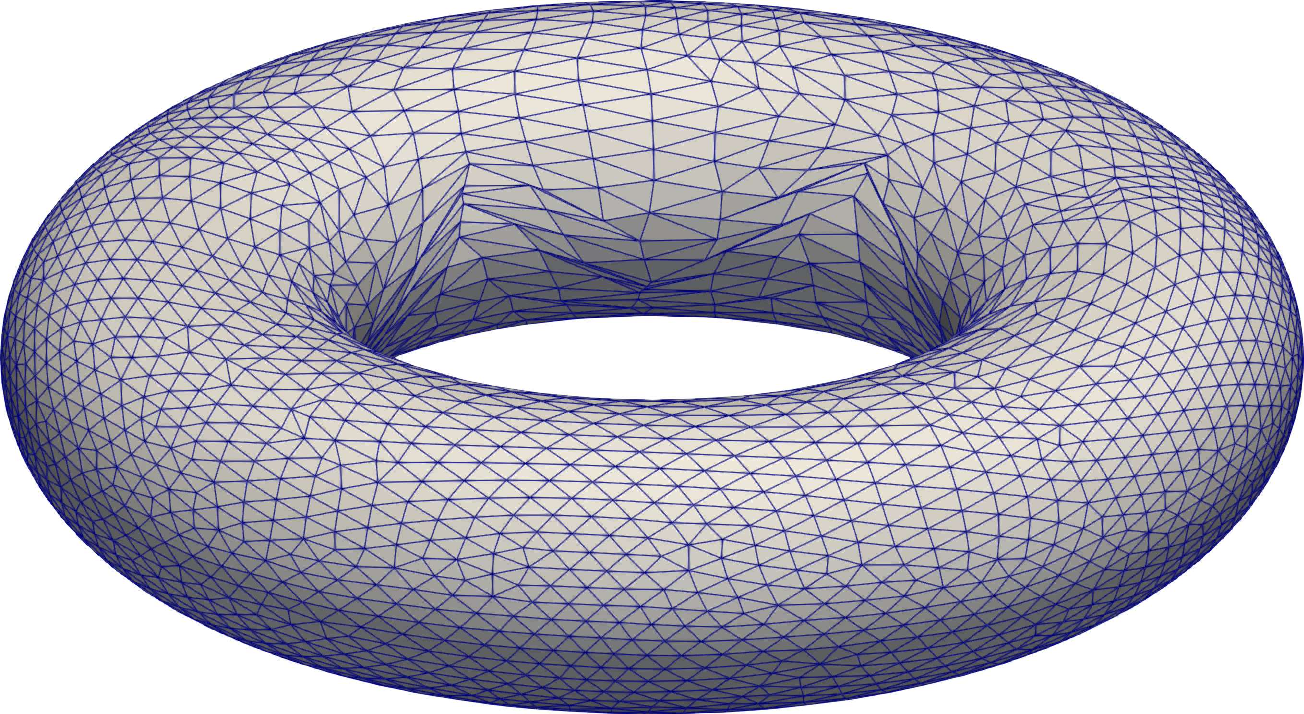
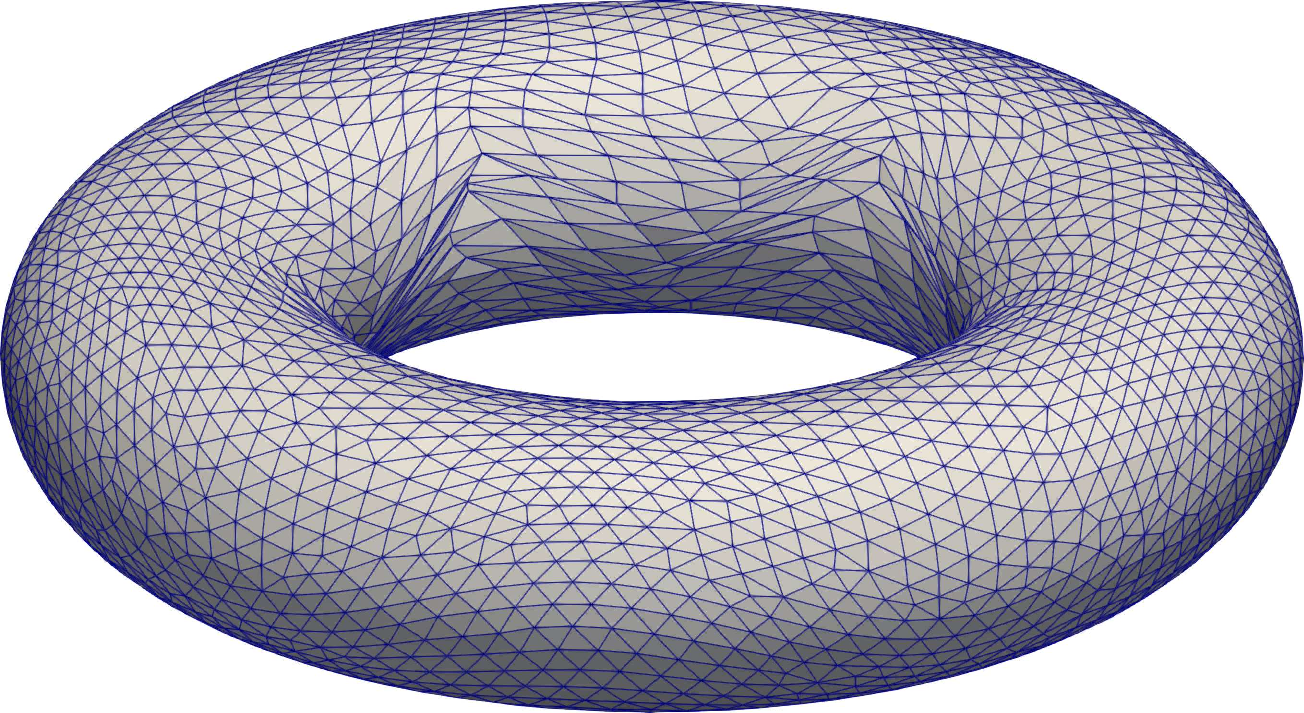
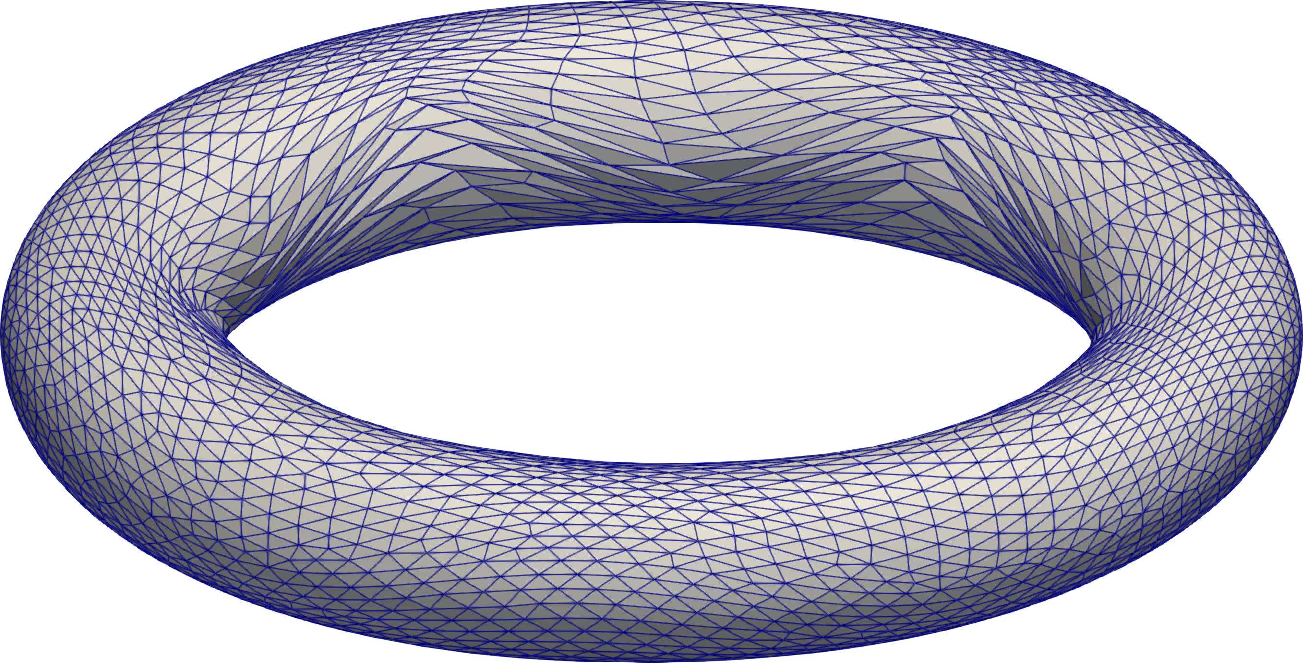
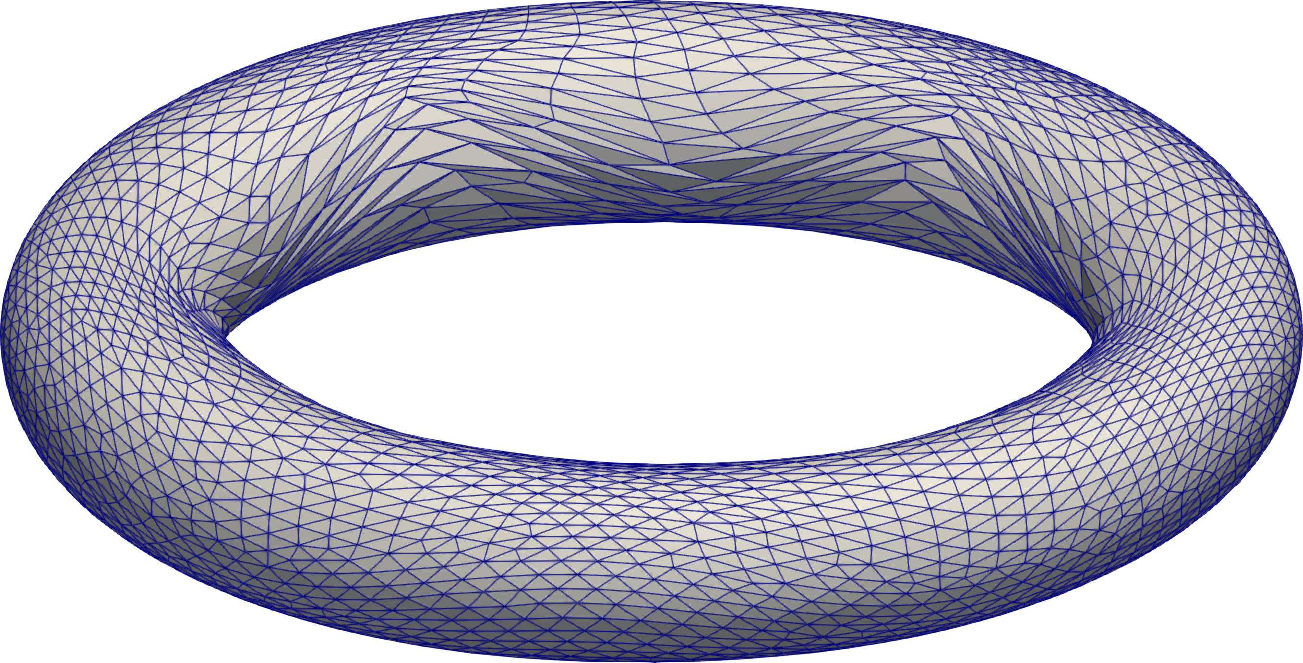
Figure 5: The polyhedral surfaces at t=0.2252 in the perturbed torus test.
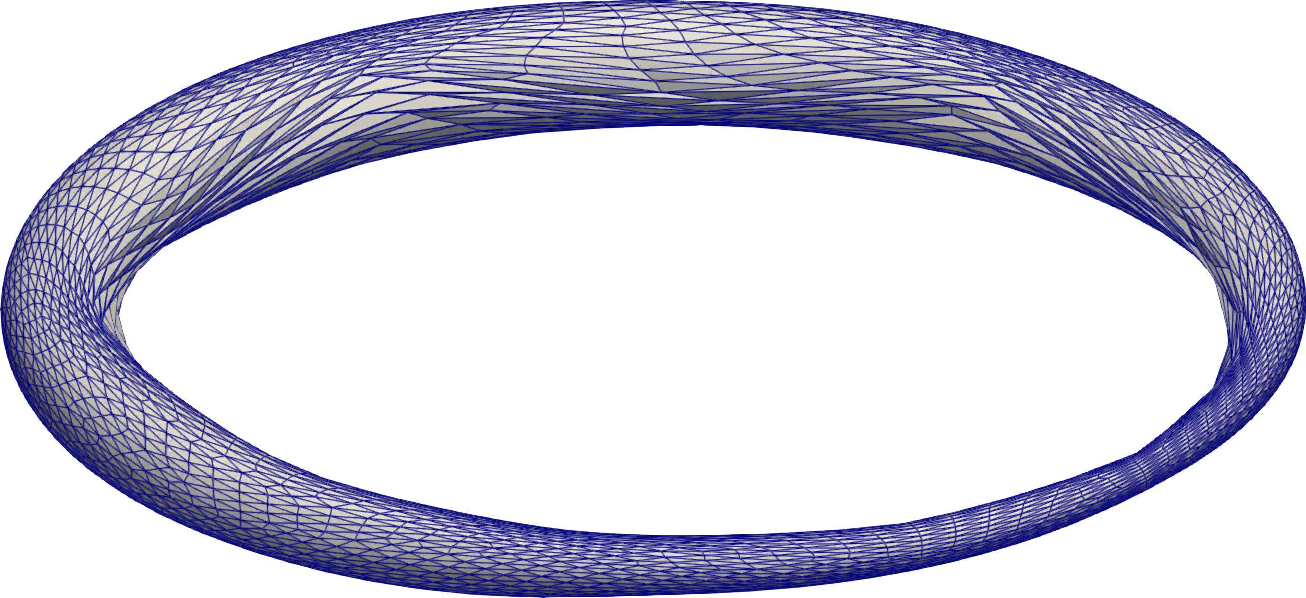
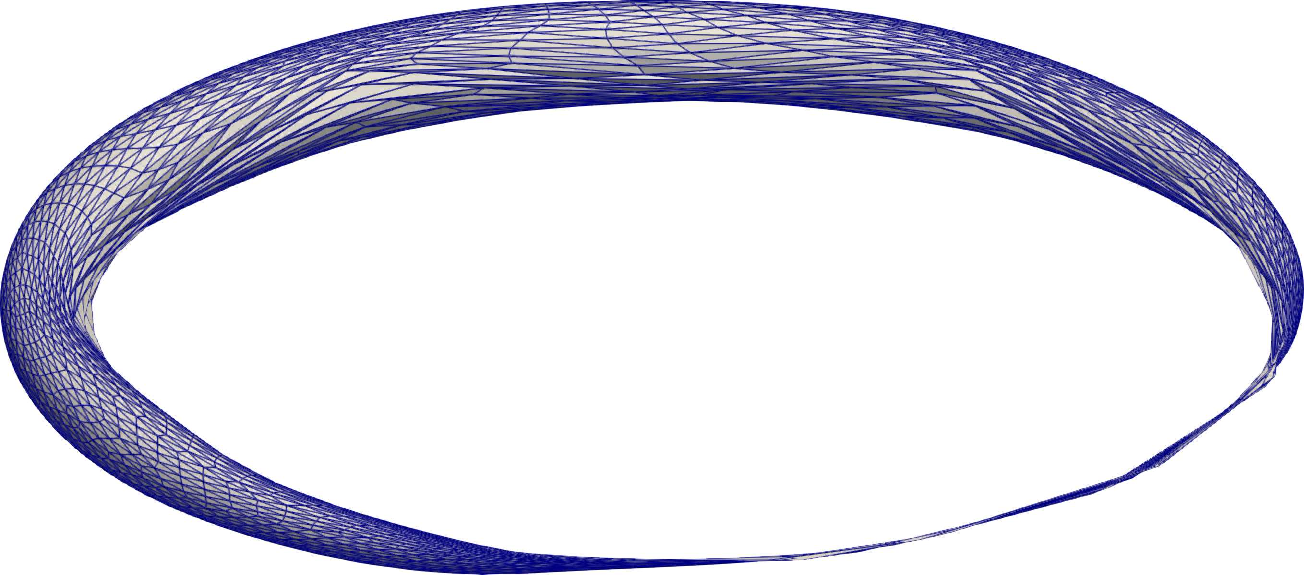
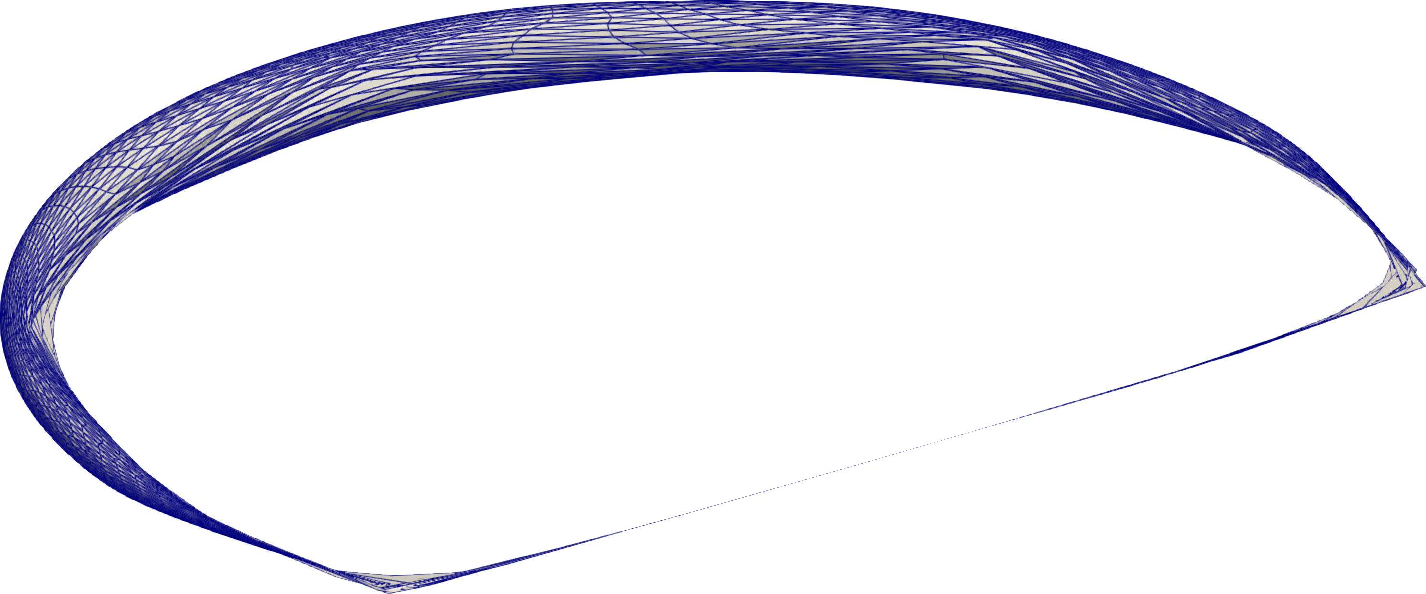
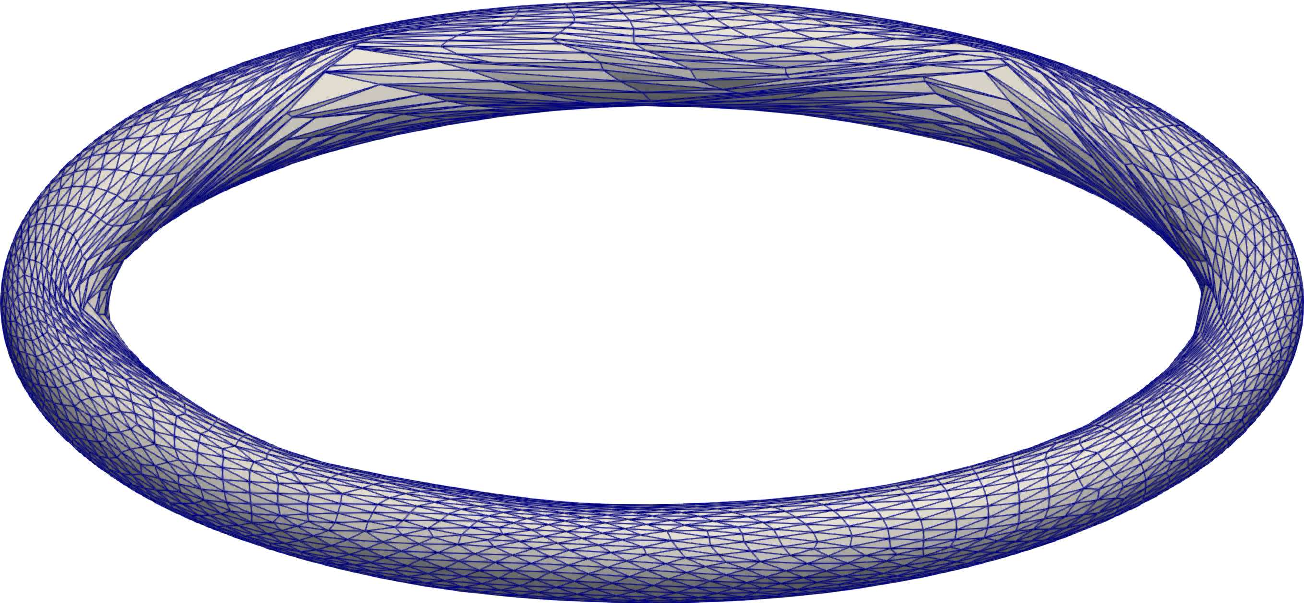
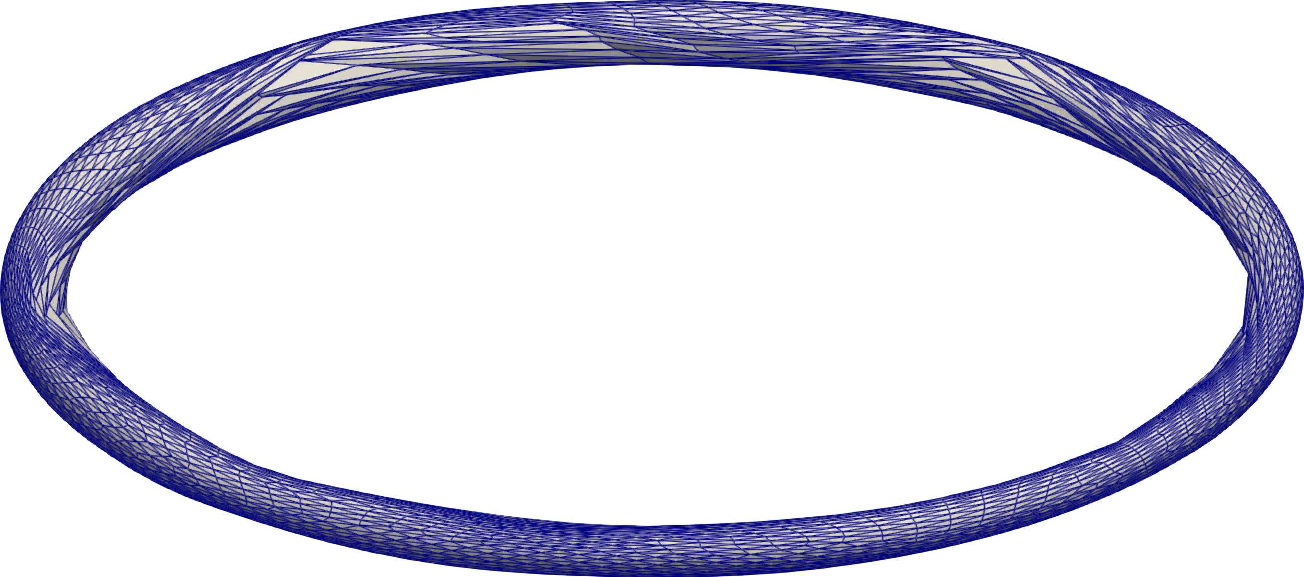
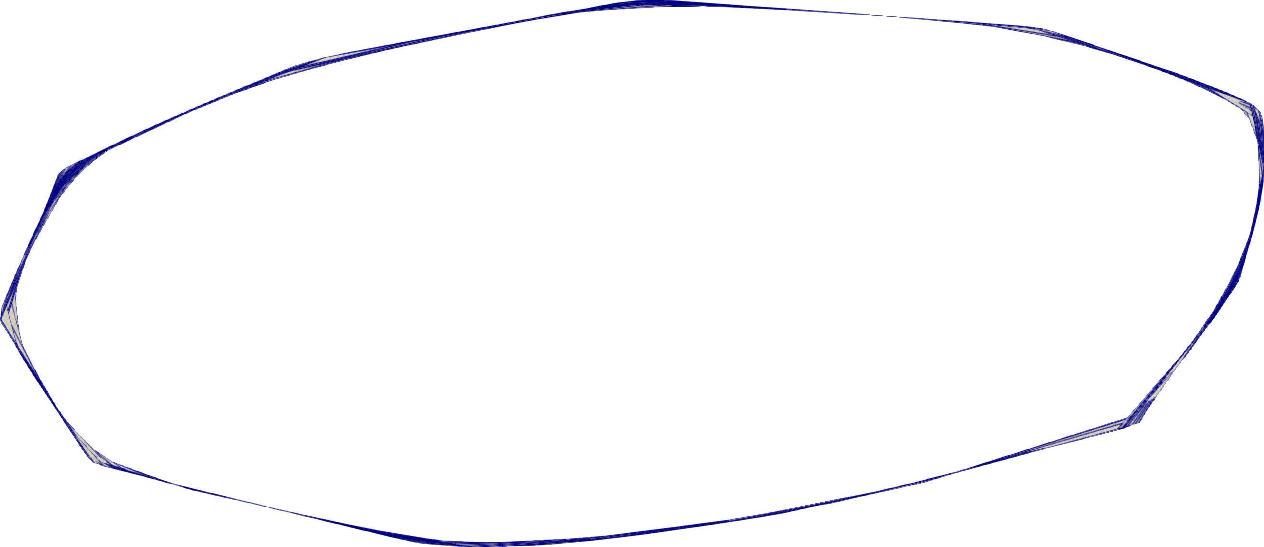
Figure 6: Late-stage evolution in the perturbed torus test. Top row: MDR. Bottom row: ad-BGN.
The selection of admissible tangential motion is found to substantially influence the long-time evolution and geometric degeneration, with ad-BGN producing significantly more uniform mesh distributions than classical MDR, particularly near extinction.
Surface Diffusion of an Elongated Cuboid
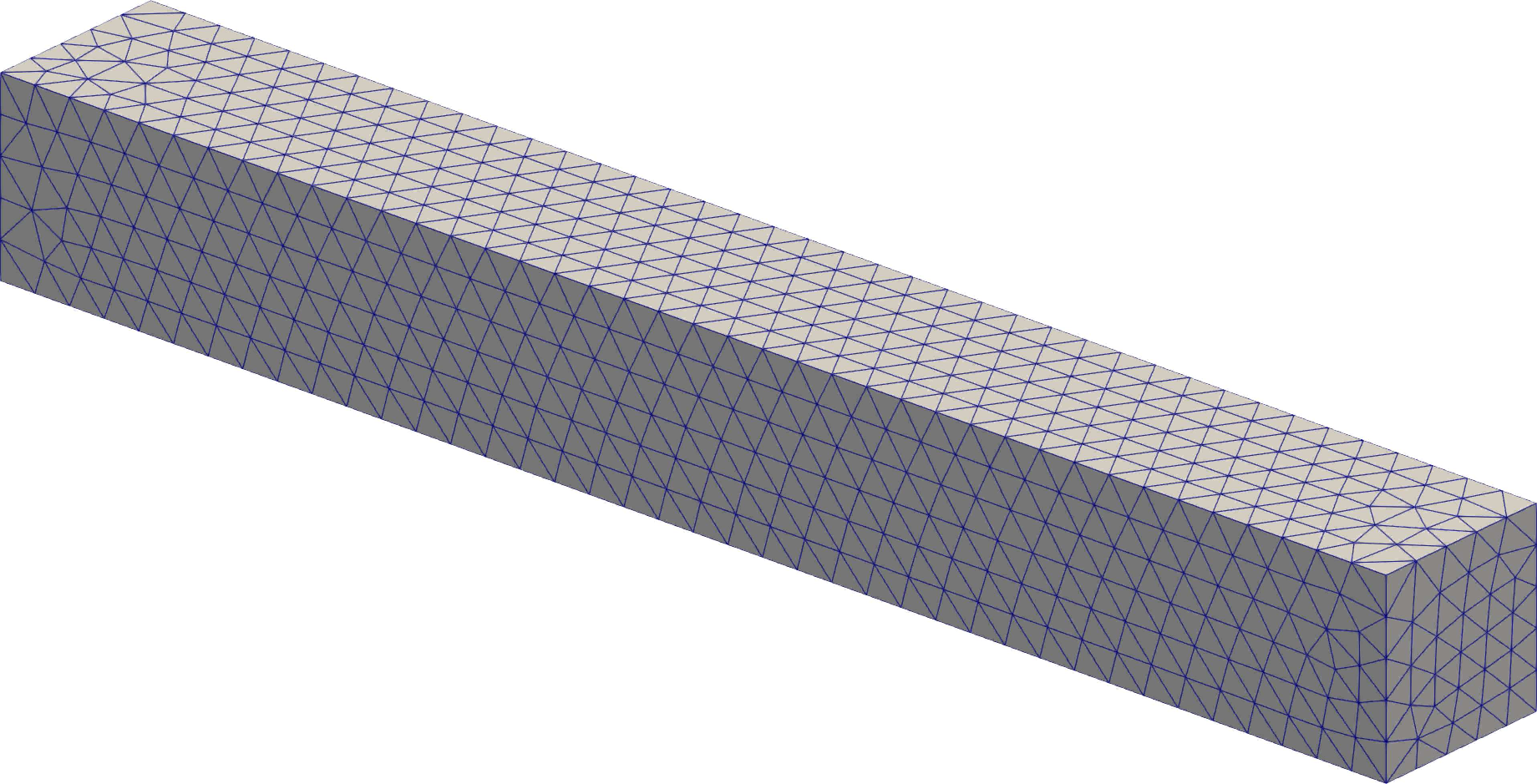
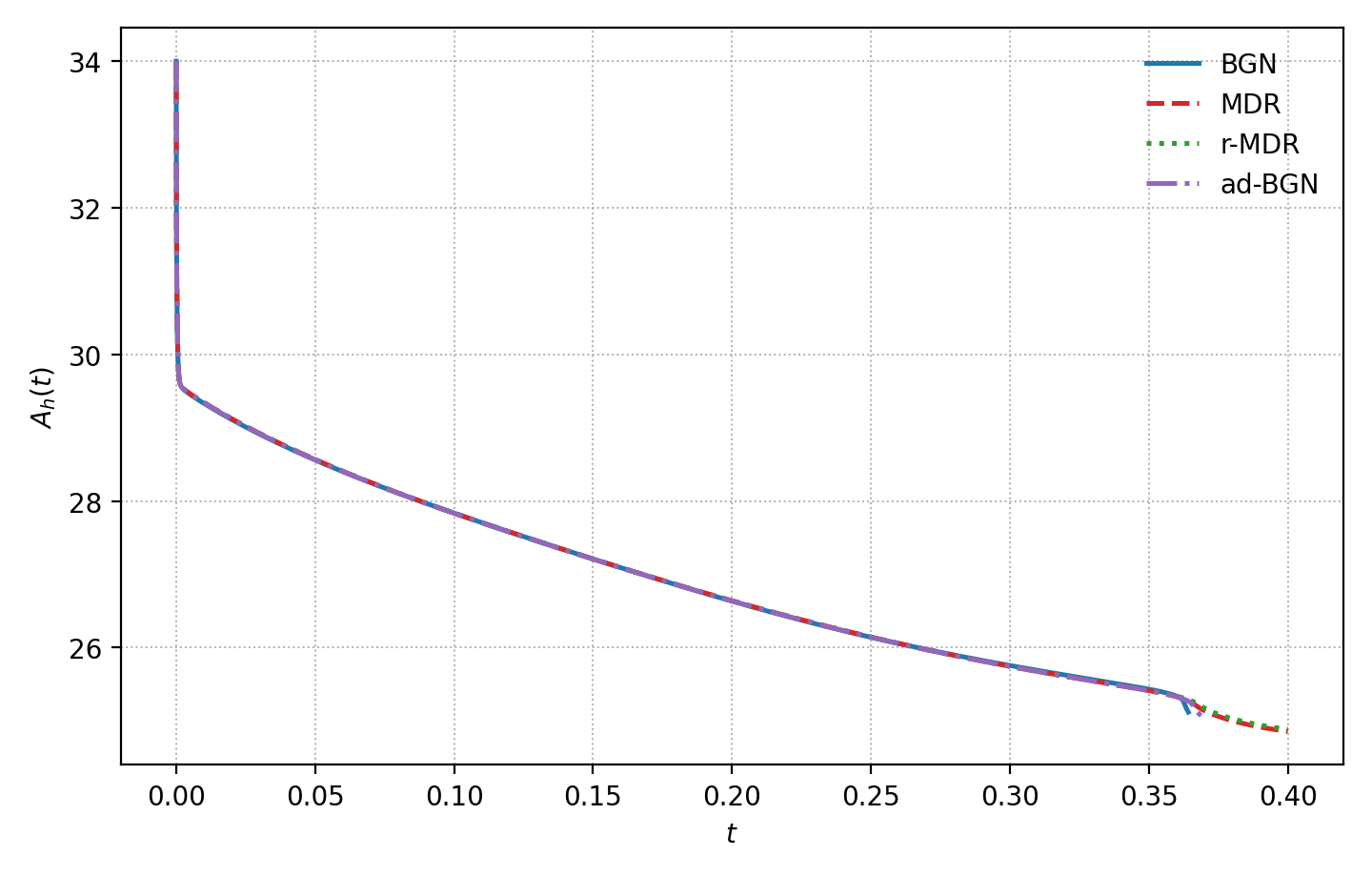
Figure 7: Initial mesh and surface-area decay in the elongated-cuboid test under surface diffusion flow.
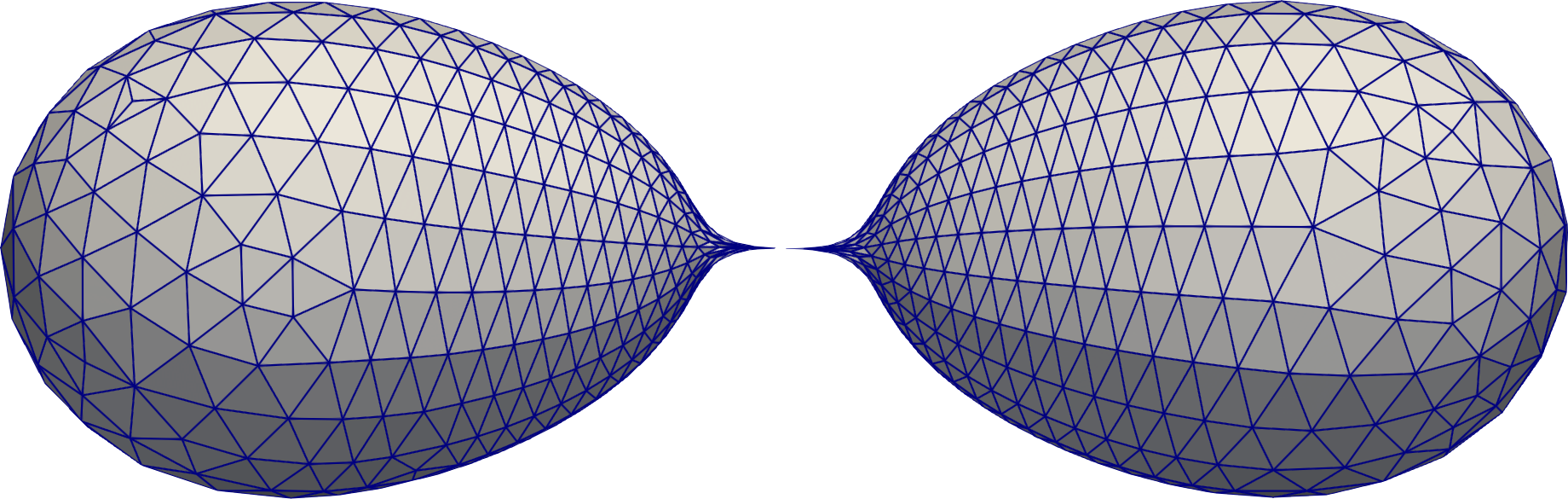
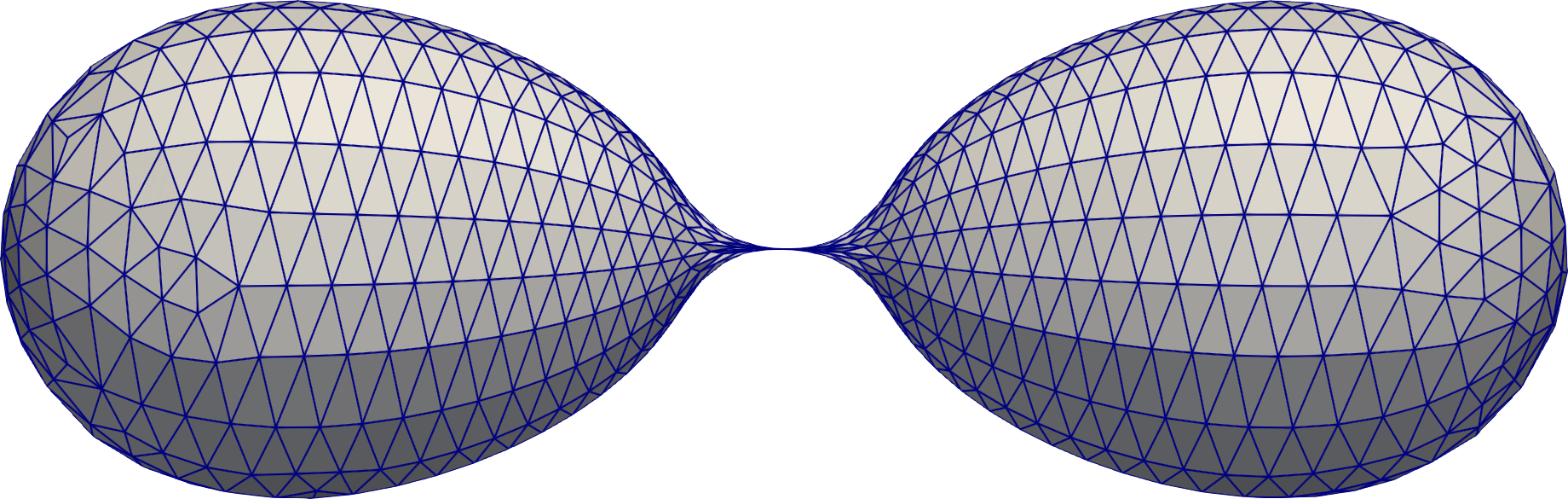
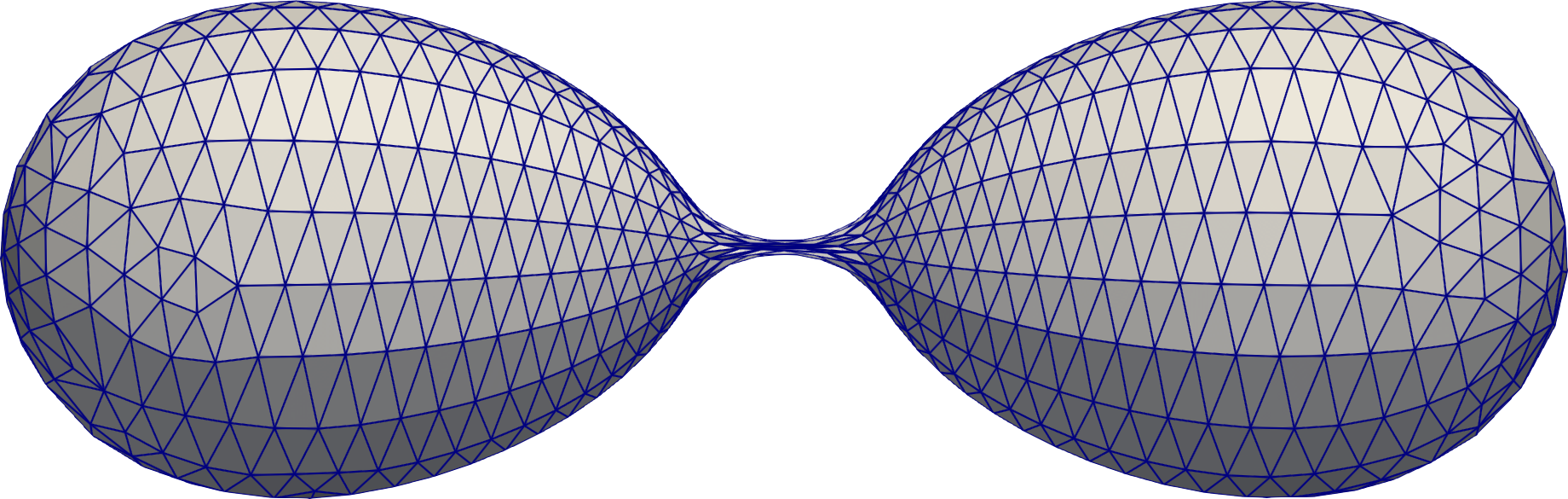
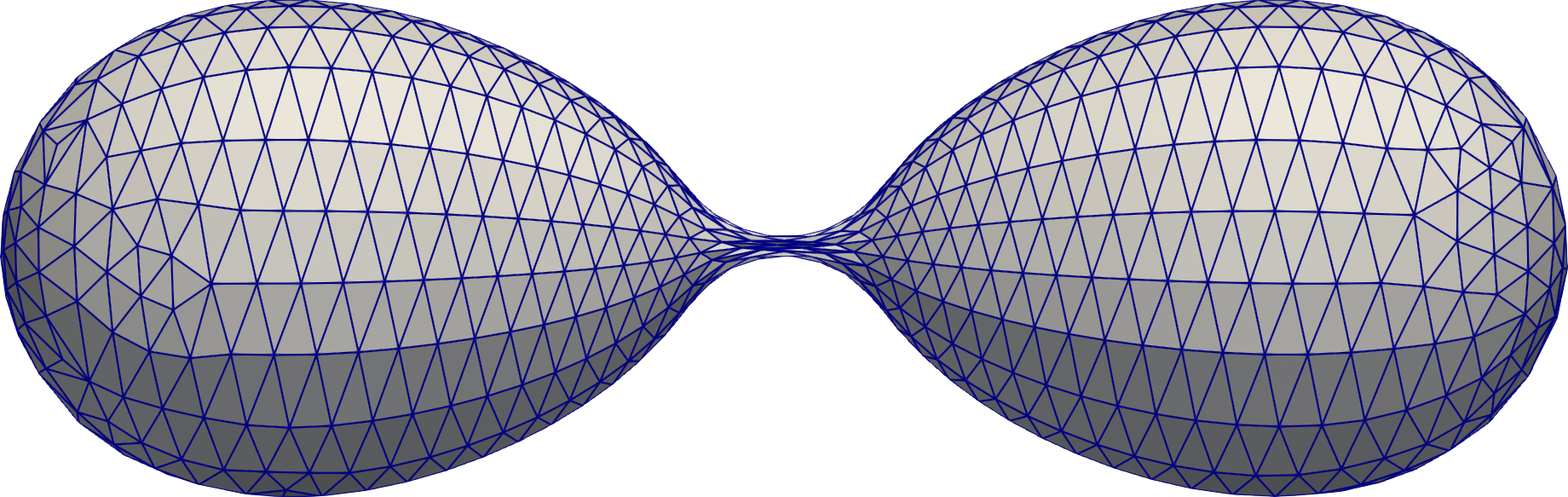
Figure 8: Polyhedral surfaces near the necking regime computed with the coarse time step τ=10−3.
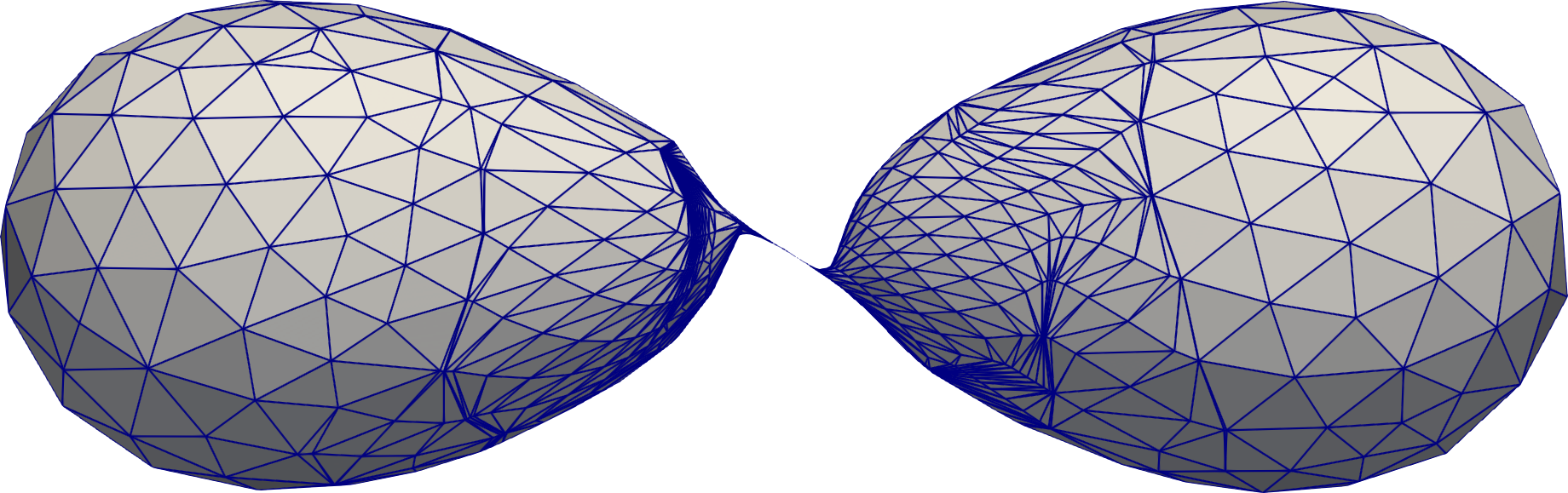
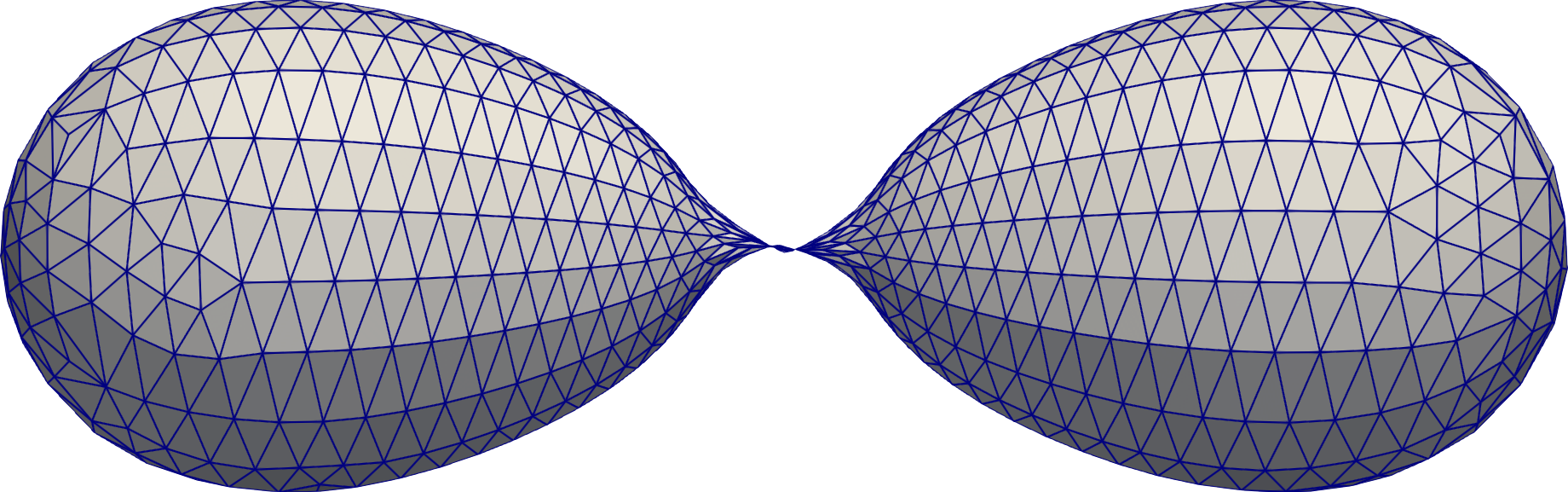
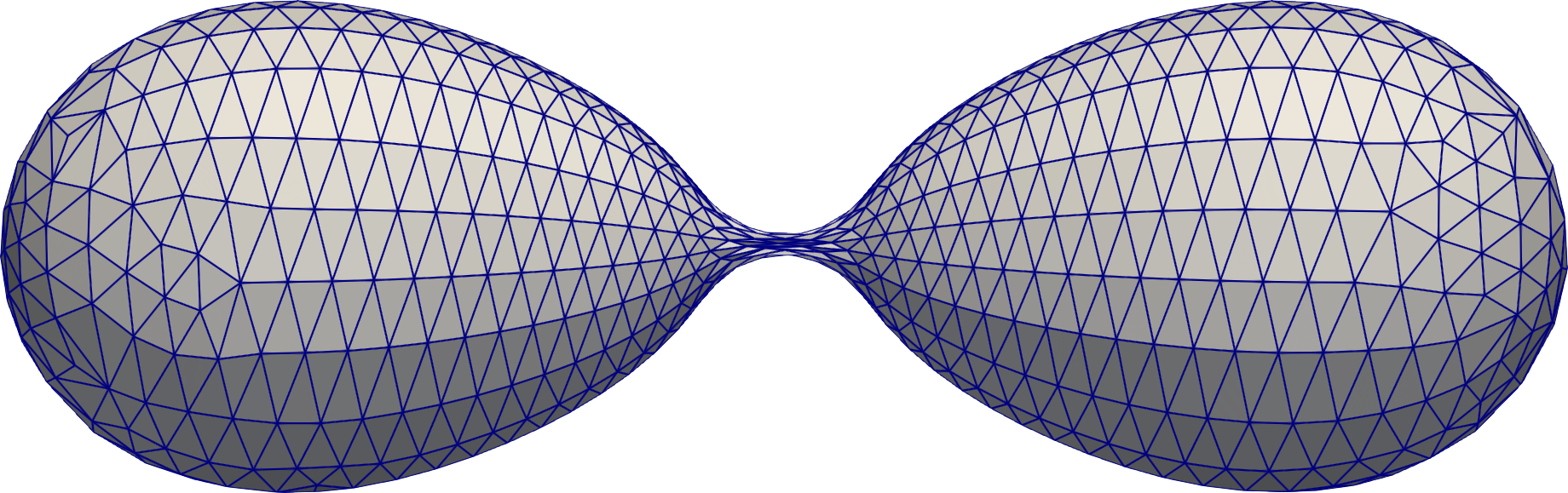
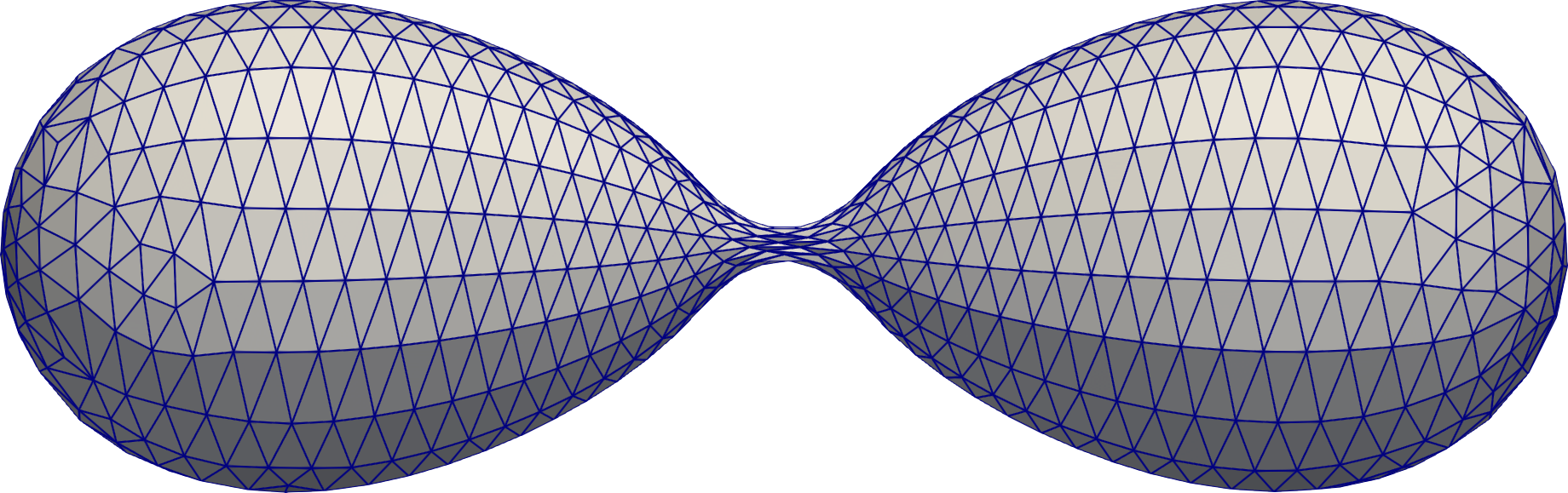
Figure 9: Polyhedral surfaces near the necking regime computed with the fine time step H−1(Γ)0.
Only the admissible schemes persist beyond the failure time of BGN, offering continued evolution with nondegenerate mesh up to the emergence of necking singularities.
Surface Diffusion of a Cross-Shaped Surface
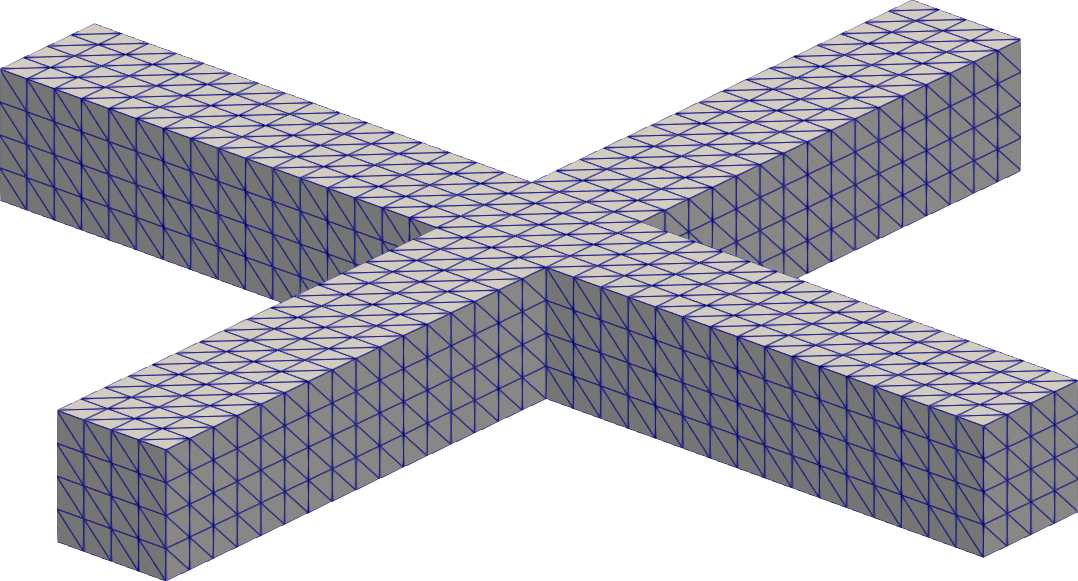
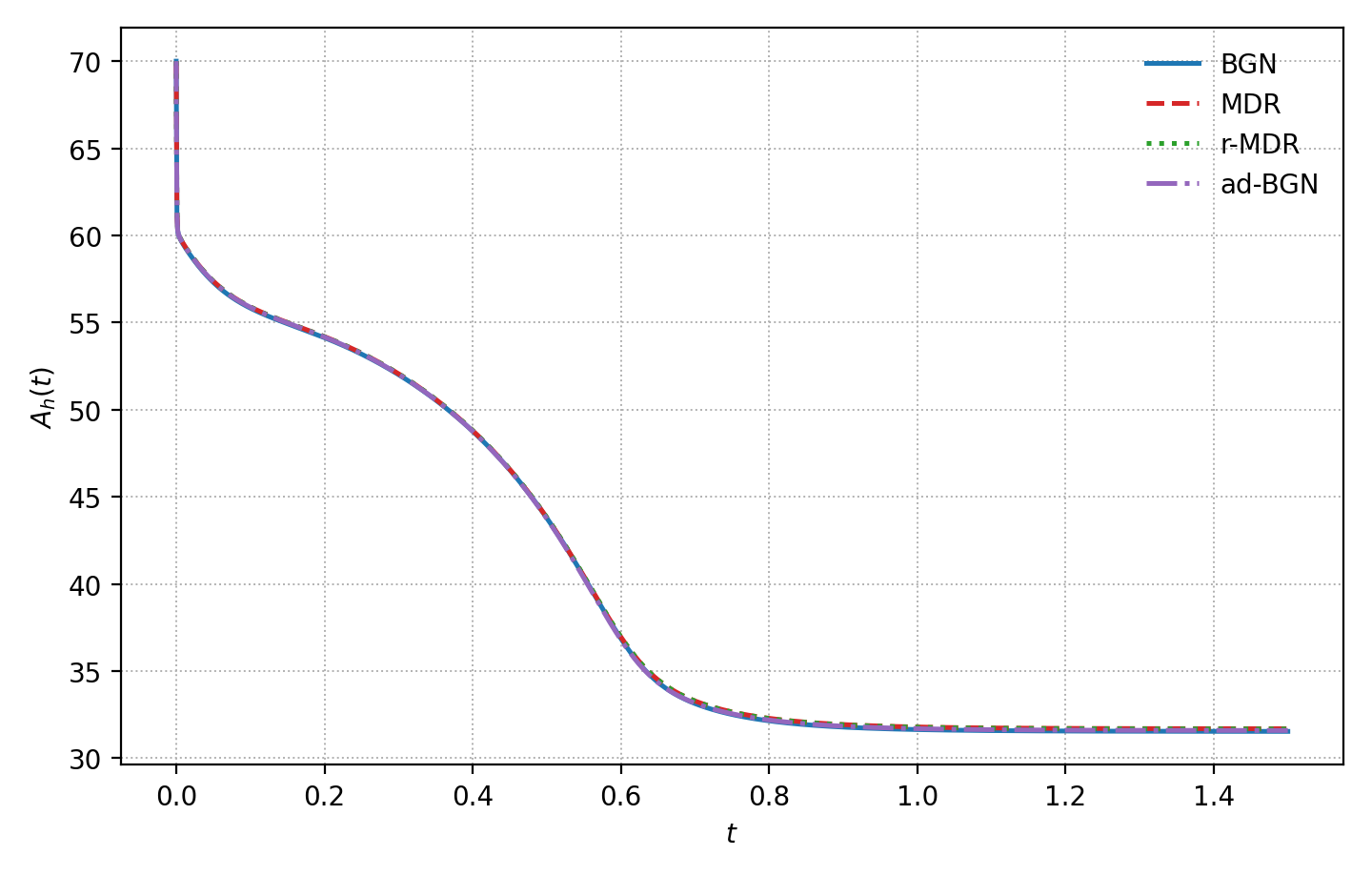
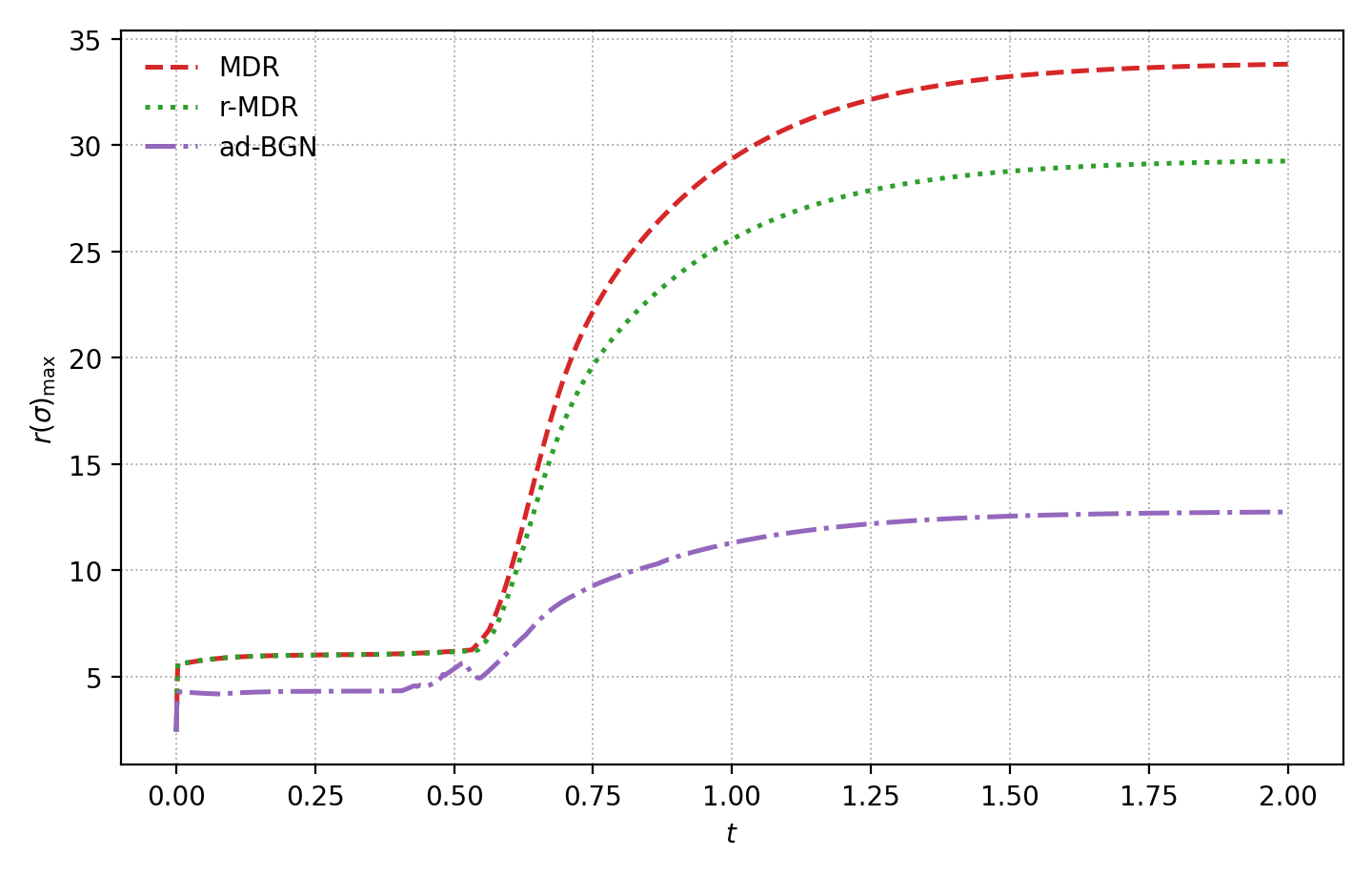
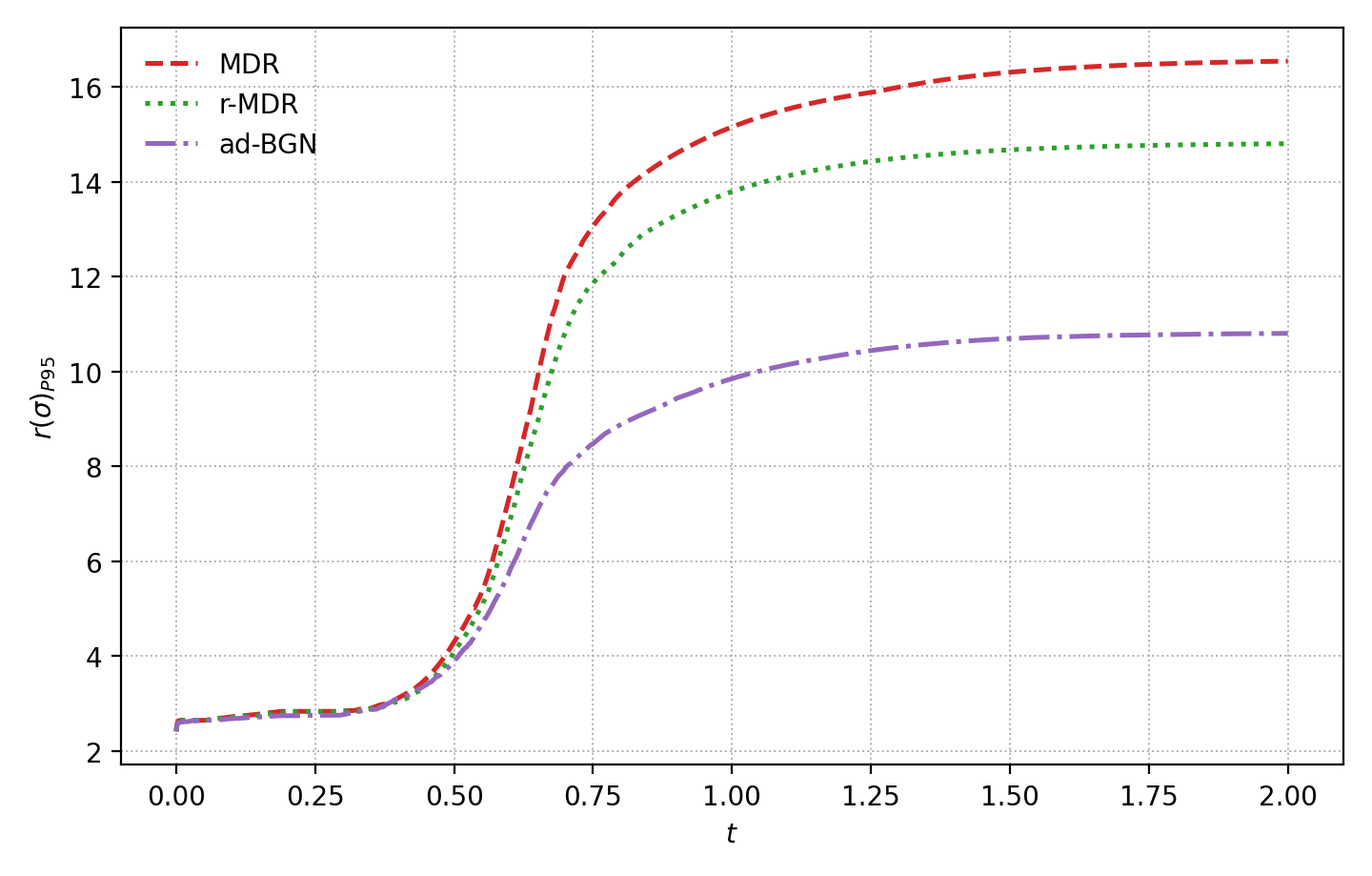
Figure 10: Initial mesh, surface-area decay, H−1(Γ)1, and H−1(Γ)2 in the cross-shaped-surface test.

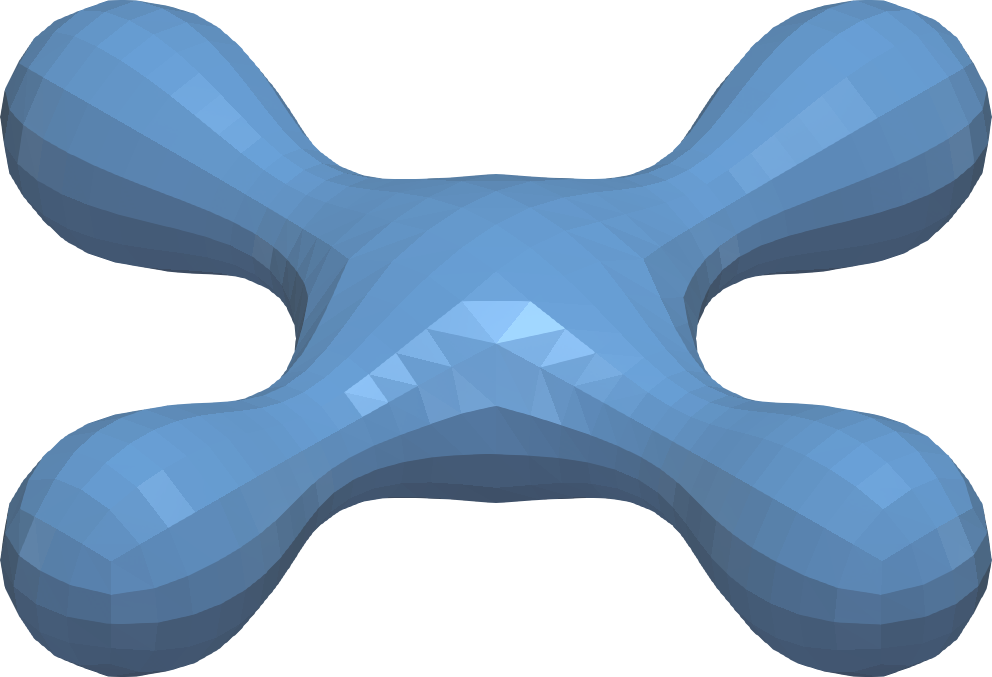


Figure 11: Snapshots in the evolution of the cross-shaped surface.
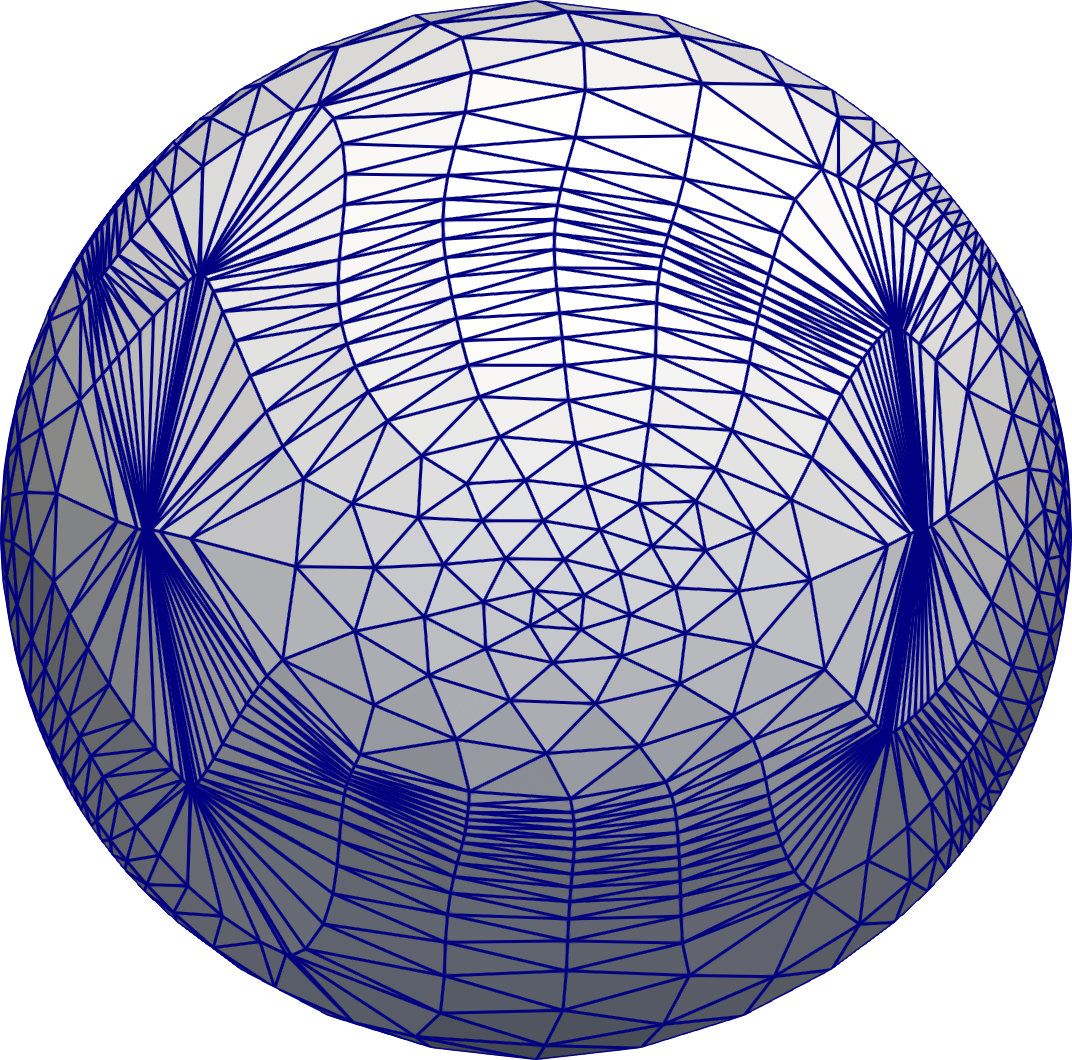
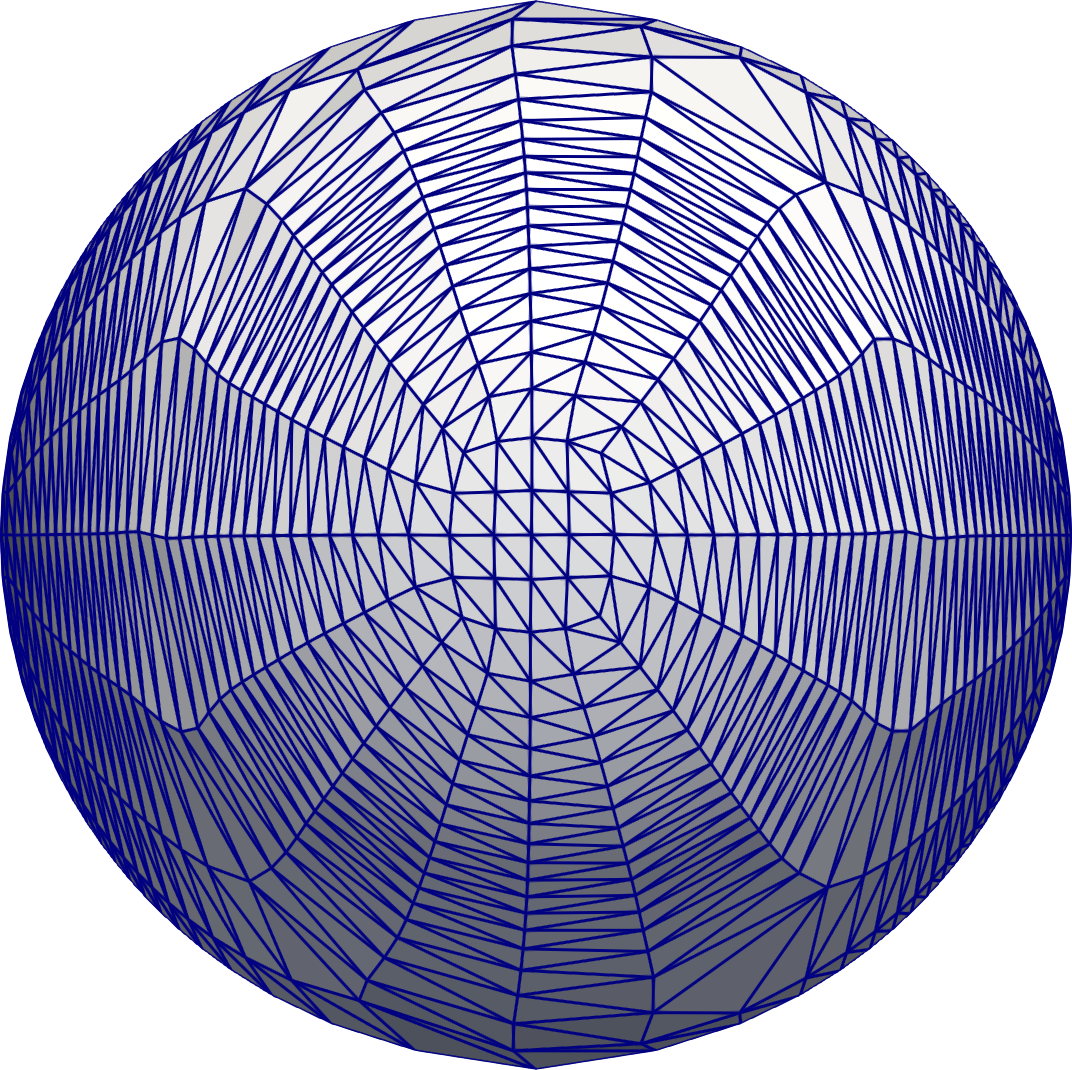
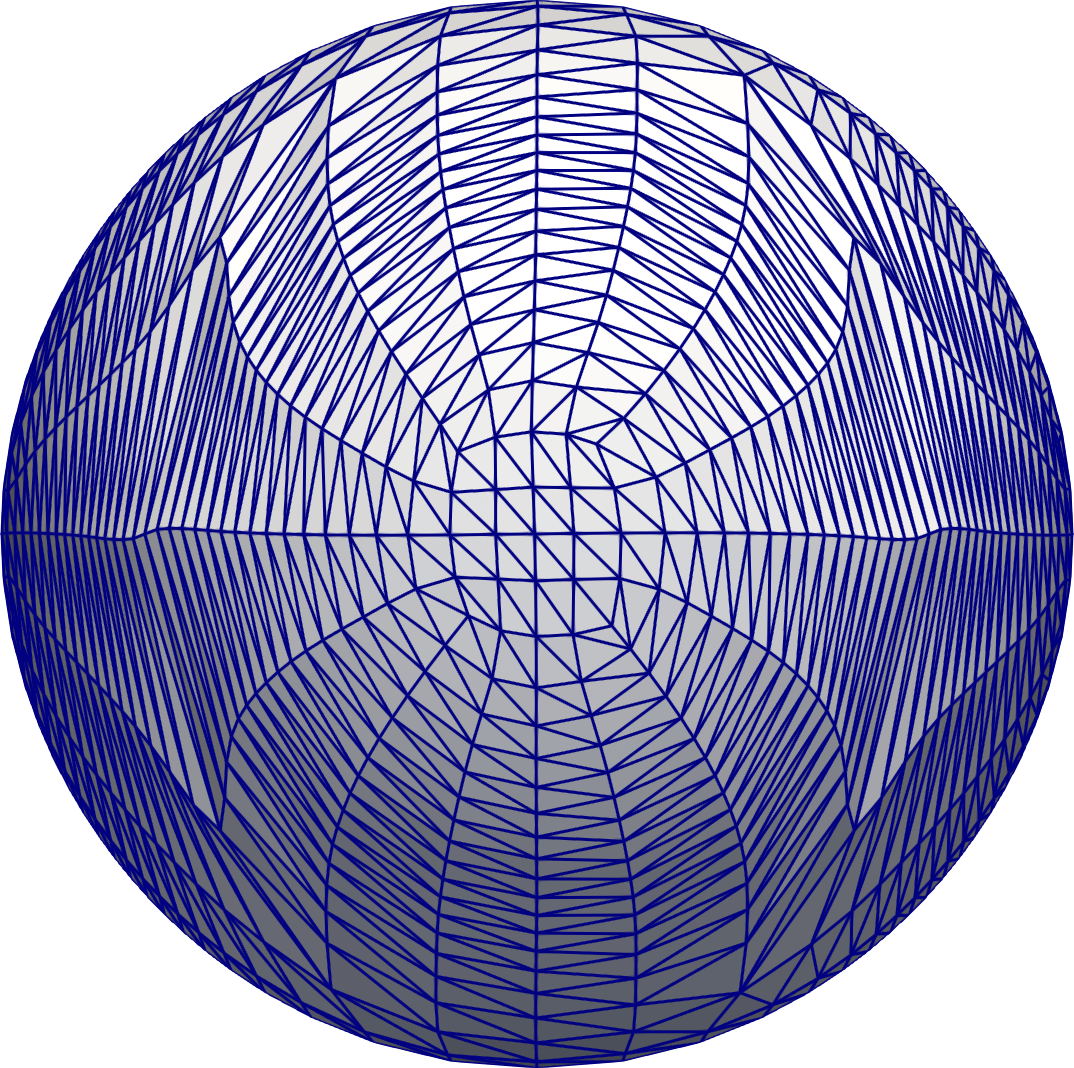
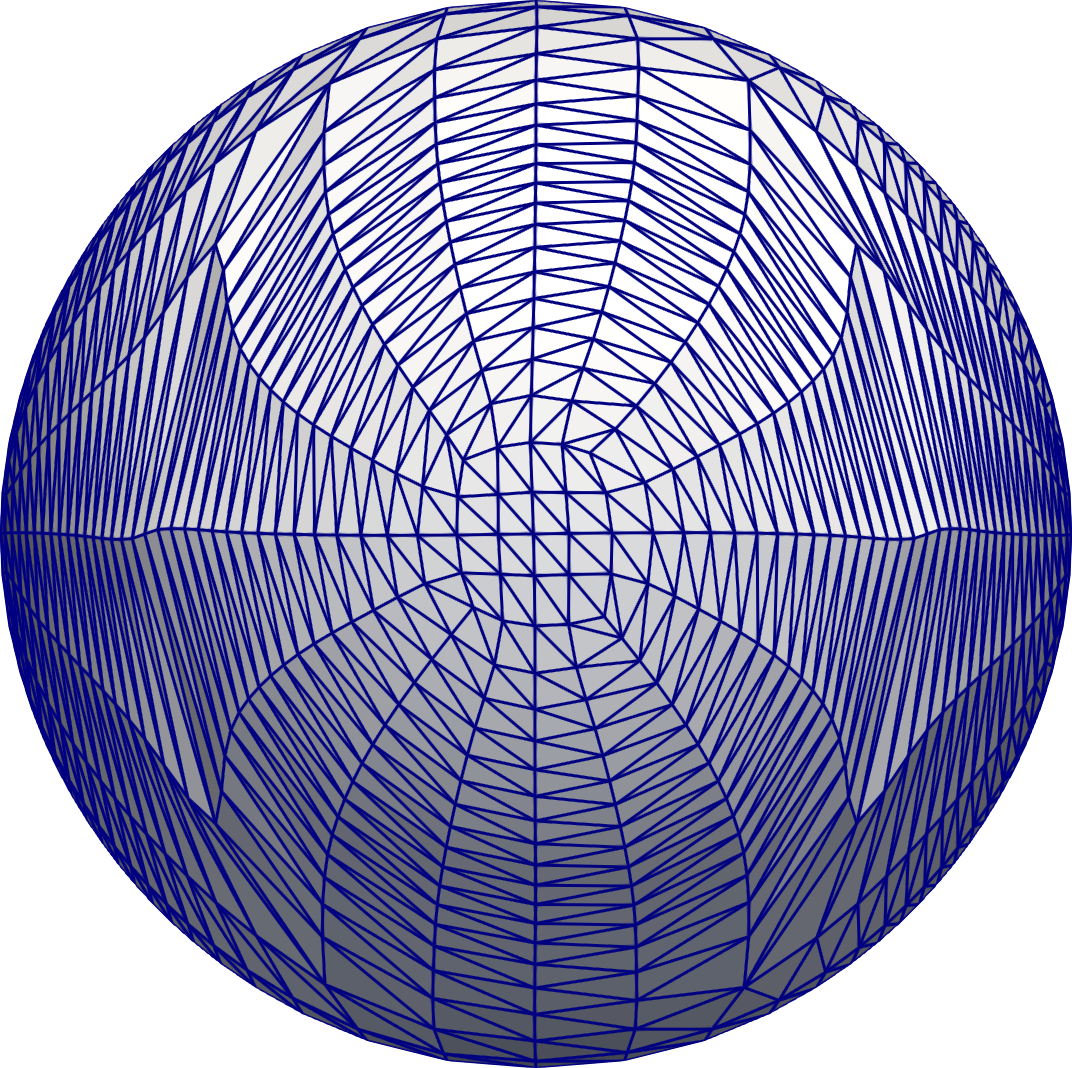
Figure 12: The polyhedral surfaces at H−1(Γ)3 in the cross-shaped surface test with H−1(Γ)4.
Admissible schemes, especially ad-BGN, exhibit superior global mesh quality statistics and regularity at late times compared to BGN, which suffers localized degeneration.
Extensions and Theoretical Implications
The minimizing-movement framework straightforwardly generalizes to:
- Volume-preserving flows by suitable normal modification, while maintaining admissibility and energy stability.
- Anisotropic curvature flows by employing discrete anisotropic Dirichlet energies.
- Higher-order geometric flows, facilitated by the adaptability of the weak constraint machinery.
These extensions are expected to yield robust, energy-stable FEMs for broader classes of geometric PDEs.
Conclusion
The minimizing-movement framework developed here establishes a rigorous, extensible foundation for energy-stable parametric FEMs with admissible tangential motion for geometric interface evolution. Through the separation of normal and tangential velocities—where admissibility is the key structural principle—the framework enables recovery of classical schemes, the design of novel admissible-discrete variants, and systematic enforcement of desirable mesh properties. The comprehensive numerical evidence confirms that admissible tangential motion leads to markedly improved mesh regularity and computational robustness, with unconditional stability and unique solvability across highly nontrivial geometric flows. This paradigm provides fertile ground for advances in discrete geometric PDE methods, including the handling of anisotropic energies and topological transitions in higher dimensions.
Reference: "A minimizing-movement framework for geometric gradient flows with admissible tangential motion" (2606.18177)