- The paper introduces a unified multigrid preconditioning framework for mixed FEEC systems using mass-lumping and transforming smoothers.
- It employs mass-lumping to replace dense mass matrices with diagonal surrogates and transforming smoothers to block-diagonalize systems for efficient relaxation.
- Extensive numerical experiments confirm h-robust convergence and spectral equivalence across various FEEC discretizations, including electromagnetic applications.
Introduction
This work develops a unified multigrid preconditioning framework for mixed, saddle-point systems from finite element exterior calculus (FEEC) discretizations of PDEs on de Rham complexes. The key innovation is the synthesis of two techniques: (1) mass-lumping, which renders all mass matrices explicitly invertible and (2) use of transforming smoothers, which block-diagonalize or lower-triangularize the otherwise indefinite and saddle-point linear systems, yielding diagonal blocks to which efficient relaxation can be applied. Through this approach, robust and scalable iterative solvers are obtained for canonical FEEC discretizations, such as the Hodge-Dirac, Hodge-Laplacian, and magnetostatics equations.
Problem Setting and Mass-Lumping
Structure-preserving FEEC and discrete exterior calculus (DEC) discretizations yield coupled, indefinite systems characterized by constraint and saddle-point structure, commonly seen in electromagnetic applications. Standard relaxation techniques (Gauss-Seidel, Jacobi) are ineffective due to indefiniteness and poor spectral properties of the original operators. The main technical obstacle in applying block-smoothing or transformation techniques is the non-invertibility (or density) of consistent L2 mass matrices, which, in general, are neither diagonal nor sparse.
To circumvent this, the framework proposes mass-lumping: approximate the consistent mass matrix by a diagonal surrogate (using scaled identity, row-sum, or barycentric dual-based constructions), yielding explicit, efficient inverses at the high-order FEEC level. Theoretical results establish h-uniform norm equivalence assumptions under which the mass-lumped and original FEEC norms are spectrally equivalent, and that stability, inf-sup, and Poincaré inequalities carry over to the mass-lumped system. This justifies the use of multigrid tailored to mass-lumped operators as preconditioners for the consistent FEEC systems.
Transforming smoothers are employed by composing the original operator on the left and right with invertible transformations, designed to yield a block lower-triangular (or block diagonal) structure with positive definite diagonal blocks. For instance, in the H(curl) mixed Hodge-Laplacian, a transformation analogous to block Gaussian elimination produces a system amenable to classical multigrid relaxation.
After mass-lumping, these transformations can be applied explicitly at the discrete level, as the inversion of mass matrices becomes cheap. This procedure is formalized for the Hodge-Dirac, mixed Hodge-Laplacian, and magnetostatics problems, with appropriate construction of transformations and smoothing iterations, detailed in Table~2 of the original paper.
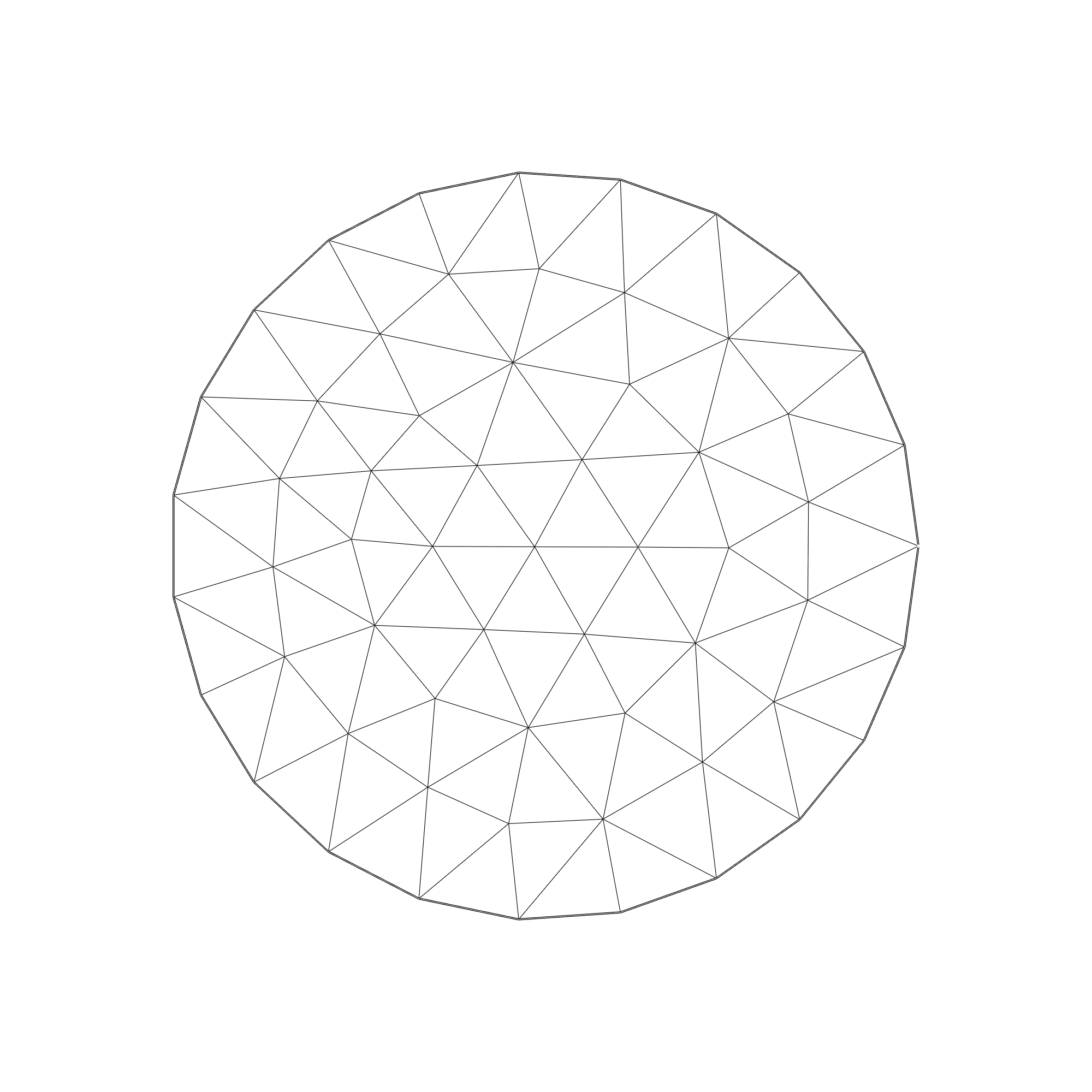
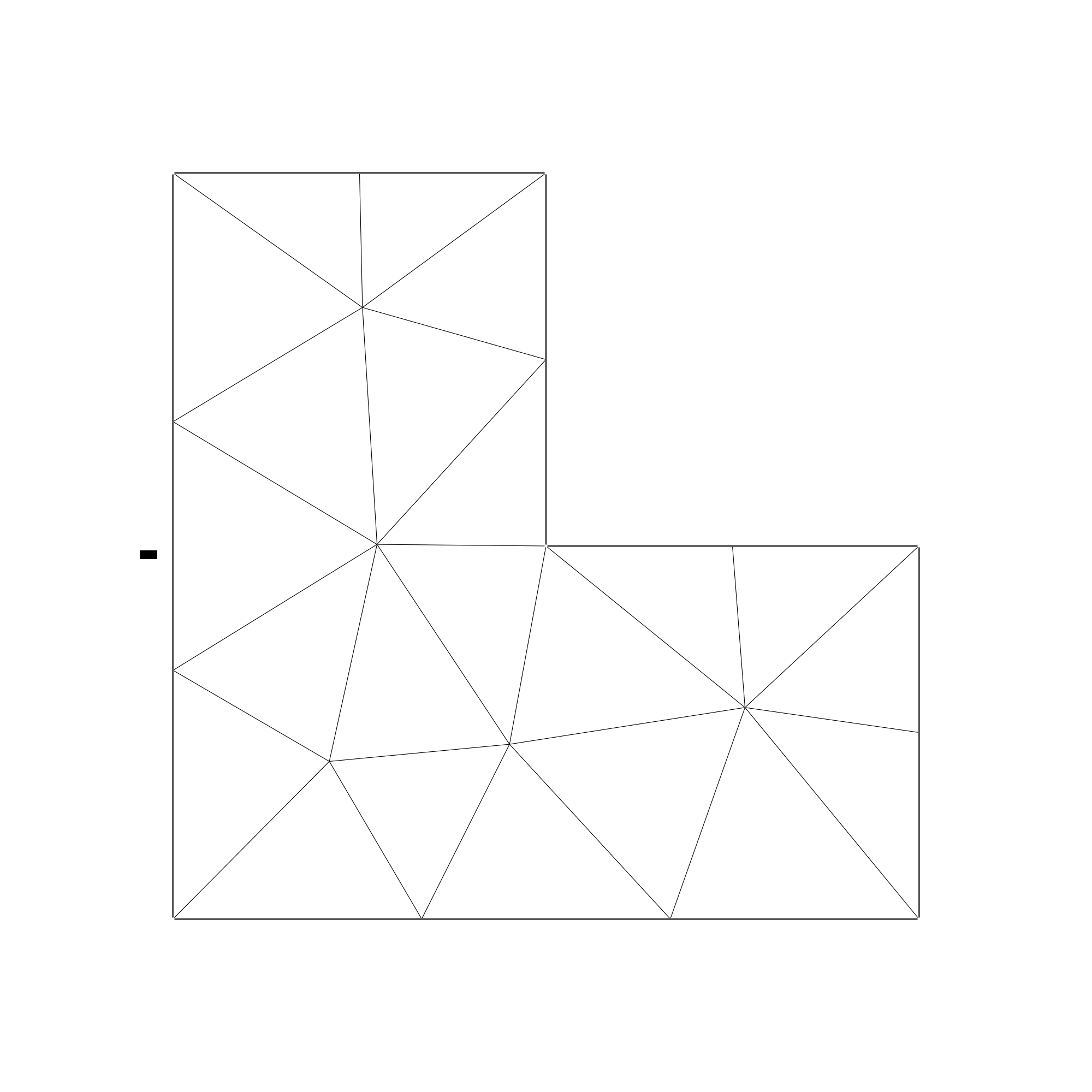
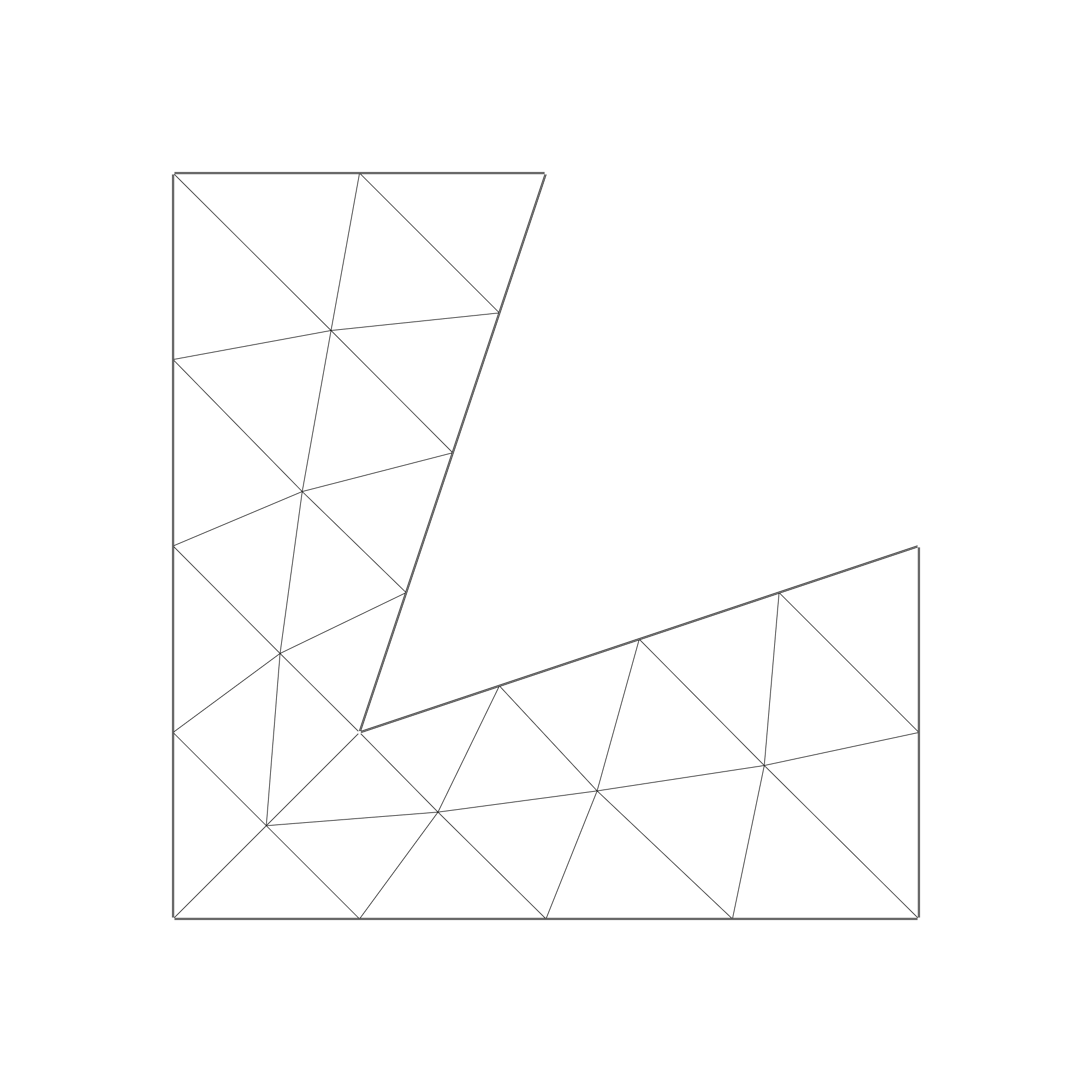
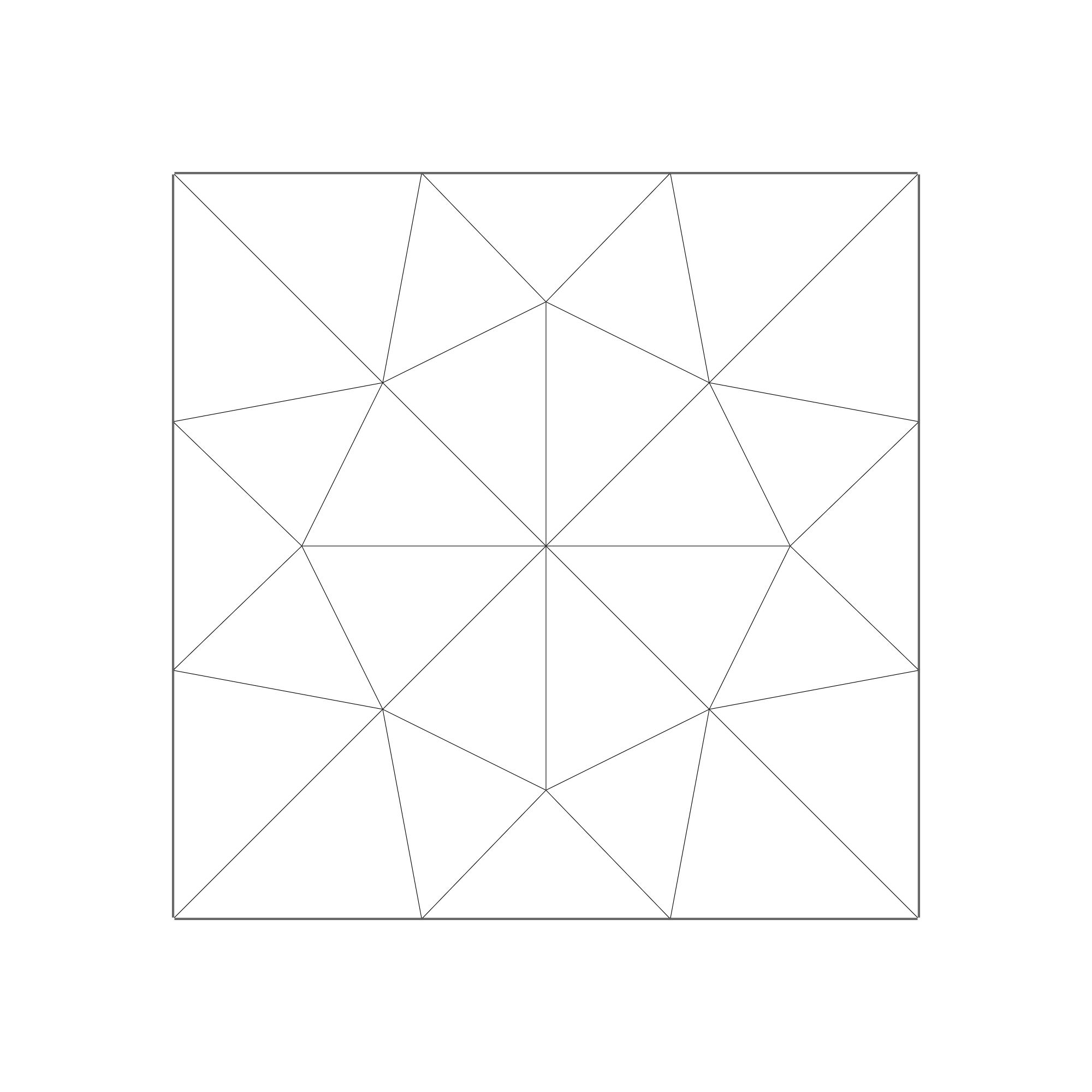
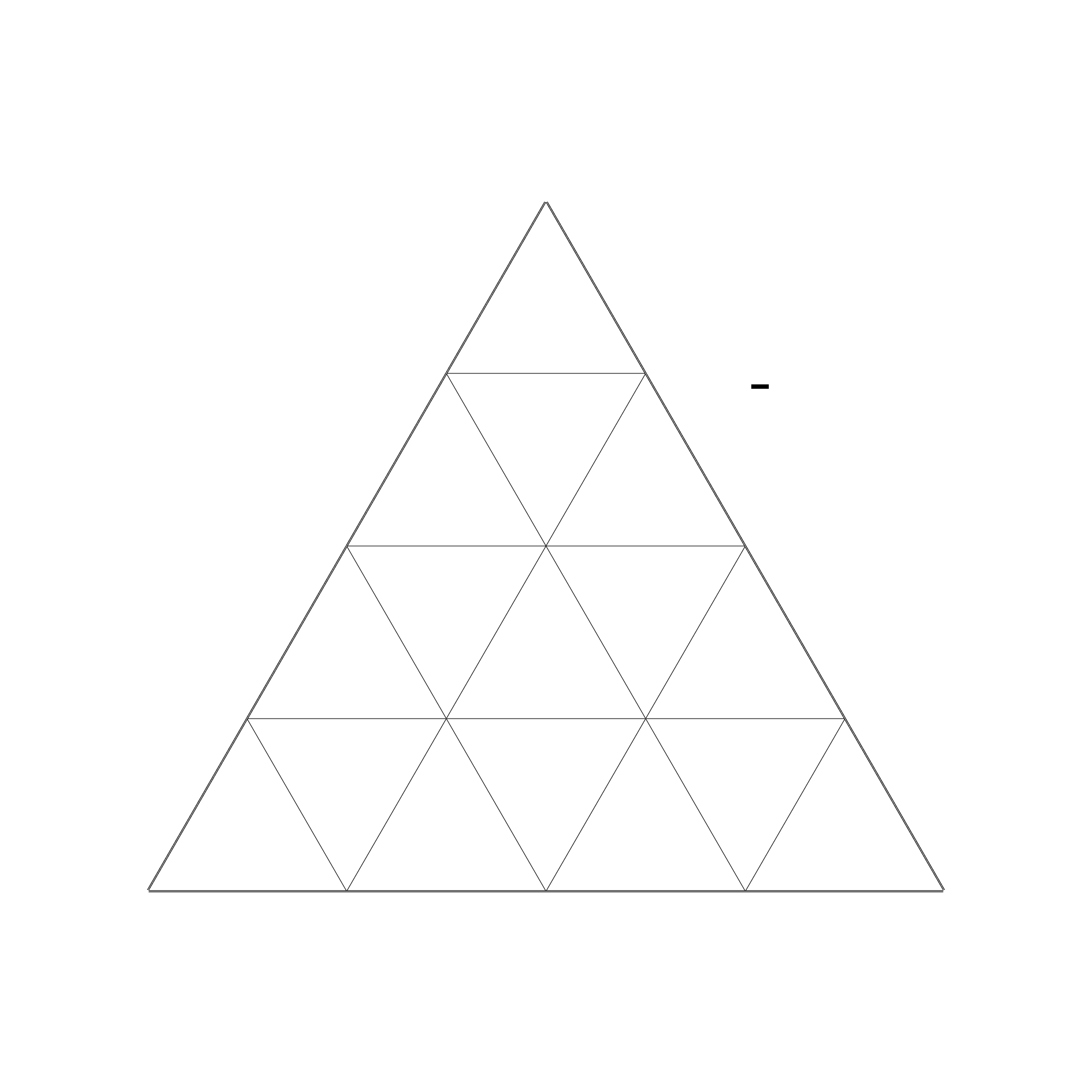
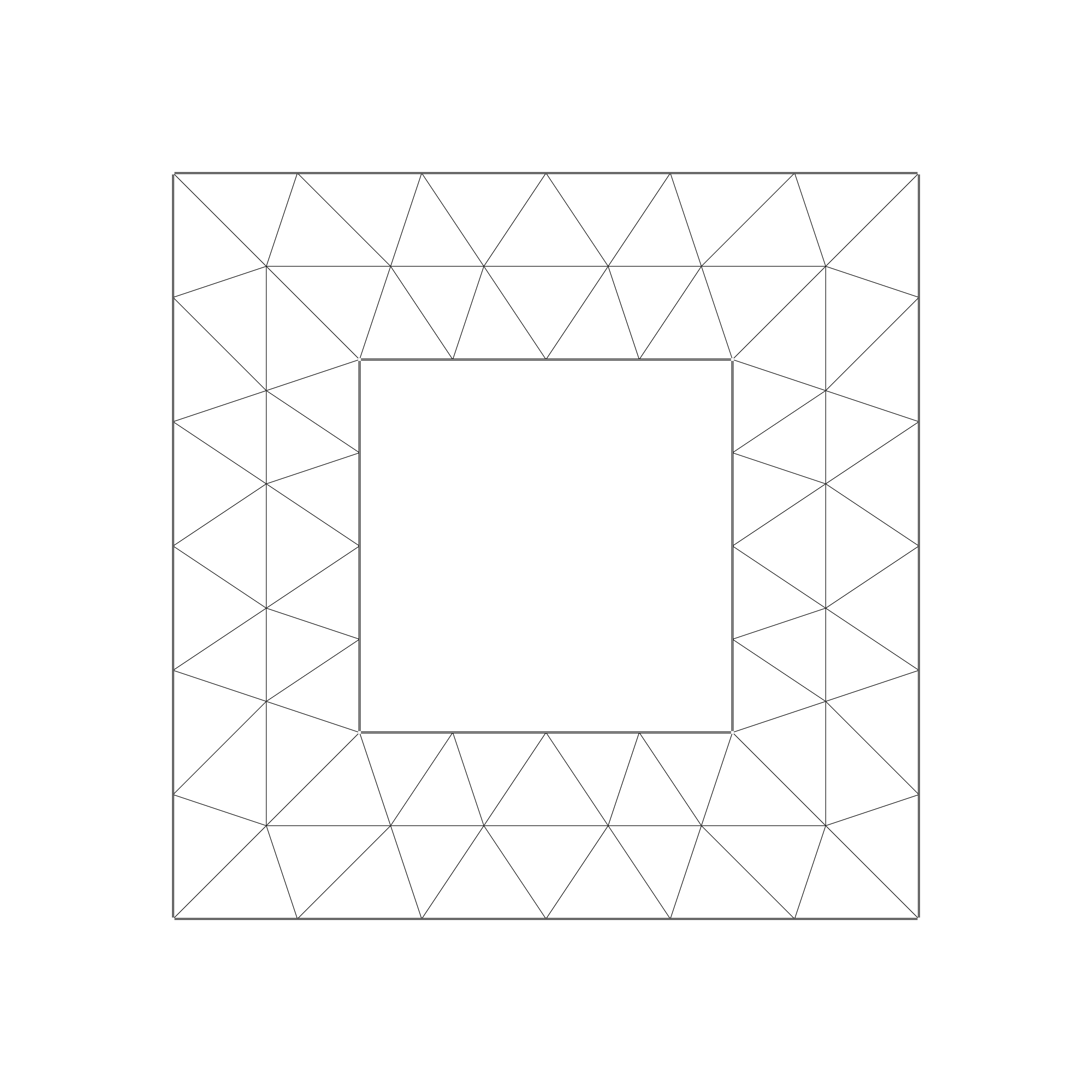
Figure 1: The "circle" mesh—one canonical domain for 2D numerical experiments.
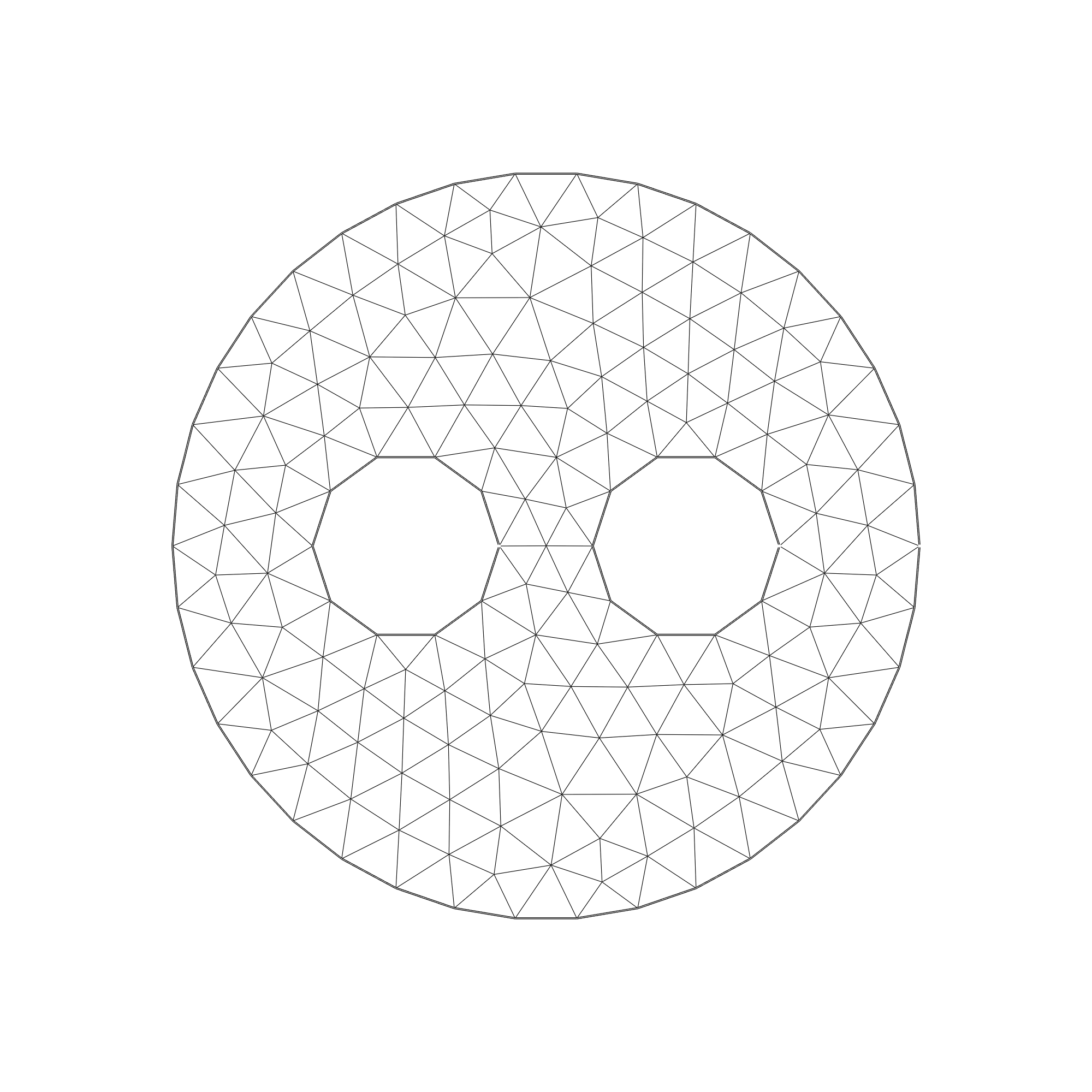
Figure 2: The "two_holes" mesh—an example of a nontrivial 2D topology exhibiting nontrivial harmonic form behavior.
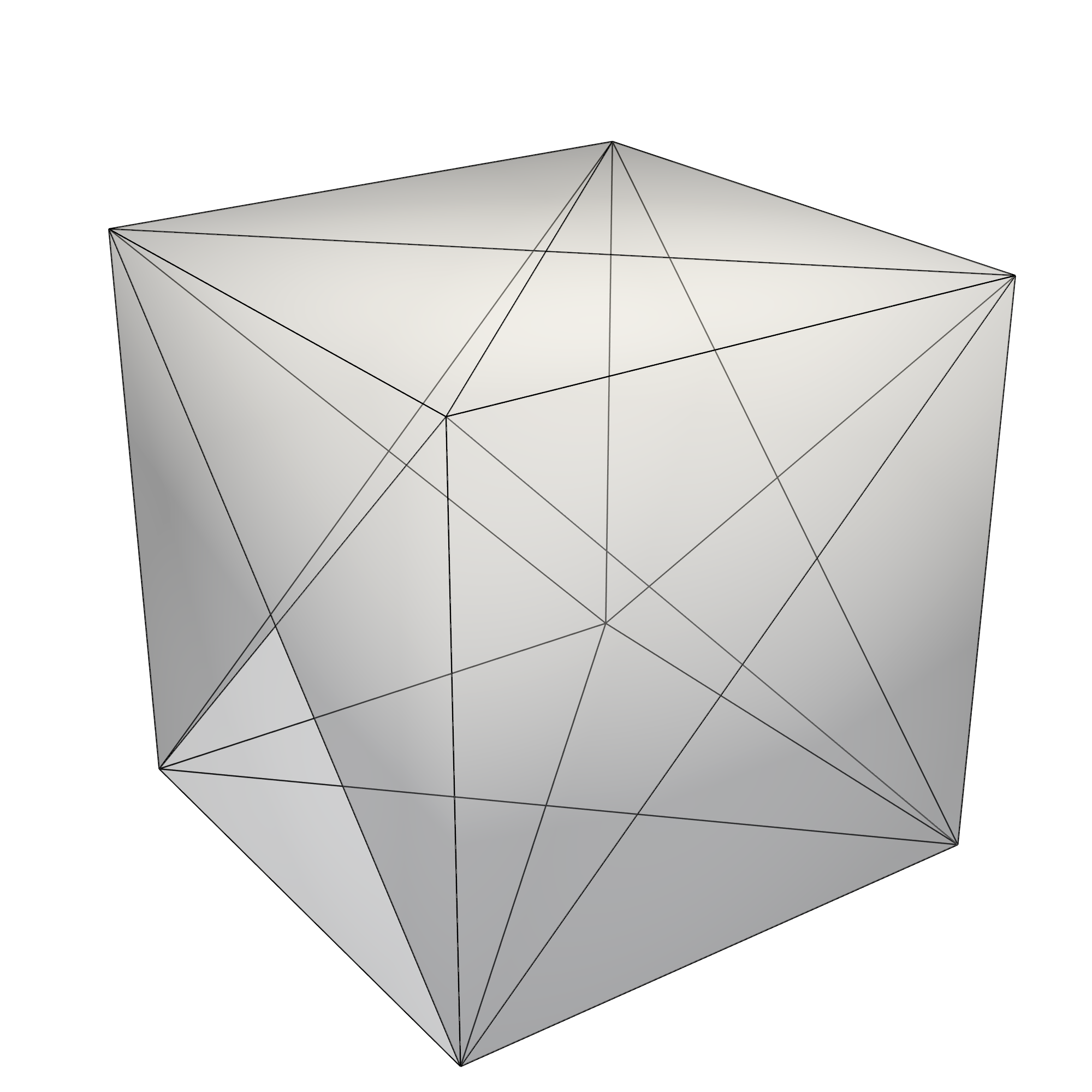
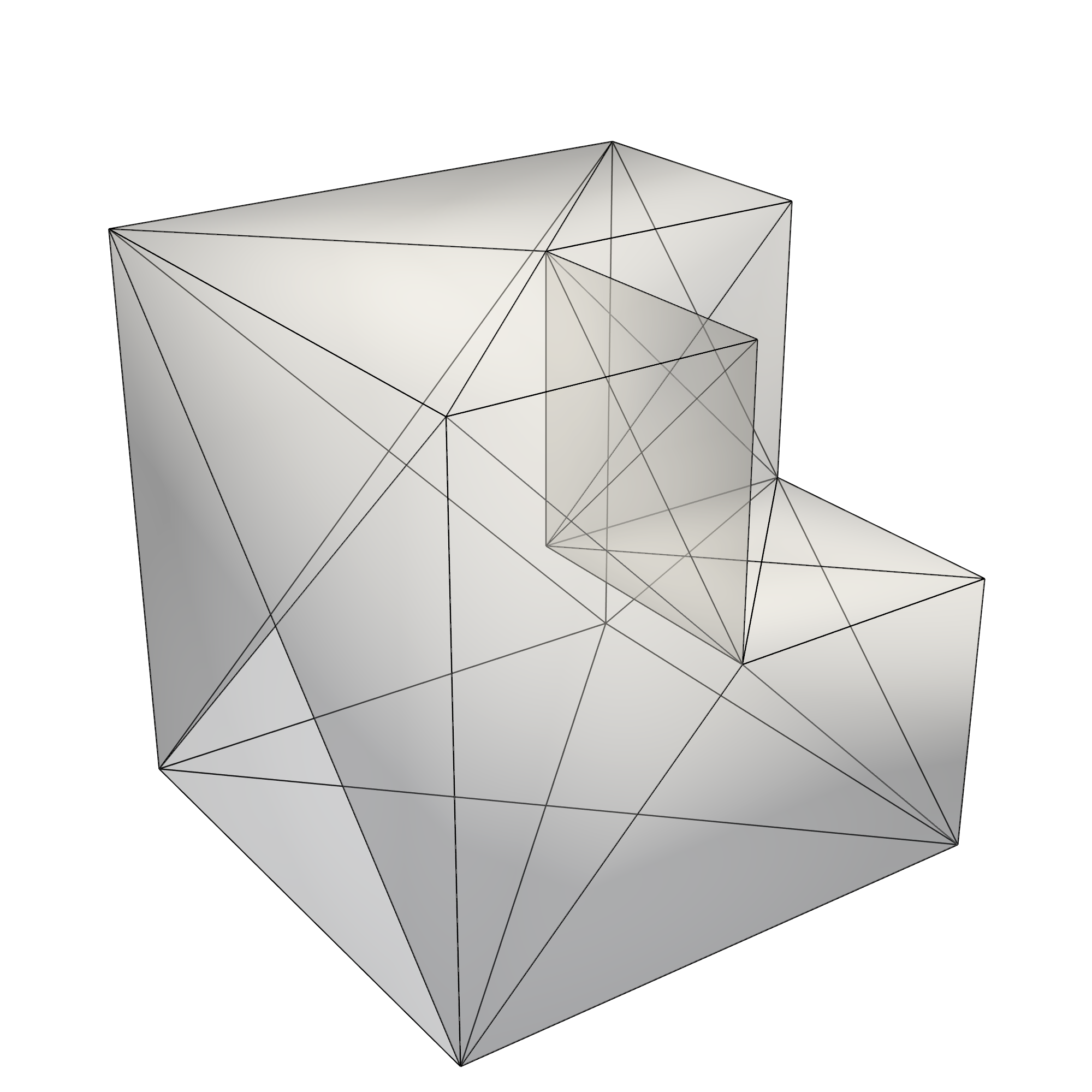
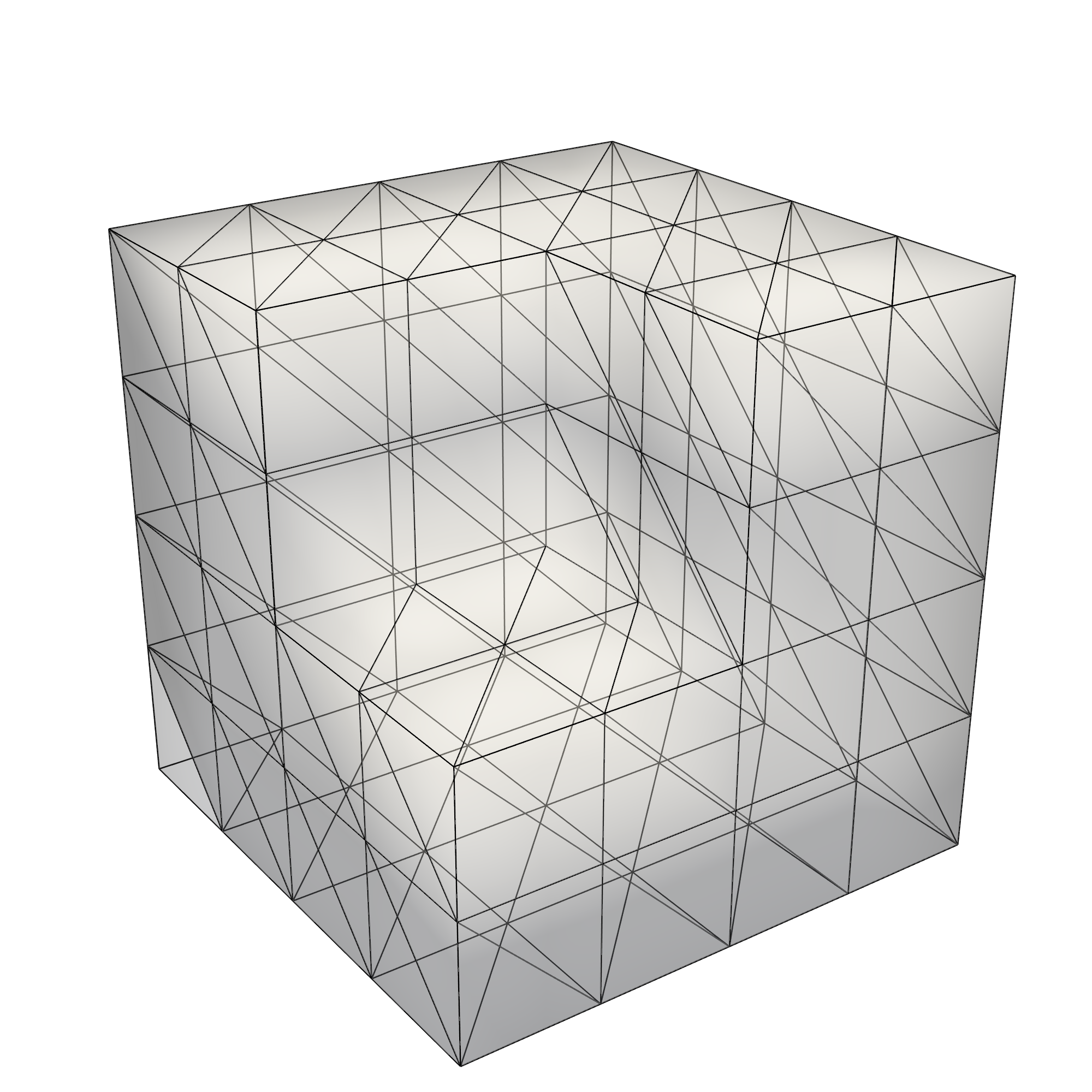
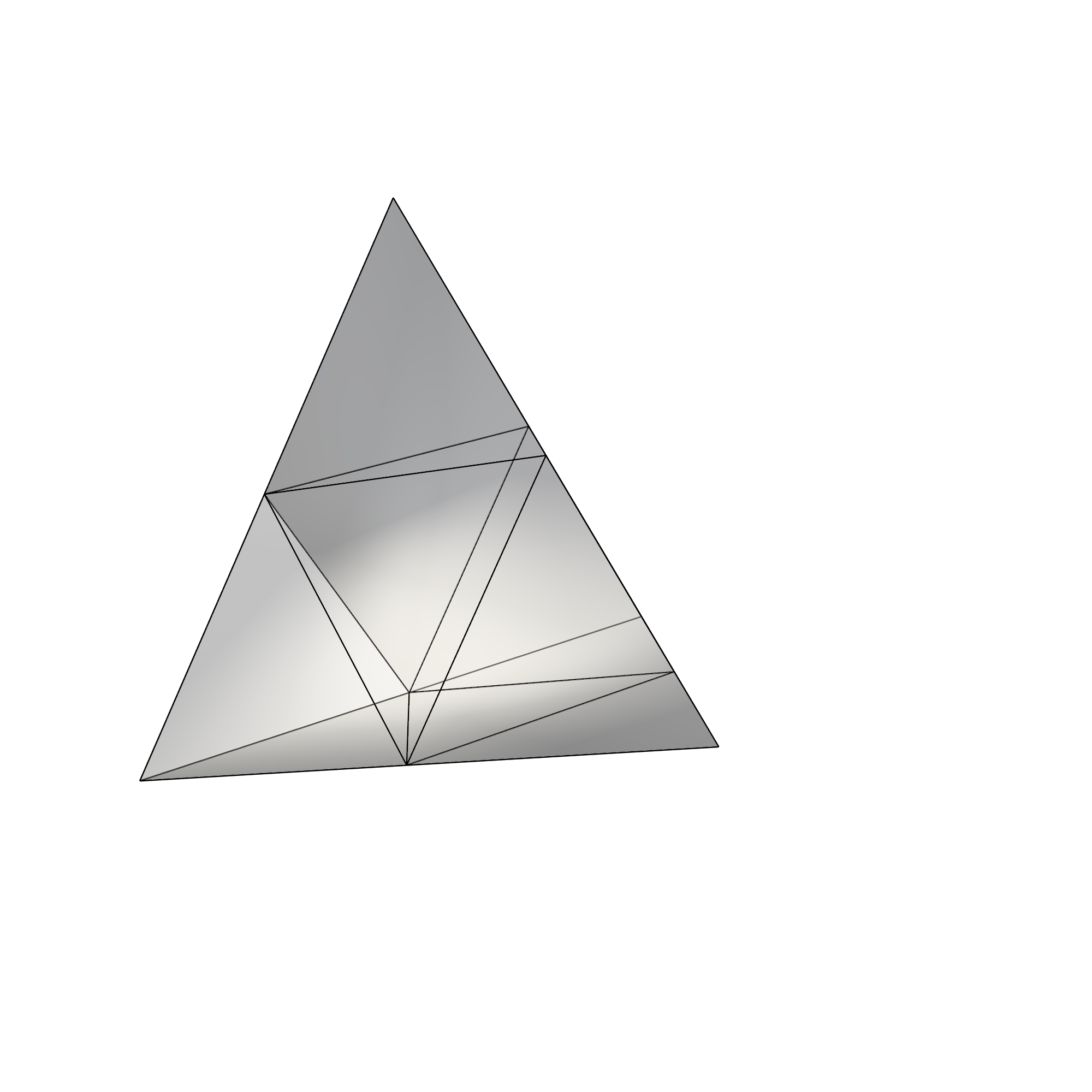
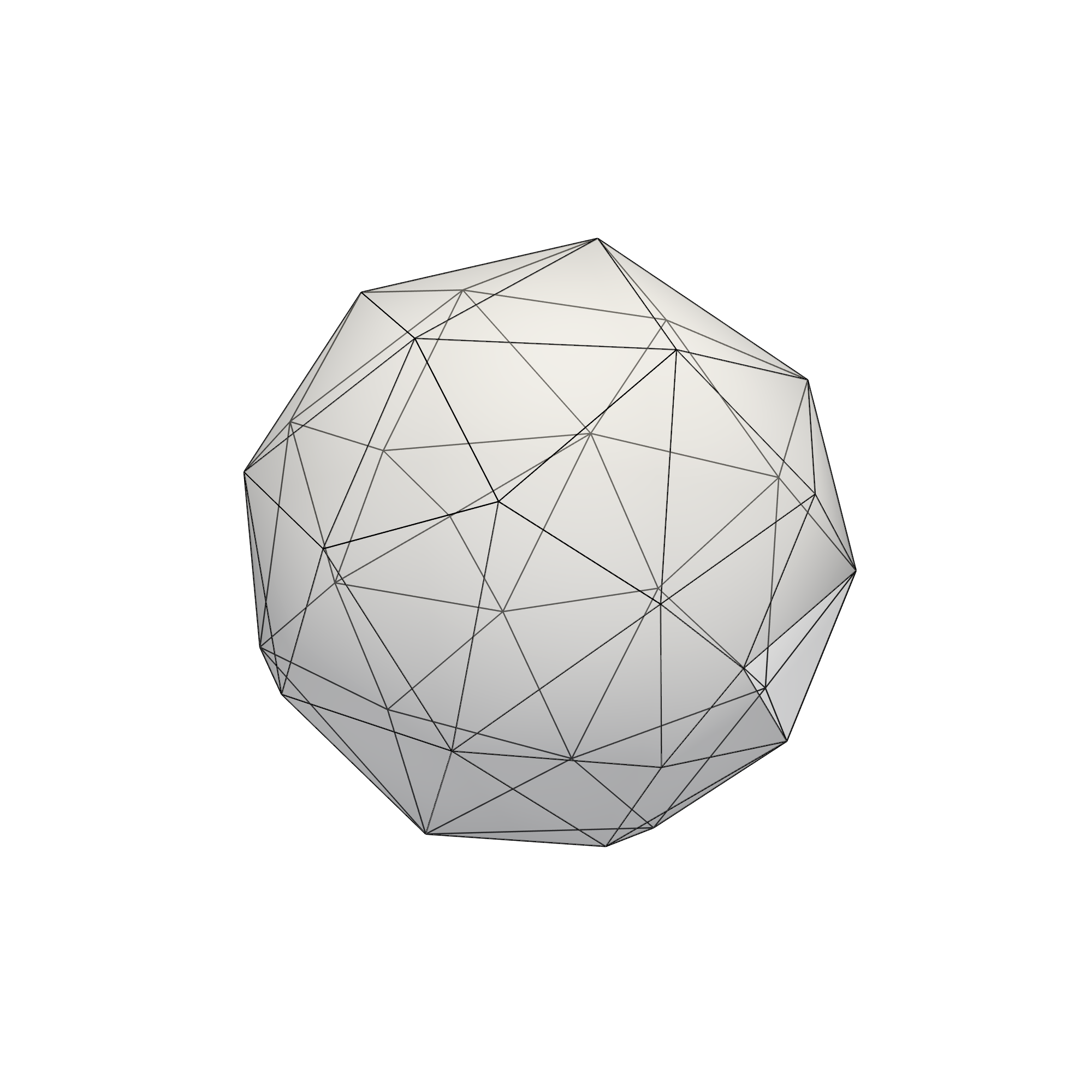
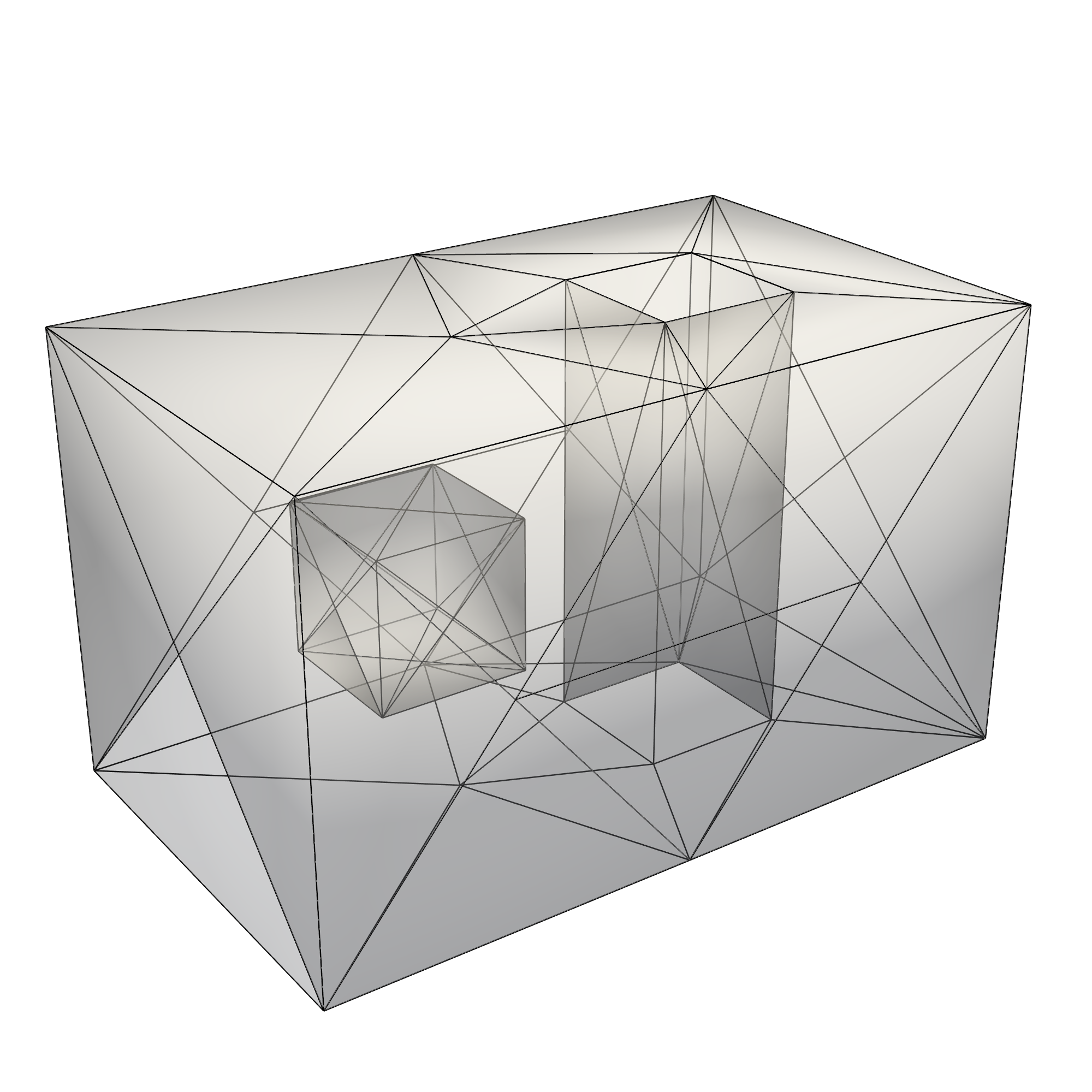
Figure 3: The "cube" mesh serving as the standard domain for 3D experiments.
Multigrid Hierarchy, Transfer, and Algorithm Details
The preconditioning strategy considers a full multilevel hierarchy of FEEC-compatible (nested) mesh refinements. Prolongation and restriction are carefully designed so as to respect both the primal and dual FEEC structures and the mass-lumped norm. Error and residual transfer operators are expressed using explicit Riesz isomorphisms for the various discretization levels.
On each level, the smoother is applied via the block-transformed operator; coarse-grid correction is formulated using compatible restriction, and the outer FEEC system uses GMRES with the mass-lumped multigrid inverse as right-preconditioner. The algorithm is designed for both V- and W-cycles; with the flexibility to use classical, distributive, or ILU-based smoothers on the diagonal blocks. Detailed pseudocode and full recursive error propagator analysis are provided.
The framework rigorously establishes h-independent inf-sup and norm equivalence estimates between the FEEC and the mass-lumped systems for all operator settings considered. Importantly, the results guarantee that, except for a topologically determined number of harmonic forms (coming from the kernel of the de Rham complex), the mass-lumped and FEEC operator spectra are equivalent. Therefore, multigrid designed for the mass-lumped operator yields uniformly efficient preconditioning for the (possibly inexact or inconsistent) FEEC discretization, up to the harmonic kernel.
In domains with nontrivial topology (e.g., meshes with holes), the resulting eigenvalue distribution reflects the expected dimension of the space of harmonic forms.
Numerical Experiments
Comprehensive experiments are conducted in 2D and 3D on diverse domains: simply-connected (e.g., circle, cube) and with nontrivial topology (e.g., two_holes), showing that the preconditioned iterative methods exhibit h-robust convergence in all cases, except for the harmonic modes where stagnation is theoretically expected.
- The number of GMRES iterations required to reduce the residual norm is insensitive to mesh grading and problem size.
- All tested mass-lumping strategies (scaled identity, row-sum, and barycentric duals) yield near-identical convergence rates.
- V-cycles and W-cycles show the expected behaviors; W-cycles require fewer iterations, as seen in the spectral radii of the corresponding error propagation operators.
- The methods are robust for both Hodge-Dirac and mixed Hodge-Laplacian problems, as well as for Maxwell-type saddle-point systems.
- For the magnetostatics problem, post-smoothing is found to be particularly critical for robust convergence.
Implications and Future Directions
This work demonstrates that algebraically-structured preconditioning (via explicit block transformation and mass-lumping) can render challenging FEEC/DEC saddle-point systems amenable to scalable solution with standard iterative methods, provided that the diagonal blocks after transformation are positive definite and that operator-norm equivalence is established. The framework leverages both the geometric and algebraic structure intrinsic to FEEC, avoids assembly of dense Schur complements, and works in both low and high-dimension, or with complex mesh topology.
Practical applications include large-scale simulations in computational electromagnetics, magnetostatics, and problems where spectral accuracy, stability, and robustness to mesh/topology are critical.
Open research avenues include:
- Extension to systems with coefficient jumps and variable material laws.
- Application to more complex mixed systems (e.g., Stokes equations).
- Development of an h-independent, rigorous convergence theory for the preconditioned GMRES solver.
- Incorporation of adaptivity in both the mesh hierarchy and smoother selection.
Conclusion
This work introduces a general, algorithmically efficient multigrid preconditioning paradigm for FEEC discretizations, combining mass-lumping and transformation-based smoothers. The resulting preconditioner enables robust, h-independent iterative solution for a broad class of mixed and saddle-point PDEs arising in numerical exterior calculus, with full compatibility for complex topologies and high-dimensional problems. The theoretical analysis and extensive numerics substantiate the spectral equivalence and practical efficiency of the method, providing a strong foundation for further developments in both numerical PDEs and scientific computing (2606.17934).

