- The paper introduces Apollo, a quantum-driven neuromorphic processor that uses p-qubits with independent quantum entropy to mimic quantum annealing dynamics without cryogenic constraints.
- It details a scalable architecture with tiled p-qubits in 16nm CMOS, achieving <1% KL divergence in stochastic sampling and ultra-low energy (~0.63 fJ per flip) performance.
- The device outperforms conventional superconducting quantum annealers by reaching lower ground-state energies in significantly shorter annealing times while supporting diverse applications in optimization and generative modeling.
Quantum-Driven Neuromorphic Computing for Million-Qubit-Scale Workloads: An Expert Overview
Introduction and Motivation
The paper "Quantum-Driven Neuromorphic Computing for Million-Qubit-Scale Workloads" (2606.12968) presents the Apollo architecture, a scalable, room-temperature, quantum-entropy-driven neuromorphic processor targeting high-dimensional, energy-based combinatorial optimization and generative modeling workloads. The work positions itself as an experimental realization of a probabilistic hardware substrate, capable of matching the dissipative quantum annealing dynamics and quantum-critical scaling observed in superconducting systems, but without the cryogenic or coherence constraints inherent to physical qubit systems.
The core premise is that asynchronous, continuous-time, physically stochastic computation using p-qubits—bistable elements modulated by quantum-derived entropy—can formally and empirically reproduce the nonequilibrium dynamical universality classes of quantum annealers via Suzuki-Trotter isomorphism, provided the collective system satisfies ergodicity, detailed balance, and noise independence at scale.
Architecture and Device Innovations
P-Qubit Implementation and Quantum-Entropy Injection
Each computational unit, termed a p-qubit, is constructed from analog bistable elements whose state fluctuates under the influence of a local field and an Integrated Quantum Entropy Unit (IQEU). Unlike typical p-bits relying on classical noise or centralized randomness, the IQEU delivers independent, irreducible quantum entropy, e.g., via quantum shot noise, tunneling, or other nonclassical processes. This ensures uncorrelated fluctuations, crucial for scaling and ergodicity.
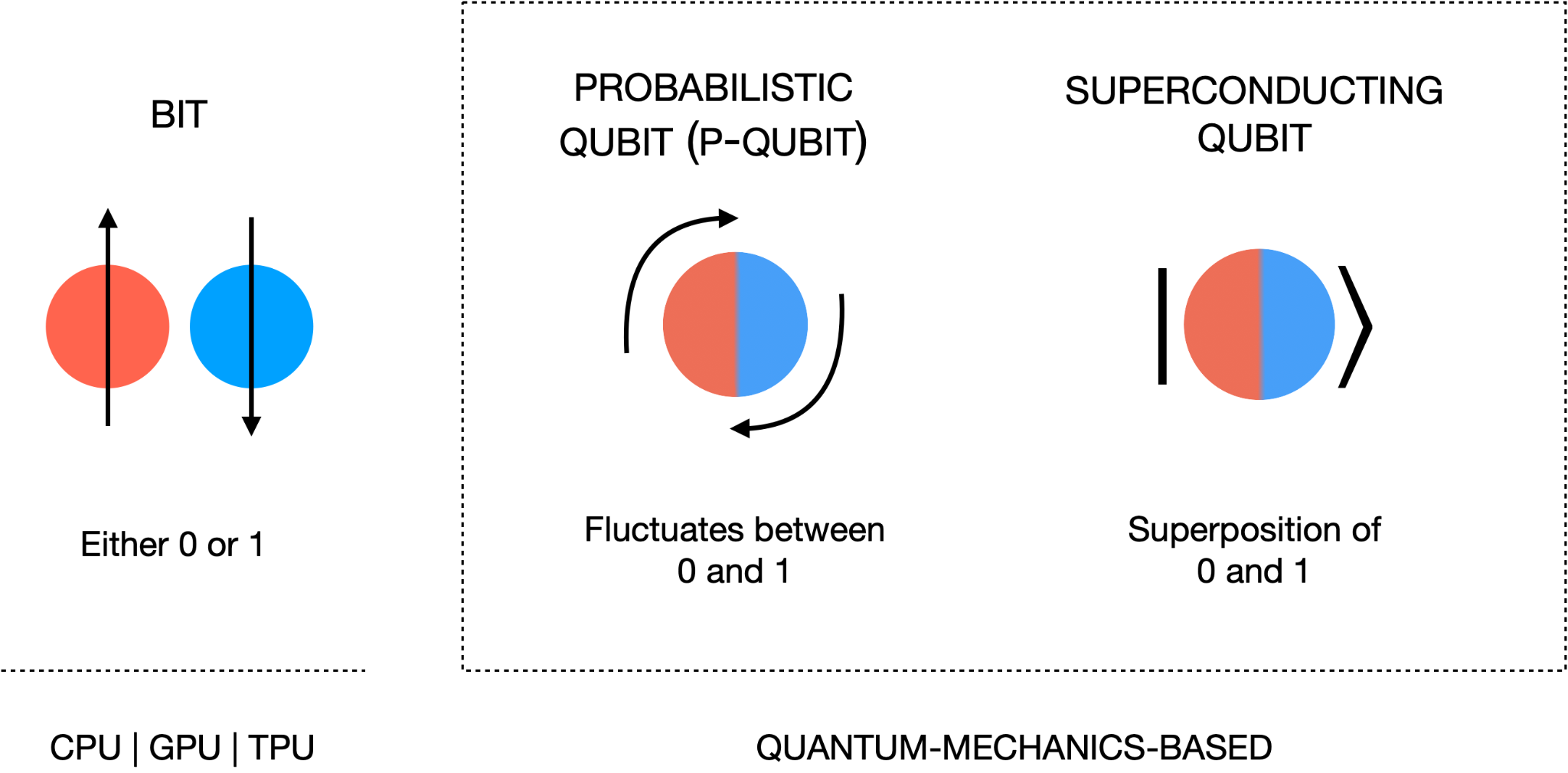
Figure 1: Classical bit, quantum-driven p-qubit, and coherent qubit conceptual illustration.
The analog circuit design comprises a floating-gate vector-matrix-multiplier (VMM) fabric for weighting, an OTA implementing the nonlinear sigmoidal activation, and direct noise injection for quantum-driven stochastic switching.
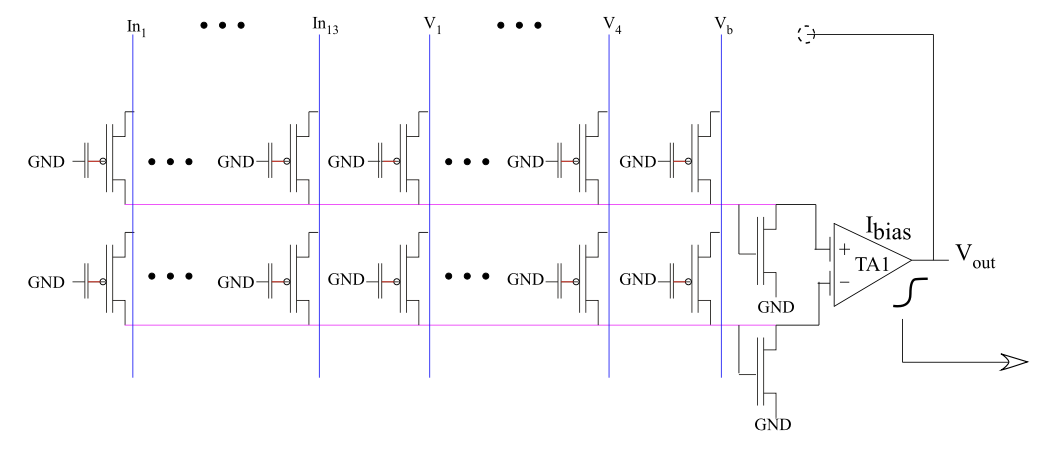
Figure 2: Single p-qubit circuit integrating local field and entropy injection via OTA for probabilistic switching.
The statistical response matches theoretical Glauber dynamics, with tunable activation slope aligning the effective temperature between classical and quantum regimes.
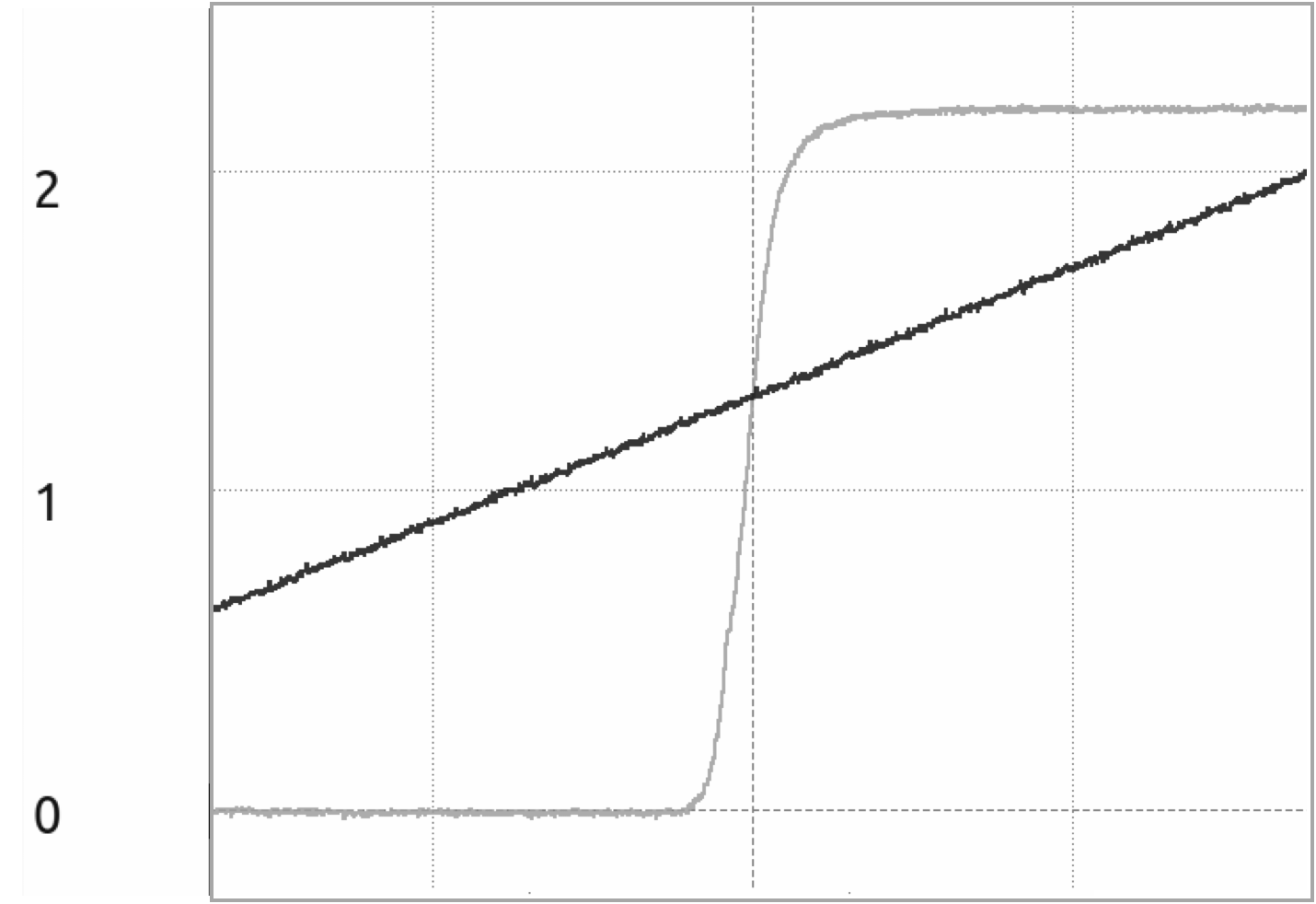
Figure 3: Empirical analog transfer (sigmoid) curves validating activation steepness and gain tunability over process corners.
Large-Scale Tileable Fabric and High-Degree Interconnect
Apollo is architected as a tiled array of 10,000 parallel p-qubits per die in 16nm CMOS, with the Δ256 interconnect topology allowing each p-qubit to have up to 256 programmable neighbors. This minimizes minor-embedding cost for dense graph-structured Ising and QUBO problems—orders of magnitude less than Chimera/Pegasus/Zephyr topologies used in superconducting QA.
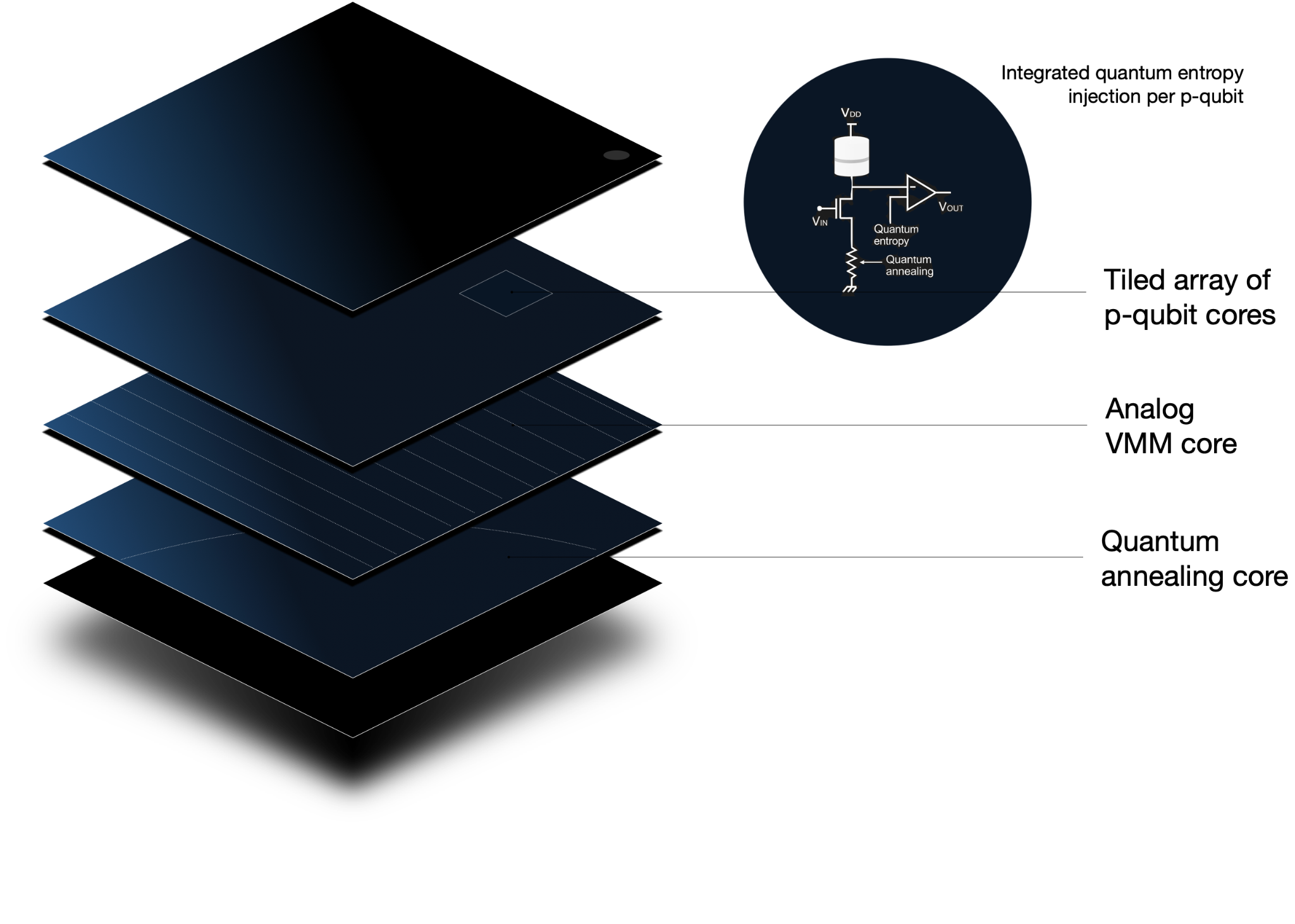
Figure 4: Multi-layer system: tiled p-qubit cores, analog correlation memory matrix (CMM), and quantum annealing core.
The analog domain avoids clocked operations, supporting asynchronous, continuous-time stochastic mixing, and the physical locality of interconnects preserves low-latency analog coupling across massive scales.
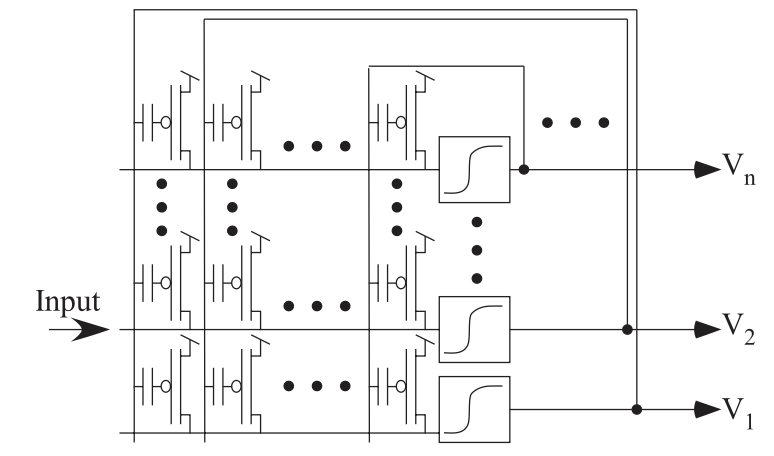
Figure 5: Complete p-qubit network with analog VMM, transimpedance, and biasing elements.
Quantum Entropy Validation
IQEU entropy quality matches or surpasses commercial quantum-optical RNGs, as shown quantitatively by bias, serial correlation, and min-entropy (NIST SP 800-90B) testing.
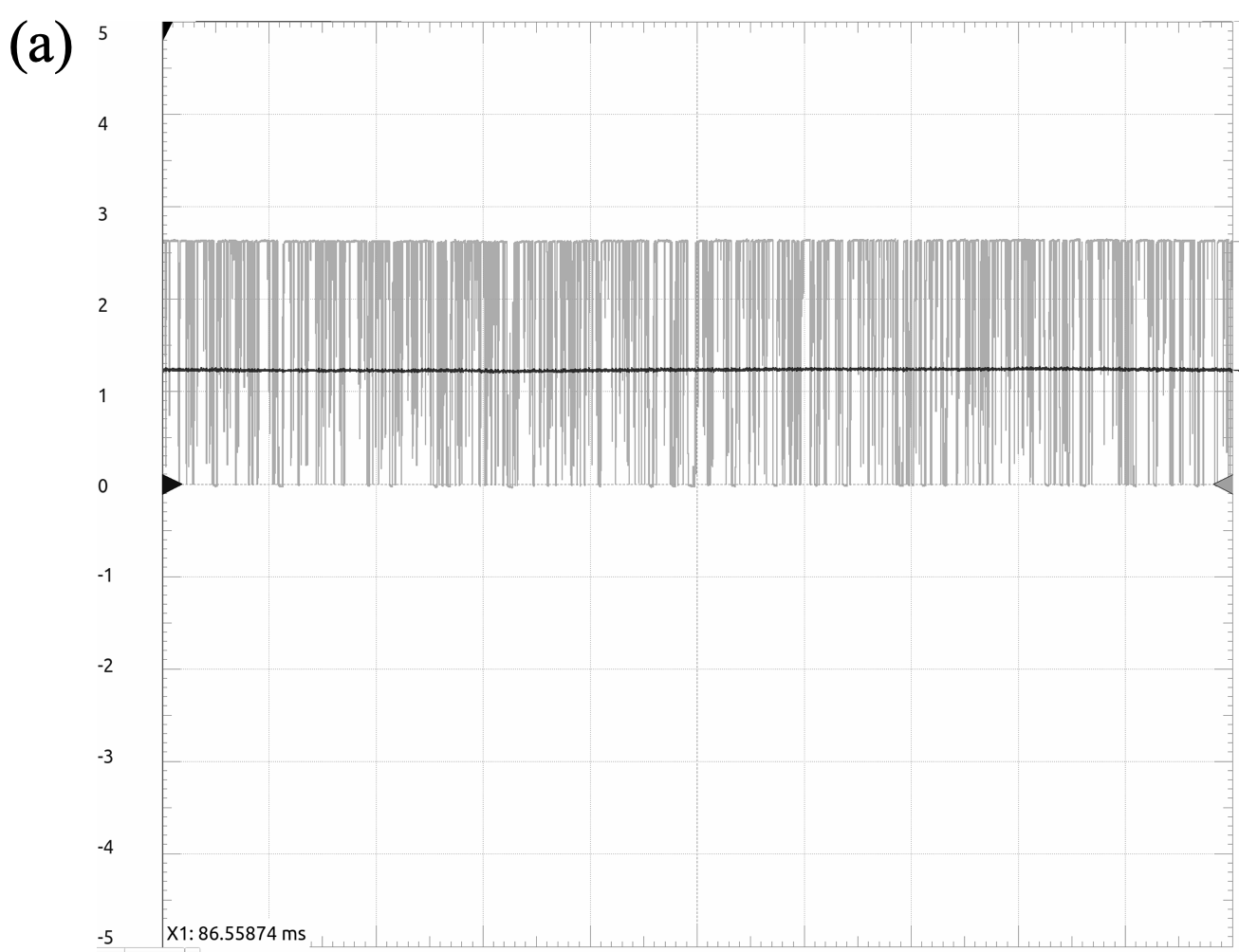
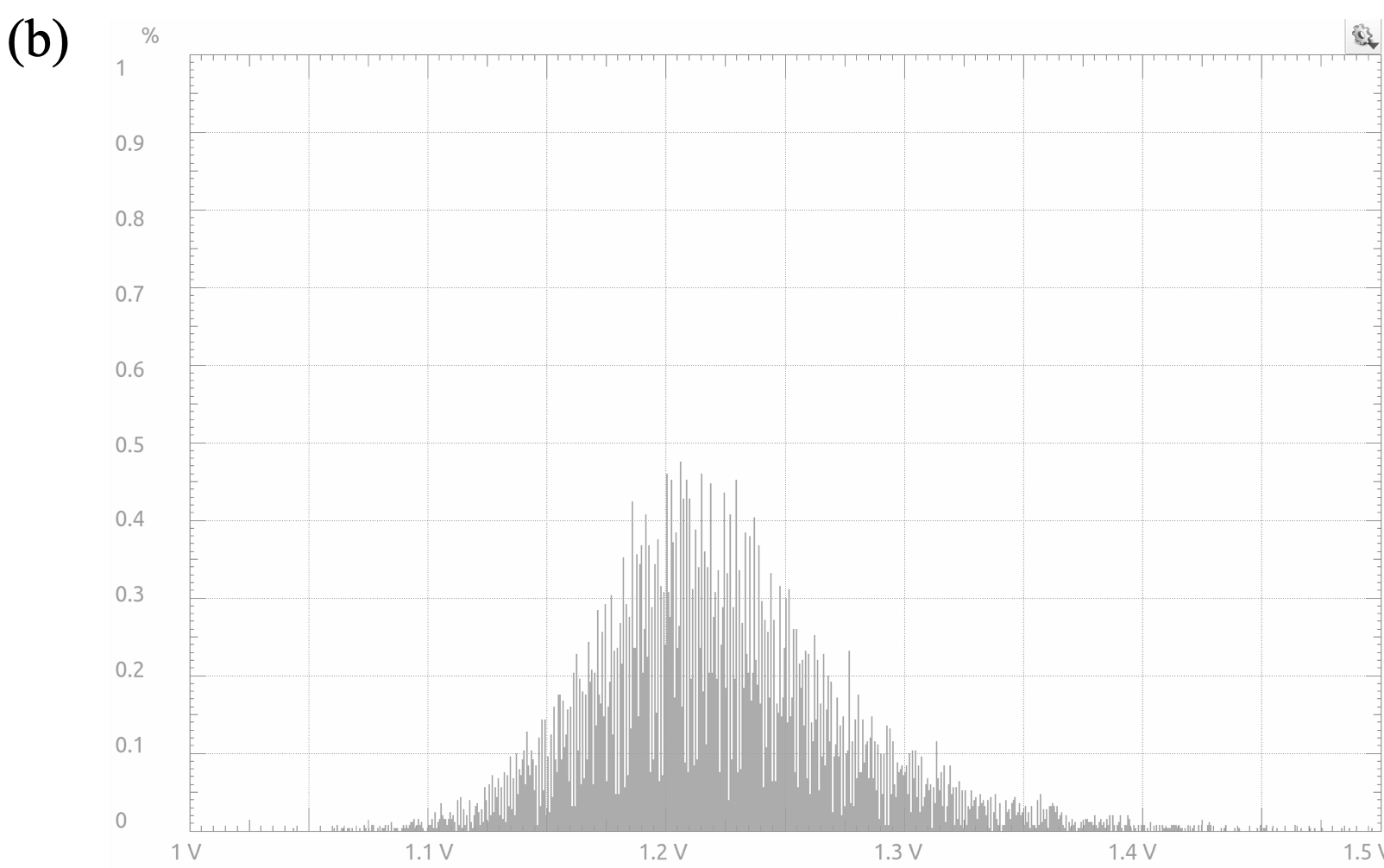
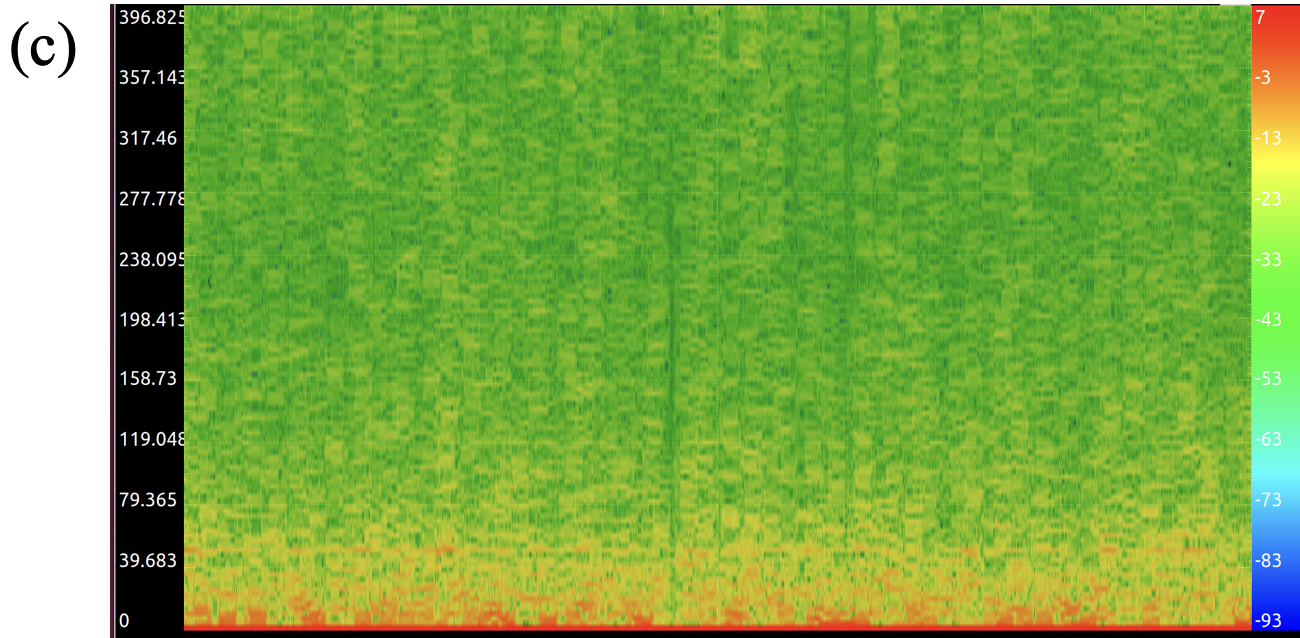
Figure 6: Time-domain, histogram, and spectrogram analyses confirm randomness, correlation absence, and temperature stability in IQEU entropy across wide operating ranges.
Continuous-Time Dynamics and Thermodynamic Sampling
Apollo's distinctive feature is fully autonomous, clock-less, continuous-time operation, in contrast to synchronous digital or simulated annealers. Each p-qubit samples asynchronously, and the collective network implements Glauber-Markov processes without algorithmic artifacts, critical for achieving detailed balance, correct Gibbs/Boltzmann sampling, and fast convergence.
Empirical device-level validation demonstrates <1% KL divergence between measured distributions and theoretical Boltzmann weights even for small analytically-solvable Ising problems.
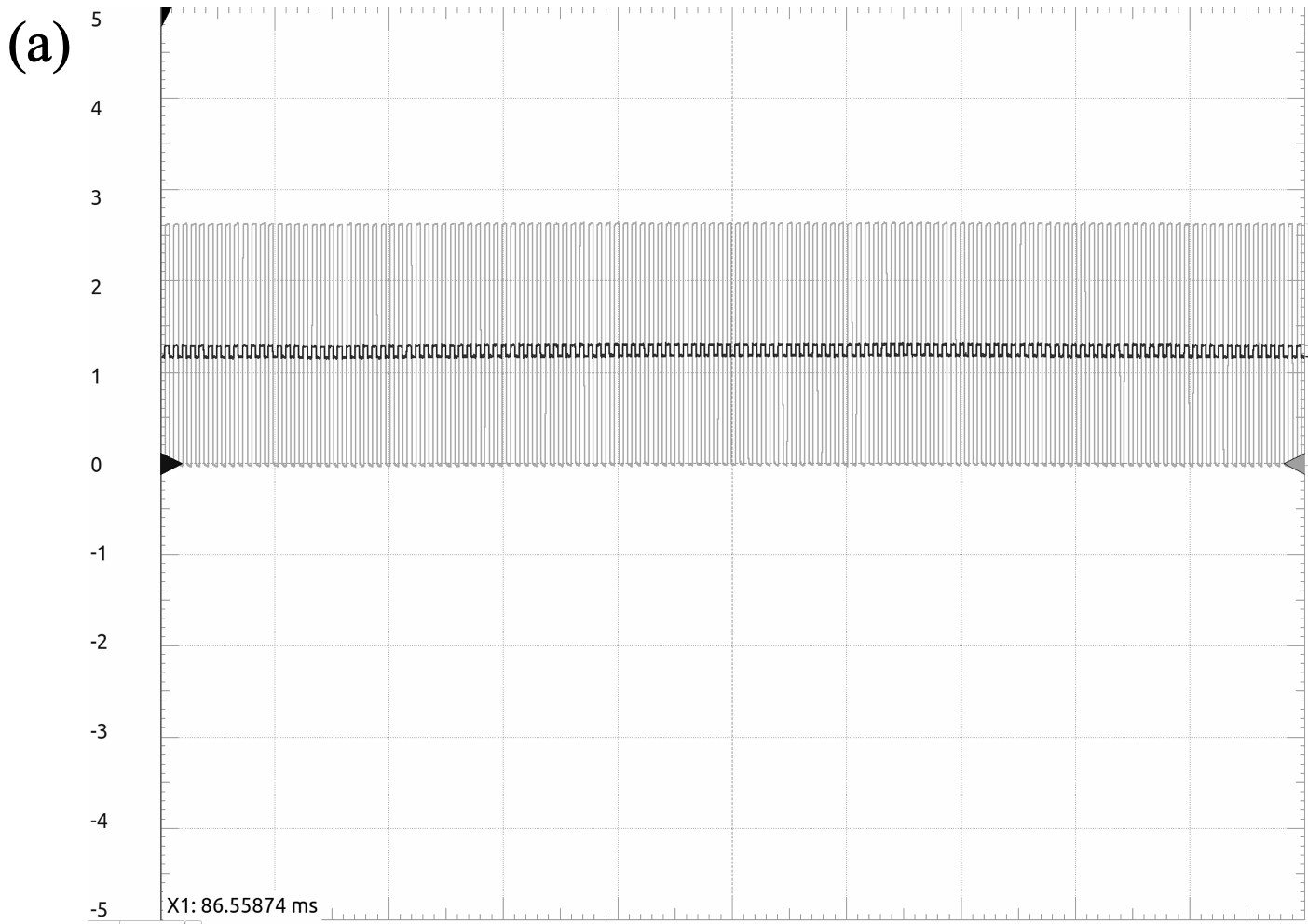
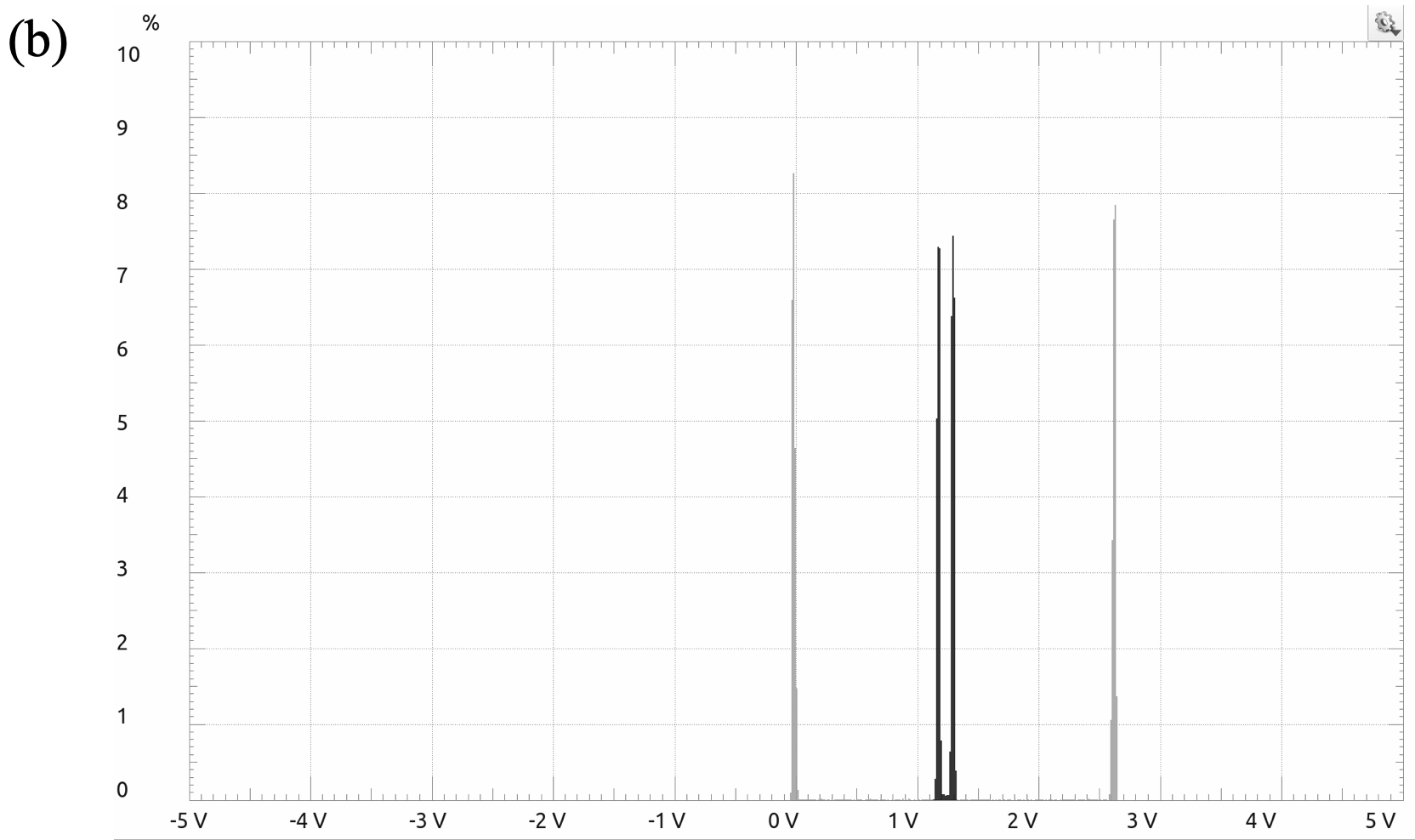
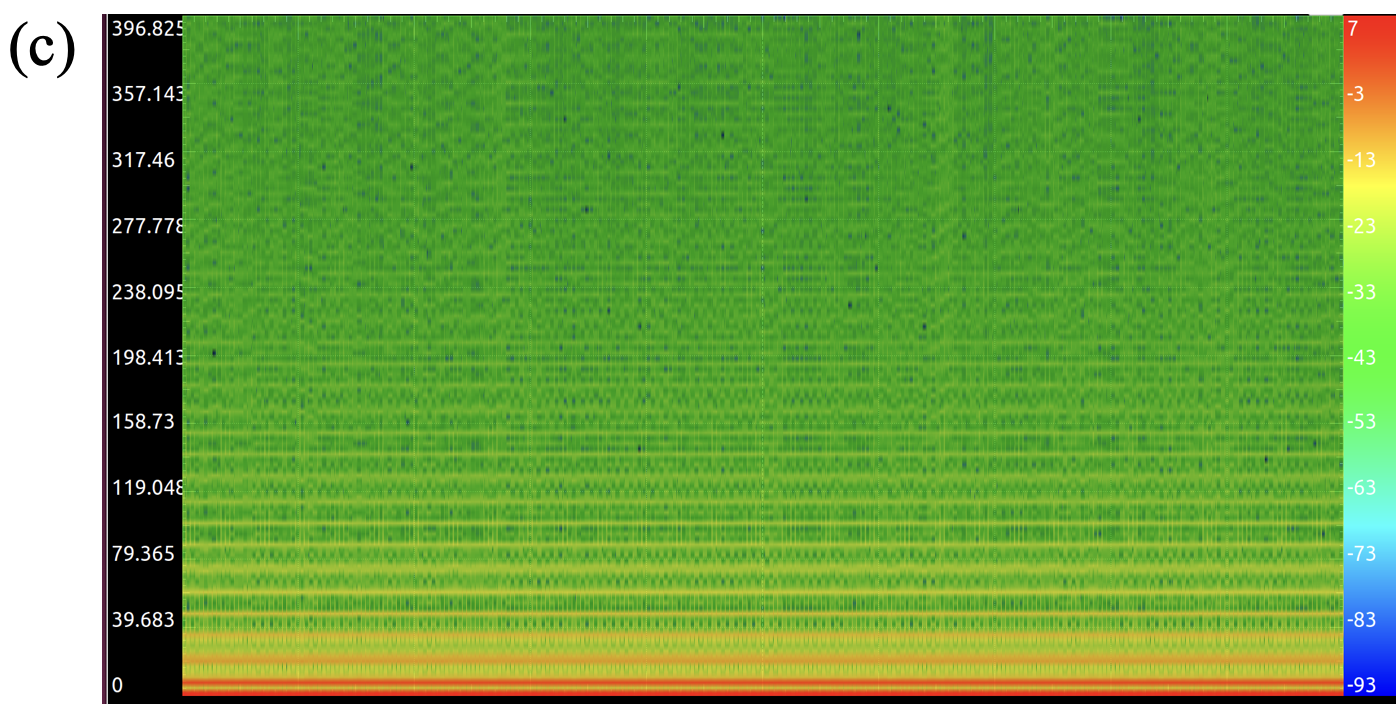
Figure 7: Four-p-qubit system: measured voltage, histogram, and spectrogram confirm stochastic sampling matches Gibbs distribution.
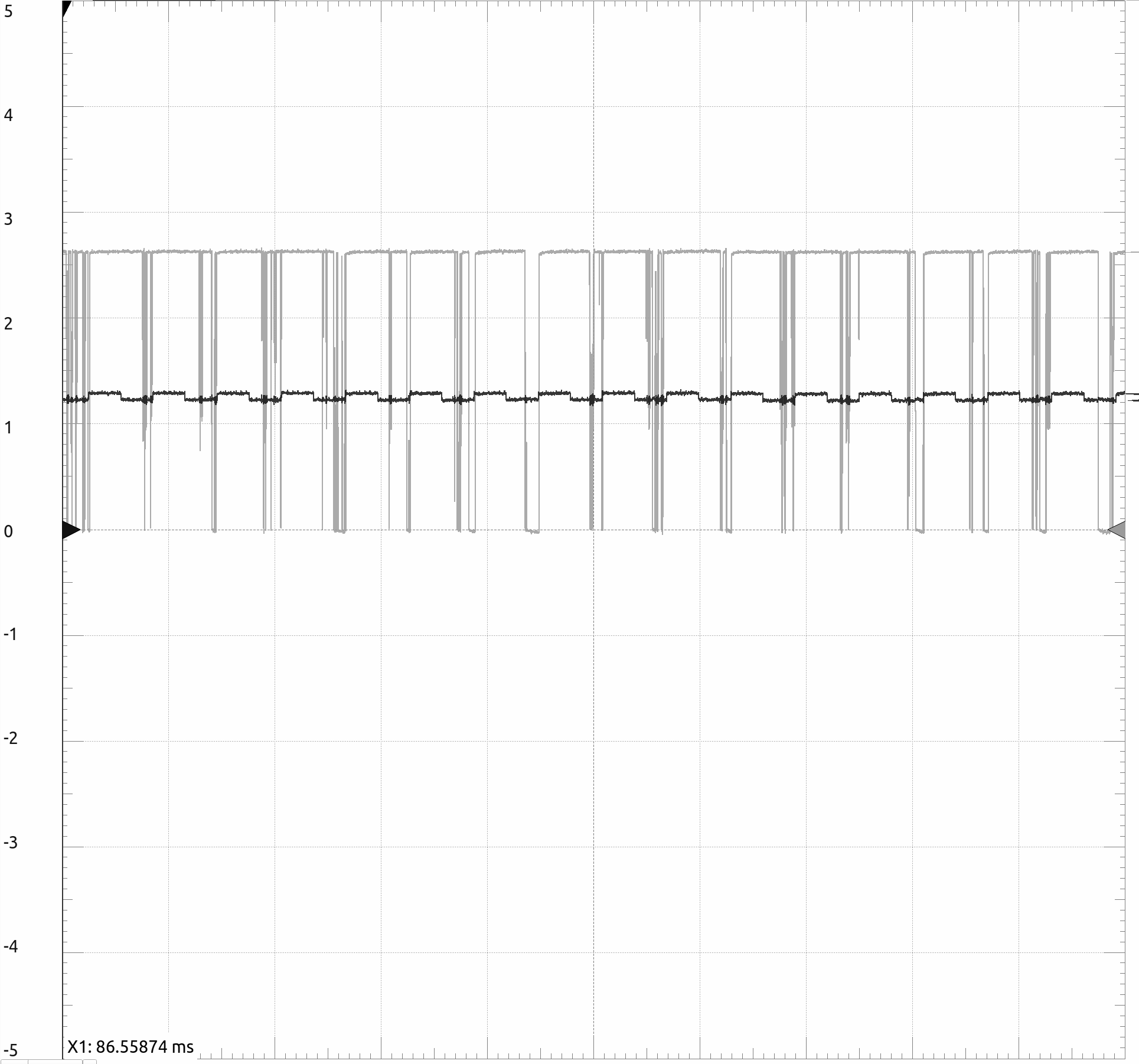
Figure 8: Clock-less, fully parallel ground-state convergence validated by time-domain voltage traces for coupled p-qubit networks.
Scaling Properties and Energy Efficiency
Physical flip rates for each p-qubit reach ~8×10¹⁰ flips/sec, with full-die throughput at 8×10¹⁴ flips/sec (10,000 p-qubits). With sub-milliwatt per-die analog power envelopes, Apollo demonstrates per-flip energies on the order of 0.63 fJ, outperforming all digital, optical, and superconducting quantum annealers by 2–5 orders of magnitude.
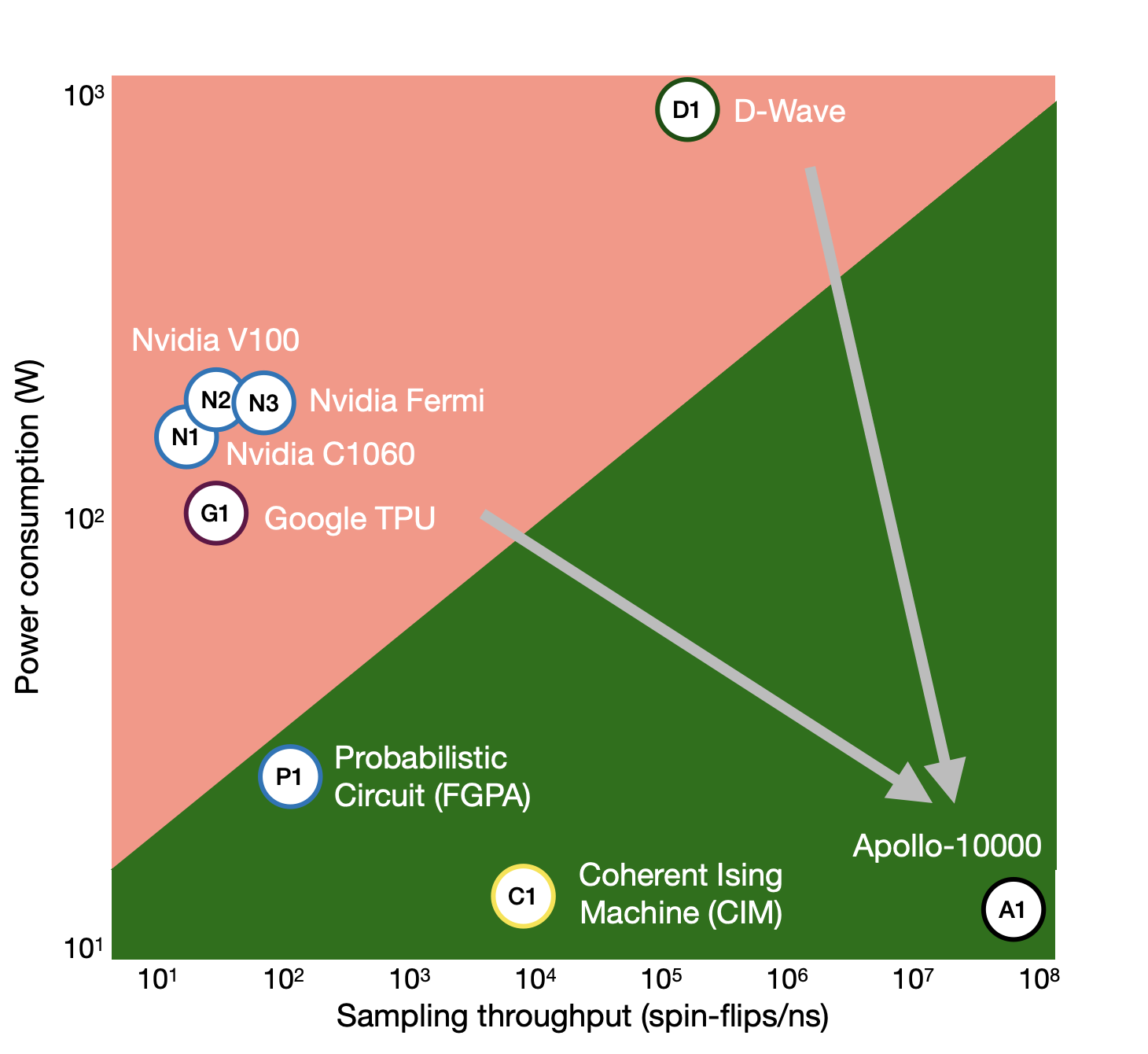
Figure 9: Energy–performance benchmarking locates Apollo on an ultra-low-energy, ultra-high-throughput Pareto frontier relative to GPUs, TPUs, Ising machines, and quantum annealers.
These scaling laws are critical for the practical application to million-spin optimization or Bayesian sampling, with no observable minor embedding or entropy correlation effects.
Quantum-Critical Dynamics and Benchmarking
The device is benchmarked using a canonical large-scale 3D Ising spin-glass instance (2,687 spins), identical to the benchmark establishing quantum advantage in D-Wave's superconducting QA [127]. Experimental measurements include ensemble-averaged residual energy density as a function of annealing time for both Apollo and various references.
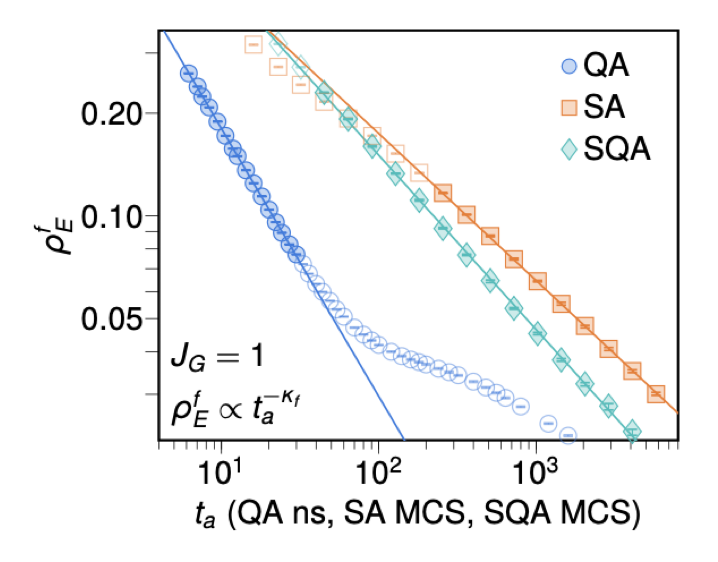
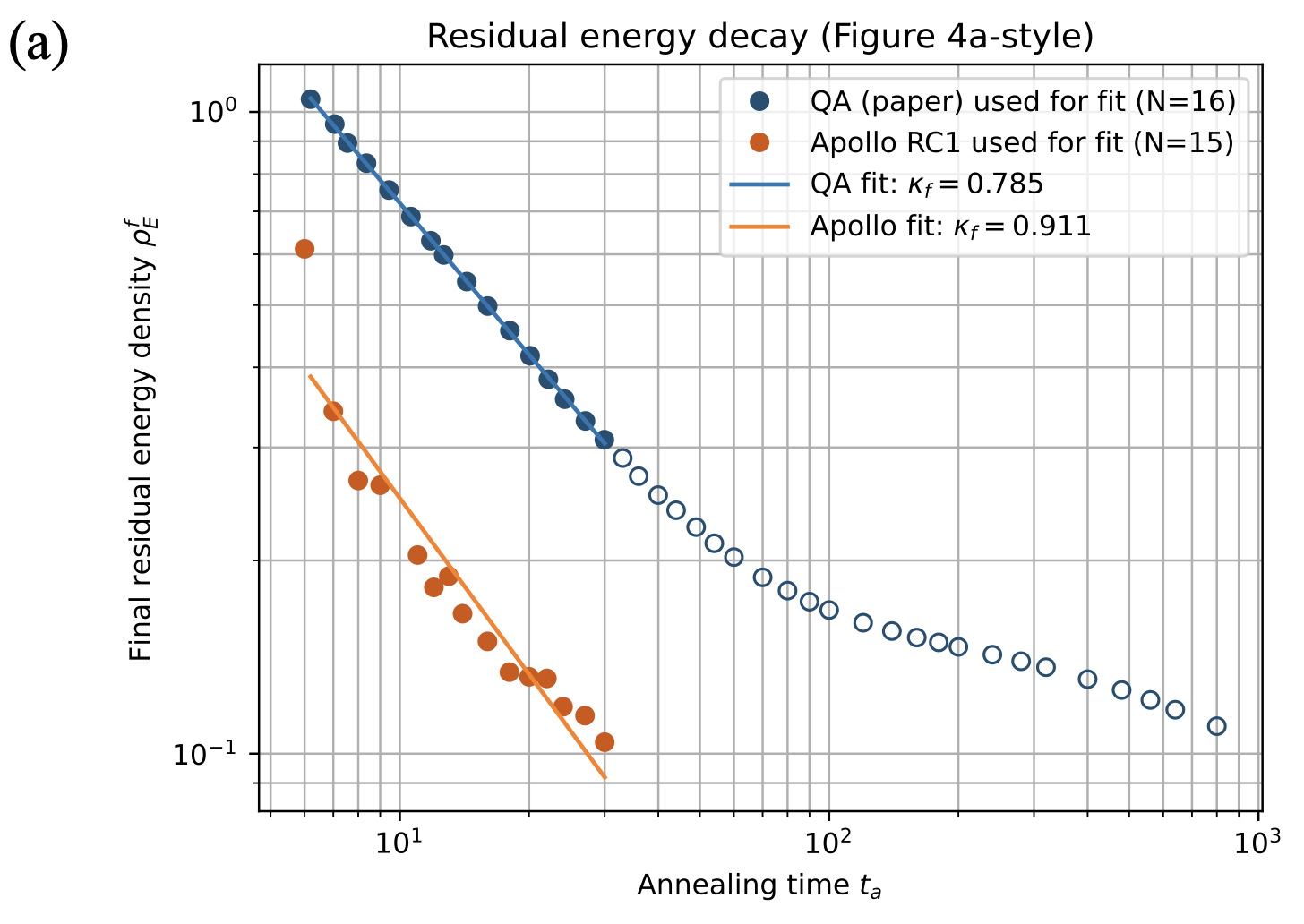
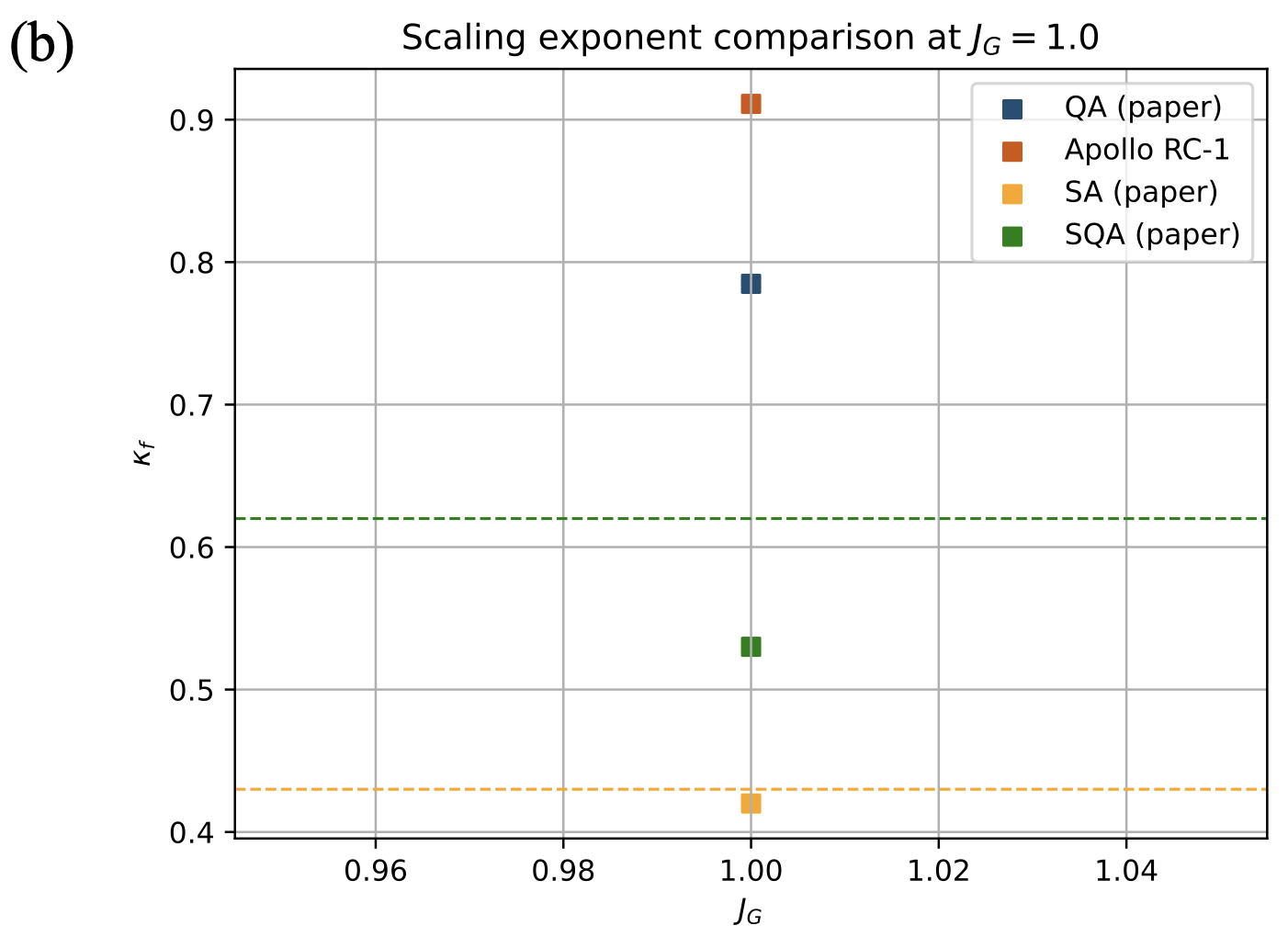
Figure 10: Comparison of residual-energy scaling (critical dynamics) for Apollo, D-Wave QA, SQA, and SA, confirming identical quantum-critical exponents and power-law decay for Apollo and D-Wave.
Apollo not only matches the quantum-critical scaling observed for QA but outperforms in mean ground-state energy discovery at two orders of magnitude lower wall-clock times.
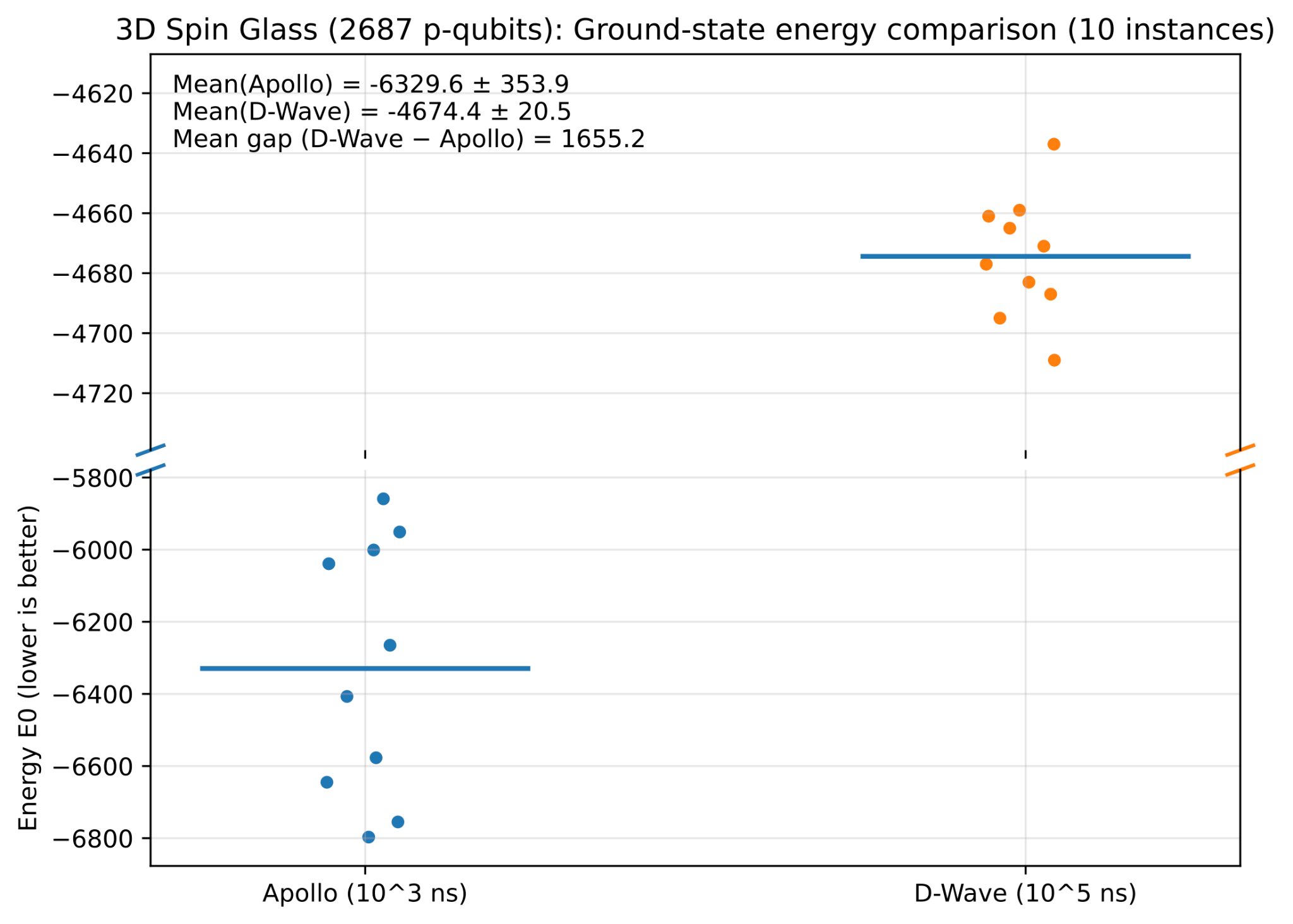
Figure 11: Direct ground-state energy discovery: Apollo achieves lower (more negative) energies than D-Wave for all ten instances, given much shorter annealing times.
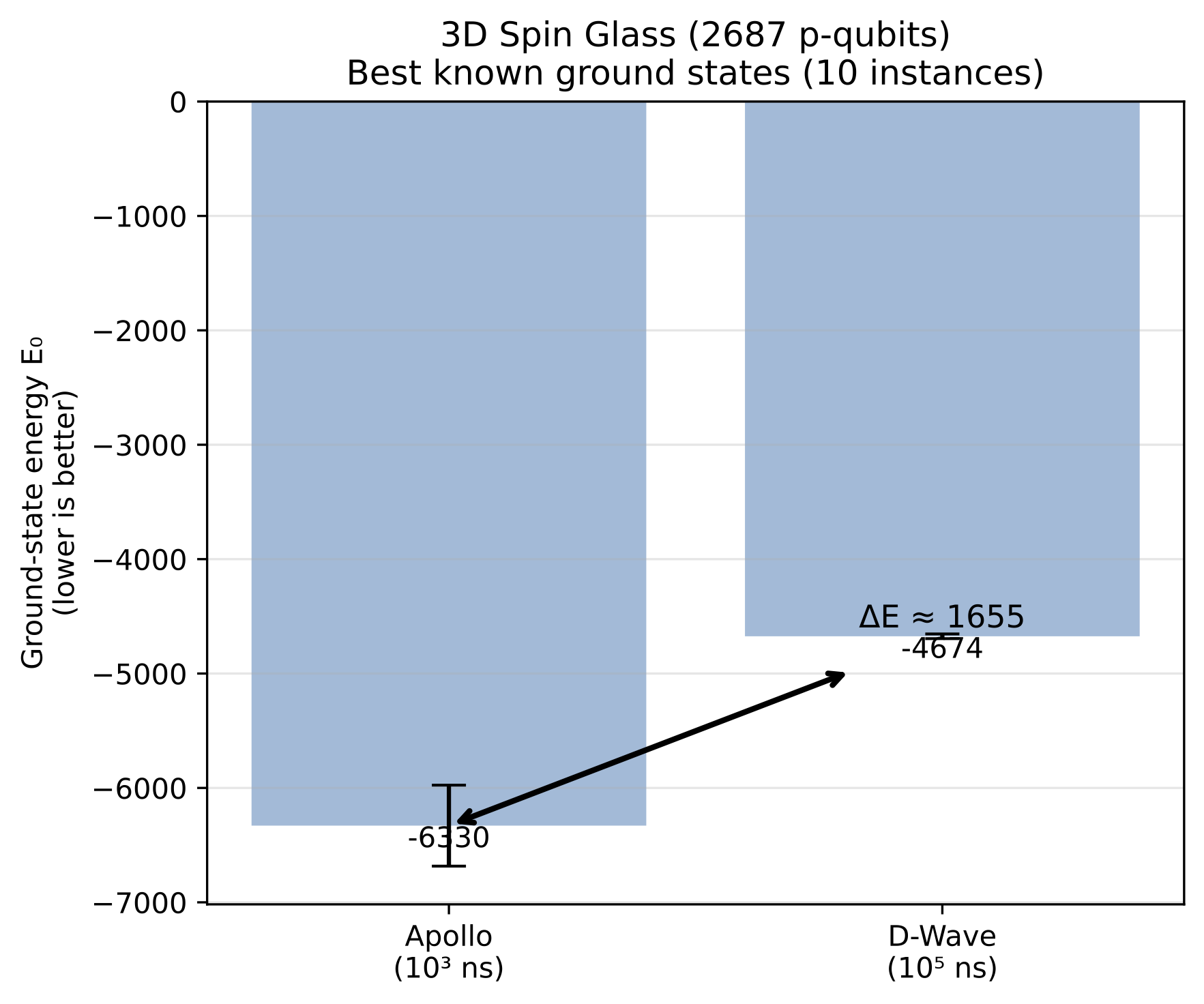
Figure 12: Distribution of mean ground-state energies and inter-run variability demonstrates Apollo's systematic advantage on this benchmark.
These results empirically confirm that quantum-equivalent annealing behavior can be achieved—and quantum-advantaged scaling retained—in physically stochastic, room-temperature analog CMOS hardware, provided correct architectural and entropy-source constraints are observed.
Supported Compute Modes and Application Domains
Apollo supports heterogeneous workloads spanning optimization (Ising/QUBO), Boltzmann sampling, generative modeling (e.g., RBM, deep energy models), analog vector-matrix inference, and quantum circuit emulation via circuit-to-Hamiltonian mapping. Gate-based quantum circuits can be compiled into Hamiltonian ground-state optimization tasks using Feynman-Kitaev constructions, gadget reductions, and hybrid embedding, albeit with ancilla overhead scaling as a function of circuit depth and gate set.
The architecture natively supports:
- Large-scale combinatorial optimization (scheduling, routing, portfolio)
- Bayesian/graphical inference and uncertainty quantification
- Generative modeling and data synthesis
- Real-time, energy-minimal probabilistic AI/ML for edge and resource-constrained systems
Discussion, Implications, and Future Trajectory
Apollo demonstrates that quantum-driven probabilistic computation is fundamentally compatible with room-temperature, ultra-scalable analog hardware. By directly connecting quantum entropy sources, continuous-time bistability, and high-degree dense interconnects, the architecture intrinsically replicates the annealing universality class of quantum annealers and achieves quantum-advantaged performance—while resolving the coherence, cooling, and bandwidth bottlenecks of existing quantum devices.
The results challenge the assumption that quantum advantage in energy-based optimization requires coherent manipulation, suggesting instead that physical realization of the appropriate stochastic process is the key ingredient; this decouples the computational universality class from explicit physical qubit implementation.
Scaling to million-qubit fabrics is enabled by the tiling architecture, Delta-256 connectivity, and analog memory models (floating-gate VMM), providing a roadmap for further density increases in advanced nodes.
The work implies new hybrid pathways: integrating digital orchestration and analog probabilistic substrates for AI/ML, scientific computing, and in situ inference/optimization at the sensor/edge. It also provides a blueprint for further research into scalable, physical, energy-based computing models—beyond what can be algorithmically emulated on digital hardware or reached by current quantum processors.
Conclusion
This paper establishes Apollo as a practically scalable, energy-efficient, and thermodynamically faithful probabilistic computing platform. By experimentally reproducing quantum-critical annealing dynamics and outperforming state-of-the-art QA systems on challenging optimization benchmarks—without reliance on cryogenics or fragile coherence—it validates quantum-driven neuromorphic hardware as a distinct, intermediate regime of computational substrates. This platform is positioned to enable future advances in optimization, inference, generative learning, and hybrid classical-quantum workflows, thereby broadening the landscape of feasible applications for probabilistic and energy-based computing.

