- The paper demonstrates that chiral anomaly-induced transport in pseudospin-1 systems leads to sign-reversed longitudinal and planar Hall conductance triggered by intervalley scattering.
- It employs a semiclassical Boltzmann framework with Berry curvature and orbital magnetic moment corrections to analyze anisotropic magnetotransport under varying field orientations and cone tilts.
- The study offers experimental guidelines to differentiate multifold fermions from Weyl fermions by exploiting the tilt-induced shift in angular dependencies of the Hall response.
Chiral Anomaly and Planar Hall Conductance in Pseudospin-1 Fermions: A Technical Summary
Introduction and Motivation
The study extends chiral anomaly-induced transport phenomena, well-known in Weyl semimetals, to systems hosting higher-pseudospin quasiparticles—particularly pseudospin-1 fermions. These systems, realized in specific crystal space groups (199, 214, 220), exhibit multifold degeneracies and higher Chern number monopoles, which fundamentally modifies their response to electromagnetic fields compared to conventional pseudospin-1/2 Weyl systems. The work focuses on two key transport observables: longitudinal magnetoconductance (LMC) and planar Hall conductance (PHC), with attention to the impact of intervalley scattering, orbital magnetic moment (OMM), broken azimuthal symmetry, and band tilt.
Theoretical Framework
The analysis employs semiclassical Boltzmann transport theory within the relaxation-time approximation, going beyond standard approaches by:
- Incorporating both intranode and intervalley scattering with explicit angle-resolved rates.
- Including OMM corrections to account for Berry phase contributions to the carrier dynamics.
- Considering charge-conservation constraints, essential due to the non-trivial topology in these systems.
- Treating symmetry-breaking configurations: (i) tilting of Weyl cones (both x and z directions), and (ii) arbitrary angle γ between electric and magnetic fields.
These extensions enable a comprehensive treatment of transport in the weak-field regime relevant for experimental observations.
For collinear electric and magnetic fields (E∥B; γ=π/2), the LMC exhibits quadratic scaling with B at low field and low intervalley scattering. Critically, the analysis demonstrates that increasing the relative strength of internode scattering (α) induces a sign reversal in both LMC and PHC, from positive to negative values. This behavior—absent when OMM is neglected—is a direct consequence of Berry curvature effects unique to systems with higher monopole charge.
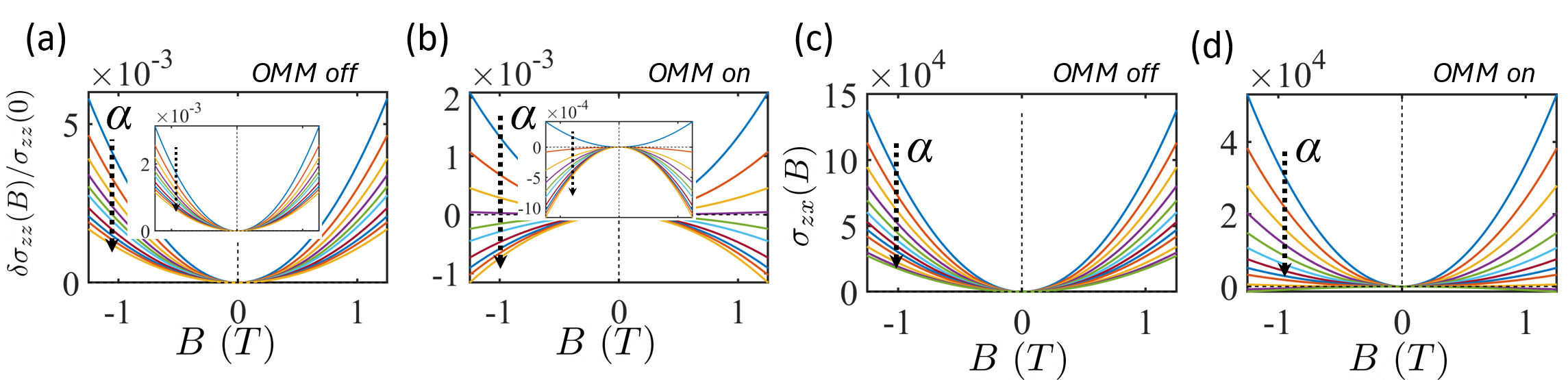
Figure 1: The magnetic field (B) dependence of LMC and PHC for pseudospin-1 semimetals, displaying sign reversals as a function of intervalley scattering strength α for two representative orientations γ=π/2 and z0.
The observed sign reversal in LMC at critical z1 constitutes a quantitative deviation from the standard pseudospin-1/2 Weyl response, where LMC remains strictly positive. The phenomenon is robust to finite z2; as the angle between z3 and z4 deviates from orthogonality, the critical threshold z5 systematically decreases, emphasizing the angular sensitivity of the transport anomalies.
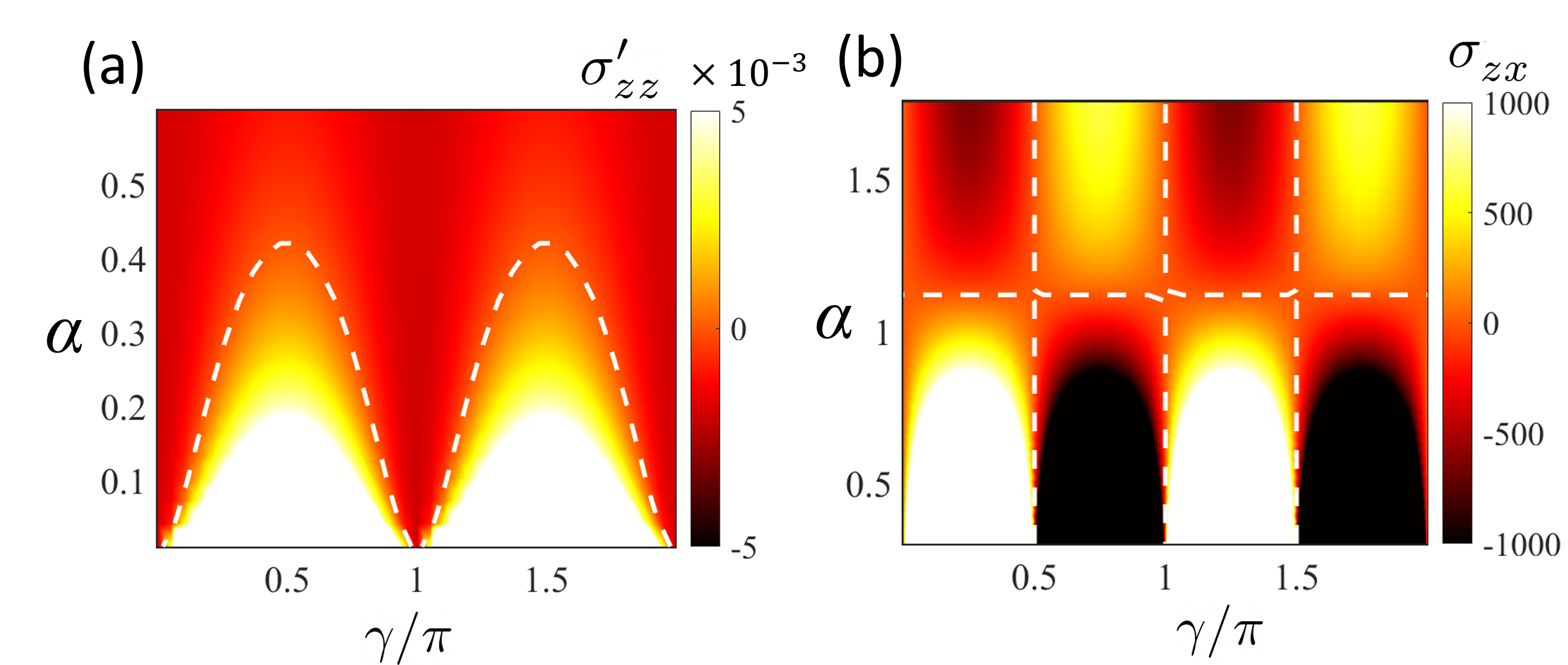
Figure 2: Phase diagrams of LMC and PHC as functions of z6 (intervalley scattering strength) and z7 (magnetic field angle), showing regions of sign reversal and the scaling z8 for LMC.
PHC vanishes in the strictly collinear case, as expected from symmetry, but becomes finite as azimuthal symmetry is broken (z9). Notably, for fixed γ0, the sign reversal in PHC occurs at a higher critical γ1 than for LMC (γ2).
Anisotropic Magnetotransport Induced by Weyl Cone Tilt
In real materials, dispersion tilts (either along γ3 or γ4) are generic due to crystallographic anisotropy or strain. The study systematically characterizes the impact of tilt:
- For oppositely tilted cones, conductivity tensor components acquire linear-in-γ5 contributions, producing a tilted parabolic profile in LMC as a function of γ6. LMC exhibits nonmonotonic dependence on the tilt parameter, with strong directional anisotropy: monotonic in γ7, nonmonotonic in γ8.
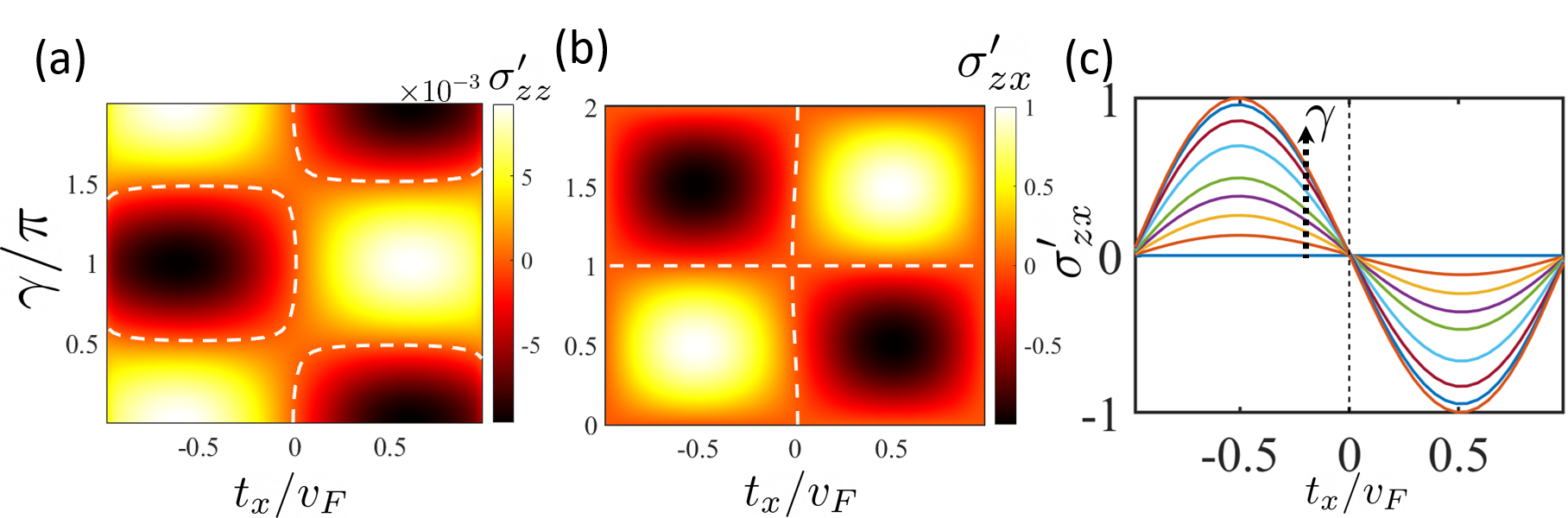
Figure 3: LMC and PHC as functions of tilt (γ9) and angle E∥B0. Strong anisotropy and nonmonotonicity emerge, particularly in the PHC response.
- PHC is highly sensitive to both the magnitude and the direction of tilt. For E∥B1-tilted cones, PHC varies as E∥B2; for E∥B3-tilted, PHC varies as E∥B4, representing a qualitative shift in angular response relative to untilted systems, where the dependence is E∥B5.
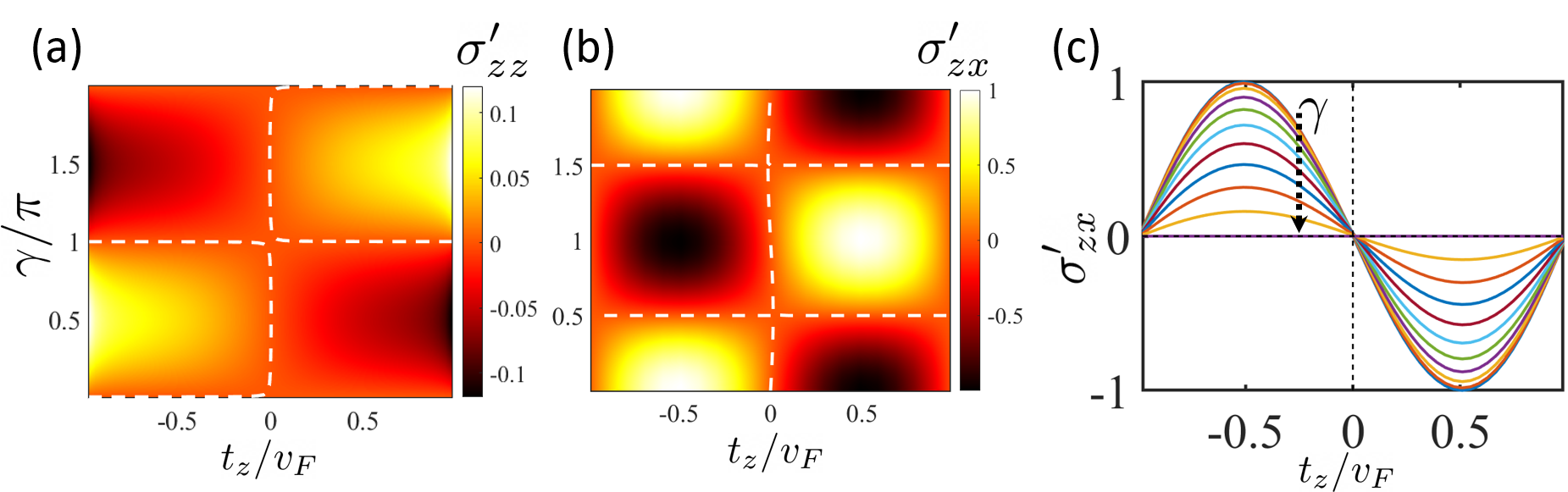
Figure 4: LMC and PHC for E∥B6-oriented tilt. Unlike the E∥B7-tilted case, the PHC shows E∥B8 dependence and similar non-monotonic tilt response.
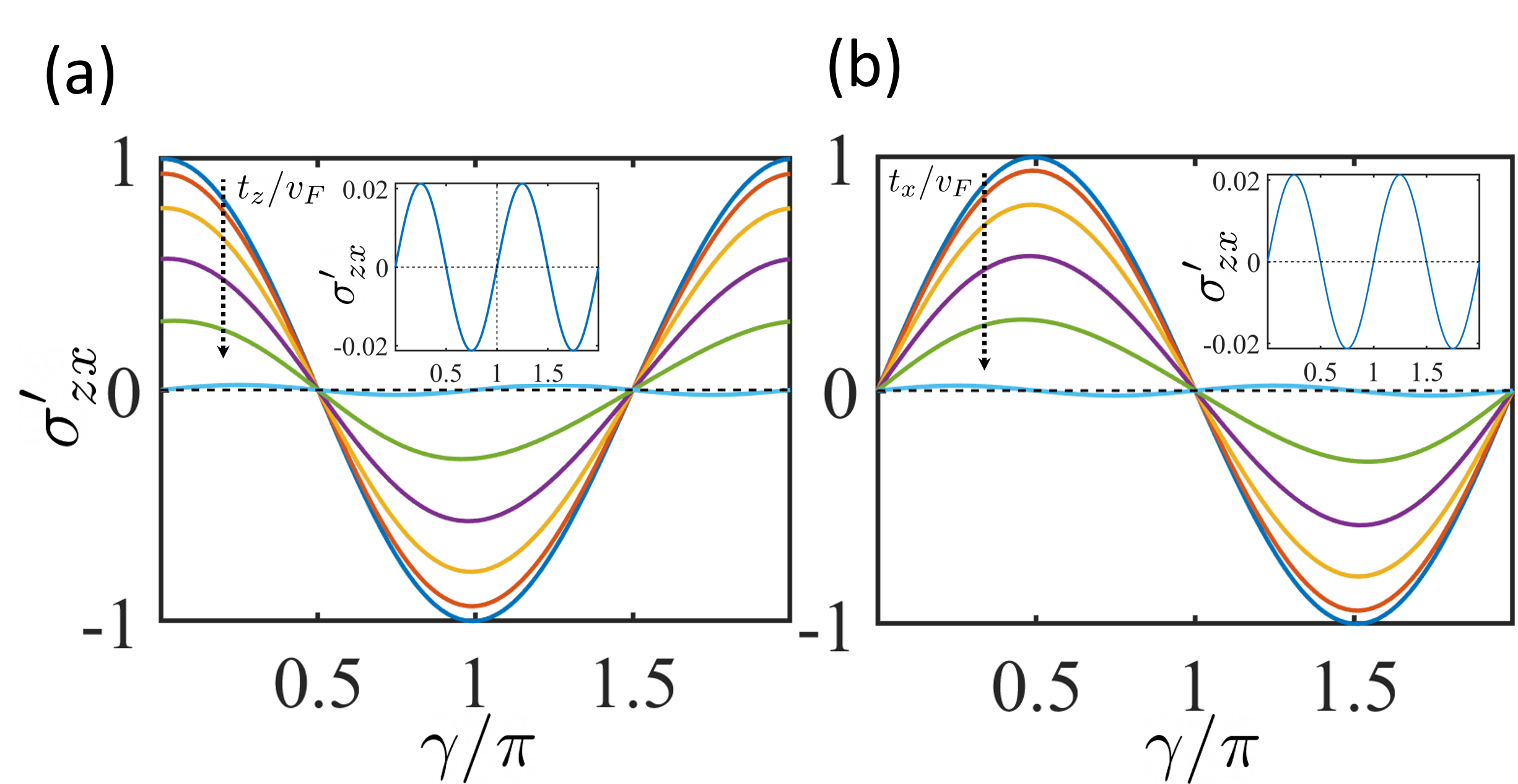
Figure 5: Angular dependence of PHC for varying tilt parameters. The transition from conventional E∥B9 dependence (untilted) to γ=π/20 (γ=π/21-tilt) or γ=π/22 (γ=π/23-tilt) is illustrated, emphasizing the role of tilt-induced anisotropy.
The nonmonotonic dependence and the odd symmetry of PHC with respect to the tilt parameter are highlighted, with maximum values realized near γ=π/24 for γ=π/25-tilt and specific γ=π/26 values enhancing the Hall response. These features are theoretically predicted to be robust and experimentally detectable in multifold fermion materials.
Implications and Perspectives
This work establishes several strong, sometimes counterintuitive claims, notably:
- Both LMC and PHC in pseudospin-1 systems can become negative with sufficiently strong intervalley scattering, a scenario not admitted in the minimal pseudospin-1/2 Weyl framework.
- The critical scattering strength for LMC sign reversal diminishes as γ=π/27 departs from γ=π/28, following γ=π/29.
- The angular dependence of PHC is a direct probe of the tilt orientation and magnitude, with clear, symmetry-driven transitions between B0, B1, and B2 forms.
From a practical standpoint, this analysis yields novel prescriptions for experimentally distinguishing between conventional Weyl and multifold pseudospin-1 fermions through their magnetotransport signatures. The tunability of LMC and PHC via intervalley disorder, field orientation, and engineered tilt offers pathways for functional device applications exploiting topological electronic responses.
Theoretically, the framework can be adapted to other multifold systems (B3) and extended further to include quantum/strong-field effects, inhomogeneous disorder, and interaction-induced phenomena. The extension to time-dependent protocols or optical-driven transport in these systems is a natural avenue for future research.
Conclusion
The paper delivers a rigorous extension of chiral-anomaly-induced transport theory to pseudospin-1 semimetals, capturing the nuanced interplay of intervalley scattering, tilt, and field orientation. It predicts hallmark signatures—such as sign-reversed LMC/PHC and pronounced anisotropic Hall responses—not present in lower-pseudospin materials. These findings are positioned to guide experimental exploration of topological phases in chiral multifold fermion systems and offer new paradigms for device engineering built on the principle of symmetry-tuned quantum transport.