Fisher geometry reshapes the effect of incompatibility in multiparameter quantum estimation
Published 9 Jun 2026 in quant-ph | (2606.11343v1)
Abstract: Multiparameter quantum estimation faces two fundamental obstacles: sloppiness, i.e., anisotropy of the quantum Fisher information matrix (QFIM) that renders some parameter directions insensitive, and incompatibility, the non-commutativity of optimal measurements for different parameters. The trade-off bound CT captures their joint impact on precision, but it has remained unclear how the distribution of incompatibility across parameter planes affects its overall cost. Here we separate the total amount of incompatibility from its location. We introduce a dimensionless quantity Gn<sup>(F) that measures the alignment between the incompatibility distribution and the eigenvalues of the QFIM, and show how the Frobenius scale of the incompatibility contribution factorizes. We obtain a bound and prove the incompatibility cost lies between this bound and a rank-dependent multiple thereof. We also prove that at fixed sloppiness, or equivalently fixed Fisher volume, concentrating incompatibility into a single parameter plane reduces the optimized trade-off cost because the Fisher geometry can then be reshaped to allocate more Fisher area to that plane. A qutrit SU(2) encoding numerically confirms that states with larger incompatibility strength can nevertheless incur a smaller cost if the matching factor G is sufficiently small. Our results establish that the distribution of incompatibility relative to the Fisher eigenbasis is a central diagnostic for multiparameter estimation, beyond the total incompatibility strength.
The paper introduces a matching factor, Gₙ^(F), quantifying how the spatial distribution of incompatibility within the Fisher geometry affects the overall estimation cost.
It demonstrates analytically and numerically that concentrating incompatibility in specific Fisher-active parameter planes can mitigate precision penalties.
The findings advocate for probe-state design strategies that reallocate Fisher area to counterbalance incompatibility, enhancing performance in quantum sensing.
Fisher Geometry and Incompatibility in Multiparameter Quantum Estimation
Introduction and Context
Multiparameter quantum estimation is fundamentally constrained by both sloppiness—the anisotropy of the quantum Fisher information matrix (QFIM), which suppresses sensitivity along certain parameter directions—and incompatibility, originating from the non-commutativity of measurements optimal for different parameters. While the SLDquantum Cramér-Rao bound governs the theoretical precision in single-parameter estimation, its attainability is not guaranteed in the multiparameter context, necessitating refined trade-off bounds such as CT, which encapsulate the combined impact of sloppiness and incompatibility.
This work probes whether the accuracy penalty induced by incompatibility depends solely on its overall magnitude, or whether the distribution of incompatibility within the Fisher geometry drastically impacts estimation precision. By introducing the dimensionless matching factor Gn(F), the study formalizes the interplay between the location of incompatibility within parameter subspaces and the eigenstructure of the QFIM, and demonstrates—both analytically and numerically—that the alignment between incompatibility and Fisher geometry decisively modulates the precision penalty.
Theoretical Framework
Quantum Geometric Tensor and Precision Bounds
The QFIM Q and the Uhlmann curvatureU arise as the real and imaginary components, respectively, of the quantum geometric tensor (QGT). For pure states, Q encodes local sensitivity to parameter changes and thus establishes the attainable precision baseline. U quantifies the geometric (Berry) curvature associated with parallel transport in parameter space and, operationally, measures the non-commutativity (incompatibility) of optimal SLD measurements.
When estimating multiple parameters, the attainable covariance is lower-bounded not just by Q but by the more fundamental Holevo bound, CH[W], which generally requires a challenging operator optimization. The paper adopts the explicit upper bound CT[W]=CS[W]+∥WQ−1UQ−1W∥1, where the first (compatible) term is CS[W]=Tr(WQ−1), and the second quantifies the incompatibility-induced penalty.
Sloppiness and Incompatibility Quantifiers
Two scalar diagnostics are advocated:
Sloppiness: Gn(F)0, the reciprocal Fisher volume, quantifying global distinguishability loss.
Incompatibility strength: Gn(F)1, the squared Frobenius norm of Gn(F)2, measuring total pairwise incompatibility.
However, Gn(F)3 alone cannot capture the operational cost when incompatibility is distributed differently across the parameter space.
Geometric Bound and Matching Factor
A central analytical result is the decomposition of the incompatibility cost:
Gn(F)4
which is further bounded (in terms of the Frobenius norm) by
Gn(F)5
where Gn(F)6 is the matching factor:
Gn(F)7
with Gn(F)8 normalizing the incompatibility distribution, and Gn(F)9 the dimensionless Fisher eigenvalues. Q0 measures the alignment of incompatibility with regions of low Fisher area in the parameter space; thus, Q1 is minimized when incompatibility is supported by parameter planes with large Fisher area.
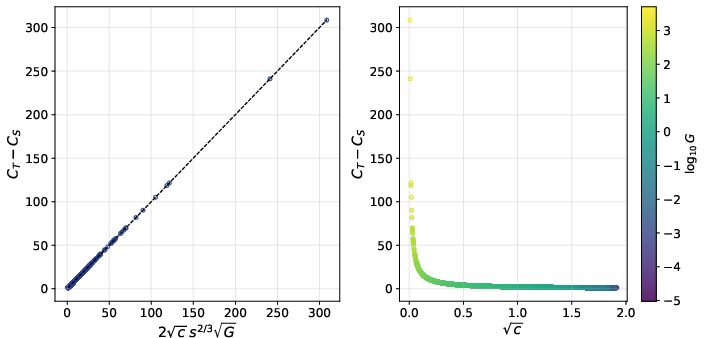
For the Q2 case, this relation becomes exact:
Q3
Figure 1: Numerical diagnosis of the incompatibility contribution in the three-parameter qutrit model. The left panel verifies the exact three-parameter decomposition Q4.
Optimization of Fisher Geometry at Fixed Sloppiness
Compatible Case
For Q5, optimal QFIM allocation is governed by the weight matrix Q6 and the fixed Fisher volume Q7. At this baseline, optimization is straightforward given by Lagrange multipliers and is independent of any incompatibility correction.
Two-Parameter Case
When Q8, incompatibility can only be localized in a single parameter plane, so the precision penalty is additive and the optimal Fisher allocation is unchanged by Q9.
Three-Parameter Case and Distribution Dependence
The exact analytic form for U0 allows exploration of how distributing incompatibility alters the achievable precision. When incompatibility is concentrated in a single parameter plane, Fisher geometry can be reshaped (subject to the QGT feasibility constraint) to increase the Fisher area associated with that plane, suppressing the incompatibility penalty.
Conversely, isotropically distributed incompatibility forces uniform Fisher allocation, precluding targeted mitigation. Analytical monotonicity results within axisymmetric families demonstrate that greater concentration (for fixed U1) systematically improves the precision bound.
Numerical Study: Qutrit U2 Model
A three-parameter, pure-state qutrit model with U3 encoding was numerically investigated. For varied probe states and fixed encoding parameters, the precise decomposition U4 was confirmed empirically.
Crucially, configurations with higher total incompatibility U5 sometimes exhibited lower total cost U6 when U7 was small, confirming that the matching factor, not just raw incompatibility, is decisive—a claim substantiated by data collapse in the numerical diagnosis.
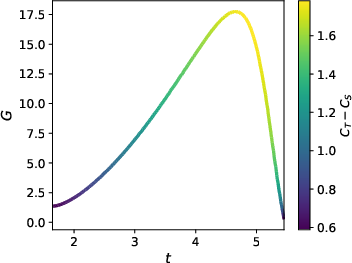
Figure 2: Variation of U8 along an approximately fixed-sloppiness slice in the U9 control plane demonstrates tunability of Q0 independent of Q1, emphasizing its status as an independent optimization axis.
Fixing the sloppiness Q2, it was shown that Q3 (and thus the total penalty) could be modulated by adjusting physical controls, affirming that probe-state design can exploit Fisher-geometric alignment to mitigate incompatibility effects.
Discussion and Implications
These results compel a nuanced view of resource allocation in multiparameter quantum metrology. Strong numerical evidence and analytic results demonstrate that distribution of incompatibility, not just its sum, is a central resource. Probe-state engineering for quantum sensors should (i) diagnose dominant incompatibility planes, (ii) allocate Fisher area to those planes, and (iii) optimize the matching factor Q4 at fixed global Fisher volume.
Theoretically, the study demonstrates that sloppiness, typically viewed as deleterious, can be purposefully structured to absorb incompatibility costs. Thus, resource trade-offs in quantum estimation are fundamentally geometric, mediated through the alignment of Q5 with the Fisher eigenbasis.
For Q6, further study of the role of mode structure in Q7 and optimization over the set of feasible Q8 pairs (subject to Q9) is necessary. Practical attainment of these optimized trade-offs, especially with realistic measurements and in non-diagonal weight settings, remains open but is critically important for quantum sensing applications. The introduction of U0 as a diagnostic tool suggests its adoption in systematic probe-design pipelines.
Conclusion
This work establishes that in multiparameter quantum estimation, the impact of incompatibility cannot be fully characterized by its total strength. The Fisher-geometric alignment—quantified by the matching factor U1—critically determines precision penalties through the trade-off bound U2. Concentrating incompatibility into particular Fisher-active parameter planes facilitates targeted Fisher-area amplification, thereby reducing estimation costs. These findings advocate for a geometric approach in probe-state optimization, wherein sloppiness and incompatibility are co-optimized as intertwined resources rather than independent obstacles. This geometric paradigm opens new directions for both theoretical investigation and practical sensor design in quantum metrology.