- The paper formalizes self-explainability by defining runtime, context-aware explanations and introducing a six-level framework to measure them.
- It categorizes approaches into classic XAI, deep learning with explainability, and innovative symbolic reasoning techniques.
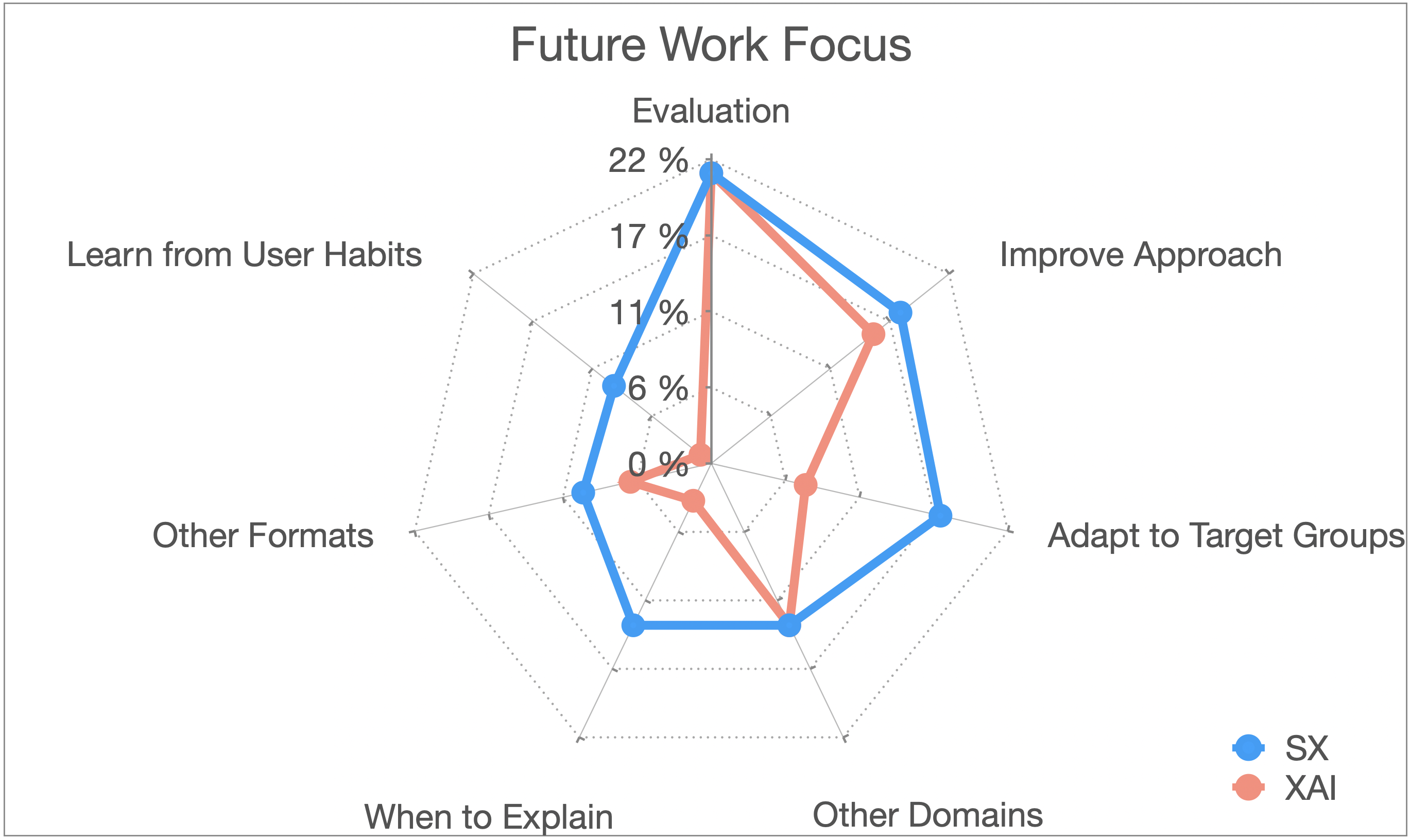
- It identifies research gaps in evaluation metrics, standardization, and domain expansion for self-adaptive systems.
Self-Explainability in Self-Adaptive and Self-Organising Systems: Current Landscape and Research Trajectories
Introduction
The escalating complexity of self-adaptive and self-organising systems (SAS, SASO) driven by advancements in artificial intelligence has rendered their behavior increasingly opaque. Conventional explainable AI (XAI) methods, while valuable, are often inadequate for these emergent, distributed, and context-driven settings. Self-Explainability (SX), understood as the autonomous generation and delivery of system behavior explanations at runtime, proposes a paradigm shift: systems no longer require external explainer frameworks but are designed to explicate their own decisions and actions for multiple stakeholder groups. This survey systematically reviews the SX literature, codifying definitions, taxonomies, and evaluation methods, and culminates in proposing a granular framework for measuring progress: the Levels of Self-Explainability.
Methodological Framework and Corpus Overview
A systematic literature review spanning ACM Digital Library, IEEE Xplore, Springer Nature, and ScienceDirect, after rigorous inclusion/exclusion criteria, reduced an initial pool of 507 works to 105 selected studies. This corpus, reflective of growing research intensity—particularly in the last decade—encompasses methodological, technological, and application-driven SX approaches.
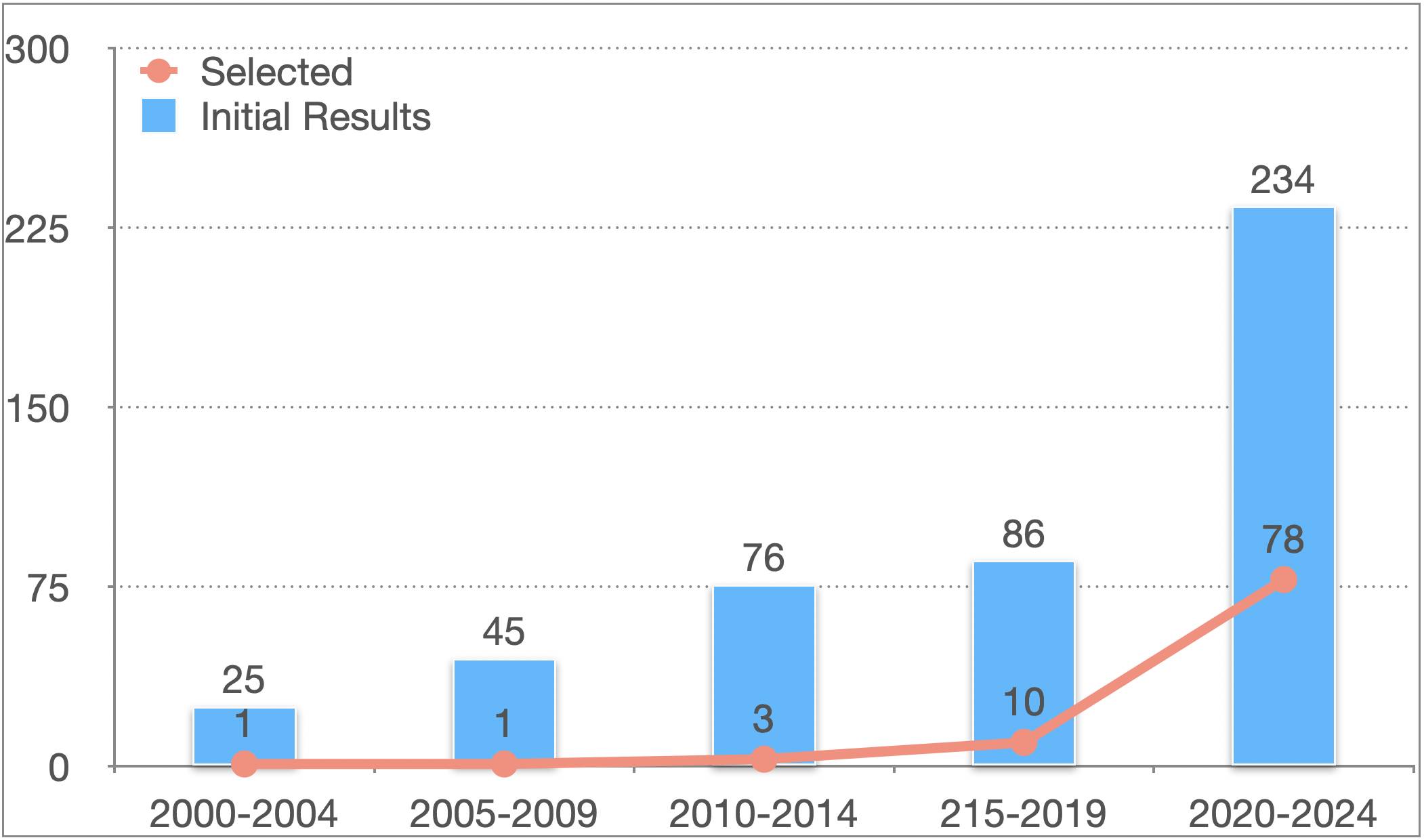
Figure 1: The number of initial studies and selected contributions, arranged by year of publication.
Definitions and Conceptual Distinctions
A key contribution of this review is the formalization of SX, juxtaposed against the broader XAI landscape and related constructs such as interpretability, self-awareness, and self-diagnosis. XAI, primarily targeting ML model transparency and post-hoc interpretability, is subsumed within the broader SX notion, which mandates the autonomous, context-sensitive generation and communication of explanations by technical systems. The authors provide three operational definitions:
- Explanation of Models (Global): Descriptions of capabilities and limitations of the underlying model, system, or surrogate, not restricted to AI artifacts.
- Explanation of Behaviour (Local): Accounts elaborating on features, causes, and procedural steps yielding a specific system behavior instance.
- Self-Explainability: The runtime ability to autonomously generate and provide explanations of system behavior for relevant stakeholders.
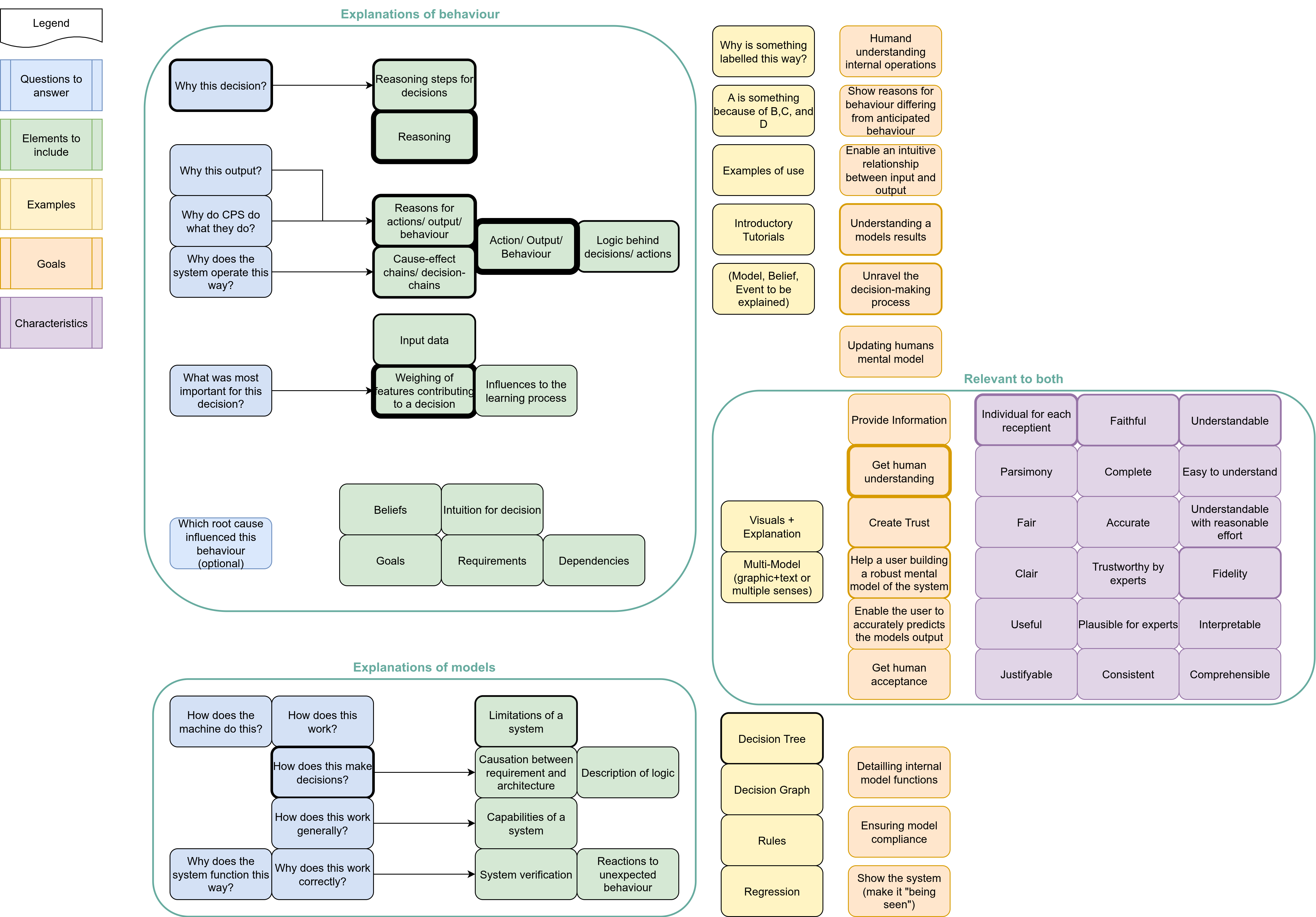
Figure 2: Snippets of explanations as extracted from the literature. The thickness of the lining indicates the frequency with which this topic was mentioned in the reviewed literature.
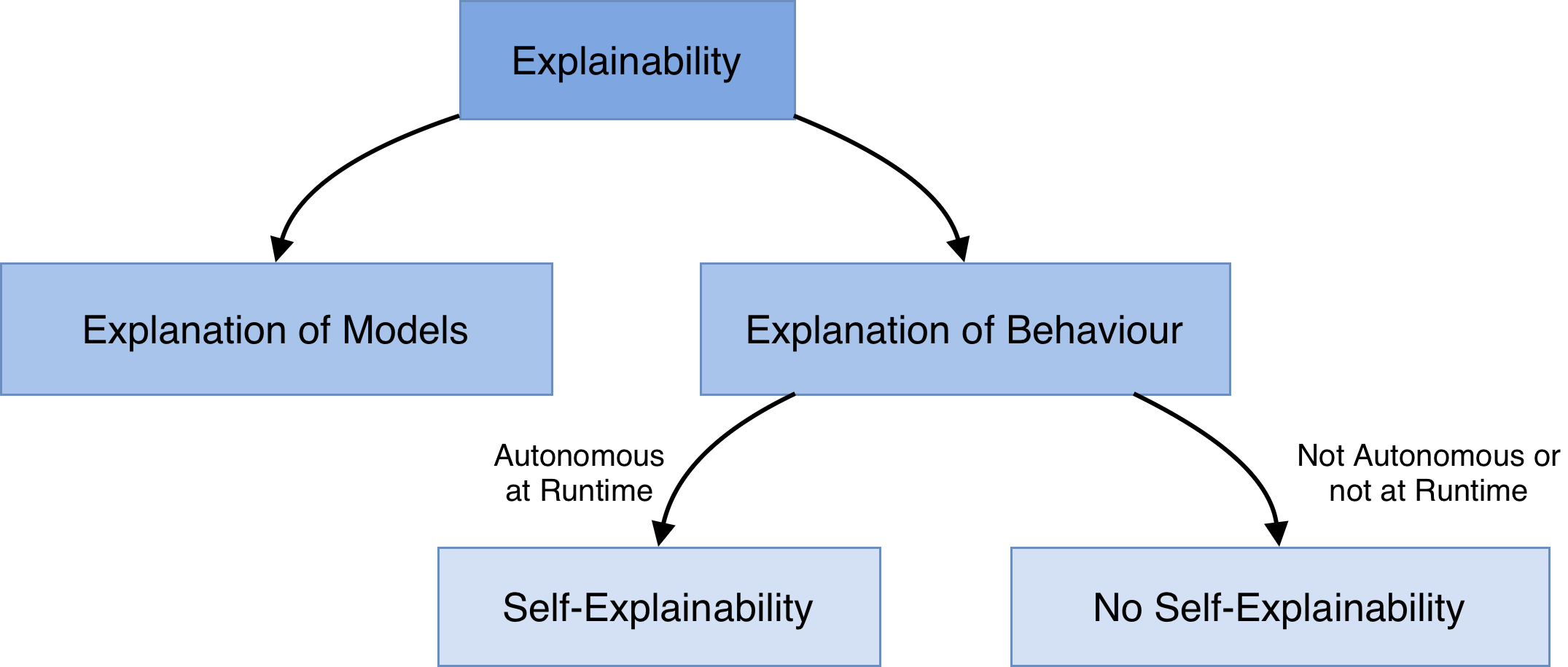
Figure 3: Explainability, divided into subcategories.
Taxonomy of SX Approaches
The review proposes an updated taxonomy that organizes SX research into three principal classes:
- Classic XAI: Post-hoc and intrinsic interpretable models (e.g., decision trees) with added explainability modules.
- Standard DL with Explainability Focus: Approaches employing deep neural architectures supplemented with feature importance or attention-based visualization—rarely achieving full SX.
- Innovative Explainability Approaches: Emphasizing symbolic reasoning—including causal models, ontologies, rule- and logic-based frameworks, and LLM-driven explanation generation—and abstract meta-models decoupled from core function.
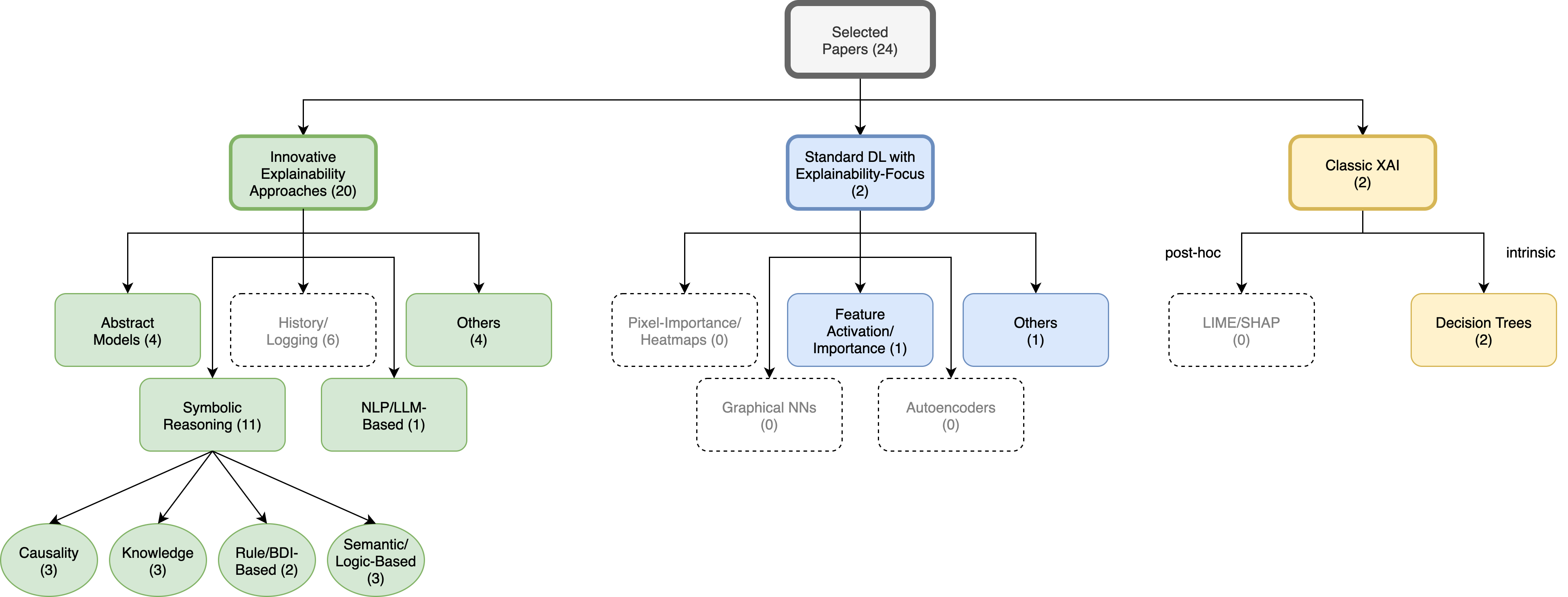
Figure 4: Taxonomy of all reviewed papers (excluding SLRs).
Figure 5: Updated taxonomy of all reviewed papers identified as self-explainable according to our definition.
Symbolic reasoning, causality-aware explanation, and modular abstraction are especially prevalent among the SX-classified contributions.
Empirical Domains, Context, and Addressee Analysis
A domain-wise analysis reveals a concentration of SX implementations in autonomous transport and smart environment domains—areas where adaptive system opacity directly impacts human trust and regulatory requirements. By contrast, fields such as healthcare are dominated by post-hoc XAI, with genuine SX approaches being scarce.
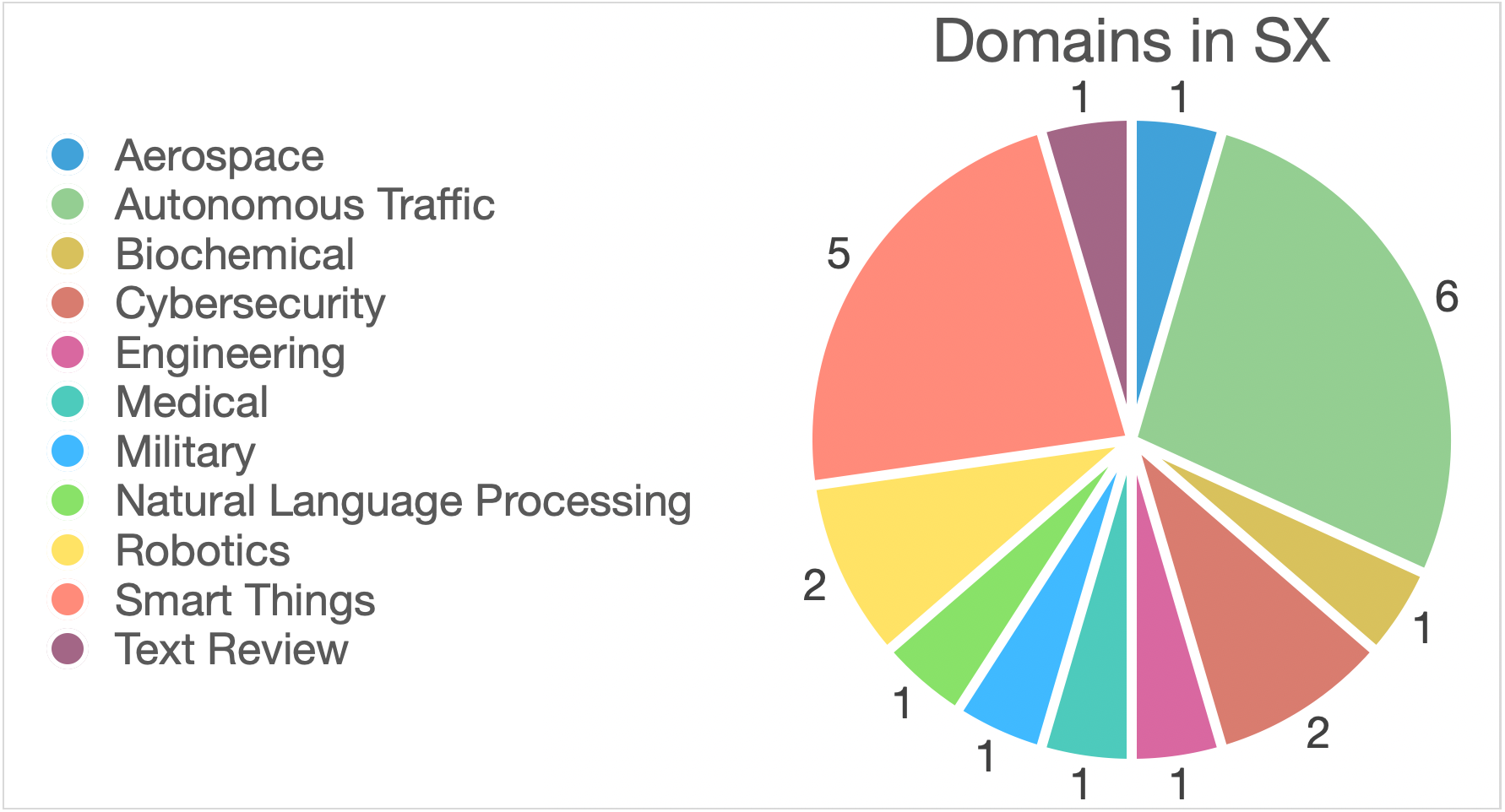
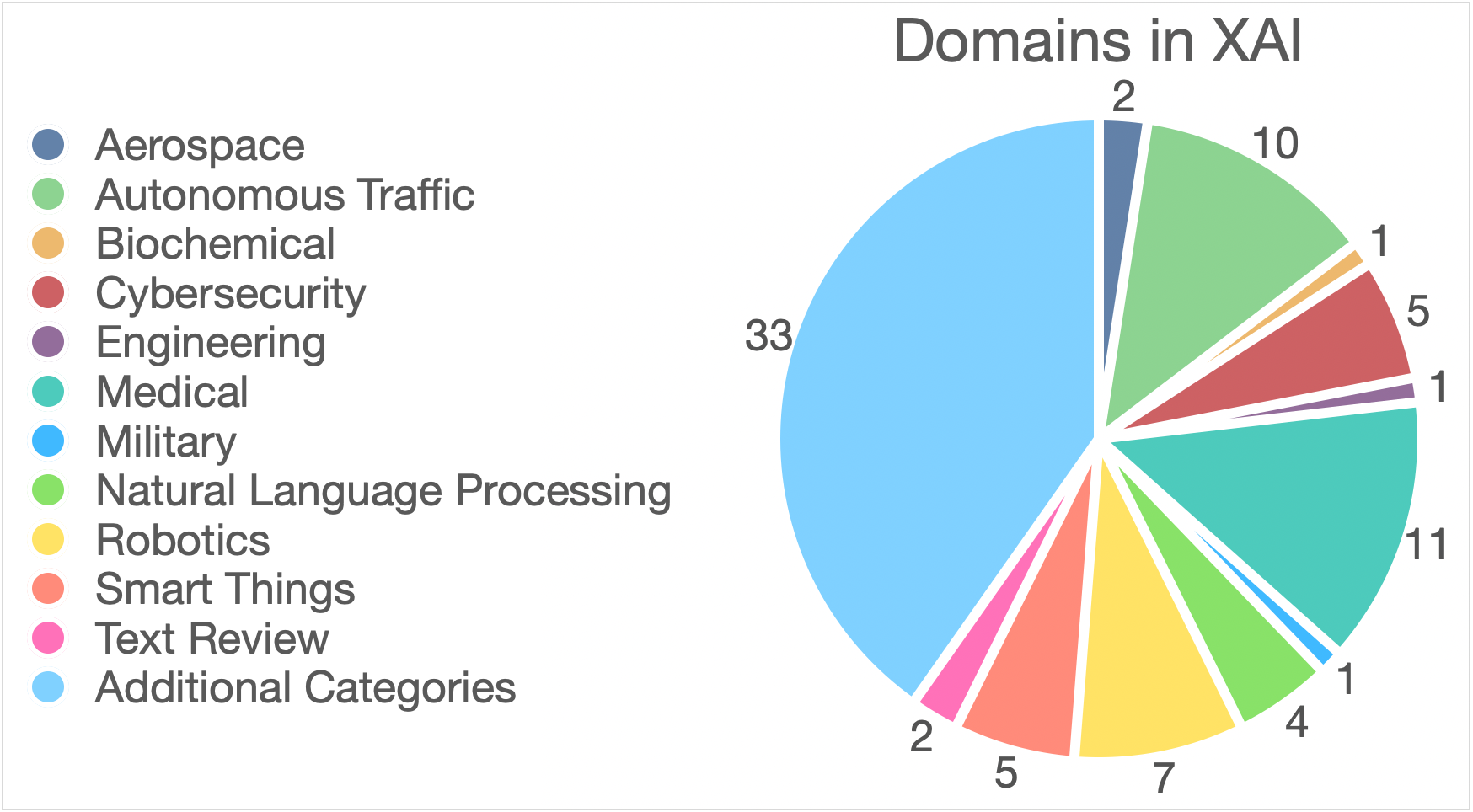
Figure 6: Domains in which the reviewed approaches are situated. Left: SX Domains, right: XAI Domains. Additional categories are shown in the appendix.
The survey also elucidates the critical importance of system perspective (inside, outside, hybrid) for SX feasibility. Hybrid architectures that interleave opaque and transparent components are prominent, reflecting practical constraints in retrofitting legacy systems with SX features.
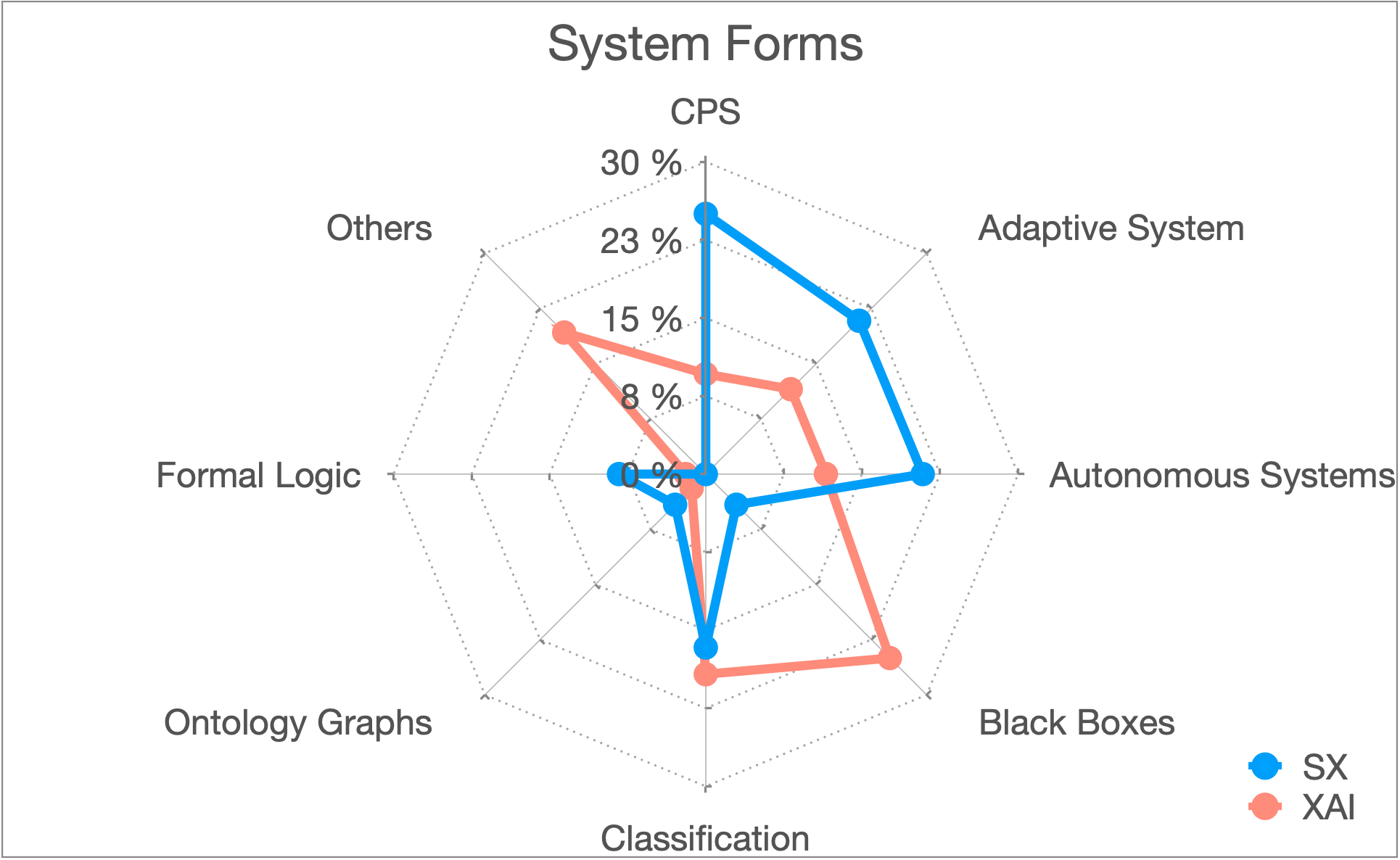
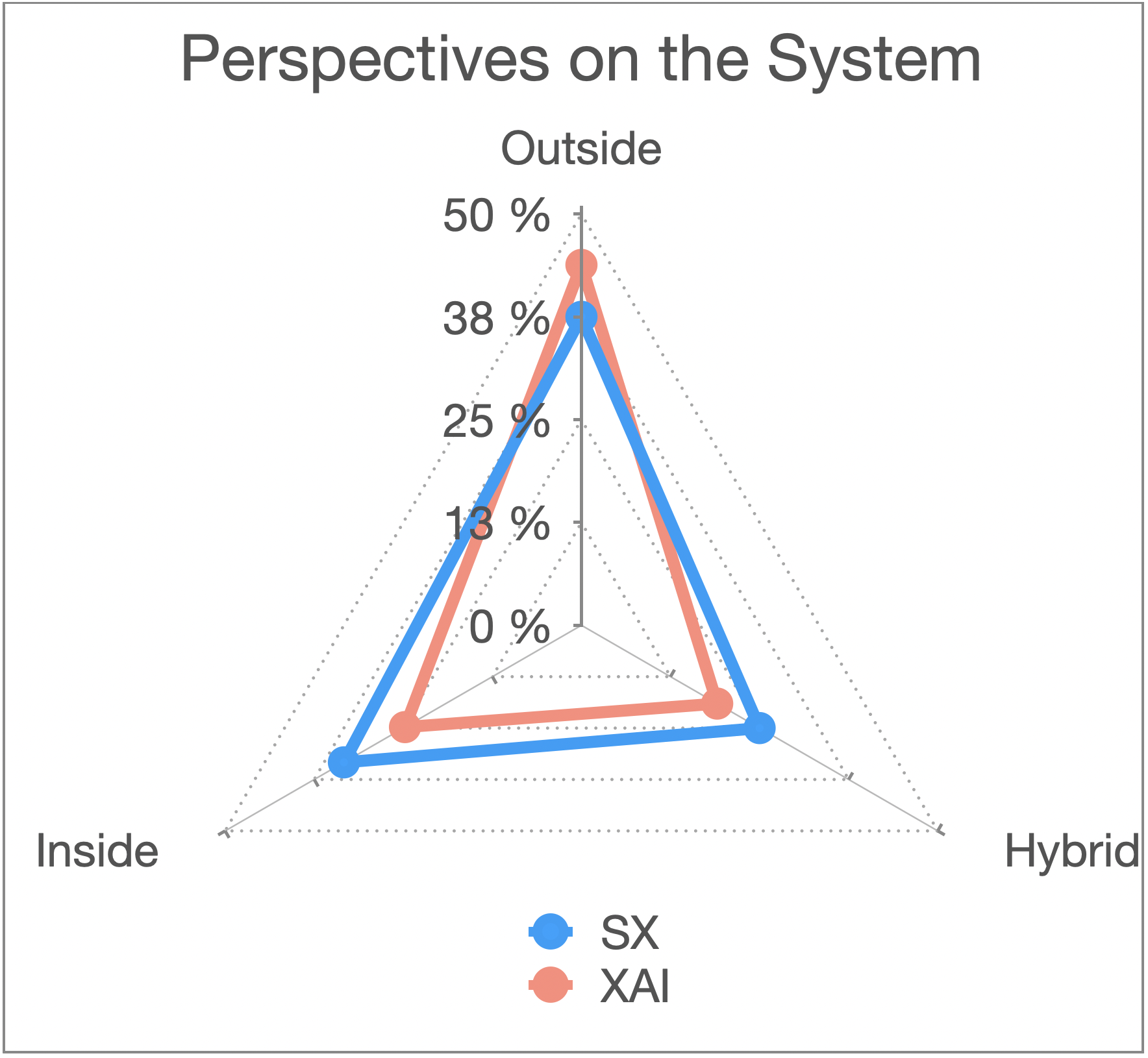
Figure 7: Comparison of context-related characteristics in SX and XAI.
Addressee analysis shows explanations predominantly target human users (end-users, domain experts), but a shift is advocated toward technical targets (other systems, subsystems), demanding new machine-consumable explanation formats.
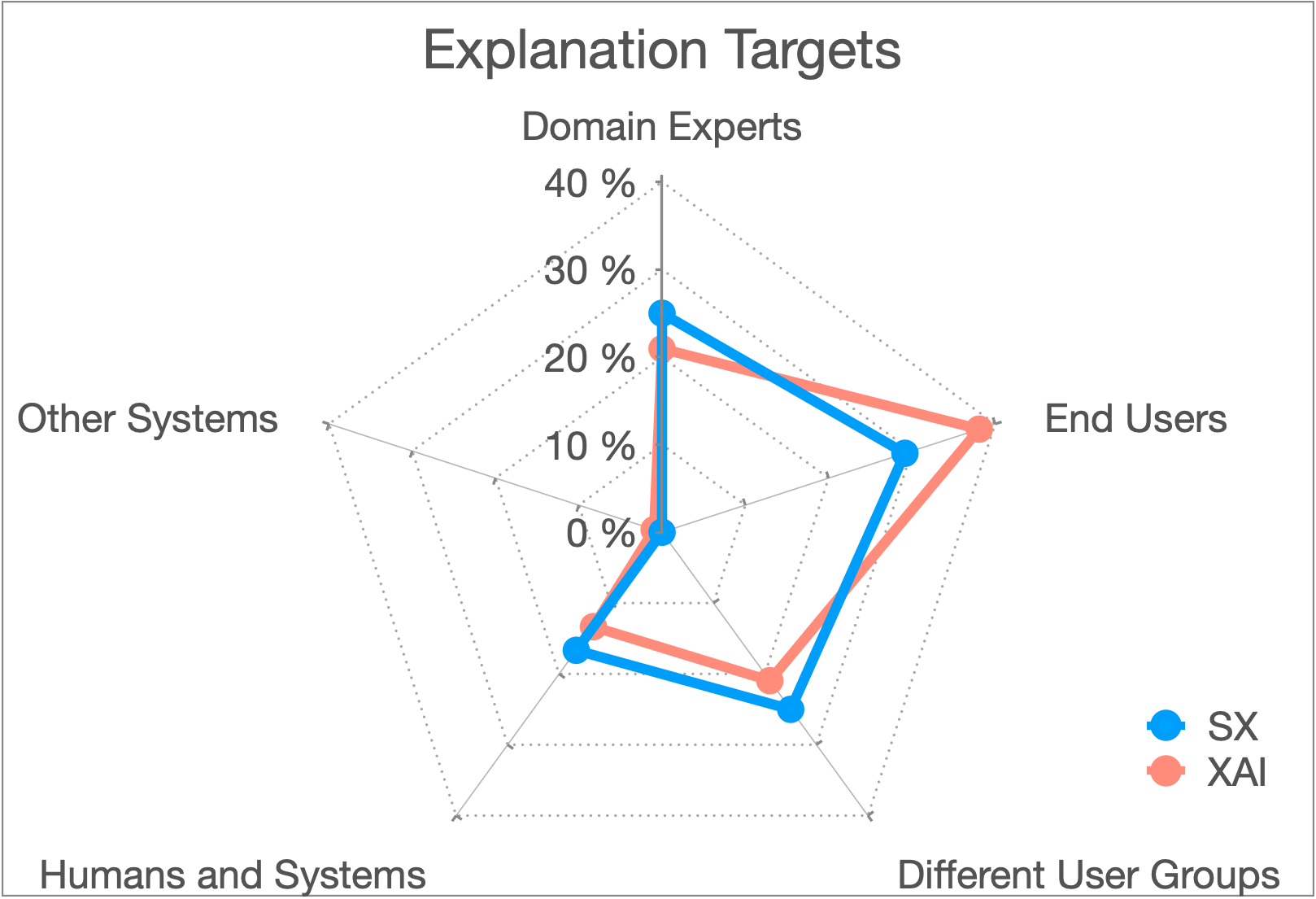
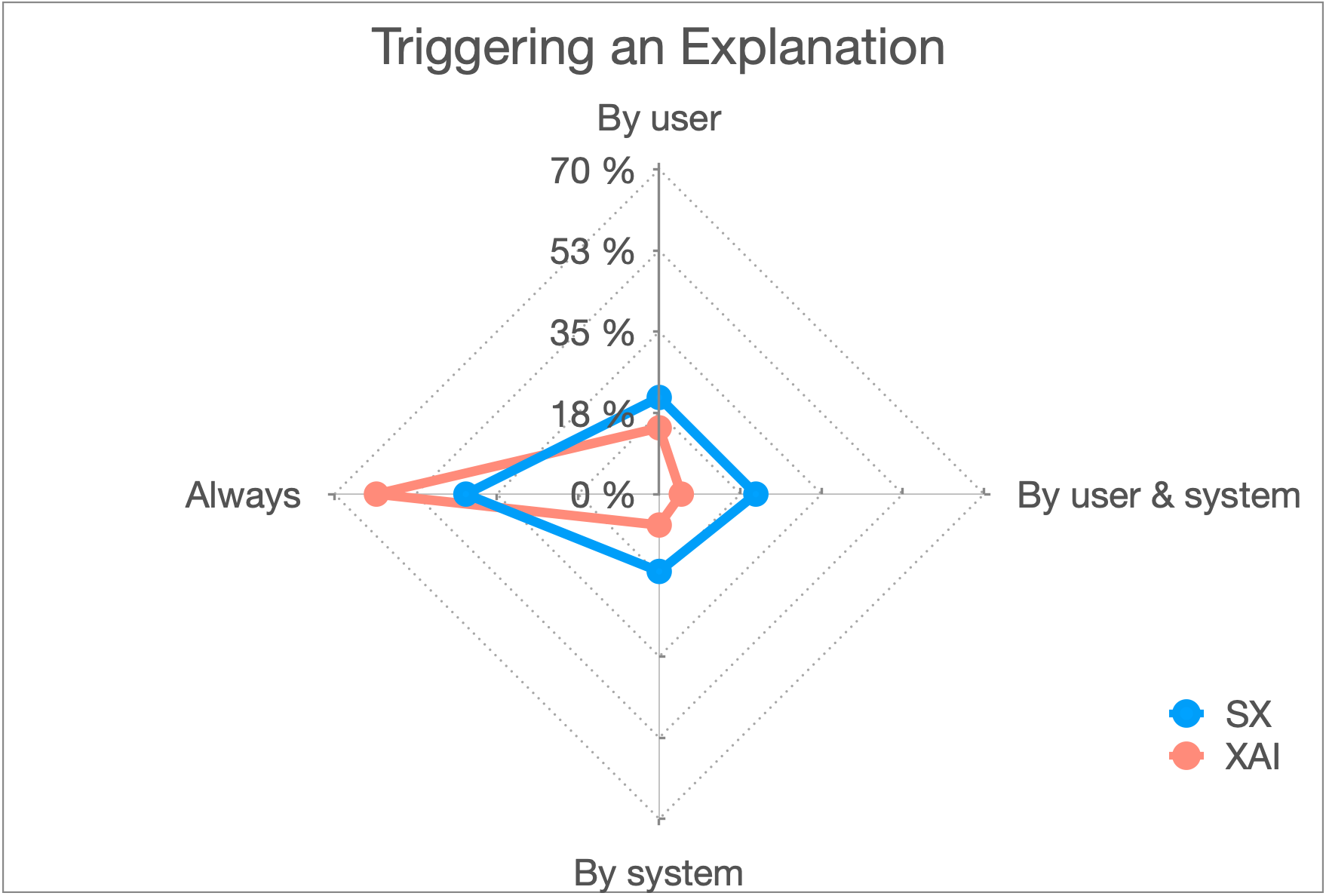
Figure 8: A comparison of the addressee-related characteristics in SX and XAI.
Furthermore, SX methods show a strong bias toward multimodal and especially textual explanation outputs, with a notable emphasis on individualization and on-demand triggering to avoid information overload.
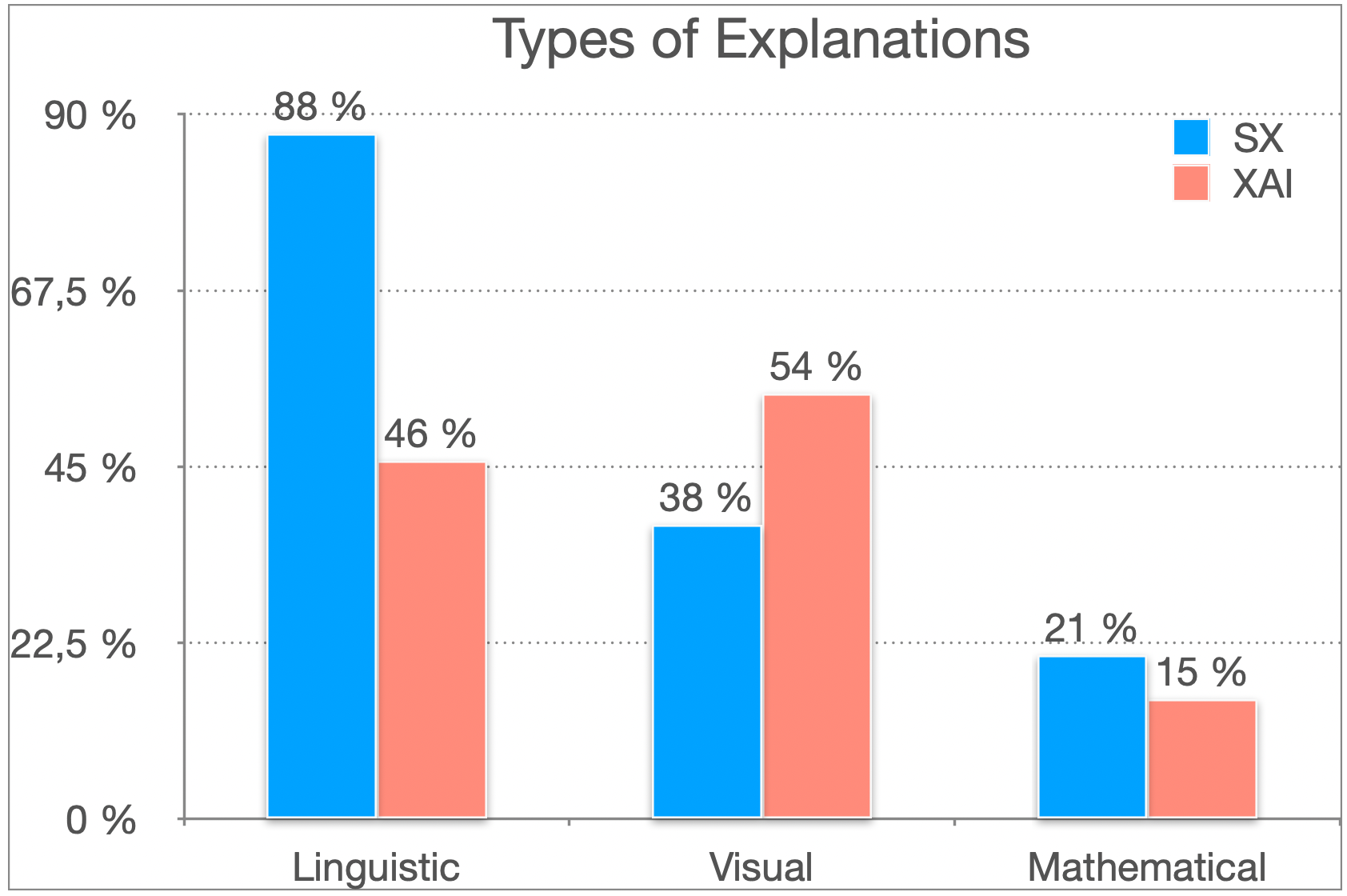
Figure 9: Types of explanations used in SX and XAI approaches. A single method may contain multiple types of explanation.
Evaluation Ecosystem and Research Gaps
The review identifies an acute lack of standardization in SX evaluation; currently, metrics are borrowed from XAI, with incommensurability and context-dependence prevailing. Key notions include fidelity, soundness, informativeness, efficiency, and robustness, with effectiveness and task impact measured when user studies are feasible. However, robustness remains almost entirely unexplored within SX.
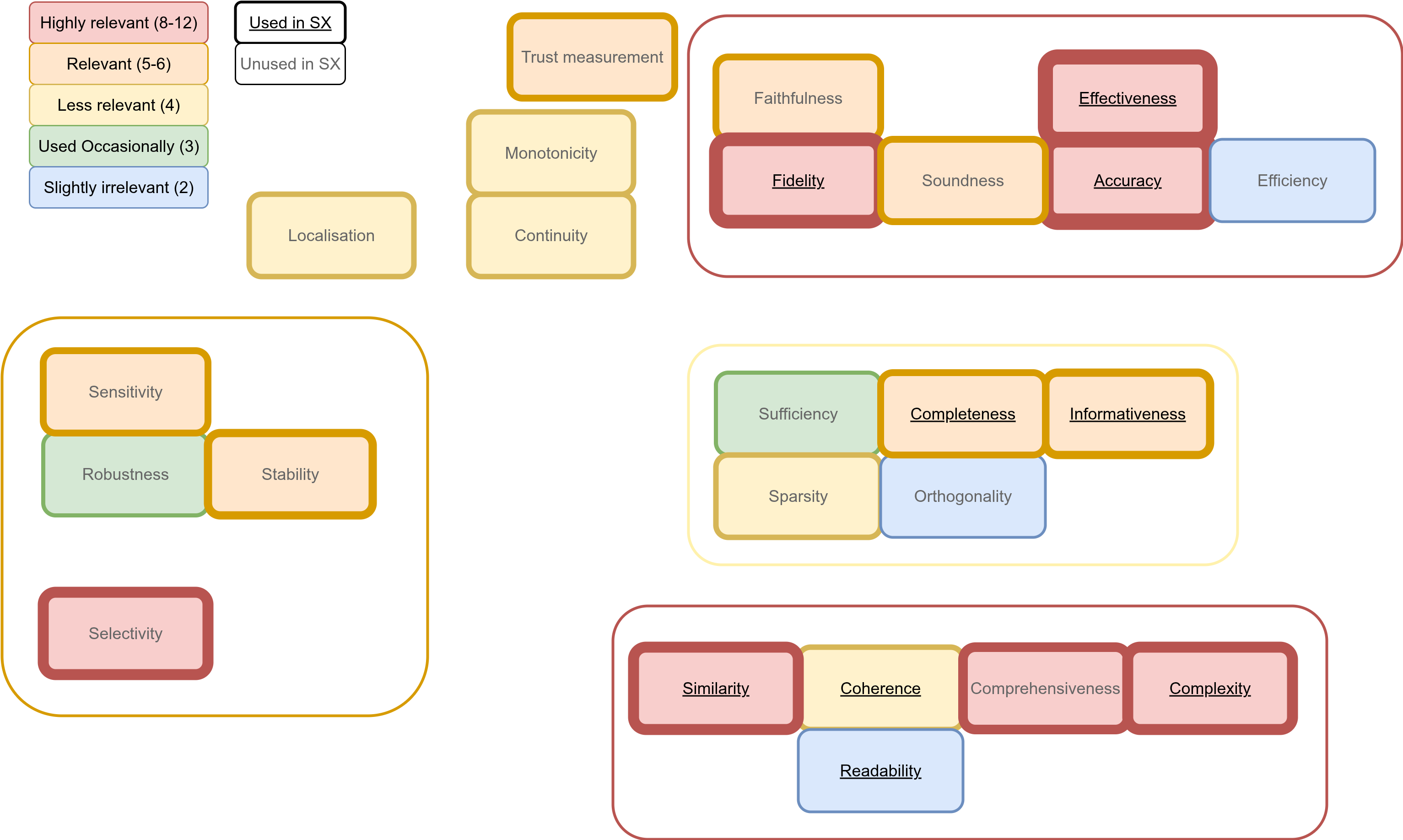
Figure 10: Most frequently used evaluation notions within the selected contributions. Thicker lines indicate higher frequency. Underlined terms mark notions that were employed in the SX papers.
A summary of research gaps and future directions includes:
Levels of Self-Explainability
Inspired by the Levels of Autonomy paradigm, the authors introduce six Levels of Self-Explainability—a stratification reflecting increasing sophistication, from non-existent explainability (Level 0) to full, target-specific, self-optimizing, and scenario-complete explainability (Level 5). No currently extant realization exceeds Level 2 (autonomous, context-triggered explanations); higher levels remain purely conceptual and unimplemented, confirming the nascent stage of SX in engineering practice.
Practical and Theoretical Implications
Practically, the review lays the groundwork for a rigorous, consensus-driven framework for SX system engineering—articulating requirements for runtime model access, modular abstraction, and explanation-tailoring infrastructure. Theoretically, the taxonomy and levels framework serve as scaffolding for systematic progression and benchmarking of SX capabilities in complex technical systems.
Furthermore, the review underscores that true SY hinges on (i) a runtime-capable, context-aware causal/semantic model of behavior, (ii) the ability to detect when and what requires explanation, and (iii) flexible target-sensitive communication mechanisms. A critical implication is that retrofitting SX onto legacy black-box systems is likely infeasible without access to intermediate processing layers or meta-models—strengthening the case for SX-centric design from inception.
Future developments in AI, especially advancements in LLMs and neuro-symbolic architectures, are expected to heavily influence the feasibility and generalizability of SX. Integration of these methods will allow for scalable, domain-adapted, and stakeholder-specific explainability, important for regulatory compliance and user acceptance across safety-critical and high-autonomy domains.
Conclusion
Self-Explainability is emerging as a pivotal capability requirement for complex, autonomous, and adaptive technical systems. While foundationally anchored in the XAI tradition, SX imposes substantially broader criteria for runtime, individualized, and self-directed explanation. The surveyed literature reveals a field mostly in theoretical or early proof-of-concept stages, with significant research and engineering challenges remaining, especially in evaluation, standardization, and domain generalization. The systematic definitions, taxonomy, and the Levels of Self-Explainability framework established by this review provide an authoritative roadmap and measurement system to steer future SX innovation, adoption, and regulatory alignment.