- The paper introduces a graph-agnostic framework that employs marginal shift detection, Markov boundary identification, and conditional distribution shift scoring to isolate true intervention targets.
- The methodology leverages the Independent Causal Mechanism principle and relative risk variation to accurately differentiate between mechanism changes and downstream effects.
- Empirical evaluations demonstrate that StableRCA achieves near state-of-the-art recovery rates with scalability and robustness in complex, high-dimensional, and multi-intervention settings.
StableRCA: Robust Graph-Agnostic Mechanism-Level Root Cause Analysis
Motivation and Problem Setting
Root Cause Analysis (RCA) aims to pinpoint variables responsible for anomalous system behavior, especially in high-dimensional, complex domains (manufacturing, distributed IT, healthcare). Existing methods bifurcate into graph-based and graph-free paradigms. Graph-based causal RCA leverages explicit or learned causal graphs, identifying root causes via explicit modeling of intervention effects and causal propagation. Their effectiveness hinges critically on the accuracy of the causal graph; misspecification in topology, functional form, or missing edges lead to substantial degradation.
Graph-free statistical RCA circumvents structure learning but conflates direct causal mechanisms with downstream anomaly propagation, resulting in high false positive rates and interpretability deficits. These methods typically rely on marginal distribution shift detection, which cannot distinguish mechanism change from propagated effects. Recent efforts—localized CI testing, partial graphs, or restrictive functional/topology assumptions—achieve limited mitigation under special assumptions but lack robustness for general, nonlinear, and large-scale settings.
StableRCA is proposed as a mechanism-level, graph-agnostic solution. It leverages the Independent Causal Mechanism (ICM) principle and Markov boundary (MB) theory, operationalizing the insight that causally downstream variables' conditional mechanisms remain stable under intervention (when locally conditioned), whereas true intervention targets manifest detectable conditional shifts.

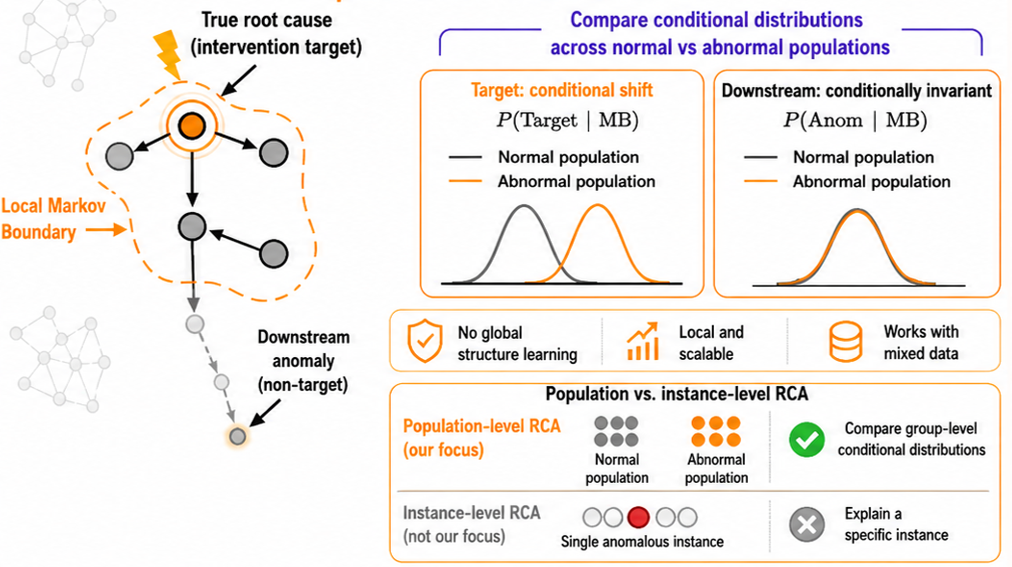
Figure 1: Traditional graph-dependent RCA versus StableRCA’s local, mechanism-level paradigm.
Methodology
The core StableRCA framework is a three-phase, graph-agnostic pipeline (see Figure 2) for mechanism-level RCA:
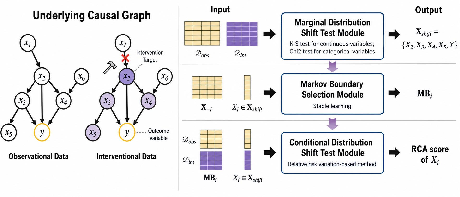
Figure 2: StableRCA architecture: (1) Marginal shift detection; (2) Local Markov boundary identification; (3) Conditional distribution shift scoring.
(1) Marginal Shift Detection:
Statistical hypothesis tests (Kolmogorov–Smirnov for continuous, χ2 for discrete) identify variables whose marginals differ between observational (normal) and interventional (anomalous) regimes. This step reliably over-approximates the set of true root causes, since it selects intervened nodes and their descendants.
(2) Markov Boundary (MB) Identification:
For each candidate variable, the local MB is estimated via sample-reweighted stable learning (SRDO). The algorithm selects the minimal variable set rendering the target conditionally independent of all others. Under standard additive-noise model assumptions and faithfulness, the MB coincides with parents, children, and spouses, consistent with causal graphical theory.
(3) Conditional Distribution Shift Detection:
A predictive model for each marginally shifted variable is trained (on the observational regime) using its local MB as inputs. Conditional risk is evaluated on both original and interventional data (with importance weighting to correct for covariate shift in the MB). The Relative Risk Variation (RRV) quantifies the predictive performance drop—i.e., violation of ICM. True causal mechanisms exhibit significant conditional shifts on their own MB; variables that are merely affected downstream do not.
This pipeline cleanly separates intervention targets from propagated anomalies, is robust to absence or misspecification of global graph structure, and is scalable to high dimensions—since only local MBs are estimated.
Theoretical Results
StableRCA’s identifiability is established both in the large-sample limit and under finite data with explicit bounds. Under assumptions of causal sufficiency, faithfulness, local detectability (intervention signals manifest as observable marginal shifts), and correct MB estimation, the framework guarantees:
- Intervened nodes are the only ones with conditional distribution shifts on their MBs.
- Non-intervened nodes' mechanisms are invariant under ICM, so conditional risk remains stable.
- Finite-sample bounds are derived for each stage (marginal shift detection, MB estimation, conditional test), showing exponential convergence in sample size N. Failure probability decays as e−Ω(N) under non-degenerate mechanisms and sufficient signal-to-noise.
The analysis rigorously quantifies the identifiability margin required for separation of true intervention targets from downstream effects, accommodating imperfect MB estimation and sampling variance. The RRV normalization stabilizes comparisons across variable types and scales, enabling robust scoring.
Empirical Evaluation
StableRCA is comprehensively benchmarked on synthetic SCM-generated graphs (including highly nonlinear mechanisms and multiple interventions) and five real-world datasets (ProRCA, Sock-shop, RCAEval, CausalMan, CausalChamber). Causal graphs for representative real-world domains are shown below.
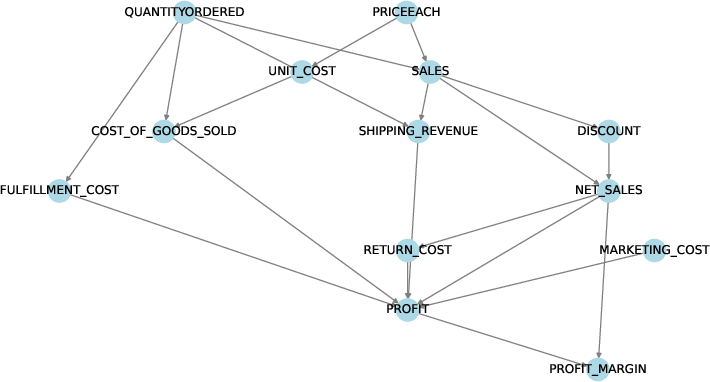
Figure 3: Ground-truth causal graph for the ProRCA dataset (retail process simulation).
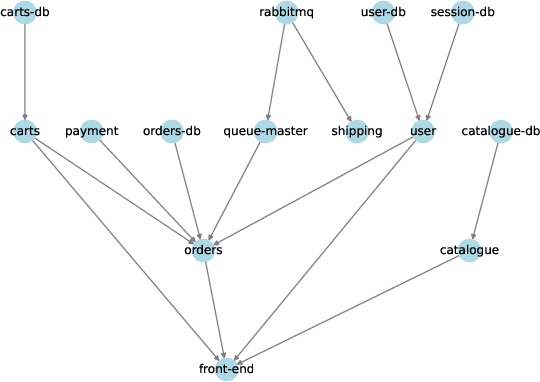
Figure 4: Causal graph for the Sock-shop microservice dataset.
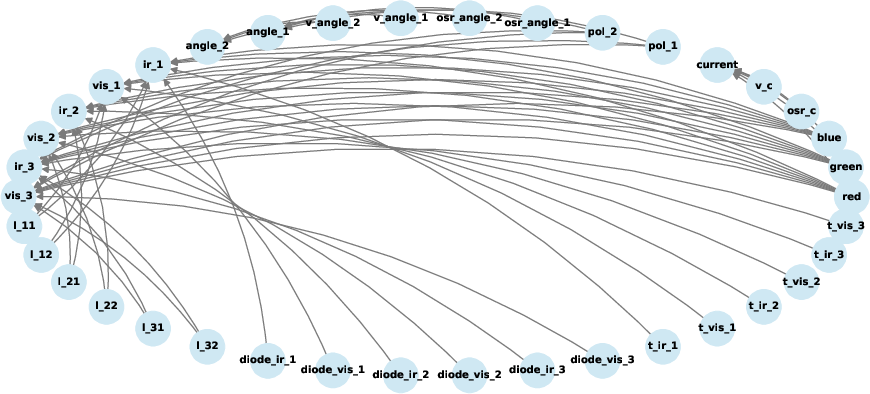
Figure 5: Causal graph for the Causal-Chamber physical system dataset.
Strong Empirical Claims:
- Graph Robustness: StableRCA maintains near SOTA accuracy as the graph structure is gradually corrupted (edge deletion/addition/orientation), while classic graph-dependent methods degrade substantially.
- Scalability: On graphs with up to 800 nodes, StableRCA sustains >97% Top-5 recovery, matching or exceeding baselines while reducing runtime by factors of 2–10 relative to best competitors.
- Multiple Interventions: StableRCA remains stable and superior under multi-cause settings, in contrast to most methods which rapidly collapse unless strong graph or single-intervention assumptions hold.
- Real-World Transfer: Balanced, high-precision recovery across diverse domains is evidenced in case-level heatmaps—most competing methods show strong dataset or scenario dependence.
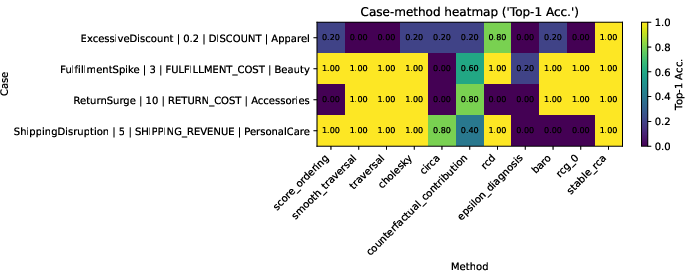
Figure 6: Per-case performance (heatmap) example for ProRCA; StableRCA achieves stable, high recall across anomaly types.
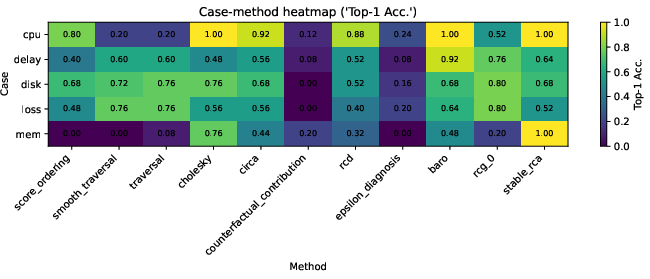
Figure 7: Performance heatmap on Sock-shop indicates StableRCA’s robustness to anomaly/fault type variability.
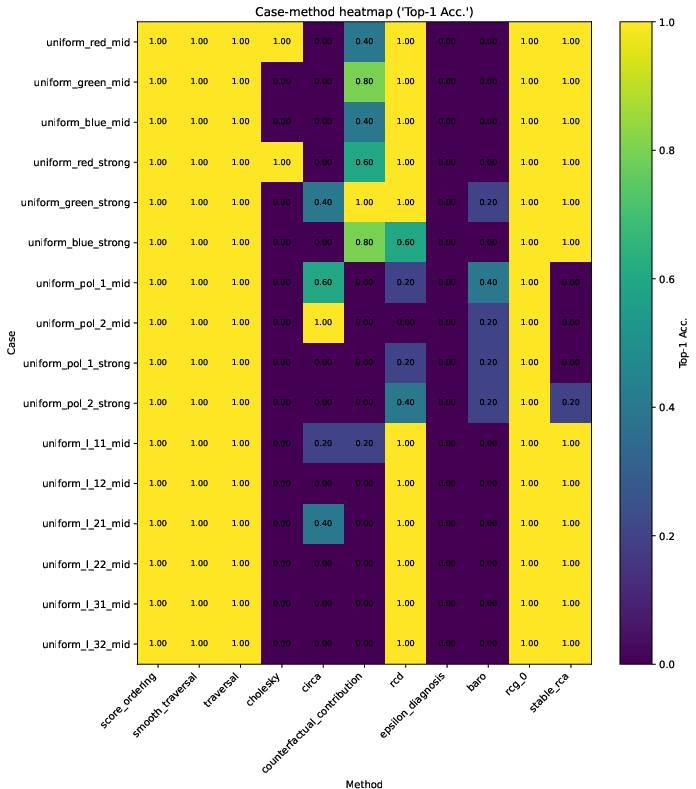
Figure 8: StableRCA retains coverage across diverse causal mechanisms in Causal-Chamber.
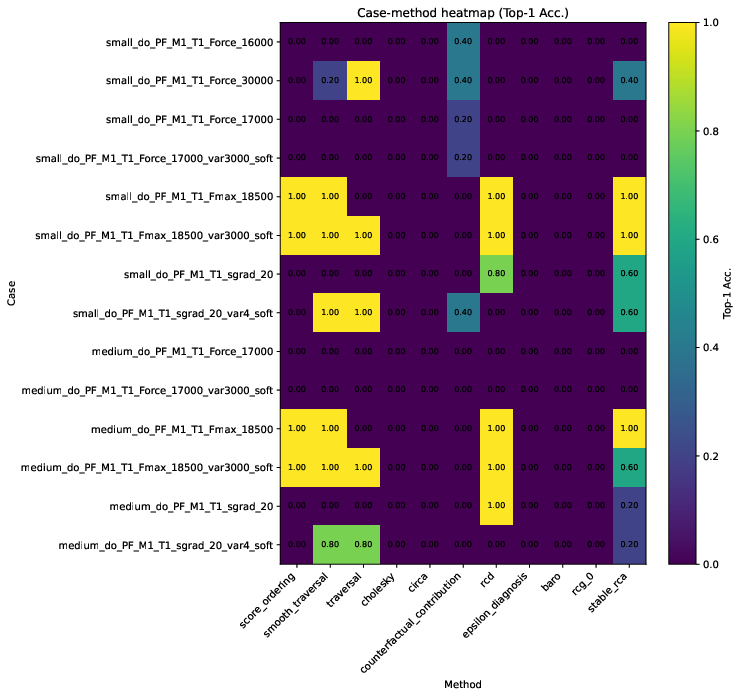
Figure 9: StableRCA matches or outperforms other approaches at large graph scales on CausalMan synthetic variants.
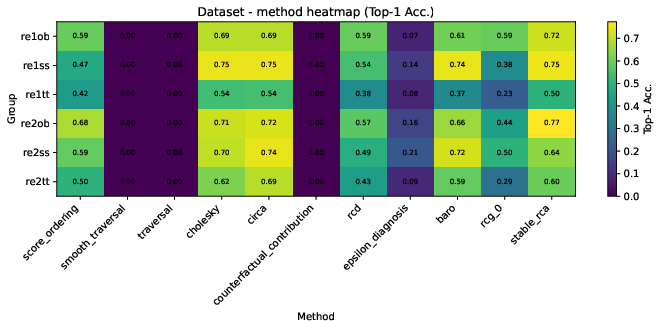
Figure 10: Across RCAEval (real microservice system failures), StableRCA sustains cross-dataset recovery.
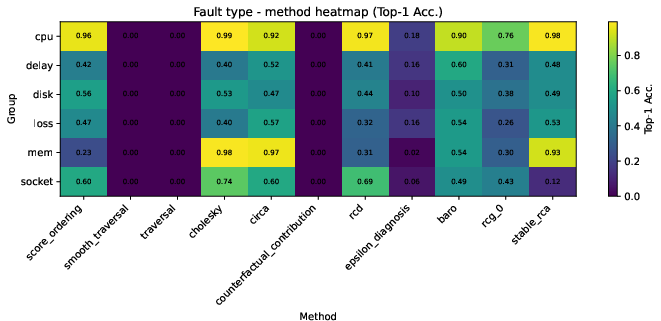
Figure 11: Root cause recall by fault type: StableRCA yields consistent precision regardless of anomaly source.
Ablation and Robustness
Ablation studies show that MB estimation accuracy is critical: random removal of true MB variables degrades recovery faster than adding irrelevant ones, indicating prioritizing local causal sufficiency over over-inclusion. Conversely, even with moderate errors, StableRCA surpasses most alternatives. Sensitivity to anomaly sample size is mild; ∼100 abnormal samples suffice for reliable detection.
Practical Implications and Limitations
Practical Impact
StableRCA constitutes a major practical advance for RCA in large, nonlinear, and heterogeneous environments lacking high-quality explicit graph knowledge. It enables scalable, interpretable mechanism-level diagnosis—a critical function in high-stakes domains—while being robust against graph misspecification and supporting high-dimensional variables and mixed data types.
Theoretical Insights
The finitary identifiability analysis provides explicit separation conditions and exponential error bounds, filling a gap in the theoretical understanding of root-cause recoverability in partially-identified, local-causal settings.
Future Directions
Limitations include reliance on the local faithfulness/sufficiency assumption and the need for effective MB estimation. Real-world challenges such as latent confounding, feedback/cyclic causality, non-invariant mechanisms, and weak interventions remain key obstacles. Promising future extensions include partial observability, ensemble MB estimation, uncertainty quantification, and integration with instance-level diagnosis.
Conclusion
StableRCA delivers graph-agnostic, mechanism-level root cause analysis by combining marginal screening, local MB identification, and conditional shift scoring. It achieves SOTA or near-SOTA performance on real and synthetic benchmarks, robust to structure misspecification and scalable to large systems. The approach formalizes the separation of true mechanism change and downstream propagation using local conditional independence, providing a scalable causal analysis framework with strong theoretical guarantees and empirical utility.
Reference: "StableRCA: Robust Graph-Agnostic Mechanism-Level Root Cause Analysis" (2606.05636).

