- The paper presents a modified QRCS formula that incorporates signal-signal entanglement for two-photon states.
- It uses detailed numerical simulations on two-dimensional target geometries to demonstrate enhanced side-lobe scattering and angular robustness.
- Non-maximally entangled states show up to 14.67% higher QRCS, indicating practical advantages for optimizing quantum radar detection.
Quantum Radar Cross Section with Two-Photon Entangled States
Introduction
This paper systematically investigates the quantum radar cross section (QRCS) in the context of two-photon entangled states, advancing beyond established single-photon QRCS frameworks. Beginning with an analysis of prior findings showing that signal-idler entanglement does not enhance QRCS, the work focuses instead on exploiting signal-signal entanglement. A modified biphoton QRCS formula is rigorously derived and its implications are evaluated both theoretically and through detailed numerical simulations on various two-dimensional target geometries, considering both monostatic and bistatic configurations. Furthermore, the study incorporates a double-Gaussian approximation to systematically explore the performance dependence of QRCS on the degree of entanglement.
Theoretical Framework
The quantum radar cross section generalizes the classical RCS to the quantum regime, where it quantifies the effective scattering cross-section using expectation values of field intensities arising from atom-photon interactions. The foundational QRCS formula for a single-photon state arises from the far-field ratio of expectation values for scattered and incident intensities. For multi-photon and, in particular, biphoton cases, the work utilizes the scattering theory of maximally entangled two-photon states.
The biphoton QRCS is formulated to incorporate pairwise correlations in the scattering amplitude, contrasting it with a direct extension from separable two-photon or classical-like states. The mathematical treatment leads to a QRCS formula whose numerator and denominator are explicit quadratic (for single photon) or quartic (for biphoton) forms in sums over atomic positions. The incident biphoton state can be parameterized either as a maximally entangled delta-function or, more generally, as a double-Gaussian with tunable Schmidt number, controlled via experimental parameters such as pump divergence and phase-matching bandwidth.
Simulation and Numerical Results
Geometric Target Configurations
To evaluate the practical impact of two-photon entanglement on QRCS, the study considers three canonical two-dimensional target geometries—square, circle, and triangle—each modeled as arrays of point scatterers of identical atomic properties. The main simulation parameters include a grid size (e.g., 31×31 for the square), resulting in 961, 709, and 462 atoms for the square, circle, and triangle, respectively.
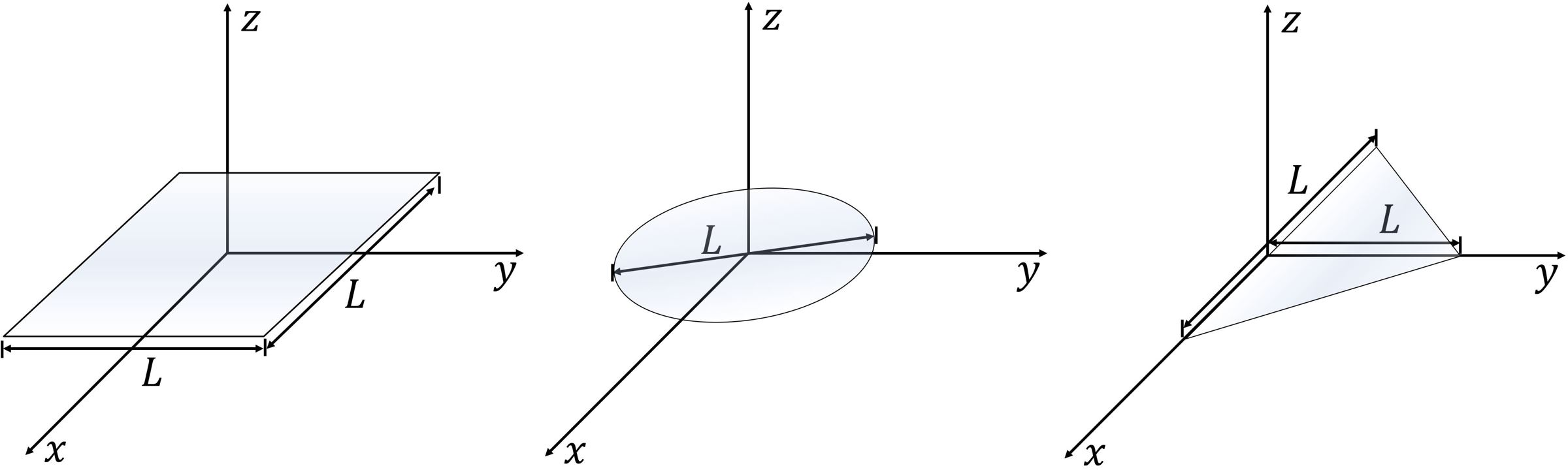
Figure 1: Geometry and dimensions of the two-dimensional quantum radar target configurations.
Monostatic QRCS—Signal-Signal Entanglement Enhancement
In the monostatic configuration (transmitter and receiver co-located and observing the same angle), the QRCS for maximally entangled two-photon states demonstrates substantial modification compared to single-photon and separable biphoton states. Notably, the main scattering lobe at zero radians is suppressed, while pronounced side-lobe enhancements appear at approximately ±0.5 radians. This effect is exacerbated in smaller circular and triangular targets, attributed to the interplay between quantum interference terms in the entangled amplitude and the atomic array geometry.
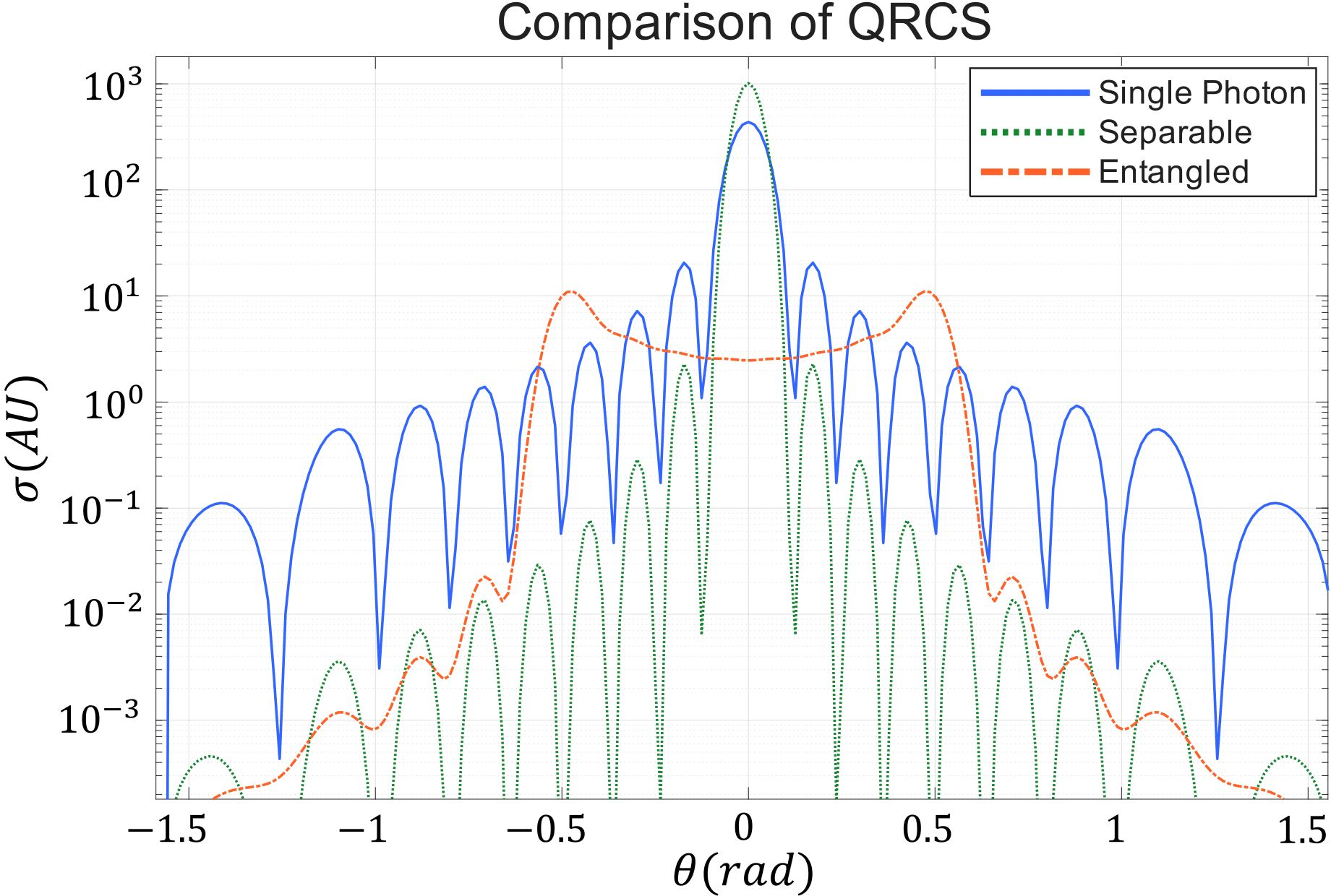
Figure 2: Monostatic QRCS patterns for a square target (961 atoms) illustrating sharp central dip and enhanced side lobes in the entangled biphoton case.
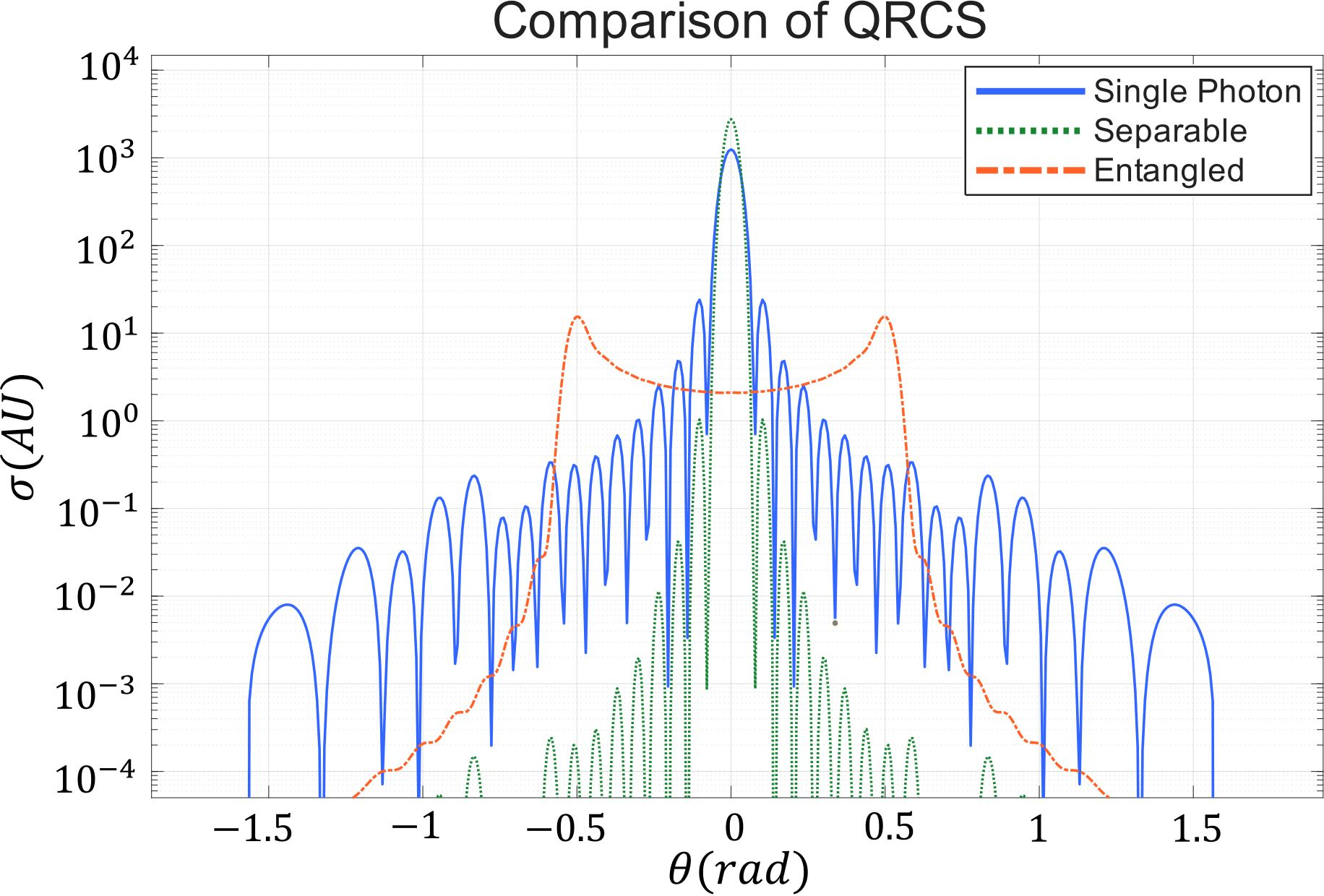
Figure 3: Monostatic QRCS for the circular target; the entangled state effectively redistributes scattering intensity.
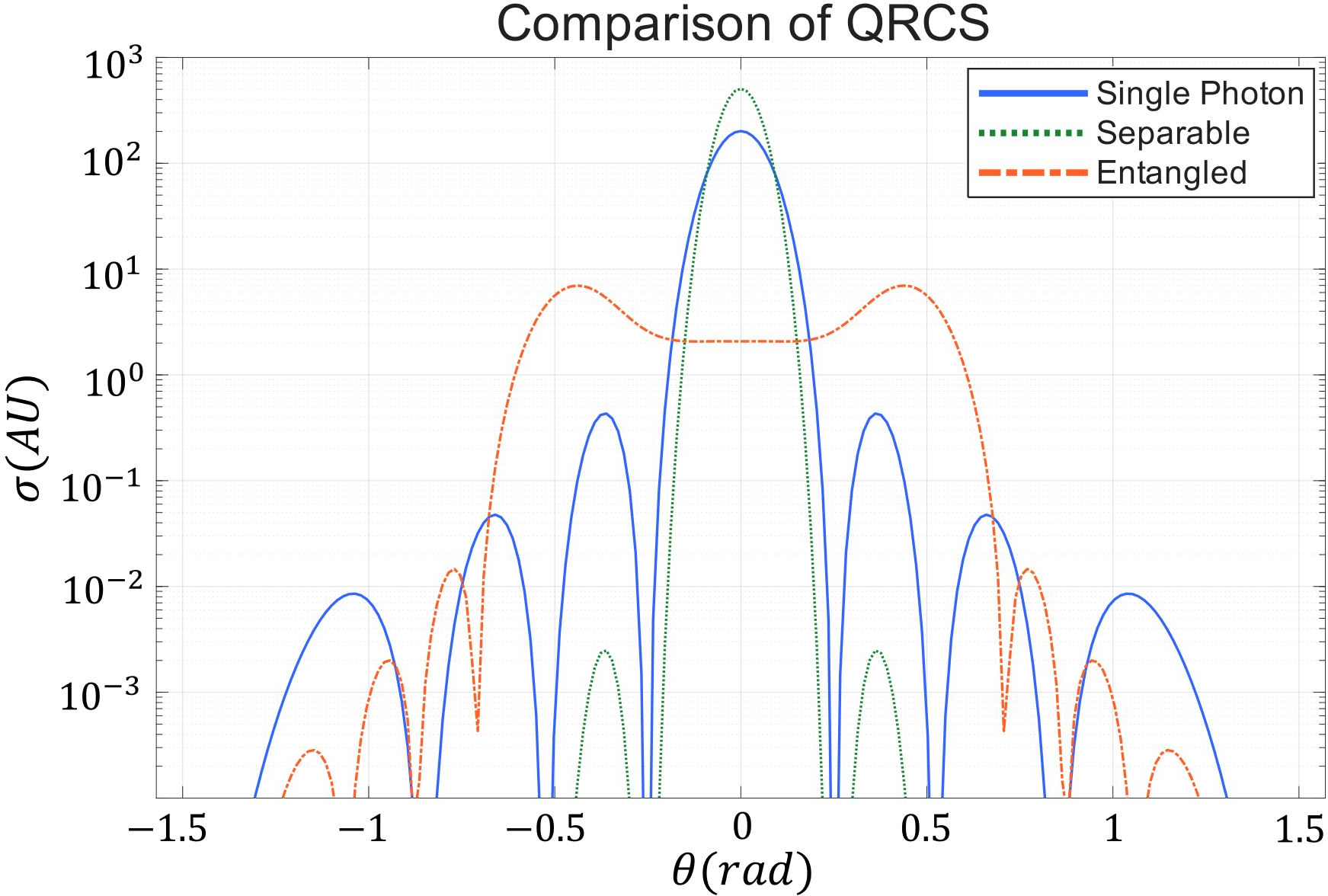
Figure 4: Monostatic QRCS for the triangular plate showcases the pronounced side-lobe enhancement for entangled states.
The angular sensitivity and the width of the main and side lobes scale with the ratio L/λ, demonstrating narrower main lobes and significant side-lobe proliferation with increasing target dimension in units of wavelength.
Bistatic QRCS—Angle-Robust Scattering
The bistatic scenario, involving spatially distinct transmitter and receiver, provides further differentiation between quantum and classical (or separable quantum) radar scattering. The QRCS for maximally entangled biphoton states displays notable independence from the incident angle, a consequence of the angular uncertainty intrinsic to the entangled state. In contrast, the single-photon and separable biphoton scattering lobes shift with changes in the incident angle.
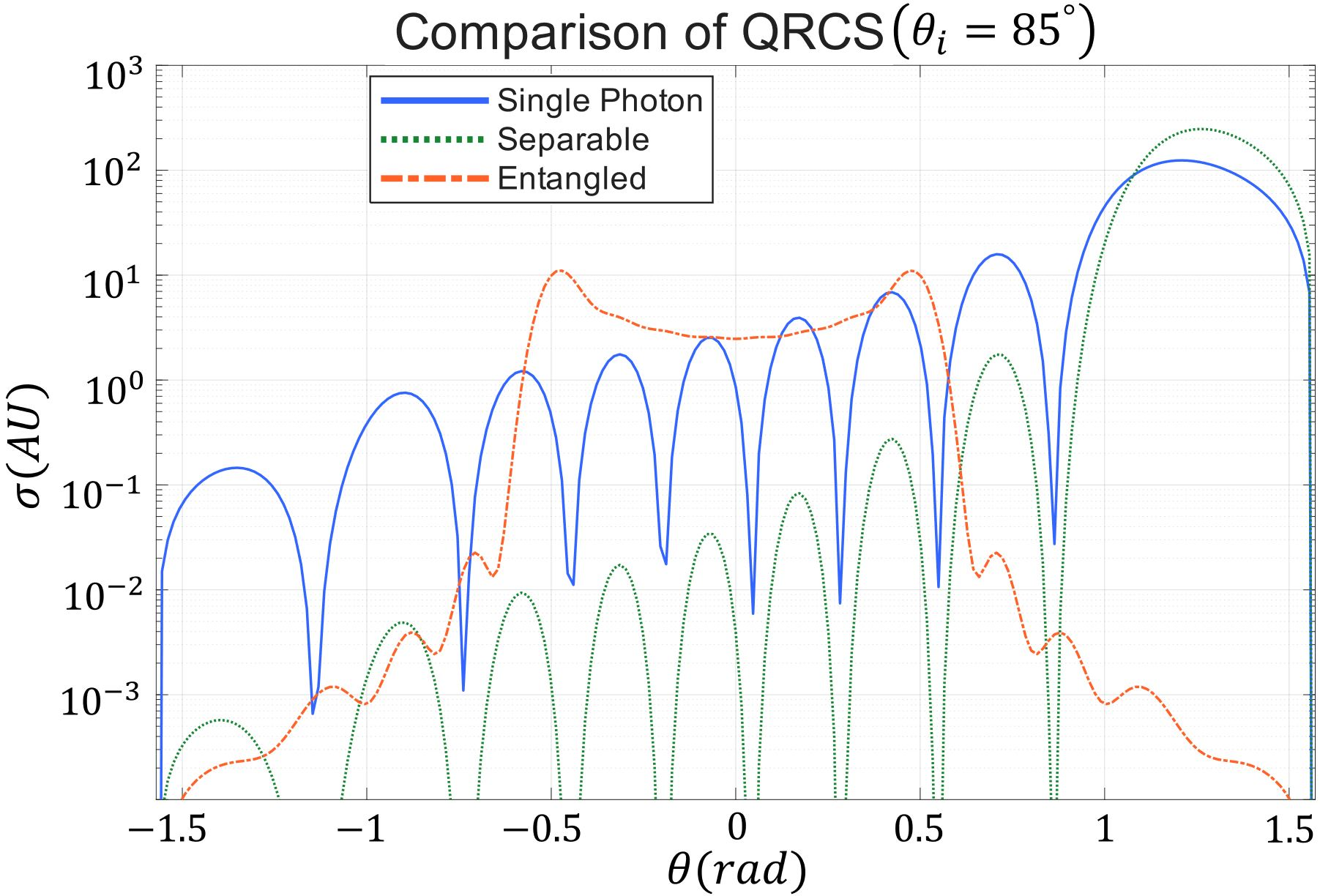
Figure 5: Bistatic QRCS for a square plate demonstrates persistent scattering features for the entangled input irrespective of incident angle.
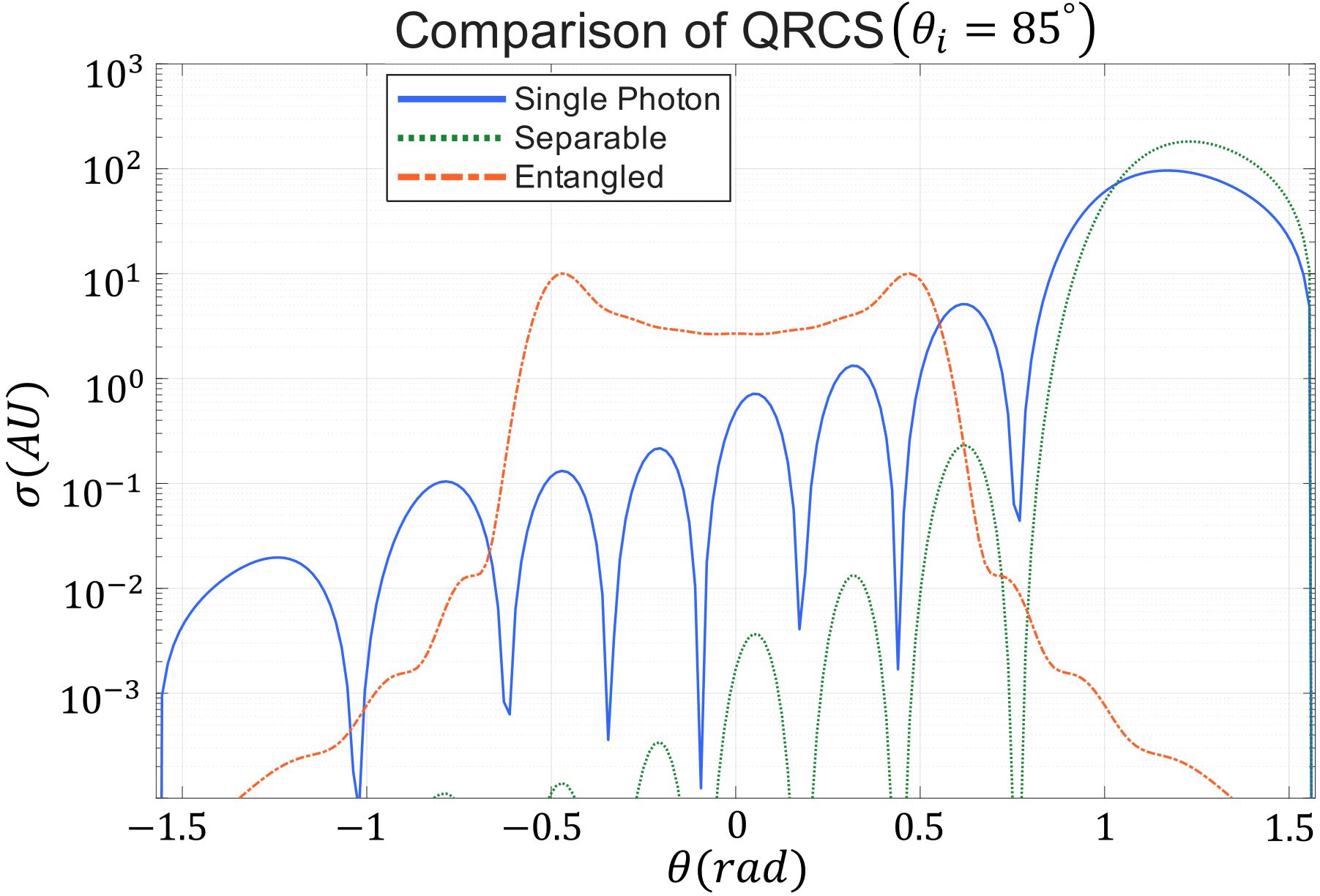
Figure 6: Bistatic QRCS for a circular target; performance highlights the robustness of the pattern with entangled input.
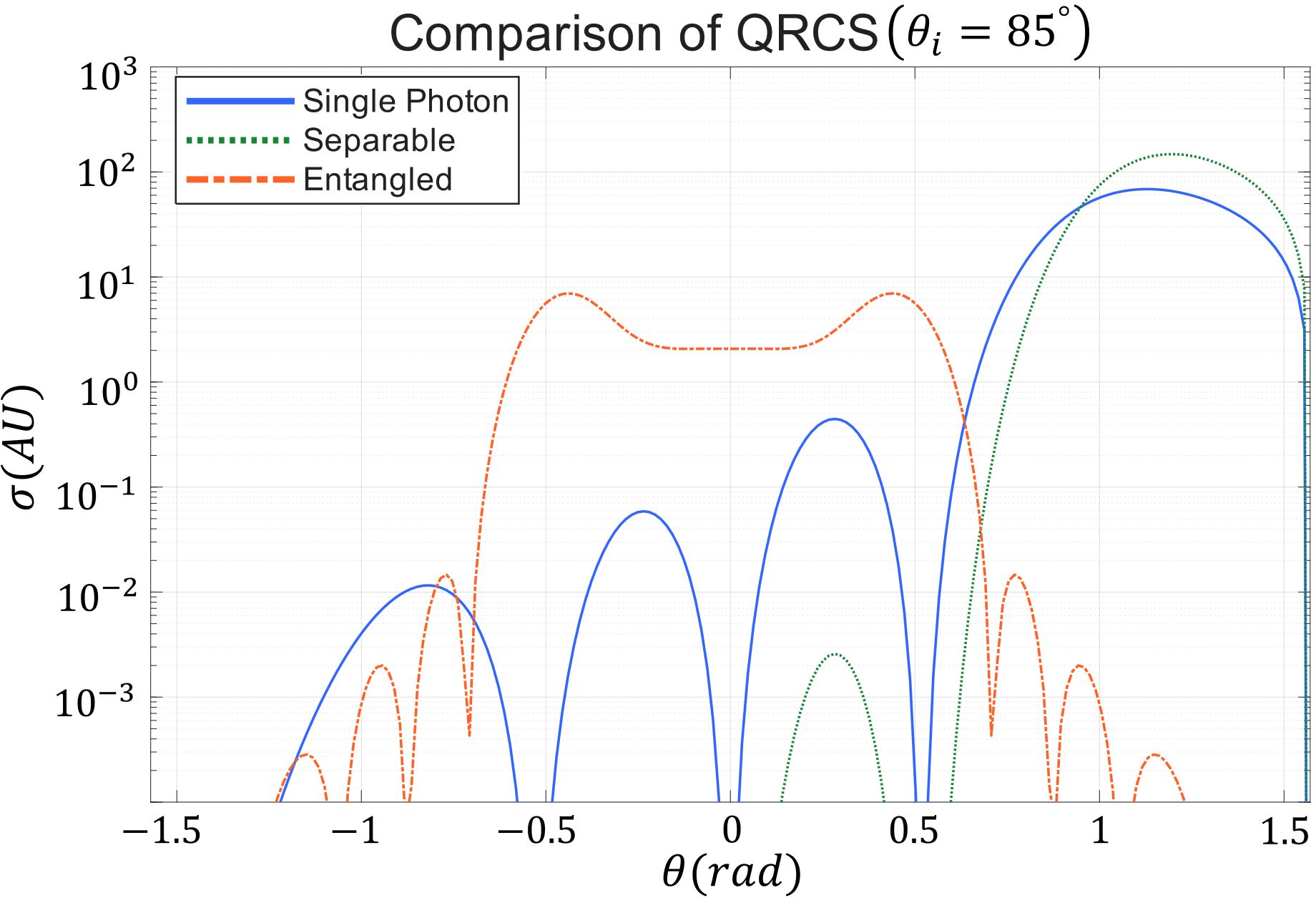
Figure 7: Bistatic QRCS for the triangular plate highlighting angular invariance of scattering features under entangled illumination.
Entanglement-Dependent QRCS: Double-Gaussian Approximation
Moving beyond maximally entangled biphoton states, the study deploys the double-Gaussian parametrization allowing for an arbitrary degree of quantum signal-signal entanglement. Simulation results reveal a nontrivial optimum at partial entanglement: non-maximally entangled states yield up to 14.67% higher QRCS at specific angles compared to maximally entangled states for selected parameter regimes.
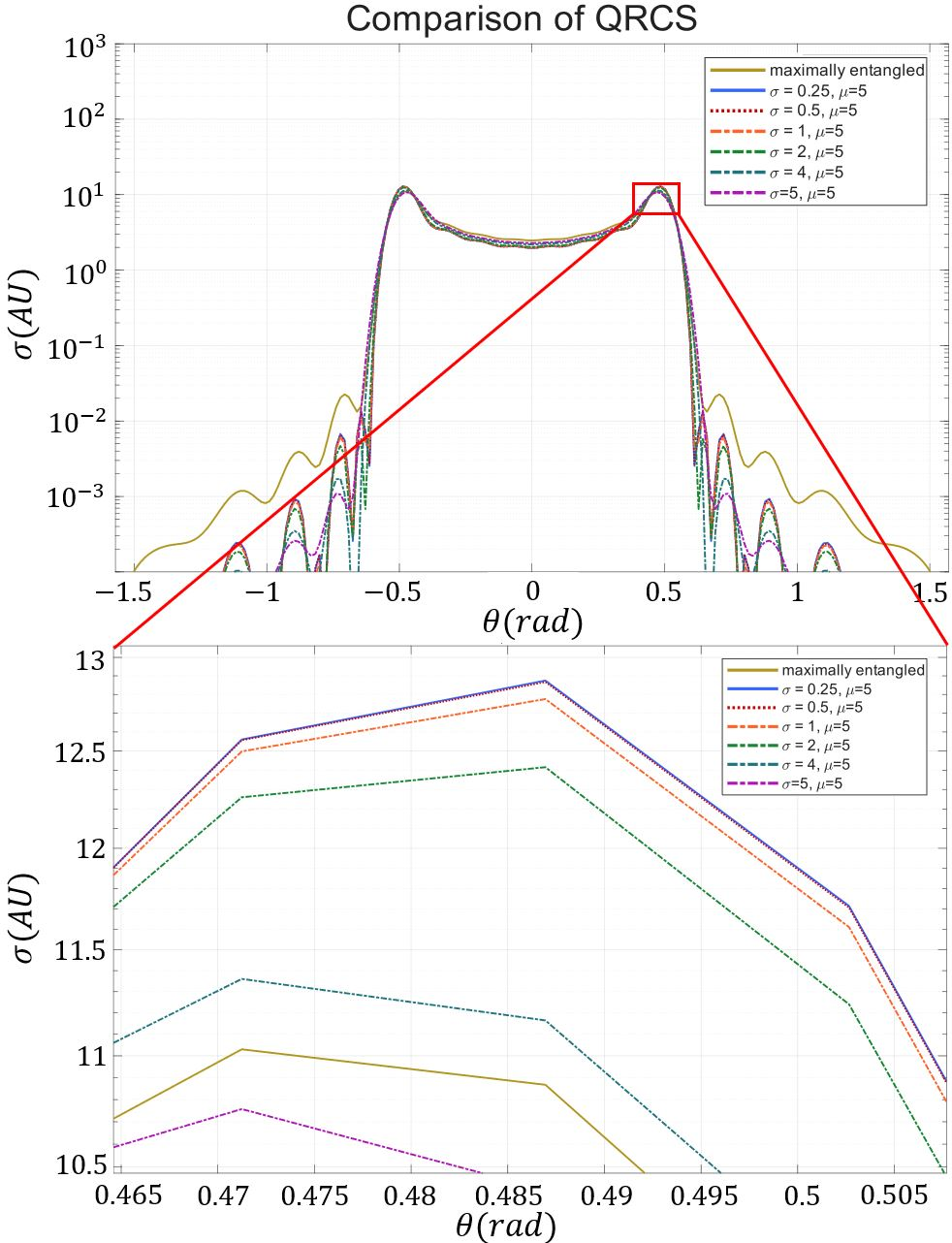
Figure 8: QRCS as a function of scattering angle for a square target; colored curves correspond to varying degrees of entanglement parameter σ at fixed μ=5.
The theoretical formalism leads to a QRCS involving infinite series, which are truncated in simulations. As entanglement increases (larger Schmidt number), the scattering pattern converges towards that of the maximally entangled state. The observed enhancement with partial entanglement suggests parameter regimes of practical value for target detection optimization.
Implications and Future Directions
This study evidences that the use of two-photon signal-signal entangled states as input for quantum radar interrogation leads to qualitative and quantitative alterations in scattering, with pronounced side-lobe enhancement and greater angular robustness in both monostatic and bistatic configurations. These effects are fundamentally distinct from those accessible via single-photon states, separable biphoton states, or classical analogs.
From a theoretical perspective, the work consolidates the hierarchy of QRCS enhancement mechanisms and provides direct criteria based on entanglement parameters for optimizing target detectability. Practically, these insights suggest new modalities for quantum radar systems, especially in scenarios where side-lobe detection is advantageous or angular invariance is desired. The demonstration that non-maximally entangled states can outperform maximally entangled states in specific regimes denotes an important consideration for state engineering in experimental systems.
Further developments may include extending the analysis to realistic environmental conditions (noise, decoherence), three-dimensional extended targets, or integration with adaptive quantum illumination protocols. Exploration of other multi-photon entangled states, or hybrid entanglement between other degrees of freedom (polarization, orbital angular momentum), could further expand capabilities in quantum-enhanced remote sensing technologies.
Conclusion
By deriving and applying the modified QRCS formula for two-photon entangled states, this work demonstrates that quantum entanglement can be harnessed to tailor scattering properties for radar detection in ways inaccessible to classical illumination or simple quantum superposition. The ability to enhance and control specific angular features of the QRCS through quantum state engineering underscores the practical and theoretical relevance of quantum photonics in next-generation sensing applications (2606.05603).

